
MIM 440C stainless steel is a high-carbon martensitic stainless steel option for small precision parts that need high hardness, wear resistance and complex geometry. It is most relevant for wear-loaded contact features, bearing-like surfaces, valve-related parts, latch mechanisms, sliding components and compact mechanical parts where hardness matters more than maximum ductility or 316L-level corrosion resistance. The key question is not only whether 440C can be molded. It is whether the part geometry, heat treatment condition, critical dimensions, surface requirements and working environment can support stable production. For sourcing teams, 440C should be evaluated together with drawing tolerances, inspection criteria, annual volume and application risks before tooling starts.
Use 440C when hardness and wear are primary requirements for small, complex MIM parts with functional contact or sliding surfaces.
Do not treat 440C as a corrosion-first stainless steel. Corrosion exposure, impact loading, thin edges and heat-treatment distortion must be reviewed.
Confirm hardness target, functional surfaces, critical dimensions, surface finish, operating environment, inspection method and production volume.
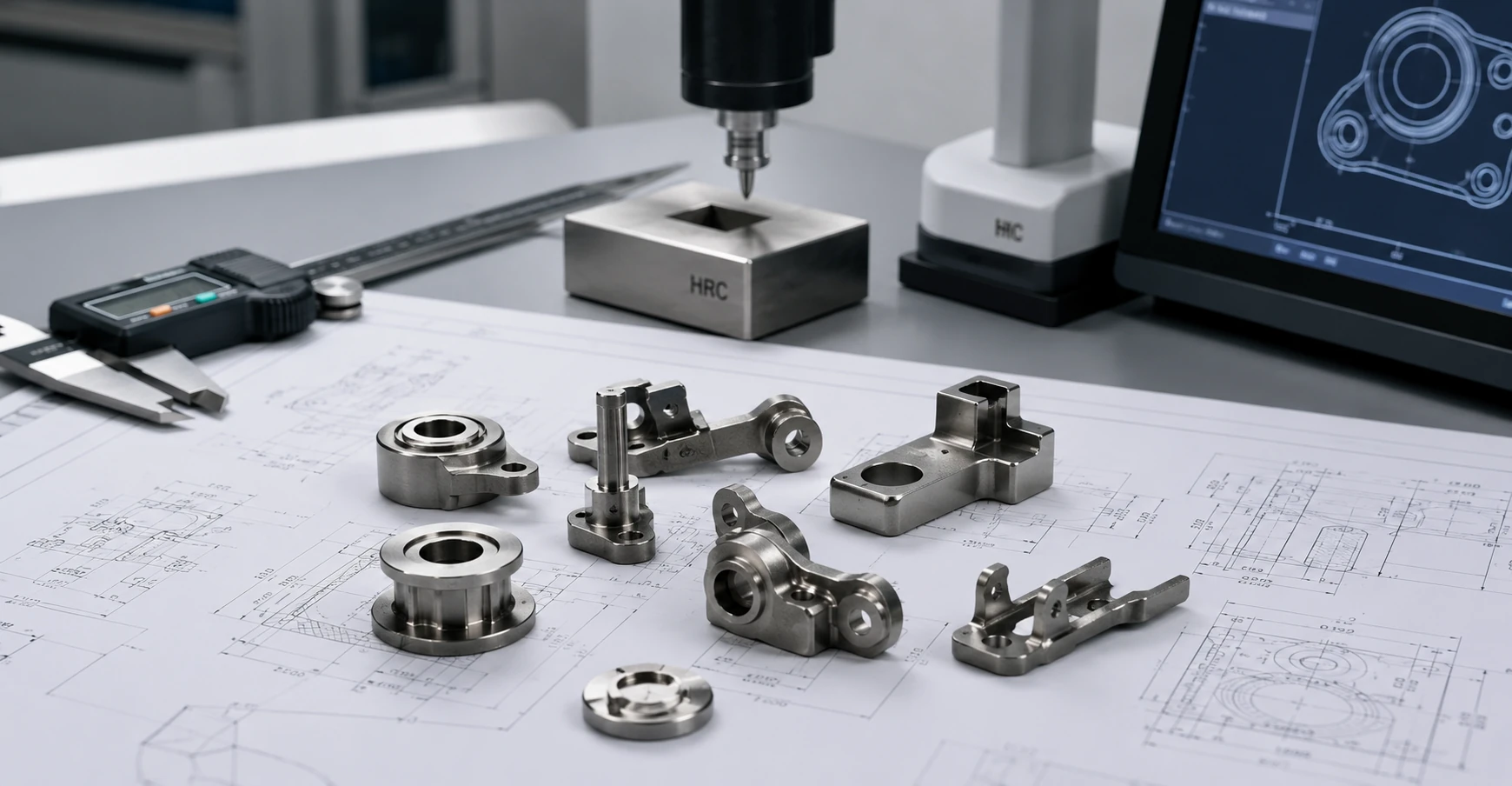
What Is MIM 440C Stainless Steel?
440C is a high-carbon martensitic stainless steel. In conventional stainless steel applications, it is known for high hardness potential after heat treatment and strong wear resistance. This background is why engineers often consider 440C when a part has bearing-like motion, valve contact, pump-related surfaces, bushings, sliding interfaces or other wear-loaded features.
In a MIM project, however, the material name alone is not enough. A MIM 440C component is produced from fine metal powder and binder-based feedstock, followed by injection molding, green part handling, debinding, sintering and possible heat treatment. This route is different from machining a wrought bar or using conventional PM press-and-sinter. Final part performance depends on powder/feedstock availability, sintered density, carbon control, heat treatment condition, part geometry, surface condition and inspection method.
For a broader view of stainless steel options in MIM, start from MIM 스테인리스강 재료. If the project is still at the early selection stage, the MIM material selection guide for early-stage grade comparison can help compare material families before reviewing 440C in detail.
MIM 440C Material Specification Should Be Confirmed by Project
440C material review should separate the general stainless steel grade name from the actual MIM production route. Chemistry, sintered density, heat treatment state, hardness target and surface condition should be confirmed with supplier-specific MIM material data and sample validation where the application is critical.
| 검토 항목 | 중요성 | How to Confirm |
|---|---|---|
| 재질 등급 | Prevents confusing wrought 440C data with MIM 440C part performance. | Review supplier MIM material data and customer drawing callout. |
| Chemistry | Influences hardness response, corrosion behavior and consistency. | Confirm customer specification, supplier material data or project-specific requirement. |
| 소결 밀도 | Affects mechanical consistency and part reliability. | Define inspection expectations when density is important to function. |
| Heat treatment state | Controls hardness but may also affect dimensions and edge condition. | Confirm heat treatment plan and validate samples for critical applications. |
| Hardness target | Connects material selection to wear performance expectation. | Define test method, target range and inspection location during RFQ. |
| 표면 요구 사항 | Affects sliding, sealing, wear and assembly behavior. | Mark functional surfaces and define finishing or surface roughness needs. |
A high-carbon martensitic stainless steel for hardness-driven parts
The main reason to consider MIM 440C is not general corrosion resistance. The reason is hardness and wear resistance. In practice, 440C is most useful when the part has repeated contact, sliding movement, hard engagement, localized wear or bearing-like function. If the part does not have a real hardness or wear requirement, another stainless steel may be easier to justify in cost, corrosion resistance, toughness or process stability.
Why application review matters more than material name
A common mistake is to ask whether 440C is “strong enough” without defining how the part works. The better question is: does this part geometry, loading condition, tolerance requirement, surface condition and operating environment justify 440C? If the part is exposed to aggressive corrosion, MIM 316L stainless steel for corrosion-driven parts may be a better starting point. If the project needs a strength and corrosion balance rather than a wear-first material, MIM 17-4 PH stainless steel for strength and corrosion balance should be reviewed. If the requirement is moderate-to-high hardness without the same wear severity, MIM 420 stainless steel for balanced hardenable applications may be more appropriate.
When to Choose MIM 440C Stainless Steel
MIM 440C is most suitable when a small precision part has a clear hardness or wear-resistance requirement and also benefits from the geometry freedom of metal injection molding. This usually means the part is too small, complex or volume-sensitive for efficient CNC machining, but still requires a hard stainless steel material.

| 프로젝트 요구사항 | Why 440C May Fit | 엔지니어링 검토 포인트 |
|---|---|---|
| High wear resistance | 440C is selected for hardness-driven applications. | Confirm the wear mechanism, contact area, mating material and lubrication condition. |
| Small contact edge | Useful for localized contact features. | Review edge radius, chipping risk, heat treatment response and surface finish. |
| Bearing-like motion | Conventional 440C is commonly associated with bearing and sliding wear applications. | Confirm load, speed, fit, hardness and the required finishing method for the specific MIM part. |
| Valve or pump component | Hard contact surfaces may be required. | Review corrosion media, sealing surface, surface roughness and secondary finishing needs. |
| Lock or latch feature | Repeated mechanical engagement can create localized wear. | Review impact load, edge geometry, mating part hardness and functional tolerance. |
| Complex small part geometry | MIM can reduce machining of small complex shapes. | Confirm annual volume, tooling feasibility, shrinkage compensation and inspection strategy. |
High-hardness contact features
MIM 440C can be relevant when the part includes contact points that repeatedly engage with another component. These areas may include locking teeth, sliding surfaces, miniature cam features, valve contact surfaces or small rotating interfaces. The material choice should be connected to the functional surface, not only to a general preference for “hard stainless steel.”
Small complex parts where machining becomes inefficient
MIM is strongest when material performance and geometric complexity appear together. If the component has undercuts, small holes, thin sections, side features or difficult-to-machine geometry, MIM 440C may be worth reviewing. If the part is large, simple and low-volume, CNC machining or another process may be more appropriate. For geometry review, see the MIM part design guide and the broader MIM 부품 category.
When 440C May Not Be the Right MIM Material
440C should not be selected only because it sounds stronger or more premium than other stainless steels. It can be the wrong material if the project’s real requirement is corrosion resistance, toughness, low cost, simple geometry or very low production volume. In production discussions, the most expensive material is often the material that solves the wrong problem.
| 위험 조건 | 중요성 | 더 나은 방향 |
|---|---|---|
| Strong corrosion exposure | 440C is not a direct substitute for 316L corrosion resistance. | Review 316L or another corrosion-resistant alloy. |
| High impact loading | High hardness may increase sensitivity to edge damage. | Review 17-4 PH, low alloy steel, geometry changes or load reduction. |
| Thin sharp edges | Hard contact features can chip if the geometry is too aggressive. | Add controlled radius, improve support or review the engagement design. |
| No real wear requirement | 440C may add unnecessary material, heat treatment and inspection complexity. | Review 304, 316L, 17-4 PH or 420 according to function. |
| Severe abrasive wear | 440C may not be enough for extreme wear environments, depending on geometry, mating material and operating condition. | Review tool steel, surface treatment or cemented carbide MIM materials where the geometry and application support that direction. |
| Very low quantity | MIM tooling cost may not be justified. | Review CNC, metal additive manufacturing or prototype-only routes first. |
Corrosion exposure is more important than hardness
440C has stainless characteristics, but it should not be positioned as the default answer for aggressive corrosion. If corrosion resistance is the dominant requirement, 316L or another corrosion-resistant alloy may be a better starting point. This is especially important for fluid contact, cleaning media, moisture, salt exposure or chemically active environments.
Impact toughness is more important than wear resistance
If the part experiences shock, impact, bending or repeated overload, hardness alone may not be the correct design priority. A high-hardness material can perform well in controlled contact wear, but it may be less forgiving at sharp edges, unsupported arms or impact-loaded sections. Before tooling, the loading mode should be reviewed together with the part’s edge geometry and mating component.
MIM 440C vs 420, 17-4 PH, 316L and 304 Stainless Steel
Material comparison is one of the most important decisions on a 440C project because users rarely evaluate this grade alone. They usually compare it with other stainless steel grades used in MIM. The goal of this section is not to replace a full material selection guide. It is to define the role of 440C clearly enough to avoid selecting it for the wrong reason.

| 재료 | Main MIM Selection Logic | Best-Fit Use Case | 주요 한계 |
|---|---|---|---|
| 440C | High hardness and wear-driven stainless option. | Contact wear, bearing-like surfaces, valve contact, latch parts and small wear-loaded mechanical components. | Corrosion exposure, toughness and heat-treatment dimensional change must be reviewed. |
| 420 | Balanced martensitic stainless option. | Moderate-to-high hardness with less extreme wear requirements. | Lower wear-focused positioning than 440C. |
| 17-4 PH | Strength and corrosion balance. | Structural precision parts, brackets, medical or industrial components requiring strength. | Not as wear-focused as 440C. |
| 316L | Corrosion resistance. | Fluid-contact, chemical exposure, medical and corrosion-driven applications. | Lower hardness compared with martensitic grades. |
| 304 | General stainless option. | General corrosion-resistant small components without demanding wear or hardness requirements. | Not suitable for high hardness or heavy wear requirements. |
440C vs 420 stainless steel
Both 420 and 440C belong to the martensitic stainless steel family, so they can overlap in search intent. The key distinction is that 440C should be positioned as the higher-hardness, wear-focused option, while 420 is better framed as a more balanced hardenable stainless grade for moderate-to-high hardness requirements. Use the 420 page for balanced hardenable stainless requirements; use this 440C page when the project is primarily wear- and hardness-driven.
440C vs 17-4 PH stainless steel
17-4 PH is often considered when the part needs a balance of mechanical strength and corrosion resistance. 440C is more wear-driven. If the component is a structural part with moderate corrosion exposure and no severe sliding wear, 17-4 PH may be the more practical engineering discussion.
440C vs 316L and 304 stainless steel
316L should be reviewed first when corrosion resistance is the primary requirement. 304 is a general stainless option for less demanding applications. If the part requires repeated sliding, contact wear or hard engagement, 304 and 316L are usually not the correct comparison point; 420, 440C, 17-4 PH or even a special alloy may be more relevant. For broader property review, see MIM 재료 특성.
MIM Process Factors That Affect 440C Performance
MIM 440C performance depends on both material selection and process control. This matters because MIM does not start from wrought bar stock. It starts from fine metal powder and binder feedstock. The part then passes through injection molding, green part handling, debinding, sintering, optional heat treatment and final inspection. The same material name can produce different project outcomes if feedstock, density, heat treatment, geometry or inspection criteria are different.

Powder and feedstock availability
Before assuming a 440C MIM project is feasible, the supplier must confirm whether a suitable powder and feedstock route is available. Powder chemistry, particle size, binder system and feedstock stability affect molding behavior, debinding response, sintering density and final material consistency. This is why a conventional 440C datasheet cannot be copied directly into a MIM production guarantee.
Material availability note: MIM material availability is supplier- and feedstock-route dependent. Confirm whether 440C or a suitable substitute alloy is available before finalizing the drawing callout, especially when the project has strict hardness, corrosion, inspection or production-volume requirements.
For the front end of the process route, see MIM 피드스톡 및 MIM 사출 성형.
Sintered density and carbon control
For high-hardness stainless materials, density and carbon control are important because they influence final mechanical behavior, heat treatment response and consistency. In production, these factors are affected by powder selection, binder removal, sintering atmosphere, temperature profile and post-sintering treatment. Carbon control, sintered density and heat treatment condition should be reviewed with supplier-specific data and sample validation when the application is function-critical.
For the thermal process route, review MIM 탈지 및 MIM 소결.
Heat treatment and dimensional change
440C is usually selected because heat treatment can support high hardness. But heat treatment can also affect dimensional stability, flatness, edge condition and surface requirements. If the drawing has critical bores, sliding surfaces, thin arms or tight assembly fits, these features should be reviewed after all major processing steps, not only after sintering. Heat treatment results should be confirmed through project-specific sample validation when hardness, size or functional surface requirements are critical. For tolerance planning, see MIM tolerance planning for heat-treatment-sensitive dimensions 및 MIM shrinkage compensation for tooling and dimensional planning.
Surface condition and post-processing
A hard material does not automatically produce a functional wear surface. If the part requires a sealing surface, sliding surface, bearing-like fit or controlled roughness, secondary finishing may be needed. This should be discussed before tooling because finishing allowance, datum strategy and inspection method can influence the part design.
Typical MIM 440C Part Applications
MIM 440C is most relevant when the part combines small size, complex geometry and hardness-driven performance. The following application categories are typical project directions, not guaranteed suitability statements. The final decision should be based on drawing review, load condition, operating environment and acceptance criteria.
| 애플리케이션 방향 | Why 440C May Be Considered | 검토해야 할 사항 |
|---|---|---|
| Precision wear components | Repeated contact or sliding wear. | Surface finish, hardness target, mating material and lubrication. |
| Valve and pump-related parts | Hard contact or sealing surfaces may be needed. | Media exposure, corrosion risk, sealing requirement and finishing method. |
| Locking and latch mechanisms | Repeated engagement creates localized wear. | Edge geometry, impact load, mating part and heat-treatment condition. |
| Bearing-like or sliding parts | Conventional 440C is commonly associated with bearing and wear applications. | MIM suitability still requires review of load, speed, lubrication, surface condition and dimensional stability. |
| Instrument and device components | Small precision movement may require wear resistance. | Functional surface, tolerance, assembly condition and inspection method. |
Depending on the industry and function, related part categories may include 산업용 장비 MIM 부품, 자동차 MIM 부품 and other small precision assemblies where wear resistance and compact geometry are both important.
DFM Review Points for MIM 440C Stainless Steel Parts
< parts and other small precision assemblies where wear resistance and compact geometry are both important.DFM Review Points for MIM 440C Stainless Steel Parts
DFM review is especially important for MIM 440C because the material is usually selected for functional performance, not only for appearance. A small geometry issue can become a hardness, edge durability, distortion or inspection issue after sintering and heat treatment.

| 검토 항목 | Why It Matters for 440C | 제공할 사항 |
|---|---|---|
| Critical wear surface | Determines hardness and finishing requirements. | Mark functional surfaces on the drawing. |
| Sharp edge or corner | May increase chipping or crack sensitivity after hardening. | Add radius requirements where acceptable. |
| Thin wall or small feature | Affects molding, debinding, sintering and handling. | Provide 3D CAD and wall thickness information. |
| Critical bore or fit | Heat treatment may affect final dimensions. | Define tolerance, datum and mating part. |
| 표면 마감 | Wear and sealing surfaces may need secondary finishing. | Define Ra, visual standard or functional surface requirement. |
| 부식 환경 | 440C may not suit aggressive media. | Provide fluid, temperature, pH or exposure condition where relevant. |
| 연간 물량 | MIM 금형이 상업적으로 합리적인지 결정합니다. | Provide prototype quantity and estimated production volume. |
Avoid unnecessary sharp edges on hard contact areas
A sharp edge may look functional in CAD, but it can create production and durability risk. In MIM 440C, sharp features should be reviewed for molding fill, debinding stability, sintering support, heat treatment response and handling damage. If a small radius does not affect function, it may improve manufacturability and durability. For deeper structure rules, use MIM 벽 두께 설계, MIM의 구멍, 슬롯 및 언더컷 및 MIM 게이트 설계 as dedicated design references.
Define wear surfaces and non-critical surfaces separately
Not every surface requires the same level of inspection or finishing. If the part has one or two functional contact surfaces, those surfaces should be marked clearly. This avoids unnecessary cost on non-critical surfaces and helps the supplier focus tooling, finishing and inspection resources on what actually affects performance.
Composite Field Scenario for Engineering Training: Chipping at a Hardened Engagement Edge
발생한 문제: A small stainless component was designed with a very sharp engagement edge. 440C was selected because the edge needed to resist repeated contact wear. During sample review, the edge showed localized chipping after functional testing.
발생 원인: The design focused on hardness but did not sufficiently review edge geometry. The contact zone was narrow, the engagement angle created high localized stress, and the edge had no radius allowance.
실제 시스템적 원인: The issue was not only material behavior. It was the combination of high hardness, sharp geometry, localized contact stress and insufficient DFM review before tooling.
수정 방법: The edge was modified with a controlled radius, the mating part contact angle was reviewed, and the drawing identified the functional wear surface more clearly.
재발 방지 방법: For MIM 440C parts, designers should mark critical engagement surfaces, avoid unnecessary knife-edge geometry, define acceptable radius conditions and review functional load before tooling.
Quality and Inspection Considerations for MIM 440C Parts
MIM 440C quality control should not focus only on hardness. Hardness is important, but it must be evaluated together with dimensions, density, surface condition, heat treatment state and functional surface requirements. This matters because a part can meet a hardness target and still fail if a critical bore, sealing surface, edge condition or mating fit is not controlled.

| 검사 영역 | 중요성 | Typical Review Direction |
|---|---|---|
| 경도 확인 | Confirms heat treatment response. | Define target range and test method during RFQ. |
| 중요 치수 | Confirms fit after sintering and heat treatment. | Identify functional dimensions and datum strategy. |
| 표면 상태 | Affects sliding, sealing and wear behavior. | Define surface finish or visual criteria. |
| Density / internal quality | Influences mechanical consistency. | Confirm inspection expectations with the supplier. |
| Material condition / microstructure review | Supports hardness response, wear consistency and high-risk application review. | Confirm when required by customer specification or functional risk. |
| Edge condition | Important for hard engagement features. | Review radius, burrs, chips and handling marks. |
| Material specification | Prevents mismatch between drawing and production. | Confirm applicable standard, customer spec or supplier material data. |
For supplier capability review, the user can also check 검사 및 테스트 역량 및 quality control capability. These links should support supplier evaluation, not replace project-specific acceptance criteria.
Composite Field Scenario for Engineering Training: Material Mismatch in a Fluid-Contact Wear Part
발생한 문제: A small valve-related part was initially specified as MIM 440C because the contact surface required wear resistance. Later review showed that the part would operate in a fluid environment with corrosion exposure.
발생 원인: The early material choice focused only on hardness and ignored the working environment. The design team treated 440C as a general stainless steel rather than a hardness-driven martensitic stainless option.
실제 시스템적 원인: The issue came from incomplete material selection input. The supplier received the geometry and target hardness but did not initially receive full information about media exposure, temperature and cleaning conditions.
수정 방법: The engineering review separated the requirements into wear resistance, corrosion exposure, sealing condition and dimensional fit. The team reviewed whether 440C, 316L, 17-4 PH or requirements into wear resistance, corrosion exposure, sealing condition and dimensional fit. The team reviewed whether 440C, 316L, 17-4 PH or another material direction was more appropriate.
재발 방지 방법: For MIM material selection, the RFQ should include operating media, temperature, corrosion exposure, hardness target, critical surfaces and estimated production volume. Material grade alone is not enough.
RFQ Information Needed for MIM 440C Stainless Steel Parts
A strong RFQ for MIM 440C should give the supplier enough information to evaluate material suitability, process risk, tolerance strategy and inspection requirements before tooling. A drawing without application context may be enough for rough sizing, but it is not enough for a reliable material and process review.

If the drawing only says “440C” but does not define hardness, surface condition, critical dimensions and operating environment, the material review remains incomplete.
| RFQ 입력 | 필요한 이유 |
|---|---|
| 공차가 포함된 2D 도면 | Defines critical dimensions, datum strategy and acceptance criteria. |
| 3D CAD 파일 | Allows geometry, wall thickness, tooling and shrinkage review. |
| Required material grade | Confirms whether 440C is fixed or alternatives are acceptable. |
| Hardness target | Helps evaluate heat treatment and inspection feasibility. |
| 기능성 마모 표면 | Shows where hardness and surface finish actually matter. |
| 부식 노출 | Prevents incorrect material selection. |
| 표면 마감 요구사항 | Determines whether secondary finishing is needed. |
| Critical fit or mating part | Helps review dimensional risk and tolerance stack-up. |
| 예상 연간 생산량 | MIM 금형이 상업적으로 합리적인지 결정합니다. |
| Inspection standard or customer specification | Clarifies acceptance requirements before tooling and production planning. |
Send Your MIM 440C Drawing for Engineering Review
Send your 2D drawing, 3D CAD file, material requirement, hardness target, critical dimensions, functional wear surfaces, surface finish requirement, operating environment and estimated annual volume. XTMIM can help evaluate whether MIM 440C is suitable for your part, whether 420, 17-4 PH, 316L or another material should be considered, and which DFM, heat treatment, tolerance or inspection risks should be clarified before tooling or production planning.
XTMIM 엔지니어링 팀에 문의표준 및 기술 참고 자료
MIM 440C projects should be reviewed with relevant MIM material standards and supplier-specific process data. Standards can guide material specification, but they do not replace project-specific DFM review, heat treatment review or inspection planning.
- ASTM B883 — 금속 사출 성형 재료의 표준 규격: relevant because it covers ferrous MIM materials made from metal powders and binders through injection molding, debinding and sintering, with or without heat treatment.
- ISO 22068:2012 — Sintered-metal injection-moulded materials — Specifications: relevant because it supports material specification for components manufactured by the MIM process.
- MIMA 재료 범위: relevant because it lists ferritic/martensitic stainless steel material families used in MIM discussions, including 440 series.
- Carpenter Technology 440C stainless steel data: useful as conventional 440C background for high-carbon chromium stainless steel and maximum-hardness applications. It should not be treated as a guaranteed MIM part performance statement.
Final project decisions should be confirmed through drawing-based engineering review, supplier material data, heat treatment condition, inspection method and customer acceptance requirements.
FAQ About MIM 440C Stainless Steel
Is 440C stainless steel suitable for MIM?
Yes. 440C stainless steel can be considered for MIM when the part needs high hardness, wear resistance and small complex geometry. Suitability still depends on powder/feedstock availability, geometry, sintering, heat treatment, tolerance requirements and inspection method.
What is MIM 440C stainless steel used for?
MIM 440C is typically reviewed for small wear-loaded stainless steel parts, including contact features, bearing-like components, valve or pump-related parts, latch mechanisms, sliding parts and precision mechanical engagement features.
Is MIM 440C harder than MIM 420 stainless steel?
440C is generally selected when higher hardness and stronger wear resistance are needed compared with 420. However, final hardness depends on heat treatment, part geometry, process control and inspection method.
What is the difference between MIM 440C and MIM 420 stainless steel?
MIM 440C should be reviewed when the project is primarily wear- and hardness-driven. MIM 420 is better positioned as a balanced hardenable martensitic stainless steel option for moderate-to-high hardness requirements where extreme wear resistance is not the main driver.
Is 440C stainless steel corrosion resistant?
440C has stainless properties, but it should not be treated as a substitute for 316L in corrosion-driven applications. If corrosion exposure is the main concern, 316L or another corrosion-resistant material should be reviewed first.
Can MIM 440C replace 316L stainless steel?
MIM 440C should not replace 316L when corrosion resistance is the main requirement. 440C is usually reviewed for hardness and wear resistance, while 316L is a better starting point for corrosion-driven applications.
Can MIM 440C be heat treated?
MIM 440C is commonly considered with heat treatment when high hardness is required. Heat treatment should be reviewed together with critical dimensions, surface finish, edge condition and functional requirements.
When should I choose 17-4 PH instead of 440C?
17-4 PH may be more suitable when the part needs a balance of strength and corrosion resistance rather than maximum hardness or wear resistance. It is often worth reviewing for structural precision parts.
What information is needed for a MIM 440C RFQ?
Provide 2D drawings, 3D CAD files, material requirements, hardness target, critical dimensions, functional wear surfaces, operating environment, surface finish, estimated annual volume and any inspection requirements.