Capacités de contrôle qualité
Le contrôle qualité MIM repose sur la discipline du processus, et non uniquement sur le tri final.
Le contrôle qualité MIM ne se limite pas à l'inspection finale. XTMIM examine la qualité depuis l'identification des matériaux entrants et du feedstock jusqu'à la stabilité du moulage par injection, la manipulation des pièces vertes, le déliantage, le retrait de frittage, l'inspection en cours de processus, l'identification des lots et la libération pour expédition. Pour les ingénieurs qualité fournisseurs, la question clé est de savoir si les risques du processus sont maîtrisés avant qu'ils ne deviennent des défauts de production récurrents.
Résumé technique : Ce que cette page vous aide à évaluer
La qualité MIM n'est pas créée à la table d'inspection finale. Elle est contrôlée tout au long du processus de production : identification du feedstock, stabilité du moulage par injection, placement des pièces vertes, déliantage, comportement du retrait de frittage, calibrage, inspection visuelle, emballage et libération pour expédition. Cette page s'adresse aux ingénieurs qualité, aux équipes d'achat et aux chefs de projet qui doivent évaluer si un fournisseur MIM peut maîtriser les risques de production, et pas seulement mesurer les pièces finies.
Utilisez cette page lorsque vous devez examiner la discipline du processus d'un fournisseur, la planification de l'inspection, la logique des enregistrements de lots et l'approche de contrôle qualité basée sur les plans. Pour les listes d'équipements et la capacité de mesure, consultez la section dédiée Page de support pour l'inspection dimensionnelle, matérielle et de surface. Pour une exécution complète du processus, consultez Capacité de processus pour le moulage par injection de métal (MIM), le déliantage et le frittage.
La qualité des pièces MIM est contrôlée par la discipline de production, et non uniquement par l'inspection finale. En moulage par injection de métal, la stabilité dimensionnelle, l'état de surface, la densité, la résistance et la cohérence des lots peuvent être affectés par le contrôle des matériaux entrants, le moulage par injection, la manipulation des pièces vertes, le déliantage, le frittage, le calibrage, la finition de surface, l'inspection, l'emballage et la libération pour expédition.
L'approche de contrôle qualité de XTMIM est axée sur le contrôle des processus et la planification d'inspection basée sur les plans. Pour les projets de production, la planification qualité peut inclure des contrôles à réception, des caractéristiques de processus définies, des contrôles de caractéristiques produit, des procédures opératoires normalisées (SOP), des enregistrements de contrôle des paramètres, des enregistrements d'inspection en cours de fabrication, l'identification des lots, l'inspection finale et les enregistrements d'expédition. Le plan d'inspection exact doit être confirmé en fonction du plan, des dimensions critiques, de la nuance de matériau, des exigences de surface, de l'environnement d'application et des critères d'acceptation du client.
Pour les clients évaluant un fournisseur MIM, la question importante n'est pas seulement de savoir si le fournisseur possède l'équipement d'inspection. La question plus pratique est de savoir si le fournisseur comprend où les risques qualité MIM sont créés et comment ces risques sont contrôlés avant que des défauts répétés n'entrent en production.
Le plan de contrôle qualité MIM dépend des exigences du plan et des CTQ
Un plan de contrôle qualité MIM ne doit pas être copié d'un projet à l'autre sans revue. La portée du contrôle doit être définie à partir du plan de la pièce, des dimensions CTQ, des surfaces fonctionnelles, de la nuance de matériau, des besoins de finition de surface, de l'environnement d'application, du volume de production attendu et des critères d'acceptation du client.
Cette approche dépendante du projet permet d'éviter deux problèmes courants : le contrôle insuffisant des caractéristiques critiques qui affectent la fonction et le contrôle excessif des dimensions qui n'affectent pas l'assemblage, l'apparence ou les performances de service.
Ce que signifie le contrôle qualité dans la production MIM
Le contrôle qualité en MIM diffère du contrôle qualité dans l'usinage simple ou l'estampage car la pièce finale est formée par une chaîne de changements dépendants du processus. Une pièce verte moulée n'est pas la pièce métallique finale. Elle doit passer par le déliantage et le frittage, où l'élimination du liant, le comportement au retrait, le support de pièce, la stabilité du four et la réponse du matériau peuvent affecter les dimensions et l'apparence finales.
Pour cette raison, le contrôle qualité MIM ne doit pas commencer à la fin de la production. Il doit commencer par l'examen des matériaux et des plans, puis se poursuivre à travers les paramètres du processus, la manipulation des pièces vertes, le contrôle du frittage, les opérations post-frittage et la libération de l'inspection.
En pratique, les risques courants en matière de qualité MIM peuvent inclure la dérive dimensionnelle, les fissures, la déformation, la distorsion de frittage, les plaintes concernant les marques de grille, les rayures, la variation de densité, la décoloration de surface ou les problèmes de lots mélangés. Certains de ces problèmes peuvent être trouvés lors de l'inspection finale, mais leurs causes profondes sont généralement créées plus tôt dans le processus.
Point d'ingénierie : XTMIM considère le contrôle qualité MIM comme une discipline de processus plutôt qu'une activité de tri final. L'inspection finale peut détecter les pièces non conformes, mais le contrôle des processus aide à réduire le risque de défauts répétés.
Points de contrôle qualité de l'inspection à réception à l'expédition
Pour les projets de production MIM, XTMIM peut élaborer une documentation de flux de processus avec des caractéristiques de processus définies, des contrôles de caractéristiques produit, des procédures opérationnelles standard (POS), des enregistrements de contrôle de paramètres, des enregistrements d'inspection en cours de fabrication et des enregistrements d'expédition. L'objectif de contrôle évolue à chaque étape de production car chaque étape crée des risques de qualité différents.

Note de figure : Le contrôle des matériaux et des lots est la première barrière qualité avant le moulage. Pour les projets MIM, le contrôle à réception doit se concentrer sur l'identification du matériau, le statut du lot, les conditions de stockage et les enregistrements d'inspection, sans exposer de données sensibles du fournisseur ou du client.
| Étape du processus | Risque qualité typique | Point de contrôle | Enregistrement ou preuve typique |
|---|---|---|---|
| Inspection à réception | Mélange de matériaux, mauvais lot, problème de stockage ou de condition du matériau | Identification, contrôle matériau, contrôle lot, condition de stockage | POS, rapport d'inspection à réception |
| Moulage | Pièce incomplète (short shot), bavure, variation de densité de la pièce brute (green part), dérive dimensionnelle, défaut visible | Pression de moulage, vitesse de moulage, température du moule, température du feedstock, aspect de la pièce brute (green part) | SOP de moulage, enregistrement de vérification des paramètres, enregistrement d'inspection de patrouille |
| Manipulation / Placement de la pièce brute | Déformation, rayures, contamination, désordre du plateau, dommages de manipulation | Méthode de placement, support de plateau, état visuel, pratique de manipulation | SOP de placement, SIP |
| Déliantage | Fissures, déliantage incomplet, déformation, faiblesse structurelle | Temps de déliantage, flux, température, intégrité de la pièce, apparence | SOP de déliantage, enregistrement de vérification des paramètres, enregistrement d'inspection de patrouille |
| Frittage | Variation de retrait, distorsion, problème de densité, changement dimensionnel, problème de surface | Température de frittage, temps de maintien, débit de gaz, apparence, dimensions contrôlées | SOP de frittage, enregistrement de vérification des paramètres, enregistrement d'inspection de patrouille |
| Traitement thermique, si nécessaire | Variation de dureté, déformation, incohérence des propriétés | Température, temps de cycle, quantité de lot, contrôle de dureté | SOP de traitement thermique, enregistrement de vérification des paramètres |
| Calibrage / Mise en forme | Sur-correction, instabilité dimensionnelle, dommage cosmétique | Pression de maintien, temps de maintien, aspect, contrôle des dimensions critiques | SOP de calibrage, enregistrement de vérification des paramètres, enregistrement d'inspection |
| Tonnelage / Polissage magnétique | Bavures, rayures de surface, assombrissement, incohérence de surface | Vitesse ou fréquence de rotation, temps, quantité, état de surface | SOP de tonnelage ou de polissage magnétique, enregistrement de surveillance |
| Inspection par jauge | Problème de jeu manqué ou dérive dimensionnelle de production | Calibre GO/NOGO, dimensions fonctionnelles, contrôle de production rapide | SOP de contrôle par calibre, enregistrement d'inspection |
| Contrôle visuel / par caméra | Défaut de surface manqué, problème de position de marquage, non-conformité cosmétique | Contrôle par caméra, vérification du marquage, critères visuels, examen des défauts de surface | SOP de contrôle par caméra, enregistrement d'inspection visuelle |
| Emballage / Expédition | Pièces mélangées, erreur de quantité, dommage de surface, problème d'emballage | Étiquette, quantité, méthode d'emballage, enregistrement d'expédition | SOP d'emballage, enregistrement d'entrepôt, enregistrement d'expédition |
Ce type de structure de contrôle aide à identifier les risques au stade du processus où ils sont les plus susceptibles de se produire. Il aide également les clients à vérifier si le fournisseur dispose d'une méthode de contrôle qualité pratique au lieu de se fier uniquement à l'inspection en fin de ligne.
Les paramètres spécifiques au projet tels que la température de frittage, les valeurs de retrait, les cibles de densité, les valeurs de dureté ou les taux de déliantage ne doivent pas être généralisés à toutes les pièces MIM. Ils doivent être contrôlés et revus en fonction de la nuance du matériau, de la géométrie de la pièce, de l'état de l'outillage, du dessin client et des exigences de production.

Note de figure : Le déliantage et le frittage sont des étapes critiques où la gestion par lots, l'organisation des plateaux, le contrôle des étapes du four et les enregistrements des processus affectent la stabilité dimensionnelle et l'intégrité structurelle. Les images de pages publiées doivent éviter les données clients lisibles, les courbes de four et les paramètres spécifiques au projet.
Comment les exigences du dessin deviennent un plan de contrôle qualité
Un plan de contrôle qualité utile commence par le dessin client. Sans exigences claires du dessin, l'inspection peut devenir incohérente, en particulier pour les pièces MIM petites et complexes avec des surfaces fonctionnelles, des zones cosmétiques et des caractéristiques sensibles au retrait.
Lors de la revue de projet, XTMIM peut évaluer les exigences du dessin telles que les dimensions critiques pour la qualité (CTQ), la stratégie de datum, les surfaces d'assemblage, les surfaces cosmétiques, les trous et fentes fonctionnels, la nuance du matériau, le traitement de surface, l'exigence de dureté, l'exigence de résistance à la corrosion et la protection de l'emballage. Ces exigences aident à définir les méthodes d'inspection et les points de contrôle appropriés.

Note de figure : Un plan qualité MIM utile doit provenir du dessin, et non d'habitudes d'inspection génériques. Les dimensions CTQ, les caractéristiques fonctionnelles, les surfaces cosmétiques, les exigences matérielles et les critères de libération doivent être définis avant la planification de la production.
| Exigence du dessin | Réponse du contrôle qualité |
|---|---|
| Dimension critique d'assemblage | Définir la dimension CTQ, la fréquence d'inspection et la méthode de mesure |
| Perçage, fente ou caractéristique de localisation fonctionnelle | Confirmer si la méthode d'inspection OMM, CMM, jauge ou autre est appropriée |
| Surface cosmétique de classe A | Définir la surface protégée, les critères visuels, les restrictions de marque de point d'injection et les exigences de manipulation |
| Surface fonctionnelle d'usure ou de contact | Examiner l'état de surface, la dureté, le processus de finition et les critères d'acceptation |
| Dimension à tolérance serrée | Vérifier si la dimension est appropriée telle que frittée, nécessite un calibrage ou un usinage secondaire |
| Exigence de rugosité de surface | Confirmer la méthode de mesure et la plage d'acceptation |
| Exigence de dureté ou de résistance | Confirmer la méthode de test et si l'exigence s'applique à chaque lot ou à une validation sélectionnée |
| Exigence de résistance à la corrosion | Confirmer le grade du matériau, le besoin de passivation ou de traitement de surface, et le besoin de brouillard salin si applicable |
| Exigence de traçabilité des lots | Définir l'identification du lot, les dossiers de fabrication et la documentation d'expédition |
| Norme spécifique au client | Confirmer les critères d'acceptation avant la libération de la production |
Une erreur courante consiste à considérer toutes les dimensions du dessin comme étant d'égale importance. En production, cela peut entraîner des coûts d'inspection inutiles tout en négligeant les dimensions qui affectent réellement l'assemblage, la fonction ou l'acceptation par le client. Une meilleure approche consiste à identifier les dimensions CTQ (Critical to Quality) et les surfaces protégées avant l'outillage et avant la libération de la production.
Pour les pièces MIM, la planification de la qualité basée sur le dessin est particulièrement importante car le retrait de frittage, l'emplacement de la porte, le support de frittage et la manipulation post-frittage peuvent tous influencer la qualité finale de la pièce. Lorsque ces exigences sont clarifiées tôt, le fournisseur peut aligner Revue du dessin et DFM avant outillage, Capacité d'outillage MIM et de compensation du retrait, le contrôle des processus et la planification de l'inspection avant que les problèmes de production ne deviennent des défauts répétés.
Inspection en cours de fabrication au lieu d'un simple tri final
L'inspection finale est nécessaire, mais elle n'est pas suffisante pour un contrôle qualité MIM fiable. L'inspection finale peut détecter les pièces non conformes, mais elle ne peut pas corriger les conditions de processus antérieures qui ont créé le problème.
Par exemple, si l'inspection finale révèle une dérive dimensionnelle, le problème peut être lié à la stabilité du moulage, au retrait de frittage, aux conditions de calibrage ou à la correction de l'outillage. Si des fissures sont trouvées après le frittage, la cause peut être liée à la géométrie, au stress de déliantage, à la manipulation de la pièce brute, ou à la stabilité du processus. Si des rayures ou des marques cosmétiques sont trouvées lors de l'inspection finale, elles peuvent avoir été causées pendant la manipulation de la pièce brute, le culbutage, l'inspection visuelle ou l'emballage.

Note de figure : La stabilité du moulage affecte la qualité de la pièce brute et la cohérence dimensionnelle ultérieure. Cette étape doit se concentrer sur la détection précoce des problèmes liés au moulage avant que les défauts ne se poursuivent en aval.

Note de figure : La manipulation des pièces brutes est un point de contrôle qualité, pas seulement une étape de transfert. Avant le frittage, les pièces moulées restent sensibles à la manipulation, au support, à l'espacement et à la contamination.
| Problème trouvé tardivement | Cause possible plus précoce | Meilleur point de contrôle |
|---|---|---|
| Dérive dimensionnelle | Variation de moulage, changement de retrait de frittage, calibrage instable | Vérification des paramètres de moulage, enregistrement du frittage, inspection du calibrage |
| Fissures | Contrainte de déliantage, transitions brusques, sensibilité géométrique | Revue DFM, contrôle du déliantage, vérification de l'aspect en cours de processus |
| Déformation au frittage | Géométrie non supportée, masse inégale, mauvais placement du plateau | Contrôle de placement de la pièce brute, revue du support de frittage |
| Rayures | Contact manutention, culbutage, emballage | Mode opératoire de manutention, critères visuels, revue de l'emballage |
| Réclamation concernant la marque de point d'injection | Point d'injection situé sur une surface cosmétique ou fonctionnelle | Revue de l'outillage et confirmation de la surface protégée |
| Problème de densité ou de résistance | Matériau, condition de frittage, géométrie de la pièce, traitement thermique | Revue du matériau, contrôle du frittage, tests spécifiques au projet |
| Lot mélangé ou mauvaise révision | Identification faible ou contrôle de révision insuffisant | Identification de lot, contrôle de révision de dessin, enregistrement d'expédition |
L'inspection en cours de fabrication aide à maîtriser ces risques plus tôt. Elle ne supprime pas le besoin d'une inspection finale, mais elle réduit la possibilité que le même problème se répète sur un lot entier.
Pour les responsables des achats et les ingénieurs qualité fournisseurs, c'est une différence importante. Un fournisseur avec uniquement une inspection finale peut encore expédier des pièces acceptables après un tri intensif. Un fournisseur avec un contrôle de processus plus solide est mieux positionné pour soutenir une production répétable, des actions correctives et la stabilité des projets à long terme.
Scénario de terrain composite pour la formation en ingénierie : Déformation de frittage découverte trop tard
Quel problème s'est produit : Une petite pièce MIM complexe a passé les premières vérifications d'apparence lors du moulage, mais après le frittage, une section mince a montré une planéité incohérente et a nécessité un tri.
Pourquoi cela s'est produit : Le véritable problème n'était pas seulement le cycle de frittage. La géométrie de la pièce présentait une distribution de masse inégale, et les pièces brutes ont été placées avec un support insuffisant dans une zone sensible au retrait.
Quelle était la véritable cause système : La revue du dessin, la méthode de placement sur plateau et les critères de manipulation en cours de fabrication n'étaient pas suffisamment liés avant la libération de la production. L'inspection finale a trouvé le problème, mais elle n'a pas abordé le point de contrôle en amont.
Comment cela a été corrigé : L'équipe a revu les caractéristiques protégées, ajusté le support de placement, clarifié les contrôles visuels et dimensionnels après le traitement au four, et mis à jour l'exigence d'enregistrement du processus pour cette famille de pièces.
Comment éviter la récurrence : Avant l'outillage ou la production d'essai, examinez ensemble les parois minces, les caractéristiques non supportées, les transitions de masse, la méthode de placement et les dimensions CTQ. Pour les géométries à haut risque, le support de frittage et le placement sur plateau doivent être considérés comme des décisions de contrôle qualité, et non comme de simples étapes de manipulation.
Enregistrements Qualité, Identification de Lot et Traçabilité de Production
Les enregistrements qualité sont importants car ils montrent comment un lot de production a été contrôlé, et pas seulement si un échantillon final a passé l'inspection. Selon le projet, la documentation de processus de XTMIM peut inclure les enregistrements d'inspection à réception, les enregistrements de contrôle des paramètres de moulage, les enregistrements de déliantage et de frittage, les enregistrements de calibrage, les enregistrements d'inspection de jauges, les enregistrements d'inspection CCD ou visuelle, les enregistrements d'emballage, les enregistrements d'entrepôt et les enregistrements d'expédition.
L'identification de lot peut également aider à réduire le risque de mélanges de matériaux, de mauvaises révisions, de lots mélangés ou d'historique d'expédition peu clair. Pour les projets de production avec des exigences de qualité plus élevées, les étiquettes de lot et les enregistrements de processus doivent être alignés sur les révisions de dessin du client, les exigences d'inspection et les conditions de libération d'expédition.

Note de figure : Les enregistrements qualité doivent supporter l'examen de la production sans exposer les données client, les paramètres spécifiques au projet, les taux de qualité erronés ou les valeurs d'inspection confidentielles.
La traçabilité qualité doit être discutée selon les exigences du projet. Certains projets peuvent seulement nécessiter des enregistrements de production et d'expédition standards. D'autres projets peuvent nécessiter une identification de lot plus détaillée, des rapports d'inspection, une vérification des matériaux, des enregistrements de traitement de surface ou une documentation spécifique au client.
Le flux de production et de gestion de XTMIM peut être supporté par Kingdee ERP pour la gestion des commandes, de la production ou des stocks, en fonction de la portée du projet. Cependant, la traçabilité qualité doit toujours être confirmée sur la base de l'exigence réelle du client plutôt que d'être présumée comme une condition universelle pour chaque pièce.
Comment les pièces MIM non conformes sont examinées avant leur libération
Lorsqu'une pièce MIM ne répond pas à une exigence définie, l'examen doit se concentrer à la fois sur le statut de la pièce et sur la cause du processus en amont. Le but n'est pas seulement de séparer les pièces non conformes, mais aussi d'empêcher que le même risque ne se poursuive dans le lot suivant, le chargement de four suivant ou la production suivante.
| Étape d'examen | Objectif qualité | Point de décision typique |
|---|---|---|
| Mettre en attente ou séparer les pièces suspectes | Empêcher la libération mixte avant que le statut ne soit confirmé | Étiquette de lot, statut d'inspection, quantité affectée |
| Confirmer la non-conformité | Éviter les rejets incorrects dus à des différences de méthode de mesure, de montage, de datum ou de jugement visuel | Méthode d'inspection, dimension CTQ, critère cosmétique, dessin client |
| Analyser la cause du processus | Identifier si le problème provient du moulage, de la manipulation, du déliantage, du frittage, du calibrage, de la finition, de l'inspection ou de l'emballage | Enregistrement des paramètres, enregistrement de surveillance, placement des plateaux, lot de four, itinéraire de manipulation |
| Définir la correction ou le confinement | Contrôler le lot actuel et réduire le risque de récurrence | Tri, retouche si applicable, ajustement du processus, inspection supplémentaire |
| Libérer ou rejeter selon les critères | Prendre la décision de libération basée sur le dessin convenu et les exigences d'acceptation | Résultat d'inspection final, exigence client, enregistrement de libération d'expédition |
La méthode exacte de gestion de la non-conformité doit dépendre du dessin, des critères d'inspection, du risque d'application et des exigences du client. XTMIM ne doit pas traiter chaque problème avec la même réponse : une rayure cosmétique, une déviation fonctionnelle d'un trou, un problème de déformation au frittage et un risque de lot mélangé nécessitent une logique d'examen différente.
Ressources d'inspection pour le contrôle qualité
Le contrôle qualité et les tests d'inspection sont liés, mais ils ne traitent pas du même sujet. Le contrôle qualité se concentre sur la discipline du processus, les enregistrements de production et la prévention. Capacité d'inspection et de test se concentre sur la mesure, la validation et la vérification rapportable.
La libération qualité de XTMIM peut être soutenue par des ressources internes de tests dimensionnels, mécaniques, de matériaux, de surface et de fiabilité. Selon le dessin et les exigences du projet, celles-ci peuvent inclure une inspection dimensionnelle pour les caractéristiques critiques, des contrôles de dureté et de propriétés mécaniques, un support d'analyse métallographique et de matériaux, des tests de rugosité de surface et liés à la corrosion, ainsi qu'une inspection visuelle ou par caméra pour les contrôles liés à l'apparence.

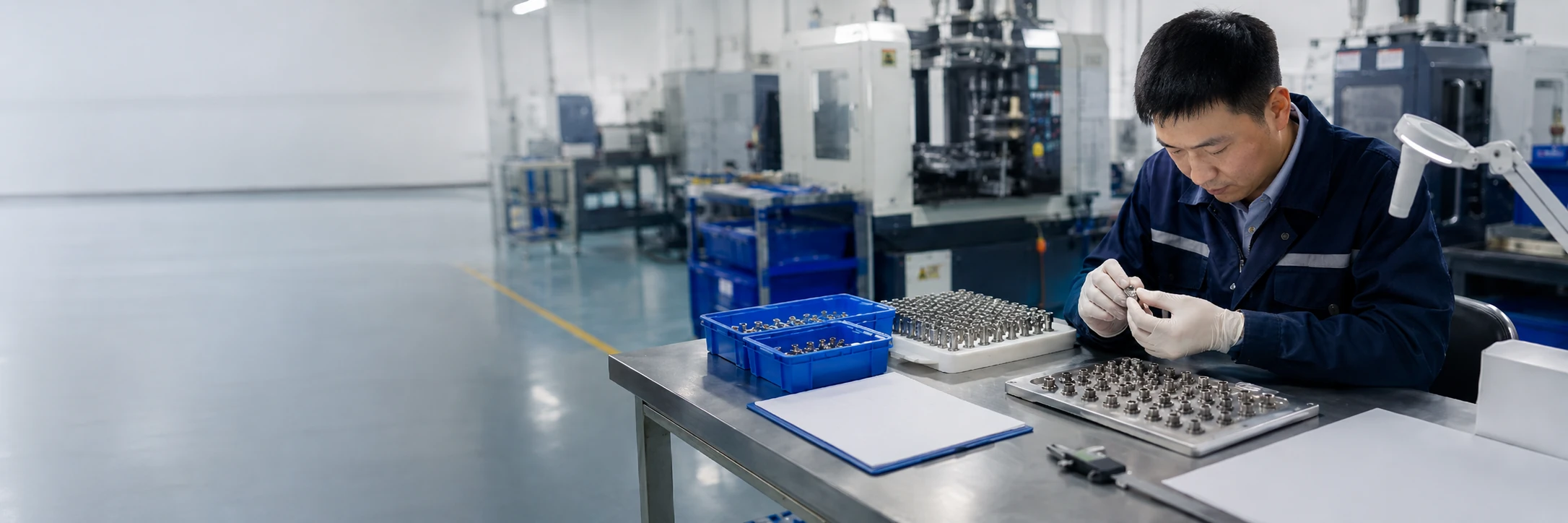
Note de figure : Les MMT, OMM, calibres, inspections visuelles et autres méthodes d'inspection doivent être sélectionnés en fonction des dimensions CTQ, de la géométrie de la pièce, des exigences de tolérance et des besoins de reporting.
La méthode d'inspection exacte doit être confirmée selon le dessin, les dimensions critiques, la nuance du matériau, l'exigence de surface, l'environnement d'application et les critères d'acceptation du client. Toutes les pièces MIM ne nécessitent pas le même plan d'inspection, et tous les tests ne sont pas nécessaires pour chaque projet.
Risques qualité MIM courants examinés avant la mise en production
Le contrôle qualité MIM est plus efficace lorsque les risques courants sont examinés avant la mise en production. De nombreux problèmes de qualité peuvent être réduits si le fournisseur examine la conception de la pièce, la stratégie d'outillage, le processus de fabrication et la méthode d'inspection avant la production de masse.
| Risque qualité MIM | Cause typique | Revue avant production |
|---|---|---|
| Dérive dimensionnelle | Variation de retrait, moulage instable, correction d'outillage non finalisée | Définir les dimensions CTQ, la méthode de mesure et les points de contrôle du processus |
| Distorsion au frittage | Épaisseur de paroi inégale, géométrie non supportée, mauvais positionnement, déséquilibre de masse | Vérifier le support de frittage, la méthode de positionnement et la géométrie à haut risque |
| Fissures | Contrainte de déliantage, transitions brusques, changements de paroi mince à épaisse, instabilité du processus | Vérifier les transitions de géométrie, la sensibilité au déliantage et les critères visuels |
| Problème de marque de point d'injection | Point d'injection situé sur une surface cosmétique ou fonctionnelle | Confirmer les surfaces protégées avant l'outillage |
| Rayures de surface | Manipulation de la pièce brute, culbutage, manipulation lors de l'inspection, contact d'emballage | Définir les exigences de manipulation, les critères cosmétiques et la protection de l'emballage |
| Problème de densité ou de résistance | Sélection du matériau, condition de frittage, taille de la pièce, condition de chargement | Confirmer le grade du matériau, la charge d'application et la méthode de validation |
| Variation de dureté | État du matériau, traitement thermique, frittage ou post-traitement | Définir l'exigence de dureté et la méthode de test le cas échéant |
| Problème de corrosion | Grade du matériau, passivation, état de surface, environnement d'application | Confirmer l'exigence de corrosion et si un brouillard salin ou une validation de surface est nécessaire |
| Lot mélangé ou mauvaise révision | Contrôle d'étiquette faible, révision de dessin peu claire, problème de gestion de lot | Confirmer l'identification du lot, le contrôle de révision et le dossier d'expédition |
| Coût de sur-inspection | Dimensions CTQ non définies ou critères d'acceptation flous | Définir les dimensions critiques et un périmètre d'inspection raisonnable avant la demande de devis (RFQ) |
Cette revue n'est pas seulement une activité qualité. C'est aussi une activité de contrôle des risques projet. Si les exigences qualité ne sont pas clarifiées qu'après l'outillage ou la production, le coût de correction peut être plus élevé et le calendrier du projet peut être affecté.
Pour les pièces sensibles à la conception, les clients peuvent également consulter des guides de conception pertinents tels que DFM pour le MIM, Tolérances MIM, et Matériaux MIM.
Contrôle Qualité pour Pièces MIM Cosmétiques, Fonctionnelles et Critiques
Différentes pièces MIM nécessitent des priorités de contrôle qualité différentes. Un composant de montre cosmétique, un support d'assemblage de précision, une pièce en acier inoxydable résistante à la corrosion et un composant magnétique doux ne doivent pas être contrôlés avec la même emphase.
| Type d'exigence de pièce | Focus du contrôle qualité |
|---|---|
| Pièces MIM cosmétiques | Surface visible, emplacement de la marque de carotte, rayures, décoloration, état du revêtement ou de la passivation, protection d'emballage |
| Pièces MIM fonctionnelles | Dimensions d'ajustement, trous, fentes, surfaces de contact, surfaces d'usure, dureté ou résistance si spécifié |
| Pièces d'assemblage de précision | Stratégie de mesure, dimensions CTQ, inspection par calibre, mesure CMM ou OMM, stabilité dimensionnelle |
| Pièces sensibles à la corrosion | Nuance de matériau, traitement de surface, état de passivation, exigence de brouillard salin si applicable |
| Pièces magnétiques douces | Sélection du matériau, condition de frittage, exigence de performance magnétique si spécifiée |
| Petites pièces en grand volume | Identification du lot, inspection en cours de fabrication, critères visuels, stratégie de calibre, cohérence de l'emballage |
C'est pourquoi les exigences de qualité doivent être définies avant la demande de devis (RFQ) ou avant la libération de l'outillage. Si le client ne fournit qu'un modèle 3D sans tolérances 2D, notes de surface ou exigences fonctionnelles, le fournisseur peut ne pas savoir quelles caractéristiques sont réellement critiques.
Pour les projets MIM, le contrôle qualité doit être adapté à la fonction de la pièce, à l'environnement d'application, au volume de production et aux critères d'acceptation.
Quand les clients doivent définir les exigences de qualité tôt
Les clients doivent définir les exigences de qualité le plus tôt possible lorsque la pièce a des exigences fonctionnelles, d'assemblage, cosmétiques ou de fiabilité. Une définition précoce aide le fournisseur à examiner la fabricabilité, le risque lié à l'outillage, la stabilité du processus et la méthode d'inspection avant la production.
Exigences à clarifier avant la RFQ
- Dimensions à tolérance serrée
- Trous, fentes, axes ou caractéristiques de localisation critiques pour l'assemblage
- Surfaces cosmétiques ou surfaces métalliques visibles
- Zones restreintes pour marque de point d'injection
- Surfaces fonctionnelles d'usure ou de contact
- Exigences de dureté, de résistance ou de traitement thermique
- Exigences de résistance à la corrosion ou de passivation
Exigences à confirmer avant production
- Exigences de rugosité de surface
- Exigences de test brouillard salin ou environnemental
- Exigences de performance magnétique
- Échantillons limites approuvés par le client
- Format requis du rapport d'inspection
- Exigences de traçabilité des lots ou de documentation d'expédition
- Exigences d'emballage spécial ou de protection de surface
D'un point de vue qualité fournisseur, des exigences peu claires créent souvent des litiges évitables. Une dimension non marquée comme critique peut néanmoins affecter l'assemblage. Une surface qui semble cosmétique pour le client peut ne pas être protégée lors de l'outillage ou de la manipulation, sauf si elle est clairement définie. Une exigence de résistance à la corrosion peut nécessiter la confirmation du matériau, du traitement de surface et de la méthode de test avant la production.
Une revue précoce des exigences qualité aide les deux parties à éviter les corrections tardives et soutient une transition plus stable de l'échantillonnage à la libération de la production. Pour une planification de lancement plus large, consultez le support de XTMIM pour les prototypes, les séries d'essais et la montée en production.
Quoi envoyer pour une revue qualité
Pour une revue qualité, les clients doivent fournir des informations techniques qui aident XTMIM à comprendre la fonction de la pièce, les exigences critiques, les risques de production et les attentes en matière d'inspection avant l'outillage, la production d'essai ou la libération de la production de masse.
- Dessin 2D avec tolérances
- Fichier CAO 3D si disponible
- Grade du matériau ou environnement d'application
- Dimensions critiques pour la qualité
- Surfaces fonctionnelles et interfaces d'assemblage
- Exigences de surface cosmétique (surface A) ou de surface protégée
- Zones restreintes pour la marque de point d'injection, le cas échéant
- Exigence de finition de surface ou de rugosité
- Exigence de dureté, résistance, densité, corrosion ou propriétés magnétiques, le cas échéant
- Volume annuel estimé
- Phase de production attendue, telle que prototype, production d'essai ou production de masse
- Problème de fabrication actuel si remplacement de l'usinage CNC, de la fonderie, de l'estampage ou du moulage sous pression
- Format requis du rapport d'inspection
- Critères d'acceptation spécifiques au client
Avec ces informations, XTMIM peut examiner si les exigences de qualité sont adaptées au MIM, quelles méthodes d'inspection peuvent être appropriées, quelles caractéristiques CTQ nécessitent un contrôle plus strict et quels risques doivent être confirmés avant la mise en production ou la libération de l'outillage.

Note de figure : La libération d'expédition ne concerne pas seulement l'emballage. Elle doit confirmer l'identification de la pièce, la quantité, l'état de l'emballage, les enregistrements d'inspection et les exigences de libération spécifiques au client, le cas échéant.

Note de figure : Le mouvement d'entrepôt n'est pas le cœur du contrôle qualité MIM, mais une manipulation contrôlée après inspection aide à réduire les erreurs d'expédition, les dommages d'emballage et un statut de libération peu clair.
FAQ
Comment XTMIM contrôle-t-il la qualité des pièces MIM pendant la production ?
XTMIM contrôle la qualité des pièces MIM via une gestion de la qualité basée sur les processus. Selon le projet, cela peut inclure le contrôle à réception, la vérification des paramètres de moulage, la gestion des pièces vertes, les enregistrements de déliantage et de frittage, le contrôle en cours de fabrication, les vérifications de calibrage, l'inspection CCD ou visuelle, les contrôles d'emballage et les enregistrements d'expédition. Le plan qualité exact doit être confirmé conformément au dessin et aux critères d'acceptation du client.
Le contrôle qualité MIM est-il identique à l'inspection finale ?
Non. L'inspection finale n'est qu'une partie du contrôle qualité MIM. Le contrôle qualité MIM doit également inclure des vérifications en amont du processus, telles que l'identification du lot et du feedstock, le contrôle des paramètres de moulage, la revue de la manipulation des pièces vertes, les enregistrements de déliantage et de frittage, l'inspection en cours de fabrication et la revue du statut de libération.
XTMIM peut-il créer un plan de contrôle qualité basé sur mon dessin ?
Oui. XTMIM peut examiner les dimensions critiques, les surfaces fonctionnelles, les surfaces esthétiques, les exigences de matériau, les exigences de surface et les conditions d'application pour aider à définir un plan de contrôle qualité et d'inspection adapté. La méthode d'inspection doit être confirmée en fonction de la géométrie de la pièce, des exigences de tolérance, de la nuance de matériau, de l'état de surface et des critères d'acceptation du client.
Quelles exigences de qualité dois-je fournir avant la demande de devis ?
Les clients doivent fournir un dessin 2D avec tolérances, un fichier CAO 3D si disponible, la nuance de matériau, les dimensions critiques, les surfaces fonctionnelles, les exigences de surface cosmétique, les exigences de finition de surface, les exigences de dureté ou de résistance à la corrosion si applicable, le volume annuel prévu, ainsi que tout critère d'inspection ou d'acceptation spécifique au client.
Comment les pièces MIM non conformes sont-elles examinées avant expédition ?
Les pièces MIM non conformes doivent être séparées ou mises en attente, vérifiées par rapport au plan et à la méthode d'inspection, analysées pour identifier la cause probable du processus, puis libérées ou rejetées selon les critères d'acceptation convenus. La réponse peut différer en cas de dérive dimensionnelle, de défauts visuels, de déformation au frittage, de risque de mélange de lots ou d'écart sur une caractéristique fonctionnelle.
Le contrôle qualité inclut-il l'inspection et les tests ?
Le contrôle qualité et l'inspection et les essais sont liés mais pas identiques. Le contrôle qualité se concentre sur le contrôle des processus, les enregistrements, les vérifications en cours de fabrication, l'identification des lots, la revue des non-conformités et la libération de la production. L'inspection et les essais se concentrent sur la mesure, la vérification, les équipements de test et la validation rapportable.
XTMIM peut-il assurer le contrôle qualité des pièces MIM cosmétiques ?
Oui, la qualité esthétique des pièces MIM peut être prise en charge par l'examen des surfaces protégées, la révision de l'emplacement des points d'injection, le contrôle de la manipulation, l'inspection visuelle, l'inspection par caméra CCD le cas échéant, les contrôles de traitement de surface et la protection de l'emballage. Les critères d'acceptation esthétique doivent être définis avant la production, de préférence avec des dessins, des notes de surface ou des échantillons limites approuvés.
Note de référence sur les normes et la documentation technique
Le contrôle qualité MIM doit être revu conformément aux dessins spécifiques au projet, aux exigences des matériaux, aux normes d'inspection et aux critères d'acceptation du client. Pour les références de matériaux et de processus, les clients peuvent considérer les ressources pertinentes du MIM et de la métallurgie des poudres telles que MPIF, La norme MPIF 35-MIM, ASTM B883, et ISO 9001:2015 le cas échéant.
Ces références doivent être utilisées comme base technique, et non comme un substitut à une revue d'ingénierie au niveau du projet. Le plan d'inspection final doit être confirmé conformément au dessin client, à la nuance du matériau, aux exigences fonctionnelles, aux exigences de surface, à l'environnement d'application et aux critères d'acceptation convenus. XTMIM ne doit publier des déclarations de certification ou des déclarations de conformité spécifiques au client qu'après confirmation de la portée du certificat, de sa validité et des exigences du projet.