Verwandte Fertigungsprozesse
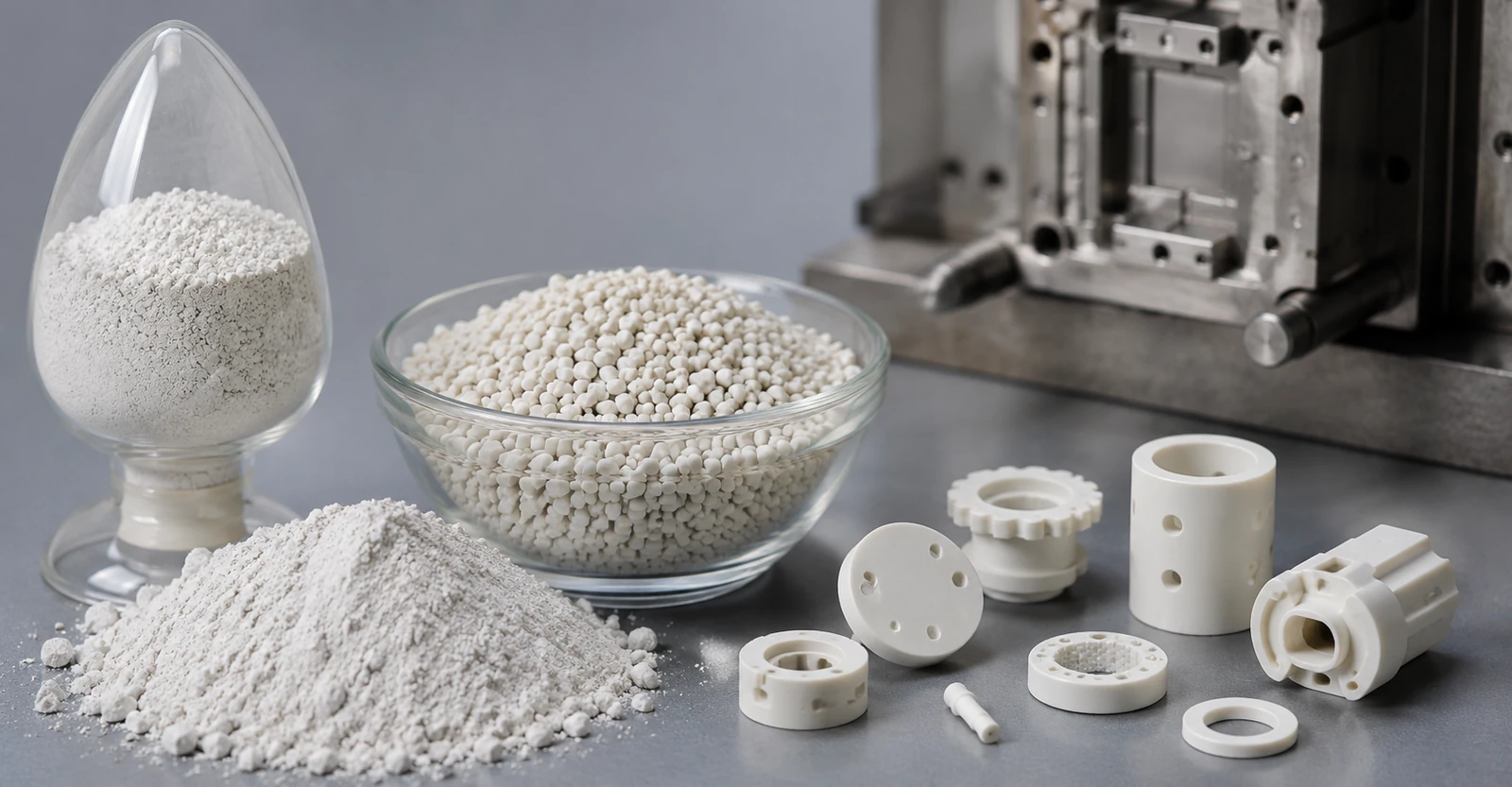
Der Keramikspritzguss (CIM) ist ein Spritzgussverfahren für kleine, komplexe technische Keramikbauteile aus Keramikpulver und Binder-Feedstock. Ähnlich wie beim Metallpulverspritzguss (MIM) werden Feedstock-Aufbereitung, Spritzgießen, Entbindern und Sintern eingesetzt, jedoch ist das endgültige Materialverhalten unterschiedlich. CIM ist eine Überlegung wert, wenn ein Bauteil Keramikeigenschaften wie elektrische Isolierung, Verschleißfestigkeit, Härte, chemische Stabilität oder Hochtemperaturleistung erfordert und die Geometrie durch Zerspanung nur kostspielig herstellbar wäre. Es sollte vermieden oder neu konstruiert werden, wenn die Komponente auf metallähnliche Zähigkeit, Biege-, Schlagfestigkeit, Presspassungs-Verformung oder Gewindebelastung angewiesen ist. Diese Seite hilft Ingenieuren bei der Entscheidung, ob eine Zeichnung in die CIM-Machbarkeitsprüfung aufgenommen werden soll. Metallpulverspritzguss, es verwendet Feedstock-Aufbereitung, Spritzgießen, Entbindern und Sintern, aber das endgültige Materialverhalten ist anders. CIM ist eine Überlegung wert, wenn ein Bauteil Keramikeigenschaften wie elektrische Isolierung, Verschleißfestigkeit, Härte, chemische Stabilität oder Hochtemperaturleistung erfordert und die Geometrie durch Zerspanung nur kostspielig herstellbar wäre. Es sollte vermieden oder neu konstruiert werden, wenn die Komponente auf metallähnliche Zähigkeit, Biege-, Schlagfestigkeit, Presspassungs-Verformung oder Gewindebelastung angewiesen ist. Diese Seite hilft Ingenieuren bei der Entscheidung, ob eine Zeichnung in die CIM-Machbarkeitsprüfung aufgenommen werden soll.
Kurze technische Zusammenfassung
CIM verwenden, wenn
Das Teil benötigt keramisches Verhalten und eine kleine, komplexe Geometrie, die sonst eine aufwendige Keramikbearbeitung erfordern würde.
Sorgfältig prüfen, wenn
Überprüfen Sie vor der Werkzeugerstellung dünne Lippen, scharfe Ecken, abrupte Wandänderungen, schlanke Merkmale, enge Toleranzen, Dichtflächen und Montagebelastungen.
Direkte Substitution vermeiden
Wandeln Sie ein MIM-Metallteil nicht allein durch Materialänderung in ein CIM-Teil um. Überprüfen Sie erneut Lastpfad, Sprödigkeit, Absplitterungen und Oberflächenanforderungen.
Ist Ihr Teil ein CIM-Kandidat?
Bevor ein Keramikbauteil in die Werkzeugprüfung eintritt, sollte das Projektteam bestätigen, ob die erforderliche Funktion, Geometrie, Toleranzstrategie, Nachbearbeitungsanforderungen, Prüfmethode und Jahresstückzahl für das Keramikspritzgießen geeignet sind. Diese Tabelle dient als erste Screening-Hilfe, nicht als endgültige Fertigungsentscheidung.
| Prüfpunkt | Gutes CIM-Kandidat-Signal | Risikosignal, das eine Neukonstruktion oder einen anderen Weg erfordert |
|---|---|---|
| Materialfunktion | Das Teil benötigt Isolierung, Härte, Verschleißfestigkeit, chemische Beständigkeit oder keramisches thermisches Verhalten. | Das Teil ist auf metallähnliche Zähigkeit, Duktilität, Biegefestigkeit, Gewindebelastung oder Schlagfestigkeit angewiesen. |
| Geometrie | Das Teil hat kleine komplexe Keramikmerkmale, Löcher, Hülsen, Gehäuse oder Formen, die nach dem Brennen aus keramischen Rohlingen kostspielig zu bearbeiten sind. | Das Design hat sehr lange ungestützte Merkmale, extrem dünne Lippen, scharfe Innencken oder Wandübergänge, die nicht modifiziert werden können. |
| Toleranzstrategie | Kritische Maße können klar definiert werden, während unkritische Maße innerhalb der praktischen Sintergenauigkeit bleiben können. | Nahezu jedes Maß ist extrem eng toleriert, aber es gibt keine Möglichkeit für Schleifen, Läppen, Polieren oder detaillierte Prüfplanung. |
| Nachbearbeitungsanforderung | Nur funktionelle Oberflächen, Dichtflächen oder ausgewählte Bezugspunkte benötigen eine Nachbearbeitung nach dem Sintern. | Eine großflächige Präzisionsnachbearbeitung ist auf vielen Oberflächen erforderlich, was Kosten und Bruchrisiko erhöht. |
| Montagebedingung | Das Bauteil wird unter kontrollierter Belastung mit begrenztem Stoß, Presspassungsspannung oder Schraubenüberlastung eingebaut. | Das Bauteil wird gepresst, angezogen, gestoßen oder gebogen, wobei eine metallähnliche Verformung angenommen wird. |
| Produktionsvolumen | Die jährliche Stückzahl kann Werkzeugbau, Feedstock-Validierung, Entbindern, Sintern, Nachbearbeitung und Prüfentwicklung rechtfertigen. | Das Projekt ist ein Einzelstück oder sehr geringe Stückzahl, sodass keramische Bearbeitung oder Prototyping für die frühe Validierung praktikabler ist. |
Was ist Keramikspritzguss?
Keramikspritzgießen ist ein Fertigungsverfahren, bei dem Keramikpulver mit einem Bindersystem zu einem spritzgießfähigen Feedstock compoundiert wird. Der Feedstock wird in eine Formkavität eingespritzt, anschließend wird der Binder entfernt und der Keramikkörper gesintert, um die endgültige Dichte, Oberflächenbeschaffenheit und Materialeigenschaften zu erreichen.
In der Praxis wird CIM in Betracht gezogen, wenn ein Keramikbauteil zu klein, zu komplex oder zu kostspielig ist, um es effizient mit konventionellen keramischen Formgebungsverfahren oder umfangreicher Nachbearbeitung durch Sintern herzustellen. Besonders relevant ist es für Teile mit dünnen Wänden, kleinen Löchern, gekrümmten Formen, miniaturisierten Merkmalen, wiederholtem Produktionsbedarf oder funktionalen Oberflächen, die aufwändig aus einem massiven Keramikrohling geschliffen werden müssten.
Keramikpulver und Binder
Keramikpulver wird mit einem Binder zu einem Feedstock mit kontrolliertem Fließverhalten compoundiert. Die Feedstock-Qualität beeinflusst das Formgeben, Entbindern, Sintern und die endgültige Oberflächenbeschaffenheit.
Formgeben und Handhabung des Grünlings
Der Feedstock wird in eine Präzisionsformkavität eingespritzt, um einen keramischen Grünling zu formen. Empfindliche Merkmale, dünne Abschnitte und Auswurfflächen müssen frühzeitig überprüft werden.
Entbindern und Sintern
Nach dem Formgeben bestimmen die Binderentfernung und das keramische Sintern die Dichte, das Schwindungsverhalten, die Maßhaltigkeit sowie das Risiko von Rissen oder Verzug.
CIM sollte nicht als “Spritzgießen von Kunststoff mit Keramikpulver” behandelt werden. Die geformte Gestalt ist nur der Zwischenzustand. Die endgültige Qualität hängt von den Pulvereigenschaften, der Binderentfernung, der Sintersteuerung, der Robustheit der Geometrie, der Auflagerstrategie, der Kantengestaltung, der Bearbeitungszugabe und den Prüfanforderungen ab.
Wie CIM mit MIM und Pulverspritzgießen zusammenhängt
CIM und MIM gehören beide zur übergeordneten Familie des Pulverspritzgießens. Pulverspritzgießen wird allgemein verwendet, um spritzgegossene Bauteile aus feinen Pulver-Feedstocks zu beschreiben, darunter Metallpulver für MIM und Keramikpulver für CIM. Daher gehört CIM auf einer MIM-fokussierten Website natürlich in eine verwandte Fertigungsprozessstruktur.
Für eine fokussierte Erklärung der Prozesshierarchie, siehe wie PIM mit MIM und CIM zusammenhängt bevor Sie mit dem detaillierten Material- und Routenvergleich fortfahren.
Die Prozessbeziehung ist real, aber die werkstoffliche Bewertung ist unterschiedlich. CIM und MIM mögen ähnliche Fertigungsstufen aufweisen, und einige Anlagenkonzepte sind ähnlich, aber ein gesintertes Keramikbauteil sollte nicht wie ein gesintertes Metallbauteil bewertet werden.
| Prozessschritt | MIM-Richtung | CIM-Richtung |
|---|---|---|
| Pulver-Feedstock | Feines Metallpulver + Binder | Keramikpulver + Binder |
| Spritzgießen | Gegrünter Metall-Rohling | Gegrünter Keramik-Rohling |
| Entbindern | Binderentfernung vor dem Metallsintern | Binderentfernung vor dem Keramiksintern |
| Sintern | Metallverdichtung und Sinterschwindung | Keramikverdichtung und Sinterschwindung |
| Endverhalten | Metallische Festigkeit, Zähigkeit, Leitfähigkeit, magnetisches Verhalten oder Ansprechen auf Wärmebehandlung | Keramische Härte, Isolierung, Verschleißfestigkeit, chemische Stabilität, Maßhaltigkeit und Sprödigkeit |
Ein häufiger Fehler ist die Annahme, dass CIM und MIM aufgrund eines ähnlichen Verfahrenswegs dieselben Konstruktionsregeln direkt übernehmen können. Das ist nicht sicher. Ein Metallteil verträgt Gewindeverschraubungen, Presspassungen, Schlagbelastung, Biegung und spanende Nachbearbeitung in der Regel leichter als ein Keramikteil. Ein Keramikteil kann Isolierung, Härte und Korrosionsbeständigkeit bieten, ist jedoch empfindlicher gegenüber Zugspannungen, scharfen Kanten, Schlagbelastung und Kantenausbrüchen.
Für den metallseitigen Fertigungsweg beginnen Sie mit dem MIM-Prozess Übersicht.
Grundlegender CIM-Prozessablauf
Eine nützliche Methode, um CIM zu verstehen, besteht darin, den Formgebungserfolg vom Erfolg des Endteils zu trennen. Ein geformtes Grünling kann akzeptabel aussehen, aber Risse, Verzug, Schwindungsschwankungen, Dichteprobleme oder Kantenschäden können später beim Entbindern, Sintern, Nachbearbeiten oder in der Montage auftreten. Aus Sicht der Projektprüfung ist die entscheidende Frage nicht nur, ob die Form gefüllt werden kann, sondern ob die gesamte Prozesskette ein stabiles Keramikteil hervorbringen kann.

| CIM-Schritt | Was passiert | Zu prüfendes technisches Risiko |
|---|---|---|
| Feedstock-Vorbereitung | Keramikpulver wird mit Binder gemischt, um ein formbares Material zu erzeugen. | Schlechte Mischung oder ungeeigneter Feedstock können Fließverhalten, Schwindung, Dichte und Oberflächenqualität beeinträchtigen. |
| Spritzgießen | Feedstock füllt die Formkavität und bildet einen Grünling. | Angusslage, Fließweg, dünne Wandabschnitte, Bindenähte, Lufteinschlüsse und fragile Geometrie können Defekte verursachen. |
| Entbindern | Das Bindersystem wird schrittweise aus dem Grünling entfernt. | Rissbildung, Verformung, innere Hohlräume und die empfindliche Handhabung des Braunlings sind Hauptprobleme. |
| Sintern | Keramikpartikel verdichten sich bei hoher Temperatur. | Schwindung, Verzug, Dichteschwankungen, Kornwachstum und Maßänderungen müssen kontrolliert werden. |
| Endbearbeitung / Prüfung | Schleifen, Polieren, Kantenbearbeitung oder Prüfung können angewendet werden. | Enge Toleranzen, scharfe Kanten, empfindliche Merkmale und funktionale Oberflächen erfordern möglicherweise eine besondere Überprüfung. |
Feedstock-Vorbereitung
CIM-Feedstock muss die Keramikpulverbeladung und das Fließverhalten des Binders ausbalancieren. Wenn der Feedstock den Formhohlraum nicht gleichmäßig füllt, können Formfehler auftreten. Wenn das Bindersystem oder die Pulververteilung nicht geeignet ist, kann das Teil während des Entbinderns oder Sinterns dennoch versagen.
Aus Sicht der Konstruktionsprüfung ist das Verhalten des Feedstocks relevant, wenn das Teil dünne Wände, lange Fließwege, Mikrostrukturen, kleine Löcher oder große Wanddickenübergänge aufweist.
Spritzgießen
Die Formgebungsphase bestimmt die Geometrie des Grünlings. Anschnittlage, Formfüllung, Entlüftung, Fließgleichgewicht, Bindenähte und Auswerfung müssen frühzeitig überprüft werden. Bei keramischen Feedstocks erfordern empfindliche Merkmale und scharfe Übergänge besondere Vorsicht, da Schäden durch spätere Prozessschritte fortgepflanzt werden können.
Ein häufiger Fehler ist, sich nur darauf zu konzentrieren, ob das Werkzeug füllen kann. In der Produktion ist die wichtigere Frage, ob das Grünteil ohne Rissbildung oder Abplatzungen entbindert, gesintert, gehandhabt, bearbeitet, geprüft und montiert werden kann.
Entbindern
Das Entbindern entfernt das Bindemittel aus dem Formteil. Diese Phase ist einer der empfindlichsten Punkte sowohl im MIM als auch im CIM. Wenn die Bindemittelentfernung zu aggressiv ist oder die Geometrie ungleichmäßige Entfernungswege schafft, kann das Teil reißen, sich verformen oder innere Defekte entwickeln.
Bei CIM-Teilen ist das Entbinderungsrisiko besonders wichtig, wenn die Komponente dicke und dünne Bereiche im selben Teil, geschlossene Hohlräume, sehr kleine Kanäle oder empfindliche, ungestützte Merkmale aufweist.
Sintern
Das Sintern entwickelt den endgültigen Keramikkörper. Während des Sinterns schrumpft und verdichtet sich das Teil. Die endgültige Dimensionsstabilität hängt vom Material, Pulversystem, der Geometrie, der Stützmethode, der Schwindungsgleichmäßigkeit und den Ofenbedingungen ab.
Das eigentliche Problem ist nicht nur der prozentuale Schwindungsgrad. Das Problem ist, ob die Schwindung über die Geometrie hinweg vorhersagbar ist. Lange, schlanke Merkmale, ebene Flächen, dünne Kanten, asymmetrische Abschnitte und ungestützte Spannweiten können empfindlicher auf Verzug und Verformung reagieren.
Gängige Materialien im CIM
Die CIM-Materialauswahl beginnt mit dem erforderlichen keramischen Verhalten, nicht nur mit der Teileform. Unterschiedliche technische Keramiken verhalten sich unterschiedlich in Bezug auf Härte, Zähigkeit, Isolierung, thermisches Verhalten, Verschleißfestigkeit, chemische Stabilität, Oberflächengüte und Verarbeitungsrisiko.
| Keramisches Material | Häufiger Verwendungsgrund | Technischer Hinweis |
|---|---|---|
| Aluminiumoxid | Elektrische Isolierung, Verschleißfestigkeit, chemische Stabilität, thermische Stabilität | Wird oft für isolierende und verschleißfeste Keramikkomponenten in Betracht gezogen, aber Kantenfestigkeit und Endbearbeitungsanforderungen müssen noch geprüft werden. |
| Zirkonoxid | Höhere Zähigkeit als viele traditionelle Keramiken, Verschleißfestigkeit, Präzisionskeramikteile | Wird oft geprüft, wenn die Bruchfestigkeit wichtiger ist als bei Standard-Aluminiumoxid, aber es ist immer noch ein keramisches Material und sollte nicht wie Metall behandelt werden. |
| Zirkonoxid-verstärktes Aluminiumoxid | Gleichgewicht zwischen Aluminiumoxid- und Zirkonoxid-Verhalten | Nützlich, wenn sowohl Verschleißverhalten als auch verbesserte Zähigkeit geprüft werden müssen. |
| Siliziumnitrid / andere technische Keramiken | Thermoschock, Verschleiß oder spezielle Hochleistungsanforderungen | Erfordert in der Regel eine anwendungsspezifische Prüfung von Material, Verarbeitung, Endbearbeitung und Inspektion. |
Dieser Abschnitt ist nur ein Materialüberblick. Die endgültige Materialwahl sollte anhand der funktionalen Anforderungen des Teils, der Anwendungsumgebung, der Belastungsbedingungen, der Isolationsanforderungen, des Verschleißmechanismus, der Temperatureinwirkung, der Gegenstücke und der Inspektionskriterien bestätigt werden. Wenn das Projekt Metalleigenschaften anstelle von keramischem Verhalten erfordert, prüfen Sie MIM-Werkstoffen bevor Sie einen Fertigungsweg wählen.
Welche Teiletypen eignen sich für CIM?
CIM ist dann am relevantesten, wenn ein Teil keramisches Materialverhalten erfordert und eine Geometrie aufweist, die vom Spritzguss profitiert. Es ist nicht automatisch der beste Weg für jedes keramische Bauteil. Bei vielen Projekten ist die bessere erste Frage, ob die erforderliche Funktion tatsächlich keramisch ist, und die zweite Frage, ob die Geometrie und die Jahresstückzahl den Werkzeugbau und die Prozessentwicklung rechtfertigen.

| Teiletyp | Warum CIM in Betracht gezogen werden kann | Wichtiger Prüfpunkt |
|---|---|---|
| Keramische Isolatoren | Elektrische Isolierung und kleine komplexe Geometrie | Bestätigung der dielektrischen Funktion, Wandstärke, Kantenzustand und Montagespannung. |
| Verschleißfeste Keramikbauteile | Härte und Abriebfestigkeit | Kontaktspannung, Stoßbelastung, Gegenlauffläche und Oberflächengüte prüfen. |
| Sensor- und Keramikhülsen | Isolation, Stabilität und Präzisionsgeometrie | Montagebelastung, Dichtfläche, kritische Maße und Ausbruchrisiko prüfen. |
| Medizinische und dentale Keramikkomponenten | Kleine komplexe Keramikmerkmale und materialspezifische Funktionsanforderungen | Ohne Prüfung der regulatorischen, material-, oberflächentechnischen und anwendungsspezifischen Anforderungen keine Eignung voraussetzen. |
| Pumpen- und Ventilkeramikteile | Verschleiß- und chemische Beständigkeit | Prüfen Sie den Fluidkontakt, die Dichtflächen, die Maßhaltigkeit und das Risiko von Kantenausbrüchen. |
| Teile für Analyse- oder optische Instrumente | Maßhaltigkeit, Isolierung und Präzisionsmerkmale | Prüfen Sie Planheit, Endbearbeitung, Sauberkeit und Prüfmethode. |
CIM kann für diese Teilekategorien in Betracht gezogen werden, wenn keramisches Werkstoffverhalten erforderlich ist. Die endgültige Machbarkeit hängt dennoch von Geometrie, Werkstoffgüte, Toleranzanforderungen, Oberflächenbeschaffenheit, Jahresstückzahl und Nachbearbeitungsbedarf ab.
Vorteile des Keramikspritzgießens
Geeignet für kleine komplexe Keramikbauteile
CIM kann kleine Keramikbauteile mit komplexen Formen herstellen, die aus vollständig gesinterten Keramikrohlingen nur schwer oder teuer zu bearbeiten wären. Dies ist relevant, wenn das Design kleine Merkmale, Kurven, Löcher, Nuten oder Formen umfasst, die übermäßiges Schleifen erfordern würden.
Reduzierte Bearbeitung bei schwieriger Keramikgeometrie
CIM ist ein Near-Net-Shape-Verfahren. Es kann den Umfang der erforderlichen Keramikbearbeitung reduzieren, eliminiert jedoch nicht automatisch die Endbearbeitung. Kritische Oberflächen, enge Toleranzen, Dichtflächen oder optische Oberflächen können weiterhin Schleifen, Läppen, Polieren oder andere Endbearbeitungsschritte erfordern.
Wiederholbare Produktion nach Werkzeugfreigabe
Sobald das Werkzeug, der Feedstock, das Entbindern, das Sintern und die Prüfroute validiert sind, kann CIM für geeignete Bauteilkonstruktionen eine wiederholbare Produktion unterstützen. Dieser Vorteil wird relevanter, wenn das jährliche Volumen den Werkzeugbau und die Prozessentwicklung rechtfertigt.
Zugang zu keramischem Materialverhalten
CIM ermöglicht es Ingenieuren, komplexe Formen unter Berücksichtigung keramischer Eigenschaften wie Isolierung, Härte, Verschleißfestigkeit, thermische Stabilität und chemische Beständigkeit zu konstruieren. Diese Vorteile müssen jedoch gegen Sprödigkeit, Bruchempfindlichkeit, Endbearbeitungskosten und Toleranzkontrolle abgewogen werden.
Einschränkungen und Konstruktionsrisiken von CIM
Hier muss CIM sorgfältig geprüft werden. Ein Bauteil mag geeignet erscheinen, weil es klein und komplex ist, aber das keramische Materialverhalten kann die Konstruktion riskant machen. Vor dem Werkzeugbau ist die Schlüsselfrage, ob die Geometrie das Entbindern, keramische Sintern, Handhabung, Endbearbeitung, Prüfung, Montage und Betriebsbelastung überstehen kann.

| Risiko | Warum das wichtig ist | Frühe Prüffrage |
|---|---|---|
| Keramiksprödigkeit | Keramikteile reagieren empfindlicher auf Zugspannung, Schlag- und Biegebeanspruchung als Metallteile. | Ist das Teil Stößen, Presspassungsmontage, Schraubenbelastung oder Biegebelastung ausgesetzt? |
| Rissbildung beim Entbindern oder Sintern | Binderentfernung und Schwindung können innere Spannungen erzeugen. | Werden Wanddickenübergänge, geschlossene Taschen und fragile Bereiche kontrolliert? |
| Verzug | Ungleichmäßige Schwindung und Auflagebedingungen können die endgültige Geometrie verändern. | Sind Ebenheit, Geradheit oder lange, schlanke Merkmale kritisch? |
| Kantenausbrüche | Scharfe Kanten und dünne Lippen können bei Handhabung oder Montage beschädigt werden. | Können Ecken verrundet, angefast oder von funktionalen Kontaktstellen entfernt werden? |
| Enge Toleranz | Keramische Schwindung und Endbearbeitungsgrenzen können Schleifen oder Läppen erfordern. | Welche Abmessungen sind wirklich kritisch und welche können im gesinterten Zustand verbleiben? |
| Montagespannung | Keramische Bauteile können sich bei der Montage nicht wie Metall verformen. | Wie wird das Bauteil montiert, geklemmt, gepresst, angezogen oder belastet? |
Technische Keramiken sind im Allgemeinen harte und spröde Werkstoffe mit geringer Toleranz gegenüber Fehlern unter Zugbelastung. Deshalb sind Design-Review, Bruchrisiko und Prüfplanung bei keramischen Bauteilen wichtig. Das Risiko besteht nicht nur darin, ob während der Produktion ein Riss entsteht, sondern auch, ob kleine Fehler, scharfe Kanten oder lokale Spannungen später während der Montage oder im Betrieb zu Ausfällen führen können.
Der MIM-DFM-Leitfaden kann Ingenieuren helfen, allgemeine Denkweisen bezüglich Feedstock-Formgebung, Schwindung, Toleranzen und Herstellbarkeit zu verstehen. Seine Grenzen und Abmessungen dürfen nicht direkt in CIM kopiert werden, da das Verhalten von Keramikmaterialien eine separate Prüfung erfordert.
Repräsentatives technisches Szenario: Rissbildung bei dünner Keramikhülse
Welches Problem ist aufgetreten: Ein kleines Keramikhülsendesign schien für das Spritzgießen geeignet, aber Versuchsteile zeigten Risse nach dem Sintern und gelegentliche Kantenausbrüche während der Handhabung.
Warum es passiert ist: Die Geometrie umfasste eine dünne Lippe, einen scharfen Übergang und ungleichmäßige Wandstärke. Das Grünling konnte gespritzt werden, aber die Entbinderungs- und Sinterphasen erzeugten Spannungen im Übergangsbereich.
Was die eigentliche Systemursache war: Das Versagen war nicht nur ein Spritzgießproblem. Es war eine Kombination aus Design-, Entbinderungs-, Sinter-, Stütz- und Handhabungsproblemen. Die Geometrie bot nicht genügend Robustheit für das Verhalten des Keramikmaterials.
Wie wurde es korrigiert: Der scharfe Übergang wurde durch einen kontrollierten Radius ersetzt, die dünne Lippe auf die minimal praktikable Dicke überprüft und die kritische Oberfläche nach Möglichkeit von der empfindlichsten Kante entfernt.
Wie kann ein erneutes Auftreten verhindert werden: Überprüfen Sie vor dem Werkzeugbau Wandübergänge, dünne Kanten, Handhabungsflächen, Sinterunterstützung und kritische Abmessungen. Beurteilen Sie die CIM-Eignung nicht nur nach der Formfüllung.
As-Sintered vs. Finished Features in CIM
CIM wird oft als Near-Net-Shape-Verfahren gewählt, aber Near-Net-Shape bedeutet nicht, dass jedes Merkmal ohne Nachbearbeitung für die Endmontage bereit ist. Kritische Keramikoberflächen sollten frühzeitig von unkritischen Oberflächen getrennt werden, damit Toleranz-, Nachbearbeitungs-, Prüf- und Kostenerwartungen realistisch bleiben.
| Merkmalstyp | Mögliche As-Sintered-Richtung | Wann Nachbearbeitung erforderlich sein kann |
|---|---|---|
| Allgemeines Außenprofil | Kann as-sintered bleiben, wenn das Maß nicht funktionskritisch ist. | Schleifen kann erforderlich sein, wenn das Außenprofil die Passung oder Bezugsfläche kontrolliert. |
| Dichtfläche | Erfordert in der Regel eine sorgfältige Prüfung, bevor der gesinterte Zustand akzeptiert wird. | Läppen, Polieren oder Schleifen kann erforderlich sein, wenn Dichtheit, Leckage oder Ebenheit kritisch sind. |
| Kleine Löcher oder Schlitze | Kann gegossen werden, wenn Geometrie, Schwindung und Prüfzugänglichkeit akzeptabel sind. | Die Nachbearbeitung kann schwierig oder kostspielig sein, wenn das Loch sehr klein, tief oder toleranzkritisch ist. |
| Kanten und dünne Lippen | Sollte auf praktische Radien oder Fasen zugeschnitten werden. | Kantenbearbeitung kann erforderlich sein, um Ausbrüche bei Handhabung oder Montage zu reduzieren. |
| Präzisionsbezugsfläche | Kann manchmal als Referenzfläche gegossen werden, wenn die Toleranzanforderungen moderat sind. | Schleifen oder prüfungsgesteuerte Endbearbeitung kann erforderlich sein, wenn sie die Toleranzkette definiert. |
| Kosmetische oder sichtbare Keramikoberfläche | Kann akzeptabel sein, wenn das Oberflächenaussehen nicht streng spezifiziert ist. | Polieren oder Oberflächenveredelung kann erforderlich sein, wenn Aussehen, Haptik, Reibung oder Sauberkeit wichtig sind. |
Für die RFQ-Prüfung markieren Sie, welche Oberflächen funktional, kosmetisch, dichtend, gleitend, bezugsrelevant oder unkritisch sind. Dies verhindert, dass das gesamte Keramikteil als vollständig präzisionsgeschliffene Komponente behandelt wird, wenn nur ausgewählte Merkmale enge Toleranzen erfordern.
CIM vs. MIM: Wann sollten Ingenieure beide vergleichen?
CIM und MIM sollten verglichen werden, wenn das Teil klein, komplex und für die Pulverspritzgussgeometrie geeignet ist, das erforderliche endgültige Materialverhalten jedoch noch ungewiss ist. Die praktische Auswahlfrage ist einfach: Benötigt das Teil metallisches oder keramisches Verhalten?
| Anforderung | Eher MIM | Eher CIM |
|---|---|---|
| Metallische Festigkeit und Zähigkeit | Ja | Normalerweise nein |
| Elektrische Isolierung | Normalerweise nein | Ja |
| Magnetische Funktion | Ja | Nein |
| Verschleißfestigkeit | Materialabhängig | Oft relevant |
| Hochbelastbare Baugruppe | Oft einfacher zu prüfen | Höheres Risiko |
| Chemisches oder thermisches keramisches Verhalten | Durch Metallwahl eingeschränkt | Oft relevant |
| Kleine komplexe Geometrie | Ja | Ja |
| Enge Toleranz nach dem Sintern | Kann eine Nachbearbeitung erfordern | Kann Schleifen oder Läppen erfordern |
Wenn das Design Gewinde, Presspassungsfestigkeit, Schlagfestigkeit, Biegebelastung, magnetische Funktion, Wärmebehandlungsreaktion oder metallähnliche Montageeigenschaften erfordert, ist MIM möglicherweise die bessere erste Wahl. Wenn das Teil Isolierung, keramische Härte, chemische Stabilität oder hohe Verschleißfestigkeit unter geeigneten Lastbedingungen erfordert, kann CIM eine Prüfung wert sein.
Dieser Abschnitt ist nur eine Auswahlübersicht. Für einen vollständigen, schrittweisen Vergleich von Materialverhalten, Kostentreibern, Toleranzstrategie, Geometrietauglichkeit und Projektentscheidungslogik verwenden Sie bitte den dedizierten MIM vs. CIM Leitfaden.
Wann CIM nicht der richtige Fertigungsweg ist
CIM ist nicht für jedes Keramikteil der beste Weg. Bei manchen Projekten sind konventionelles Keramikpressen, keramische Bearbeitung, CNC-Bearbeitung, MIM, PM, metallischer 3D-Druck oder ein anderer Weg praktikabler.
- Das Projektvolumen ist zu gering, um Werkzeugbau und Feedstock-/Prozessentwicklung zu rechtfertigen.
- Die Teilegeometrie ist einfach genug für Pressen oder spanende Bearbeitung.
- Das Teil erfordert Duktilität, Biegefestigkeit oder Schlagzähigkeit.
- Das Teil hat scharfe Innenkanten, sehr dünne Stege oder extreme Wanddickenunterschiede, die nicht modifiziert werden können.
- Die Konstruktion erfordert aggressives Presspassen, Gewindebelastung oder metallähnliche Verformung.
- Es sind enge Toleranzen erforderlich, aber es gibt kein Budget für Schleifen, Läppen, Polieren oder detaillierte Prüfung.
- Der Anwender möchte nur ein “keramikähnliches” Teil, benötigt aber kein tatsächliches keramisches Materialverhalten.
Repräsentatives technisches Szenario: Metallhalterung in Keramik umgewandelt ohne Lastprüfung
Welches Problem ist aufgetreten: Ein Projektteam erwog, eine kleine Metallhalterung in ein keramisches Spritzgussteil umzuwandeln, da das Teil eine bessere Isolierung in der Nähe einer elektronischen Baugruppe benötigte.
Warum es passiert ist: Das Team konzentrierte sich auf die Isolierung, überprüfte jedoch nicht die Montagespannung. Die ursprüngliche Metallhalterung wurde mit Schrauben befestigt und erfuhr während der Montage lokale Biegungen.
Was die eigentliche Systemursache war: Die ursprüngliche Geometrie basierte auf der Zähigkeit des Metalls und einer leichten elastischen Verformung. Ein keramischer Werkstoff konnte nicht direkt substituiert werden, ohne den Lastpfad neu zu gestalten.
Wie wurde es korrigiert: Das Design wurde hinsichtlich Auflageflächen, Schraubenbelastung, Spiel und lokaler Spannungskonzentration überprüft. Das Team trennte die Isolationsfunktion von der strukturellen Lastfunktion.
Wie kann ein erneutes Auftreten verhindert werden: Wandeln Sie Metallteile nicht nur durch Materialwechsel in Keramik um. Überprüfen Sie funktionale Last, Befestigungsmethode, Toleranzkette, Montagespannung und ob die Keramikkomponente neu gestaltet statt kopiert werden sollte.
Welche Informationen sollten für eine CIM- oder MIM-Prozessprüfung vorbereitet werden?
Eine CIM- oder MIM-Prüfung wird sinnvoll, wenn das Projektteam genügend Informationen hat, um Materialverhalten, Geometrie, Toleranz, Produktionsvolumen und Prozessrisiko zu bewerten. Eine allgemeine Teilebeschreibung reicht nicht aus; die Prüfung sollte Zeichnung, funktionale Anforderung, Fertigungsweg, Prüfplan und erwartete Produktionsmenge miteinander verbinden.

| Bereitzustellende Informationen | Warum das wichtig ist |
|---|---|
| 2D-Zeichnung | Zeigt Maße, Toleranzen, Bezüge, Kantenanforderungen und kritische Merkmale an. |
| 3D-CAD-Datei | Hilft bei der Bewertung von Geometrie, Wandübergängen, Fließweg, Werkzeugrichtung und empfindlichen Merkmalen. |
| Erwartetes Material oder funktionale Anforderung | Stellt klar, ob keramisches oder metallisches Verhalten erforderlich ist. |
| Kritische Maße | Identifiziert, welche Merkmale besondere Kontrolle, Nachbearbeitung oder Prüfplanung benötigen. |
| Oberflächengüteanforderung | Bestimmt, ob Schleifen, Polieren, Läppen oder Kantenbearbeitung erforderlich sein können. |
| Anforderung an elektrische Isolierung / Verschleiß / Korrosion / Temperatur | Hilft bei der Entscheidung, ob CIM, MIM oder ein anderer Weg geeigneter ist. |
| Montagemethode | Zeigt Risiken durch Presspassung, Schraubenbelastung, Schlag, Klemmen oder Ausrichtung auf. |
| Geschätzte Jahresstückzahl | Bestimmt, ob Werkzeugbau und Prozessentwicklung angemessen sind. |
| Aktuelles Fertigungsverfahren | Hilft beim Vergleich von CIM mit Keramikbearbeitung, MIM, PM, CNC oder anderen Verfahren. |
| Aktuelles Problem | Zeigt, ob das Problem Kosten, Geometrie, Festigkeit, Isolierung, Verschleiß, Toleranz oder Wiederholbarkeit betrifft. |
Eine gute frühzeitige Prüfung fragt nicht einfach: “Kann das gespritzt werden?” Sie fragt, ob das Teil spritzgegossen, entbindert, gesintert, fertigbearbeitet, geprüft, montiert und zuverlässig verwendet werden kann.
Frühe Prozesseignungsprüfung anfordern
Wenn Ihr Bauteil eine kleine, komplexe Geometrie erfordert und Sie CIM, MIM, keramische Bearbeitung, CNC-Bearbeitung, PM oder metallischen 3D-Druck vergleichen, senden Sie die Projektdetails für eine frühe Prozesseignungsprüfung.
Bitte stellen Sie 2D-Zeichnungen, 3D-CAD-Dateien, erwartetes Materialverhalten, kritische Abmessungen, Anforderungen an die Oberflächenbeschaffenheit, Umgebungsbedingungen der Anwendung, Montageverfahren, geschätztes Jahresvolumen und das aktuelle Fertigungsproblem bereit. XTMIM kann geeignete CIM-Projekte nach projektspezifischer Machbarkeitsprüfung übernehmen. Das Ingenieurteam wird bestätigen, ob das Teil besser für MIM, CIM oder einen anderen Weg geeignet ist, und frühzeitig Risiken in Bezug auf Materialauswahl, Schwindung, Toleranzen, Werkzeugbau, Nachbearbeitung und Inspektion vor der Werkzeuginvestition identifizieren.
FAQ: Keramikspritzguss
Ist CIM dasselbe wie MIM?
Nein, CIM und MIM folgen zwar einem ähnlichen Pulverspritzgussverfahren, sind aber nicht identisch. MIM verwendet Metallpulver und Binder zur Herstellung von Metallteilen. CIM verwendet Keramikpulver und Binder zur Herstellung von Keramikteilen. Der Formgebungsprozess mag ähnlich erscheinen, aber das Endmaterialverhalten, das Sinterverhalten, die Sprödigkeit, die Prüfanforderungen und die Anwendungsgrenzen unterscheiden sich.
Welche Werkstoffe werden üblicherweise im Keramikspritzguss verwendet?
Zu den gängigen CIM-Werkstoffrichtungen gehören Aluminiumoxid, Zirkonoxid, zirkonoxidverstärktes Aluminiumoxid, Siliciumnitrid und andere technische Keramiken. Der richtige Werkstoff hängt von den Anforderungen des Bauteils an Isolierung, Verschleiß, Temperatur, Chemikalienbeständigkeit, Bruchfestigkeit, Oberflächengüte und Maßhaltigkeit ab. Die endgültige Werkstoffauswahl sollte durch eine projektspezifische technische Prüfung bestätigt werden.
Welche Arten von Teilen eignen sich für CIM?
CIM wird häufig für kleine komplexe Keramikkomponenten wie Keramikisolatoren, Hülsen, Sensorteile, verschleißfeste Bauteile, Pumpen- und Ventilteile sowie technische Präzisionskeramikteile in Betracht gezogen. Die Eignung hängt von Geometrie, Wandstärke, Kantenbeschaffenheit, Toleranz, Oberflächengüte, Jahresstückzahl und Anwendungsbelastung ab.
Ist CIM für Kleinserienprojekte geeignet?
CIM ist in der Regel besser geeignet, wenn das Produktionsvolumen die Werkzeug- und Prozessentwicklung rechtfertigt. Bei sehr geringen Stückzahlen können keramische Bearbeitung, Prototyping oder andere Verfahren praktikabler sein. Die Entscheidung sollte Werkzeugkosten, Geometriekomplexität, Materialanforderungen, Endbearbeitungskosten und Produktionsmenge vergleichen.
Können MIM-Konstruktionsregeln für CIM-Teile angewendet werden?
Die MIM-Konstruktionslogik kann Ingenieuren helfen, über Feedstock-Formgebung, Entbindern, Sinterschwindung und Toleranzrisiken nachzudenken, aber MIM-Konstruktionsregeln sollten nicht direkt auf CIM übertragen werden. Keramikteile reagieren empfindlicher auf Sprödigkeit, Kantenausbrüche, Zugspannung und Montagebelastung. CIM erfordert eine eigene Material- und Geometrieprüfung.
Sollte ich für mein Bauteil CIM oder MIM wählen?
Wählen Sie MIM, wenn das Teil Metallfestigkeit, Zähigkeit, Leitfähigkeit, magnetisches Verhalten, Wärmebehandlungsreaktion oder metallähnliche Montageeigenschaften benötigt. Ziehen Sie CIM in Betracht, wenn das Teil keramische Isolierung, Härte, Verschleißfestigkeit, chemische Stabilität oder Hochtemperatur-Keramikverhalten erfordert. Falls die Wahl unklar ist, vergleichen Sie die Materialfunktion, bevor Sie die Kosten vergleichen.
Wie unterscheidet sich CIM von der keramischen Bearbeitung oder dem Pressen?
CIM ist ein spritzgießbasierter keramischer Formgebungsprozess für kleine komplexe Teile aus keramischem Pulver und Binder-Feedstock. Die keramische Bearbeitung entfernt Material von einem keramischen Rohling und kann für geringe Stückzahlen, einfache Geometrien oder Präzisionsnachbearbeitung praktischer sein. Das keramische Pressen kann für einfachere Formen effizient sein, ist jedoch weniger geeignet für komplexe Hinterschneidungen, kleine detaillierte Merkmale oder spritzgegossene Geometrien. Die richtige Route hängt von Geometrie, Materialverhalten, Toleranz, Nachbearbeitung, Produktionsvolumen und Kostenstruktur ab.
Was sollte ich vor der Anforderung einer CIM- oder MIM-Prüfung vorbereiten?
Erstellen Sie eine 2D-Zeichnung, eine 3D-CAD-Datei, Material- oder Funktionsanforderungen, kritische Maße, Oberflächengüteanforderungen, Montagemethode, geschätzte Jahresstückzahl, aktuelle Fertigungsmethode und das Hauptproblem, das Sie lösen möchten. So kann das Ingenieurteam die Prozesseignung vor dem Werkzeugbau oder der Produktionsplanung prüfen.
Normen und technische Referenzen
Die Prüfung von Keramikspritzgussprojekten sollte durch relevante technische Referenzen unterstützt werden, wenn Materialverhalten, mechanische Festigkeit, Bruchfestigkeit, Dichte, Porosität oder Prüfanforderungen kritisch sind. Diese Referenzen unterstützen Material- und Prozessdiskussionen, ersetzen jedoch nicht die projektspezifische Zeichnungsprüfung, die Prozessvalidierung des Lieferanten oder vereinbarte Abnahmekriterien.
Normen und Werkstoffprüfnachweise
- ASTM C1161-18(2023) — relevant, wenn die Biegefestigkeit von Hochleistungskeramiken für die Werkstoffentwicklung, Qualitätskontrolle, Charakterisierung oder Generierung von Auslegungsdaten bewertet werden muss.
- ASTM C1421-18(2025) — relevant, wenn die Bruchzähigkeit und der Widerstand gegen Sprödbruch von Hochleistungskeramiken das Anwendungsrisiko beeinflussen.
- ISO 18754:2020 — relevant, wenn Dichte und scheinbare Porosität von Feinkeramiken Teil der Qualitäts- oder Werkstoffverifizierung sind.
- ASM International: Strukturkeramiken — relevant für das Verständnis von Härte, Sprödigkeit, Isolationsverhalten und Fehlerempfindlichkeit von Keramiken unter Zugbelastung.
Prozesshintergrund-Referenzen
- PIM International: Hintergrund zum Pulverspritzguss — relevant, da es den Pulverspritzguss als Familie erklärt, die MIM und CIM umfasst.
- ARBURG Technischer Überblick zum Pulverspritzguss — relevant, da es den Pulverspritzguss für komplexe Metall- und Keramikbauteile beschreibt, einschließlich Feedstock, Spritzgießen, Entbindern und Sintern.