
金型製作前のMIM設計判断がコストに与える影響
MIMのコスト最適化設計は、金型製作前のレビューであり、部品機能の低下や生産リスクを生じさせることなく、回避可能なコスト要因を除去します。このレビューでは、形状、肉厚、型のアクション、ゲートとパーティングラインの制約、公差戦略、焼結サポート、後加工、検査負荷、および予想される生産量が、金型コストと単価にどのように影響するかを重点的に検討します。スライド機構、後加工、特殊検査、または困難な焼結サポートが必要な場合、小さなフィーチャーでも高価になることがあります。逆に、機械加工や組立を置き換えることができる有用な複雑さは維持されるべきです。目的は、最低の見積もりや最小仕様ではなく、金型鋼が切削される前に、重要な寸法、機能面、組立インターフェース、材料性能、および生産安定性を保護する、コスト効率の高いMIM設計です。.
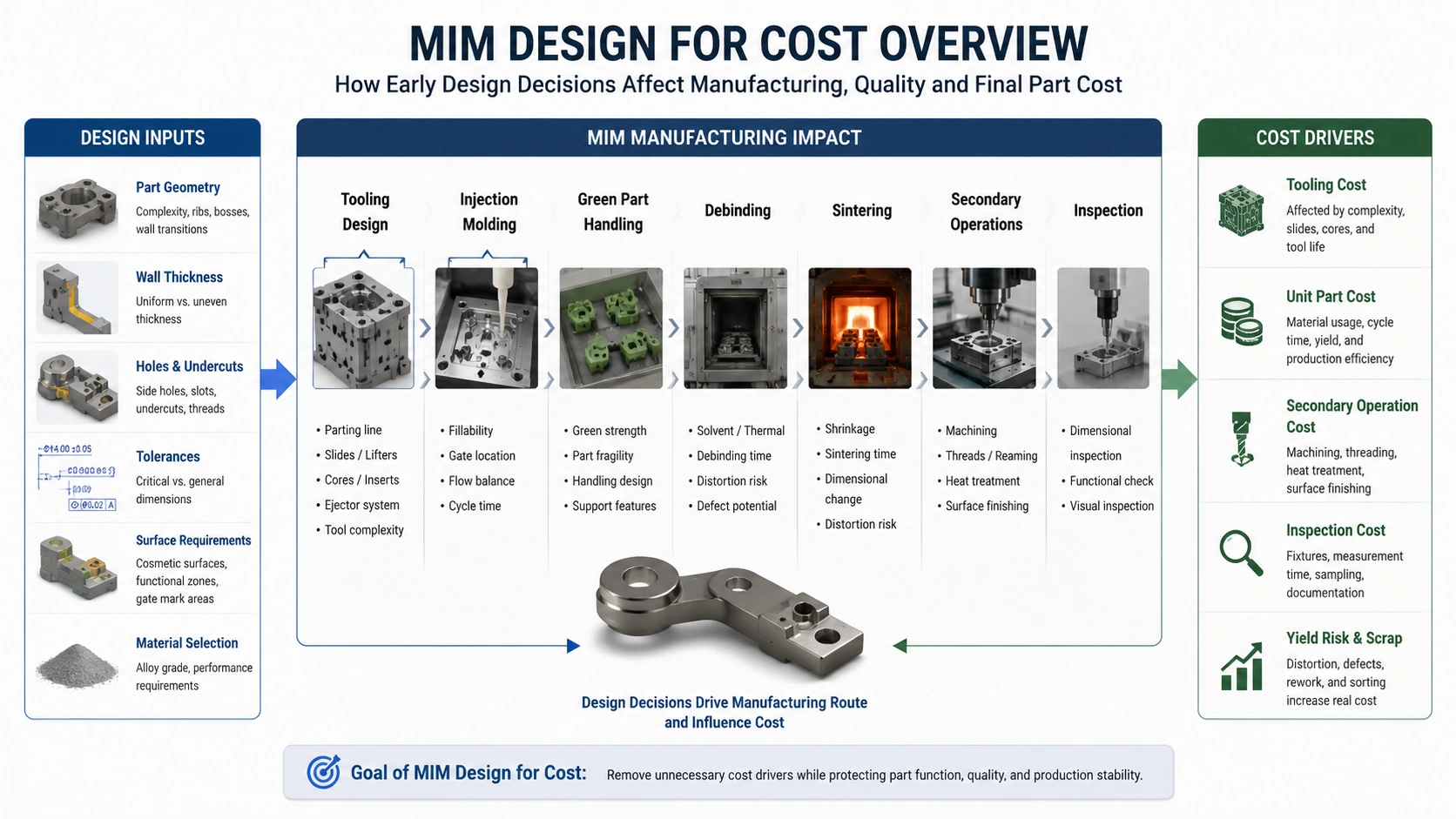
MIMにおけるコストを考慮した設計(Design for Cost)とは
コスト設計は、より低い見積もりを求めることとは異なります
よくある間違いは、MIMのコスト削減を購買交渉として扱うことです。エンジニアリングの観点からは、見積もりが確定する前に、より大きな機会が見つかることがほとんどです。図面にすでに不必要な厳しい公差、回避可能な金型アクション、定義されていない目に見える表面領域、サポートが難しいスパン、焼結後に機械加工が必要な機能が含まれている場合、サプライヤーは生産リスクを増大させることなくコストを削減できる余地が限られます。.
MIMにおけるコスト設計は、部品形状、機能要件、重要寸法、材料ニーズ、表面要件、および予想される生産量の構造的なレビューから始めるべきです。このページは、 MIM設計ガイド 金型製作前に設計上の決定がコストにどのように影響するかを扱っています。より広範なプロジェクトレベルのコストの内訳については、 金属射出成形コストガイド.
MIMでは、コストは金型製作開始前に確定することが多い
MIMは、微細な金属粉末とバインダーを混合してフィードストックを作成し、射出成形、グリーン部品の取り扱い、脱脂、焼結収縮、最終検査を行います。収縮補償を考慮して金型を設計する必要があり、焼結後の部品に二次加工が必要な場合もあるため、最初の量産部品が製造される前に、多くのコスト決定がプロジェクトにロックインされます。.
例えば、金型開き方向に対して垂直な側面機能がある場合、金型にはスライド機構やコア機構が必要になることがあります。目に見える面が明確に定義されていない場合、金型設計者は多くの領域にわたるゲートマーク、パーティングライン、エジェクターピンマークを避ける必要があるかもしれません。すべての寸法が重要とマークされている場合、検査の負担が増加し、サプライヤーは、そうでなければ必要とされない機械加工、サイジング、または特殊な検査治具を見積もる必要があるかもしれません。.
適切な目標は、最小仕様ではなく、コスト効率の高い製造性です
コスト効率の高いMIM設計とは、すべての複雑な機能を削除することではありません。MIMは、そうでなければCNC加工、組み立て、溶接、または複数の成形工程が必要となる、小さく複雑で高密度の金属部品を形成できるため、しばしば選択されます。複雑に見える機能でも、二次加工を排除したり、組み立て部品を削減したりできる場合は、経済的に正当化される可能性があります。.
コストを削減する上で重要なのは、必要な機能を損なうことなく、不要なコストを排除することです。適切なコスト削減設計レビューでは、荷重支持部、精密な接触面、位置決め機能、ねじ込みインターフェース、摩耗面、および組み立てに重要な寸法を保護します。また、機能的な意図を変更することなく、形状、公差、表面仕上げ、または検査要件を簡略化できる非重要領域も特定します。.
MIM部品のコストを通常増加させる設計上の選択肢は?
厚肉部および不均一な肉厚遷移
厚肉部は、いくつかの点でコストを増加させる可能性があります。材料の使用量が増え、脱脂および焼結の制御に時間がかかる場合があり、収縮のばらつきや変形の风险を高める可能性があります。問題は金属粉末の量だけではありません。真のコストリスクは、バインダー除去中、高温焼結中、および最終的な寸法管理中のプロセス不安定性にあります。.
MIM部品では、フィードストックがキャビティを充填し、バインダーが除去され、部品が焼結中に制御された方法で収縮する必要があります。ある領域が別の領域よりもはるかに厚い場合、プロセスウィンドウはより困難になります。厚肉部には、均一性を改善するためにコアリング、肉厚削減、または形状変更が必要になる場合もあります。より詳細な形状ルールについては、以下を参照してください。 MIM肉厚設計.
側部穴、スロット、および逆引き出し機能
側部穴、スロット、内部プロファイル、および逆引き出し機能は、必ずしも悪いわけではありません。これらは、設計者がMIMを検討する最初の理由となることがよくあります。ただし、スライド、コアピン、リフター、インサート、または特別なパーティングライン配置が必要な場合、金型コストが増加する可能性があります。.
設計レビューの観点からは、最初の質問は、機能の方向が金型開き方向と一致できるかどうかであるべきです。そうでない場合は、コストへの影響が機能によって正当化される必要があります。CNCドリル加工や組み立てを置き換えるサイドアクションは価値があるかもしれません。マイナーな非機能的な詳細のためだけに追加されたサイドアクションはレビューされるべきです。機能レベルのガイダンスについては、以下を参照してください。 MIM設計における穴、スロット、および逆引き出し機能.
ゲート、パーティングライン、またはエジェクターレイアウトを制限する目に見える表面
定義されていない目に見える表面要件は、MIMのコストを静かに増加させる可能性があります。サプライヤーがどの面が目に見える面、機能面、または顧客に面する面であるかを知らない場合、金型設計者は多くの領域にわたるゲート、エジェクター、およびパーティングラインのマークを回避する必要があるかもしれません。これにより、ゲート位置の効率が悪くなり、金型の複雑さが増したり、マークが目立たないがより機能的な領域に押し込まれたりする可能性があります。.
より良いアプローチは、目に見える表面領域を明確に定義することです。図面または3Dモデルには、目に見える面、接触面、隠れた面、許容されるゲートマーク領域、許容されるパーティングライン領域、およびエジェクター接触が許可される面を特定する必要があります。ゲート位置が主要な懸念事項である場合は、以下を参照してください。 MIMゲート設計.
非重要寸法への厳密な公差適用
厳密な公差は、MIMにおける最も一般的な隠れたコスト要因の一つです。アセンブリ、位置合わせ、動作、または接触性能に重要な寸法があります。これらは明確に管理されるべきです。しかし、すべての寸法に厳密な公差が適用されると、追加の検査、高いスクラップ管理、機械加工代、サイジング、または二次修正が必要になる場合があります。.
コスト効率の高い図面は、機能重要寸法と一般寸法を分離します。これにより、サプライヤーはプロセス制御と検査を、性能に真に影響を与える寸法に集中させることができます。公差戦略とプロセス能力の境界については、こちらを参照してください。 MIM公差.
ねじ、精密ボア、精密接触面
一部のフィーチャーは、最初から後加工フィーチャーとして設計する方が適しています。内部ねじ、精密ボア、軸受座、接触面、および非常にタイトな嵌合は、焼結済みフィーチャーとして経済的ではない場合があります。サンプリング後に機械加工の必要性が判明した場合、プロジェクトは再設計、追加治具、リードタイムの増加、およびコスト変更に直面する可能性があります。.
低年間生産量と複雑な金型構造
MIMは、部品が小型で複雑であり、かつ相当量の生産が見込まれる場合に、より魅力的な選択肢となります。年間生産量が低すぎる場合、複雑な金型は経済的に正当化されない可能性があります。その場合、初期開発段階や少量生産には、CNC加工、金属積層造形、鋳造、あるいは他の製造方法がより適切かもしれません。金型償却、生産量、二次加工、および単価ロジックのプロジェクトレベルでの検討には、 金属射出成形コストガイド RFQ(見積依頼)を出す前に.
MIM設計コスト要因マトリクス
以下のマトリックスは、初期図面レビュー中に使用できます。サプライヤー固有のDFMレビューに取って代わるものではありませんが、エンジニアがRFQの前に、どの設計上の決定が金型コスト、単価、二次加工、検査負荷、または歩留まりリスクに影響を与える可能性が高いかを特定するのに役立ちます。.
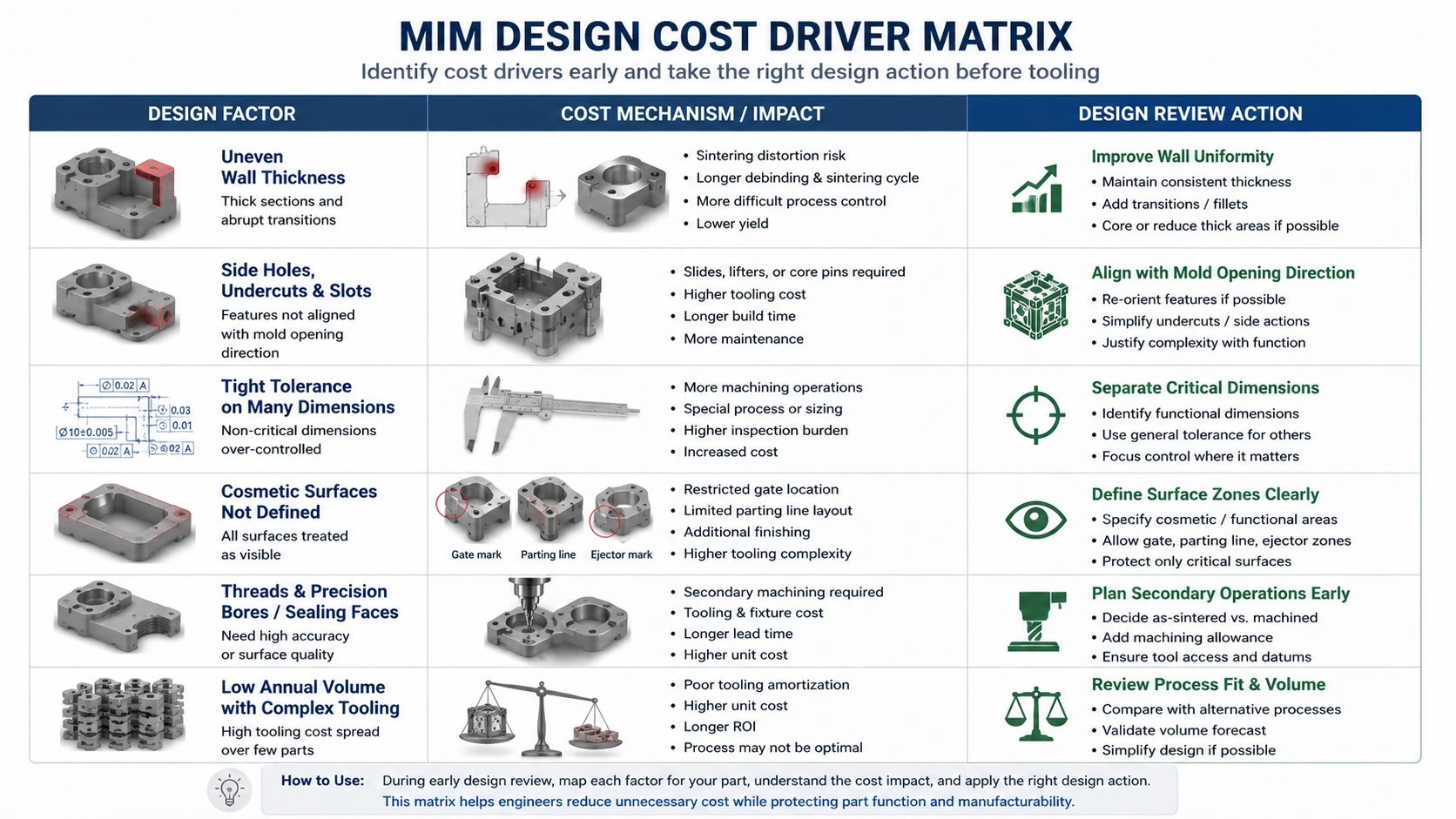
| コスト要因 | 製品設計 | コストリスク | 関連ガイド | 確認事項 |
|---|---|---|---|---|
| 不均一な肉厚 | 機能が許す範囲で、均一な肉厚、滑らかな遷移、および肉厚部のコアリング。. | 充填、脱脂、焼結、および収縮制御が不安定になりやすくなります。. | 肉厚設計 | 金型製作前に、肉厚の均一性を改善するか、肉厚部を見直してください。. |
| 厚肉ソリッド部 | 強度と荷重経路が有効な場合にのみ、リブ、ポケット、または内部肉厚削減を使用してください。. | 材料使用量の増加、プロセス制御の長期化、収縮のばらつき、および反りリスク。. | 肉厚設計 | 機械的機能を確認した後にのみ、コアリングまたは肉厚削減を追加してください。. |
| 側面穴または逆抜き形状 | 可能な限り、穴、スロット、および逆抜き詳細を金型開き方向に合わせてください。. | スライド、インサート、コア機構、フラッシュ制御、および金型メンテナンスによりコストが増加する可能性があります。. | 穴、スロット、アンダーカット | サイドアクションは、機械加工、組立、または必須機能を代替する場合にのみ使用してください。. |
| 金型複雑性 | 金型設計前に、パーティングライン、インサート、エジェクターエリア、スライド、保護面を確認してください。. | 金型費用、トライアル修正、メンテナンス、リードタイムが増加する可能性があります。. | MIM金型設計 | 機能しない詳細を簡素化し、機能的な金型要件を早期に確認してください。. |
| 目に見える表面の制限 | 目に見える領域、機能領域、隠し領域、および許容されるマーキング領域を定義します。. | ゲート、パーティングライン、エジェクターのレイアウトが制限され、手直しや仕上げコストが発生する可能性があります。. | ゲート設計 | 機能、外観、または顧客要件に実際に影響を与える表面のみを保護してください。. |
| 多くの寸法で厳しい公差 | 機能にクリティカルな寸法と一般的な寸法を分離してください。. | 機械加工、検査治具、ソーティング、サイジング、二次修正によりコストが増加する可能性があります。. | MIM公差 | 組み立て、動き、接触、または基準に関連する寸法にのみ厳しい公差を適用してください。. |
| 精密ねじ、ボア、および接触面 | 金型製作前に、焼結後加工品か焼結後機械加工品かを決定してください。. | 加工に関する決定を遅らせると、治具の変更、再設計、リードタイムの増加につながる可能性があります。. | MIMのDFM | RFQ段階で、機械加工しろ、アクセス、基準面戦略、検査方法を計画してください。. |
| 支持されていない平坦部 | 金型製作前に、平面度、支持面、焼結方向、セッター接触を確認してください。. | 焼結時の歪み、支持治具コスト、選別、手直しが増加する可能性があります。. | 焼結サポート | 平面度と寸法安定性が必要な箇所には、支持面を追加するか、形状を調整してください。. |
| 収縮に敏感な重要寸法 | 金型補正と焼結安定性に依存する重要寸法を特定してください。. | 金型修正、サンプル試行、寸法手直しが増加する可能性があります。. | 収縮補正 | 金型リリース前に、重要基準面、測定基準、補正戦略を確認してください。. |
| 高コスト材料の早期選定 | 負荷、耐摩耗性、耐食性、温度、磁性、または顧客の要件に合わせて合金を選択します。. | フィードストックのコスト、焼結挙動、熱処理、表面処理、および検査は変更される可能性があります。. | 材料選定とMIM品質 | 機能要件および顧客要件を満たす、リスクの最も低い材料を使用してください。. |
| 少量生産と複雑な金型 | 予想される年間生産量と金型の複雑さ、および生産寿命を比較してください。. | 金型コストが少なすぎる部品に分散され、MIMの経済性が低下する可能性があります。. | MIMコストガイド | 金型製作の前に、MIM、CNC、鋳造、またはその他のプロセスがより適切かどうかを確認してください。. |
部品を弱めることなくMIMコストを削減する方法

機械加工や組み立てを置き換える複雑な形状は維持してください
複雑なMIM形状は、より高価な工程ステップを置き換える場合、コスト効率が高くなる可能性があります。例えば、一体化されたリブ、フック、スロット、ボス、または内部形状は、CNC加工、溶接、または組立工程を削減できる場合があります。その形状を削除すると金型設計の複雑さは軽減されるかもしれませんが、後工程で追加する必要がある場合、製品総コストが増加する可能性があります。.
設計レビューでは、付加価値を生み出す複雑な形状を特定する必要があります。これらの形状は保護されるべきです。コスト削減の取り組みは、MIMを正当化する形状ではなく、不要な複雑さに焦点を当てるべきです。.
機能的なジオメトリではなく、不要な複雑さのみを削除してください
すべての形状が同じ価値を持つわけではありません。位置決め用のボスは重要である可能性があります。装飾的な内部コーナーはそうではないかもしれません。精密な接触面は厳密な管理が必要な場合があります。隠れた非接触面はそうではないかもしれません。コスト最適化設計レビューでは、変更を加える前に形状を機能別に分類する必要があります。.
これらの形状を保護してください
- 重要な機能形状
- 組立・位置決め用形状
- 荷重支持形状
- 精密接触面
- 摩耗面
これらのコスト要因を見直す
- 非重要部材形状
- 不要なサイドアクション
- 過度な目視面制限
- 過度に厳しい一般寸法
- 計画外の後加工部品
機能が許容する場合、厚肉部を減らすためにコアリングを使用する
コアリングは材料使用量を削減し、肉厚均一性を向上させ、厚肉部加工リスクを低減できます。ただし、盲目的に適用すべきではありません。荷重支持部、精密接触面、ねじサポート部、または高応力遷移部から材料を除去すると、機械的リスクが生じる可能性があります。正しいアプローチは、荷重経路、アセンブリ機能、および焼結安定性を一緒にレビューすることです。.
機能方向を調整できる場合は、金型アクションを簡素化する
一部の高価な金型アクションは、機能方向の調整、穴から溝への変更、リセス加工の修正、または機能しない逆引き機能の再設計によって回避できます。これは、すべてのサイド機能が削除されるべきという意味ではありません。それは、すべてのアクションに理由が必要であることを意味します。金型固有の評価については、こちらを参照してください。 MIM金型設計.
重要寸法と一般寸法を分離する
多くの寸法を重要とマークした図面は、不必要な検査や後加工につながる可能性があります。コスト効率の高いMIM図面は、アセンブリ、動き、精密接触、強度、外観、および一般的なフィット感を制御する寸法を特定する必要があります。これにより、サプライヤーは正しい加工ルートの見積もりを行い、プロジェクトが機能性を向上させない精度に対して支払いを行うことを防ぎます。.
アプリケーションが許容する場合、より多くの機能を焼結後(as-sintered)で設計する
焼結後(as-sintered)の機能は、後加工された機能よりもコスト効率が高い場合が多いですが、それは必要な公差、表面状態、および機能性能が形状と材料に対して現実的である場合に限られます。軸受接触、タイトな摺動嵌合、制御されたねじ込み、または精密な基準面を必要とする機能は、依然として機械加工が必要になる場合があります。.
公差、機械加工、および検査:コストが急速に増加する箇所

焼結後公差と機械加工公差は同じではありません
MIMは高密度で複雑な金属部品を製造できますが、プロセスには脱脂と焼結収縮が含まれます。収縮補償、材料挙動、形状、サポート、炉制御すべてが最終寸法に影響するため、焼結後公差は機械加工公差とは異なる扱いが必要です。.
一般的な間違いは、すべてのMIM寸法にCNCスタイルの期待を適用することです。これにより、見積もりが不必要に高価になったり、技術的に非現実的になったりする可能性があります。クリティカルな寸法については、サプライヤーが金型補償、焼結サポート、サイジング、機械加工、または検査戦略によって制御すべきかどうかを判断できるように、早期に議論する必要があります。.
厳しい公差は機能的な寸法のために予約されるべきです
厳しい公差は、機能性を保護する場合に価値があります。機能しない面や参照寸法に適用されると、無駄になります。より厳しい管理を正当化する可能性のある寸法の例としては、アセンブリインターフェース寸法、ベアリングまたはピボット特徴、位置決め基準、モーションコントロール特徴、および相手部品と接触する面が挙げられます。.
すべての寸法がクリティカルになると、検査コストが増加します
検査は無料ではありません。すべての寸法がクリティカルとして扱われる場合、サプライヤーはより多くの治具、より多くの測定時間、より多くの文書、またはより多くの選別が必要になる場合があります。これによりコストが増加し、納期が遅れる可能性があります。明確な検査計画は、機能、アセンブリ、または品質リスクに影響する特徴に焦点を当てるべきです。詳細については、レビューしてください。 部品寸法が最終的なMIM部品品質に与える影響.
二次機械加工は、サンプリング後に発見されるのではなく、計画されるべきです
二次加工は、正しく計画されていれば問題になりません。遅れて発見されるとコストの問題になります。ボア、ねじ、平面度要件、精密接触面、または精密基準に機械加工が必要な場合、部品にはその作業のための十分な設計許容範囲とアクセスが含まれている必要があります。.
材料と表面の要件は、実際のコストを変更する可能性があります
機能に基づいて材料を選択してください。強度のみで判断しないでください。
材料選定は、材料価格以上に影響を与えます。MIMでは、選択された合金がフィードストックの入手性、焼結挙動、熱処理、耐食性、硬度、磁気応答、表面仕上げ、検査要件に影響を与える可能性があります。アプリケーションで要求される以上のグレードの材料を選択すると、製品価値を向上させることなくコストが増加する可能性があります。.
適切な材料レビューは、負荷、摩耗、腐食暴露、温度暴露、磁気要件、目視面要件、後処理要件、顧客の材料要件といったアプリケーション条件から始まります。材料に焦点を当てた品質への影響については、以下を確認してください。 材料選定とMIM部品の品質.
表面仕上げの要件は、ゲート、パーティングライン、後処理の選択肢を制限する可能性があります
表面要件は早期に定義する必要があります。図面で全ての表面に高い視覚基準が要求される場合、金型設計者はゲート配置、エジェクター位置、パーティングラインレイアウトの選択肢が少なくなる可能性があります。追加の仕上げが必要になる場合もあります。.
より良いアプローチは、機能面、目視面、隠し面、許容ゲートマーク領域、許容エジェクターマーク領域、許容パーティングライン領域、研磨、コーティング、めっき、または機械加工が必要な表面といった表面ゾーンを定義することです。これにより、金型チームは、部品全体を過剰に処理することなく、重要な面を保護するための十分な自由度を得ることができます。.

代表的なコスト最適化設計シナリオ1:過度に広範に適用されたタイトな公差
シナリオ開示: 以下の代表的なシナリオは、MIM図面、見積もり、および金型レビューで遭遇する一般的なパターンを組み合わせています。これらは個々のXTMIM顧客のケーススタディではなく、エンジニアリングの例です。.
発生した問題
小さなMIM機械部品が、予想外に高い単価で見積もられました。図面では、多くの外形寸法、内部ポケット、非接触面がタイトな公差でマークされていました。実際に組み立てに重要だったのは、わずか2つの寸法だけでした。.
発生理由
設計チームは、CNC加工図面のフォーマットを再利用していました。公差は、MIMの機能、組み立て、または検査の必要性に基づいたものではなく、図面のデフォルトの習慣として適用されていました。.
実際のシステム原因は何だったのか
問題は公差値だけではありませんでした。真のシステム原因は、公差分類の欠如でした。サプライヤーは多くの寸法が重要であると仮定せざるを得ず、それが検査の労力を増加させ、二次加工の可能性を高めました。.
修正方法
図面をフィーチャーごとにレビューしました。アセンブリクリティカルな寸法は厳密に管理しました。非接触面および隠蔽面は、より適切な一般的な要件に緩和しました。検査計画は、機能寸法に焦点を当てるように簡素化しました。.
再発防止方法
RFQの前に、すべてのタイトな公差を、機能的、アセンブリ関連、目に見える表面関連、検査関連、または非クリティカルに分類してください。公差の理由が説明できない場合は、レビューする必要があります。.
代表的なコスト最適化設計シナリオ2:金型レビューなしで追加されたサイドフィーチャー
発生した問題
コンパクトなMIM部品に、設計後期の改訂でサイドフィーチャーが追加されました。フィーチャーには金型内のサイドアクションが必要だったため、見積もりは増加しました。フィーチャーは単純に見えたため、プロジェクトチームはわずかなコスト変更しか予想していませんでした。.
発生理由
フィーチャーの方向が金型開き方向に対してレビューされていませんでした。設計チームはフィーチャーの形状に焦点を当てましたが、フィーチャーがどのように形成されるかについては考慮しませんでした。.
実際のシステム原因は何だったのか
本当の問題はフィーチャーサイズではなく、金型アクションでした。サイドフィーチャーは、スライド、コアピン、メンテナンス要件、フラッシュ制御の懸念、および金型設計の複雑さを追加する可能性があります。.
修正方法
フィーチャーの機能がレビューされました。改訂されたジオメトリにより、フィーチャーはより有利な金型方向に配置されました。サイドフィーチャーを排除できない場合は、二次加工を置き換えるため、コストは正当化されました。.
再発防止方法
設計初期レビュー中に、各穴、スロット、および逆引きフィーチャーが金型開き方向で成形できるか確認してください。できない場合は、追加の金型コストが機能によって、または二次加工を排除することによって正当化されるかを決定してください。関連する品質リスクについては、以下を確認してください。 金型設計がMIM品質に与える影響.
コスト削減が製造または機能リスクになった場合
コスト削減は機能から切り離されるべきではありません。コスト削減のアイデアの中には、除去するコストよりも高いリスクを生み出すものがあります。設計変更を受け入れる前に、部品の機能、嵌合部品、材料の挙動、公差スタックアップ、検査方法、および生産量をレビューしてください。.
| コスト削減アイデア | リスクが生じる可能性 | 最初に確認すべきこと |
|---|---|---|
| 全ての公差を緩和する | 組立、精密接触、または動作が失敗する可能性があります。. | 機能上重要な寸法 |
| 厚い部分の材料を除去する | 強度または剛性が低下する可能性があります。. | 荷重経路と応力集中 |
| 二次加工を避ける | ねじ、ボア、または精密接触面が機能を満たさない可能性があります。. | 機能面および嵌合部品 |
| 低コスト材料への変更 | 腐食、摩耗、熱、または磁気性能が失敗する可能性があります。. | 使用環境 |
| 外観重視のためゲート位置のみ変更 | 充填バランスやウェルドラインのリスクが増加する可能性があります。. | ゲート位置と流動経路 |
| 焼結サポート機能を削除 | 平面度や寸法安定性が損なわれる可能性があります。. | 焼結時の向きとサポート面 |
| 検査要件を過度に削減 | アセンブリや顧客使用時に欠陥が発生する可能性があります。. | 重要な検査ポイント |
RFQ前のコストを考慮した設計チェックリスト
MIMのRFQを送信する前に、サプライヤーが製造性とコストドライバーの両方を評価できるように、十分な情報を準備してください。有用なコスト設計レビューには、通常、3Dモデル以上の情報が必要です。なぜなら、形状だけでは材料要件、検査の優先順位、年間生産量、表面仕上げの期待、または厳しい寸法設定の理由を説明できないからです。.

エンジニアが図面をリリースする前にレビューすべきこと
- 機能寸法と非機能寸法は分離されていますか?
- 重要な表面は明確に特定されていますか?
- 目に見える表面は必要な場合にのみ定義されていますか?
- 厚肉部、急激な遷移部、および支持されていないスパンはレビューされていますか?
- サイド穴、スロット、リバースプル機能は、金型開き方向に対してレビューされていますか?
- ねじ、ボア、精密面、および嵌合部は、焼結後または機械加工後の製造として計画されていますか?
- 材料要件は、実際のアプリケーション条件に基づいていますか?
- 表面仕上げの要件は明確に定義されていますか?
- 検査ポイントは実際の機能にリンクされていますか?
購買チームが有用な見積もりのために送付すべきもの
- 2D図面
- 3D CADファイル
- 材料要件または適用環境
- 重要寸法および公差に関する注記
- 表面仕上げおよび目視面要件
- 想定年間数量
- 目標生産寿命
- 嵌合部品またはアセンブリ情報
- 後処理要件
- 検査要件
- 現在のプロセス(CNC、鋳造、プレス加工、その他の工法からの転換の場合)
MIMサプライヤーは、部品が成形可能か、グリーン部品として取り扱えるか、脱脂、焼結、サポート、検査が可能か、そして一貫して製造できるかを確認する必要があります。また、機能を変えずにコストを削減できる箇所を特定する必要があります。より構造化された準備のために、以下を使用してください。 MIM DFM設計チェックリスト および MIM公差と収縮チェックリスト.
MIMのコストを考慮した設計に関するFAQ
金属射出成形における設計コストとは?
MIMにおけるコスト設計とは、金型投資前に部品形状、公差、材料、表面要件、金型の複雑さ、二次加工、検査要件をレビューするプロセスです。目的は、部品の機能、組立性、品質、生産安定性を維持しながら、不必要なコスト要因を排除することです。.
このページは一般的なMIMコストガイドと同じですか?
いいえ。このページでは、金型製作前にコストに影響を与える設計上の判断に焦点を当てています。具体的には、肉厚、金型アクション、公差戦略、焼結サポート、機械加工、検査、歩留まりリスクなどです。一般的なMIMコストガイドは、通常、より広範な価格構造、金型償却、生産量、材料費、プロセス比較を扱います。.
どのような設計上の特徴が通常、MIM部品のコストを増加させますか?
一般的なコスト要因としては、厚肉部、不均一な壁厚変化、サイドホール、逆抜き形状、非重要寸法への厳しい公差、未定義の外観面、精密ねじ、精密穴、および後加工が必要な形状が挙げられます。これらの形状は必要な場合もありますが、金型製作前にレビューを行う必要があります。.
複雑なMIM部品は必ずコストが高くなるのですか?
必ずしもそうとは限りません。MIMは複雑な金属部品を量産時に経済的に成形できるため、選ばれることが多いです。複雑な形状は、CNC加工、溶接、組立を代替することで総コストを削減できる場合があります。重要なのは、その複雑さが機能的な価値を追加するのか、それとも金型やプロセスのリスクを増大させるだけなのかという点です。.
厳しい公差はMIMコストを増加させる可能性がありますか?
はい。厳しい公差は、機械加工、サイジング、追加検査、特殊治具、または厳格な工程管理を必要とする場合にコストを増加させる可能性があります。コスト効率の高いMIM図面では、機能上重要な寸法と一般寸法を分離する必要があります。.
MIM部品の二次加工はいつ計画すべきですか?
ねじ切り、精密ボア、精密接触面、ベアリング面、厳しい基準面などの形状を焼結状態で経済的に管理できない場合は、二次加工を計画する必要があります。これらの工程を金型製作前に計画することで、後での再設計や予期せぬコスト変動を回避できます。.
MIMのコスト設計レビューにはどのような情報を送ればよいですか?
2D図面、3D CADファイル、材料要件、用途背景、重要寸法、表面仕上げ要件、年間予想数量、検査要件、後処理の必要性、現在のコストや製造上の懸念事項をお送りください。.
MIMサプライヤーは部品機能を変えずにコストを削減できますか?
多くの場合、可能です。コスト削減は、重要な寸法の明確化、外観面の定義、非機能部の簡素化、必要な箇所のみへの機械加工の計画、肉厚の均一化などによって実現できます。最終的な変更は、プロジェクト固有のDFMレビューを通じて必ず確認する必要があります。.
コスト最適化のための図面を提出する
MIM部品に複雑な形状、厳しい公差、サイドフィーチャー、目に見える表面要件、二次機械加工の必要性、金型製作前の焼結歪みのリスク、またはコスト圧力がかかる場合、XTMIMはコストと製造性の観点から設計をレビューできます。.
2D図面、3D CADファイル、材質要件、公差要件、表面仕上げのニーズ、年間推定生産量、用途背景、必要な二次加工、および検査要件をお送りください。.
当社のエンジニアリングチームは、金型リリース、サンプルトライアル、または生産計画の前に、設計上のどの特徴が金型コスト、単体部品コスト、歩留まりリスク、二次加工、検査作業量、および寸法安定性に影響を与える可能性があるかをレビューします。.
コスト最適化のための図面を提出するXTMIMエンジニアリングチームによるエンジニアリングレビュー
この記事は、金属射出成形(MIM)のエンジニアリングの観点から作成およびレビューされました。レビューは、プロセスの適合性、材料選定、DFMロジック、金型リスク、焼結収縮挙動、二次加工計画、公差戦略、検査要件、および生産の実現可能性に焦点を当てています。.
最終的なコスト、公差能力、材料の適合性、および生産の実現可能性は、プロジェクト固有の図面レビュー、材料レビュー、およびサプライヤーのDFM評価を通じて常に確認する必要があります。このページでは、固定価格、保証された公差値、または普遍的なコスト削減率を提供していません。.
規格と技術参考資料
コストのための設計(Design-for-cost)レビューは、標準のみに依存するべきではありませんが、関連する技術的参照資料は、材料選定、プロセス適合性の評価、および設計に関する議論をサポートできます。これらの参照資料は、一般的な設計、材料、およびプロセスの適合性に関する議論をサポートしますが、固定コスト標準として扱われるべきではありません。最終的な要件は、プロジェクト図面、顧客仕様、承認された材料データ、および適用される正式な標準に従う必要があります。.
- MIMA — MIMによる複雑な設計スライド、コア、金型複雑性、およびMIM部品メーカーとの設計レビューに関連します。.
- MPIF Standard 35-MIM — 金属射出成形部品の材料規格材料指定および材料カテゴリのレビューに関連します。プロジェクト固有のコストレビューの代わりにはなりません。.
- EPMA — 金属射出成形の概要数量での複雑形状部品のプロセス適合性に関する議論に関連します。.
- PIM International — 設計者およびエンドユーザー向けMIM&CIMガイド材料、部品サイズ、金型複雑性、サイクルタイム、脱脂、および焼結を含むコスト要因に関連します。.