
إجابة سريعة: ضع في اعتبارك MIM التيتانيوم عندما يوفر هدف وزن محدد، أو متطلب خدمة معين، أو سبيكة تيتانيوم مطلوبة فائدة تبرر ضوابط المواد والمعالجة الخاصة بها. ابدأ بفولاذ MIM المقاوم للصدأ عندما تلبي درجة مناسبة متطلبات الحمل والتآكل والمظهر والتفاوتات وتقدم مسار إنتاج مؤهل بشكل أفضل ومتحكم في التكلفة.
التيتانيوم ليس أقوى أو أصلب أو أكثر مقاومة للتآكل تلقائيًا من كل درجة من درجات الفولاذ المقاوم للصدأ. قارن السبائك المحددة في حالتها النهائية بعد MIM وتحقق من الهندسة الفعلية، وبيئة التشغيل، وتوفر مادة التغذية، وطريقة التلبيد، والتكلفة لكل جزء مقبول قبل إصدار الأدوات.
ما هي متطلبات المشروع التي تغير فعليًا قرار التيتانيوم مقابل الفولاذ المقاوم للصدأ؟
قبل مقارنة أوراق بيانات السبائك، افصل بين المتطلبات التي لا يمكن أن تفشل والتفضيلات التي يمكن مقايضتها مقابل التكلفة. لا تكون مقارنة الفولاذ المقاوم للصدأ مقابل التيتانيوم مفيدة إلا بعد تحديد هذه المتطلبات للجزء الفعلي.
ابدأ بالمكون، وليس المعدن. بالنسبة للغلاف الرقيق، قد يكون الحد الأقصى للكتلة المحدد أكثر أهمية من القوة الاسمية للسبيكة. بالنسبة لقفل يحمل الأحمال، قد تحدد الصلابة، والإجهاد، والتآكل التلامسي التصميم. بالنسبة لآلية يتم تنظيفها بشكل متكرر، قد يهيمن التعرض الكيميائي الفعلي والسطح النهائي على كليهما.
| قيد التحديد | هل يجب تلبيته أم قابل للتفاوض؟ | ما الذي يغير خيار التيتانيوم مقابل الفولاذ المقاوم للصدأ | الدليل المطلوب تقديمه |
|---|---|---|---|
| الكتلة القصوى للجزء / كتلة النظام | يجب تلبيتها إذا كان التصميم يمتلك سقف وزن مؤكد. | يصبح التيتانيوم مرشحًا جادًا إذا كان انخفاض كثافته يحل مشكلة وزن ذات مغزى. | حجم CAD وميزانية كتلة على مستوى التجميع. |
| الحمل، الصلابة، الإجهاد، والتآكل | عادة ما يجب تلبيتها. | تقييم السبيكة الدقيقة، حالة MIM النهائية، أزواج التلامس، وما إذا كانت تغييرات التصميم مسموح بها. | حالة التحميل، الأسطح المتزايدة، هدف العمر، طريقة الاختبار. |
| التعرض للتآكل والتنظيف | يجب تلبيتها حيث يؤثر الفشل على الوظيفة أو السلامة. | مقارنة الدرجات الدقيقة تحت الوسط الفعلي بدلاً من استخدام تصنيفات التآكل العامة. | تفاصيل العرق/الملح/المنظف، المدة، درجة الحرارة، دورة التنظيف. |
| التشطيب الجمالي والوظيفي | يجب أن تلبي الأسطح المحددة للمظهر أو الإحكام. | قد تؤدي تجارب التشطيب، وحدود تلف السطح، وتوافق الطلاء، وسهولة الوصول إلى تغيير اختيار المادة. | مناطق السطح، الخشونة، مواصفات الطلاء، المعايير المرئية. |
| التكلفة، الحجم السنوي، والتأهيل | مفاضلة ما لم يتم تحديدها بموجب عقد أو لائحة. | قد لا تبرر فائدة أداء صغيرة مسار عملية مادة خاصة. | الوحدات السنوية المستهدفة، الميزانية، قواعد الموافقة والتتبع. |
إذا لم تتمكن مادة ما من تلبية حمل مطلوب، أو وسط تشغيل، أو بُعد، أو درجة محددة بعد مسار MIM الكامل، فلا ينبغي اختيارها لمجرد أن خاصية أخرى تبدو جذابة.
إذا استوفى كلا المرشحين كل متطلب إلزامي، قم بتقييم وفورات كتلة الجزء الفعلية، وتعقيد التشطيب، وأدلة الإنتاج المؤهلة، وتكلفة الجزء المقبولة، واستمرارية التوريد.
يجب أن يلبي الاختيار المتطلبات الوظيفية أولاً، وقابلية التصنيع المثبتة بتقنية MIM ثانياً، واقتصاديات المشروع ثالثاً. للعائلات الأخرى من السبائك، انظر مواد MIM أو دليل اختيار مواد MIM.
كيف تتم مقارنة التيتانيوم والفولاذ المقاوم للصدأ في أجزاء MIM النهائية؟
قد تعني كلمة "تيتانيوم" التيتانيوم النقي تجارياً أو سبيكة مثل Ti-6Al-4V؛ وقد يعني "الفولاذ المقاوم للصدأ" 316L أو 17-4 PH أو 420 أو درجة أخرى. تحدد الحالة النهائية لـ MIM، والمعالجة الحرارية، والكثافة، والحالة السطحية أي الخصائص المنشورة قابلة للتطبيق.
| خاصية القرار | مسار التيتانيوم | مسار الفولاذ المقاوم للصدأ | نتيجة عملية لتصميم الأجزاء |
|---|---|---|---|
| الكثافة / الكتلة | الكثافة المرجعية لـ Ti-6Al-4V: حوالي 4.43 جم/سم مكعب. | الكثافة المرجعية لـ 316L: حوالي 8.0 جم/سم مكعب. | عند حجم صلب متساوٍ، يكون التيتانيوم أخف بكثير؛ تحقق مما إذا كان توفير الكتلة المطلق مهماً. |
| الصلابة | معامل المعدن الأساسي لـ Ti-6Al-4V هو حوالي 110 جيجا باسكال. | معامل المعدن الأساسي لـ 316L هو حوالي 200 جيجا باسكال. | عند نفس الهندسة، تنحرف المادة الأكثر صلابة بشكل عام بشكل أقل تحت التحميل المرن؛ لا تزال بيانات MIM الفعلية والهندسة هي التي تحكم. |
| القوة / الصلابة | يتمتع التيتانيوم CP و Ti-6Al-4V بمستويات قوة مختلفة؛ حالة MIM هي التي تحدد. | تخدم درجات 316L، و 17-4 PH، و 420، و 440C اتجاهات مختلفة للقوة والصلابة ومقاومة التآكل. | اختر درجات محددة وظروف معالجة، وليس تسمية عامة مثل التيتانيوم مقابل الفولاذ. |
| سلوك التآكل | يمكن أن يكون الفيلم الأكسيدي الواقي فعالاً في العديد من التطبيقات؛ الأداء يعتمد على البيئة المحددة. | تحديد التركيب السبائكي والحالة السطحية لكل درجة من الفولاذ المقاوم للصدأ أمر حاسم. | حدد التعرض الكيميائي والتنظيف الفعلي قبل ترتيب المواد. |
| التشطيب والمظهر | تحتاج عمليات التحضير السطحي والعمليات الزخرفية إلى تجارب خاصة بالدرجة الهندسية والشكل. | تتوفر العديد من مسارات التلميع، والتخميل، والترسيب الفيزيائي للبخار (PVD) المناسبة لدرجات الفولاذ المقاوم للصدأ الملائمة. | حدد المعايير الوظيفية والتجميلية؛ لا تفترض أن التشطيب معتمد لأي درجة. |
قيم الكثافة ومعامل المرونة هذه هي خصائص مرجعية للسبائك الأساسية المحددة، لا الخصائص المضمونة لأجزاء MIM النهائية. تجميع NBS/NIST لـ Ti-6Al-4V و ورقة بيانات الشركة المصنعة لـ 316/316L توفير القيم الأساسية. يجب أن يعتمد القبول النهائي على حالة مادة MIM المحددة واختبارات مستوى الجزء ذات الصلة.
توفير الوزن مقابل الصلابة وهندسة الجزء
عند حجم صلب نظري متساوٍ، فإن Ti-6Al-4V (حوالي 4.43 جم/سم3) أخف بنسبة 45% تقريبًا من الفولاذ المقاوم للصدأ 316L (حوالي 8.0 جم/سم3). يزن مثال حجم صلب يبلغ 1 سم3 حوالي 4.43 جم مقابل 8.0 جم: فرق قدره 3.57 جم. طريقة الفحص: اضرب حجم CAD الصلب للجزء بالسنتيمتر المكعب في حوالي 3.57 جم/سم3 لتقدير توفير الوزن عند هندسة دون تغيير. تعتمد كتلة جزء MIM الفعلية على الكثافة النهائية والتشطيب وأي تغييرات في التصميم.
الكثافة المنخفضة لا تعني صلابة أكبر. معامل المرونة المرجعي حوالي 110 جيجا باسكال لـ Ti-6Al-4V وحوالي 200 جيجا باسكال لـ 316L. عند نفس الهندسة والتحميل، قد ينحرف دعامة التيتانيوم بشكل أكبر في النطاق المرن. يمكن أن يؤدي تغيير سمك الضلع أو هندسة المقطع إلى استعادة الصلابة، ولكن هذا التعديل يغير أيضًا كتلة الجزء وسلوك انكماش MIM. اسأل عما إذا كان مستوى التجميع توفير الكتلة مهم قبل اعتبار التيتانيوم مطلبًا.
القوة، مقاومة التعب، الصلابة، ومقاومة التآكل
لا تقارن "قوة التيتانيوم" بـ "قوة الفولاذ" دون تسمية كلا الدرجتين. التيتانيوم النقي تجاريًا و Ti-6Al-4V تختلف بشكل كبير؛ وكذلك 316L والمعالجة حرارياً 17-4 PH. يمكن أن تكون عائلات الفولاذ المقاوم للصدأ القابل للتصلب ذات صلة عندما يكون التآكل بالاحتكاك أو الصلابة العالية مهمة. هل التيتانيوم معدن لين؟ لا يمكن الإجابة على ذلك بالنسبة للتيتانيوم كعائلة: التيتانيوم النقي تجارياً و Ti-6Al-4V لا يشتركان في مستوى صلابة واحد، ويمكن لدرجة الفولاذ المقاوم للصدأ المعالج أن تتصرف بشكل مختلف مرة أخرى.
تكون نسبة القوة إلى الوزن مفيدة فقط بعد معرفة مسار الحمل والهندسة. قد تستبعد عوامل مثل الإجهاد الدوري، والاحتكاك عند الدبوس، ومتانة الحافة، والالتصاق عند نقاط الاتصال المعدنية المتزاوجة مادة تبدو ممتازة في جدول خصائص الشد البسيط. يمكن أن تؤدي كثافة MIM، والمسامية المتبقية، ومحتوى الأكسجين، والمعالجة الحرارية، والحالة السطحية إلى تغيير نتيجة الجزء النهائي بشكل أكبر. قم بتأكيد الأداء مع حالة MIM المحددة والاختبار المناسب بدلاً من استعارة قيمة من قضيب مشكل.
مقاومة التآكل وبيئة الخدمة
يشكل التيتانيوم سطحاً واقياً من الأكاسيد وقد يكون مرشحاً قوياً في بيئات تآكل معينة. تعتمد سبائك الفولاذ المقاوم للصدأ على سطح سلبي غني بالكروم ولكن لديها مقاومة مختلفة بشكل واضح عبر الدرجات وظروف التعرض. لا تتمتع أي من المادتين بحصانة تآكل عالمية. قد تؤدي الكلوريدات، والشقوق، وتلف السطح، وملامسة المعادن المختلفة، وعوامل التنظيف، ودرجة الحرارة إلى تغيير النتيجة.
بالنسبة للأجهزة القابلة للارتداء التي تتلامس مع الجلد، حدد التعرض للعرق ومستحضرات التجميل بدلاً من افتراض أن الملصق العام "مضاد للحساسية" أو "جراحي" يثبت الملاءمة. بالنسبة لآليات الأجهزة الطبية، حدد المطهرات، ودورات التنظيف، ومعايير قبول العميل؛ قد يكون ما إذا كان السطح يمكن تنظيفه باستمرار مهماً بقدر مقاومة التآكل الاسمية بالجزء السائب.
متطلبات التشطيب السطحي، التخميل، والطلاء
يمكن مراجعة أجزاء الفولاذ المقاوم للصدأ للتلميع، والفرشاة، والسفع، والتخميل، و PVD عندما تكون مناسبة للدرجة المختارة والهندسة السطحية. تهدف معالجات التخميل للفولاذ المقاوم للصدأ إلى تحسين الحالة السطحية عن طريق إزالة الحديد الحر وتعزيز الفيلم السلبي الواقي؛ يجب تحديد الإجراء والتحقق منه. يختلف السطح الأصلي للتيتانيوم وإعداده: لا يجب افتراض أن وصفة تخميل الفولاذ المقاوم للصدأ قابلة للتبديل مع معالجة التيتانيوم.
لكلا المسارين، حدد الخشونة، مظهر الحافة، سمك الطلاء، الالتصاق، مناطق التجميل، الإخفاء، والتغيرات الأبعاد بعد التشطيب. يمكن أن يفشل الغلاف المرئي في المشروع حتى عندما تكون كيمياء المواد وخصائص الشد مقبولة، إذا لم يتم النظر في الوصول إلى التلميع أو تكرار التشطيب قبل التصنيع.
يجب أن يحدد الرسم الخاص بجهاز طبي والذي يتطلب فولاذ 316L مع معالجة التخميل (passivation) درجة الفولاذ المقاوم للصدأ، وتسلسل المعالجة، وطريقة التحقق. تغيير المادة إلى التيتانيوم يغير كلاً من متطلبات المادة والمعالجة السطحية؛ إجراء تخميل الفولاذ المقاوم للصدأ ليس مناسبًا تلقائيًا للتيتانيوم.
للحصول على بيانات مستوى الدرجة، راجع سبائك التيتانيوم لـ MIM و درجات الفولاذ المقاوم للصدأ المصنعة بتقنية MIM قبل تحديد المادة النهائية.
ما هي حدود التصنيع بتقنية MIM التي يمكن أن تغير اختيار المادة؟
حتى لو استوفت المادة هدف التصميم النظري، فقد لا يتمكن مسار القولبة بالحقن المعدني الفعلي من ذلك. يعتمد توفر مادة التغذية (feedstock)، وإزالة المادة الرابطة (debinding)، والتلبيد المتحكم به (controlled sintering)، والسلوك البعدي، وإثبات الخصائص النهائية على ما إذا كان يمكن إصدار درجة مقترحة لأدوات التصنيع (tooling).
هل يمكن توفير درجة المادة المطلوبة كمادة تغذية لـ MIM؟
تستخدم القولبة بالحقن المعدني (MIM) خليطًا مؤهلاً من المسحوق المعدني والمادة الرابطة كمادة تغذية. يجب التحقق من توفر درجة محددة, ليس فقط للتسمية الواسعة "التيتانيوم" أو "الفولاذ المقاوم للصدأ". قدرة المورد على توفير مسحوق للتصنيع الإضافي لا تثبت تلقائيًا وجود مادة تغذية MIM مطابقة وتاريخ معالجة.
يجب أن تندرج إمدادات مادة التغذية المُجهزة، والحد الأدنى لكمية الشراء، ووثائق الكيمياء والتتبع، واتساق الدُفعات، والتوافق مع عملية إزالة المادة الرابطة ضمن المراجعة الأولية للمورد. بالنسبة لمشاريع XTMIM، تُعد مادة التغذية المُجهزة مدخلًا تصنيعيًا مشتَرى، وليست خدمة خلط داخلية. يجب عدم الالتزام بدرجة تيتانيوم للإنتاج حتى يتم تأكيد مسار تصنيع وفحص متوافق.
كيف تؤثر إزالة المادة الرابطة والتلبيد والتلوث على الجزء النهائي؟
بعد الحقن، يجب إزالة المادة الرابطة دون تشقق أو ترك بقايا غير مقبولة. ثم يقوم التلبيد بتكثيف الجزء البني. يمتلك التيتانيوم ألفة قوية للشوائب البينية، بما في ذلك الأكسجين والكربون؛ يمكن أن تؤثر إزالة المادة الرابطة، والمناولة، وظروف الفرن على التلوث واللدونة النهائية. يمثل هذا تحديًا تأهيليًا مختلفًا ماديًا عن افتراض أنه يمكن ببساطة إعادة استخدام دورة فولاذ مقاوم للصدأ مألوفة.
بحث حول clean titanium MIM binder systems documents the importance of interstitial-impurity control. Experimental and simulated Ti-6Al-4V sintering research also shows why shrinkage and support strategy must be validated for the actual geometry. These published examples establish technical possibilities, not a particular supplier's qualified manufacturing capability. Stainless steel also requires controlled debinding and sintering, although established stainless MIM routes are generally more widely available.
Can MIM Meet the Part's Tolerances and Acceptance Requirements?
Both titanium and stainless steel MIM parts shrink during sintering. Tooling compensation depends on feedstock, wall transitions, geometry, gates, supports, and final density. Long thin features, uneven cross-sections, sharp transitions, deep holes, and cosmetic faces may distort or become costly to correct. A grade change can therefore force a new review of shrinkage allowances and tooling design.
Before approving the route, separate dimensions that can remain as-sintered from those needing machining, sizing, grinding, or fixture-supported sintering. Define how the supplier will measure them, not merely an average nominal tolerance. The دليل تفاوتات MIM provides broader design context; final capability must be verified for the actual drawing and material condition.
Published manufacturing evidence, not a general MIM guarantee: In an ElementPlus Ti-6Al-4V watch-case pilot reported in 2020, most complex case features were formed by MIM, while some tight-tolerance features still needed CNC machining. The company also reported sintered density above 99% for its tested route. These are نتائج خاصة بالحالة, not tolerance, density or cost promises for another supplier. Ask what was actually measured on your required grade and geometry before authorising tooling.
| بوابة الجدوى | Can proceed when... | Hold or reject the route when... | Who must verify |
|---|---|---|---|
| Specified grade / feedstock | A traceable feedstock route exists for the exact grade and target quantity. | Only an approximate alloy is offered, or qualified feedstock is unavailable. | Powder or feedstock supplier and MIM manufacturer. |
| إزالة المادة الرابطة / التلبيد | Binder removal and atmosphere control are documented for this route. | Contamination limits or sintering controls cannot be demonstrated. | Manufacturing engineer and qualified process owner. |
| Geometry / shrinkage | DFM, tooling compensation, sintering support, and corrections are feasible. | Distortion-sensitive features cannot meet the print or cannot be inspected. | MIM tooling and process engineering. |
| Acceptance properties | Required chemistry, density, mechanical properties, and surface results have defined tests. | Customer expects wrought-bar properties without equivalent MIM qualification. | Quality engineer and customer. |
| Production evidence | Sample and repeat-run qualification expectations are agreed. | The supplier has no validated capability yet and the schedule assumes immediate scale-up. | Customer and manufacturing supplier. |
Critical stop condition: The existence of a published titanium MIM standard or research process does not validate any specific factory's feedstock, furnace setup, impurity control, tolerances or production yield. Request evidence for the proposed route; otherwise hold the tooling decision.
How Should Cost and Production Risk Affect the Material Choice?
The relevant number is the cost of a qualified, accepted production component, not simply the price of one kilogram of metal powder. A more expensive alloy can still be justified if its unique benefit is essential; an unnecessary special-material route can turn an otherwise practical MIM design into a costly project.
Is titanium more expensive than stainless steel for MIM production? For many common project comparisons, titanium is likely to carry a higher material and qualification burden than established stainless-steel grades. But there is no responsible universal premium: the actual difference depends on grade, feedstock sourcing, process qualification, finishing, acceptance yield, and order size. Use comparable quotations with the same part geometry, specifications, volume, and inspection scope.
| Cost or risk driver | How titanium may change the project | What to compare in the quote |
|---|---|---|
| مادة التغذية المحضرة | Special-alloy availability, order size, and procurement risk may be less favorable. | Confirmed grade, material specification, supplier MOQ, material price basis. |
| Process controls | Atmosphere, contamination monitoring, and sintering validation can add complexity. | Qualified route, process checks, sample qualification, applicable testing. |
| القوالب والتطوير | Material-specific shrinkage and distortion behavior may require additional trials. | Mold design, sample iterations, support strategy, validation responsibilities. |
| Accepted-part yield | Scrap or rework risk matters more than nominal powder cost alone. | Cost per accepted part, defect limits, measurement plan. |
| Finishing and inspection | Cosmetic finish, masking, machining, or extra testing can materially change cost. | All secondary operations and acceptance criteria on the same quotation basis. |
| Volume and continuity | Tooling amortization and supply reliability depend on forecast volume. | Prototype quantity, annual demand, ramp-up plan, supply-change provisions. |
Make the comparison at accepted-part level. For example, a low quote based on raw powder or unqualified samples is not equivalent to a quote that includes required chemistry testing, controlled sintering, secondary machining, cosmetic inspection, and rejected-unit risk. Ask the supplier what evidence the price includes and what remains subject to trial.
Production volume also changes the result. Small, complex parts with repeat orders may justify MIM tooling; very low quantities or simple geometry can favor another manufacturing route. If volume or geometry is uncertain, the economic case for either MIM material is not yet established. The broader cost factors are explained in تكلفة القولبة بالحقن المعدني.
Quote comparison rule: Ask both suppliers to quote the same drawing revision, grade/alternate policy, annual quantity, surface and inspection specification. Compare tooling and trial charges separately from the recurring price per مقبول part. A low as-molded price is not a better offer if more items fail dimensional, cosmetic, chemistry or functional acceptance after sintering and finishing.
قاعدة القرار: Choose titanium only if its measurable part-level benefit and required technical qualification justify the additional total project burden. If a qualified stainless grade meets every must-have requirement, stainless may be the more defensible starting route.
How Does the Material Choice Change Across Typical Part Designs?
Different part requirements can lead to different material choices. Independent manufacturer reports document both titanium and stainless MIM components in wearables and non-implant medical equipment. These are applications with different geometries and acceptance criteria, not a controlled head-to-head material trial.
Wearable Housings: When Does Lower Weight Justify Titanium?
Consider a compact wearable housing with complex geometry, visible external surfaces, sealing details, and repeat production demand. If the product has a documented weight target and the housing is a substantial fraction of total device mass, titanium's lower density may deliver a meaningful benefit. But if the housing is only a tiny share of device weight, the total product saving may be too small to justify the change.
Visible housings must also meet polishing or brushing requirements, PVD color, edge consistency, assembly-fit tolerances, and corrosion behavior after sweat exposure. A suitable stainless grade may be preferable when cost and repeatable surface quality dominate. Titanium remains an option when the measured weight benefit is worth qualifying its MIM and finishing processes.
| Wearable design condition | Most useful comparison | تداعيات القرار |
|---|---|---|
| Low overall device weight is a measured requirement | Mass saving based on actual CAD volume and assembly contribution. | Titanium deserves a feasibility review if the saving is material to product function. |
| Visual appearance and finish consistency dominate | Polishing, edge consistency, masking, PVD trial, cosmetic inspection. | Do not choose by metal name alone; qualify the entire finish route. |
| Extremely tight sealing or assembly features | Datum control, sintering distortion, selective machining and post-finish fit. | Either material may need a hybrid MIM-plus-machining process. |
| Cost-sensitive repeat production | Qualified route, supplier continuity, accepted-part cost. | A stainless grade may be the better starting point if weight is not decisive. |
Two published watch-case examples show established use of Ti-6Al-4V and 316L MIM for different products. They do not establish relative cost, yield or performance under identical production conditions.
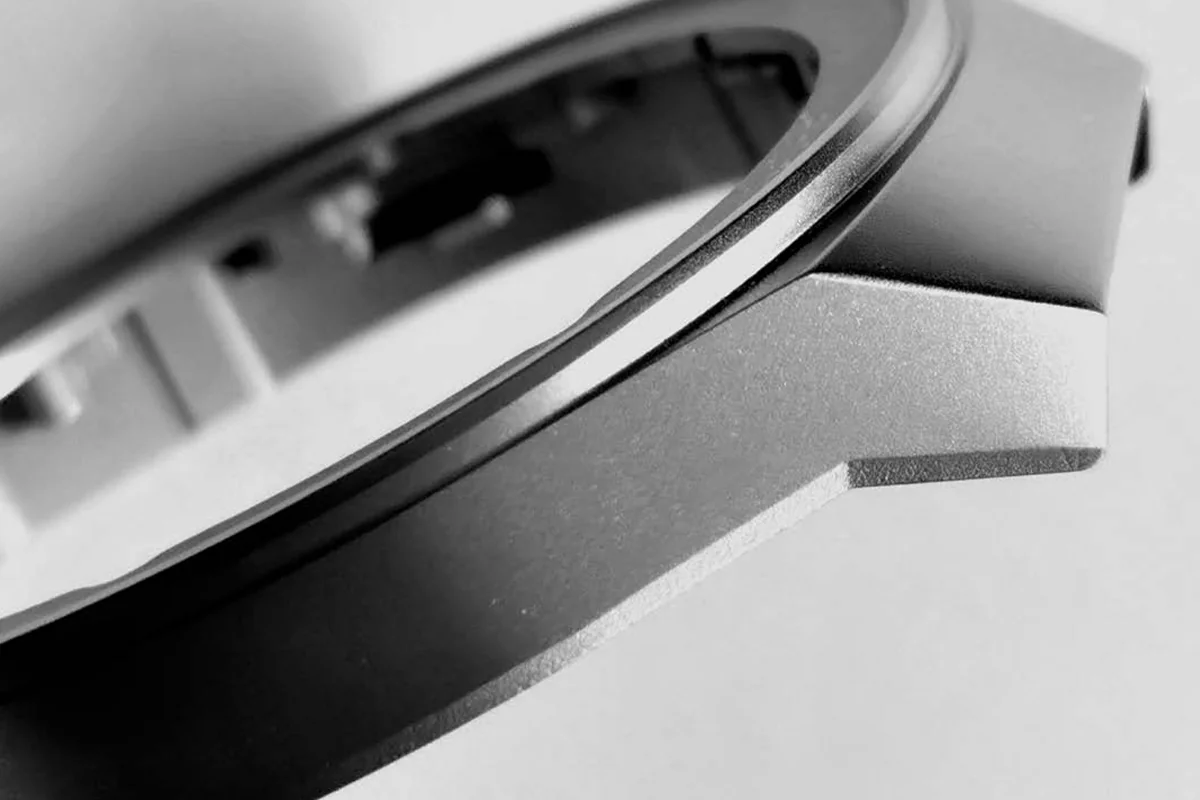
Ti-6Al-4V smartwatch case — ElementPlus
ElementPlus described a Ti-6Al-4V MIM watch-case development in which complex housing details could be molded and selected precision areas machined afterward. The published account concerns pilot development; it does not establish universal production yield or as-sintered tolerances.
Material-selection relevance: A lower-density alloy can be useful for a weight-constrained housing, but the selected finish, assembly datum, and post-machining requirements still determine viability.
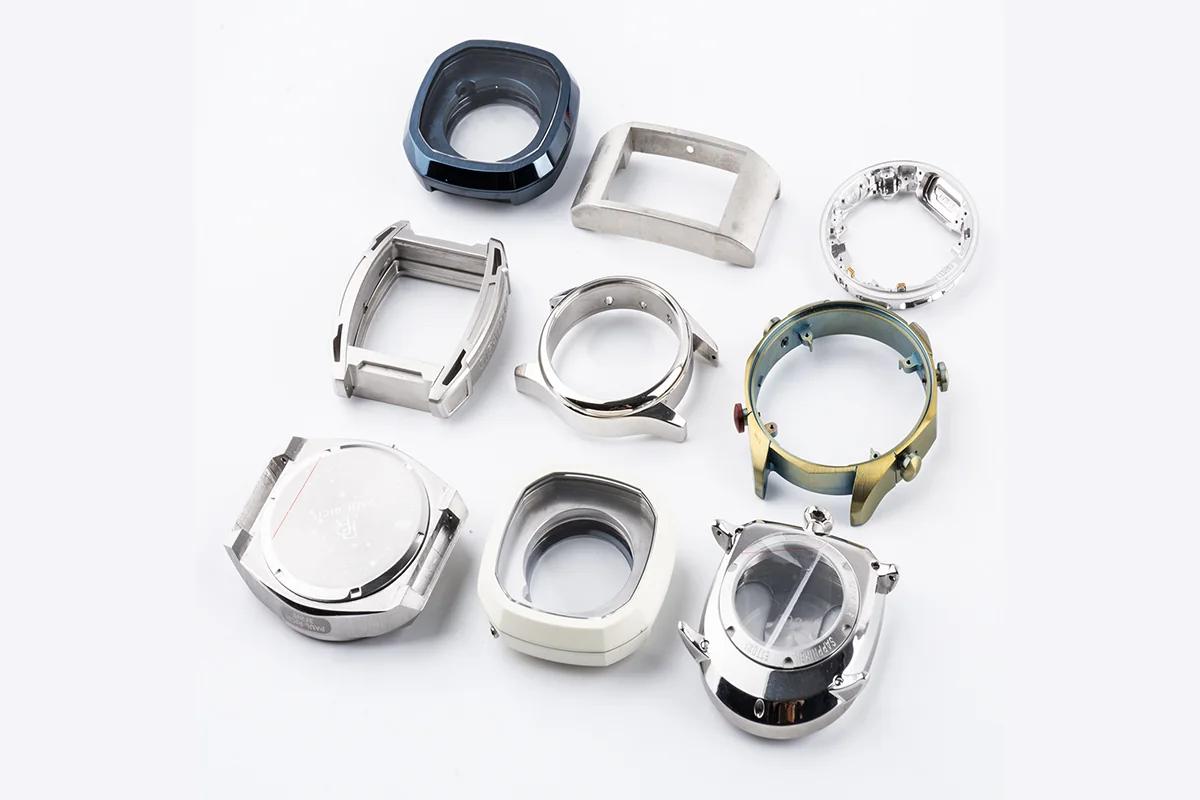
316L watch cases and smartwatch housings — ZCMIM
ZCMIM identifies square and round 316L stainless steel watch-case parts made by MIM. Its published gallery lists finishing routes such as magnetic polishing, sandblasting, polishing and PVD, depending on the individual component.
Material-selection relevance: When the design is driven by surface appearance and repeatable finishing rather than maximum weight reduction, a qualified 316L MIM route may be a practical starting point.
A 2026 MTIG industry case also reports titanium MIM wearable-device housings. The source does not identify the exact alloy grade of the pictured part, so it should not be used as proof of a specific titanium grade or another supplier’s production capability.
Non-Implant Medical Device Parts: How Do Cleaning and Material Requirements Affect the Choice?
For non-implant medical instruments and equipment, the choice depends on cleaning chemicals, access to internal corners, surface condition, edge quality, exact material grade and acceptance tests. Stainless steel and titanium use different passive-surface and finishing routes; the customer’s passivation requirement must be checked for the selected grade rather than transferred from one alloy to another.
A stainless 316L component with a defined cleaning and passivation process may be appropriate if the drawing and customer specification allow it. Titanium normally develops its own protective oxide film and requires a different surface-treatment review; a stainless-steel passivation callout cannot simply be transferred to a titanium drawing. A titanium route may be relevant when a specified grade or verified service benefit requires it. Both need application-specific qualification. Terms such as "surgical stainless" or "medical grade titanium" cannot replace the material specification, tests or applicable approval process; this is not an implant-suitability claim.
| Non-implant mechanism requirement | Why this changes material review |
|---|---|
| Repeated cleaning or disinfectant contact | Identify actual agents and temperature; verify alloy and finish compatibility. |
| سطح فولاذي مقاوم للصدأ معالج بالتخميل | Define relevant grade, cleaning/passivation method, and acceptance; do not equate passivation with certification. |
| Titanium oxide surface behavior | Confirm exact alloy, surface treatment, and exposure; the passive film does not independently prove device suitability. |
| Complex miniature geometry | Check blind pockets, crevices, burr control, cleanability, and inspection access. |
| Customer/regulatory requirement | Specify the governing standard and evidence; this article does not grant medical or implant approval. |
The published titanium handle and stainless steel equipment bracket serve different functions. Together, they show why material requirements must follow part function and qualification; they are not interchangeable specimens in a controlled test.
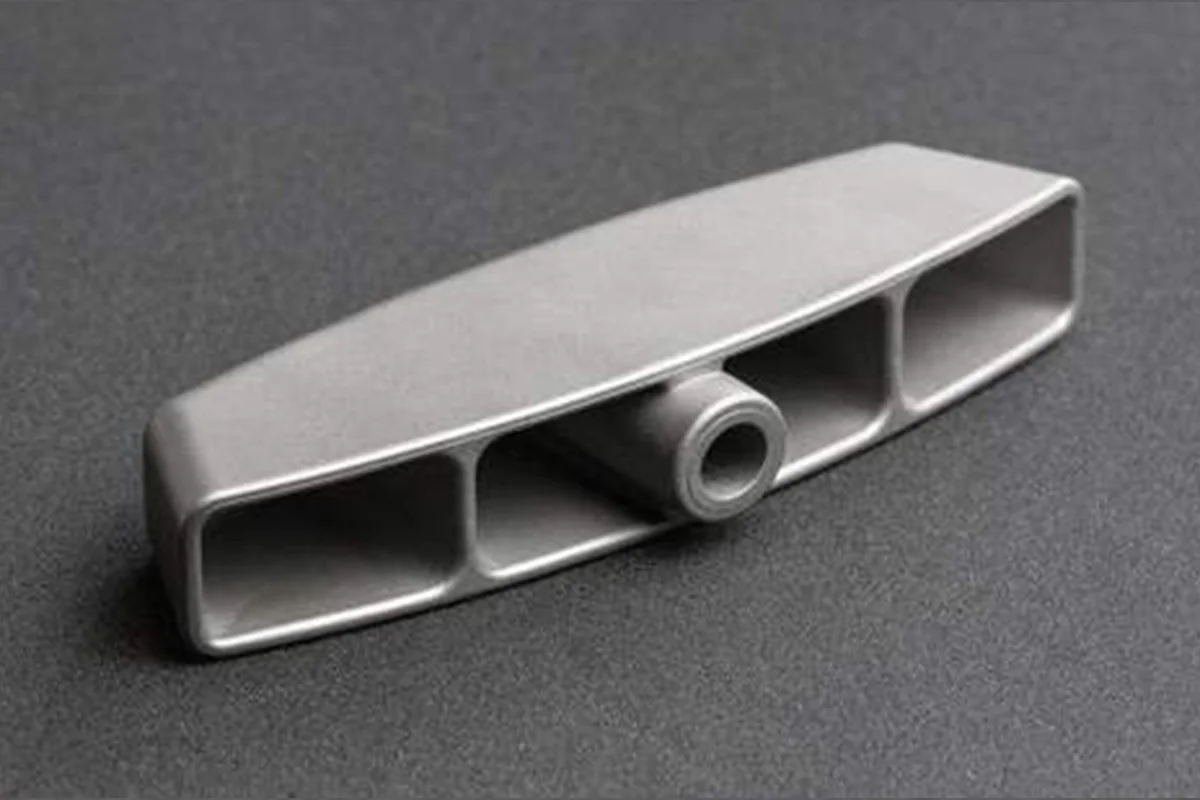
Ti-6Al-4V orthopaedic surgical-instrument handle — Element 22
A PIM International feature identifies an approximately 80 g Ti-6Al-4V MIM handle used as an orthopaedic surgical-instrument component. Its hollow geometry is documented, but the publication does not provide complete cleaning or sterilization qualifications.
Material-selection relevance: The example demonstrates a specific titanium MIM instrument component, not blanket medical approval, implant suitability, or proof that titanium is preferable for every medical mechanism.
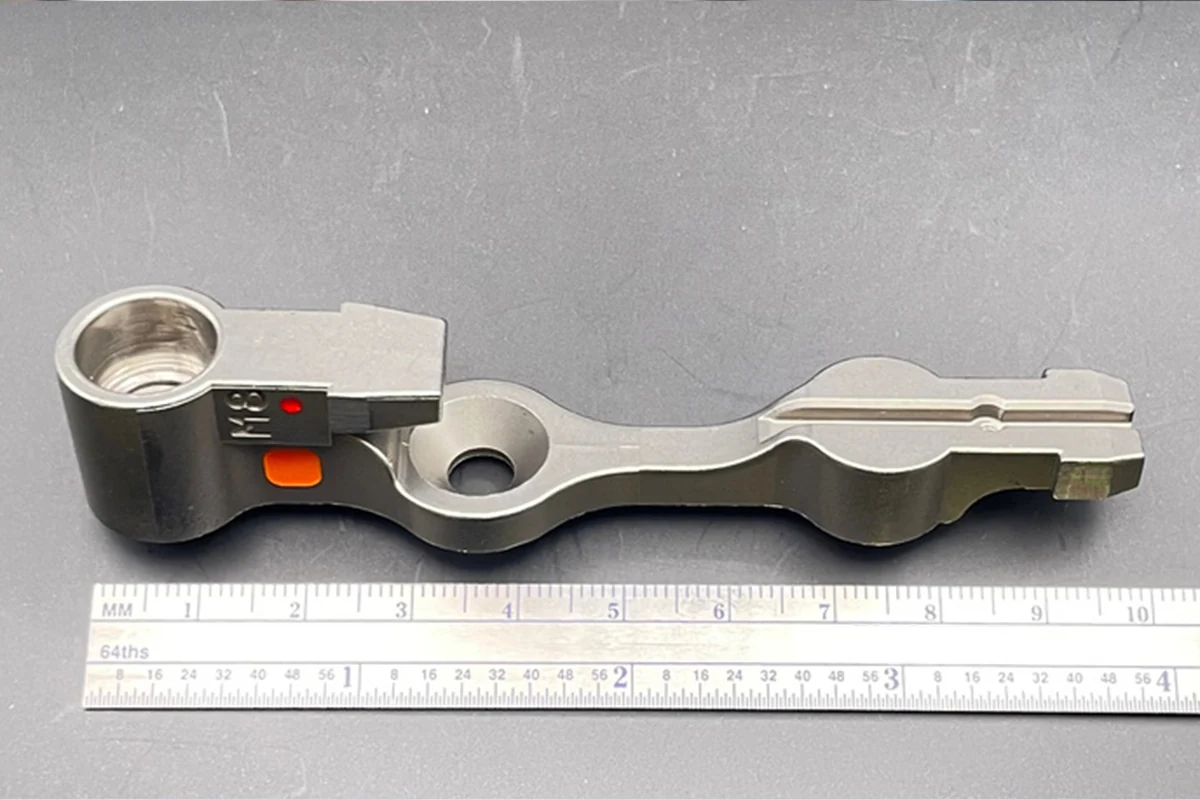
316L portable digital X-ray equipment bracket — CASTEM
CASTEM lists a stainless steel 316L MIM bracket for a portable digital X-ray diagnostic device. The manufacturer confirms the material and application category, but does not publish the bracket’s exact operating load, cleaning chemistry, tolerance or production volume.
Material-selection relevance: A corrosion-resistant stainless grade can be appropriate for medical-equipment hardware when it meets the actual specification; the device application alone does not require titanium.
Grade specificity matters: The same CASTEM brochure identifies other components as 17-4 PH MIM forceps parts, illustrating why a medical mechanism needing a different strength response may require a different stainless grade rather than a titanium substitution. The manufacturer does not disclose the exact role of each forceps subcomponent. Source: CASTEM medical MIM samples.
حدود الدليل: The four photographs document third-party manufacturer or publication examples. They are not XTMIM production records, comparative material tests, or evidence of XTMIM titanium MIM qualification.
Related application details are covered under MIM medical-device components و wearable-device components.
How to Choose Between Titanium and Stainless Steel for Your MIM Part?
The matrix below combines mandatory performance requirements, material grade, the supplier’s demonstrated MIM capability, and total project cost. Each result is conditional: an otherwise attractive material must be rejected or paused when a required property or production route cannot be verified.
| حالة المشروع | الاتجاه الأولي | Condition that can overturn the choice |
|---|---|---|
| Verified weight reduction is required and consequential. | Evaluate titanium first. | Reject or pause if feedstock, mechanical properties, cost, or qualified sintering route cannot be supported. |
| Stainless grade meets corrosion, strength, and wear requirements. | Evaluate stainless steel first. | Reopen titanium if weight, customer specification, or a tested environmental limitation makes stainless unacceptable. |
| High hardness or sliding contact is the priority. | Review suitable stainless grades first. | Check actual wear pair, hardness condition, lubrication and potential titanium surface engineering. |
| A specified titanium grade is mandatory. | Titanium route, subject to feasibility. | A grade requirement does not waive qualification of MIM feedstock, chemistry, sintering, and final properties. |
| Small weight saving with no demonstrated function benefit. | Prefer a validated stainless route where it meets the print. | Compare accepted-part cost; do not pay for nominal material prestige alone. |
| No supplier can demonstrate the required chemistry, dimensional control, or quality evidence. | Stop before tooling. | Resolve grade or specification, test method and route ownership; consider another qualified process or supplier. |
The selected grade must pass three checks together: it meets the drawing and service requirements, the supplier can demonstrate a suitable MIM and finishing route, and the total cost of accepted parts is viable.
What Must Be Verified Before You Lock the Material and MIM Tooling?
A material decision is ready for tooling only when the customer requirements and the supplier's feasibility evidence agree. An attractive comparison chart cannot replace a documented grade, controlled manufacturing route, drawing review, and agreed acceptance criteria.
| مدخلات المشروع | Customer should define | Supplier must demonstrate or confirm |
|---|---|---|
| الهندسة | 2D drawing, 3D CAD, critical datums, threads, slots and thin features. | MIM feasibility, gates, sintering supports, post-machining need. |
| المادة | Requested grade, alternate grades allowed, performance priority. | Exact available feedstock, chemistry basis, processed-part data. |
| التعرض للخدمة | Load history, sweat, moisture, disinfectants, corrosion or wear conditions. | Relevant grade suitability and test / finishing proposal. |
| الفحص | Critical tolerances, surface roughness, cosmetic acceptance, required tests. | Measurement approach, achievable capability, material test evidence. |
| الاقتصاديات | Prototype quantity, forecast annual volume, cost and delivery targets. | Tooling, samples, total accepted-part cost, qualification plan. |
| التأهيل | Customer-specific standards, controlled-use requirements, documentation needs. | Which requirements are already validated and which require development or external qualification. |
Minimum material-specific verification: For a proposed titanium MIM route, ask which final-part oxygen, carbon and nitrogen limits, density and mechanical acceptance properties apply, and who will test them. For a proposed 316L or 17-4 PH MIM route, confirm the exact grade, final condition, heat-treatment requirements where relevant, corrosion/surface tests and dimensional capability. The applicable values must come from the project specification and appropriate standard, not from an unrelated marketing datasheet.
Include both candidate grades and their allowable alternatives in the same RFQ package, alongside the drawing and test requirements. For document preparation, see the دليل إعداد طلب عرض أسعار MIM. If a supplier has not qualified a titanium route, that limitation must be clear before quotation or tooling.
Standards and medical-use boundary
ASTM B883-24 concerns MIM materials including ferrous grades; MPIF Standard 35-MIM (2025 edition) identifies MIM titanium grades and additional stainless specifications. ASTM F2885-17(2023) has a particular scope for MIM Ti-6Al-4V components used in surgical-implant manufacture. None of these standards automatically certifies a factory or grants approval to a customer's finished device. The correct specification and qualification path must be determined for the actual use.
مراجع فنية
The sources below support the stated material properties, manufacturing constraints and published part examples. They are not XTMIM material test reports or manufacturer certifications.
- MPIF Standard 35-MIM (2025): official edition announcement - scope and added MIM titanium grades.
- ASTM B883-24: مواد القولبة بالحقن المعدني (MIM) - scope for ferrous and selected other MIM materials.
- U.S. National Bureau of Standards: Ti-6Al-4V properties, Table 4 - compiled density (4.43 g/cm3) and Young's modulus (110 GPa); not sintered MIM qualification data.
- Alleima: Sanmac 316/316L product datasheet - reference density (8.0 g/cm3) and Young's modulus (200 GPa at 20 C) for bar stock, not MIM acceptance data.
- Lim et al., Powder Technology (2024): titanium MIM clean-binder feedstock - impurity control and binder-removal engineering considerations.
- Su et al., Materials (2022): Ti-6Al-4V sintering simulations and experiments - evidence for geometry-dependent shrinkage, deformation and support effects.
- ASTM F2885-17(2023) - limited scope for selected MIM Ti-6Al-4V surgical-implant components.
- حافظات ساعات ذكية من التيتانيوم Ti-6Al-4V بتقنية MIM من ElementPlus — PIM International, Dec. 2020, pp. 86–87; supplier-reported pilot, sintered-density/finishing information and watch-case images.
- ZCMIM: معرض أجزاء الساعات المصنعة بتقنية MIM — Manufacturer-published 316L MIM watch-case and smartwatch-shell examples, dimensions and post-treatment routes.
- حافظة جهاز قابل للارتداء من تيتانيوم MTIG بتقنية MIM (2026) — PIM International, Feb. 2026; manufacturer-reported titanium wearable case, exact grade of pictured part not published.
- مقبض جراحي MIM من التيتانيوم Ti-6Al-4V (العنصر 22) — PIM International, June 2020, Fig. 10; approx. 80 g MIM Ti-6Al-4V surgical instrument handle.
- كتالوج عينات XTMIM الطبي بتقنية القولبة بالحقن المعدني — CASTEM Technology Labs, MIM Samples page; 316L X-ray equipment bracket and 17-4PH forceps parts (PART-115 and PART-117).
Need an engineering material decision before tooling?
Send the drawing and CAD model with candidate grades, operating environment, critical tolerances, finishing and estimated volume. The engineering review should confirm which route is already supported and which requirements still need sample testing before tooling approval.