
تكلفة القولبة بالحقن المعدني | دليل الهندسة وطلب عرض الأسعار
تكلفة القولبة بالحقن المعدني تتكون من مكونين متميزين: الاستثمار لمرة واحدة في قالب إنتاج وتأهيل المشروع، والتكلفة المتكررة لكل جزء معدني نهائي مقبول. يعتمد التقدير الموثوق على هندسة الجزء، والمادة، والتفاوتات الحرجة، والعمليات الثانوية، وحجم الإنتاج المتوقع، وحالة التسليم المتفق عليها.
نشرت XTMIM سابقًا 5,500 دولار أمريكي للقالب الواحد كمرجع لبعض تكوينات الأدوات القياسية. هذا الرقم ليس عرضًا ثابتًا أو تقديرًا لتكلفة الوحدة لجزءك. هناك حاجة إلى مراجعة قائمة على الرسم لتحديد ما إذا كانت تقنية MIM يمكن أن تقلل من التكلفة مدى الحياة لمكونك المحدد.
جميع أمثلة تكلفة الوحدة الرقمية أدناه هي حسابات توضيحية، وليست عروض أسعار للعملاء أو أسعار تصنيع مضمونة. مرجع الأدوات خاص بتجارب XTMIM المنشورة سابقًا.
كم تبلغ تكلفة القولبة بالحقن المعدني (MIM)؟
لا يوجد سعر قياسي للجزء النهائي للقولبة بالحقن المعدني المخصصة. تتضمن الميزانية الواقعية قالب الإنتاج وأي أعمال تأهيل مشحونة بشكل منفصل مع سعر كل جزء نهائي مقبول عند كمية محددة. يعتمد المبلغ النهائي على الرسم الهندسي، وسبائك المعدن، والتفاوتات، والعمليات الثانوية، ومتطلبات الفحص، والحجم المتوقع على مدار البرنامج. يفصل الجدول الأرقام التي يمكن مناقشتها مبدئيًا عن تلك التي تتطلب عرض سعر يعتمد على الرسم الهندسي.
| سؤال التكلفة | إجابة مفيدة | ما الذي يحدد الكمية؟ |
|---|---|---|
| كم تبلغ تكلفة القالب؟ | مرجع XTMIM منشور سابقًا: حوالي 5,500 دولار أمريكي لبعض تكوينات الأدوات القياسية؛ تأكيد النطاق. | استراتيجية التجويف، المنزلقات أو الإدخالات، قذف الجزء، تعقيد الأدوات، تعويض الانكماش، ومتطلبات التجربة. |
| كم تبلغ تكلفة كل جزء MIM؟ | يتطلب عرض أسعار خاص بالجزء؛ لا يوجد سعر ثابت لكل جزء أو لكل جرام موثوق. | المادة والوزن، خطة الإنتاج، التفاوتات النهائية، التشطيب، الفحص، وإنتاجية العملية. |
| ما هي التكلفة الإجمالية للمشروع؟ | رسوم لمرة واحدة + تكلفة الجزء المقبول المتكررة حسب الحجم ذي الصلة. | حجم القبول مدى الحياة، مشتمليات العرض المتفق عليها، وأي عمليات يتم فوترتها بشكل منفصل. |
سبق لـ XTMIM أن أشارت إلى حوالي 5500 دولار أمريكي لبعض تكوينات قوالب MIM القياسية. هذا مرجع ميزانية تاريخي،, وليس عرضًا ثابتًا حاليًا أو سعرًا متوسطًا في الصناعة. يجب أن يحدد الاقتراح الخاص بجزء فعلي عدد التجاويف، والشرائح أو الإضافات، ومادة الأداة، وعمر الخدمة المتوقع، وبدلات التجربة والتأهيل، والتعديلات المضمنة، وأي تجهيزات مخصصة. قد يكلف القالب الذي يبدو غير مكلف في البداية المزيد على مدار البرنامج إذا تم استبعاد تصحيحات التجربة الضرورية أو أعمال التأهيل.
ما الذي تتضمنه عروض أسعار MIM؟
قد يقدم موردان شروط تسليم مختلفة لنفس الرسم: قطعة خام بعد التلبيد، أو جزء بعد التشغيل الآلي الحرج، أو مكون مكتمل وفحصه بالكامل. قبل مقارنة أسعارهم، تأكد من العمليات ومتطلبات القبول التي يشملها كل عرض سعر. السعر الوحدوي الأقل ليس بالضرورة تكلفة أقل لنفس الجزء النهائي.
تكاليف الأدوات لمرة واحدة وتطوير المشروع
يجب أن يسمح قالب MIM بإخراج الجزء الضعيف ميكانيكيًا جزء أخضر من التجويف وأن يتوقع التغير البعدي أثناء إزالة المادة الرابطة والتلبيد بدرجة حرارة عالية. يعكس سعره أكثر من مجرد تشغيل تجويف: تصميم بوابة ومجرى، أسطح الفصل، قوة القلب، الإخراج، التجويفات، الإدراجات أو المنزلقات، تعويض الانكماش، وتجارب القالب المخطط لها كلها تؤثر على العمل. يعتمد سلوك الانكماش على مادة التغذية، هندسة المكون، ومسار العملية، لذلك يجب التحقق من التعويض النهائي والأداء البعدي من خلال أجزاء تجريبية بدلاً من افتراضها من عامل انكماش اسمي واحد. قد يتم تضمين أخذ العينات، واختبارات التأهيل، ومثبتات التلبيد المخصصة، وتجهيزات التشغيل في الاقتراح الأولي أو تسعيرها بشكل منفصل. قم بتأكيد شروط الملكية والصيانة والتخزين، وجولات التجارب، ومن يدفع مقابل المراجعات قبل تفويض القالب. لمزيد من التفاصيل حول محركات التكلفة هذه، راجع سبب ارتفاع تكلفة أدوات MIM.
التكلفة المتكررة لكل جزء نهائي مقبول
لكل دفعة إنتاج، يتم حقن مادة التغذية في القالب، وإزالة المادة الرابطة، وتلبيد الهيكل المسحوق المتبقي إلى الحالة المطلوبة. قد تشمل تكلفة الجزء النهائي المسلم والمقبول أيضًا المناولة، ودعامات التلبيد، والحفر أو التنصيص، والتجويف، والتشطيب باستخدام CNC، والمعالجة الحرارية، والمعالجة السطحية، والفحص، والتعبئة والتغليف. المعيار الصحيح للتكلفة هو عدد الأجزاء التي تلبي معايير القبول المتفق عليها، وليس عدد الأجزاء الخضراء المقولبة أو الأجزاء الملبدة المنتجة. خسائر العملية، التحميل الإضافي للفرن، إعادة المناولة، وجهد الفحص مهمة لأنها تزيد من الموارد المستخدمة لكل مكون مقبول. قد يدرج المورد بالفعل خسائر الإنتاجية العادية والعمليات الثانوية في سعر الجزء النهائي؛ يجب على المشتري عدم إضافة تلك الرسوم مرة أخرى.
فحص توضيحي للمردود (ليست بيانات إنتاج XTMIM): إذا تكبدت دفعة ما 200 دولار أمريكي في مرحلة معالجة قابلة للتطبيق وأنتجت 92 جزءًا مقبولاً من 100 جزء تم البدء بها، فإن هذه المرحلة تساهم US$200 ÷ 92 = US$2.17 لكل جزء مقبول, وليس US$2.00 للجزء الذي تم البدء به. هذه الحسابات توضح سبب تأثير نسبة القبول على اقتصاديات الأجزاء المسلمة. لا تبرر إضافة نسبة خردة أخرى إلى سعر المورد عندما يكون المورد قد سمح بالفعل بالخسائر العادية.
| سطر عرض الأسعار | توقيت التكلفة | ما يجب على المشتري تأكيده |
|---|---|---|
| القالب والأدوات الأولية | عادةً مقدمًا أو يتم استردادها بموجب هيكل تسعير متفق عليه | عدد التجاويف، نطاق التجربة، شروط الملكية والتعديل. |
| الهندسة / التأهيل / التركيبات | مرة واحدة إذا تم فرض رسوم عليها بشكل منفصل | ما هو مدرج في سعر القالب، ونطاق الاختبار، ومعايير الموافقة. |
| مادة التغذية + القولبة + إزالة المادة الرابطة + التلبيد | تكلفة التصنيع المتكررة | وزن الجزء، درجة المادة، خطة الدفعة، والإنتاجية المقبولة المتوقعة. |
| العمليات الثانوية الضرورية | متكررة، ما لم يتم تسعيرها كخدمة منفصلة | أسطح حرجة محددة، خيوط، معالجة حرارية، طلاء، وتشطيب. |
| الفحص + التعبئة والتغليف | عادة ما تكون جزءًا من تكلفة التسليم، وأحيانًا بند تسعير منفصل | خطة الفحص، مستندات القبول، أساس التعبئة والتسليم. |
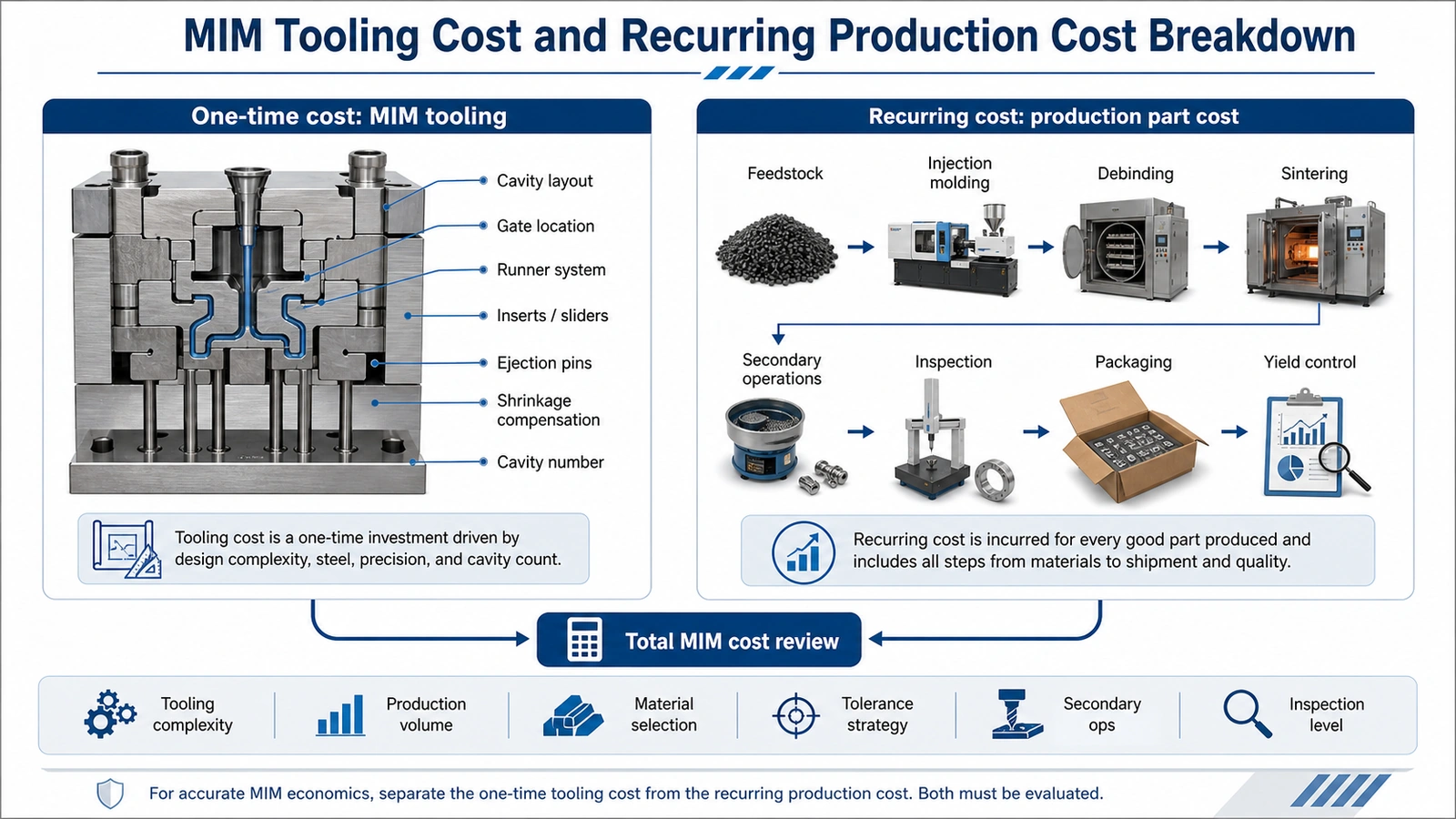
قد يخفي سعر جزء MIM المنخفض ظاهريًا ببساطة عمليات تشغيل آلية أو فحص يدرجها مورد آخر. على العكس من ذلك، قد يكون اقتراح الأدوات الأعلى قليلاً مبررًا اقتصاديًا إذا كان يدعم تخطيط تجويف مستقر، أو عيوبًا أقل، أو عمليات متكررة أقل. لا يوجد خيار أفضل تلقائيًا؛ تصبح المقارنة ذات مغزى فقط عندما تغطي كلا الاقتباسين نفس مراجعة الرسم، ومواصفات المواد، ومعايير القبول، وحالة التسليم النهائية.
تجنب العد المزدوج. إذا كان سعر الوحدة يسترد بالفعل تكلفة الاستثمار في القالب، أضف فقط رسومًا لمرة واحدة يتم إصدار فواتير بها بشكل منفصل. وبالمثل، لا تضف تكاليف التشغيل الآلي أو الفحص أو خسائر العملية العادية مرة أخرى عندما يتم تضمينها في سعر الجزء النهائي المقبول من المورد.
لماذا تختلف تكاليف أجزاء MIM المتشابهة؟
الوزن المتشابه لا يعني تكلفة MIM متشابهة. قد تتطلب قطعتان من نفس درجة الفولاذ المقاوم للصدأ إجراءات قالب مختلفة، ودعمًا للتلبيد، وتشغيلًا آليًا لاحقًا، وفحصًا. ينشأ اختلاف التكلفة عندما تتغير ميزة في الرسم كيفية تحرير الجزء الأخضر، وكيف ينجو من إزالة المادة الرابطة والتلبيد، أو كيف يجب فحص الجزء النهائي وتسليمه.
هندسة الجزء، وتعقيد القالب، ومخاطر التلبيد
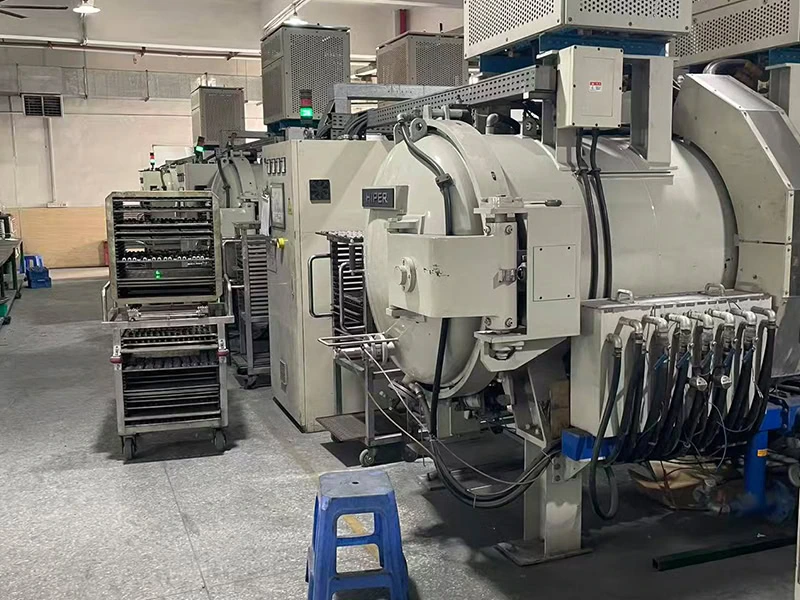
تؤثر هندسة MIM على التكلفة أولاً عند الحقن والإخراج، ثم مرة أخرى بعد إزالة المادة الرابطة. قد تتطلب الفتحة الضيقة العميقة قلبًا نحيفًا؛ وقد يتطلب التجاويف الداخلية المنفصلة شريحة أو قالبًا مقسومًا؛ ويجب أن يملأ البوابة التجويف دون إنشاء عيوب تدفق غير مقبولة أو علامات على الأسطح الوظيفية. يناقش دليل التصميم الصناعي وضع البوابات لتشجيع التدفق من الأقسام السميكة نحو الأقسام الأرق وتوازن العدّايات في قوالب متعددة التجويف. بعد الإخراج، يجب أن ينجو الجزء الأخضر الذي يحتوي على المادة الرابطة من المناولة، وإزالة المادة الرابطة، وانكماش التلبيد الكبير. قد يصبح تغيير سمك الجدار، أو الأذرع الطويلة غير المدعومة، أو أوجه الاتصال المختارة بشكل سيء أكثر صعوبة في التحكم في التشوه أو تلف السطح. قد يصبح المُثبّت المخصص أو خطوة تحجيم إضافية جزءًا من مسار التصنيع الفعلي. هذه النتائج مشروطة بالهندسة، والمادة الخام، والاتجاه، وإعدادات العملية - وليست دليلاً على فشل ميزة معينة. انظر دليل MIMA للتصميم المعقد لاعتبارات البوابة، والإخراج، والسمك، ودعم التلبيد.
لمراجعة التكلفة المستندة إلى الرسم، حدد مناطق اتصال البوابة والمُخرج المقبولة، وتحقق من الوصول إلى القلب واتجاه تحرير القالب في CAD، وحدد الأسطح التي يمكن أن تدعم الجزء أثناء التلبيد دون إتلاف وجه وظيفي. توفر تجارب القوالب والعينات الأولية بعد ذلك قياسات لتعويض الانكماش والأبعاد المحددة. حتى يتم الانتهاء من عمليات الفحص المتفق عليها، فإن الإنتاجية المتوقعة والتفاوتات بعد التلبيد تنتمي إلى افتراضات عرض الأسعار بدلاً من تقديمها كقدرة إنتاج مؤكدة.
اختيار المواد، وزن الجزء، وتكلفة المعالجة
تحديد اسم سبيكة مألوفة فقط لا يكفي لتحديد تكلفة التصنيع. الـ الحالة النهائية المطلوبة—على سبيل المثال، الأداء المقاوم للتآكل للفولاذ المقاوم للصدأ 316L أو حالة معالجة حرارية/قوة محددة لـ 17-4PH—يؤثر على كيفية معالجة الدرجة المختارة والتحقق منها. تؤثر خصائص المسحوق ونظام مادة التغذية المؤهل على الملء، وإزالة المادة الرابطة، والتلبيد، وقابلية التكرار الأبعاد. يمكن أن يؤدي التغيير إلى تركيبة مسحوق أو مادة رابطة غير مألوفة إلى إدخال أعمال تطوير وتأهيل حتى لو كان سعر مادة خامها المقتبس أقل. يؤثر وزن الجزء على استهلاك المواد، ولكن توزيع الكتلة وسمك المقطع يمكن أن يقيدا أيضًا إزالة المادة الرابطة، وسعة دفعة التلبيد، والتعامل مع الجزء، ووقت الدورة. لذلك، فإن قسمة سعر مادة التغذية على وزن المكون ليست طريقة موثوقة لحساب تكلفة الجزء النهائي. يجب التحقق من ملاءمة المواد مقابل الرسم والمواصفات المتفق عليها النهائي الخصائص؛ معيار MPIF 35-MIM هو مرجع لمواصفات المواد، وليس قائمة أسعار.
التفاوتات، العمليات الثانوية، وتكلفة الفحص
قد يتطلب الرسم الذي يحتوي على تجاويف متقاربة، أو أسطح مانعة للتسرب، أو خيوط، أو متطلبات تسطيح، أو أسطح جمالية، تشغيلًا آليًا، أو معايرة، أو طحنًا، أو تنصتًا، أو تشطيبًا للأسطح بعد التلبيد. يصف MIMA تقريبًا ±0.3% كمتوسط عام على مستوى العملية للتفاوتات القياسية لتقنية MIM بعد التلبيد، مع التأكيد على العمليات الثانوية للميزات الأكثر تطلبًا؛ هذا ليس ضمانًا لقدرات XTMIM ولا يمكن تطبيقه بشكل أعمى على كل بعد أو هندسة. يمكن لتعويض القالب ضبط الانكماش المنهجي، ولكنه لا يمكنه بمفرده إزالة التشوه، أو الاختلافات بين التجويف والآخر، أو عدم كفاية قدرة القياس. يجب أن يحدد الرسم الهندسي نقطة البيانات الحرجة وظيفيًا وطريقة القبول، ثم يجب على المورد شرح الميزات المتوقعة بعد التلبيد وتلك التي تم تسعيرها للتشطيب. لفحص أقرب لتأثيرات عروض الأسعار هذه، انظر كيف تؤثر العمليات الثانوية على تكلفة طلبات عروض أسعار MIM.
مثال هندسي أ · مقارنة تصميم افتراضية
جزأين متشابهين من الفولاذ المقاوم للصدأ، بتكاليف تصنيع مختلفة
ضع في اعتبارك تصميمين من الفولاذ المقاوم للصدأ بكتلة مماثلة ونفس المتطلبات لـ 8000 جزء مقبول. Part A has relatively even wall thickness, a straightforward mold-release direction and close tolerances only on functional interfaces. Part B has a deep slot, thick-to-thin transitions, extensive close-tolerance callouts and specified tapping, machining and polishing after sintering. Part B may therefore require a more demanding core or mold action, specific sintering support and additional inspected operations. The extent of those costs cannot be established from weight or appearance alone; it needs a tool concept, process plan and quotation. These are hypothetical designs, with no measured price difference or yield data.
| Engineering feature | Part A (illustrative) | Part B (illustrative) | What changes in cost review |
|---|---|---|---|
| Material and quantity | Same stainless steel; 8,000 parts | Same stainless steel; 8,000 parts | These variables alone do not explain the difference. |
| Wall / slot geometry | Relatively uniform walls | Uneven walls; deep narrow slot | Review green-part ejection, debinding, support and distortion risk. |
| استراتيجية التفاوتات | Selected functional dimensions controlled closely | Most features marked to tight limits | Review capability and need for additional machining or inspection. |
| Secondary work | محدود | التنصت، التشغيل الآلي، التلميع | Additional recurring operations change delivered-part cost. |
| Before-quote action | Confirm key interfaces | Identify noncritical requirements and redraw only with customer approval | Verify a technically equivalent specification before quoting. |
To evaluate the difference, mark the function-critical surfaces and permitted gate and ejector locations on both drawings. Review core support and any moving mold actions, establish whether special sintering setters are needed, then list the machining and inspection required for each design. Trial measurements can determine whether the proposed tolerances are realistic. If a change to the slot, wall transition or nonfunctional tolerance could reduce work, obtain customer approval before issuing a revised quotation. Both prices should describe parts in the same accepted finished condition.
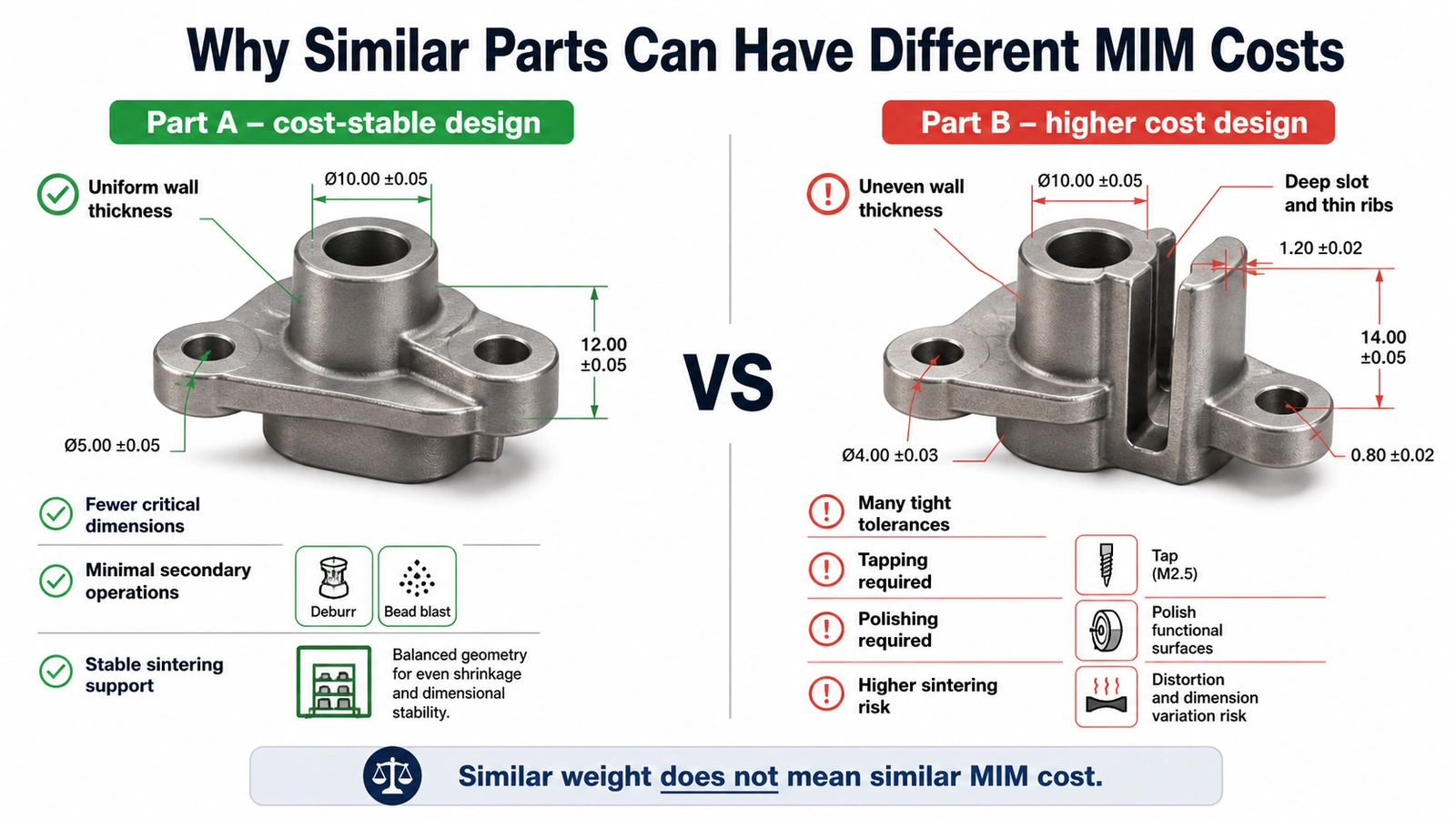
Mold release, sintering orientation and finishing requirements affect one another. A MIM design-for-cost review before the tool is finalized can prevent a design change from turning into repeated tooling, sample and qualification work.
كيف تقدر تكلفة جزء MIM لكل قطعة؟
For a custom MIM project, lifetime economics and the first-order budget are different calculations. Tooling amortization distributes the initial investment across expected accepted parts to compare manufacturing options; it does not change when the supplier invoices the mold. The estimate should therefore state both the forecast quantity and the actual payment terms. It also should not be mistaken for a calculation of the supplier's internal production cost or margin.
Calculate Total Project Cost and All-In Unit Cost
Estimated Total Program Cost = F + (N × Cمسلمة)
Estimated All-In Cost per Accepted Part = (F ÷ N) + Cمسلمة
F is the total genuinely separate one-time tooling, fixtures and qualification investment not already recovered in the quoted unit price; N is the number of accepted finished parts delivered within the chosen forecast period; and Cمسلمة is the price per accepted, finished part for the specified material, operations and inspection. This simple model assumes a constant delivered-part price and no additional tooling events. If orders have different prices or a tool is expected to require refurbishment, the better model is to add the actual lot-by-lot spending and any additional investment. Do not insert an extra yield allowance when the supplier's quoted unit price is already per accepted component.
Assume a separately invoiced 5,500 دولار أمريكي mold, a constant US$3.50 price per accepted finished part and 10,000 accepted parts over the program. Total nominal spending is US$40,500, equivalent to US$4.05 per part over its lifetime. If the first order is only 1,000 parts and the complete mold charge is due upfront, the immediate tooling and production payment is US$9,000, excluding any separately agreed freight, qualification or other charges. The US$4.05 figure is a planning average, not the invoice price of the first 1,000 units. These figures are hypothetical, not a customer quotation.
Tooling amortization falls as accepted lifetime quantity rises, provided that the same one-time investment serves the entire forecast and the finished-part price remains unchanged. In practice, batch size, material contracts, cavity count, production requalification, tool wear and maintenance can alter costs. Ask the supplier for realistic order-size pricing, expected tool service life and any refurbishment or replacement assumption. If a program requires a second mold or a separate major qualification, include its cost rather than spreading the first mold charge across volumes it cannot produce.
How Annual and Lifetime Volume Affect Tooling Amortization
Initial batch quantity describes the first purchase and its immediate cash need. الطلب السنوي informs repeat scheduling and how soon the tooling may be recovered. Expected lifetime accepted volume is the quantity relevant to an investment comparison across the program. One order of 4,000 units and a four-year program of 4,000 units each year have very different amortization outcomes.
Do not treat forecast volume as committed demand. If annual orders are uncertain, calculate at least a conservative volume case and the planned lifetime case. A higher-volume scenario may look attractive on paper while exposing the buyer to unrecovered tooling investment if repeat orders do not occur. Keeping these cases separate is more useful than applying a universal annual MIM quantity threshold.
| Accepted lifetime volume | Tooling share at F = US$5,500 | Meaning for the cost model |
|---|---|---|
| 1,000 | US$5.50 / part | A large fixed-cost burden per accepted part. |
| 3,000 | US$1.83 / part | Tooling cost remains significant. |
| 5,000 | US$1.10 / part | Amortization decreases, subject to manufacturing fit. |
| 10,000 | US$0.55 / part | Fixed-cost share falls further. |
| 50,000 | US$0.11 / part | Tooling share is small, but recurring production cost remains. |
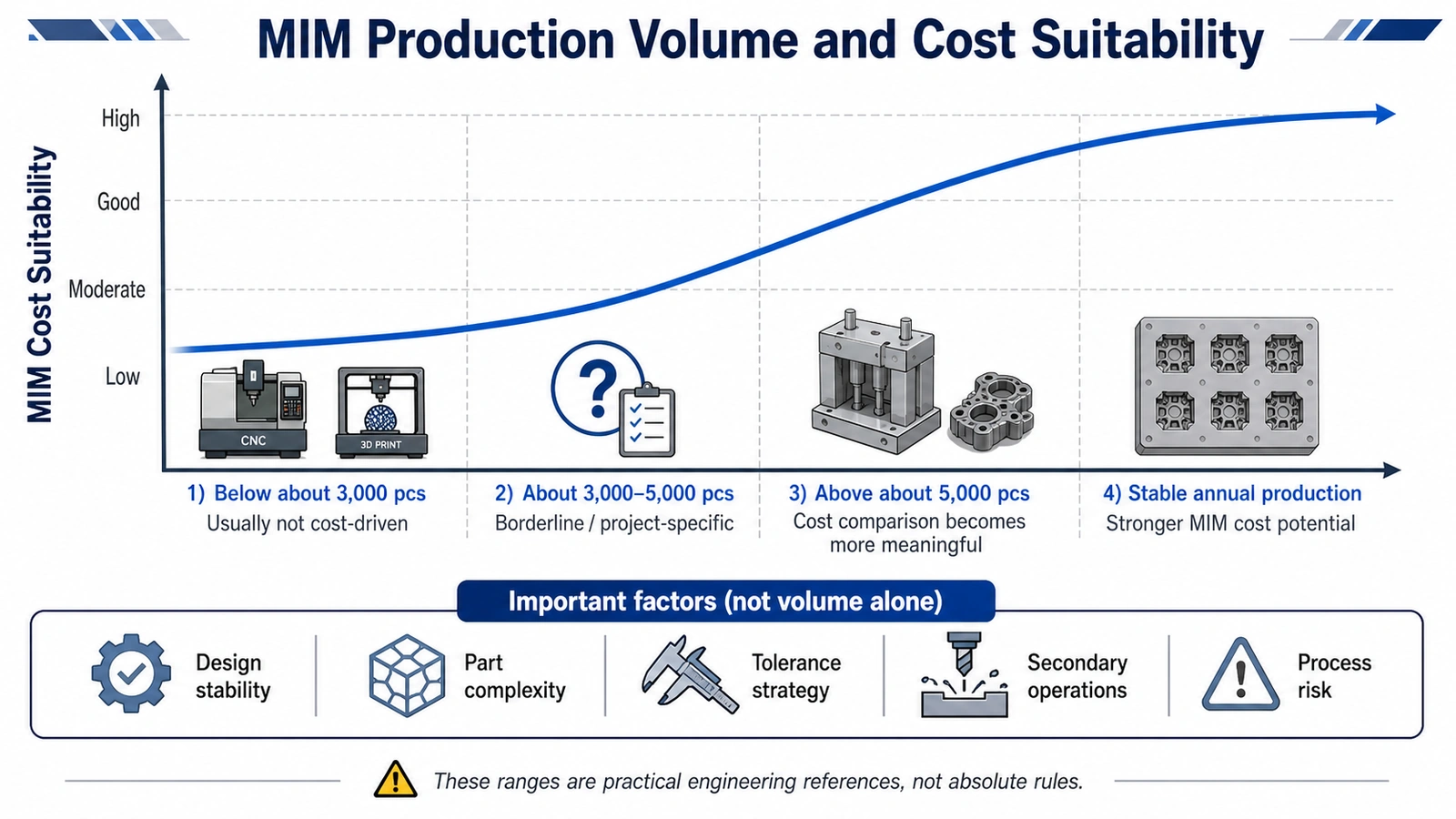
XTMIM has used approximate annual-demand screening cues: below 3,000 accepted parts per year often requires caution for purely cost-driven conversion; around 3,000–5,000 warrants a project-specific comparison; above roughly 5,000 may justify a full engineering and cost review. These are indicative XTMIM screening cues, not a contractual MOQ, an industry standard or a fixed break-even threshold. A design with strong machining savings and repeat demand may justify tooling below these levels, while a simple part may remain cheaper by another process at higher volumes.
Manufacturing condition: Favorable amortization does not prove that the proposed component can be molded, debound, sintered and inspected to its required specification. A production decision also needs an acceptable mold design, trial results and agreed functional and dimensional criteria.
When orders are uneven, the first batch is uncertain or production volumes will ramp up gradually, the MIM tooling amortization guide provides further detail on quantity planning and the effect of changing demand.
متى تكون MIM أرخص من التشغيل الآلي باستخدام الحاسب الآلي (CNC)؟
Metal injection molding can be cost-competitive with CNC machining when an existing metal part requires repeated setups, expensive material removal, fine-feature machining, deburring or assembly—and when the design is stable enough and the production quantity large enough to recover the mold investment. The comparison must be based on the same accepted finished part, not a MIM blank versus a fully machined and tested CNC component.
Compare the Same Finished-Part Requirements
Begin with the actual CNC routing and accepted finished-part cost: stock material, cutting/removal, setups, deburring, joining, heat treatment, finishing, inspection and handling. Next mark the features that MIM could form near net shape, and identify those that would still require machining or grinding. A material grade name alone does not establish performance equivalence: the final strength, corrosion behavior, heat-treatment condition, assembly fit and required testing must satisfy the same drawing and application. The MIM comparison must therefore include the production mold and trials, feedstock, molding, debinding, sintering, approved secondary operations and the accepted delivery condition. Counting all current CNC operations as removed while leaving necessary MIM finishing out of the calculation would create a false saving.
Near-net-shape molding may eliminate repeated setups and difficult fine-feature machining, while consolidating separate pieces can reduce assembly and inventory work. The combined geometry must still be released from the mold, debound and sintered without losing its required function. Precision bores, threads and sealing surfaces may remain machined. Those operations belong in the MIM finished-part price. The مراجعة التحويل من CNC إلى MIM explains how to assess which original CNC features may be molded and which need to stay machined.
Calculate the MIM vs CNC Break-Even Quantity
Under a simplified constant-unit-cost assumption, the break-even quantity is the one-time MIM investment divided by the saving per accepted finished part when compared with CNC. This relationship is valid only when both processes meet the same specification and when the CNC cost is higher than the recurring MIM cost. If the recurring MIM cost is equal to or higher than the CNC cost, this simple model has no positive payback quantity from tooling amortization alone.
Break-Even Accepted Quantity = F ÷ (CCNC − CMIM)
Hypothetical example: F = US$5,500; CNC accepted finished part = US$5.00; MIM accepted finished part after tooling = US$3.50. Recurring saving = US$1.50 per part. Break-even quantity = 5,500 / 1.50 ≈ 3,667 accepted parts.
| Accepted lifetime parts | CNC total (US$5.00/part) | MIM total (US$5,500 + US$3.50/part) | Lower-cost route in this example |
|---|---|---|---|
| 3,000 | 15,000 دولار أمريكي | 16,000 دولار أمريكي | CNC by US$1,000 |
| 4,000 | US$20,000 | US$19,500 | MIM by US$500 |
| 10,000 | US$50,000 | US$40,500 | MIM by US$9,500 |
The crossover depends on the accepted-part saving and on both processes meeting the same specification. With the same hypothetical US$5,500 investment, a saving of only US$0.50 per accepted part requires 11,000 parts to recover tooling, compared with about 3,667 parts at a saving of US$1.50. Added machining, qualification, replacement tooling or lower-than-expected acceptance yield can reduce or eliminate the saving. Confirm the complete production route and comparable finished-part quotations before approving tooling.
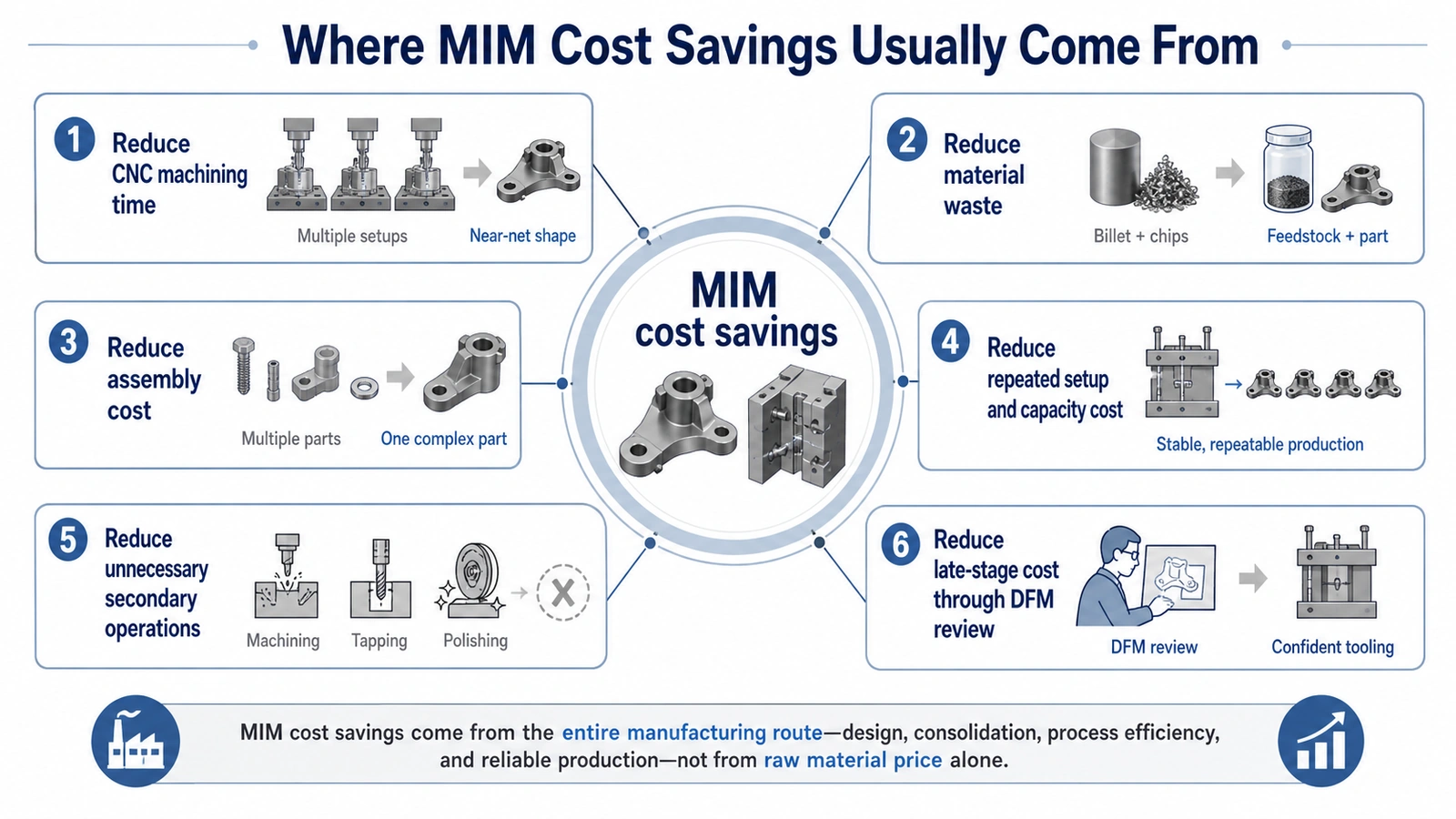
Engineering example B · Hypothetical CNC-to-MIM conversion
A CNC-Machined Stainless-Steel Bracket Under MIM Review
Consider a hypothetical stainless-steel bracket currently produced from bar stock through five CNC setups, deburring and joining two small features, with planned repeat demand of about 12,000 finished parts per year. Those operations make MIM worth investigating because one near-net component might eliminate some milling, multiple setups and assembly. But combining the features can change the section thickness, load path and sintering support requirements. A proposed unit price is only credible after identifying which CNC steps disappear, which precision fits remain machined, and whether an integrated MIM design satisfies the same strength and dimensional requirements. The volume and production steps are assumptions, not actual XTMIM order records.
| خطوة المراجعة | سؤال هندسي | Cost implication |
|---|---|---|
| المشكلة | Which repeated machining, deburring and assembly operations drive the present cost? | Potential opportunity to reduce repeated work. |
| السبب المحتمل | Are those operations necessary because of complex geometry that could be injection molded? | Near-net shaping might replace part of the CNC route. |
| التحقق | Can the bracket be molded and sintered with stable critical interfaces and required mechanical properties? | Mold trial, shrinkage review, validation and inspection must be considered. |
| Remaining work | Do two critical fits still require finish machining? | Retain the real secondary operations in the MIM accepted-part price. |
| قرار | Does the expected lifetime saving exceed tooling and qualification cost? | Proceed to quotation only if both technical and economic conditions are credible. |
Review the bracket's functional datums, joint loads and critical fit dimensions before considering a one-piece design. Identify which assembly operations would disappear and which tight-fitting surfaces would still need machining. Tolerance or cosmetic changes must receive customer approval. The assumed annual quantity of 12,000 parts supports a quotation study, but does not establish a cost saving or guarantee dimensional capability.
Before committing to production tooling, compare the proposed molded geometry, post-sinter machining plan, sintering supports and inspection method with the original bracket's load-bearing and locating requirements. Representative trial parts must meet the agreed functional criteria. If required machining increases or functional testing reveals a design problem, revise both the manufacturing plan and cost comparison rather than relying on the original assumed price.
متى لا تكون MIM فعالة من حيث التكلفة؟
A part may be technically moldable without offering an economic advantage. Production tooling requires an upfront commitment, and frequent drawing changes, uncertain demand or extensive machining after sintering can offset the benefit of near-net-shape production. These factors need to be examined before approving a mold, particularly when the current process already delivers the required quality at a competitive cost.
Low Volume, Design Changes, and High Post-Processing Costs
A prototype-only design usually needs speed and flexibility more than the recurring economies of a production mold. When the drawing is still changing, each revision can trigger new trial work, delayed qualification or mold rework. Even with repeat volume, tight specifications on many surfaces can require nearly as much finishing as the CNC route the project aimed to replace. Large and simple parts can also be poor candidates because material, handling, binder removal and furnace economics may not favor MIM.
Annual demand is only an initial screening measure. The stronger test is expected lifetime accepted quantity against a credible per-part saving. A small first order may be viable within a confirmed multi-year program, while a larger one-off order may still fail to recover tooling if the cost difference is small or negative. The low-volume MIM project review discusses the additional planning issues when repeat demand is uncertain.
When CNC, Pressed PM, Casting, or Metal 3D Printing May Be Better
التصنيع باستخدام الحاسب الآلي (CNC) is often practical when volumes are low, part designs change frequently or the shape is relatively simple. الطباعة المعدنية ثلاثية الأبعاد can support prototype validation or complex geometries before a production design is stable, although final surface and material requirements still need validation. الصب may suit larger parts and features that its tooling, tolerances and finishing routes can accommodate.
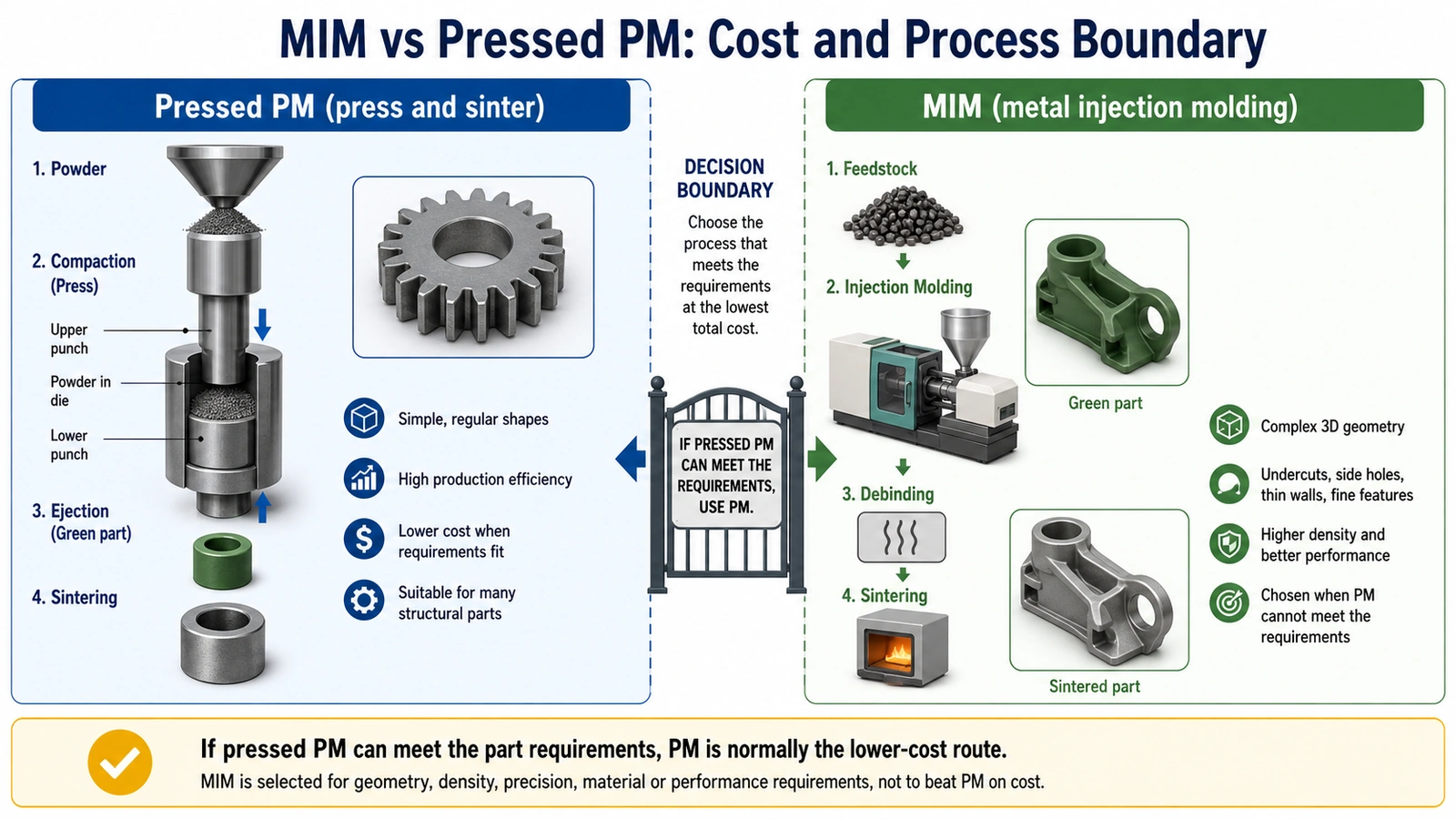
Conventional press-and-sinter powder metallurgy (PM) deserves special attention because the forming method uses primarily axial compaction and ejection. A shape that can be pressed and ejected directly, while meeting the required material, density, tolerances and performance, may be more economical than MIM. MIM is more attractive for three-dimensional detail and features that are difficult to produce in the pressing direction. However, geometry alone does not make MIM cheaper: a high post-machining burden or a large powder mass can still outweigh its near-net-shape advantage. The EPMA process guidance explains the pressing/ejection distinction, while the MIM vs pressed PM comparison covers the detailed process decision.
| حالة المشروع | Initial cost decision | Next sensible action |
|---|---|---|
| Drawing is changing; no repeat demand | MIM tooling is a weak default | Use CNC or another suitable prototyping route, then reassess. |
| Small complex part; stable design; credible repeat demand | Potential MIM candidate | Calculate delivered-part savings and request a DFM review. |
| Large simple form; limited fine features | Alternative route often stronger | Compare CNC, casting or other geometry-appropriate processes. |
| Pressed PM meets geometry and property targets | MIM often difficult to justify on cost alone | Review a PM quotation at equivalent acceptance requirements. |
| Many high-precision features still require machining | Potentially weak MIM economics | Estimate realistic finishing burden before tooling. |
Engineering example C · Hypothetical low-volume project
A Low-Volume Mechanism Part with a Changing Drawing
Consider a representative, hypothetical small mechanism part requiring fewer than 1,000 initial validation pieces. Its fit surfaces and assembly interfaces have not yet passed functional testing. MIM may seem attractive because a future mold could form its complex profile, but the dominant near-term uncertainty is whether the drawing will survive testing. An upfront tool can become partially unusable if an interface, thin wall or parting-sensitive feature is revised after samples; an apparently attractive recurring MIM unit price does not recover those sunk costs.
For a design still undergoing functional trials, make validation samples by a technically suitable flexible process, test critical fits and loads, and freeze the drawing revision and datum scheme before ordering a production mold. Document realistic annual orders and total expected accepted volume, then establish which features could remain as-sintered and which would need additional machining. A prototype produced by CNC or additive manufacturing does not automatically represent final MIM microstructure or performance, so the selected MIM material and finished part still require their own validation.
When the functional interfaces or material requirements are still changing, deferring production tooling limits exposure to mold changes and repeated trials. Once the design and expected demand are credible, a MIM DFM and cost quotation should state the sampling scope, responsibility for modifications and criteria for proceeding. A small first order alone is not grounds for rejection when a stable repeat-production program is planned.
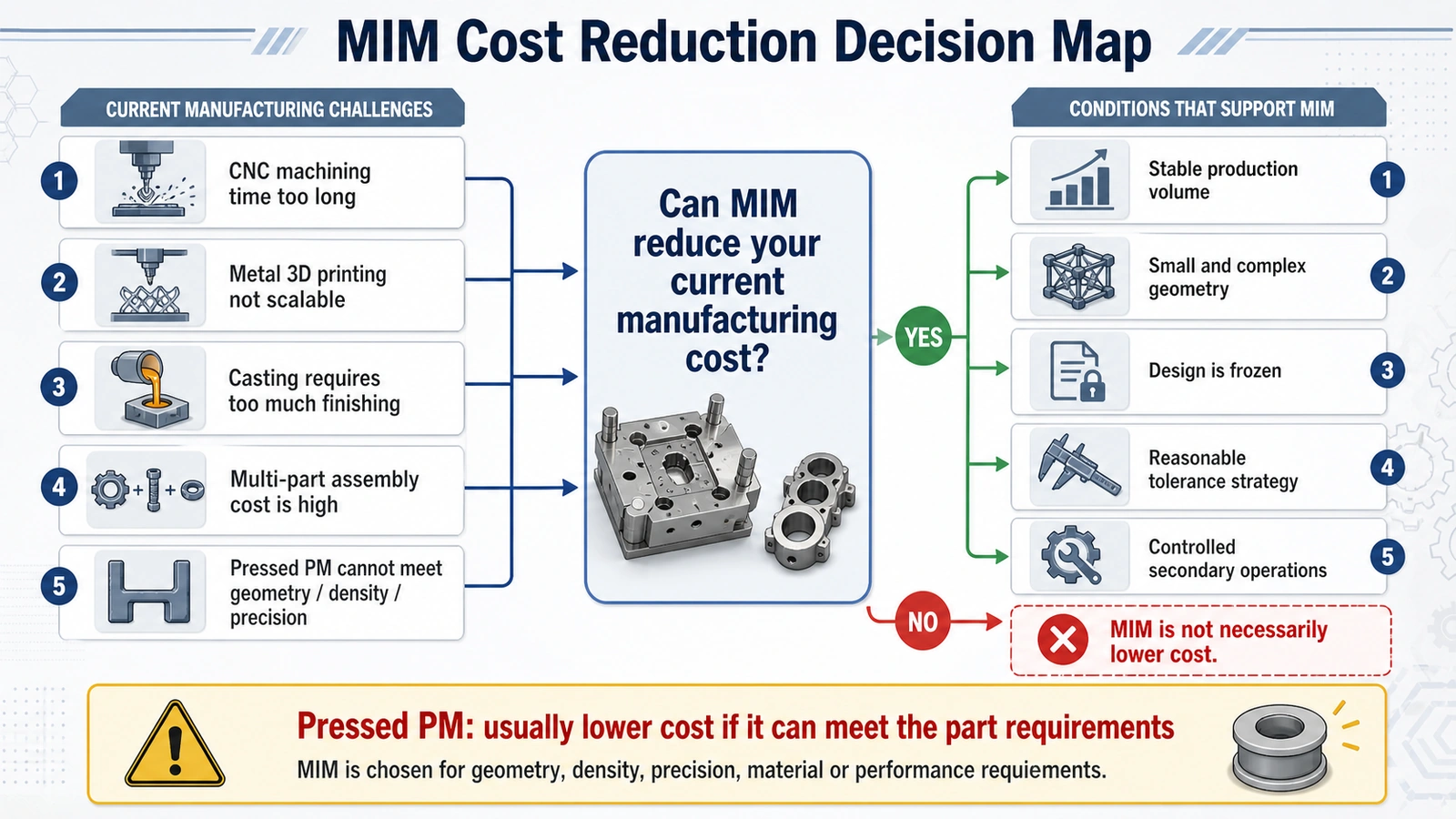
كيف يمكنك تقليل تكلفة MIM قبل تصنيع القالب؟
The best cost-reduction opportunities are usually identified before a mold is released for manufacture. Once gating, cavity geometry, ejection and shrinkage compensation are built into tooling, changes may require rework, additional trials or repeated validation. Cost reduction should remove unnecessary operations and over-specified requirements; it must not compromise the application's material performance, critical fit, wear resistance or inspection criteria.
Optimize Functional Tolerances and Part Geometry
تحديد functional datums, contact faces and critical fit dimensions before proposing any tolerance change. A precision mating bore or sealing surface may legitimately need finishing, while a non-contact external profile may be accepted in the as-sintered condition if trials show the required repeatability. A uniform-wall redesign can reduce debinding or sintering problems, but thickness cannot be reduced below what mechanical loading requires. Likewise, improving ejection direction, modifying a nonfunctional deep slot or adding a feasible support face may avoid tool actions or costly setters. For every design alternative, compare the exact requirement being changed, the expected manufacturing operation removed, and the validation required to maintain function. The customer or design authority must approve specification changes before the lower-cost route is quoted as equivalent.
A design-for-cost review should also check undercuts, deep slots and any surfaces that require a new mold action. Removing an unnecessary insert or simplifying a feature can improve tooling simplicity; keeping a genuinely necessary undercut may be the correct engineering decision even if it raises cost. Review all proposals through a formal DFM assessment and, where relevant, sample validation.
Reduce Unnecessary Secondary Operations and Production Risks
Identify every post-sinter step and why it is specified: machining a precision bore, tapping a functional thread, grinding a reference face, polishing an appearance-critical surface, or applying heat treatment or passivation for a stated property. Internal threads can sometimes be molded, but a complex unscrewing tool may cost more than tapping; select the route using geometry, tolerance and lifetime production economics, not a blanket rule that one method is always cheaper. Review whether a surface can remain as-sintered, whether a specified finish is necessary, and whether one operation can satisfy several legitimate requirements. When material substitution is considered, validate final strength, corrosion behavior, heat-treatment response and qualified feedstock availability; a lower powder price does not establish a lower accepted-part cost.
| عنصر المراجعة | Cost mechanism | Proposed engineering action | Verification / constraint |
|---|---|---|---|
| Critical vs noncritical tolerances | Excess machining and inspection when every dimension is tight | Mark the real fit / datum features and agree reasonable general tolerances elsewhere | Verify assembly function and acceptance criteria. |
| Uneven walls or difficult green-part ejection | Tool complexity, sintering support and potential scrap | Review wall transitions, feature access and mold-release strategy | Confirm strength, molding, debinding and distortion behavior. |
| Threads, bores and sealing faces | Additional drilling, tapping, sizing or grinding | Determine what must remain post-machined and what may be formed | Verify actual tolerance, finish and repeatability. |
| Surface and cosmetic specification | Polishing, plating, coating and extra inspection | Keep only necessary surface requirements | Validate application environment, appearance and performance. |
| Cavity count and repeat production | Upfront mold investment vs batch productivity | Compare viable cavity proposals against lifetime demand | Check filling balance, tooling life and production qualification. |
| تجميع متعدد الأجزاء | Inventory, joining and tolerance stack-up | Assess part consolidation only if the new shape is MIM-suitable | Validate fit, loading and quality acceptance. |
| Sintering support faces and long spans | Custom setters, distortion-related sizing and extra handling | Review resting orientation, common-plane supports and protected functional faces before tool release | Confirm sample flatness, contact marks and dimensional repeatability without compromising the design. |
A production-volume discussion should include realistic batch sizes, lifetime demand and projected changes. Multi-cavity tooling may be valuable for repeat production, but the larger initial investment must be justified through an achievable lower delivered cost and acceptable process stability. Tooling ownership and storage should be documented in the purchase agreement, not assumed from general industry practice.
Compare the approved original drawing with a customer-approved alternative under the same finished-part and inspection requirements. Request separate figures for any change in tooling investment, machining time, inspection work and acceptance-yield assumptions. Where the proposed saving depends on better dimensional stability, use measurements from representative trials; a guessed reduction in scrap is not an adequate basis for the revised price.
Geometry and tolerance changes should be checked against the MIM design for cost guide. إرشادات MIMA للعمليات الثانوية explains why machining, sizing and finishing can increase the cost of a delivered MIM component. Any reduction still has to be confirmed against the part's functional and inspection requirements.
Cost reductions are valid only when the finished part continues to meet its specified material properties, load-bearing requirements, critical datums, heat treatment and acceptance tests. Any proposed drawing change must be approved by the customer or design authority.
كيف تحصل على عرض سعر MIM موثوق؟
A reliable custom MIM quotation starts by agreeing on what constitutes an accepted finished part: the drawing revision, material and final properties, critical dimensions, finishing, test method, forecast quantity and delivery terms. The supplier then determines which requirements can be built into the mold and sintering route, which require a secondary operation, and which remain unresolved until a sample trial. A preliminary budgetary estimate is not a confirmed production capability. Its open assumptions should be visible so that later approval or rejection has a clear technical basis.
What Drawings and Production Data Should You Submit?
Provide the 2D controlled drawing and 3D STEP model together. The 3D model helps locate undercuts, cores, parting directions and local wall changes; the 2D drawing identifies which tolerances and datums must actually be met after sintering and any finishing. State material grade and required final condition, coatings, heat treatment, inspection method, key performance tests, first batch size, expected annual orders and realistic program lifetime. If the project is a CNC conversion, an existing routing or accepted finished-part price can help identify the real cost-reduction opportunity, although disclosure is optional. Flag any specifications still subject to customer confirmation rather than allowing different suppliers to assume different acceptance criteria.
| مدخلات طلب عرض الأسعار (RFQ) | Why the supplier needs it |
|---|---|
| 2D drawing and 3D STEP model | Define geometry, functional interfaces, moldability and tolerance requirements. |
| Material grade and intended final condition | Check feedstock route, strength/corrosion requirements and possible heat treatment. |
| First order, annual quantity and program lifetime | Distinguish initial batch price, recurring production and mold amortization. |
| Critical tolerances, datums and inspection scope | Separate achievable as-sintered features from post-machining and testing needs. |
| Surface finish, threads, coatings and heat treatment | Price all required secondary operations into the final accepted part. |
| Current process, present finished-part cost if available | Create a meaningful MIM vs CNC or other-route cost comparison. |
| Application, acceptance criteria and delivery conditions | Confirm non-negotiable function and compare quotations on the same basis. |
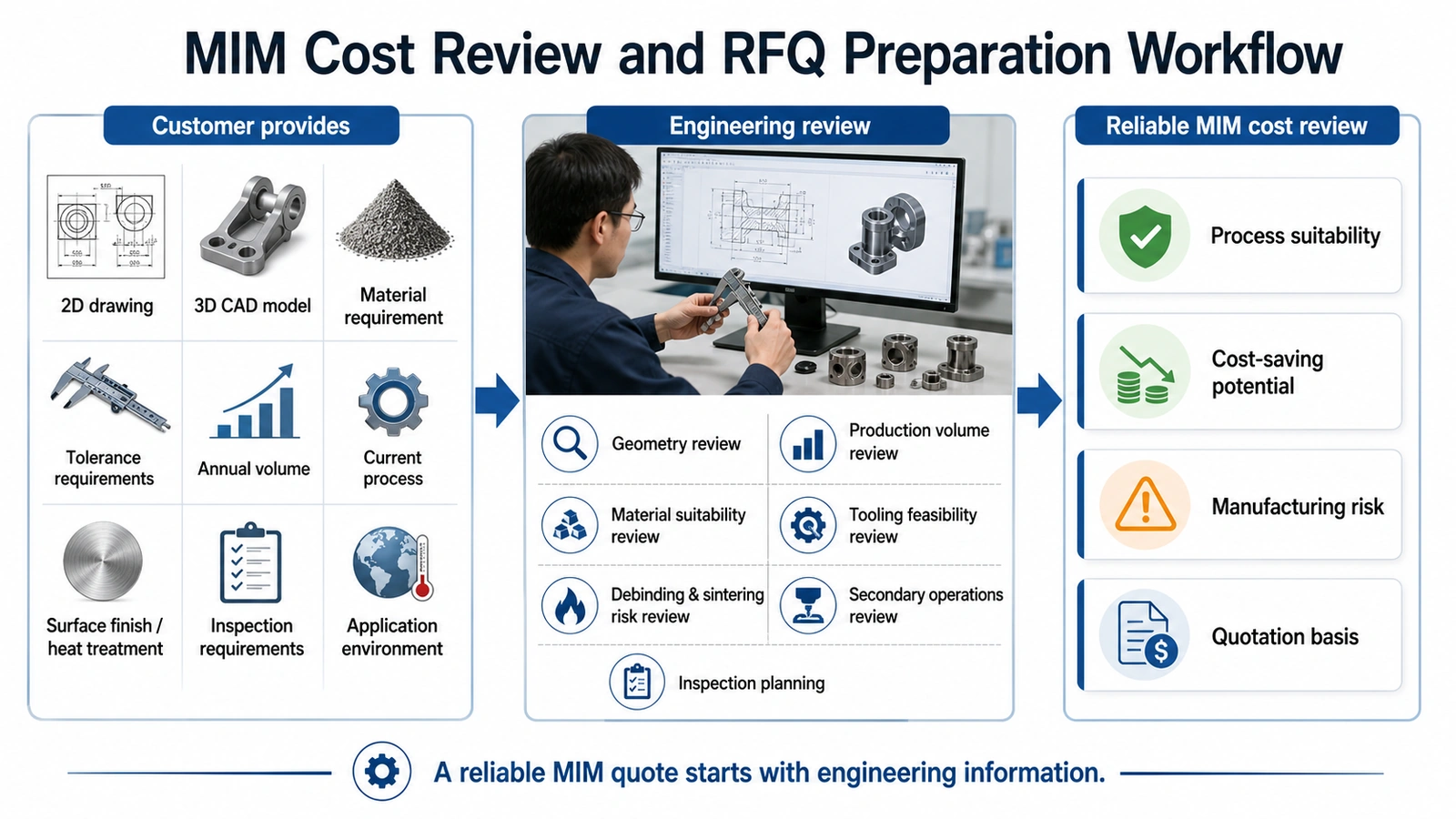
How to Compare MIM Supplier Quotations Fairly
A fair comparison puts supplier proposals on one controlled drawing revision and one acceptance specification: material and treatment state, finished dimensions, post-processing, inspection/reporting, packaging and delivery condition. Separately compare tooling configuration and cavity count, tool service life, trial/qualification rounds, charges for revisions, batch minimum assumptions, quoted price tiers and lead time. For cross-border buying, compare currency, price validity, Incoterms, freight, taxes and duties using the same basis; an ex-works unit price is not a delivered landed cost. If one supplier quotes an as-sintered blank and another quotes a fully finished component, first add the missing validated operations or request a revised common-scope offer.
For a new part, XTMIM can review mold release and gating, cavity strategy, critical tolerances, debinding and sintering supports, post-sinter machining and the inspection scope. The quotation should distinguish confirmed drawing requirements, engineering assumptions و features requiring sample validation. For example, a close-fit bore may initially be priced as finish-machined until measured trials support an as-sintered solution. A slender arm with uncertain flatness may need a support concept and dimensional checks before a production yield assumption is credible. The دليل إعداد طلب عرض الأسعار helps organize the specifications and files suppliers need.
Before tool release, the quotation package should identify the approved drawing revision, mold and cavity configuration, planned sintering and finishing route, method for inspecting critical dimensions and properties, one-time and recurring charges, and responsibility for samples and changes. Documentation can be proportionate to the project's complexity, but the price must remain traceable to the agreed engineering and delivery requirements.
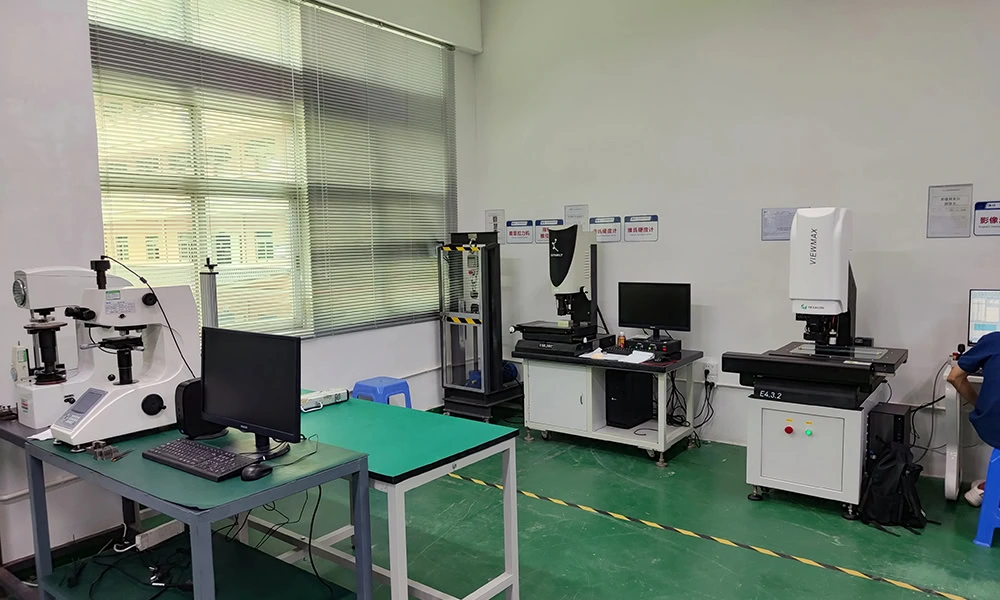
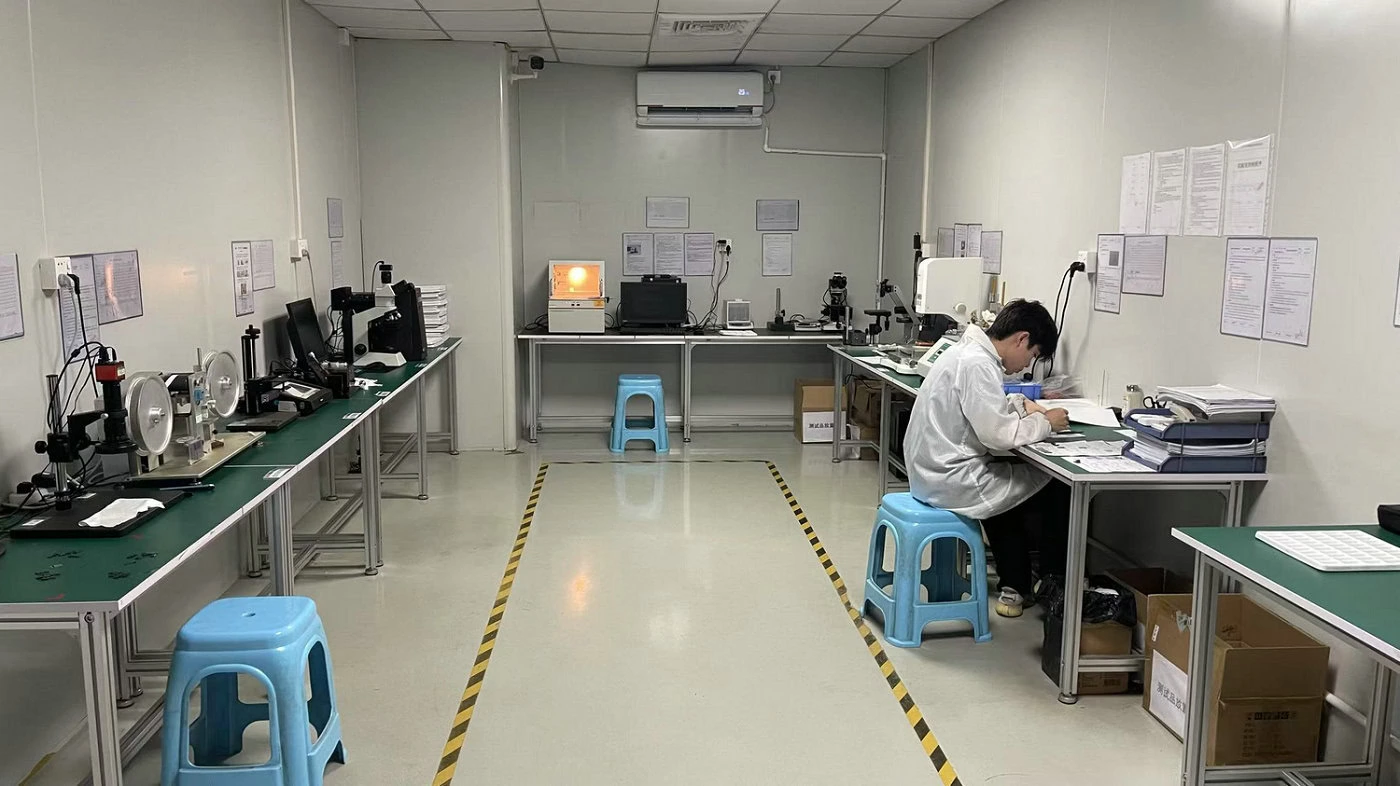
Before placing a tooling order: Confirm whether the quoted unit price covers an as-sintered blank or a finished accepted part, how tooling charges are invoiced, and which tests, dedicated fixtures, secondary operations or trial revisions are excluded. Any unresolved requirement should be identified in the quotation rather than assumed to be included.
Drawing-based cost review
Get a quote based on your actual part, not a generic unit price
Share your drawings, material, estimated production volume and critical requirements. XTMIM can review whether MIM is a technically and economically reasonable route before you commit to production tooling.
الأسئلة الشائعة حول تكلفة القولبة بالحقن المعدني
هل يتم تضمين رسوم قالب MIM في سعر الوحدة للقطعة؟
ليس دائمًا. قد تكون رسومًا منفصلة تُدفع مرة واحدة، أو تكلفة تُسترد من خلال سعر القطعة، أو مزيجًا من الاثنين. اسأل عما إذا كان عرض السعر يشمل التجارب، والتجهيزات المخصصة، والتأهيل، وتأكد من كيفية استرداد تكلفة القالب عبر الطلبات المتوقعة. إذا كان سعر الوحدة للقطعة المقبولة يتضمن بالفعل هذا الاسترداد، فلا تضف رسوم القالب الكاملة مرة أخرى في نموذج دورة الحياة.
هل يمكن لطلب أولي مكون من 1000 قطعة أن يبرر تكلفة أدوات القولبة بالحقن المعدني (MIM)؟
يمكن مراجعته، ولكن الجدوى الاقتصادية عادة ما تكون صعبة عندما يكون هذا هو إجمالي الطلب المتوقع. قد يختلف الطلب الأولي الصغير عن برنامج متكرر متعدد السنوات. تحقق من استقرار التصميم، وحجم العمر المقبول، وتكلفة التصنيع البديلة، واسترداد تكاليف الأدوات قبل المتابعة.
هل تشمل عروض الأسعار تجارب العينات والفحوصات وتعديلات الأدوات؟
قد يتم تضمينها أو تسعيرها بشكل منفصل اعتمادًا على اتفاقية المورد. اسأل عن عدد جولات التجربة المضمنة، وتقارير التأهيل والفحص التي يتم تسعيرها، وما إذا كانت تغييرات التصميم تتطلب رسوم أدوات تصنيع جديدة.
هل يؤدي زيادة عدد تجاويف القالب دائمًا إلى خفض تكلفة جزء MIM لكل قطعة؟
لا يمكن أن تنتج التجاويف الإضافية أجزاء خضراء (green parts) أكثر لكل دورة حقن، ولكن القالب يكون أكثر تكلفة ويجب أن يملأ نظام البوابة/المجرى التجاويف بشكل متسق. يجب أن يفي كل تجويف أيضًا بمتطلبات التلبيد والأبعاد المتفق عليها لاحقًا. اطلب تكلفة القالب الخاصة بكل تجويف، والمخرجات المقبولة المتوقعة، وكمية الإنتاج اللازمة لتبرير الفرق.
ماذا لو احتاج القالب للاستبدال قبل انتهاء المشروع؟
يعتمد عمر القالب على تصميم القالب، ومادة التغذية، وظروف التشغيل، والصيانة، وسجل الإنتاج. إذا تجاوز حجم الإنتاج المقبول المتوقع العمر التشغيلي المؤهل للقالب، فيجب تضمين تكاليف التجديد أو الاستبدال المحتملة والموافقات ذات الصلة في نموذج الاستثمار طويل الأجل. قم بتأكيد افتراضات عمر القالب وشروط المسؤولية الخاصة بالمورد قبل الموافقة على عرض السعر.
هل يمكن أن تظل الأداة قابلة للاستخدام إذا تغير الرسم بعد أخذ العينات؟
قد يكون ذلك ممكنًا، اعتمادًا على التغيير. قد يكون تعديل ميزة غير حرجة أمرًا مباشرًا؛ أما نقل سطح حرج (datum-critical surface)، أو تغيير قطع سفلي حساس لخط الفصل (parting-sensitive undercut)، أو تغيير سمك المقطع بشكل كبير، فقد يتطلب نوى جديدة، أو تعديلات رئيسية للقالب، أو تأهيلًا جديدًا للتلبيد. قم بتأكيد مراجعة الرسم الفنية الدقيقة، والموافقة الفنية، وملكية التكلفة قبل قبول التغيير.
Technical References and Scope of Evidence
The references cover MIM geometry, molding and sintering limits, secondary operations, material standards and process selection. They do not set XTMIM's current tooling prices or establish guaranteed tolerances, measured yields or savings for an individual project. MPIF Standard 35-MIM is a material-specification reference, not a pricing standard.
- MIMA — التصاميم المعقدة باستخدام MIM: gate location and cavity balance, variable wall thickness, green-part ejection, mold undercuts and sintering supports; technical design guidance, not a price database.
- Metal Injection Molding Association — Designing with MIM: design complexity, production volume, reducing machining and component consolidation.
- MIMA — Secondary Operations: machining, sizing, heat treatment and effects of finishing on component cost.
- European Powder Metallurgy Association — Metal Injection Moulding: MIM processing and economic boundaries compared with conventional pressed PM.
- Metal Powder Industries Federation — Standard 35-MIM materials: general material specification reference, not a costing standard or a finished-part quotation.
فريق XTMIM الهندسي · Project-specific prices and technical suitability are confirmed through drawing review and the agreed manufacturing requirements.