
금속 사출 성형(MIM) 비용 | 엔지니어링 및 RFQ 가이드
금속 사출 성형 비용 는 두 가지 별도 구성 요소로 이루어집니다: 생산 금형 및 프로젝트 승인에 대한 일회성 투자, 그리고 승인된 최종 금속 부품당 반복되는 비용입니다. 신뢰할 수 있는 견적은 부품 형상, 재료, 중요 공차, 후처리 공정, 예상 생산량 및 합의된 납품 조건에 따라 달라집니다.
XTMIM은 이전에 게시한 USD 4,500/금형 표준 금형 구성에 대한 참조로 사용합니다. 이 수치는 고정된 제안이나 부품 단위 비용 견적이 아닙니다. MIM이 특정 부품의 수명 주기 비용을 절감할 수 있는지 여부를 결정하려면 도면 기반 검토가 필요합니다.
아래의 모든 수치 단위 비용 예시는 고객 견적이나 보장된 제조 가격이 아닌 설명용 계산입니다. 금형 참조는 XTMIM의 이전 게시 경험에 특화된 것입니다.
금속 사출 성형(MIM) 비용은 얼마인가요?
맞춤형 금속 사출 성형에는 표준 완제품 가격이 없습니다. 현실적인 예산은 생산 금형과 별도로 청구되는 모든 자격 작업, 그리고 특정 수량에서 승인된 각 완제품의 가격을 결합한 것입니다. 최종 금액은 도면, 합금, 공차, 후처리, 검사 요구 사항 및 프로그램 전체에서 예상되는 볼륨에 따라 달라집니다. 이 표는 처음에 논의할 수 있는 수치와 도면 기반 견적이 필요한 수치를 분리합니다.
| 비용 관련 질문 | 유용한 답변 | 금액은 무엇으로 결정되나요? |
|---|---|---|
| 금형 비용은 얼마인가요? | 이전 XTMIM 참조: 약 USD 4,500 일부 표준 금형 구성의 경우; 범위를 확인하십시오. | 캐비티 전략, 슬라이더 또는 인서트, 부품 배출, 금형 복잡성, 소결 수축 보상 및 시험 요구 사항. |
| MIM 부품당 비용은 얼마인가요? | 부품별 견적이 필요합니다. 부품당 또는 그램당 고정 가격은 신뢰할 수 없습니다. | 재료 및 중량, 생산 계획, 최종 공차, 후처리, 검사 및 공정 수율. |
| 총 프로젝트 비용은 얼마인가요? | 일회성 비용 + 관련 볼륨에 대한 승인된 부품의 반복 비용. | 평생 승인 볼륨, 합의된 견적 포함 사항 및 별도 청구되는 모든 작업. |
XTMIM에서 이전에 인용한 약 1,500달러 특정 표준 MIM 금형 구성의 경우. 이는 과거 예산 책정 참고 자료이며, 현재 고정 제안이나 업계 평균 가격이 아닙니다.. 실제 부품에 대한 제안에는 캐비티 수, 슬라이드 또는 인서트, 공구 재질 및 예상 수명, 시험 및 자격 부여 수당, 포함된 조정 및 전용 고정 장치가 명시되어야 합니다. 처음에는 저렴해 보이는 금형이라도 필요한 시험 수정 또는 자격 부여 작업이 제외된 경우 프로그램 전체에서 더 많은 비용이 발생할 수 있습니다.
MIM 견적에는 무엇이 포함되나요?
두 공급업체가 동일한 도면에 대해 다른 납품 조건을 견적할 수 있습니다. 즉, 소결된 블랭크, 중요 가공 후 부품 또는 완전히 가공 및 검사된 부품입니다. 가격을 비교하기 전에 각 견적에 포함된 작업 및 승인 요구 사항을 확인하십시오. 낮은 단가는 동일한 완성 부품에 대해 반드시 낮은 비용을 의미하는 것은 아닙니다.
일회성 금형 및 프로젝트 개발 비용
MIM 금형은 기계적으로 약한 부품을 그린 파트(Green Part) 캐비티에서 분리하고 탈지 및 고온 소결 중 발생하는 치수 변화를 예측해야 합니다. 금형 가격에는 단순한 캐비티 가공 비용 이상의 것이 반영됩니다. 게이트 및 러너 설계, 분할면, 코어 강도, 이젝션, 캐비티, 인서트 또는 슬라이드, 수축 보상, 계획된 금형 시험 등이 모두 작업에 영향을 미칩니다. 수축 거동은 피드스톡, 부품 형상 및 공정 경로에 따라 달라지므로, 최종 보상 및 치수 성능은 단일 공칭 수축 계수에서 추정하는 대신 시험 부품을 통해 확인해야 합니다. 샘플링, 품질 인증 시험, 전용 소결 지그 및 가공 고정구는 초기 제안에 포함되거나 별도로 가격이 책정될 수 있습니다. 금형 승인 전에 소유권, 유지보수 및 보관 조건, 시험 라운드, 개정 비용 부담 주체를 확인하십시오. 이러한 비용 동인에 대한 자세한 내용은 다음을 참조하십시오. MIM 금형 비용이 높은 이유.
생산 완료된 부품당 반복 비용
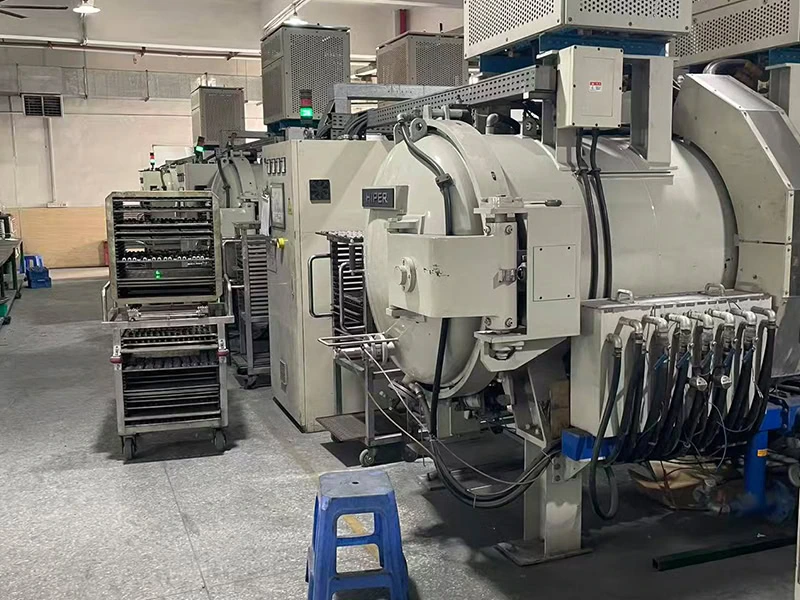
각 생산 배치에 대해 피드스톡이 금형에 사출되고, 바인더가 제거되며, 남은 분말 골격이 요구되는 상태로 소결됩니다. " 납품 및 검수 완료된 부품 에는 취급, 소결 지지대, 드릴링 또는 태핑, 사이징, CNC 가공, 열처리, 표면 처리, 검사 및 포장이 포함될 수 있습니다. 올바른 비용 산정 기준은 성형된 그린 부품 또는 생산된 소결 블랭크의 수가 아니라, 합의된 검수 기준을 충족하는 부품의 수입니다. 공정 손실, 추가로 가열로에 적재하는 작업, 반복적인 취급 및 검사 노력은 승인된 부품당 사용되는 자원을 증가시키기 때문에 중요합니다. 공급업체는 이미 일반적인 수율 손실 및 후처리 작업을 완성된 부품 가격에 포함했을 수 있습니다. 구매자는 이러한 비용을 두 번 추가해서는 안 됩니다.
예시 수율 확인 (XTMIM 생산 데이터 아님): 만약 특정 공정 단계에서 US$200이 발생하고, 시작된 100개의 부품 중 92개의 승인된 부품이 생산된다면, 해당 단계는 기여합니다 US$200 ÷ 92 = US$2.17 개당 단가 (승인된 부품 기준), 시작된 부품 기준 US$2.00이 아닙니다. 이 계산 방식은 승인 수율이 납품 부품의 경제성에 미치는 영향을 설명합니다. 이미 정상적인 손실을 감안한 공급업체의 가격에 추가적인 불량률을 더하는 것을 정당화하지는 않습니다.
| 견적 라인 | 비용 시점 | 구매자가 확인해야 할 사항 |
|---|---|---|
| 금형 및 초기 공구 | 일반적으로 선불 또는 합의된 가격 구조 하에서 회수 | 캐비티 수, 시험 범위, 소유권 및 조정 조건. |
| 엔지니어링 / 자격 / 고정구 | 별도 청구 시 1회성 | 금형 가격에 포함되는 사항, 시험 범위 및 승인 기준. |
| 피드스톡 + 성형 + 탈지 + 소결 | 반복 제조 비용 | 부품 중량, 재질 등급, 배치 계획 및 예상 수율. |
| 필요한 후가공 | 별도 서비스로 견적되지 않는 한 반복적 | 특정 중요 표면, 나사산, 열처리, 코팅 및 마감. |
| 검사 + 포장 | 일반적으로 납품 비용에 포함되며, 때로는 별도 견적 항목 | 검사 계획, 승인 문서, 포장 및 납품 기준. |
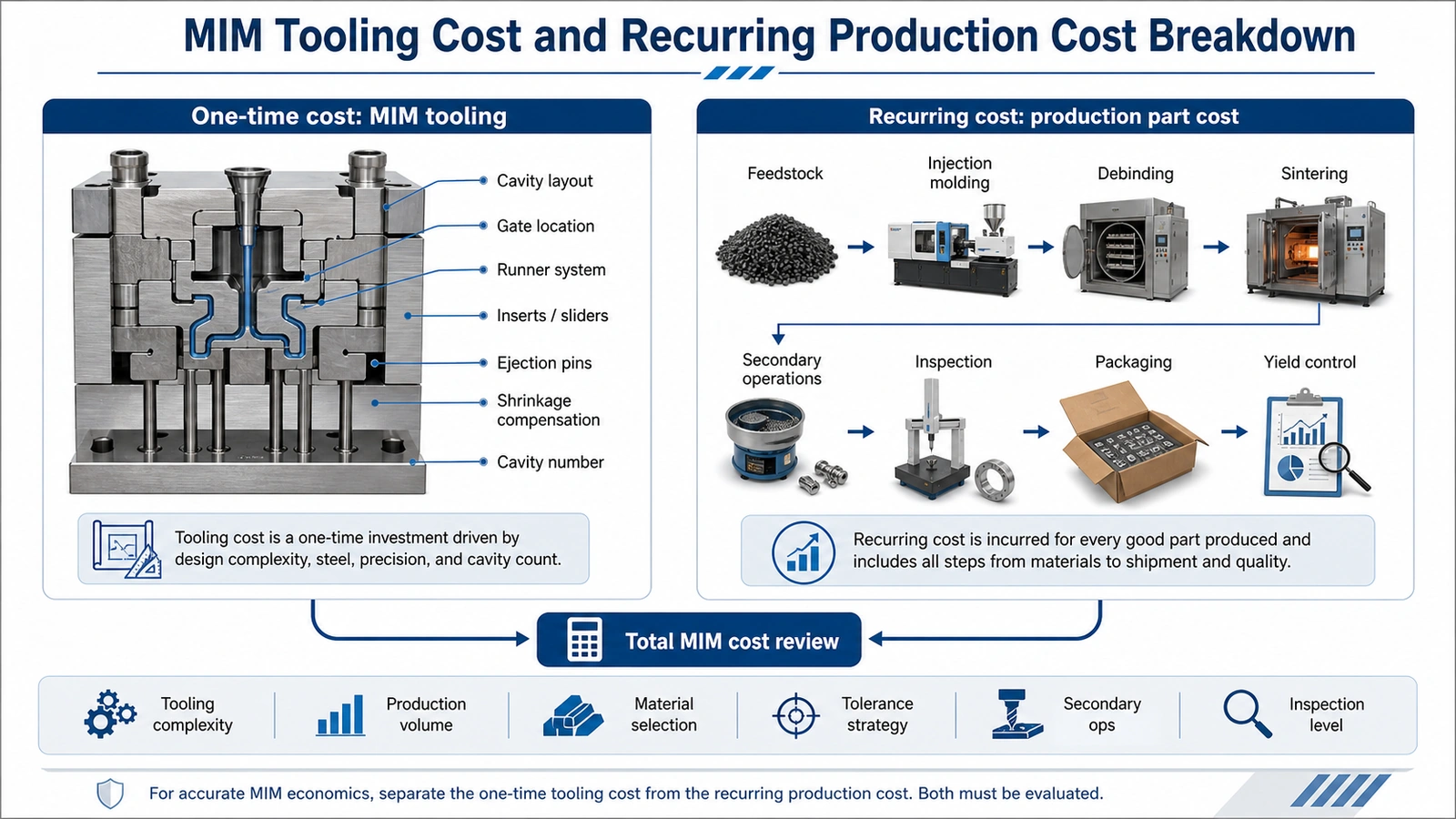
겉보기에는 낮은 MIM 부품 가격이 다른 공급업체가 포함하는 가공 또는 검사를 단순히 누락한 것일 수 있습니다. 반대로, 약간 더 높은 금형 제안은 안정적인 캐비티 레이아웃, 적은 결함 또는 적은 반복 공정을 지원하는 경우 경제적으로 정당화될 수 있습니다. 어느 쪽이든 자동으로 더 나은 것은 아닙니다. 두 견적 모두 동일한 도면 개정판, 재질 사양, 승인 기준 및 최종 납품 조건을 다룰 때만 비교가 의미가 있습니다.
이중 계산 방지. 단가에 이미 금형 투자비가 회수된 경우, 별도로 청구되는 일회성 비용만 추가하십시오. 마찬가지로, 공급업체의 승인된 완제품 단가에 이미 포함된 가공, 검사 또는 일반적인 공정 손실을 다시 추가하지 마십시오.
유사한 MIM 부품의 비용이 다른 이유는 무엇인가요?
무게가 비슷하다고 해서 MIM 비용이 비슷한 것은 아닙니다. 동일한 스테인리스강 등급의 두 부품이라도 다른 금형 작동, 소결 지지대, 후가공 및 검사가 필요할 수 있습니다. 도면의 특정 형상이 그린 파트의 이형 방식, 탈지 및 소결 과정에서의 생존성, 또는 완제품의 검사 및 납품 방식에 영향을 미칠 때 비용 차이가 발생합니다.
부품 형상, 금형 복잡성 및 소결 위험
MIM 형상은 사출 및 이젝션 단계에서 먼저 비용에 영향을 미치며, 바인더 제거 후 다시 영향을 받습니다. 깊고 좁은 슬롯은 가느다란 코어를 필요로 할 수 있고, 내부 언더컷은 슬라이드 또는 분할 금형을 필요로 할 수 있으며, 게이트는 기능성 표면에 허용되지 않는 흐름 결함이나 자국을 생성하지 않고 캐비티를 채워야 합니다. 업계 디자인 가이드라인에서는 게이트를 배치하여 두꺼운 섹션에서 얇은 섹션으로의 흐름을 유도하고 멀티 캐비티 금형에서 러너를 균형 있게 배치하는 것에 대해 논의합니다. 이젝션 후, 바인더를 포함한 그린 파트는 취급, 탈지 및 상당한 소결 수축을 견뎌야 합니다. 벽 두께 변화, 길고 지지되지 않은 암, 잘못 선택된 접촉면은 뒤틀림이나 표면 손상을 제어하기 어렵게 만들 수 있습니다. 전용 세터 또는 추가 사이징 단계가 실제 제조 경로의 일부가 될 수 있습니다. 이러한 결과는 형상, 피드스톡, 방향 및 공정 설정에 따라 달라지며 특정 기능이 실패한다는 증거는 아닙니다. 참조 두꺼운 섹션에서 얇은 섹션으로의 흐름 그리고 멀티 캐비티 금형에서 러너를 균형 있게 배치하는 것에 대해 논의합니다. 이젝션 후, 바인더를 포함한 그린 파트는 취급, 탈지 및 상당한 소결 수축을 견뎌야 합니다. 벽 두께 변화, 길고 지지되지 않은 암, 잘못 선택된 접촉면은 뒤틀림이나 표면 손상을 제어하기 어렵게 만들 수 있습니다. 전용 세터 또는 추가 사이징 단계가 실제 제조 경로의 일부가 될 수 있습니다. 이러한 결과는 형상, 피드스톡, 방향 및 공정 설정에 따라 달라지며 특정 기능이 실패한다는 증거는 아닙니다. 참조 MIMA의 복잡한 설계 지침 게이트, 이젝터, 두께 및 소결 지지대 고려 사항에 대해.
도면 기반 비용 검토를 위해 허용 가능한 게이트 및 이젝터 접촉 영역을 표시하고, CAD에서 코어 접근 및 금형 이형 방향을 확인하며, 기능면을 손상시키지 않고 소결 중 부품을 지지할 수 있는 표면을 식별하십시오. 그런 다음 초기 금형 및 샘플 시험을 통해 수축 보상 및 지정된 치수에 대한 측정을 제공합니다. 합의된 검사가 완료될 때까지 예측된 수율 및 소결 후 공차는 확인된 생산 능력으로 제시되기보다는 견적 가정에 포함되어야 합니다.
재료 선택, 부품 중량 및 가공 비용
익숙한 합금 이름만 지정하는 것으로는 제조 비용을 결정하기에 충분하지 않습니다. 요구되는 최종 상태—예를 들어, 316L 스테인리스강의 부식 성능 또는 17-4PH의 지정된 강도/열처리 상태—는 선택한 등급을 어떻게 가공하고 검증해야 하는지에 영향을 미칩니다. 분말 특성과 자격을 갖춘 피드스톡 시스템은 충진, 바인더 제거, 소결 및 치수 반복성에 영향을 미칩니다. 익숙하지 않은 분말 또는 바인더 제형으로 변경하면 인용된 원자재 가격이 더 낮더라도 개발 및 자격 작업이 필요할 수 있습니다. 부품 중량은 재료 소비에 영향을 미치지만, 질량 분포 및 단면 두께도 바인더 제거, 소결 배치 용량, 부품 취급 및 사이클 시간에 제약을 줄 수 있습니다. 따라서 피드스톡 가격을 부품 중량으로 나누는 것은 신뢰할 수 있는 최종 부품 비용 계산이 아닙니다. 재료 적합성은 도면 및 합의된 사항에 대해 확인해야 합니다. 최종 속성; MPIF Standard 35-MIM은 가격 목록이 아닌 재료 사양 참조입니다.
공차, 후처리, 검사 비용
정밀한 보어, 밀봉면, 나사산, 평탄도 요구 사항 또는 외관 표면이 있는 도면은 소결 후 가공, 사이징, 연삭, 탭핑 또는 표면 마감이 필요할 수 있습니다. MIMA는 대략적으로 설명합니다 소결 후 MIM 공차에 대한 ±0.3%를 일반적인 공정 수준 평균으로 더 까다로운 기능을 위해 후처리 강조; 이것은 XTMIM 역량 보증이 아니며 모든 치수나 형상에 맹목적으로 적용될 수 없습니다. 공구 보정은 체계적인 수축을 조정할 수 있지만, 왜곡, 캐비티 간 차이 또는 불충분한 측정 능력을 자체적으로 제거할 수는 없습니다. 엔지니어링 도면은 기능적으로 중요한 기준점과 승인 방법을 식별해야 하며, 공급업체는 어떤 형상이 소결 후 상태이고 어떤 형상이 후처리용으로 가격 책정되었는지 설명해야 합니다. 이러한 견적 효과에 대한 더 자세한 내용은 다음을 참조하십시오. 후처리 공정이 MIM RFQ 비용에 미치는 영향.
엔지니어링 예시 A · 가상 설계 비교
두 개의 유사한 스테인리스강 부품, 다른 제조 비용
질량은 유사하고 동일한 요구 사항을 가진 두 개의 스테인리스강 설계를 고려하십시오. 8,000개 승인 부품. 부품 A는 비교적 균일한 벽 두께, 간단한 금형 이형 방향, 기능 인터페이스에만 근접 공차를 가집니다. 부품 B는 깊은 슬롯, 두꺼운 부분과 얇은 부분의 전환, 광범위한 근접 공차 지정, 소결 후 탭핑, 가공 및 폴리싱 사양이 있습니다. 따라서 부품 B는 더 까다로운 코어 또는 금형 작동, 특정 소결 지지대 및 추가 검사 작업이 필요할 수 있습니다. 이러한 비용의 정도는 무게나 외관만으로는 확립할 수 없으며, 툴링 컨셉, 공정 계획 및 견적이 필요합니다. 이들은 가상의 설계이며, 측정된 가격 차이나 수율 데이터는 없습니다.
| 엔지니어링 기능 | 부품 A (예시) | 부품 B (예시) | 비용 검토 시 변경 사항 |
|---|---|---|---|
| 재료 및 수량 | 동일한 스테인리스강; 8,000개 부품 | 동일한 스테인리스강; 8,000개 부품 | 이 변수만으로는 차이를 설명할 수 없습니다. |
| 벽 두께 / 슬롯 형상 | 비교적 균일한 벽 두께 | 불균일한 벽 두께; 깊고 좁은 슬롯 | 그린 파트 이젝션, 탈지, 서포트 및 변형 위험 검토. |
| 공차 전략 | 정밀하게 제어되는 주요 기능 치수 | 대부분의 형상은 엄격한 공차로 표시됨 | 가공 능력 및 추가 가공 또는 검사 필요성 검토. |
| 후처리 | 제한적 | 탭핑, 가공, 폴리싱 | 추가적인 반복 작업은 납품 부품의 비용을 변경합니다. |
| 견적 전 조치 | 주요 인터페이스 확인 | 비중요 요구사항 식별 및 고객 승인 시에만 재도면 | 견적 전 기술적으로 동등한 사양 확인. |
차이점을 평가하기 위해, 양쪽 도면 모두에서 기능 중요 표면과 허용 가능한 게이트 및 이젝터 위치를 표시하십시오. 코어 지지대 및 이동 금형 작동 여부를 검토하고, 특수 소결 세터가 필요한지 여부를 결정한 다음, 각 설계에 필요한 가공 및 검사 목록을 작성하십시오. 시험 측정을 통해 제안된 공차가 현실적인지 확인할 수 있습니다. 슬롯, 벽 전환 또는 비기능적 공차 변경이 작업량을 줄일 수 있다면, 수정된 견적 발행 전에 고객 승인을 받으십시오. 두 가격 모두 동일하게 승인된 최종 상태의 부품을 설명해야 합니다.
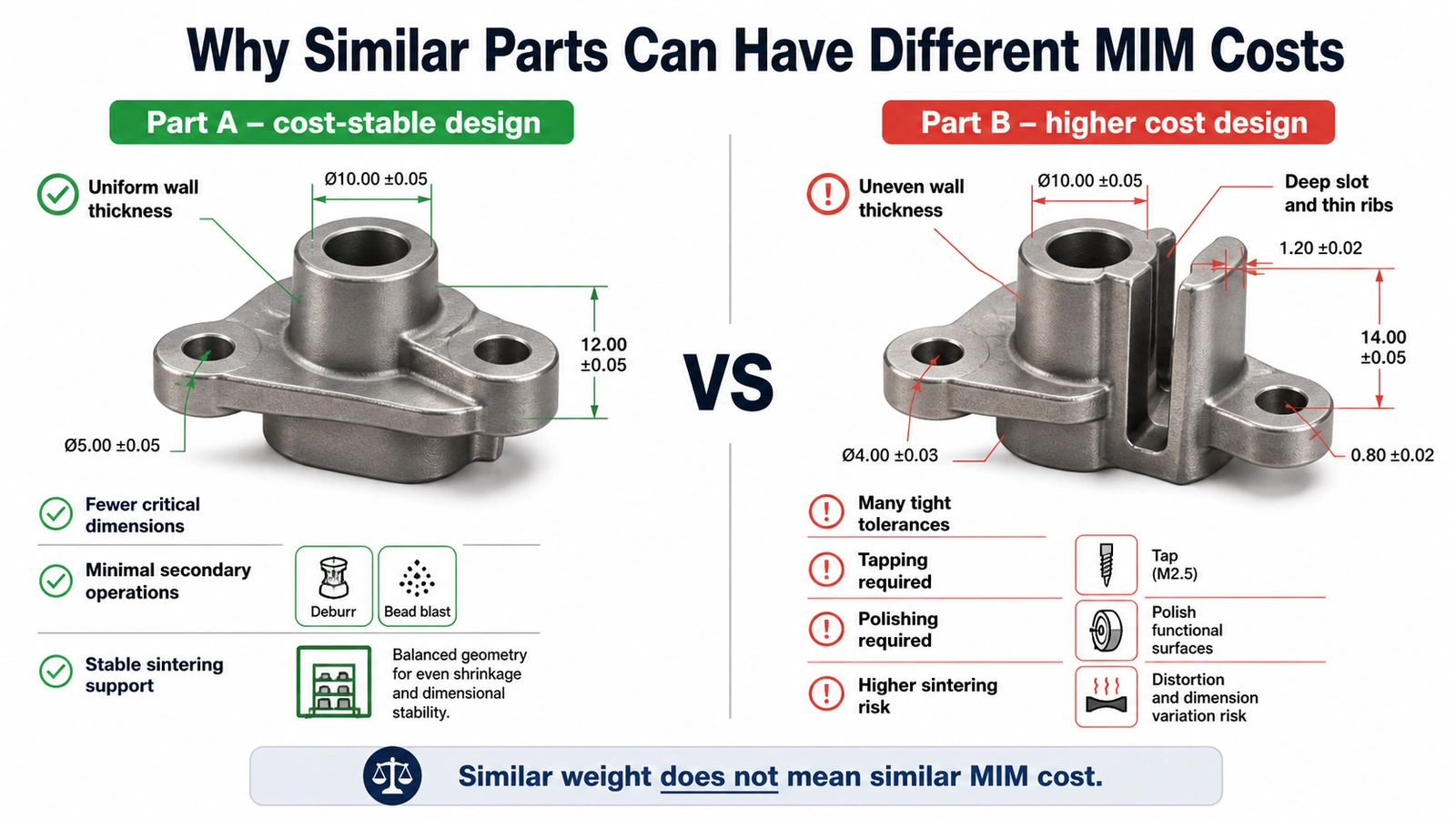
금형 이형, 소결 방향 및 후처리 요구사항은 서로 영향을 미칩니다. A MIM 제조성 비용 검토 금형이 최종 확정되기 전에 설계 변경으로 인한 반복적인 금형, 샘플 및 검증 작업 발생을 방지할 수 있습니다.
부품당 MIM 비용을 어떻게 추정하나요?
맞춤형 MIM 프로젝트의 경우, 전체 수명 주기 경제성과 초기 주문 예산은 다른 계산 방식이 적용됩니다. 금형 감가상각은 예상 승인 부품 수에 초기 투자를 분배하여 제조 옵션을 비교하는 데 사용되며, 공급업체가 금형 비용을 청구하는 시점과는 무관합니다. 따라서 견적에는 예상 수량과 실제 지불 조건이 모두 명시되어야 합니다. 또한 공급업체의 내부 생산 비용이나 마진 계산과 혼동해서는 안 됩니다.
총 프로젝트 비용 및 모든 포함 단가 계산
예상 총 프로그램 비용 = F + (N × C납품된)
예상 총 포함 단가/승인 부품 = (F ÷ N) + C납품된
F 는 견적 단가에 이미 포함되지 않은, 별도로 청구되는 총 금형, 고정구 및 검증 투자액이며,; N 는 예상 기간 내에 납품되는 승인된 최종 부품 수이고, C납품된 는 지정된 재료, 공정 및 검사에 대한 승인된 최종 부품당 가격입니다. 이 간단한 모델은 일정한 납품 부품 가격과 추가 금형 작업이 없다고 가정합니다. 주문마다 가격이 다르거나 금형 수리가 예상되는 경우, 실제 로트별 지출과 추가 투자를 더하는 것이 더 나은 모델입니다. 공급업체의 견적 단가가 이미 승인된 부품 기준인 경우 추가 수율 여유분을 삽입하지 마십시오.
별도 청구되는 USD 4,500 금형, 일정 US$3.50 개당 승인된 최종 부품 단가 및 10,000 프로그램 전체 승인 부품 수. 총 예상 지출액은 US$40,500, 에 해당하며, 부품당 US$4.05 전체 수명 주기 동안. 첫 주문이 1,000개에 불과하고 전체 금형 비용을 선불로 지불해야 하는 경우, 즉각적인 툴링 및 생산 결제 금액은 US$9,000, 별도로 합의된 운송, 인증 또는 기타 비용은 제외됩니다. US$4.05 수치는 계획 평균이며 첫 1,000개 단위의 송장 가격이 아닙니다. 이 수치는 가상이며 고객 견적이 아닙니다.
승인된 전체 수량이 증가함에 따라 툴링 상각비는 감소하며, 이때 동일한 일회성 투자가 전체 예측에 사용되고 최종 부품 가격이 변경되지 않는다고 가정합니다. 실제로는 배치 크기, 재료 계약, 캐비티 수, 생산 재인증, 툴 마모 및 유지보수가 비용을 변경할 수 있습니다. 공급업체에 현실적인 주문량별 가격, 예상 툴 수명 및 수리 또는 교체 가정을 문의하십시오. 프로그램에 두 번째 금형 또는 별도의 주요 인증이 필요한 경우, 생산할 수 없는 수량에 첫 번째 금형 비용을 분산시키는 대신 해당 비용을 포함하십시오.
연간 및 전체 수량이 툴링 상각에 미치는 영향
초기 배치 수량 첫 구매와 즉각적인 현금 필요성을 설명합니다. 연간 수요량 반복적인 일정과 금형 회수 가능 시점을 안내합니다. 예상 수명 주기 동안 수락된 수량 프로그램 전반에 걸친 투자 비교와 관련된 수량입니다. 4,000개 단위의 주문과 연간 각각 4,000개 단위의 4년 프로그램은 매우 다른 상각 결과를 가져옵니다.
예측 수량을 확정된 수요로 취급하지 마십시오. 연간 주문이 불확실한 경우, 최소한 보수적인 수량 사례와 계획된 수명 주기 사례를 계산하십시오. 더 높은 수량 시나리오는 서류상으로는 매력적으로 보일 수 있지만, 반복 주문이 발생하지 않을 경우 구매자가 회수되지 않은 금형 투자에 노출될 수 있습니다. 이러한 사례를 별도로 유지하는 것이 보편적인 연간 MIM 수량 임계값을 적용하는 것보다 더 유용합니다.
| 수락된 수명 주기 동안의 총 수량 | F = US$5,500에서의 금형 분담금 | 비용 모델에 대한 의미 |
|---|---|---|
| 1,000 | US$5.50 / 개 | 수락된 부품당 상당한 고정 비용 부담. |
| 3,000 | US$1.83 / 개 | 금형 비용은 여전히 중요합니다. |
| 5,000 | US$1.10 / 부품 | 제조 적합성에 따라 상각비가 감소합니다. |
| 10,000 | US$0.55 / 부품 | 고정 비용 비율이 더 낮아집니다. |
| 50,000 | US$0.11 / 부품 | 금형 비용 비율은 작지만 반복적인 생산 비용은 유지됩니다. |
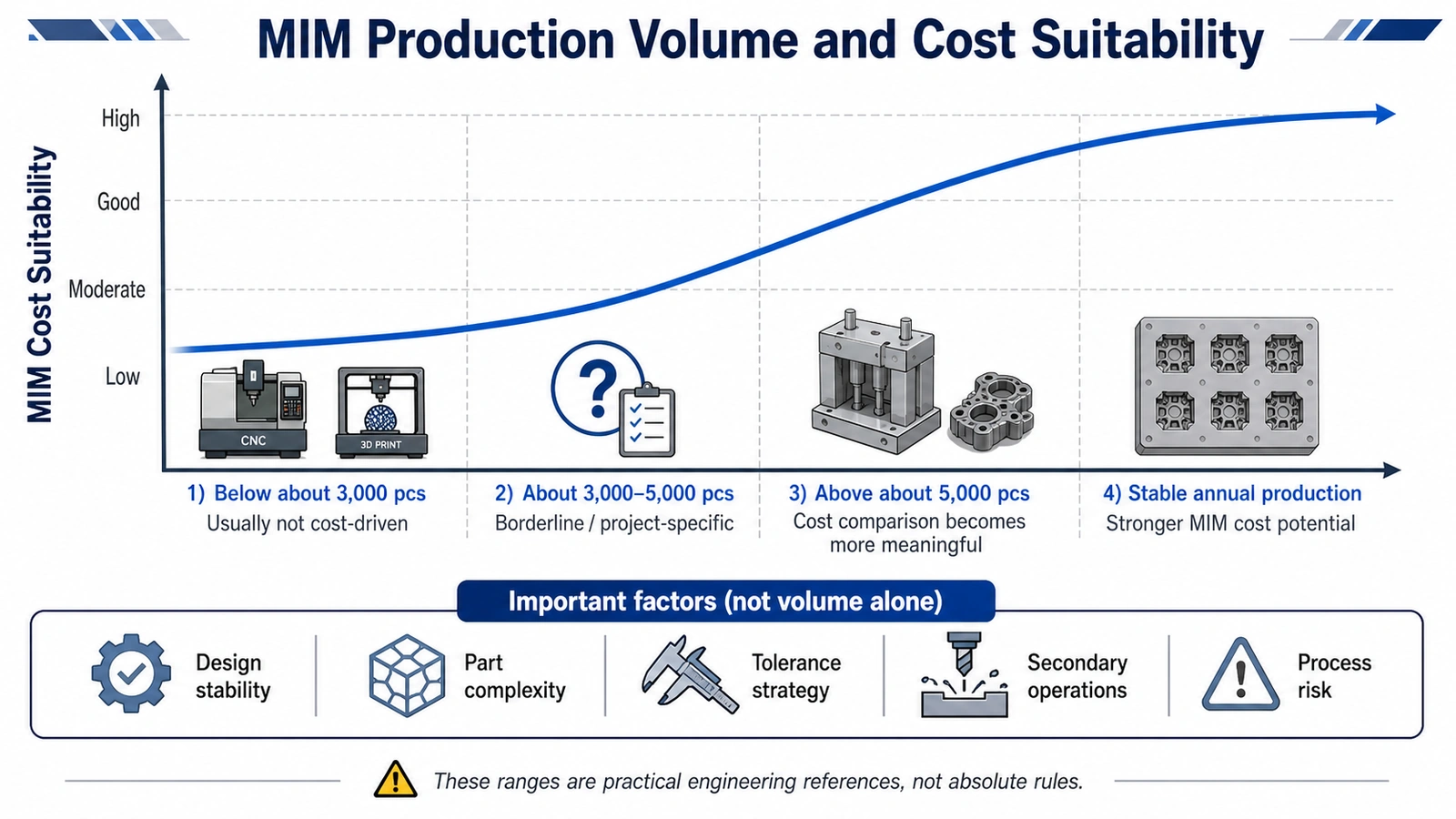
XTMIM은 대략적인 연간 수요 스크리닝 단서를 사용해 왔습니다. 연간 3,000개 미만의 부품은 순수하게 비용 중심의 전환에 주의가 필요할 수 있으며, 약 3,000~5,000개는 프로젝트별 비교를 보증하며, 약 5,000개 이상은 전체 엔지니어링 및 비용 검토를 정당화할 수 있습니다. 이것들은 XTMIM의 지표 스크리닝 단서, 이며, 계약상 최소 주문 수량(MOQ), 산업 표준 또는 고정된 손익분기점 임계값이 아닙니다. 강력한 기계 가공 절감 효과와 반복 수요가 있는 설계는 이러한 수준 이하의 금형 비용을 정당화할 수 있지만, 단순한 부품은 더 높은 수량에서 다른 공정으로 인해 더 저렴할 수 있습니다.
제조 조건: 우호적인 상각비가 제안된 부품을 요구 사양에 맞게 성형, 탈지, 소결 및 검사할 수 있음을 증명하지는 않습니다. 생산 결정에는 또한 허용 가능한 금형 설계, 시험 결과 및 합의된 기능 및 치수 기준이 필요합니다.
주문량이 불규칙하거나, 첫 배치 생산량이 불확실하거나, 생산량이 점진적으로 증가할 경우, MIM 금형 감가상각 가이드 수량 계획 및 수요 변동의 영향에 대한 자세한 내용을 제공합니다.
MIM이 CNC 가공보다 저렴한 경우는 언제인가요?
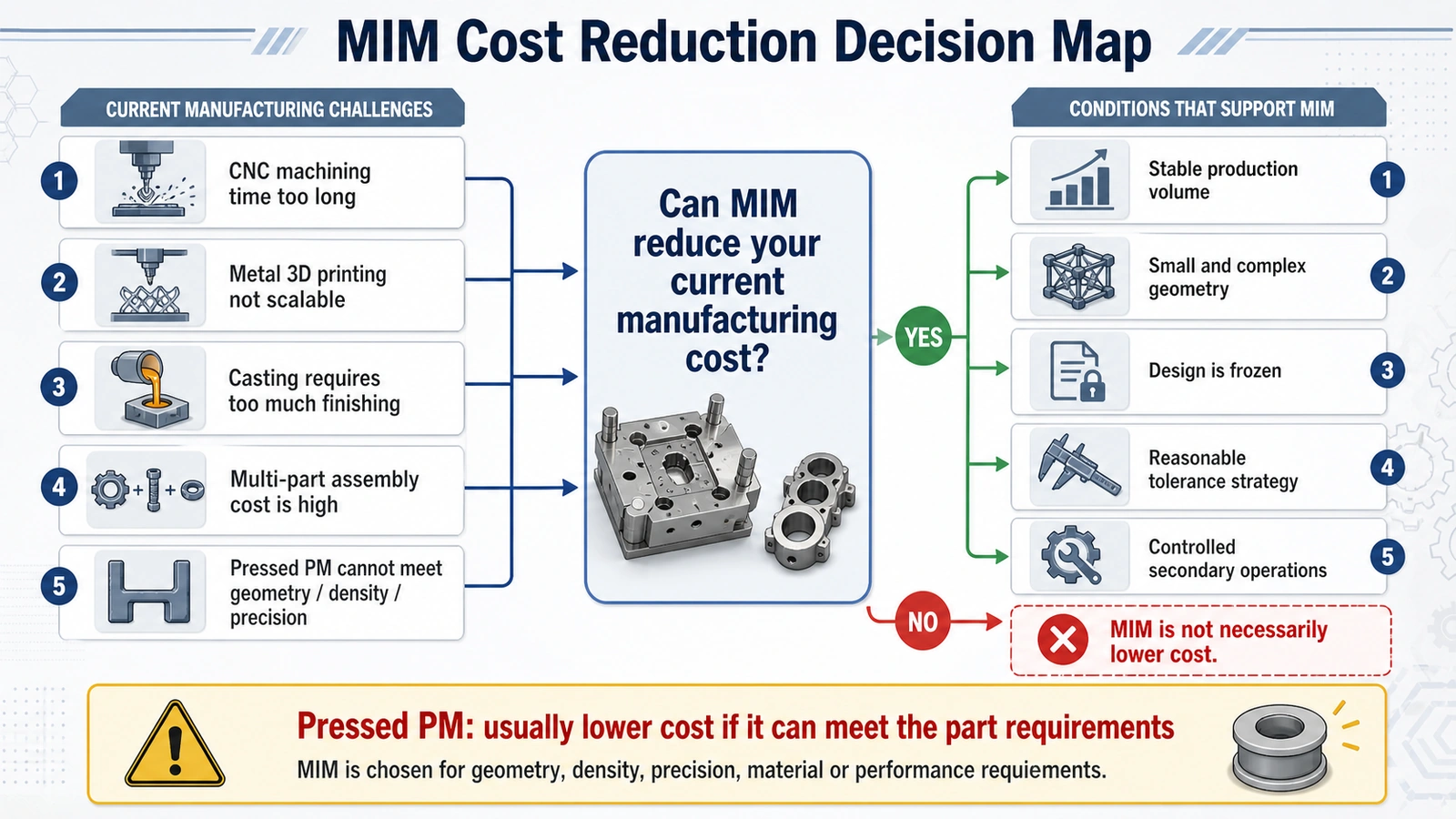
금속 사출 성형(MIM)은 기존 금속 부품에 반복적인 셋업, 값비싼 재료 제거, 미세 형상 가공, 디버링 또는 조립이 필요하고, 금형 투자비를 회수할 만큼 설계가 안정적이며 생산량이 충분할 경우 CNC 가공과 비용 경쟁력을 가질 수 있습니다. 비교는 완성된 최종 부품을 기준으로 해야 하며, 동일한 승인된 완성 부품, MIM 블랭크 대 완전 가공 및 테스트된 CNC 부품과 비교하는 것이 아닙니다.
동일한 최종 부품 요구 사항 비교
시작은 실제 CNC 라우팅 및 승인된 최종 부품 비용: 재고 재료, 절단/제거, 설정, 디버링, 조립, 열처리, 마감, 검사 및 취급입니다. 다음으로 MIM이 거의 최종 형상으로 형성할 수 있는 기능에 표시하고 여전히 가공 또는 연삭이 필요한 기능을 식별합니다. 재료 등급 이름만으로는 성능 동등성을 확립할 수 없습니다. 최종 강도, 부식 거동, 열처리 조건, 조립 적합성 및 필요한 테스트는 동일한 도면과 애플리케이션을 만족해야 합니다. 따라서 MIM 비교에는 생산 금형 및 시험, 피드스톡, 성형, 탈지, 소결, 승인된 후처리 작업 및 승인된 납품 조건이 포함되어야 합니다. 현재 모든 CNC 작업을 제거된 것으로 계산하고 필요한 MIM 마감을 계산에서 제외하면 잘못된 절감 효과가 발생합니다.
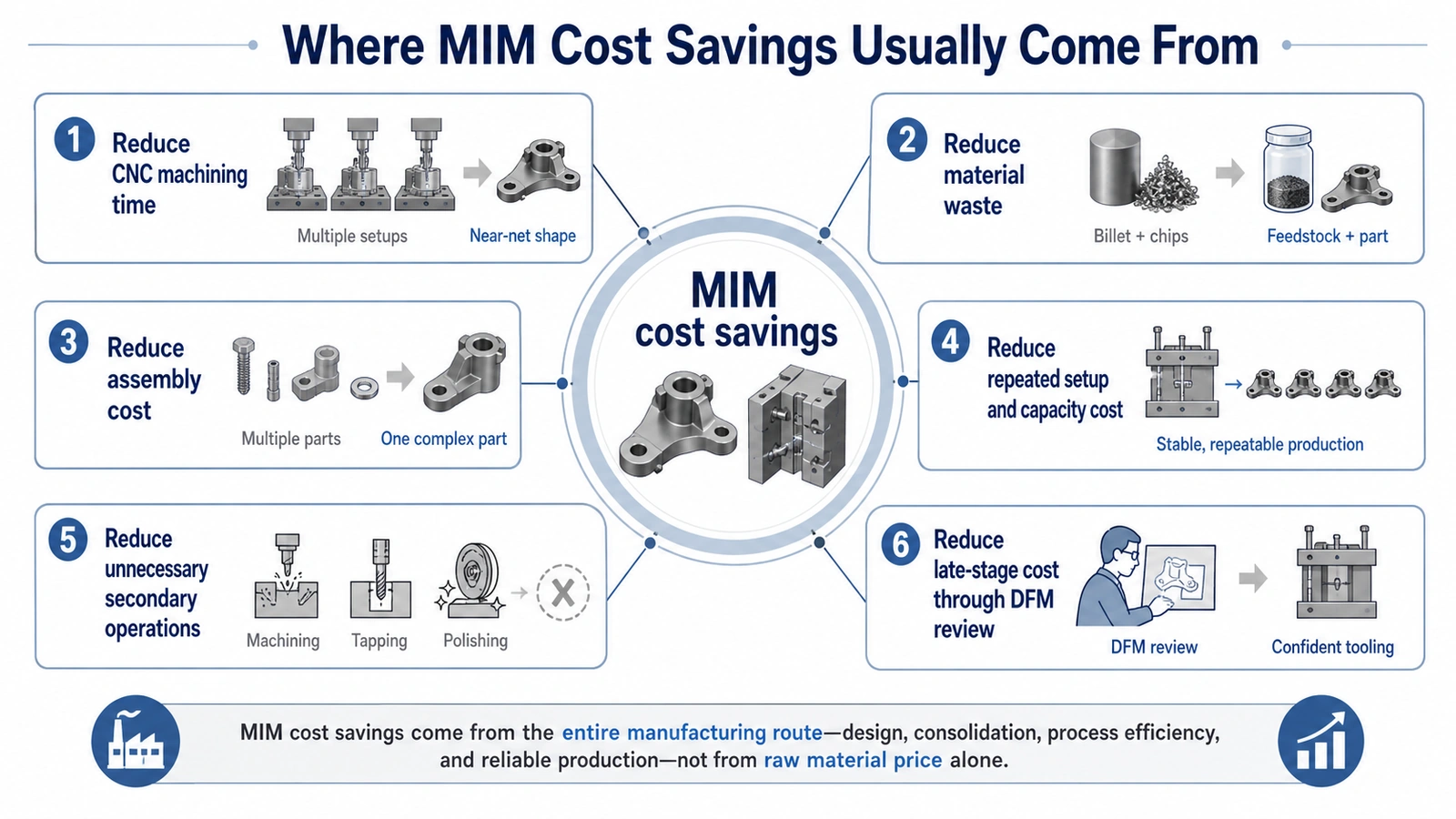
거의 최종 형상 성형은 반복적인 설정과 어려운 미세 형상 가공을 제거할 수 있으며, 별도의 부품을 통합하면 조립 및 재고 작업을 줄일 수 있습니다. 결합된 형상은 금형에서 해제되고, 탈지 및 소결될 때에도 필요한 기능을 잃지 않아야 합니다. 정밀 보어, 나사산 및 밀봉 표면은 가공된 상태로 유지될 수 있습니다. 이러한 작업은 MIM 최종 부품 가격에 포함됩니다. " CNC에서 MIM으로의 전환 검토 원래 CNC 기능 중 어떤 것을 성형할 수 있고 어떤 것을 가공해야 하는지 평가하는 방법을 설명합니다.
MIM vs CNC 손익분기점 수량 계산
단순화된 일정 단위 비용 가정을 바탕으로, 손익분기점 수량은 1회성 MIM 투자 비용을 CNC와 비교했을 때 승인된 완성품 1개당 절감액으로 나눈 값입니다. 이 관계는 두 공정 모두 동일한 사양을 충족하고 CNC 비용이 MIM의 반복 비용보다 높을 때만 유효합니다. 만약 MIM의 반복 비용이 CNC 비용과 같거나 높다면, 이 단순 모델은 금형 감가상각만으로는 양수 손익분기점 수량을 갖지 못합니다.
손익분기점 승인 수량 = F ÷ (CCNC − CMIM)
가상 예시: F = US$5,500; CNC 승인 완성품 = US$5.00; 금형 제작 후 MIM 승인 완성품 = US$3.50. 반복 절감액 = 부품당 US$1.50. 손익분기점 수량 = 5,500 / 1.50 ≈ 3,667 승인 부품.
| 평생 승인 부품 수량 | CNC 총계 (부품당 US$5.00) | MIM 총계 (US$5,500 + 부품당 US$3.50) | 이 예시에서의 저비용 경로 |
|---|---|---|---|
| 3,000 | US$15,000 | US$16,000 | CNC by US$1,000 |
| 4,000 | US$20,000 | US$19,500 | MIM by US$500 |
| 10,000 | US$50,000 | US$40,500 | MIM by US$9,500 |
The crossover depends on the accepted-part saving and on both processes meeting the same specification. With the same hypothetical US$5,500 investment, a saving of only US$0.50 per accepted part requires 11,000 parts to recover tooling, compared with about 3,667 parts at a saving of US$1.50. Added machining, qualification, replacement tooling or lower-than-expected acceptance yield can reduce or eliminate the saving. Confirm the complete production route and comparable finished-part quotations before approving tooling.
Engineering example B · Hypothetical CNC-to-MIM conversion
A CNC-Machined Stainless-Steel Bracket Under MIM Review
Consider a hypothetical stainless-steel bracket currently produced from bar stock through five CNC setups, deburring and joining two small features, with planned repeat demand of about 12,000 finished parts per year. Those operations make MIM worth investigating because one near-net component might eliminate some milling, multiple setups and assembly. But combining the features can change the section thickness, load path and sintering support requirements. A proposed unit price is only credible after identifying which CNC steps disappear, which precision fits remain machined, and whether an integrated MIM design satisfies the same strength and dimensional requirements. The volume and production steps are assumptions, not actual XTMIM order records.
| 검토 단계 | 엔지니어링 질문 | Cost implication |
|---|---|---|
| 문제 | Which repeated machining, deburring and assembly operations drive the present cost? | Potential opportunity to reduce repeated work. |
| 발생 가능한 원인 | Are those operations necessary because of complex geometry that could be injection molded? | Near-net shaping might replace part of the CNC route. |
| 검증 | Can the bracket be molded and sintered with stable critical interfaces and required mechanical properties? | Mold trial, shrinkage review, validation and inspection must be considered. |
| Remaining work | Do two critical fits still require finish machining? | Retain the real secondary operations in the MIM accepted-part price. |
| 결정 | Does the expected lifetime saving exceed tooling and qualification cost? | Proceed to quotation only if both technical and economic conditions are credible. |
Review the bracket's functional datums, joint loads and critical fit dimensions before considering a one-piece design. Identify which assembly operations would disappear and which tight-fitting surfaces would still need machining. Tolerance or cosmetic changes must receive customer approval. The assumed annual quantity of 12,000 parts supports a quotation study, but does not establish a cost saving or guarantee dimensional capability.
Before committing to production tooling, compare the proposed molded geometry, post-sinter machining plan, sintering supports and inspection method with the original bracket's load-bearing and locating requirements. Representative trial parts must meet the agreed functional criteria. If required machining increases or functional testing reveals a design problem, revise both the manufacturing plan and cost comparison rather than relying on the original assumed price.
MIM이 비용 효율적이지 않은 경우는 언제인가요?
A part may be technically moldable without offering an economic advantage. Production tooling requires an upfront commitment, and frequent drawing changes, uncertain demand or extensive machining after sintering can offset the benefit of near-net-shape production. These factors need to be examined before approving a mold, particularly when the current process already delivers the required quality at a competitive cost.
Low Volume, Design Changes, and High Post-Processing Costs
A prototype-only design usually needs speed and flexibility more than the recurring economies of a production mold. When the drawing is still changing, each revision can trigger new trial work, delayed qualification or mold rework. Even with repeat volume, tight specifications on many surfaces can require nearly as much finishing as the CNC route the project aimed to replace. Large and simple parts can also be poor candidates because material, handling, binder removal and furnace economics may not favor MIM.
Annual demand is only an initial screening measure. The stronger test is expected lifetime accepted quantity against a credible per-part saving. A small first order may be viable within a confirmed multi-year program, while a larger one-off order may still fail to recover tooling if the cost difference is small or negative. The low-volume MIM project review discusses the additional planning issues when repeat demand is uncertain.
When CNC, Pressed PM, Casting, or Metal 3D Printing May Be Better
CNC 가공 is often practical when volumes are low, part designs change frequently or the shape is relatively simple. 금속 3D 프린팅 can support prototype validation or complex geometries before a production design is stable, although final surface and material requirements still need validation. 주조 may suit larger parts and features that its tooling, tolerances and finishing routes can accommodate.
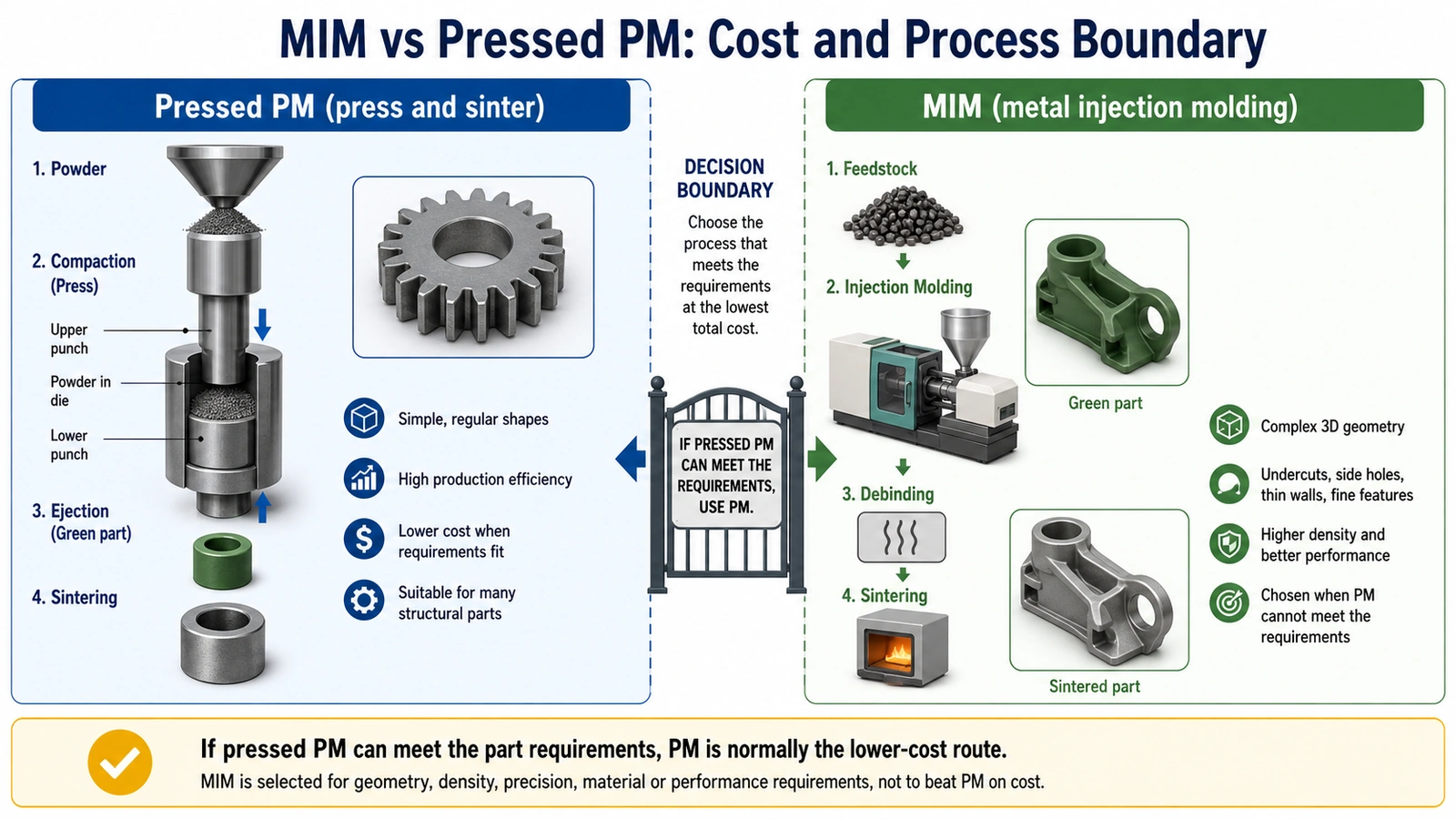
Conventional press-and-sinter powder metallurgy (PM) deserves special attention because the forming method uses primarily axial compaction and ejection. A shape that can be pressed and ejected directly, while meeting the required material, density, tolerances and performance, may be more economical than MIM. MIM is more attractive for three-dimensional detail and features that are difficult to produce in the pressing direction. However, geometry alone does not make MIM cheaper: a high post-machining burden or a large powder mass can still outweigh its near-net-shape advantage. The EPMA process guidance explains the pressing/ejection distinction, while the MIM vs pressed PM comparison covers the detailed process decision.
| 프로젝트 상황 | Initial cost decision | Next sensible action |
|---|---|---|
| Drawing is changing; no repeat demand | MIM tooling is a weak default | Use CNC or another suitable prototyping route, then reassess. |
| Small complex part; stable design; credible repeat demand | Potential MIM candidate | Calculate delivered-part savings and request a DFM review. |
| Large simple form; limited fine features | Alternative route often stronger | Compare CNC, casting or other geometry-appropriate processes. |
| Pressed PM meets geometry and property targets | MIM often difficult to justify on cost alone | Review a PM quotation at equivalent acceptance requirements. |
| Many high-precision features still require machining | Potentially weak MIM economics | Estimate realistic finishing burden before tooling. |
Engineering example C · Hypothetical low-volume project
A Low-Volume Mechanism Part with a Changing Drawing
Consider a representative, hypothetical small mechanism part requiring fewer than 1,000 initial validation pieces. Its fit surfaces and assembly interfaces have not yet passed functional testing. MIM may seem attractive because a future mold could form its complex profile, but the dominant near-term uncertainty is whether the drawing will survive testing. An upfront tool can become partially unusable if an interface, thin wall or parting-sensitive feature is revised after samples; an apparently attractive recurring MIM unit price does not recover those sunk costs.
For a design still undergoing functional trials, make validation samples by a technically suitable flexible process, test critical fits and loads, and freeze the drawing revision and datum scheme before ordering a production mold. Document realistic annual orders and total expected accepted volume, then establish which features could remain as-sintered and which would need additional machining. A prototype produced by CNC or additive manufacturing does not automatically represent final MIM microstructure or performance, so the selected MIM material and finished part still require their own validation.
When the functional interfaces or material requirements are still changing, deferring production tooling limits exposure to mold changes and repeated trials. Once the design and expected demand are credible, a MIM DFM and cost quotation should state the sampling scope, responsibility for modifications and criteria for proceeding. A small first order alone is not grounds for rejection when a stable repeat-production program is planned.
금형 제작 전에 MIM 비용을 어떻게 절감할 수 있나요?
The best cost-reduction opportunities are usually identified before a mold is released for manufacture. Once gating, cavity geometry, ejection and shrinkage compensation are built into tooling, changes may require rework, additional trials or repeated validation. Cost reduction should remove unnecessary operations and over-specified requirements; it must not compromise the application's material performance, critical fit, wear resistance or inspection criteria.
Optimize Functional Tolerances and Part Geometry
표시 functional datums, contact faces and critical fit dimensions before proposing any tolerance change. A precision mating bore or sealing surface may legitimately need finishing, while a non-contact external profile may be accepted in the as-sintered condition if trials show the required repeatability. A uniform-wall redesign can reduce debinding or sintering problems, but thickness cannot be reduced below what mechanical loading requires. Likewise, improving ejection direction, modifying a nonfunctional deep slot or adding a feasible support face may avoid tool actions or costly setters. For every design alternative, compare the exact requirement being changed, the expected manufacturing operation removed, and the validation required to maintain function. The customer or design authority must approve specification changes before the lower-cost route is quoted as equivalent.
A design-for-cost review should also check undercuts, deep slots and any surfaces that require a new mold action. Removing an unnecessary insert or simplifying a feature can improve tooling simplicity; keeping a genuinely necessary undercut may be the correct engineering decision even if it raises cost. Review all proposals through a formal DFM assessment and, where relevant, sample validation.
Reduce Unnecessary Secondary Operations and Production Risks
Identify every post-sinter step and why it is specified: machining a precision bore, tapping a functional thread, grinding a reference face, polishing an appearance-critical surface, or applying heat treatment or passivation for a stated property. Internal threads can sometimes be molded, but a complex unscrewing tool may cost more than tapping; select the route using geometry, tolerance and lifetime production economics, not a blanket rule that one method is always cheaper. Review whether a surface can remain as-sintered, whether a specified finish is necessary, and whether one operation can satisfy several legitimate requirements. When material substitution is considered, validate final strength, corrosion behavior, heat-treatment response and qualified feedstock availability; a lower powder price does not establish a lower accepted-part cost.
| 검토 항목 | Cost mechanism | Proposed engineering action | Verification / constraint |
|---|---|---|---|
| Critical vs noncritical tolerances | Excess machining and inspection when every dimension is tight | Mark the real fit / datum features and agree reasonable general tolerances elsewhere | Verify assembly function and acceptance criteria. |
| Uneven walls or difficult green-part ejection | Tool complexity, sintering support and potential scrap | Review wall transitions, feature access and mold-release strategy | Confirm strength, molding, debinding and distortion behavior. |
| Threads, bores and sealing faces | Additional drilling, tapping, sizing or grinding | Determine what must remain post-machined and what may be formed | Verify actual tolerance, finish and repeatability. |
| Surface and cosmetic specification | Polishing, plating, coating and extra inspection | Keep only necessary surface requirements | Validate application environment, appearance and performance. |
| Cavity count and repeat production | Upfront mold investment vs batch productivity | Compare viable cavity proposals against lifetime demand | Check filling balance, tooling life and production qualification. |
| 다중 부품 조립 | Inventory, joining and tolerance stack-up | Assess part consolidation only if the new shape is MIM-suitable | Validate fit, loading and quality acceptance. |
| Sintering support faces and long spans | Custom setters, distortion-related sizing and extra handling | Review resting orientation, common-plane supports and protected functional faces before tool release | Confirm sample flatness, contact marks and dimensional repeatability without compromising the design. |
A production-volume discussion should include realistic batch sizes, lifetime demand and projected changes. Multi-cavity tooling may be valuable for repeat production, but the larger initial investment must be justified through an achievable lower delivered cost and acceptable process stability. Tooling ownership and storage should be documented in the purchase agreement, not assumed from general industry practice.
Compare the approved original drawing with a customer-approved alternative under the same finished-part and inspection requirements. Request separate figures for any change in tooling investment, machining time, inspection work and acceptance-yield assumptions. Where the proposed saving depends on better dimensional stability, use measurements from representative trials; a guessed reduction in scrap is not an adequate basis for the revised price.
Geometry and tolerance changes should be checked against the MIM design for cost guide. MIMA의 후가공 지침 explains why machining, sizing and finishing can increase the cost of a delivered MIM component. Any reduction still has to be confirmed against the part's functional and inspection requirements.
Cost reductions are valid only when the finished part continues to meet its specified material properties, load-bearing requirements, critical datums, heat treatment and acceptance tests. Any proposed drawing change must be approved by the customer or design authority.
신뢰할 수 있는 MIM 견적을 받는 방법은 무엇인가요?
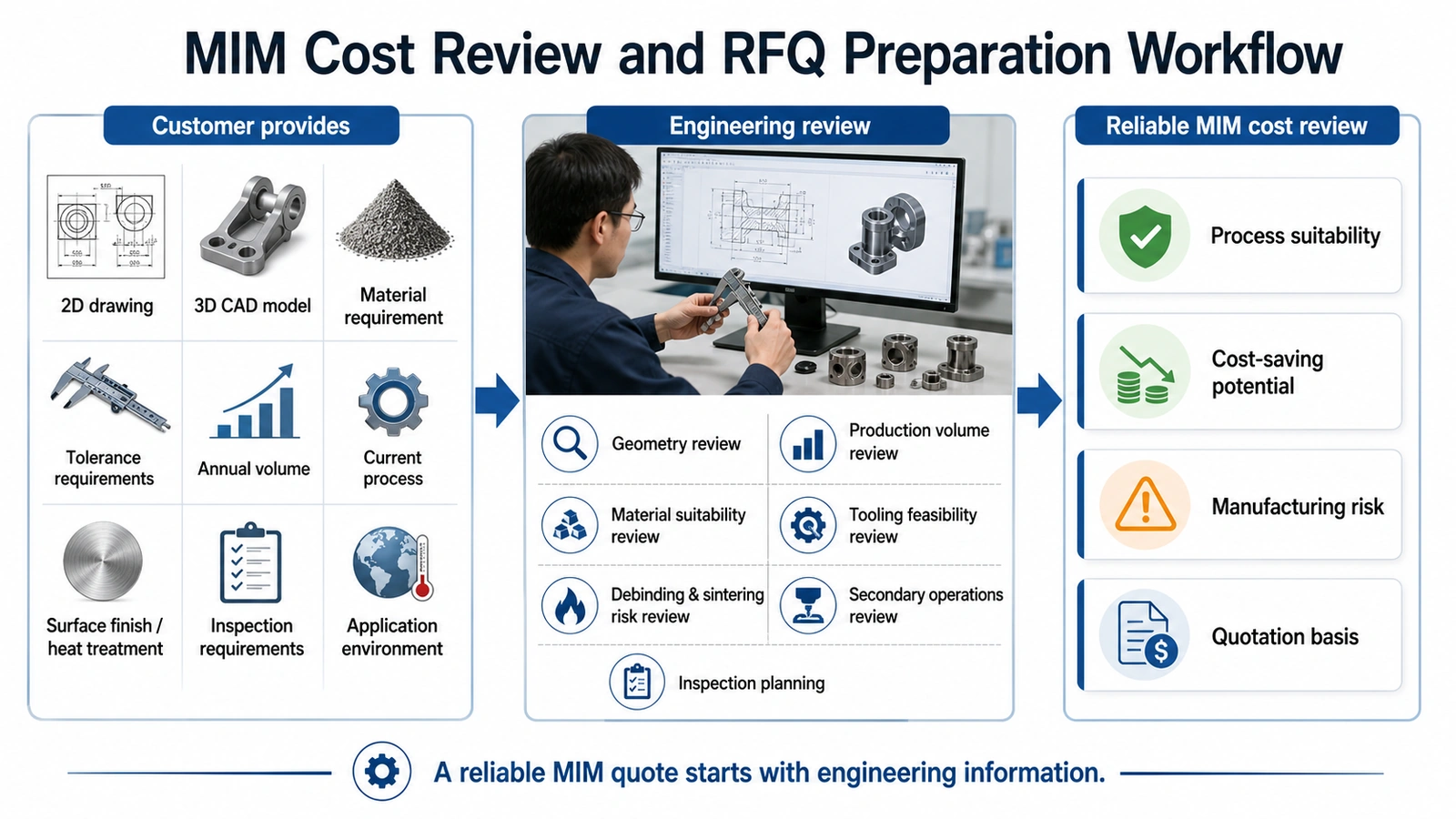
A reliable custom MIM quotation starts by agreeing on what constitutes an accepted finished part: the drawing revision, material and final properties, critical dimensions, finishing, test method, forecast quantity and delivery terms. The supplier then determines which requirements can be built into the mold and sintering route, which require a secondary operation, and which remain unresolved until a sample trial. A preliminary budgetary estimate is not a confirmed production capability. Its open assumptions should be visible so that later approval or rejection has a clear technical basis.
What Drawings and Production Data Should You Submit?
Provide the 2D controlled drawing and 3D STEP model together. The 3D model helps locate undercuts, cores, parting directions and local wall changes; the 2D drawing identifies which tolerances and datums must actually be met after sintering and any finishing. State material grade and required final condition, coatings, heat treatment, inspection method, key performance tests, first batch size, expected annual orders and realistic program lifetime. If the project is a CNC conversion, an existing routing or accepted finished-part price can help identify the real cost-reduction opportunity, although disclosure is optional. Flag any specifications still subject to customer confirmation rather than allowing different suppliers to assume different acceptance criteria.
| RFQ 입력 | Why the supplier needs it |
|---|---|
| 2D drawing and 3D STEP model | Define geometry, functional interfaces, moldability and tolerance requirements. |
| Material grade and intended final condition | Check feedstock route, strength/corrosion requirements and possible heat treatment. |
| First order, annual quantity and program lifetime | Distinguish initial batch price, recurring production and mold amortization. |
| Critical tolerances, datums and inspection scope | Separate achievable as-sintered features from post-machining and testing needs. |
| Surface finish, threads, coatings and heat treatment | Price all required secondary operations into the final accepted part. |
| Current process, present finished-part cost if available | Create a meaningful MIM vs CNC or other-route cost comparison. |
| Application, acceptance criteria and delivery conditions | Confirm non-negotiable function and compare quotations on the same basis. |
How to Compare MIM Supplier Quotations Fairly
A fair comparison puts supplier proposals on one controlled drawing revision and one acceptance specification: material and treatment state, finished dimensions, post-processing, inspection/reporting, packaging and delivery condition. Separately compare tooling configuration and cavity count, tool service life, trial/qualification rounds, charges for revisions, batch minimum assumptions, quoted price tiers and lead time. For cross-border buying, compare currency, price validity, Incoterms, freight, taxes and duties using the same basis; an ex-works unit price is not a delivered landed cost. If one supplier quotes an as-sintered blank and another quotes a fully finished component, first add the missing validated operations or request a revised common-scope offer.
For a new part, XTMIM can review mold release and gating, cavity strategy, critical tolerances, debinding and sintering supports, post-sinter machining and the inspection scope. The quotation should distinguish confirmed drawing requirements, engineering assumptions 및 features requiring sample validation. For example, a close-fit bore may initially be priced as finish-machined until measured trials support an as-sintered solution. A slender arm with uncertain flatness may need a support concept and dimensional checks before a production yield assumption is credible. The RFQ 준비 가이드 helps organize the specifications and files suppliers need.
Before tool release, the quotation package should identify the approved drawing revision, mold and cavity configuration, planned sintering and finishing route, method for inspecting critical dimensions and properties, one-time and recurring charges, and responsibility for samples and changes. Documentation can be proportionate to the project's complexity, but the price must remain traceable to the agreed engineering and delivery requirements.

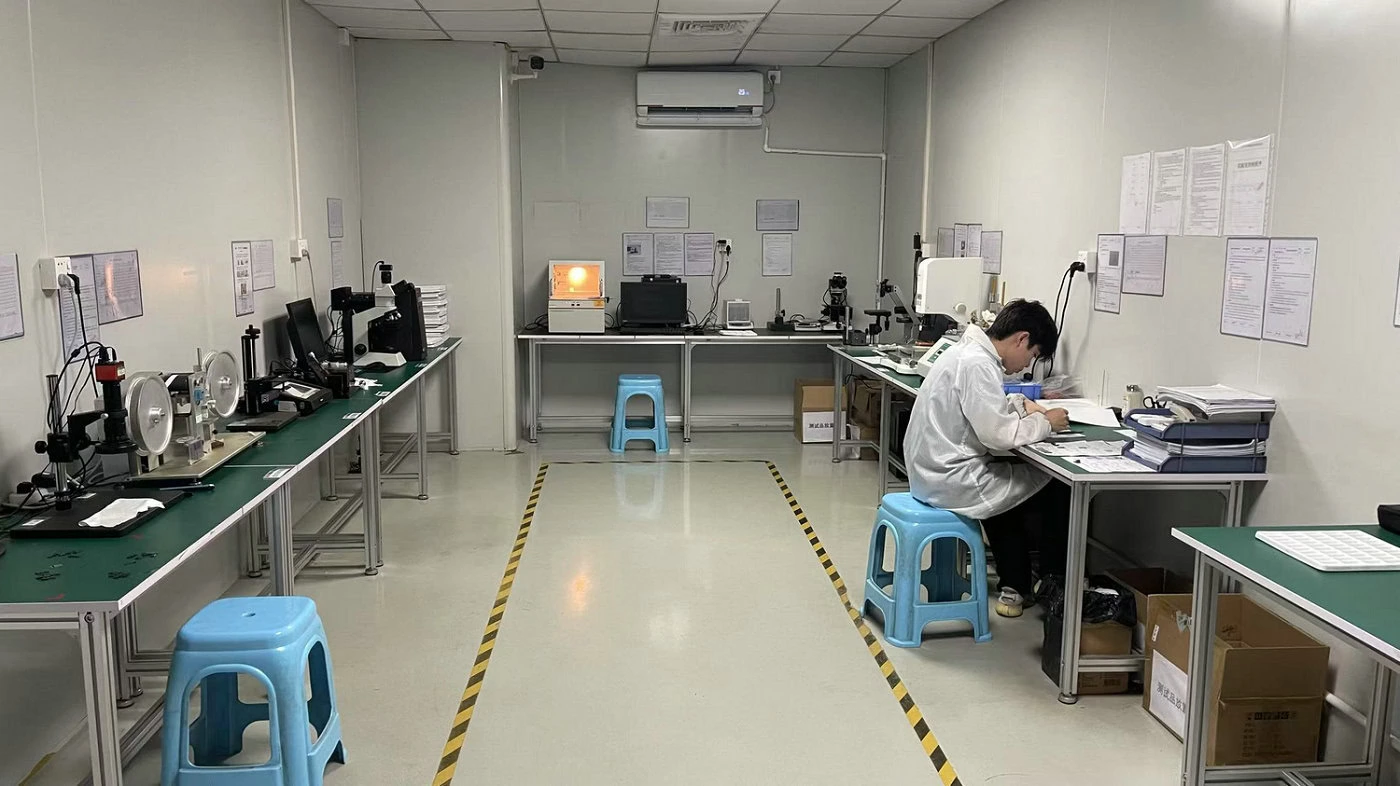
Before placing a tooling order: Confirm whether the quoted unit price covers an as-sintered blank or a finished accepted part, how tooling charges are invoiced, and which tests, dedicated fixtures, secondary operations or trial revisions are excluded. Any unresolved requirement should be identified in the quotation rather than assumed to be included.
Drawing-based cost review
Get a quote based on your actual part, not a generic unit price
Share your drawings, material, estimated production volume and critical requirements. XTMIM can review whether MIM is a technically and economically reasonable route before you commit to production tooling.
금속 사출 성형 비용 FAQ
MIM 금형 비용이 부품 단가에 포함되어 있습니까?
항상 그런 것은 아닙니다. 별도의 일회성 요금일 수도 있고, 개당 단가에 포함되어 회수되거나, 둘 다일 수도 있습니다. 견적에 시험 생산, 전용 고정구 및 품질 인증이 포함되는지 문의하고, 금형 비용이 예상 주문량에 걸쳐 어떻게 회수되는지 확인하십시오. 승인된 부품의 개당 단가에 이미 해당 회수 비용이 포함되어 있다면, 수명 주기 모델에서 전체 금형 비용을 다시 추가하지 마십시오.
1,000개 부품의 초기 주문으로 MIM 금형 제작이 정당화될 수 있습니까?
검토는 가능하지만, 해당 물량이 전체 예상 수요인 경우에는 경제성이 떨어지는 경우가 많습니다. 소량의 초기 주문과 다년간의 반복 프로그램은 다를 수 있습니다. 진행 전에 설계 안정성, 예상 누적 수량, 대체 제조 비용 및 금형 회수 가능성을 확인하십시오.
견적에 샘플 테스트, 검사 및 금형 수정이 포함되나요?
공급업체 계약에 따라 포함되거나 별도로 가격이 책정될 수 있습니다. 포함된 시험 횟수, 가격이 책정된 자격 및 검사 보고서, 설계 변경 시 신규 금형 비용 발생 여부를 문의하십시오.
금형 캐비티 수를 늘리면 항상 MIM 부품당 비용이 절감되나요?
추가 캐비티는 사출 사이클당 더 많은 그린 파트(Green Part)를 생산할 수 있지만, 금형 비용이 더 비싸고 게이트/러너 시스템은 캐비티를 일관되게 채워야 합니다. 또한 각 캐비티는 합의된 후속 소결 및 치수 요구 사항을 충족해야 합니다. 캐비티별 금형 비용, 예상 승인 생산량, 그리고 차액을 정당화하는 데 필요한 생산 수량에 대해 문의하십시오.
프로젝트 종료 전에 금형 교체가 필요하면 어떻게 되나요?
금형 수명은 금형 설계, 피드스톡, 작동 조건, 유지보수 및 생산 이력에 따라 달라집니다. 예상되는 승인된 생산량이 금형의 검증된 수명을 초과할 경우, 잠재적인 수리, 교체 및 관련 승인 비용을 전체 투자 모델에 포함하십시오. 견적 승인 전에 공급업체의 금형 수명 가정 및 책임 조건을 확인하십시오.
샘플링 후 도면이 변경될 경우에도 금형을 계속 사용할 수 있습니까?
변경 사항에 따라 달라질 수 있습니다. 중요하지 않은 형상의 변경은 비교적 간단할 수 있지만, 기준(datum)에 중요한 표면의 이동, 분할선(parting line)에 민감한 언더컷 변경 또는 단면 두께의 중대한 변경은 새로운 코어, 금형의 주요 수정 또는 새로운 소결 자격(qualification)이 필요할 수 있습니다. 변경 수락 전에 정확한 도면 개정(revision), 기술 승인 및 비용 부담 주체를 확인하십시오.
Technical References and Scope of Evidence
The references cover MIM geometry, molding and sintering limits, secondary operations, material standards and process selection. They do not set XTMIM's current tooling prices or establish guaranteed tolerances, measured yields or savings for an individual project. MPIF Standard 35-MIM is a material-specification reference, not a pricing standard.
- MIMA — MIM을 이용한 복잡한 설계: gate location and cavity balance, variable wall thickness, green-part ejection, mold undercuts and sintering supports; technical design guidance, not a price database.
- Metal Injection Molding Association — Designing with MIM: design complexity, production volume, reducing machining and component consolidation.
- MIMA — Secondary Operations: machining, sizing, heat treatment and effects of finishing on component cost.
- European Powder Metallurgy Association — Metal Injection Moulding: MIM processing and economic boundaries compared with conventional pressed PM.
- Metal Powder Industries Federation — Standard 35-MIM materials: general material specification reference, not a costing standard or a finished-part quotation.
XTMIM 엔지니어링 팀 · Project-specific prices and technical suitability are confirmed through drawing review and the agreed manufacturing requirements.