
어떤 MIM 소재 쌍을 비교하고 계십니까?
두 가지 MIM 소재를 이미 고려 중일 때, 유용한 비교는 단순히 어떤 등급이 더 높은 공개 강도나 경도를 가지고 있는지가 아닙니다. 이는 최종 MIM 상태에서 부품의 서비스 요구 사항을 충족하는 재료입니다. 최종 MIM 상태에서. 일치하는 쌍으로 시작한 다음, 금형 제작을 확정하기 전에 공정 및 검증 요구 사항을 확인하십시오.
304 vs 316L 스테인리스강
두 가지 모두 오스테나이트계 스테인리스강 옵션이지만, 316L은 몰리브덴을 함유하고 있으며 국부 부식에 대한 저항성이 더 요구될 때 종종 고려됩니다. 각 등급이 충분하다고 간주하기 전에 사용 매체, 온도, 세척 방식 및 최종 표면 상태를 확인하십시오.
MIM 부품용 304 vs 316L 비교316L vs 17-4 PH 스테인리스강
316L은 종종 내식성과 연성을 평가하는 데 사용되며, 17-4 PH는 석출 경화 및 강도가 중요할 때 고려됩니다. 강도뿐만 아니라 지정된 열처리 조건, 부식 노출, 자기 민감도 및 변형 민감 치수를 비교하십시오.
316L vs 17-4 PH 스테인리스강 비교420 vs 440C 스테인리스강
420 vs 440C 스테인리스강을 비교할 때는 실제 마모 모드, 접촉 재료 및 열처리 조건을 기준으로 시작하십시오. 더 높은 달성 가능한 경도가 더 나은 서비스 수명을 보장하는 것은 아니며, 날카로운 형상, 취성 파손 위험, 마감 및 치수 변화도 중요합니다.
MIM에서 420 대 440C 스테인리스강 비교17-4 PH vs 4605 저합금강
가공 후 요구되는 강도와 부식 노출, 보호 또는 코팅 요구사항 및 마감을 비교하십시오. MIM 4605는 부식 제한 사항이 허용되는 경우 구조적 후보가 될 수 있으며, 프로젝트별 데이터 없이는 낮은 비용이나 동등한 성능을 가정해서는 안 됩니다.
17-4 PH와 MIM 4605 비교티타늄 대 스테인리스강
티타늄은 유용한 밀도 및 부식 관련 절충안을 제공할 수 있지만, 정확한 비교를 위해서는 특정 등급, 작동 조건 및 수용 기준이 필요합니다. MIM의 경우 피드스톡, 분위기 및 오염 제어를 확인하십시오. “티타늄'이라는 단어만으로 생체 적합성을 추론하지 마십시오.
티타늄 대 스테인리스강 MIM 비교코바(Kovar) 대 인바(Invar) 합금
코바는 특정 실링 어셈블리에서 팽창 계수 일치를 위해 자주 고려됩니다. 인바는 정의된 온도 범위에서 낮은 팽창 계수로 알려져 있습니다. 단일 팽창 값이 아닌, 결합 재료, 사용 온도 구간, 재료 상태 및 완성 부품의 치수 안정성을 비교하십시오.
MIM 부품용 Kovar vs Invar 비교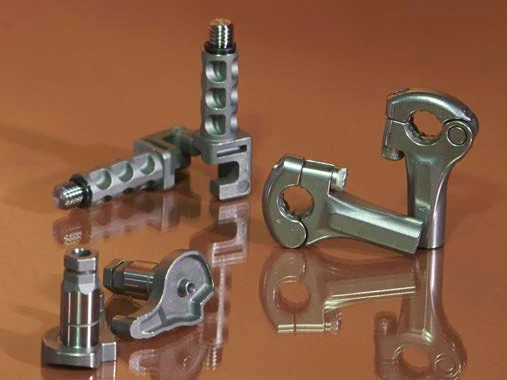
동일한 유압 밸브 어셈블리 내 17-4 PH 및 4605
문서화된 MIMA 수상 프로젝트에서 사용됨 17-4 PH 스테인리스강 베이스 캡 및 베이스 바디용 4605 저합금강 농업 및 오프로드 장비용 유압 비례 제어 밸브의 캐처 및 텐션 바용. 두 베이스 부품은 소결 시 치수 요구 사항을 충족했습니다. 캐처는 외경 연삭 및 버니싱이 필요했고, 텐션 바는 외부 나사선 선삭 가공이 필요했습니다.
이 부품들은 하나의 어셈블리를 공유하지만, 동일한 작업이나 후처리 경로를 거치지는 않습니다. 이 예시는 재료 선택이 개별 부품 및 해당 승인 기준에 속하는 이유를 보여줍니다. 이는 해당 산업의 모든 부품에 MIM을 사용해야 한다는 것을 동일한 부품에 대해 17-4 PH와 4605를 직접 비교하는 테스트입니다.
귀하의 페어가 목록에 없는 경우, 해당 정확한 두 가지 등급과 도면을 다른 비교에서 도출된 결론을 적용하기보다는 검토를 위해 보내주십시오. 목록에 있는 합금이 모든 MIM 공급업체에서 반드시 생산 가능한 재료인 것은 아닙니다.
동일한 부품에 대해 두 가지 MIM 재료를 비교하는 방법은 무엇입니까?
두 후보 모두와 비교하십시오 동일한 부품, 작동 조건 및 허용 한계. 부식 노출, 하중 지지 능력, 접촉 마모, 질량, 자기 응답 또는 열팽창 중 어떤 요구 사항을 타협할 수 없는지 식별하십시오. 그런 다음 두 출처가 동일한 재료 상태, 열처리, 시험 온도, 밀도 및 시험 방법을 보고하는지 확인하십시오. 종이상의 차이는 부품의 성능이나 제조 위험을 변경하는 경우에만 유용합니다.
하중 지지 부품의 경우, 두 최종 재료가 이미 필요한 여유분을 가지고 설계 요구 사항을 충족하고 다른 파손 모드가 지배적인 경우 추가 인장 강도는 제한적인 가치를 갖습니다. 마모 표면의 경우, 접촉 압력, 상대 재료 및 윤활 없이는 경도만으로는 수명을 예측할 수 없습니다. 비교가 부품의 실제 제한 조건에 초점을 맞추면 재료 선택이 더 명확해집니다.
| 동일 부품에 대한 요구 사항 | 후보 간 비교 대상 | 엔지니어링 결정을 변경하는 요소 |
|---|---|---|
| 부식 노출 | 등급, 실제 유체 또는 대기, 온도, 표면 처리, 부동태화 및 부식 시험 조건. | 두 재료가 요구되는 노출 및 서비스 수명을 충족하는지 여부; 정의된 환경 없이 부식 저항성을 순위 매기지 마십시오. |
| Load and mechanical response | Minimum strength, ductility, heat-treated condition and the relevant failure mode. | Whether test data for the specified final MIM condition support the required failure-mode and safety margins—not merely a higher published number. |
| Sliding, impact or contact wear | Hardness, toughness, mating surface, contact load, lubrication and surface treatment. | Whether the wear mechanism actually benefits from the proposed property rather than hardness alone. |
| Thermal or magnetic function | Expansion over the specified temperature range, mating materials and magnetic response in the final condition. | Whether assembly fit, sensor behavior or sealing performance depends on the difference. |
| Mass, finishing and program constraints | Density, surface requirements, additional operations, availability and verified supplier quotations. | Whether a functional advantage survives the added process, inspection and production cost. |
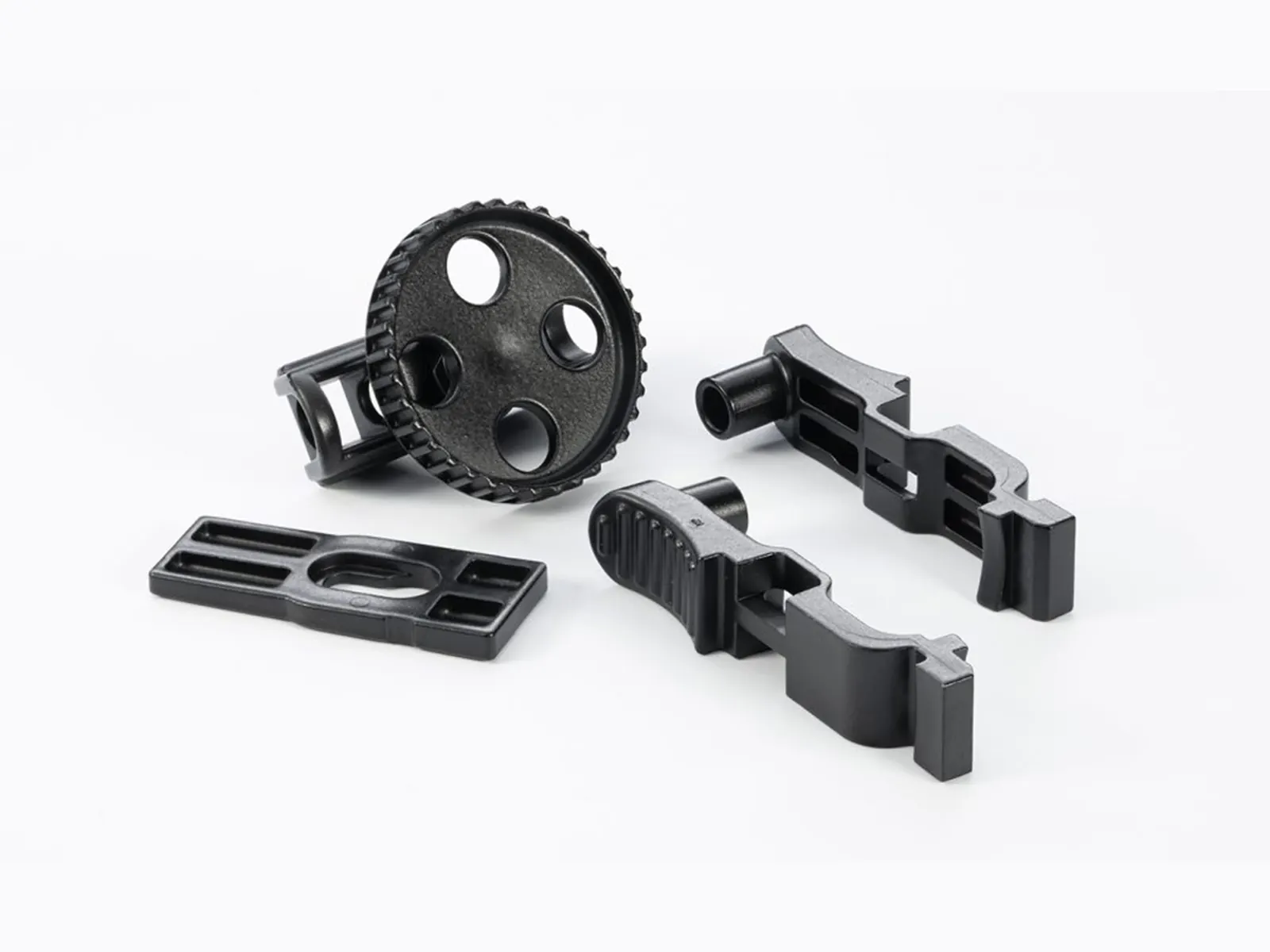
316L underwater cable latch: alloy and coating were both part of the solution
MPP and Schilling Robotics redesigned a latch assembly for electrical and communications cables used in the deep ocean. The original plastic components had stretched and cracked. The new four-part, five-piece assembly used MIM 316L 스테인리스강은 with a low-friction, corrosion-resistant coating.
The material grade addressed only part of the problem. Locking loads, corrosion exposure, friction and the coating on the finished assembly also mattered. For an actual 304-versus-316L or 316L-versus-17-4 PH decision, the relevant evidence would be the same service environment and acceptance tests—not this example alone.
Can Each Candidate Material Meet the Requirements as a MIM Part?
A grade that meets the functional requirements may still be unsuitable for the planned MIM route. The comparison has to continue from the material specification to available feedstock, sintering and post-treatment, and finally to the part's achievable dimensions and inspection. A different alloy can change the process route even when the drawing is unchanged.
Is MIM Feedstock and a Viable Process Route Available?
First confirm the exact alloy grade, not merely a broad family such as stainless steel or titanium. Ask whether suitable MIM feedstock can be obtained consistently, whether its chemistry and impurity limits fit the requirement, and whether the supplier has a viable injection, debinding and sintering route. A listed powder grade, a powder for additive manufacturing or a wrought-stock datasheet does not by itself establish qualified MIM feedstock.
Availability is especially important for less common or reactive materials, where feedstock supply, furnace atmosphere, contamination control and previous production experience may decide whether a candidate is feasible. The 금속 사출 성형 협회(MIMA) 재료 범위 lists material families but explicitly advises checking alloy availability with the supplier. It is a reference for possible options, not a declaration of XTMIM's qualified production scope.
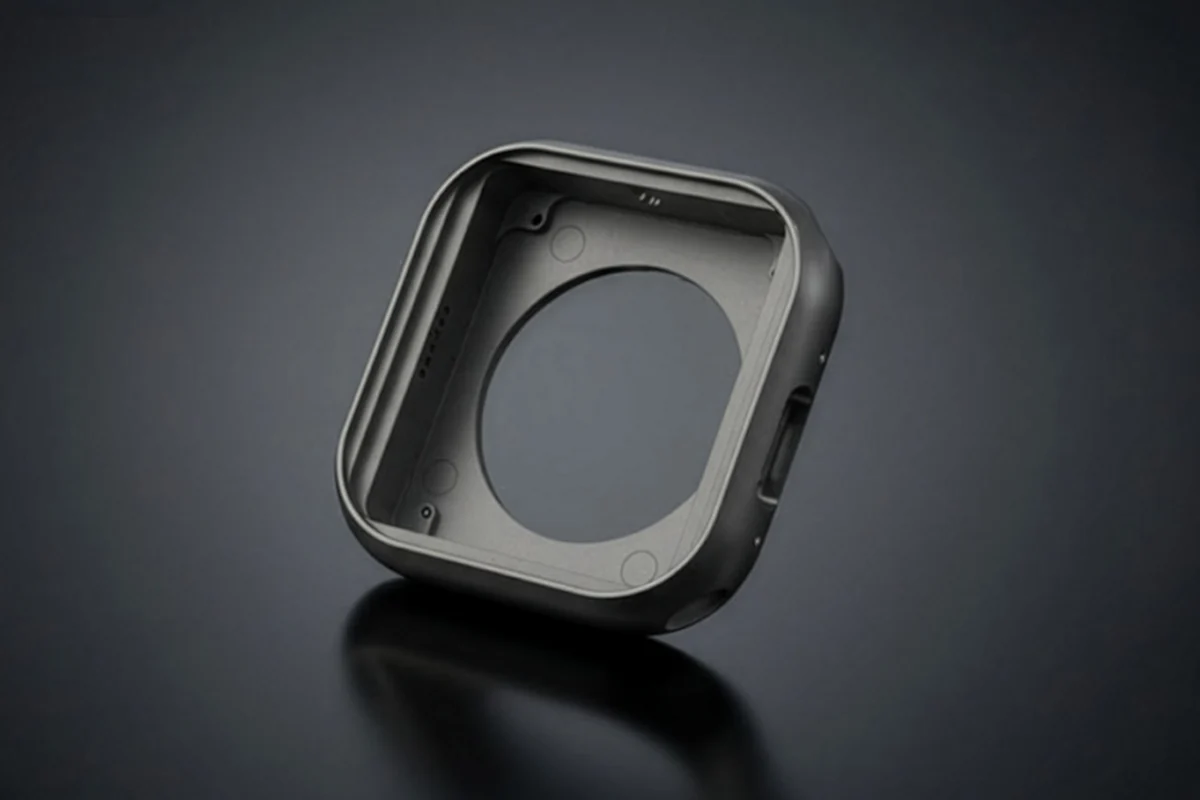
Titanium MIM wearable housing: the process route must be qualified
PIM International documented MTIG's titanium MIM wearable-device housing and its integrated approach to titanium powder, feedstock and sintering. The significance for a stainless-versus-titanium decision is not the appearance of the housing; it is the additional control required to produce the material consistently.
The publication does not identify the pictured housing as CP titanium or Ti-6Al-4V. Neither its grade-specific performance nor another supplier's production capability can be inferred from the photo. Confirm the specified chemistry, impurity limits, sintering conditions and final inspection records with the proposed manufacturer.
Can the Finished MIM Part Meet the Required Properties?
Next compare the required properties in the final as-sintered or post-treated condition. Sintering atmosphere, density and residual porosity, chemistry changes, heat treatment and surface finishing can influence strength, hardness, corrosion behavior and other functional results. For precipitation-hardening or martensitic stainless grades, the treatment condition may be as important as the alloy name; for reactive alloys, contamination and sintering controls require additional confirmation.
Use MIM-specific references where applicable—for example, MPIF Standard 35-MIM (2025년판)—alongside the supplier's actual material condition and test records. Typical values in standards or datasheets are useful screening evidence, but they are not guaranteed properties for every molded geometry. Do not place wrought, cast and MIM values side by side as though they represent identical material conditions. Before approval, agree on which mechanical, corrosion, expansion or other tests apply and whether the tested condition represents the intended production part.
Can Geometry, Tolerances, and Inspection Requirements Be Met?
Finally, assess the same drawing using each candidate's actual processing route. Thin walls, isolated heavy sections, blind holes, undercuts, unsupported spans and asymmetric mass distribution can affect filling, handling, sintering support and distortion. Critical holes, flatness, mating features or sealing surfaces may require sizing, machining or another secondary operation. The required treatment may also change final dimensions.
Identify the critical-to-function dimensions and acceptance method early. A candidate should not be approved just because a property table is favorable if the supplier cannot show how final geometry, surface condition and inspection requirements will be controlled. Ask what is proven in existing production, what requires sample trials and what cannot yet be confirmed.
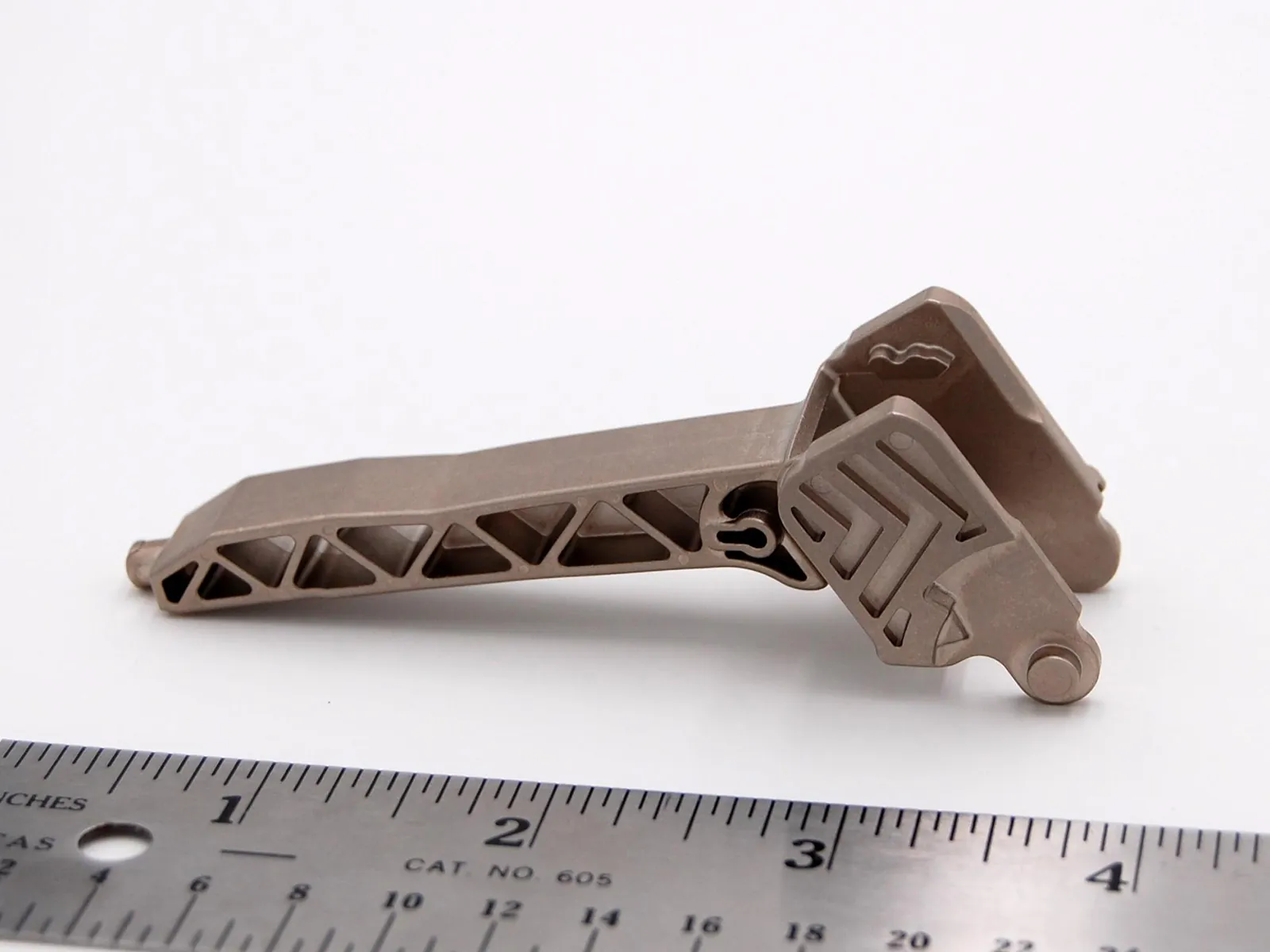
17-4 PH generator handle: sintering support mattered as much as the grade
MIMA's upper beam handle was redesigned from a fully machined component for a removable turbine-generator brush-holder assembly. Its long ribbed geometry needed a custom sintering support tray to limit distortion. After sintering, the manufacturer still used coining and one local machining operation to meet a critical dimension.
This is why two candidate grades cannot be approved from tensile-strength data alone. Ask whether each proposed process route can deliver the same mating features after sintering and heat treatment, and whether secondary finishing is needed to meet the drawing.
재료 가용성: The materials discussed here are candidates for comparison; XTMIM production capability is not confirmed for every listed grade. Feedstock, sintering, post-treatment and acceptance requirements must be checked for each project.
What Can You Decide from the Comparison, and What Still Needs Validation?
After comparing the required properties and the available MIM processes, separate what is already supported by evidence from what still needs testing or supplier confirmation.
When Can You Make a Preliminary Material Choice?
| Decision status | 알고 있는 것 | 적절한 다음 조치 |
|---|---|---|
| Preliminary preference | The part requirements and material states are defined; comparable evidence favors one candidate; no known manufacturing blocker has been identified. This is not a production approval. | Review the detailed A-vs-B page, then verify the exact grade, final MIM condition and supplier-specific evidence. |
| Engineering validation required | Both candidates appear plausible, but performance, process controls, geometry or inspection capability remains uncertain. | List the unresolved requirements and ask the proposed supplier for route-specific records, representative samples or agreed testing as appropriate. |
| Not enough information | Key service conditions, acceptance limits, material grade or qualified process availability are missing. | Complete the requirements first; do not infer suitability from a generic comparison table. |
Final approval depends on the drawing and contract: material certificates, production-representative samples, mechanical or corrosion tests, first-article inspection and dimensional capability evidence may be required. The comparison identifies what to check; it does not replace those checks.
What Information Is Needed for Project-Specific Validation?
Share both candidate grades and the actual part requirements. The information below lets the engineer compare the same component and identify which result still needs verification.
| 제공할 정보 | Why it matters to the A-vs-B decision |
|---|---|
| 데이터텀, 중요 치수 및 공차를 포함한 2D 도면 | Shows which dimensions must be molded, sintered, post-machined or specifically inspected. |
| 3D CAD model and functional interfaces | Reveals thin walls, local mass changes, tooling constraints, support needs and mating geometry. |
| Both candidate grades and required material condition | Prevents generic family comparisons and identifies heat treatment, chemistry or grade restrictions. |
| Service environment and functional loading | Defines corrosion media, temperature range, mechanical load, contact wear, magnetic or expansion requirements. |
| Surface finish, coatings and critical acceptance tests | Clarifies any finishing, passivation, dimensional or material verification requirements. |
| Estimated annual quantity and project stage | Helps assess tooling economics and whether a reliable repeat-production route is needed. |
| Existing samples, failures or alternative process history (if available) | Highlights previously observed distortion, corrosion, cracking, wear or quality-control problems. |
Comparing two materials for a specific MIM part?
Send the 2D drawing, 3D model, exact candidate grades and critical service requirements. XTMIM can assess the questions that need resolution before a production route is selected. Material availability and manufacturing feasibility are confirmed for the individual project.