
Which MIM Material Pair Are You Comparing?
When two MIM materials are already under consideration, the useful comparison is not simply which grade has the higher published strength or hardness. It is which material meets the part's service requirements in the intended finished MIM condition. Start with the matching pair below, then check processing and validation requirements before committing to tooling.
304 vs 316L Stainless Steel
Both are austenitic stainless options, but 316L contains molybdenum and is often considered when resistance to localized corrosion is more demanding. Confirm the medium, temperature, cleaning regime and final surface condition before treating either grade as sufficient.
Compare 304 vs 316L for MIM parts316L vs 17-4 PH Stainless Steel
316L is often evaluated for corrosion resistance and ductility; 17-4 PH is considered when precipitation hardening and strength are important. Compare the specified heat-treatment condition, corrosion exposure, magnetic sensitivity and distortion-sensitive dimensions—not strength alone.
Compare 316L vs 17-4 PH stainless steel420 vs 440C Stainless Steel
When comparing 420 vs 440C stainless steel, start with actual wear mode, mating material and heat-treated condition. Higher attainable hardness is not proof of better service life; edge geometry, brittle-failure risk, finishing and dimensional change also matter.
Compare 420 vs 440C stainless steel in MIM17-4 PH vs 4605 Low-Alloy Steel
Compare the required strength after processing alongside corrosion exposure, protection or coating needs and finishing. MIM 4605 can be a structural candidate where its corrosion limitations are acceptable; neither lower cost nor equivalent performance should be assumed without project-specific data.
Compare 17-4 PH vs MIM 4605Titanium vs Stainless Steel
Titanium may offer a useful density and corrosion-related trade-off, but an accurate comparison requires specific grades, operating conditions and acceptance criteria. For MIM, verify feedstock, atmosphere and contamination control; do not infer biocompatibility from the word “titanium” alone.
Compare titanium vs stainless steel for MIMKovar vs Invar Alloys
Kovar is often considered for matching expansion in certain sealing assemblies; Invar is known for low expansion over defined temperature ranges. Compare the mating material, service temperature interval, material condition and finished-part dimensional stability—not a single expansion value.
Compare Kovar vs Invar for MIM parts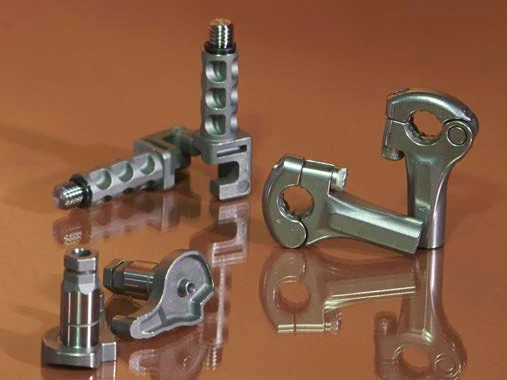
17-4 PH and 4605 in the same hydraulic valve assembly
A documented MIMA award project used 17-4 PH stainless steel for the base cap and base body and 4605 low-alloy steel for the catcher and tension bar in hydraulic proportional valves for agricultural and off-highway equipment. The two base components met their dimensional requirements as sintered. The catcher needed OD grinding and burnishing; the tension bar required a turned external thread.
These parts share an assembly, but not the same job or finishing route. The example shows why material choice belongs to the individual component and its acceptance criteria. It is not a direct test of 17-4 PH against 4605 on one identical part.
MIMA case and material allocation · PIM International photo source
If your pair is not listed, send the exact two grades and the drawing for review rather than applying conclusions from a different comparison. A listed alloy is not necessarily a qualified production material at every MIM supplier.
How Do You Compare Two MIM Materials for the Same Part?
Compare both candidates against the same part, operating conditions and acceptance limits. Identify which requirement cannot be compromised—corrosion exposure, load capacity, contact wear, mass, magnetic response or thermal expansion. Then check whether the two sources report the same material condition, heat treatment, test temperature, density and testing method. A difference on paper is useful only if it changes the part's performance or manufacturing risk.
For a load-bearing component, extra tensile strength has limited value if both finished materials already meet the design requirement with the necessary margin and a different failure mode governs. For a wear surface, hardness alone cannot predict life without contact pressure, mating material and lubrication. Material selection becomes clearer once the comparison focuses on the part's actual limiting condition.
| Requirement for the same part | What to compare between candidates | What changes the engineering decision |
|---|---|---|
| Corrosion exposure | Grade, actual fluid or atmosphere, temperature, finish, passivation and corrosion test conditions. | Whether both materials meet the required exposure and service life; do not rank corrosion resistance without a defined environment. |
| Load and mechanical response | Minimum strength, ductility, heat-treated condition and the relevant failure mode. | Whether test data for the specified final MIM condition support the required failure-mode and safety margins—not merely a higher published number. |
| Sliding, impact or contact wear | Hardness, toughness, mating surface, contact load, lubrication and surface treatment. | Whether the wear mechanism actually benefits from the proposed property rather than hardness alone. |
| Thermal or magnetic function | Expansion over the specified temperature range, mating materials and magnetic response in the final condition. | Whether assembly fit, sensor behavior or sealing performance depends on the difference. |
| Mass, finishing and program constraints | Density, surface requirements, additional operations, availability and verified supplier quotations. | Whether a functional advantage survives the added process, inspection and production cost. |
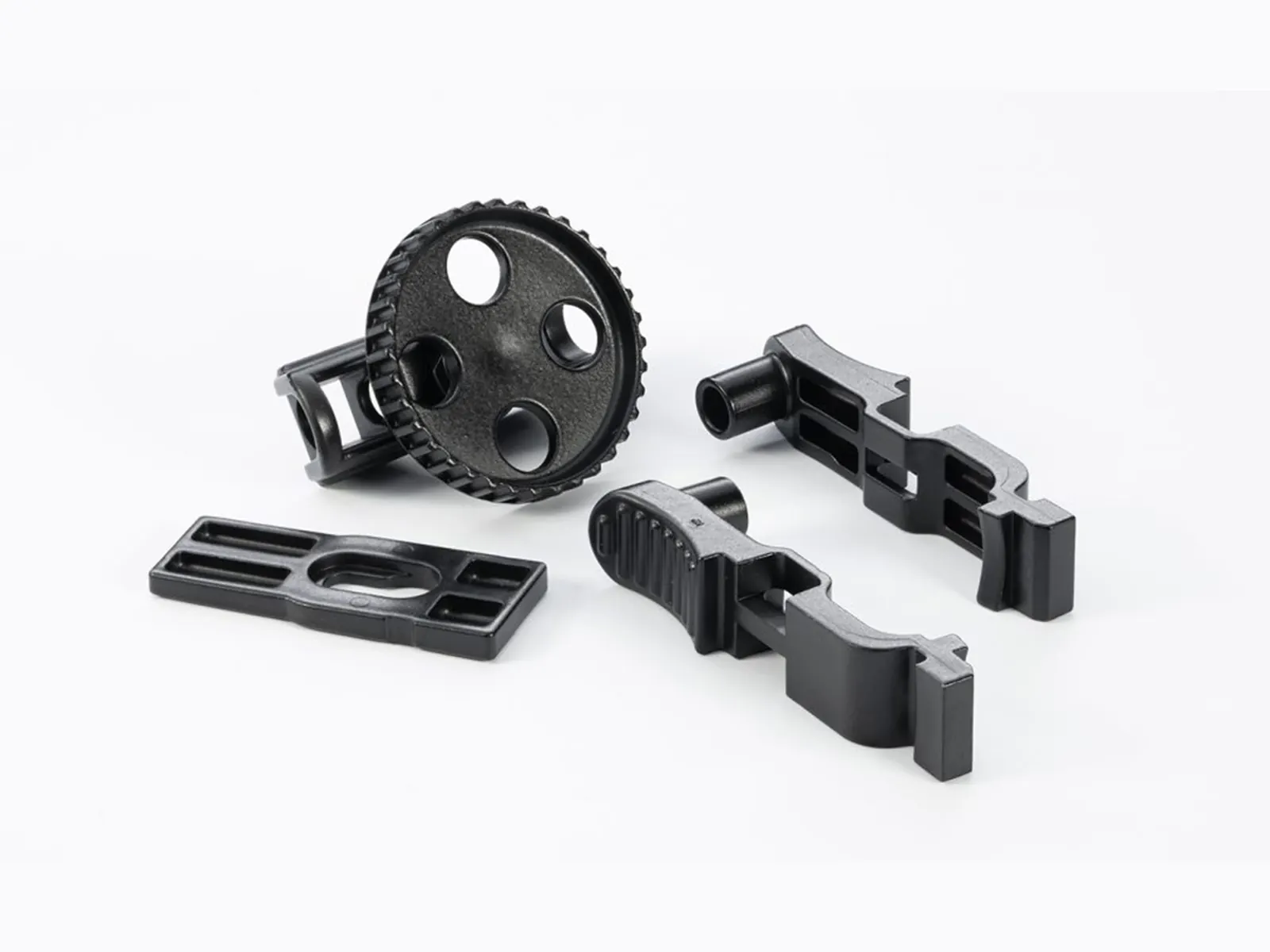
316L underwater cable latch: alloy and coating were both part of the solution
MPP and Schilling Robotics redesigned a latch assembly for electrical and communications cables used in the deep ocean. The original plastic components had stretched and cracked. The new four-part, five-piece assembly used MIM 316L stainless steel with a low-friction, corrosion-resistant coating.
The material grade addressed only part of the problem. Locking loads, corrosion exposure, friction and the coating on the finished assembly also mattered. For an actual 304-versus-316L or 316L-versus-17-4 PH decision, the relevant evidence would be the same service environment and acceptance tests—not this example alone.
Can Each Candidate Material Meet the Requirements as a MIM Part?
A grade that meets the functional requirements may still be unsuitable for the planned MIM route. The comparison has to continue from the material specification to available feedstock, sintering and post-treatment, and finally to the part's achievable dimensions and inspection. A different alloy can change the process route even when the drawing is unchanged.
Is MIM Feedstock and a Viable Process Route Available?
First confirm the exact alloy grade, not merely a broad family such as stainless steel or titanium. Ask whether suitable MIM feedstock can be obtained consistently, whether its chemistry and impurity limits fit the requirement, and whether the supplier has a viable injection, debinding and sintering route. A listed powder grade, a powder for additive manufacturing or a wrought-stock datasheet does not by itself establish qualified MIM feedstock.
Availability is especially important for less common or reactive materials, where feedstock supply, furnace atmosphere, contamination control and previous production experience may decide whether a candidate is feasible. The Metal Injection Molding Association (MIMA) materials range lists material families but explicitly advises checking alloy availability with the supplier. It is a reference for possible options, not a declaration of XTMIM's qualified production scope.
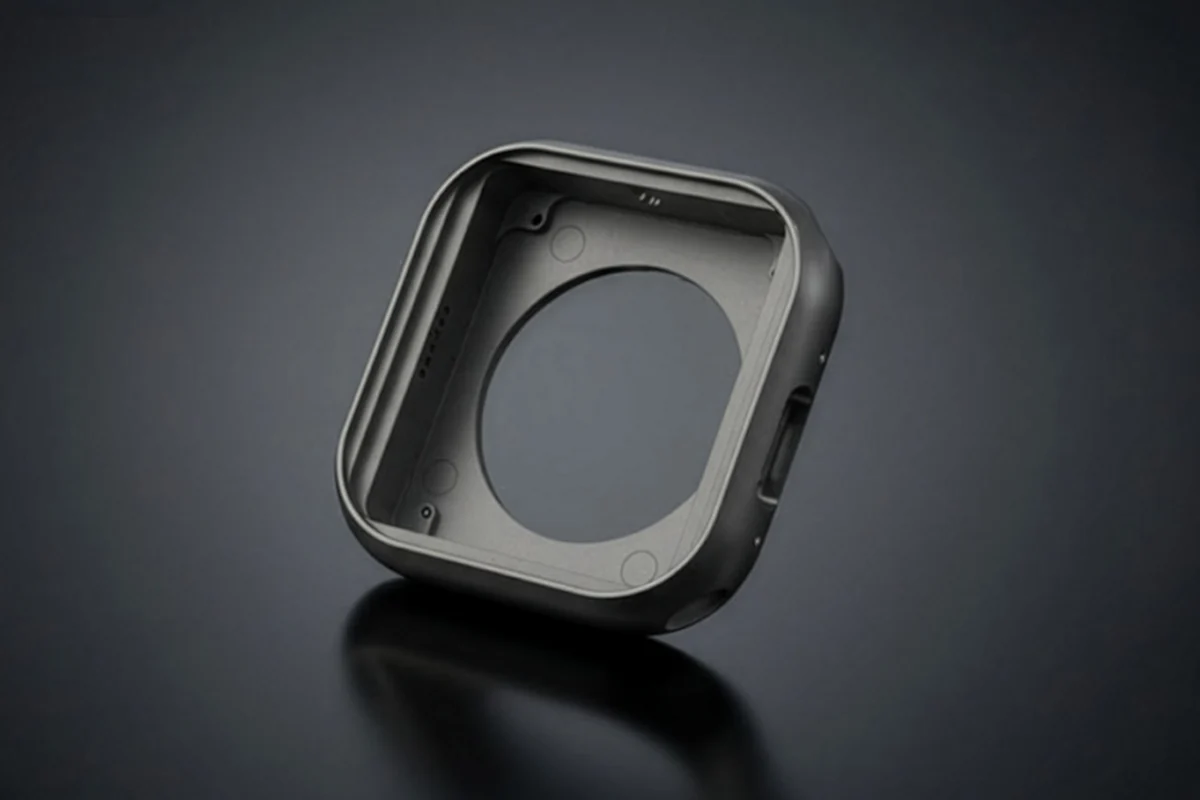
Titanium MIM wearable housing: the process route must be qualified
PIM International documented MTIG's titanium MIM wearable-device housing and its integrated approach to titanium powder, feedstock and sintering. The significance for a stainless-versus-titanium decision is not the appearance of the housing; it is the additional control required to produce the material consistently.
The publication does not identify the pictured housing as CP titanium or Ti-6Al-4V. Neither its grade-specific performance nor another supplier's production capability can be inferred from the photo. Confirm the specified chemistry, impurity limits, sintering conditions and final inspection records with the proposed manufacturer.
Can the Finished MIM Part Meet the Required Properties?
Next compare the required properties in the final as-sintered or post-treated condition. Sintering atmosphere, density and residual porosity, chemistry changes, heat treatment and surface finishing can influence strength, hardness, corrosion behavior and other functional results. For precipitation-hardening or martensitic stainless grades, the treatment condition may be as important as the alloy name; for reactive alloys, contamination and sintering controls require additional confirmation.
Use MIM-specific references where applicable—for example, MPIF Standard 35-MIM (2025 edition)—alongside the supplier's actual material condition and test records. Typical values in standards or datasheets are useful screening evidence, but they are not guaranteed properties for every molded geometry. Do not place wrought, cast and MIM values side by side as though they represent identical material conditions. Before approval, agree on which mechanical, corrosion, expansion or other tests apply and whether the tested condition represents the intended production part.
Can Geometry, Tolerances, and Inspection Requirements Be Met?
Finally, assess the same drawing using each candidate's actual processing route. Thin walls, isolated heavy sections, blind holes, undercuts, unsupported spans and asymmetric mass distribution can affect filling, handling, sintering support and distortion. Critical holes, flatness, mating features or sealing surfaces may require sizing, machining or another secondary operation. The required treatment may also change final dimensions.
Identify the critical-to-function dimensions and acceptance method early. A candidate should not be approved just because a property table is favorable if the supplier cannot show how final geometry, surface condition and inspection requirements will be controlled. Ask what is proven in existing production, what requires sample trials and what cannot yet be confirmed.
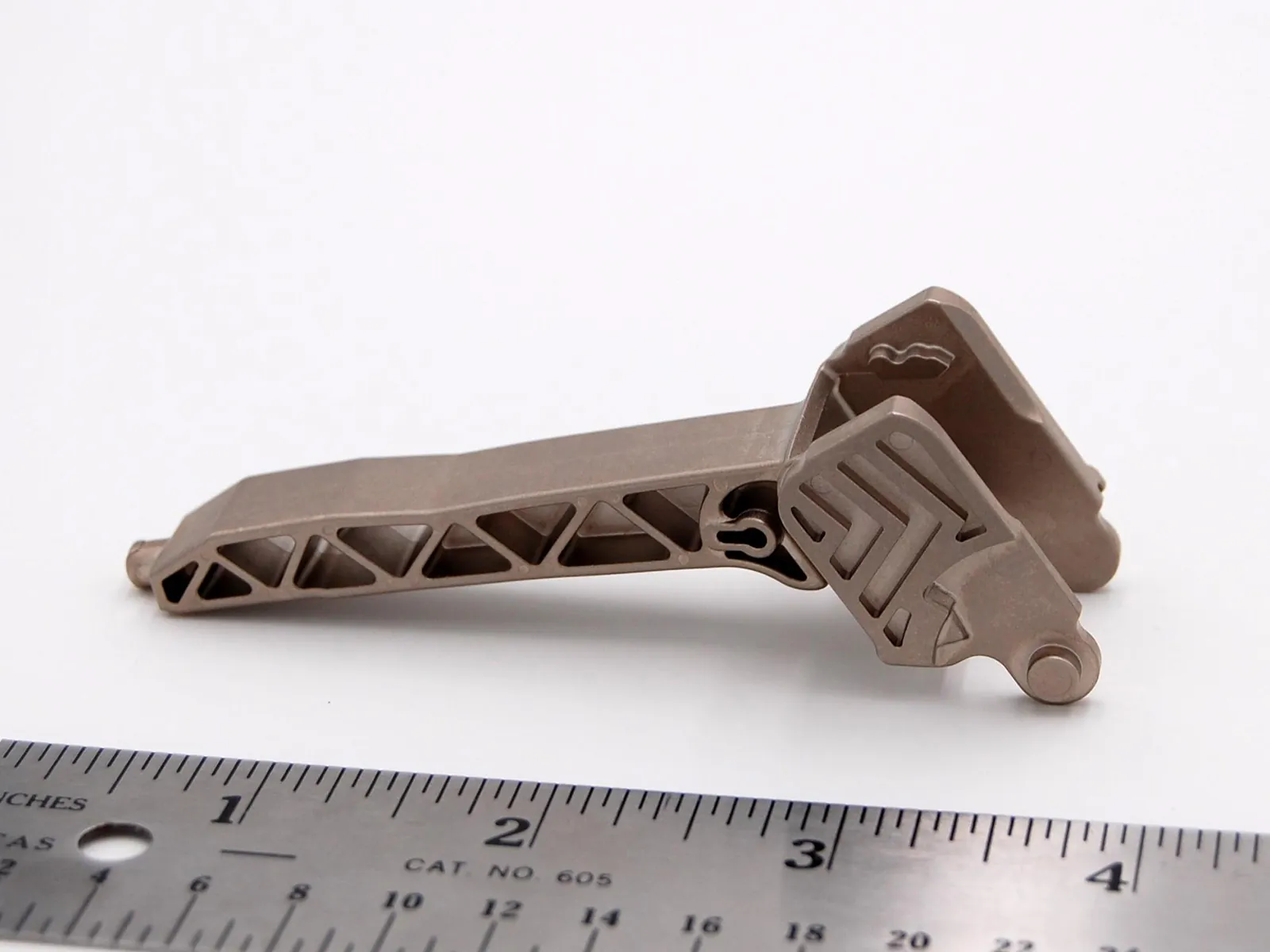
17-4 PH generator handle: sintering support mattered as much as the grade
MIMA's upper beam handle was redesigned from a fully machined component for a removable turbine-generator brush-holder assembly. Its long ribbed geometry needed a custom sintering support tray to limit distortion. After sintering, the manufacturer still used coining and one local machining operation to meet a critical dimension.
This is why two candidate grades cannot be approved from tensile-strength data alone. Ask whether each proposed process route can deliver the same mating features after sintering and heat treatment, and whether secondary finishing is needed to meet the drawing.
Material availability: The materials discussed here are candidates for comparison; XTMIM production capability is not confirmed for every listed grade. Feedstock, sintering, post-treatment and acceptance requirements must be checked for each project.
What Can You Decide from the Comparison, and What Still Needs Validation?
After comparing the required properties and the available MIM processes, separate what is already supported by evidence from what still needs testing or supplier confirmation.
When Can You Make a Preliminary Material Choice?
| Decision status | What you know | Appropriate next action |
|---|---|---|
| Preliminary preference | The part requirements and material states are defined; comparable evidence favors one candidate; no known manufacturing blocker has been identified. This is not a production approval. | Review the detailed A-vs-B page, then verify the exact grade, final MIM condition and supplier-specific evidence. |
| Engineering validation required | Both candidates appear plausible, but performance, process controls, geometry or inspection capability remains uncertain. | List the unresolved requirements and ask the proposed supplier for route-specific records, representative samples or agreed testing as appropriate. |
| Not enough information | Key service conditions, acceptance limits, material grade or qualified process availability are missing. | Complete the requirements first; do not infer suitability from a generic comparison table. |
Final approval depends on the drawing and contract: material certificates, production-representative samples, mechanical or corrosion tests, first-article inspection and dimensional capability evidence may be required. The comparison identifies what to check; it does not replace those checks.
What Information Is Needed for Project-Specific Validation?
Share both candidate grades and the actual part requirements. The information below lets the engineer compare the same component and identify which result still needs verification.
| Information to provide | Why it matters to the A-vs-B decision |
|---|---|
| 2D drawing with datums, critical dimensions and tolerances | Shows which dimensions must be molded, sintered, post-machined or specifically inspected. |
| 3D CAD model and functional interfaces | Reveals thin walls, local mass changes, tooling constraints, support needs and mating geometry. |
| Both candidate grades and required material condition | Prevents generic family comparisons and identifies heat treatment, chemistry or grade restrictions. |
| Service environment and functional loading | Defines corrosion media, temperature range, mechanical load, contact wear, magnetic or expansion requirements. |
| Surface finish, coatings and critical acceptance tests | Clarifies any finishing, passivation, dimensional or material verification requirements. |
| Estimated annual quantity and project stage | Helps assess tooling economics and whether a reliable repeat-production route is needed. |
| Existing samples, failures or alternative process history (if available) | Highlights previously observed distortion, corrosion, cracking, wear or quality-control problems. |
Comparing two materials for a specific MIM part?
Send the 2D drawing, 3D model, exact candidate grades and critical service requirements. XTMIM can assess the questions that need resolution before a production route is selected. Material availability and manufacturing feasibility are confirmed for the individual project.