
MIM special alloys are considered when a part requires performance that commonly used MIM stainless steels or low-alloy steels cannot provide—such as a controlled thermal expansion, high density, a specific wear response, or targeted electrical or thermal performance. Titanium, cobalt-chromium, controlled-expansion, tungsten, nickel, copper, aluminum and cemented-carbide systems are different material routes, not interchangeable grades.
An alloy that works in machining, casting or conventional powder metallurgy is not automatically suitable for MIM. First match the material to the part function; then verify feedstock availability, sintering control, finished-part properties and production economics before approving tooling. Explore the wider MIM materials library if the requirement does not call for a special alloy.
When Does a MIM Part Need a Special Alloy?
A special alloy is justified by a defined functional gap, not by a preference for a more expensive or less common material. A small precision part may need controlled thermal expansion to keep a seal aligned through temperature changes; high density in a constrained volume; conductivity or heat transfer beyond that of the current grade; or wear behavior that a standard structural alloy cannot deliver. In other cases, corrosion exposure, service temperature, mass limits, or a customer-defined material specification may narrow the choice.
Specify the requirement in terms that can be checked: the mating material and temperature range for expansion matching, the electrical or thermal performance expected of a contact, the operating medium for corrosion exposure, or the load and wear condition for a working surface. General phrases such as "high strength," "heat resistant," or "biocompatible" do not by themselves establish which alloy or production route is suitable. Material choice must also consider the final surface state and the applicable product requirements.
If a real performance gap remains, the next step is not to pick an exact grade immediately. It is to identify the material family most likely to address that gap.
How Do You Shortlist a Special Alloy for Your Part?
Use the primary part function to establish a shortlist, then confirm the exact operating conditions. More than one family may be relevant; an alloy that looks attractive for one property can introduce a disadvantage in weight, cost, toughness, corrosion behavior, or MIM process risk. The links in the table lead to the material explanations below, where each family receives a more focused review.
Shortlist rule: Keep functional fit and production maturity separate. The matrix lists materials worth investigating, not an approved catalog of XTMIM production grades. Do not finalize any alloy until the supplier confirms the relevant feedstock route and finished-part criteria.
| Primary Functional Requirement | Candidate Family to Review | Why Consider It? | Important Trade-off / What to Verify | Next Explanation |
|---|---|---|---|---|
| Lower component weight with corrosion resistance or defined mechanical requirements | Titanium alloys; aluminum alloys only where an appropriate process route can be demonstrated | Both are lighter than steels, but have very different processing and property profiles. | Required strength and surface condition, part geometry, oxygen/oxide control, and credible feedstock and sintering evidence. | Titanium / Aluminum |
| Heavy wear, abrasion, or contact loading | Cobalt-chromium alloys; cemented carbides; sometimes a treated standard alloy | Wear resistance may be more important than nominal tensile strength. | Wear mechanism, opposing material, toughness, edge damage, surface finishing, and inspection method. | Co-Cr / Hardmetals |
| Controlled expansion or dimensional stability through temperature change | Controlled-expansion alloys such as Kovar or Invar | Specified expansion behavior can be essential to joints, seals, and precision assemblies. | Temperature interval, mating material, seal design, and the grade's actual coefficient of thermal expansion. | Controlled expansion |
| High mass in a small volume or engineered shielding behavior | Tungsten-based heavy alloys | High density can provide counterbalance or functional mass without enlarging the part. | Target density, alloy composition, part toughness, exact shielding specification, and fabrication route. | Tungsten |
| Challenging high-temperature or corrosive service | Specific nickel-base alloys; compare with suitable stainless steels | Selected grades may retain useful performance in defined service environments. | Temperature, chemical medium, grade-specific corrosion data, heat-treatment condition, and feedstock supply. | Nickel |
| Electrical conductivity or heat transfer | Pure copper or an appropriate copper alloy, with process comparison | Electrical or thermal function may be the governing design requirement. | Specific grade, actual conductivity target, sintered density, oxidation, and whether machining, stamping, or PM is preferable. | Copper |
| Specified body-contact or medical-device requirements | Relevant titanium or cobalt-chromium grades, subject to a full specification review | Some grades are investigated for demanding corrosion or body-contact applications. | Applicable grade, device and surface requirements, cleaning, evidence of biocompatibility, and regulatory acceptance. | Titanium / Co-Cr |
If the drawing already specifies a grade such as Ti-6Al-4V, Kovar, or Invar, use the corresponding family page to confirm the grade-specific requirements. If only the function is known, start from this shortlist and avoid treating a family name as the final material specification.
Which Special Alloy Families Can Be Considered for MIM?
The eight material groups below form the special-alloys branch of the XTMIM materials library. This site category also includes hardmetal composites such as cemented carbides; it is not a single standardized alloy classification. Inclusion here describes an engineering investigation route, not a statement that every listed grade is commercially available or validated on XTMIM production equipment. For each family, identify the component's function first, then review the main performance trade-off and the strongest manufacturing uncertainty. The MIMA materials range provides an independent reference to the breadth of MIM-related material families and recommends confirming alloy availability with the supplier.
How to read the examples: Cases attributed to MPIF, PIM International, research organizations or other manufacturers are independent public references, not XTMIM customer projects. Some confirm MIM production, some confirm only material function; each example is labeled accordingly. Material grades not disclosed by the source remain unspecified.
Titanium Alloys — Lightweight and Corrosion-Resistant Components
Titanium alloys are candidates where low part mass, corrosion resistance, and a specified mechanical response are relevant to the design. Potential part functions include lightweight precision brackets, small housings or structural features, and selected non-cutting device components. Commercially pure titanium and Ti-6Al-4V are not interchangeable: the grade must match the required strength, environment, surface condition, and customer specification.
For MIM, reactive titanium can be sensitive to oxygen, carbon, and nitrogen pickup during processing. Powder/feedstock control, debinding, furnace conditions, density, and final testing all matter. An alloy used in conventional machining is not automatically acceptable in MIM, nor does a material name confer medical-device approval. The 2025 MPIF Standard 35-MIM update introduced material standards for MIM-CpTi and MIM-Ti-6Al-4V, providing grade-specific specification references rather than a blanket approval for any finished part.

Wearable electronics housing — documented titanium MIM.
MTIG has published a titanium MIM wearable-device case with an outer frame and a central opening for the assembly. The component provides a compact housing and mounting space. Its published caption does not establish whether it is CP titanium or Ti-6Al-4V, so the image should not be used to infer either grade.
For a similar design, confirm the specified titanium grade, interstitial chemistry, surface finish, wall thickness and inspection requirements before applying the process to another part.
Cobalt-Chromium Alloys — Wear and Corrosion Resistance
Cobalt-chromium systems may be assessed for compact contact components or precision features exposed to wear and specified corrosive conditions. Possible applications span dental-related components and high-wear engineered surfaces, but their use must be tied to the exact alloy and finished-part requirements. A wear part needs evaluation of sliding or abrasion conditions, contact pressure, opposing material, and surface condition rather than hardness alone.
For MIM, chemistry, processing state, density, finishing, and inspection affect the finished result. ASTM F75 describes cast Co-Cr-Mo material and ASTM F1537 describes wrought Co-Cr-Mo material; neither should be presented as automatic certification of a MIM part. Body-contact or medical-device acceptance requires additional application-specific evidence.
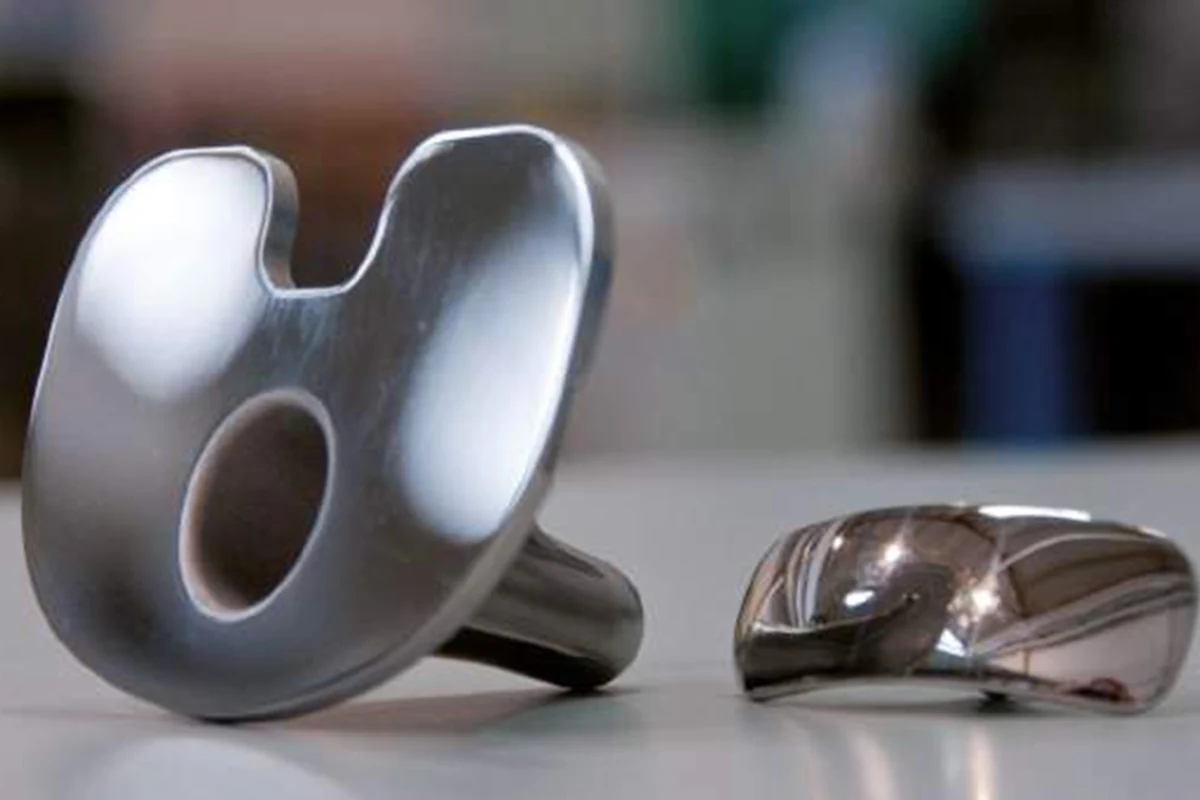
Co-Cr-Mo knee-component research prototypes — not commercial implant qualification.
Mimest and the University of Trento reported CrCoMo knee-prosthesis components produced as MIM research prototypes. The photographed parts illustrate why wear-related geometry and surface finishing matter for cobalt-chromium components.
The publication does not establish commercial implant production or regulatory clearance. A new project requires its own material, finished-surface, wear, corrosion and validation criteria.
Cemented Carbides — Hardness and Severe Wear Applications
Cemented carbides are hardmetal composites, commonly involving a carbide phase and a metallic binder. They may be considered for wear inserts, contact features, and small tooling-related working parts where abrasion resistance is critical. The design must consider the actual working edge, impact or chipping risk, and the geometry of the part rather than assuming that maximum hardness is always desirable.
For MIM, binder content, powder characteristics, green strength, shrinkage, toughness, and any finishing allowance need review. Hardmetal powder injection molding, traditional press-and-sinter routes, and standard metal-alloy MIM should not be treated as identical processes. An application example must identify how the specific component was made.
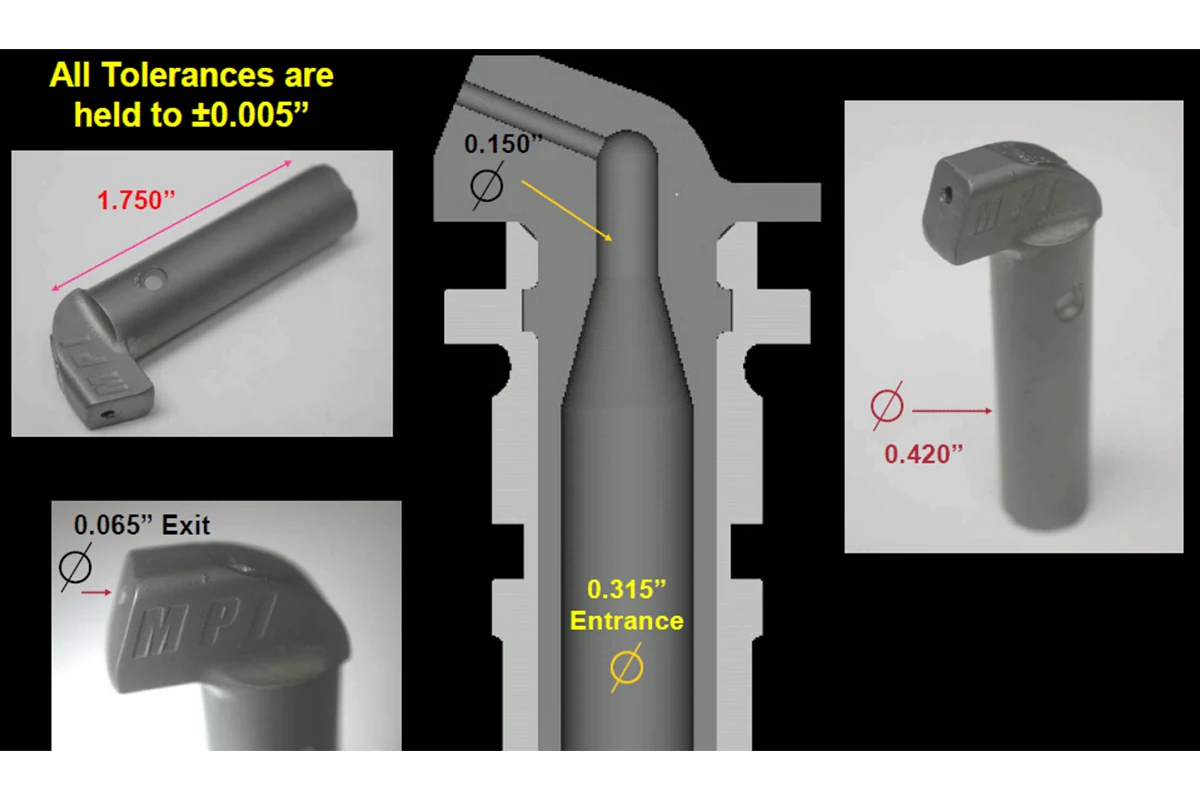
Hardmetal tar-sand nozzle — low-pressure powder injection moulding.
Materials Processing Inc. produced a 47 g hardmetal nozzle with a changing internal passage using low-pressure powder injection moulding (LP-PIM). The flow path and working surfaces explain the appeal of near-net shaping for abrasive-service parts.
LP-PIM is a specific process variant, not evidence that the same nozzle can be transferred directly to a conventional MIM line. The exact hardmetal grade was not disclosed.
Controlled Expansion Alloys — Thermal Expansion Matching
Controlled-expansion alloys are useful when dimensional behavior across a temperature interval is part of the product function. Kovar-type grades are associated with specified glass or ceramic sealing interfaces; Invar-type grades are associated with low thermal expansion and dimensional stability. Such uses include selected electronic or optical assembly features, locating parts, and precision interfaces whose dimensional movement affects alignment.
For MIM, a single coefficient-of-thermal-expansion number is insufficient without the temperature range, mating material, thermal history, and acceptance condition. Grade selection should follow interface requirements and a viable powder, sintering, dimensional-control, and inspection plan.
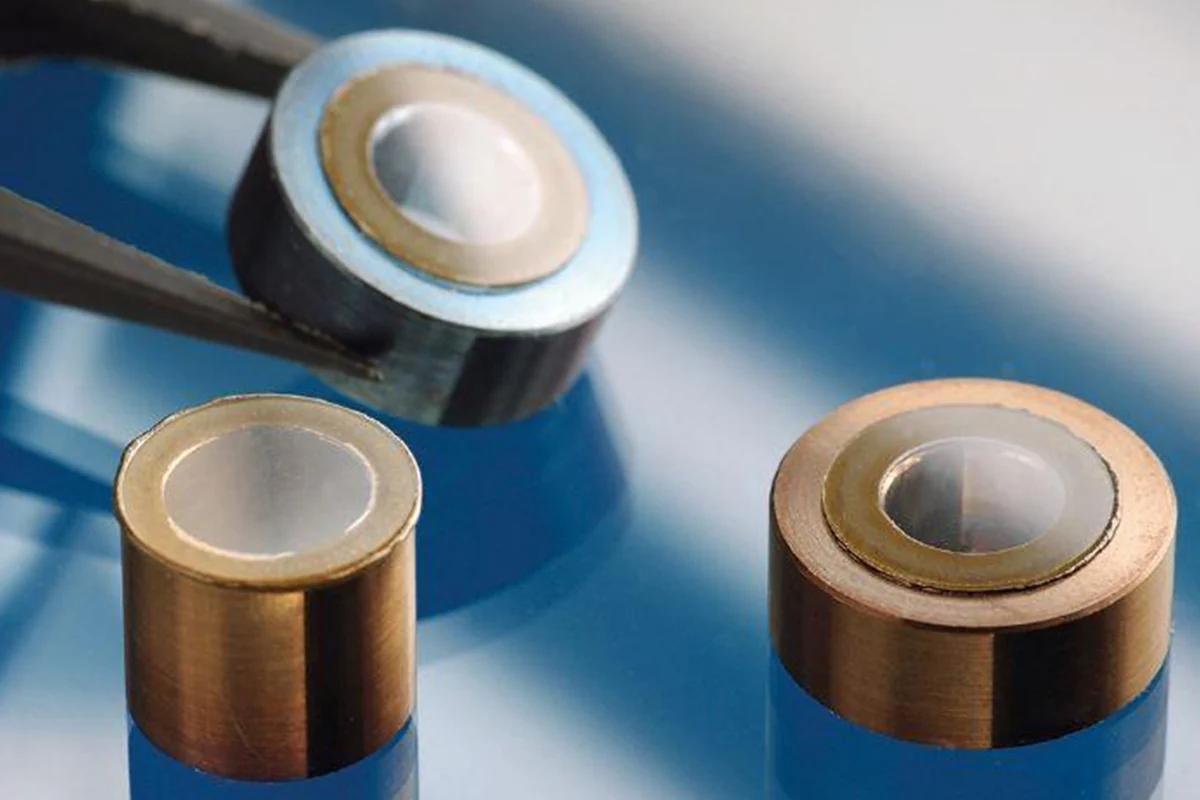
Kovar sleeve and borosilicate-glass cover — verified joining research, not MIM.
Fraunhofer ILT used Kovar sleeves and borosilicate-glass covers to study laser glass-frit bonding. Here the metal is selected around the glass-to-metal interface and its thermal behavior, not simply because the part needs low expansion.
This source demonstrates the sealing function of Kovar; it does not identify the sleeve as metal injection moulded. A MIM version would still require feedstock, shrinkage, interface and leak-tightness validation.
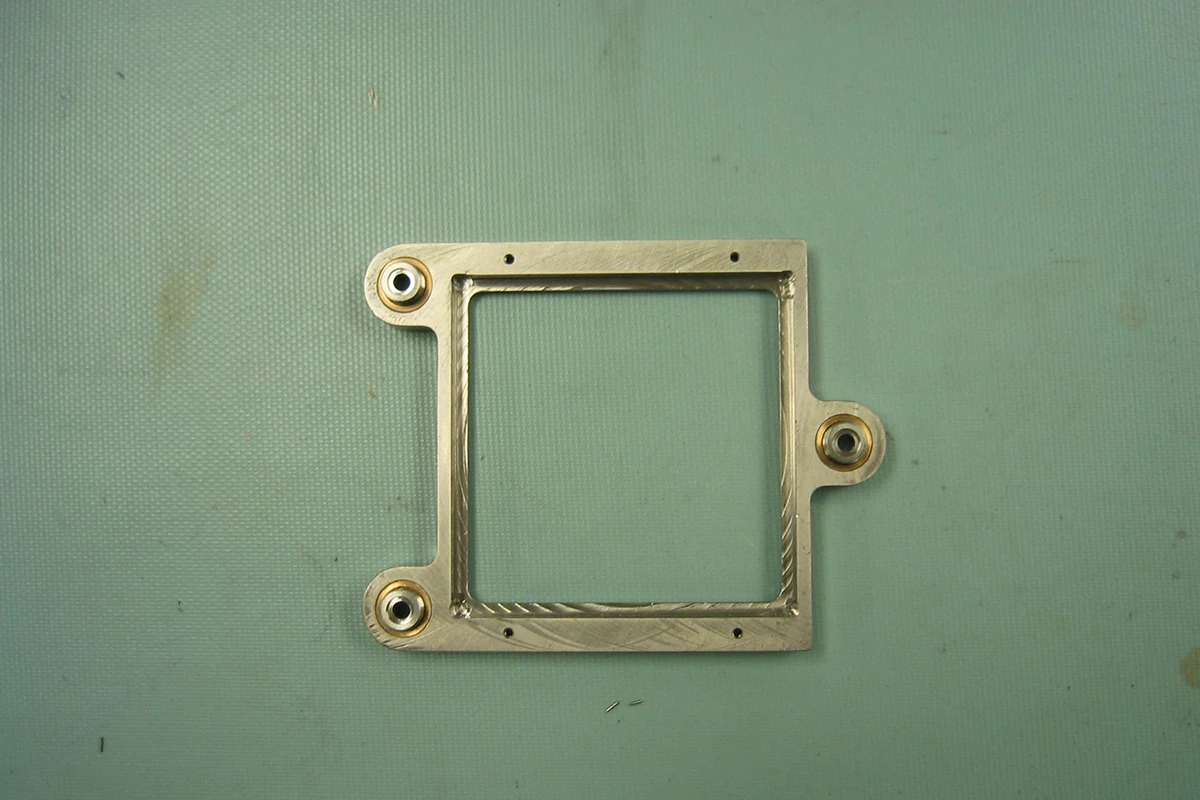
Invar CCD detector mounting plate — material-function example, not MIM.
Carnegie Science documents an Invar mounting plate used to locate a CCD detector in an astronomical instrument. Its value is dimensional stability in a controlled-temperature assembly, where relative movement can impair alignment.
The source supports the Invar application but does not establish MIM manufacturing. The relevant temperature interval, flatness, hole positions and mounting method remain design-specific.
Review controlled-expansion alloys; for a direct grade-choice question, see Kovar vs Invar.
Tungsten Alloys — High-Density Functional Parts
Tungsten-based heavy alloys can be considered when a part needs significant mass within a compact space, such as a balance weight or a specified high-density component. Certain compositions can also be considered in shielding-related designs, but the shielding requirement must be calculated and verified for the actual application. Pure tungsten, tungsten heavy alloys, and tungsten carbide hardmetals are distinct material systems.
For MIM, achievable density, powder cost, debinding/sintering conditions, brittleness, part geometry, and post-processing vary by composition. An example manufactured by conventional PM does not establish that the same part has a proven MIM route.
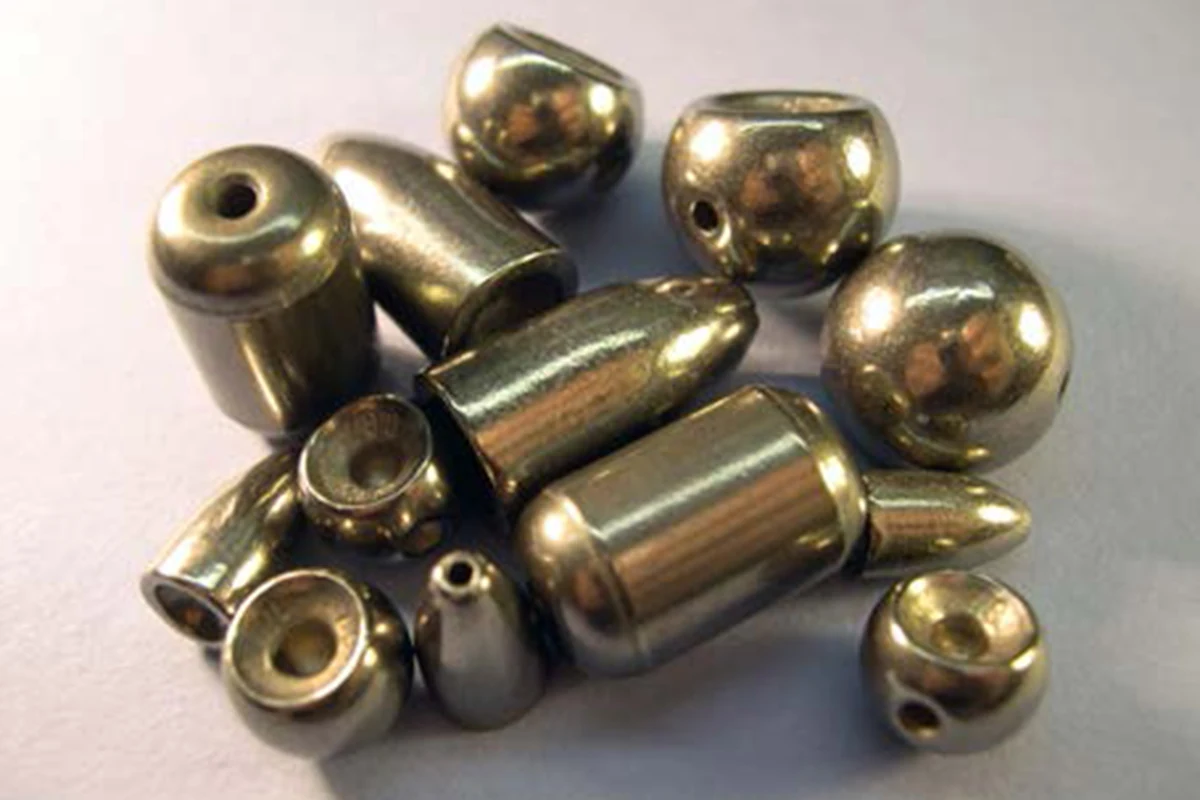
Injection-moulded tungsten-composite fishing weights — compact mass.
Published tungsten-composite fishing weights show how substantial mass can be placed in small, shaped tackle components. This is a useful functional example of high-density tungsten-containing material.
The report does not establish a W-Ni-Fe or W-Ni-Cu heavy-alloy grade for these images. Tungsten composites, sintered heavy alloys and W-Cu thermal materials must not be treated as one specification.
A different tungsten-family use is the W-Cu 80/20 heat-dissipation component recognized in the 2023 MPIF awards for a 5G optical-communications module. Here thermal management—not compact mass—is the design function. W-Cu is distinct from tungsten heavy alloys and WC-Co cemented carbide. MPIF application reference
Nickel Alloys — High-Temperature and Corrosive Environments
Nickel-base alloy families may be investigated for small features exposed to specified hot or corrosive service, including fluid-handling or equipment components where the working environment is known. Individual grades have different responses to temperature, oxidation, corrosion media, and heat treatment; "nickel alloy" is not a sufficiently precise performance requirement.
For MIM, confirm the exact chemistry and powder route, furnace compatibility, target sintered properties, heat-treatment condition, and acceptance tests. The design should compare relevant stainless or other established alloys when their performance is sufficient at a lower total project risk.
IN713LC compressor vanes — documented specialist MIM production.
Schunk reported stationary IN713LC compressor vanes for the Rolls-Royce Pearl 15 aircraft engine. The aerodynamic vane profile guides airflow through compressor stages; the process required dedicated vacuum sintering, dimensional verification and finishing of critical mounting surfaces.
The case shows what a qualified supplier-specific route can achieve. It does not establish that IN713LC can be run successfully in a general-purpose furnace or on an unqualified MIM line.
Industry source: PIM International / Schunk
Copper and Copper Alloys — Electrical and Thermal Components
Pure copper and selected copper alloys may be investigated for compact conductive contacts, thermal-transfer details, or complex connectors when the function requires electrical or thermal performance. The required output should be specified explicitly: electrical conductivity, contact resistance, thermal transfer, strength, or corrosion behavior. Pure copper, brass, bronze, and copper-based specialty grades cannot be treated as interchangeable.
For MIM, powder/feedstock availability, oxidation, sintered density, alloy chemistry, and the finished-state conductivity require evidence. Small quantities or simple geometries may favor machining, stamping, or a conventional PM route over special-alloy MIM.
Copper-alloy optical-module housing — heat dissipation with finish machining.
An MPIF-recognized MIM housing manufactured by Sino-MIM conducts heat away from electronic components in an optical-communications module. The complex internal geometry was made using MIM, while selected contact surfaces required CNC finishing to achieve the specified flatness and surface condition.
The alloy is described as proprietary copper-based material; no standard grade should be inferred. On a new part, the mating surfaces and heat-transfer path still need their own inspection criteria.
Industry source: MPIF / Sino-MIM
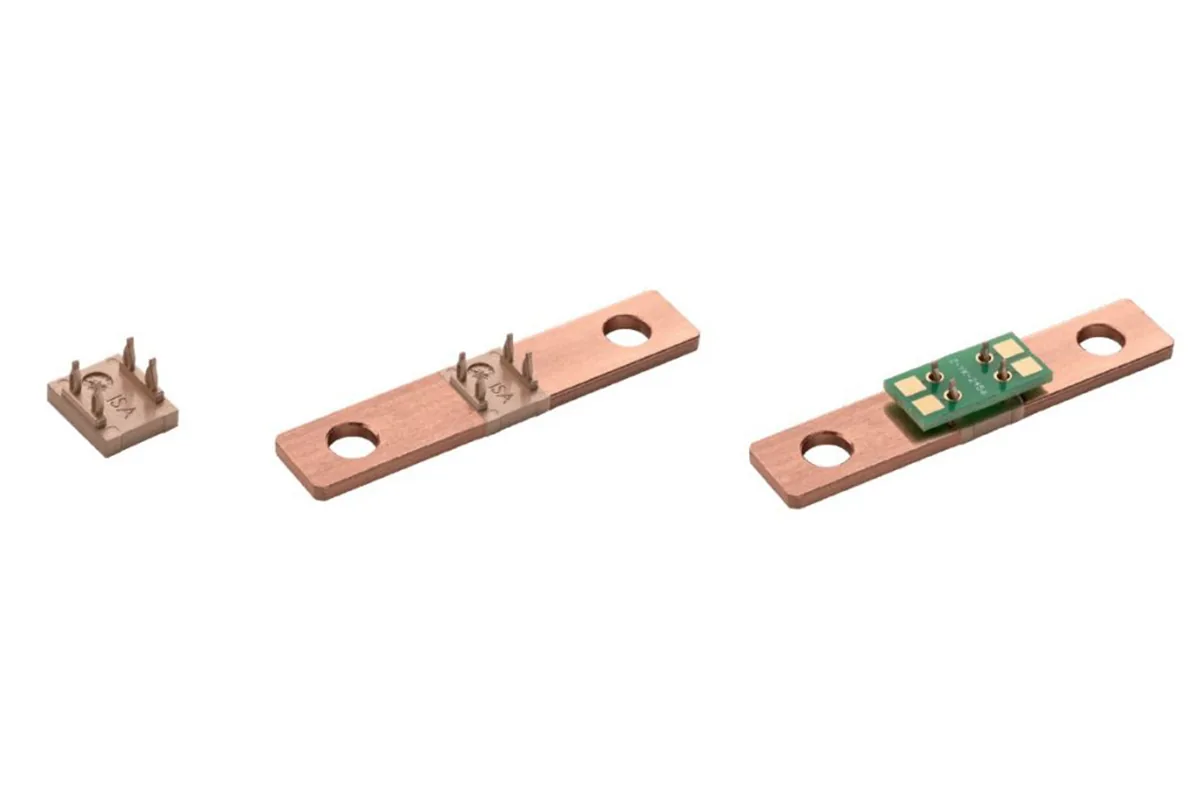
Two-component copper MIM shunt — distinct electrical functions in one part.
Schunk described a 2C-MIM part combining a copper-alloy shunt body with high-purity copper terminals for PCB connections. Separating the shunt and terminal functions allows different electrical properties within one compact component.
The source does not publish a universally interchangeable copper-alloy grade. Electrical conductivity, resistance, joint integrity and finished-part testing must follow the actual circuit requirement.
The optical-module housing was recognized in the 2025 MPIF Design Excellence awards. The material was identified only as a proprietary copper-based alloy; conductivity and heat-transfer requirements must be checked against the actual finished part.
Aluminum Alloys — Lightweight Potential and MIM Processing Limits
Aluminum alloy systems may be explored when the specified part function requires low mass and the geometry motivates considering a powder-based near-net-shape route. This is a case-by-case feasibility topic, not a substitute for established aluminum machining, die casting, or other conventional shaping methods. Documented industrial MIM applications exist, but they do not establish that every aluminum grade or supplier can consistently meet the same geometry, finishing, and production requirements.
For MIM, stable powder and feedstock supply, persistent surface oxides, densification, atmosphere control, and repeatable final properties must be confirmed. An alternative manufacturing route may be the lower-risk recommendation.
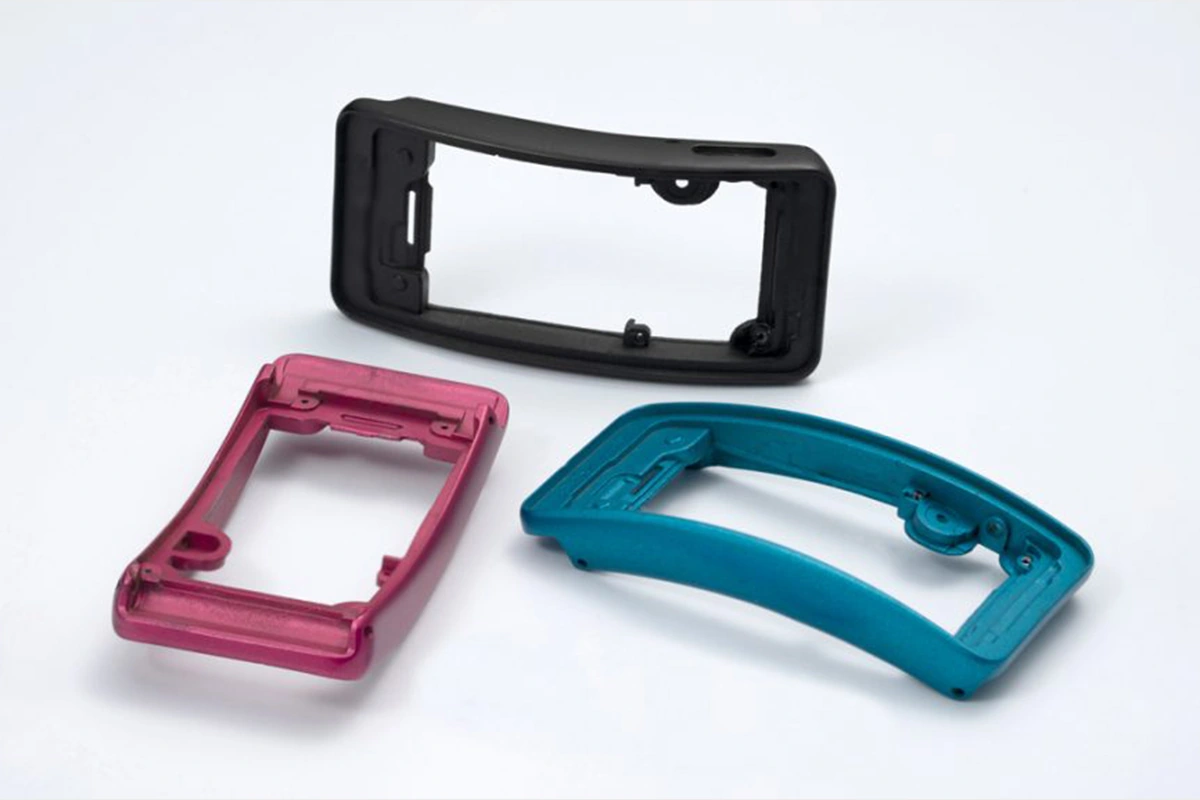
Aluminum-alloy smart-watch housing — award-winning industrial MIM example.
An MPIF-recognized Sino-MIM aluminum-alloy housing combines thin sections, curved exterior surfaces and assembly features. The published case describes specialized feedstock and injection moulding, followed by polishing and anodizing for the finished product.
The source does not disclose the exact alloy grade. This example confirms an industrial aluminum-MIM route for a particular design, not blanket availability for every aluminum grade or supplier.
A material-family description establishes the reason to investigate a grade, not the grade's final approval. For detailed chemistry, specified properties, or comparisons between particular grades, move to the relevant child page rather than treating this hub as a datasheet.
Can the Selected Alloy Be Manufactured Reliably by MIM?
Selecting a special-alloy family is only the first technical decision. A repeatable MIM route must connect powder, feedstock, injection molding, debinding, sintering, and final inspection under conditions appropriate to that specific material. The MIMA process overview explains the general sequence; the project review must establish which parts of that sequence are verified for the proposed grade and geometry.
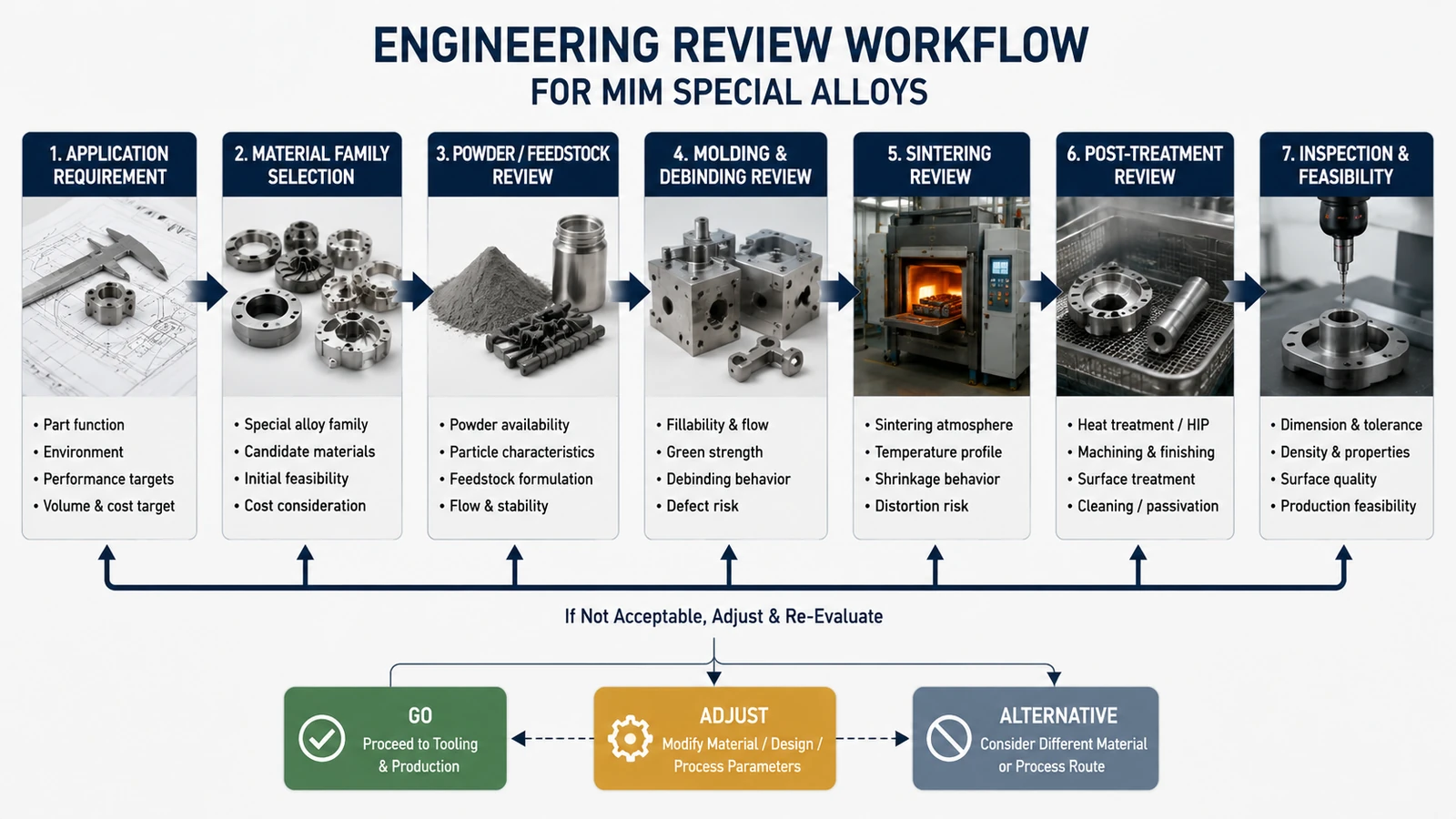
Is Suitable MIM Powder or Feedstock Available?
First identify the exact chemistry and whether a powder suitable for MIM can be sourced with the required particle characteristics, cleanliness, and consistency. Powder shape and distribution affect feedstock flow and packing; the binder system and mixing route affect molding and debinding. A material designation used for wrought or cast stock does not establish that commercial MIM feedstock exists. If the supplier offers only a possible custom powder, treat this as a development and sourcing issue until the route is tested.
Can Molding, Debinding, and Sintering Be Controlled?
A candidate feedstock must fill the mold without unacceptable defects and produce a green part strong enough for handling. Debinding must remove binder without damaging the geometry or introducing contamination. Sintering must achieve the required chemistry, density, shape control, and property response under an appropriate atmosphere and temperature profile. Titanium may require especially careful interstitial contamination control; other alloy families present their own furnace, oxide, or densification constraints. No single furnace recipe or shrinkage factor should be assumed to apply across all special alloys.
Processing boundary from a copper MIM research build: Schunk, Schweizer Electronic and Schunk Sonosystems reported a closed copper MIM cold-plate demonstrator with internal cooling features for power electronics. For a similar customer design, the questions extend beyond making copper powder sinter: flow-channel integrity, leak tightness, coolant compatibility, mounting interfaces and pressure testing would need project-specific evidence. This published development study is not proof of commercial production or a capability claim for XTMIM. Source: PIM International (2026).
What Evidence Supports a Repeatable Manufacturing Route?
Ask what has actually been demonstrated for the specific grade and a comparable part. A literature result establishes a technical possibility; available MIM-grade powder helps sourcing; successful trial components establish a stronger basis; repeated builds with documented inspection provide a more relevant basis for production planning. These are engineering review categories, not a formal industry certification scale.
| Available Evidence | What It Establishes | What It Does Not Establish | Required Next Check |
|---|---|---|---|
| Published study or general material listing | The alloy family has been investigated or identified for a MIM-related route. | Commercial grade availability or success on a supplier's equipment. | Confirm powder/feedstock sources and the exact grade. |
| Powder/feedstock supplier information | A defined material supply option may exist. | Acceptable sintering and finished-part performance. | Review process compatibility, chemistry, and sampling plan. |
| Trial parts with inspection records | The route has produced measurable parts under tested conditions. | Stable output across future lots or different geometries. | Check repeatability, yield risk, and critical features. |
| Repeat production with documented control | There is evidence supporting a repeatable process for defined conditions. | Automatic suitability for a different customer drawing or specification. | Validate differences in geometry, surface condition, and acceptance criteria. |
Can the Finished MIM Part Meet Its Required Properties and Tolerances?
A viable powder and sintering route is not enough if the component cannot meet its fit, surface, or functional requirements. For each critical feature, identify the likely manufacturing risk and how the finished part will be checked. This avoids choosing a material on published bulk properties while overlooking what the actual molded, sintered, and finished part must do.
Which Geometry and Dimensional Risks Must Be Reviewed?
Review uneven wall sections, slender features, thin edges, unsupported spans, internal transitions, and locations where sintering supports or gates affect appearance or fit. Shrinkage is not necessarily uniform across a complex part, and it should not be copied from another alloy or feedstock. Key dimensions may require tooling compensation, process trials, or selective secondary machining. Identify critical-to-function dimensions on the drawing before finalizing the tooling concept; the full geometry rules belong in the MIM design guide.
How Will Functional Properties and Inspection Requirements Be Met?
Specify which properties must be verified on the finished component, not only in a generic datasheet: chemistry, density, hardness or mechanical response, corrosion behavior, electrical or thermal performance, thermal expansion, and the geometry of working surfaces. Depending on the application, finishing, heat treatment, machining, cleaning, or other operations may be necessary. The inspection method must correspond to the actual feature and acceptance criterion.
| Finished-Part Requirement | Primary Manufacturing Risk | Evidence or Verification to Plan |
|---|---|---|
| Controlled expansion at a sealed interface | Mismatch between alloy behavior, operating temperature range, and mating material. | Grade-specific CTE data for the relevant interval, interface tolerance, and thermal-cycle evaluation when needed. |
| Electrical or thermal function of a copper-based component | Finished density or chemistry differs from the assumed bulk-material data. | Specified grade, as-processed condition, and the relevant conductivity or thermal-performance test. |
| High-wear contact, insert, or working edge | Edge chipping, unsuitable contact geometry, surface condition, or inadequate toughness. | Wear mechanism definition, surface and edge inspection, and application-relevant wear or mechanical validation. |
| Small high-density weight or shielding-related feature | Actual density, dimensional tolerance, or composition fails the functional target. | Density and dimensional inspection, plus application-specific functional assessment where required. |
| Thin, long, or nonuniform precision geometry | Distortion, variable shrinkage, or a critical dimension outside tolerance. | DFM assessment, sintering support review, trial measurements, and post-machining allowance if justified. |
| Titanium part with controlled interstitial chemistry | Oxygen, carbon, or nitrogen pickup may change as-sintered properties compared with published wrought data. | Grade-specific chemistry results from representative sintered parts, plus required mechanical and surface tests. |
| Nickel-base component exposed to sustained heat | A nominal heat-resistant alloy may fail creep, oxidation, or strength targets after the actual sintering and finishing route. | Confirm specified service temperature and environment; plan applicable hot-property tests and qualification records. |
| Aluminum-alloy cosmetic housing | Thin sections and oxide-related sintering difficulty can affect distortion and finish quality. | Trial geometry and density, fit/flatness measurements, and polishing/anodizing acceptance samples if required. |
Pre-tooling decision check for a wear-loaded feature: Identify the working surface, mating material, contact load, expected wear mechanism, permissible edge damage, and test method before approving a hardness-driven alloy change. If the drawing specifies only "high hardness," the engineering response should request those functional details first; hardness alone does not decide the alloy, surface treatment, or suitable process.
Standards and evidence note: MPIF Standard 35-MIM (2025 edition) is a relevant reference when specifying covered metal injection molded materials; it does not authorize assuming that every special-alloy family has a standardized MIM grade. For cobalt-chromium applications, ASTM F75 relates to cast material and ASTM F1537 to wrought material. Neither is automatic certification of a MIM-made or finished medical part. The project drawing, applicable specification, surface state, tests, and regulatory requirements control acceptance.
When Is Special-Alloy MIM Worth Choosing Over Other Options?
A technically possible process is not always the right process. Evaluate the value of geometric integration, required output volume, tooling and feedstock investment, special sintering controls, likely secondary operations, inspection cost, and the consequences of an unproven route. An exact breakeven quantity cannot be assigned to all special-alloy materials; total cost depends on alloy, part complexity, production scale, and validation requirements.
| Initial Decision | Conditions That Support It | Recommended Next Action |
|---|---|---|
| Proceed to MIM feasibility review | Special material functionality is essential, the geometry benefits from MIM, supply and process evidence are credible, and volume may support the investment. | Confirm grade, critical drawing features, trial plan, and required acceptance criteria before tooling approval. |
| Review an established alternative alloy | The selected special alloy adds risk but a standard alloy or an appropriate surface/process treatment may meet the functional requirement. | Compare relevant performance after processing, not merely nominal alloy labels; review the MIM materials range. |
| Review another manufacturing process | Part geometry is simple, annual demand is low, the material is poorly matched to MIM, or tooling/testing cost is disproportionate. | Evaluate CNC, stamping, conventional PM, or other appropriate processes based on drawing and quantity. |
| Hold for additional validation | The grade, powder route, service environment, dimensional target, or acceptance method is still unclear. | Resolve the missing facts or arrange a relevant material/process trial before committing to mass-production tooling. |
When conventional alloys cannot meet the requirement and no established MIM grade is available, a further custom MIM material review may help identify the technical questions. That does not mean every proposed alloy should be developed or that trial success is guaranteed. The defensible decision is the route that meets function, process stability, and total project economics together.
What Should You Provide for a Special-Alloy MIM Feasibility Review?
You do not need to complete every material test before approaching a supplier. A useful first review starts with the drawing and the functional problem the material must solve. Distinguish the parameters already fixed by your design from those that the supplier is being asked to recommend or validate.
| Information to Share | Why It Matters to the Engineering Review |
|---|---|
| 2D drawing and 3D model | Identify geometry, assembly interfaces, critical dimensions, and likely tooling or sintering constraints. |
| Target grade or measurable property requirement | Separate mandatory material chemistry from a performance goal where alternatives may be evaluated. |
| Operating conditions | Record the service temperature, chemical medium, wear mechanism, loading, thermal cycle, or electrical/thermal duty. |
| Critical features and tolerances | Distinguish non-negotiable mating dimensions from features that could be adjusted during DFM. |
| Surface finish and secondary operations | Clarify polishing, machining, treatment, cleaning, coating, and final surface conditions. |
| Acceptance criteria and applicable standards | Connect required material properties and dimensions to a specific inspection or qualification method. |
| Sample quantity, estimated annual volume, target cost | Determine whether development, tooling, validation, and production investment could be justified. |
| Whether material substitution is allowed | Distinguishes a mandatory grade and standard from a performance-driven request where an established alternative can be considered. |
An initial engineering review should identify the likely material direction, process constraints, missing information and tests needed before tooling. If the proposed special alloy lacks a verified route, the review may recommend an established substitute or another fabrication method instead of proceeding directly to a quote for production tooling.
Need to verify a special-alloy MIM part before tooling?
Send the drawing and the required function. XTMIM can begin an engineering discussion about material suitability, powder/feedstock availability, shape and tolerance risks, finishing, quality checks, and whether another material or process deserves consideration. A review is not a guarantee of production availability for any particular special alloy.