Share your drawing, material requirements, annual volume, tolerance needs, or application details. Our engineering team will review your MIM project and respond with technical feedback or a quotation.
Industry Outlook MIM industry trends in 2026 are less about whether metal injection molding is a new process and more about how buyers evaluate it. More projects now require tighter material control, earlier DFM review, clearer qualification logic, stable shrinkage behavior, and fewer surprises between sampling and production. This article explains the practical shifts behind …
MIM industry trends in 2026 are less about whether metal injection molding is a new process and more about how buyers evaluate it. More projects now require tighter material control, earlier DFM review, clearer qualification logic, stable shrinkage behavior, and fewer surprises between sampling and production.
This article explains the practical shifts behind that change and what OEM buyers should review before treating MIM as only a cost-down option.
Quick Answer
In 2026, the most important MIM industry trend is the move from simple shape-making to stricter engineering validation. Buyers are paying more attention to application fit, material readiness, DFM risk, qualification evidence, process repeatability, and supplier execution across molding, debinding, sintering, finishing, and inspection. For OEM teams, this means MIM should be reviewed as a complete manufacturing route, not just as a way to make small complex metal parts at a lower unit price.
Engineering review perspective
This article is written for OEM buyers, product teams, and engineers evaluating real MIM project risk. It is structured from a manufacturing perspective: part fit, material readiness, qualification logic, process stability, and supplier execution.
Editorial note: This is not a market-size article. The focus here is where the MIM industry is moving in practice: higher-value applications, broader material discussions, stricter qualification, earlier DFM review, and stronger pressure on process repeatability.
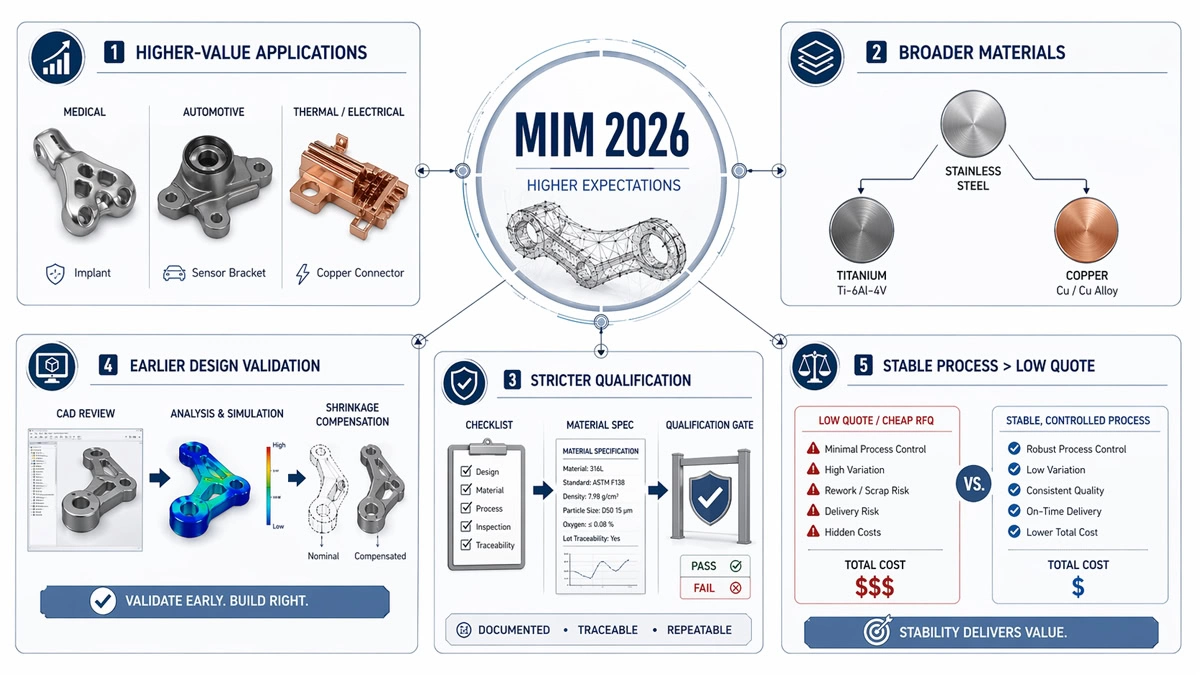
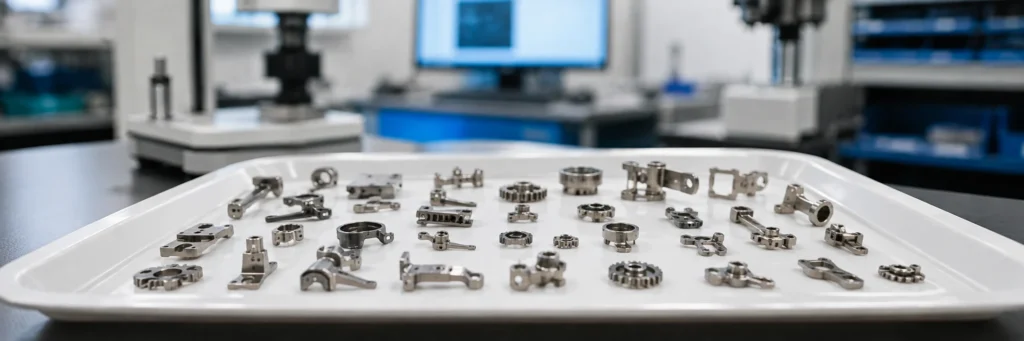
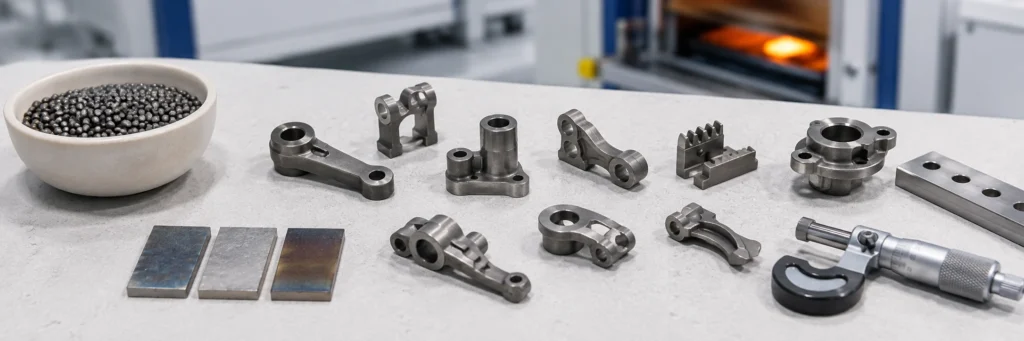
Figure 1. The most important MIM trend in 2026 is not simple growth. It is the shift toward higher expectations in applications, materials, qualification, design validation, and process stability.
Why 2026 MIM Industry Trends Matter for Buyers
For many years, MIM was often evaluated with a narrow logic: the part is small, complex, and metal, so MIM may be worth a quote. That logic is no longer enough. In 2026, buyers are more often dealing with parts that combine dimensional requirements, cosmetic expectations, corrosion performance, secondary operations, and batch-to-batch consistency requirements in the same project.
That changes the sourcing conversation. The better question is no longer just whether MIM can make the shape. The better question is whether the full process chain can deliver the part reliably after shrinkage, debinding, sintering, finishing, and inspection are all included. If you are new to the process itself, start with the core Metal Injection Molding overview and then review the detailed MIM process guide.
Where MIM Is Growing in 2026
One of the clearest MIM industry trends in 2026 is the move toward parts with higher functional value. Growth is not only coming from small structural components. It is also coming from medical and dental parts, automotive electronics and sensor-related hardware, and thermal or electrical functional components where geometry, material behavior, and repeatability all influence the final application.
From a buyer standpoint, this matters because it changes how you should read a supplier’s capability. A factory that can mold a small metal part is not automatically ready for a part that also demands flatness, stable post-sinter dimensions, cosmetic quality, corrosion resistance, or heat-related function. These projects require a stronger combination of material control, tooling logic, sintering discipline, and inspection planning.
Medical and dental parts
Medical and dental applications usually reward process repeatability more than broad capability claims. Buyers in these segments tend to care about consistency, qualification discipline, and how the supplier handles parts that cannot tolerate unstable shrinkage or cosmetic uncertainty.
Automotive electronics and sensor components
Automotive-related MIM demand is increasingly tied to precision hardware around sensing, mounting, electrical integration, and miniaturized assemblies. These are often not simple high-volume parts. They are compact parts where geometry, fit, and post-process outcome all influence function.
Thermal and electrical functional parts
Another meaningful direction is the growing attention on copper and other function-driven materials. That should push buyers beyond the old assumption that MIM is mainly attractive for structural stainless components. For application-fit review, compare this trend with the broader MIM parts page and the end-market focused MIM industries page.
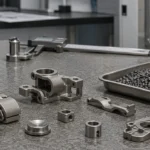
Figure 2. MIM growth is increasingly tied to higher-value applications where geometry, function, and repeatability matter together.
Why MIM Qualification Is Getting Stricter in 2026
Another important 2026 trend is the rise of qualification-driven sourcing. The question is no longer only whether a supplier has worked with a similar part family. Buyers increasingly need to know how that supplier defines material specs, controls lot variation, predicts shrinkage, and agrees on acceptance criteria before production starts.
This matters even more as the material conversation broadens. Once the project moves beyond familiar stainless grades, weak qualification logic becomes expensive very quickly. If a supplier says a material is possible, you still need to ask whether the full production route is already mature. For general technical questions, the MIM FAQ can help buyers connect qualification concerns with material, tolerance, and process-control topics.
For B2B buyers, qualification should not be a late-stage paperwork exercise. It should start near the RFQ stage, especially when the part includes tight dimensional requirements, corrosion-related expectations, or visible cosmetic standards.
Why Design Validation Starts Earlier
One of the most practical shifts in MIM is that design validation is moving earlier in the project. More teams now want better front-end review of gate logic, wall transitions, local mass concentration, unsupported features, and post-sinter distortion risk before they discover those problems during sampling.
This is a healthier direction for the industry. Many MIM issues that appear after sintering actually begin much earlier, when the part is accepted without a serious manufacturability review. In other words, 2026 is pushing MIM sourcing closer to real DFM thinking and further away from quote first, solve later.
For drawing-level review, connect this trend with the MIM design guide, especially when the part has thin walls, uneven mass, tight tolerance zones, internal features, or post-sinter flatness requirements.
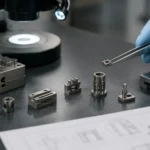
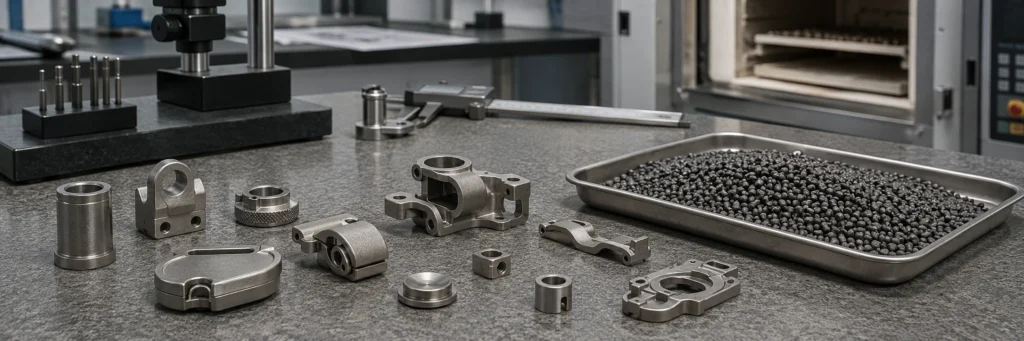
Figure 3. In modern MIM projects, risk is reduced when geometry review, process validation, and qualification decisions happen early rather than after sampling problems appear.
Why Material Discussions Are Broader
MIM in 2026 is not only about standard stainless steels. Buyers increasingly hear discussions around titanium, copper-related applications, nickel-free stainless systems, and higher-performance material options. That does not mean every supplier is ready for them. It means the material discussion itself is broader than it was before.
This creates both opportunity and risk. The opportunity is that buyers can evaluate MIM for a wider range of functions than before. The risk is that some projects will be sold as material-capable before the supplier has a stable production window for that alloy. That is why broader material choice should always be matched with stronger validation questions.
For material selection, the best next step is to review the MIM materials pillar page before narrowing the discussion to stainless steels, low-alloy steels, titanium alloys, copper-related materials, or other special alloys.
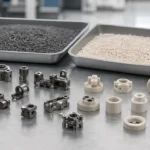
Figure 4. A wider material discussion does not automatically mean a wider stable production window. In MIM, broader material choice usually means stronger validation work.
Why Stable Processes Beat Low Quotes
Many buyers still compare MIM suppliers mainly by tooling cost and unit price. In 2026, that is becoming a weaker buying method. The more demanding the project becomes, the more expensive instability becomes. A cheap quote can quickly lose its advantage if the project needs repeated sampling, unstable dimensions, excessive sorting, or extra correction after sintering.
This is why stable process control matters more than low headline pricing. Feedstock behavior, molding consistency, debinding response, furnace control, and post-sinter dimensional predictability all affect actual project cost. A supplier with a slightly higher quote but fewer process surprises may still be the lower-cost choice in production.
For process-risk review, buyers should look beyond the molding step and compare how the supplier controls MIM process stages such as debinding, sintering, secondary operations, and final inspection.
Figure 5. A low quote can look attractive at RFQ stage, but unstable molding, debinding, sintering, and sorting can make it more expensive than a stable process.
What Buyers Should Do in 2026
If you are sourcing MIM parts in 2026, the most useful response is not to chase trend language. It is to improve your early qualification logic. The following review points are far more valuable than asking a supplier to simply confirm they can do MIM.
Confirm whether the part still fits MIM after tolerance, shrinkage, density, and secondary operations are considered.
Ask how the supplier controls the full process chain, not just the molding step.
Review whether the proposed material is already production-ready for that supplier.
Clarify what qualified means in measurable terms: dimensional capability, density, hardness, corrosion behavior, appearance, and batch consistency.
Ask what commonly goes wrong during pilot runs, because that answer often reveals more than a capability slide deck.
After the early review is clear, buyers can move from general trend research to project-specific validation. If your part already has drawings, tolerance requirements, material targets, or expected annual demand, submit the details for an engineering review instead of evaluating MIM from trend language alone.
Final takeaway: The most important MIM trend in 2026 is not simply that the industry is growing. It is that expectations are rising. Buyers now need more than a part sample and a quote. They need clearer evidence of qualification logic, material readiness, and production repeatability.
For OEM teams, this article should be used as a bridge from informational research to practical sourcing review: application fit, material readiness, DFM risk, qualification logic, and stable production control.
Need to evaluate a MIM project for 2026 production?
Share your drawing, material target, tolerance requirements, and expected production volume through the Submit Drawing for Review page, or send a direct project inquiry through Request a Quote.
FAQ
Is MIM still mainly a stainless steel process in 2026?
Stainless steels still matter, but the material discussion is broader than before. Buyers now hear more about titanium, copper-related applications, nickel-free systems, and other higher-performance material options. The key issue is not whether a material is theoretically possible, but whether the supplier already has a stable production route for it.
Does a wider material range mean every MIM supplier can handle those materials well?
No. A broader industry discussion does not automatically mean broad production readiness. Buyers still need to verify feedstock maturity, sintering control, distortion behavior, surface outcome, and final inspection logic for the specific alloy involved.
Why is earlier design validation becoming more important in MIM projects?
Because many final defects begin much earlier than the sintering stage. Geometry transitions, wall imbalance, mass concentration, gate logic, and tolerance strategy all affect whether the project stays stable during sampling and production.
What should buyers focus on most in 2026: price, material, or process control?
Process control should usually come first, because unstable molding, debinding, or sintering can erase any apparent price advantage. Material choice and price still matter, but stable execution is what protects yield, consistency, and delivery reliability.