
Quick answer: Metal injection molding (MIM) materials include stainless steels, low-alloy steels, soft magnetic alloys, tool steels, and selected special MIM alloys such as titanium, copper, nickel, and tungsten systems. The right MIM material depends on the finished part's required corrosion resistance, strength, wear behavior, magnetic response, weight, or thermal function. Verify grade availability, feedstock supply, sintering feasibility, and part-level acceptance before tooling.
01 / MATERIAL DIRECTORY
What Types of Materials Are Used in Metal Injection Molding?
Stainless steels, low-alloy steels, soft magnetic materials and specialist alloys meet different functional requirements. The grades shown are initial candidates; suitability depends on the operating conditions, specified properties and available MIM processing route.
MIM Materials at a Glance
| Material family | Typical reason to consider | Representative grades or routes | First check before selecting |
|---|---|---|---|
| Stainless steel | Corrosion, finish, strength or hardness, depending on grade | 304 · 316L · 17-4 PH · 420 · 440C | Corrosion exposure; heat-treatment condition; contact wear |
| Low-alloy steel | Structural and heat-treatable small components | 4605 · 4140 · 4340 · Fe-Ni systems | Finished strength, heat treatment and corrosion protection |
| Soft magnetic | Magnetic-flux response in complex components | Fe-3Si · Fe-50Ni · Fe-50Co | Magnetic specification, density and test conditions |
| Special MIM alloys | Weight, conductivity, density or thermal-expansion needs | Titanium · copper · tungsten · Invar/Kovar | Powder/feedstock supply and demonstrated process capability |
These families are starting options, not qualified production materials. Final grade properties, heat-treatment condition, feedstock availability and verified manufacturing capability must be checked against the actual part.
01 / Corrosion / Finish / Mechanical Performance
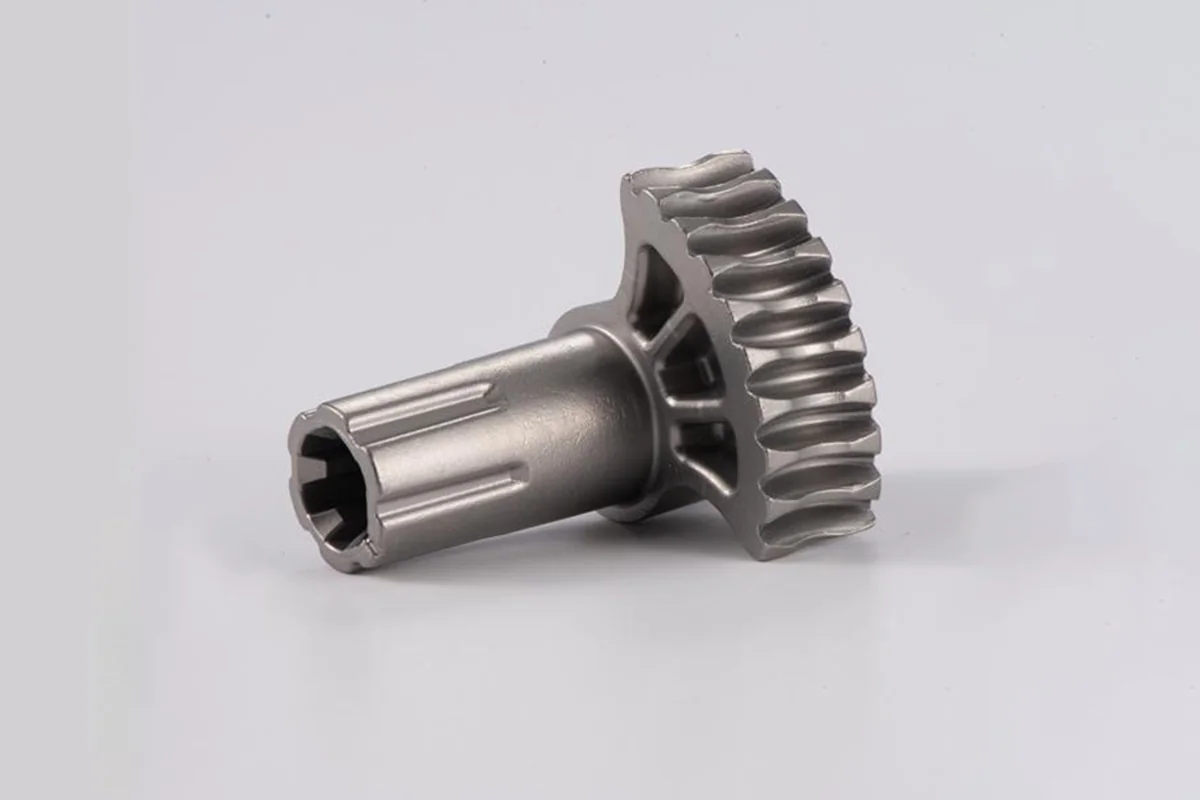
Stainless Steel MIM Materials
Stainless steels are widely used MIM materials, but the grades do not serve the same purpose. Austenitic options are often considered for corrosion resistance and ductility; precipitation-hardening and martensitic grades are considered when higher strength or hardness is needed.
Representative grades: 304, 316L, 17-4 PH, 420, and 440C.
Selection check: A corrosion-resistant grade is not automatically suitable for hard sliding contact. Heat treatment and finishing may also affect dimensional acceptance.
Explore Stainless Steel
02 / Structural Strength / Heat Treatment
Low-Alloy Steel MIM Materials
Low-alloy steels are a starting point for many mechanical components where strength, heat-treatment response, and production economics matter. They may require additional surface protection when exposed to corrosive environments.
Representative grades: 4605, 4140, 4340; additional Fe-Ni directions include Fe-2Ni, Fe-4Ni, and Fe-8Ni.
Selection check: Compare required properties in the finished condition, not only nominal alloy chemistry or a wrought-steel datasheet.
Explore Low-Alloy Steel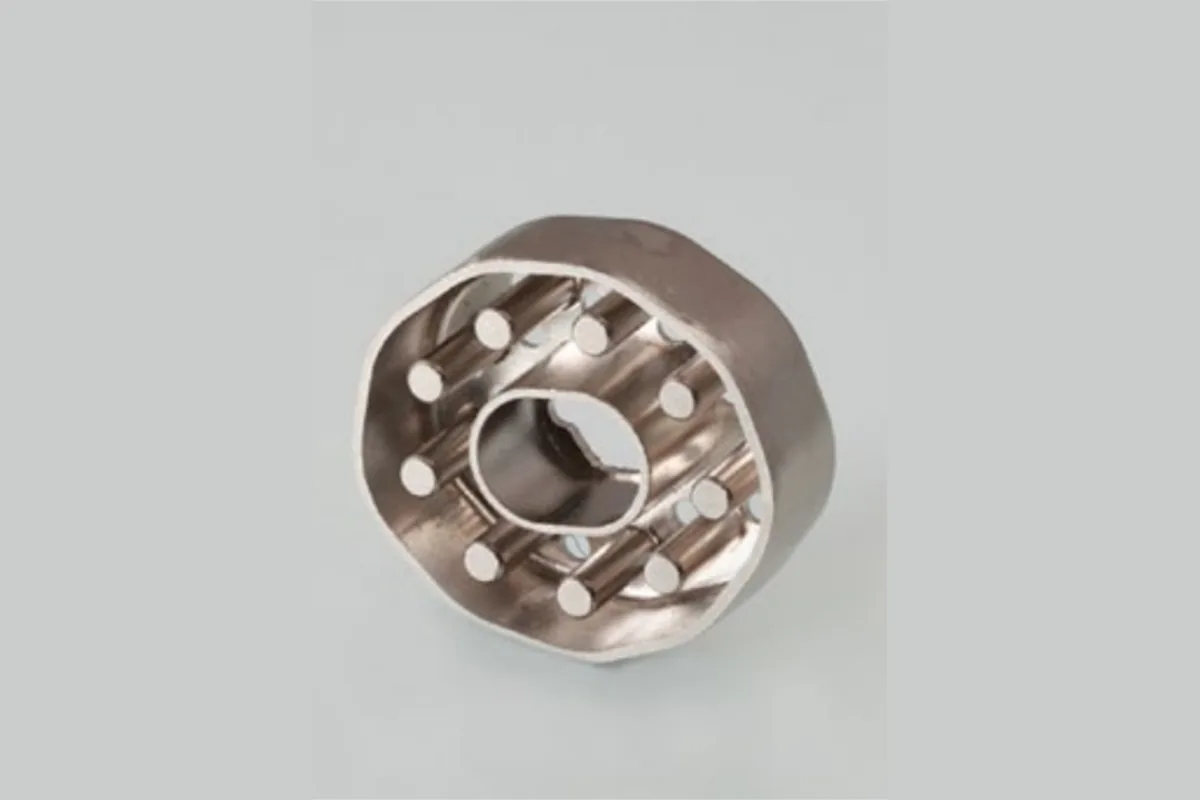
03 / Magnetic Function
Soft Magnetic MIM Materials
Soft magnetic alloys are considered when a compact component must carry or respond to magnetic flux with specified magnetic behavior. The correct material depends on the magnetic target, component geometry, density, heat treatment, and test conditions—not only on the word “magnetic.”
Representative routes: Fe-3Si, Fe-50Ni, and Fe-50Co.
Selection check: Soft magnetic and permanent magnetic functions are different design requirements. Confirm the intended response and inspection method before naming a grade.
Explore Soft Magnetic Materials
04 / Special Functional Requirements
Special MIM Alloys
Special alloys become candidates when stainless or low-alloy steels cannot meet a critical functional requirement. Examples include titanium for weight-sensitive designs, copper-based systems for specified conductivity needs, tungsten-based materials for high density, and Invar- or Kovar-type alloys for expansion control. Nickel, cobalt-chromium, aluminum and cemented-carbide routes have additional application-specific limitations.
Other specialist categories: Nickel Alloys, Cobalt-Chromium Alloys, Aluminum Alloys, and Cemented Carbides.
Selection check: Specialized powder supply, contamination control, suitable debinding and sintering, and part-level validation must be checked. A listed alloy is not proof of an established XTMIM production capability.
Explore Special AlloysWhere do tool steels fit? Tool steels form a distinct material direction for selected hardness and wear requirements; they are not interchangeable with 420/440C stainless steels or cemented carbides. For sliding or abrasive contact, assess the wear mechanism, mating material, target hardness and available MIM processing conditions before choosing a tool steel or another wear-resistant material.
CNC-to-MIM material matching: The same nominal alloy name in a CNC drawing does not automatically identify a qualified powder/feedstock option or guarantee identical properties after MIM processing.
02 / FUNCTION FIRST
Browse MIM Materials by Required Performance
Not every project begins with a known alloy grade. Identify the non-negotiable performance requirement first, then consider any competing priorities—for example, corrosion resistance alongside strength, or hardness alongside toughness and dimensional control. A candidate material must satisfy the complete operating requirement: for example, corrosion resistance alone does not establish wear performance, while high hardness can introduce toughness or distortion concerns.
Mechanical & Functional Requirements
Compare potential alloy families against the most important working requirement.
Special Functional Requirements
Weight, conductivity, density and thermal expansion can determine the alloy family.
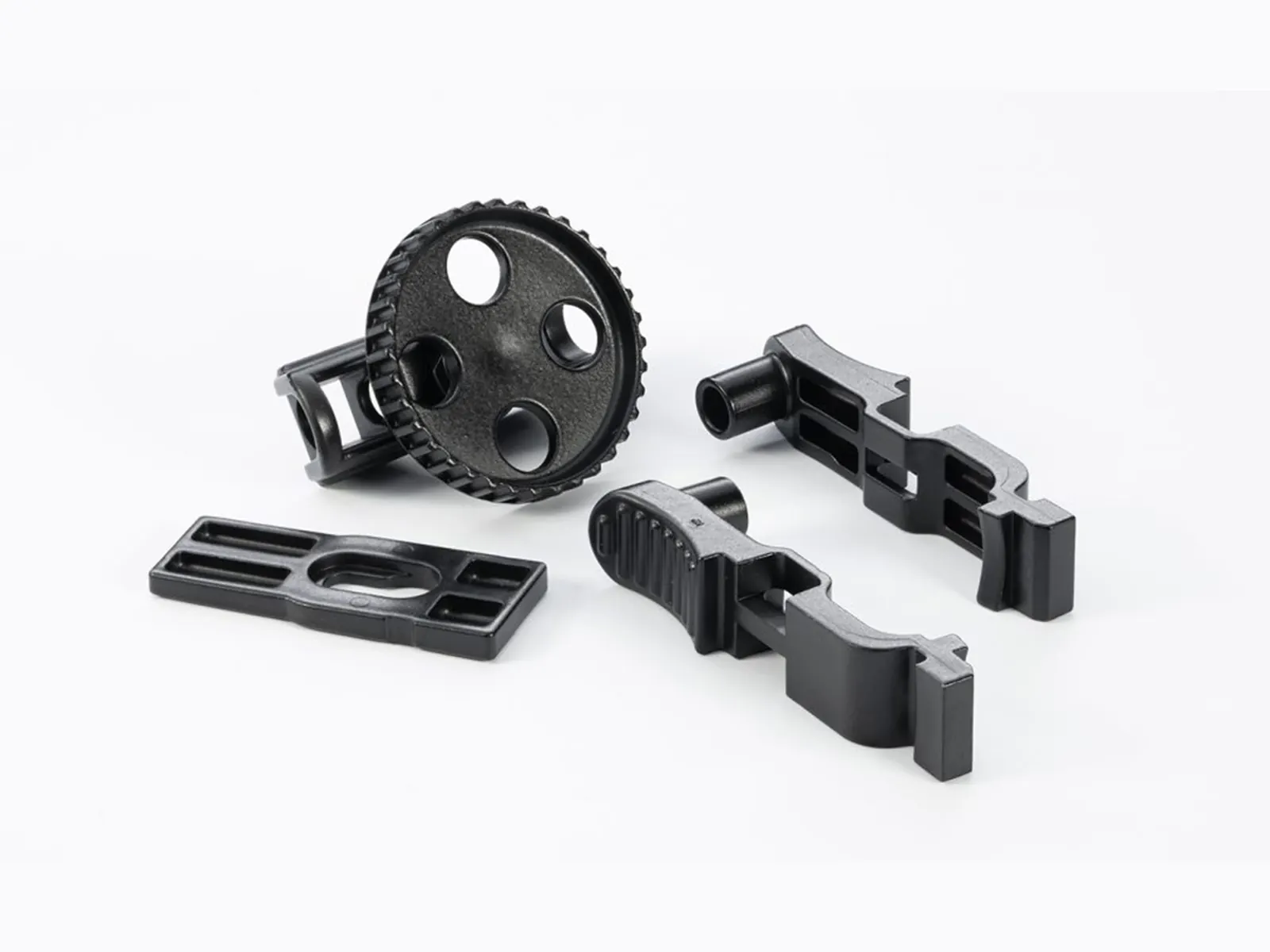
MIM 316L · CORROSION ENVIRONMENT
Subsea robotics cable latch
An industry example where corrosion exposure, functional contact and surface requirements must be evaluated together.
Source · PART-016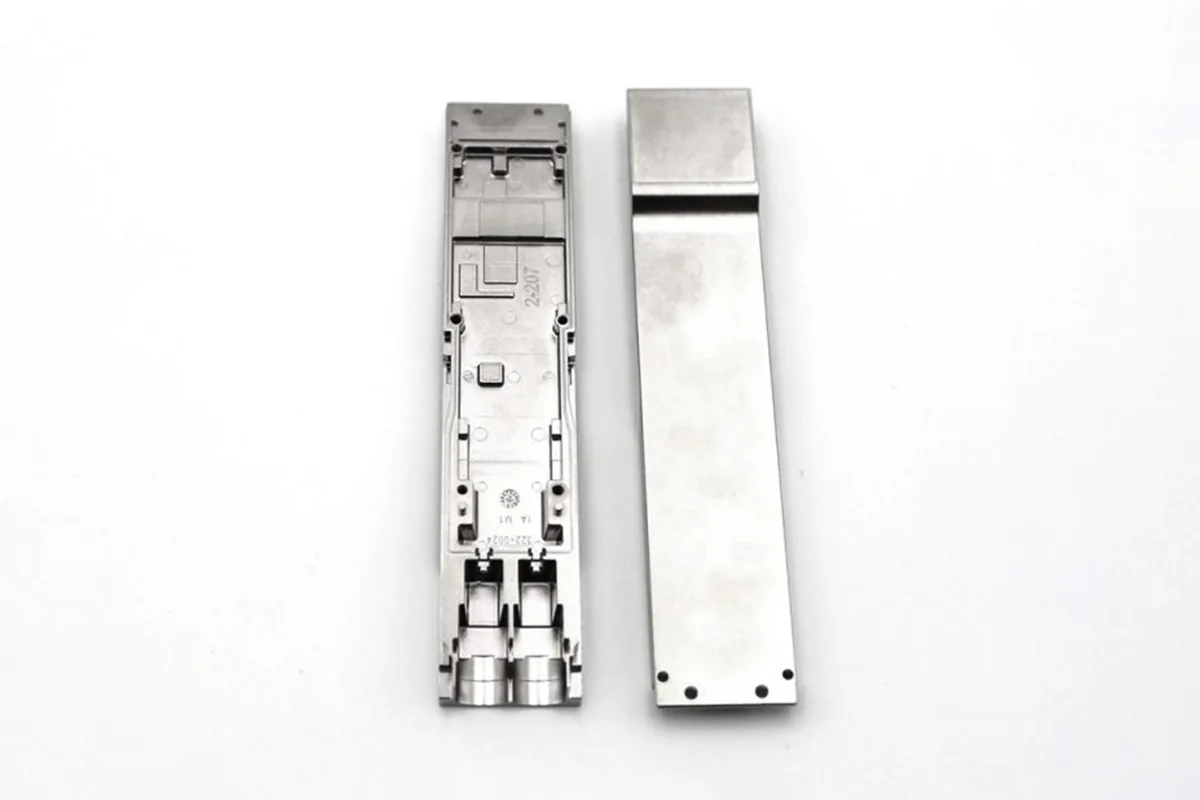
COPPER-ALLOY ROUTE · THERMAL MANAGEMENT
Optical-module heat-dissipation housing
This published copper-alloy MIM housing addresses heat dissipation in an optical module. The exact alloy grade was not disclosed, so its composition and thermal performance cannot be assumed for another part.
Source · PART-147316L is a possible candidate for corrosion-exposed parts, but it is not automatically suitable for abrasive wear. A high-hardness grade may also require distortion control after sintering or heat treatment. Final selection must account for operating conditions, contacting surfaces, critical dimensions and inspection requirements. See all MIM material properties →
03 / MATERIAL RESEARCH
Explore MIM Material Grades, Comparisons, and Selection Guides
Once a family meets the main functional requirements, narrow the choice with grade-specific evidence. A specified alloy needs chemistry and property data; competing candidates need a direct comparison; an open-ended requirement needs a selection process based on the part drawing and operating environment.
You already know the alloy or grade
For a specified grade, confirm its designation, chemistry, required finished condition and relevant limitations. The applicable material specification and supplier test data—not the grade name alone—determine whether it meets the drawing.
Browse all material families and grade links →You are comparing two candidates
The MIM Material Comparison pages compare candidates against corrosion, strength, heat-treatment and dimensional requirements. For example, 316L may be considered where corrosion resistance and ductility are priorities, whereas heat-treated 17-4 PH may better serve higher-strength requirements. The choice still depends on exposure, loading and dimensional limits.
View material comparisons →You are still defining the material
Use the MIM Material Selection Guide to connect working conditions, essential properties, geometry and manufacturing requirements before shortlisting grades.
Read the selection guide →You need deeper properties or an alternative
Review the MIM Material Properties hub for requirement-specific guides. If established materials cannot meet the specification, explore Custom MIM Materials for a review of supply, processing and testing feasibility before considering any nonstandard feedstock.
Explore properties and alternatives →Popular grade-to-grade comparisons
04 / ENGINEERING FEASIBILITY
Can the Selected Material Be Manufactured by MIM?
A material may meet a product's functional targets on paper but still be unsuitable for a particular MIM production route. Before deciding on tooling, evaluate availability, process stability and finished-part acceptance together. This check is especially important when converting a CNC drawing to MIM or considering a less common alloy.
Powder and Feedstock Availability
Confirm whether the required chemistry can be supplied in suitable powder and feedstock form, with documented specifications and practical sourcing conditions. Availability of a wrought or cast alloy does not establish availability of an equivalent MIM feedstock. Special formulations may introduce additional supply and process risk.
Molding, Debinding and Sintering Feasibility
Review the feedstock's molding behavior, green-part handling, binder-removal route, sintering atmosphere, shrinkage, geometry support, and potential contamination or distortion. Thin arms, blind features, small holes near thick bosses, and cosmetic faces can become critical even with a familiar alloy.
Finished-Part Requirements and Validation
Confirm the acceptance condition: critical dimensions, density, strength, hardness, magnetic properties where relevant, surface finish, heat treatment, coating, and inspection method. Target properties must refer to the finished part and its verified process condition, not solely to a nominal alloy label.
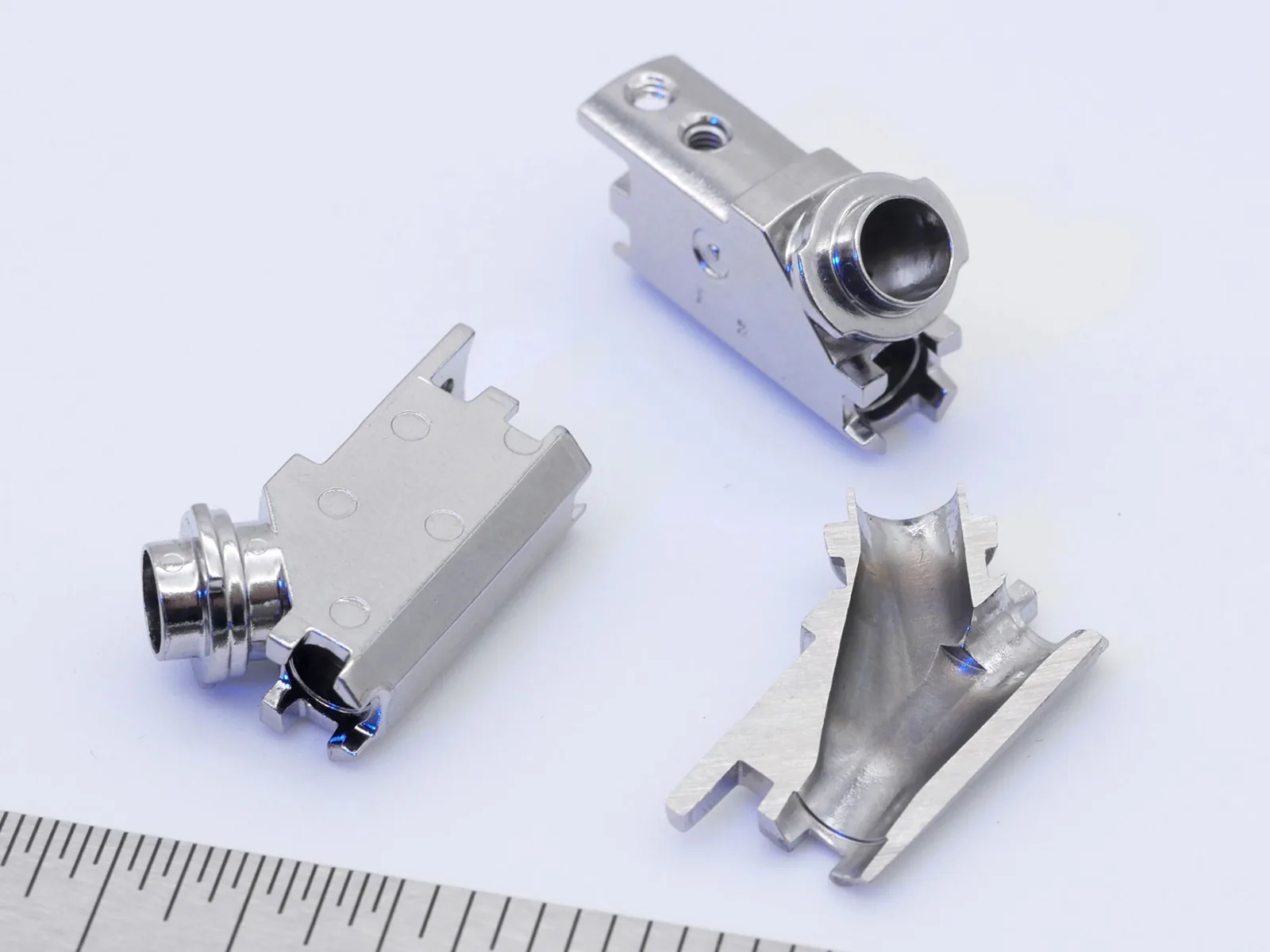
In complex MIM parts, hole location, unsupported features and surface requirements can become acceptance risks even when the alloy is familiar.
Review the MIM process →Which feedstock datasheet values matter before tooling?
Feedstock datasheet checks: A supplier datasheet should state the precise grade and feedstock designation, the oversize factor and its validation conditions, any flow-index test conditions, and the sintered density and mechanical-property test conditions. An oversize factor or molding-temperature range specified for one feedstock cannot be transferred to another formulation or part geometry without validation.
Example: dimensional risk in a complex MIM geometry
Hypothetical geometry example (not an XTMIM customer project): If a stainless steel part has a long thin arm beside a thick boss and a nearby tolerance-critical hole, the specified grade alone cannot confirm dimensional stability. The engineering review should examine section transitions, molding and handling, sintering support, finishing and how the hole position will be measured before tooling release.
Possible outcomes of a material feasibility review
A route may be available, but the specific drawing, tolerances and acceptance criteria still require review.
Next: Check the drawing, process limits and inspection criteria before committing to tooling.
Material supply, processing behavior or part-level performance remains uncertain.
Next: Identify the limiting requirement and request the missing supplier data or test results.
There is insufficient evidence to promise a stable MIM process for this grade or project.
Next: Consider a validated material or a different manufacturing process before investing in tooling.
Evidence needed before material approval: the identified powder/feedstock supplier and grade specification; relevant sintered chemistry, density and mechanical or functional test results under the intended processing condition; trial-part shrinkage and dimensional inspection of critical features; and heat-treatment, surface-finishing or magnetic verification when required. If these records are not yet available, the material remains a candidate requiring feasibility review—not a qualified XTMIM production route.
Industry reference data: The MIMA materials overview identifies material families used across the industry, while MPIF standards resources support the definition of relevant material specifications. Feedstock preparation, debinding and sintering can change final density and dimensions; their process requirements are explained in the MIM Process guide. Neither reference establishes XTMIM production capability or replaces part-specific qualification testing.
05 / MATERIAL REVIEW
What Information Is Needed for an MIM Material Review?
A material name by itself is rarely enough for a meaningful MIM quote. Share the part's function and drawing requirements so the engineering team can judge material options alongside geometry, sintering behavior, secondary operations and inspection needs.
Not sure which material to specify? Describe the required function and non-negotiable conditions rather than choosing a high-specification alloy by guesswork. Material substitution, manufacturability and total process cost can then be assessed before tooling decisions are made.
START AN ENGINEERING REVIEW
Have a project drawing?
Ready to check a candidate MIM material against your part? Send the drawing and operating requirements for an engineering feasibility review. If a grade or special alloy route is not already established, availability and validation will need to be confirmed before any production commitment.
Submit Drawing for Review