
MIM 420 stainless steel is a martensitic stainless steel option for small precision parts that need hardness, contact durability and moderate wear resistance more than maximum corrosion resistance. In metal injection molding, 420 is usually reviewed when a compact part has repeated engagement, sliding contact, locking surfaces, local wear zones or hardened functional edges that would be difficult to machine economically at production volume. The material should not be selected only because it is “stainless steel.” The practical decision depends on hardness target, heat treatment condition, corrosion exposure, dimensional stability, surface finish, magnetic behavior and inspection requirements.
If corrosion resistance is the primary requirement, MIM 316L stainless steel is usually a better starting point. If the part needs higher wear resistance or sharper hardened contact features, MIM 440C stainless steel may need review. For a MIM project, 420 should be evaluated together with the drawing, critical dimensions, mating material, heat treatment plan, surface condition and expected annual volume.
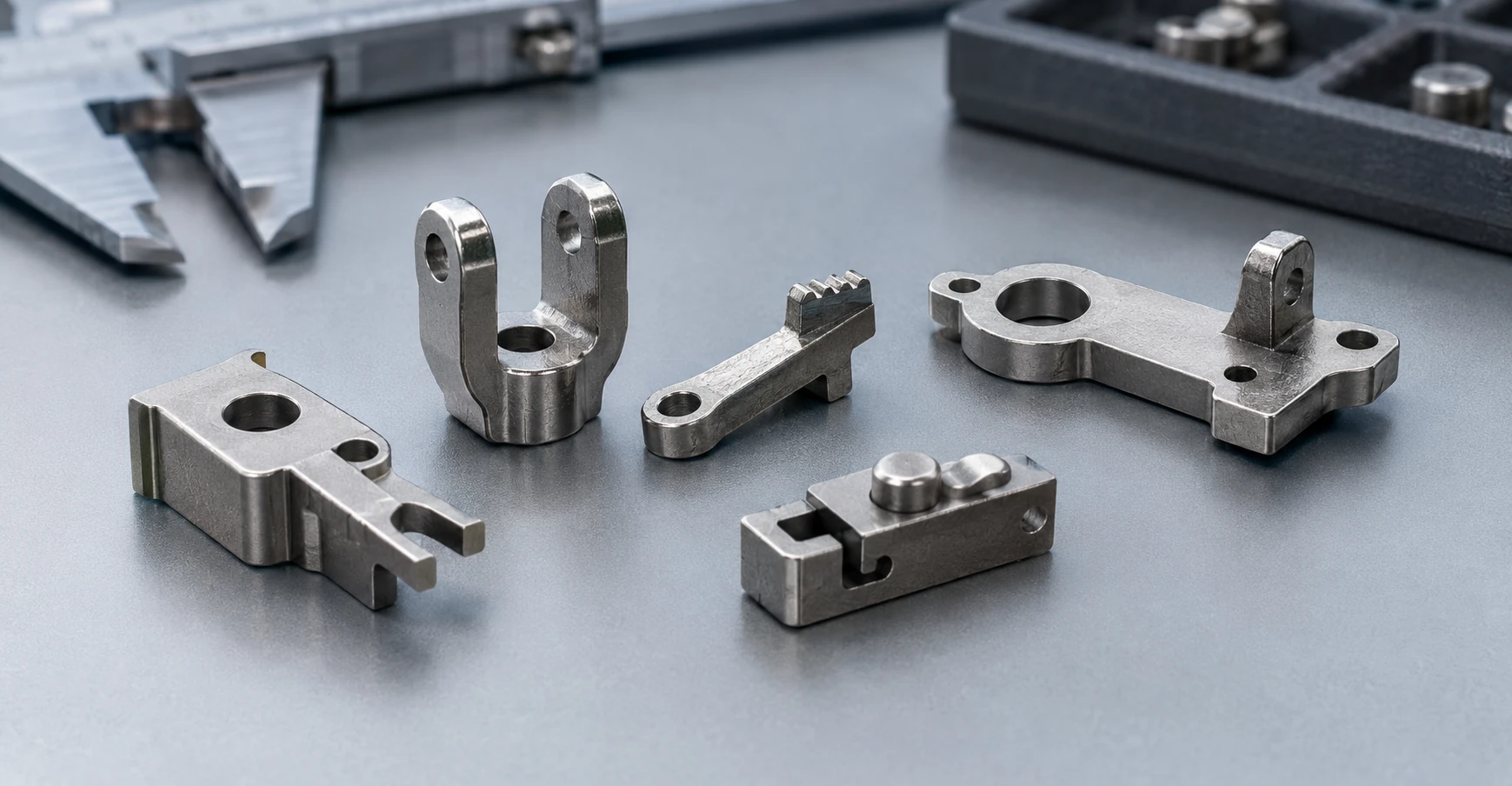
When Should You Choose MIM 420 Stainless Steel?
From a design review perspective, the first question is not whether 420 is a “strong stainless steel.” The better question is whether the part needs hardness-driven function in a size, geometry and production volume that justify metal injection molding. MIM 420 is strongest as a material decision when functional contact and compact geometry appear together.
Best-fit conditions for MIM 420
- The part needs higher hardness than 304 or 316L stainless steel.
- Repeated contact, sliding, latching or mechanical engagement exists.
- The geometry is small, complex or expensive to machine at volume.
- Moderate corrosion resistance is acceptable for the service environment.
- Heat treatment can be planned before production approval.
- Magnetic behavior is acceptable for the application.
Review another material or process when
- Corrosion resistance and ductility are the dominant requirements.
- The part needs strength but not high hardness or wear resistance.
- Severe sliding wear may require 440C or another hardened material route.
- Non-magnetic behavior is required near sensors or magnetic systems.
- The part is large, simple, very low volume or unsuitable for MIM tooling.

| Selection Trigger | Why It Matters in a MIM 420 Project | What to Confirm Before Tooling |
|---|---|---|
| Higher hardness is required. | 420 is a martensitic stainless grade and is normally reviewed for heat-treatment response. | Target hardness, heat treatment condition and hardness test location. |
| Repeated contact or sliding exists. | Contact surfaces may need better wear behavior than softer stainless grades. | Mating material, load, movement type, lubrication and surface finish. |
| The part is small and complex. | MIM can form compact features, holes, slots and near-net-shape geometries before sintering. | Wall thickness, gate location, shrinkage risk, sintering support and critical datums. |
| Moderate corrosion resistance is acceptable. | 420 is not normally selected when corrosion resistance is the highest priority. | Moisture, chloride, cleaning media, storage condition and exposure duration. |
| Heat treatment is part of the plan. | Heat treatment may improve hardness but can also affect final size and shape. | Post-heat-treatment dimensions, allowable movement and final inspection method. |
What Is MIM 420 Stainless Steel in Metal Injection Molding?
MIM 420 stainless steel is not simply machined 420 bar stock in a smaller shape. In MIM, fine metal powder is combined with binder to form MIM feedstock, injected into a mold cavity, handled as a green part, processed through the MIM debinding process, sintered with controlled shrinkage in the MIM sintering process and then finished or heat treated according to the project requirement. Each stage can influence final geometry and performance.
420 stainless steel belongs to the martensitic stainless steel family. In MIM material selection, this means it is usually reviewed for hardness, contact durability and wear-related functions rather than maximum corrosion resistance or high ductility. ASM International heat treatment references support the general principle that martensitic stainless steels are hardened and tempered to obtain useful strength and hardness, but the final MIM result still depends on feedstock, sintering, heat treatment, geometry and supplier process control. ASM International martensitic stainless steel heat treatment reference
MIM 420 project review items
The table below is not a guaranteed datasheet. It is a practical review framework for early RFQ, material screening and drawing-based discussion. Final values and acceptance criteria should be confirmed through the selected feedstock route, sintering condition, heat treatment plan, inspection method and project specification.
| Review Item | What It Means for MIM 420 | What to Confirm During RFQ |
|---|---|---|
| Material family | 420 is a martensitic stainless steel grade reviewed for hardness-driven function. | Whether the application truly needs 420, or whether 316L, 17-4 PH, 440C or another alloy is more suitable. |
| Primary selection driver | Hardness, contact durability and moderate wear resistance are usually the main reasons to review 420. | Hardness target, contact surface function, load, sliding condition and mating material. |
| Corrosion boundary | 420 should not be treated as equivalent to 316L in corrosion-driven applications. | Moisture, chloride, cleaning media, storage condition, service environment and finishing requirement. |
| Magnetic behavior | 420 should generally be treated as magnetic. | Whether magnetic behavior affects sensors, actuation, electronics, assembly or end-use performance. |
| Heat treatment condition | Heat treatment may be needed to obtain the required hardness, but it can influence dimensions and shape. | Target condition, test method, post-heat-treatment dimensions, fixture strategy and acceptance criteria. |
| Sintered density and properties | MIM properties depend on feedstock, molding, debinding, sintering, heat treatment and part geometry. | Supplier-confirmed data, sample validation, part testing or coupon testing based on project requirements. |
| Inspection focus | Hardness alone does not fully define functional performance. | Critical dimensions, hardness location, surface condition, corrosion expectation and functional contact checks. |
Why MIM 420 is not the same as machined 420 bar stock
Machined 420 parts often start from rolled, forged or otherwise consolidated material. MIM 420 parts start from powder-binder feedstock. This difference matters because MIM part quality is controlled through molding stability, green part handling, debinding, sintering shrinkage, density, heat treatment, secondary operations and final inspection. A drawing that is acceptable for CNC machining may still need DFM review before MIM tooling.

Standards and material data should be used as review inputs
MPIF announced that the 2025 edition of Standard 35-MIM includes MIM-420 HIP’d & HT stainless steel. MIMA also identifies Standard 35-MIM as a material standard framework for metal injection molded parts. These references support material evaluation, but they do not replace drawing-based DFM review, supplier-specific process capability, feedstock data, heat treatment condition and agreed inspection criteria. MPIF Standard 35-MIM 2025 announcement MIMA Standard 35-MIM information
The MPIF reference should be understood as a material standards framework and condition reference, not as a default project guarantee. For a production project, the applicable material condition, heat treatment route, inspection method and acceptance criteria should be confirmed in the quotation, drawing review and project specification.
Engineering Advantages of MIM 420 Stainless Steel
MIM 420 is selected when hardness-related function matters more than general stainless corrosion performance. Its engineering value is strongest when hardness, contact durability and compact geometry are all part of the same requirement.
Hardness potential after heat treatment
The key value of 420 is its heat-treatment response. In a MIM project, this matters when a functional surface must resist indentation, sliding contact, repeated engagement or local wear. The hardness target should be specified as a functional requirement, not as a vague material preference. It should also be linked to test method, test position and final heat treatment condition.
BASF lists Catamold 420W for components requiring high hardness and wear resistance, which supports this material direction in MIM feedstock selection. This should be treated as feedstock and application context, not as a universal performance guarantee for every part geometry. BASF Catamold product portfolio
Wear and contact surface performance
MIM 420 may be suitable for small components with sliding, locking, latching or engagement surfaces. These are cases where 304 or 316L may be too soft for the functional contact condition. Wear performance still depends on the full system: hardness, surface finish, contact pressure, mating material, lubrication, corrosion, debris and functional testing.
Small complex geometries that benefit from MIM
MIM 420 becomes more attractive when the part has compact locking arms, small engagement teeth, thin functional walls, cross holes, blind features, complex outside profiles, local contact surfaces or multiple small datum features. If the part is large and simple, MIM may not be the first choice. If the part is small, complex and produced in meaningful volume, MIM can reduce machining dependency while keeping the material suitable for hardness-driven functions.
Limitations and Risks Before Selecting MIM 420
A useful MIM 420 review should explain both why the material is attractive and where it creates risk. Many selection mistakes happen when a project treats “stainless,” “hard” and “wear resistant” as the same requirement.
Corrosion resistance is not the same as 316L
420 is stainless steel, but it should not be treated as a substitute for 316L in corrosion-driven applications. If the part will be exposed to chloride, sweat, cleaning fluid, humid storage, outdoor service or aggressive cleaning environments, corrosion risk must be reviewed before material confirmation.
A better starting question is whether the environment is mild enough for 420 or whether corrosion resistance should be prioritized over hardness. If corrosion resistance is the first requirement, review MIM 316L stainless steel or another corrosion-focused material.
Heat treatment may affect dimensional stability
Heat treatment is often necessary to obtain the hardness benefit of 420. It can also affect dimensional stability, especially for small parts with thin sections, long arms, uneven wall thickness, tight datum relationships or asymmetric geometry. This does not mean 420 should be avoided. It means heat treatment, tooling compensation and inspection must be planned before production approval.
High hardness does not automatically mean good wear performance
Hardness helps, but it is not the entire wear system. A hardened 420 part may still wear, gall, chip or corrode if the contact condition is not appropriate. Wear-critical parts should be reviewed with mating material, contact load, movement type, lubrication, surface finish and service environment.
Thin walls, long arms and asymmetric geometry need review
MIM is strong for small complex parts, but not every complex part is automatically safe. Thin walls, abrupt transitions, long unsupported arms and unbalanced sections can increase the risk of short shots, debinding stress, sintering distortion or heat-treatment movement.
MIM 420 vs 316L, 17-4 PH and 440C Stainless Steel
420 is often compared with 316L, 17-4 PH and 440C. This comparison should be used as an early screening tool, not as a final material decision. Final selection depends on drawing geometry, functional surfaces, corrosion environment, heat treatment condition, tolerance strategy and inspection method.

| MIM Stainless Grade | Better Starting Point For | Main Caution Before Approval |
|---|---|---|
| 316L | Corrosion resistance, ductility, clean stainless surface and non-hardness-driven parts. | Not suitable when high hardness is the main functional requirement. |
| 17-4 PH | Heat-treatable strength, compact structural parts and higher strength than austenitic stainless grades. | Magnetic behavior, heat treatment condition and corrosion exposure need review. |
| 420 | Hardness, contact surfaces, moderate wear resistance and small functional mechanisms. | Corrosion resistance, heat-treatment movement and surface condition need review. |
| 440C | Higher hardness and more severe wear requirements in selected applications. | Toughness, chipping risk, corrosion margin and processing difficulty need review. |
In practice, 420 is often a middle path between corrosion-focused stainless grades and more aggressive high-hardness options. For broader grade screening, use the MIM stainless steel materials page and the MIM material comparison page.
Typical MIM 420 Stainless Steel Parts
MIM 420 is best described by function rather than only by industry. A useful 420 candidate usually has small size, repeated contact, local wear demand or hardness-driven performance.
Contact and engagement components
Possible MIM 420 candidates include small locking components, latch parts, engagement fingers, compact levers, sliding contact parts, wear contact inserts and miniature mechanical control parts.
Precision parts with local wear surfaces
420 may be reviewed when only part of the component has a wear-related function, such as contact pads, stop faces, engagement teeth, local bearing surfaces or functional edges.
Tool-related, fixture-related or instrument-related small parts require careful review. Cleaning method, corrosion exposure, surface finish, validation requirements and regulatory expectations must not be assumed from the material name alone.
DFM Review Points for MIM 420 Stainless Steel Parts
For MIM 420, DFM review should connect geometry, tooling compensation, sintering support, heat treatment and functional surfaces. A drawing that is acceptable for CNC machining may still need adjustment for MIM because feedstock flow, debinding, sintering shrinkage and heat treatment can influence the final part.

Geometry features that need early review
| Feature | Why It Matters for MIM 420 | Review Action |
|---|---|---|
| Thin walls | May increase molding, debinding, sintering or heat-treatment distortion risk. | Review minimum wall thickness, local transitions and support strategy. |
| Long unsupported arms | May move during sintering or heat treatment. | Check arm length, section balance and functional clearance after heat treatment. |
| Heavy-to-thin transitions | May create differential shrinkage, local stress or dimensional instability. | Review transition radius, section balance and tolerance priority. |
| Sharp contact corners | May concentrate contact stress or increase finishing sensitivity. | Review contact load, edge condition and secondary finishing needs. |
| Small holes near contact surfaces | May affect tolerance control and inspection access. | Confirm hole position, datum method and post-treatment inspection plan. |
| Asymmetric geometry | May increase distortion and datum instability. | Review orientation, sintering support, tooling compensation and functional datums. |
Critical dimensions and datum strategy
Critical dimensions should be separated from non-critical dimensions before RFQ. For 420, this is especially important because heat treatment may influence final size and shape. Engineers should define functional datums, contact surface dimensions, hole size and position requirements, flatness or straightness requirements, dimensions measured after sintering, dimensions measured after heat treatment, and surfaces that may require secondary machining.
Heat treatment and surface finishing planning
Heat treatment should not be treated as an afterthought. It affects hardness, dimensions, surface condition and inspection. Surface planning should define whether the part requires as-sintered surface, polishing, passivation, coating, grinding, cosmetic surface control or a functional contact finish.
Representative Engineering Scenario: Heat-Treatment Movement on a Thin Locking Part
A compact locking component was designed with a long thin arm and a small contact tooth. 420 stainless steel was selected because the contact tooth needed hardness and wear resistance. After heat treatment, the arm moved slightly and the engagement position became unstable.
This representative scenario combines common MIM engineering risks for project-screening guidance and is not presented as a specific customer case.
A thin locking arm lost stable engagement after heat treatment.
The geometry combined a thin arm, local contact tooth and asymmetric section.
The project treated material selection separately from DFM, heat treatment and datum strategy.
The critical datum, contact tooth and post-heat-treatment dimension were redefined before tool correction.
Review thin arms, functional contact faces and final inspection dimensions before tooling.
Inspection and Quality Checks for MIM 420 Parts
Inspection planning should match the reason 420 was selected. If the material was selected for hardness, the inspection plan should not only check appearance and dimensions. It should confirm the function-related requirements that caused the project to choose 420 in the first place.

Hardness and heat treatment verification
Hardness requirements should be defined before production. The drawing or specification should clarify target hardness, acceptable test method, test location, heat treatment condition, whether testing is done on a part or sample coupon, and whether hardness is required globally or at a functional surface.
Dimensional inspection after sintering and heat treatment
MIM parts shrink during sintering, and heat treatment may further influence geometry. For 420, inspection should consider critical dimensions, hole size and position, flatness, straightness, contact surface location, post-heat-treatment size change and functional assembly fit.
Surface and corrosion-related checks
Surface condition can affect both function and corrosion behavior. If the part is exposed to moisture, cleaning media or user contact, surface finish and corrosion expectations should be reviewed. Possible checks include visual inspection, surface roughness, passivation requirement, corrosion exposure review, cleaning compatibility and functional contact surface condition.
Functional testing when wear is the real requirement
If wear resistance is the reason for choosing 420, functional testing may be needed. Hardness alone may not predict real performance under sliding, impact, contamination or poor lubrication. Testing should reflect the actual mating material, motion and contact condition whenever possible.
For broader supplier quality context, see XTMIM’s inspection and testing capability.
Representative Engineering Scenario: Hardness Passed but Wear Performance Failed
A small sliding component met the agreed hardness requirement after heat treatment, but early wear appeared during functional testing. The part was not wrong only because of material selection. The contact system had not been fully defined.
This representative scenario combines common MIM engineering risks for project-screening guidance and is not presented as a specific customer case.
The part passed hardness inspection but showed early wear in functional movement.
The project used hardness as the only wear indicator.
Mating material, surface finish, contact pressure and lubrication were not reviewed together.
The contact face finish and mating material condition were added to the review scope.
Include wear condition, contact load, mating material and surface finish in the RFQ package.
MIM 420 Stainless Steel RFQ Checklist
A clear RFQ package helps the engineering team judge whether 420 is suitable before tooling. It also prevents material selection from becoming a guess based only on the material name. For early-stage projects, the most useful RFQ is not the shortest one. It is the one that tells the supplier why hardness, contact durability or corrosion resistance matters.

| RFQ Input | Why It Matters | Review Result It Supports |
|---|---|---|
| 2D drawing | Defines dimensions, tolerances, datums and functional surfaces. | Tolerance review, inspection plan and tooling compensation. |
| 3D CAD file | Helps review geometry, moldability, shrinkage and sintering risk. | DFM review and mold concept evaluation. |
| Target material | Confirms whether 420 is required or only a candidate. | Material comparison with 316L, 17-4 PH, 440C or another alloy. |
| Current material or process | Helps compare MIM with CNC, casting, stamping or another route. | Process suitability and cost-driver review. |
| Hardness target | Clarifies why 420 is being considered. | Heat treatment and hardness verification plan. |
| Wear or contact condition | Determines whether hardness alone is enough. | Functional testing and surface finish review. |
| Mating material | Influences wear, galling and surface finish decisions. | Contact system review. |
| Corrosion environment | Determines whether 420 or 316L is more appropriate. | Corrosion risk and finishing review. |
| Heat treatment expectation | Affects hardness, size change and inspection. | Post-treatment dimensional control plan. |
| Critical dimensions | Helps identify tolerance and post-treatment risk. | Datum strategy and final inspection focus. |
| Surface finish | Affects wear, appearance and corrosion behavior. | Secondary operation and acceptance review. |
| Annual volume | Helps judge whether MIM tooling investment is reasonable. | Manufacturing route and project feasibility review. |
Need to Review a MIM 420 Stainless Steel Part?
If your part requires hardness, contact durability, sliding wear resistance or heat-treated stainless performance, MIM 420 may be a candidate material. Send your 2D drawing, 3D CAD file, target hardness, wear condition, corrosion exposure, critical dimensions, surface finish and estimated annual volume for engineering review.
XTMIM can help evaluate whether 420 is suitable, whether 316L / 17-4 PH / 440C should be compared, and whether the geometry has heat-treatment, sintering, tolerance or inspection risks before tooling.
Submit Drawing for Review Request a Quote Contact XTMIMFAQs About MIM 420 Stainless Steel
What is MIM 420 stainless steel used for?
MIM 420 stainless steel is used for small precision parts that need hardness, contact durability and moderate wear resistance. Typical candidates include locking parts, latch components, sliding contact parts, engagement features and compact mechanical components. The final decision should consider geometry, heat treatment, corrosion exposure and inspection requirements.
Is MIM 420 stainless steel corrosion resistant?
MIM 420 stainless steel has stainless behavior, but it should not be treated as equal to 316L for corrosion-driven applications. If the part will face chloride, sweat, cleaning chemicals, humid storage or outdoor exposure, corrosion resistance should be reviewed before material confirmation.
Is MIM 420 better than MIM 316L stainless steel?
It depends on the requirement. MIM 420 is usually better when hardness and contact wear are important. MIM 316L is usually a better starting point when corrosion resistance, ductility and non-hardness-driven stainless performance are more important.
Should I choose MIM 420 or MIM 17-4 PH?
MIM 420 is usually reviewed when hardness, contact durability and moderate wear resistance are the main drivers. MIM 17-4 PH is often reviewed when strength and precipitation-hardened stainless performance are more important. The final decision should consider heat treatment, corrosion exposure, magnetic behavior, geometry and critical dimensions.
What is the difference between MIM 420 and MIM 440C?
Both can be reviewed for hardness and wear-related applications, but 440C is typically considered when higher hardness or more severe wear resistance is required. 420 may be a more moderate option when the project needs hardness with stainless behavior. Toughness, corrosion margin, geometry and heat treatment risk should be reviewed before selecting either grade.
Can MIM 420 stainless steel be heat treated?
Yes, 420 stainless steel is a martensitic stainless grade commonly associated with heat-treatment response. In a MIM project, heat treatment should be planned together with hardness target, dimensional stability, inspection method and functional surface requirements.
What hardness can MIM 420 stainless steel achieve?
MIM 420 is selected for heat-treatment response and hardness-driven functions, but the final hardness should be confirmed by feedstock, sintering, heat treatment condition, part geometry and agreed inspection method. XTMIM should review the target hardness during RFQ instead of assuming a generic datasheet value.
Is MIM 420 stainless steel magnetic?
420 stainless steel should generally be treated as magnetic. If the part is used near sensors, magnets, electronic components or magnetic actuation systems, magnetic behavior should be reviewed before material selection.
What information is needed before quoting MIM 420 parts?
A useful RFQ should include 2D drawings, 3D CAD files, target material, hardness requirement, corrosion environment, wear or contact condition, mating material, critical dimensions, surface finish, estimated annual volume and any inspection or acceptance requirements.
Engineering Review and Technical References
MIM 420 stainless steel should be selected through drawing-based review, not only by material name. Relevant material standards and feedstock information can guide evaluation, but they do not replace supplier-specific DFM review, feedstock data, heat treatment planning, tolerance agreement and inspection criteria.
- MPIF Standard 35-MIM 2025 Edition announcement — relevant because the edition includes MIM-420 HIP’d & HT stainless steel.
- MIMA Standard 35-MIM information page — relevant for understanding the MIM material standards framework.
- BASF Catamold product portfolio — relevant because Catamold 420W is positioned for hardness and wear resistance applications.
- ASM International martensitic stainless steel heat treatment reference — relevant for general heat treatment background on martensitic stainless steels.
- PIM International article on 420 martensitic stainless steel processed by MIM — relevant for MIM-specific 420 processing and heat treatment discussion.