MIM Project Development Support from Early Review to Production Handoff
MIM project development helps an OEM or product engineering team decide whether a small, complex metal part can move from drawing review to trial samples and controlled production. The decision is not based on one good sample. It depends on part geometry, material behavior, tooling correction, sintering shrinkage, CTQ dimensions, surface requirements, inspection access, and projected production volume. XTMIM supports this stage by reviewing the available drawing package, identifying development risks before tooling or production release, and connecting sample feedback with production handoff requirements. This page is most useful when you already have a 2D drawing, 3D CAD file, material target, tolerance requirement, application background, or trial production plan and need to evaluate whether the project is ready for MIM development.
Engineering Summary
- Use this capability when a project needs drawing-based review, sample planning, trial production feedback, and production handoff.
- Do not treat MIM as rapid prototyping when the project has no tooling justification or future production demand.
- Key review points include tooling risk, shrinkage, green part handling, CTQ dimensions, surface requirements, inspection method, and packaging.
- Next step: send drawings, 3D files, material, tolerance, surface finish, annual volume, and application background.
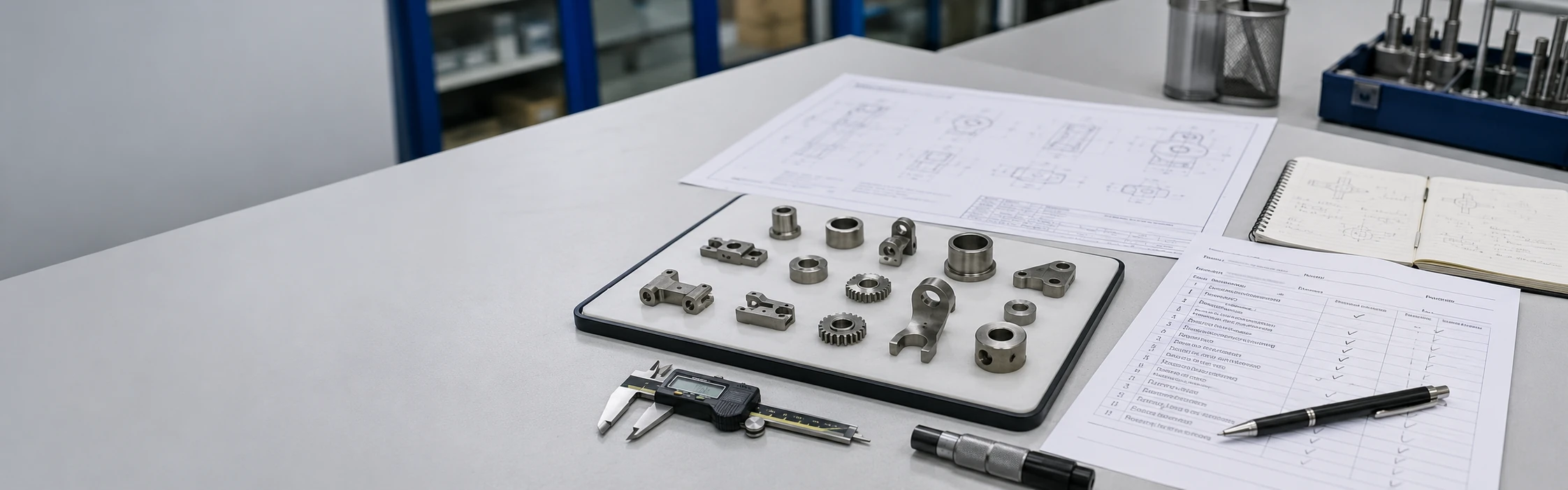
XTMIM supports MIM project development for OEM and custom metal component projects where the customer already has a drawing, 3D file, material requirement, target tolerance, application background, or trial production plan. The goal is to help engineering and sourcing teams identify manufacturing risks before tooling release, review trial samples with production intent, and prepare the information needed for repeatable production.
Development timing, sample quantity, inspection scope, and production readiness should be confirmed after reviewing the actual part geometry, material, tolerance, surface requirement, and estimated volume. For a capability overview beyond project development, visit the XTMIM Capabilities page.
What Project Development Means for a MIM Part
For a MIM part, project development is the transition from “can this part be made?” to “can this part be produced repeatedly under defined requirements?” It includes early technical review, tooling and trial planning, sample evaluation, production preparation, and handoff to manufacturing and quality control. The real issue is not only whether the part can be molded once, but whether the combination of fine metal powder feedstock, injection molding, debinding, sintering shrinkage, possible sizing, and inspection can support the drawing intent.
| Development Stage | Main Purpose | What Should Be Reviewed |
|---|---|---|
| Project input review | Understand the part and decide whether MIM is a reasonable route. | 2D drawing, 3D CAD, material, tolerance, annual volume, surface finish, application environment. |
| Prototype and trial planning | Prepare the route for sample development and trial production. | Tooling requirement, gate area, shrinkage-sensitive features, inspection method, expected sample quantity. |
| Trial feedback | Review whether sample results support further correction or production preparation. | Dimensions, appearance, deformation, cracks, secondary operations, surface condition. |
| Production handoff | Transfer the approved development result into controlled production. | Process route, inspection plan, packaging requirement, production schedule, change control. |
The important point is that MIM development is usually tooling-dependent. It is not the same as CNC rapid prototyping. A CNC sample can sometimes be made directly from stock material, while a MIM sample normally depends on mold design, feedstock behavior, injection molding, debinding, sintering shrinkage, possible sizing, and inspection confirmation. For this reason, early project review should happen before tooling decisions are finalized.

When Project Development Support Matters Most
Project development support is most valuable when the part has enough complexity, risk, or production value that a simple quotation is not enough. From a project manager’s perspective, the key question is not only “Can the supplier make this part?” but also “Can the supplier help identify what may go wrong before the project reaches production?”
| Project Situation | Why Project Development Is Needed |
|---|---|
| A new MIM part is still under design review. | Geometry, tolerance, material, and tooling risk should be checked before the project moves too far. |
| A part is being converted from CNC, casting, die casting, or stamping. | Cost structure, tooling investment, tolerance strategy, and production volume assumptions may change. |
| The part has small holes, thin walls, slots, undercuts, or complex features. | Filling, green part handling, sintering deformation, and inspection access may affect manufacturability. |
| Functional dimensions are critical. | CTQ dimensions must be reviewed before tooling and trial production. |
| Cosmetic or surface requirements are important. | Gate location, parting line, polishing, tumbling, passivation, coating, or other finishing steps may affect acceptance. |
| The customer needs samples before production release. | Trial samples should be reviewed as part of a production-intent process, not only as isolated pieces. |
| The project requires OEM manufacturing support. | Material, tolerance, inspection, packaging, and production communication should be clarified early. |
Engineering point: A common mistake is to treat MIM project development as a sample-making service. In practice, the value of development support is risk reduction before production: confirming what the drawing requires, what the process can reasonably support, what needs tooling feedback, and what must be checked during trial production.
Prototype, Trial Production and Production Handoff Are Different
Prototype planning, trial production, and production handoff serve different purposes. Confusing these stages can lead to unrealistic lead time expectations, incomplete inspection planning, or premature production approval.

| Stage | Purpose | What Should Be Confirmed | Common Risk |
|---|---|---|---|
| Prototype planning | Decide whether the project is suitable for MIM development. | Drawing completeness, material target, tolerance level, annual volume, tooling requirement. | Treating MIM as a low-cost rapid prototype route. |
| Tooling trial | Evaluate the first mold and early process response. | Mold filling, gate area, green part condition, sintering shrinkage trend, major dimensional deviation. | Underestimating tooling correction and shrinkage adjustment. |
| Trial production | Check whether the process can repeat the sample result across a small batch. | Batch consistency, CTQ dimensions, appearance, secondary operations, inspection method. | Assuming several good samples mean the part is ready for mass production. |
| Production handoff | Transfer the approved result into routine production control. | Process route, inspection plan, packaging, labeling, production schedule, change control. | Releasing production without clear acceptance criteria. |
For MIM parts, the trial stage should not be evaluated only by visual appearance. A sample may look acceptable but still have risks in shrinkage-sensitive dimensions, flatness, hole position, thread area, cosmetic surface, magnetic performance, strength, corrosion resistance, or downstream assembly. The review method should be based on the drawing, application, and customer acceptance criteria.
Production handoff is the point where engineering decisions become production requirements. If critical dimensions, inspection methods, secondary operations, and packaging requirements are not confirmed at this stage, production risk can move downstream into process quality control during production, delivery, or customer assembly.
Project Information Needed Before Development Starts
The quality of a MIM development review depends heavily on the information provided at the beginning. A drawing alone may not be enough if the application, functional surfaces, material requirement, and target production volume are unclear.

| Project Input | Why It Matters for MIM Development |
|---|---|
| 2D drawing | Defines dimensions, tolerances, datum structure, critical features, and inspection points. |
| 3D CAD file | Helps review geometry, wall thickness, undercuts, holes, slots, moldability, and sintering support concerns. |
| Material grade or performance requirement | Affects feedstock selection, sintering behavior, density, strength, corrosion resistance, magnetic behavior, or heat treatment. |
| Critical dimensions | Helps identify which features require closer tooling, shrinkage, or inspection attention. |
| Surface finish or cosmetic requirement | May affect gate location, parting line strategy, tumbling, polishing, passivation, coating, or packaging. |
| Application environment | Helps review wear, corrosion, temperature, magnetic, strength, or assembly requirements. |
| Estimated annual volume | Helps determine whether MIM tooling investment is practical. |
| Target sample quantity | Helps plan prototype or trial production expectations. |
| Current manufacturing route | Useful when converting from CNC, casting, die casting, stamping, or another process. |
| Existing problem or failure mode | Helps focus the review on cost, deformation, cracking, tolerance, surface, or assembly risk. |
In production, project development becomes more efficient when the customer clearly separates “must-have” requirements from “preferred” requirements. For example, a cosmetic surface, a functional sealing surface, and a non-critical hidden surface should not be treated with the same priority during development. The same principle applies to tolerances: every dimension does not need to be controlled at the same level.
How XTMIM Supports MIM Project Development
XTMIM is a Dongguan-based manufacturer established in 2016, with approximately 10,000 m² of production space and 220 employees. For project development, the factory can support custom non-standard component projects, OEM manufacturing requirements, sample checks before shipment, and production preparation based on drawing and application requirements.
The company’s engineering-related resources include product development, manufacturing engineering, R&D, tooling, and quality-related roles. For Project Development content, the most relevant resources include product development support, manufacturing engineering support, feasibility discussion for selected project requirements, and ERP-supported production/order coordination. These resources should be understood as project support capabilities, not as a promise that every project requires or receives the same development scope.
| Support Area | How It Helps the Project |
|---|---|
| Product development support | Helps connect customer requirements with manufacturability, sample planning, and production preparation. |
| Manufacturing engineering support | Helps convert trial feedback into process route, production flow, and handoff requirements. |
| Feasibility discussion support | Supports review of selected material, geometry, application requirements, and development risks before tooling or production release. |
| Tooling feedback | Helps review whether mold design, gate strategy, and shrinkage compensation need correction after trial samples. |
| Quality and inspection support | Helps define dimensional checks, sample release checks, and production acceptance points. |
| ERP-supported coordination | Helps manage production-related information such as orders, scheduling, inventory, and delivery coordination. |
XTMIM can support MIM, CIM, and related precision component projects, but this page focuses on MIM project development. For MIM parts, the main development concern is usually not whether a part can be molded once, but whether the part can be reviewed, corrected, inspected, and prepared for repeatable production.
What You Receive After a MIM Development Review
A useful project review should not only reply with a price. For a MIM project, the review output should help the customer understand whether the drawing, material, tolerance, sample plan and production handoff requirements are ready for the next decision.
| Review Output | How It Helps Engineering or Purchasing |
|---|---|
| Manufacturability notes | Identifies geometry, wall thickness, undercut, small hole, slot, gate, or handling concerns before tooling discussion. |
| Project risk points | Highlights shrinkage-sensitive dimensions, surface risks, secondary operation needs, inspection access, or packaging concerns. |
| Sample and trial planning direction | Clarifies whether the project should move to sample planning, tooling discussion, trial batch review, or further drawing clarification. |
| Tooling feedback items | Shows which features may need mold design attention, gate review, shrinkage compensation, or trial correction discussion. |
| Inspection focus | Separates CTQ dimensions and functional surfaces from non-critical dimensions so inspection planning is more realistic. |
| Production handoff checklist | Defines what must be confirmed before sample approval can move into controlled production planning. |
Practical value: The review output should reduce uncertainty before tooling, trial production or production release. It does not replace the customer drawing or formal acceptance criteria, but it helps both sides discuss the project with the same engineering reference.
Development Evidence and Factory Support Records
For a capability page, engineering explanations should be supported by real factory evidence whenever available. During a project discussion, XTMIM can use appropriate non-confidential records and photos to help customers understand the development workflow. The exact evidence that can be shared depends on project confidentiality, drawing status, part type, and customer permission.
Sample and Trial Records
Useful evidence may include masked sample batch photos, trial review notes, sample version tracking, and non-confidential inspection summaries used to evaluate whether the project is ready for the next stage.
Project Review Documents
Masked drawing review sheets, project input checklists, CTQ notes, tooling feedback items, and process route discussions help show how engineering decisions are connected to production preparation.
Production Handoff Evidence
Production handoff evidence may include approved sample status, process route confirmation, inspection focus, packaging requirements, and change control points before the project enters routine production.
This type of evidence is more useful than generic factory photos because it connects real project management steps with MIM development risks: mold feedback, sintering shrinkage, CTQ dimensions, secondary operations, inspection planning, and production release control.
Trial Production Review Before Mass Production
Trial production is the stage where sample results are reviewed with production intent. It should answer a practical question: if the part moves into production, what must be controlled to reduce quality, delivery, and acceptance risk?

| Review Item | Why It Matters |
|---|---|
| Critical dimensions | Confirms whether tooling correction, shrinkage behavior, and possible sizing are moving toward drawing requirements. |
| Green part handling risk | Thin walls, sharp transitions, small pins, and fragile features may deform or break before sintering. |
| Sintered part condition | Cracks, distortion, discoloration, excessive deformation, or surface abnormality may indicate process risk. |
| Gate mark and parting line | These areas may affect cosmetic surfaces, assembly surfaces, or functional contact areas. |
| Secondary operation requirement | Sizing, tumbling, polishing, sandblasting, passivation, heat treatment, or coating may affect cost and lead time. |
| Inspection method | CTQ dimensions must be measurable by suitable tools before production release. |
| Packaging and handling | Small precision parts may require protection from mixing, scratching, deformation, or surface damage. |
A trial batch should be reviewed differently from a single sample. A single sample may show whether the concept is possible, while a trial batch provides more information about repeatability, handling risk, inspection difficulty, and production preparation. If the trial production review identifies dimensional drift, deformation, surface defects, or unstable secondary operation results, the project may need tooling correction, process adjustment, inspection plan revision, or design discussion before release.

Composite Trial Review Scenario for Engineering Training
This scenario is a composite engineering example for training. It does not describe a named customer, a specific order, or confidential production data.
| Trial Review Step | Composite Engineering Interpretation |
|---|---|
| Project input | A small precision MIM part was submitted with a 2D drawing, 3D model, stainless steel material target, several tight hole position requirements, and a cosmetic surface requirement. |
| Early risk note | The geometry included shrinkage-sensitive features, a thin functional arm, and small holes close to a cosmetic surface. These features needed tooling, sintering support, and inspection attention before release. |
| Trial finding | Early samples passed visual review, but trial batch inspection showed inconsistent hole position and minor distortion near the thin functional arm. |
| Engineering action | The CTQ dimensions were separated from non-critical dimensions, tooling feedback was reviewed, inspection points were clarified, and the production handoff checklist was updated. |
| Handoff decision | The project was not treated as production-ready until the drawing revision, CTQ inspection method, surface acceptance, packaging requirement, and change control points were confirmed. |
| Prevention lesson | Before tooling or production release, define functional dimensions, surface priorities, inspection access, expected volume, secondary operations, and acceptance criteria in the project input package. |
From Sample Approval to Production Handoff
Sample approval is not the final step of a MIM project. It is a decision point before production handoff. Once samples are approved, the project still needs clear transfer of drawing version, process route, inspection method, packaging requirement, and change control.

| Handoff Item | What Should Be Confirmed |
|---|---|
| Approved sample status | Which sample version has been approved and what acceptance criteria were used. |
| Drawing revision | Whether the latest drawing, material, tolerance, and surface requirements are aligned. |
| Process route | Whether molding, debinding, sintering, sizing, finishing, inspection, packing, and delivery steps are defined. |
| CTQ dimensions | Which dimensions require special control or dedicated inspection. |
| Inspection plan | Whether dimensional, appearance, material, surface, or functional checks are required. |
| Secondary operations | Whether additional processing steps are internal, external, or project-dependent. |
| Packaging requirement | Whether parts need anti-scratch, anti-mixing, anti-deformation, or customer-specific packing. |
| Production schedule | Whether the expected quantity and delivery plan match production capacity and process route. |
| Change control | Whether design, material, tooling, or process changes require customer confirmation after sample approval. |
This handoff stage is important for both engineering and purchasing teams. Engineering teams need evidence that the part is not only manufacturable but also controllable. Purchasing teams need a clear basis for production planning, delivery discussion, and supplier evaluation. Quality teams need inspection points that can be applied consistently after the project moves from development into production.
Development Limits and Project-Dependent Factors
A reliable MIM supplier should be clear about development limits. Not every metal part is suitable for MIM, and not every project should move directly into tooling. The suitability depends on part geometry, material, tolerance, functional requirements, projected volume, surface expectation, and cost target.

| Factor | Practical Meaning |
|---|---|
| Tooling requirement | MIM usually needs a mold, so it is not the same as CNC rapid prototyping. |
| Part complexity | Very simple geometries may be more economical by CNC, stamping, PM, or casting. |
| Production volume | Low-volume projects may not justify tooling unless future production demand is clear. |
| Tolerance level | Some dimensions may be suitable as-sintered, while others may require sizing or secondary machining. |
| Material behavior | Stainless steel, low alloy steel, and soft magnetic materials may require different review priorities. |
| Surface requirement | Cosmetic, sealing, sliding, or coating surfaces may need special gate, polishing, or finishing consideration. |
| Inspection requirement | Critical dimensions and functional requirements must be measurable before production release. |
| Lead time | Sample and production schedules depend on tooling, material, trial results, inspection, and secondary operations. |
Project-dependent note: Development lead time and production capacity should not be treated as fixed numbers before review. They should be confirmed after the drawing, material, part size, manufacturing difficulty, tooling condition, inspection requirement, and production schedule are evaluated.
Send Drawings for Project Development Review
If you are developing a small, complex, or precision metal part and need to evaluate whether MIM is suitable for production, send XTMIM your available project information for review. This is most useful when the part has functional dimensions, complex geometry, a defined material requirement, cosmetic or surface expectations, or enough projected volume to justify tooling discussion.
Before you contact us, prepare these five items if available: 2D drawing, 3D CAD file, target material, CTQ dimensions or tolerance requirements, and estimated annual volume or application background. These inputs help XTMIM review manufacturability, tooling risk, inspection needs, trial production planning, and production handoff requirements before formal production planning begins.
- 2D drawing and 3D CAD file
- Material grade or performance requirement
- Critical dimensions and tolerance needs
- Surface finish or cosmetic requirement
- Application environment and estimated annual volume
- Sample or trial production requirement
- Current manufacturing route and existing problem, if the part is being converted from another process
XTMIM can review the project from manufacturability, tooling risk, material suitability, tolerance strategy, trial production planning, inspection method, packaging requirement, and production handoff perspectives before formal production planning begins.
FAQ: MIM Project Development
Can XTMIM support MIM prototype development?
Yes. XTMIM can support MIM project development and sample review for suitable custom metal component projects. However, MIM prototypes are usually tooling-dependent, so sample timing and development cost should be confirmed after reviewing the drawing, material, tolerance, part complexity, and expected production volume.
Is MIM suitable for low-volume prototypes?
MIM is usually not the best route for very low-volume prototype-only projects because tooling cost must be justified. If the project has future production demand, complex geometry, suitable material requirements, and enough projected volume, MIM development may be reasonable. If the part is only needed in a few pieces, CNC machining or metal additive manufacturing may be more practical for early validation.
How is MIM prototype development different from CNC prototyping?
CNC prototyping can often produce early samples directly from stock material without a MIM mold. MIM prototype development is usually tooling-dependent and must consider feedstock behavior, injection molding, debinding, sintering shrinkage, possible sizing, secondary operations, and inspection. For this reason, MIM development is more suitable when the project has future production demand and the geometry, material, and volume can justify tooling review.
What information should I send before project development starts?
A useful project package should include a 2D drawing, 3D CAD file, material requirement, critical dimensions, tolerance requirements, surface finish needs, application environment, estimated annual volume, and sample or trial quantity. If the part is being converted from CNC, casting, die casting, stamping, or another process, the current manufacturing problem should also be shared.
How is trial production different from mass production?
Trial production is used to review whether the process, tooling, dimensions, appearance, secondary operations, and inspection method are moving toward production readiness. Mass production requires confirmed process flow, inspection plan, packaging method, production schedule, and change control. A few acceptable trial samples do not automatically mean the project is ready for stable mass production.
Can XTMIM support OEM MIM project development?
Yes. XTMIM can support OEM custom MIM projects based on customer drawings, material requirements, tolerances, surface requirements, application background, and volume expectations. The development scope should be confirmed according to the actual part and project requirements.
Can sample lead time be confirmed before drawing review?
Only a rough discussion is possible before drawing review. For MIM parts, sample lead time depends on tooling, part complexity, material, trial results, inspection requirements, secondary operations, and customer approval steps. A reliable lead time should be confirmed after the project package is reviewed.
What should be confirmed before releasing a MIM project to production?
Before production release, the approved sample status, drawing revision, material requirement, CTQ dimensions, inspection method, surface acceptance, secondary operations, packaging requirement, production quantity, delivery schedule, and change control method should be confirmed.
Why is production handoff important after sample approval?
Sample approval confirms that a specific sample version is acceptable, but production handoff defines how the part will be controlled in repeated manufacturing. Without a clear handoff, risks such as dimensional variation, unclear inspection standards, surface inconsistency, packaging problems, or undocumented changes may appear during production.
When should a MIM project not move directly into tooling?
A MIM project should not move directly into tooling when the drawing is incomplete, CTQ dimensions are unclear, material and surface requirements are not defined, projected volume cannot justify tooling cost, or the inspection method is not practical for the required features. These issues should be reviewed before tooling release.
Standards Note
This page is a project development capability page, not a material specification page or inspection standard page. Standards are referenced only to support project review context, not to replace the customer drawing, material datasheet, acceptance criteria, or formal project documents.
Material, dimensional, mechanical, surface, and reliability requirements should be confirmed according to the customer drawing, application environment, acceptance criteria, and applicable standards. Material-specific standards may apply when required by the customer drawing or project acceptance criteria, but the applicable standard should be confirmed during the project review rather than assumed before drawing evaluation.
- MPIF Standards can be used as a reference background for PM and MIM-related material standards context.
- MIMA Designing with MIM is useful for general MIM design suitability context.
Do not claim specific certifications, certificate scopes, or certificate validity on this page unless XTMIM provides the latest certificate documents, certificate numbers, issuing bodies, scope, and expiration dates.