MIM Secondary Operations After Sintering
MIM secondary operations are selected post-sintering processes used when an as-sintered metal injection molded part needs tighter dimensional control, improved surface condition, adjusted material properties, or project-specific post-treatment.
Many MIM parts can remain as-sintered when part design, tooling compensation, material selection, debinding control, and sintering stability are properly matched. Secondary operations should be planned before tooling, but applied only where they improve fit, function, surface performance, inspection reliability, or production consistency.
Quick Answer: When Do MIM Parts Need Secondary Operations?
MIM parts need secondary operations only when the as-sintered condition cannot fully meet the final drawing, assembly, performance, or inspection requirement. Typical reasons include tight bores, functional threads, datum surfaces, flatness requirements, mating surfaces, sealing areas, cosmetic surfaces, corrosion requirements, hardness targets, wear zones, coating requirements, or application-specific performance needs.
A well-designed MIM part should form most of its complex body through injection molding and sintering. Secondary operations should be limited to selected critical features, not applied across the entire part without engineering reason.
What Are MIM Secondary Operations?
MIM secondary operations are post-sintering processes used to bring selected features of a metal injection molded component closer to their final functional, dimensional, surface, or material requirements. They are part of the post-sintering engineering route, not a substitute for the core MIM process.
The core MIM process forms the part through feedstock preparation, injection molding, debinding, and sintering. After sintering, the part has completed its major shrinkage and has become a dense metallic component. At this point, selected operations may be used to correct dimensions, improve functional areas, modify surface condition, apply coatings, adjust material performance, or prepare the part for final inspection.
Secondary operations should not be used to hide poor MIM design. If a part has unstable wall thickness, unsupported sintering surfaces, unrealistic sharp corners, excessive tolerance demands, or poor datum planning, post-processing may increase cost without solving the root cause.
When Do Secondary Operations Happen in the MIM Process?
Secondary operations physically occur after sintering, but the engineering decision must happen much earlier. Machining allowance, sizing strategy, surface finishing notes, coating thickness, heat treatment risk, and final inspection timing can all influence mold design, sintering planning, cost, and production stability.
Material flow, gate strategy, feature reproduction, and green-part quality establish the starting condition.
Binder removal must preserve part shape and avoid cracks, slumping, contamination, or incomplete debinding.
Densification, shrinkage, distortion, final dimensions, and metallurgical condition are established.
Sizing, machining, finishing, or heat treatment is applied only where the drawing and function require it.
Dimensions, surface condition, coating, hardness, fit, and acceptance criteria are verified in the delivered condition.
From Feedstock to Injection Molding, Debinding, and Sintering
Each earlier MIM stage affects whether secondary operations will be needed. Feedstock stability affects mold filling, shrinkage behavior, and part consistency. Injection molding affects green part quality, gate marks, parting lines, flash, and feature reproduction. Debinding affects internal pore channels and shape stability. Sintering controls densification, shrinkage, distortion, final size, and metallurgical condition.
A secondary operation can improve a selected feature, but it cannot fully erase instability from earlier process stages. This is why process control before sintering remains more important than post-processing after sintering.
As-Sintered Condition Review Is the Starting Point
The as-sintered condition is not a secondary operation. It is the baseline condition used to decide whether any additional post-sintering process is required.
After sintering, the first engineering question should be: can the part meet its intended function in the as-sintered condition? If the answer is yes, unnecessary secondary operations should be avoided. If the answer is no, the issue should be classified into dimensional calibration, machining, surface finishing, heat treatment, or a project-dependent special operation.
What to Review As-Sintered
- Overall geometry and shrinkage stability
- Sintering distortion, warpage, or flatness condition
- Critical dimensions versus general dimensions
- Datum features and inspection references
- Functional holes, slots, threads, and mating areas
- Gate marks, parting lines, and visible surface marks
What May Trigger Post-Processing
- Surface roughness or cosmetic surface expectations
- Material property, hardness, or wear requirements
- Corrosion, coating, or cleaning requirements
- Coating thickness or masking requirements
- Final inspection method and acceptance criteria
- Assembly-critical fit, sealing, or sliding features
Main Types of Secondary Operations After MIM Sintering
Secondary operations should be organized by engineering purpose, not by a generic “post-treatment” label. For MIM parts, the most useful classification is sizing and dimensional calibration, post-sintering machining, surface finishing, heat treatment and functional post-treatment, plus a small group of project-dependent special operations.

Sizing & Calibration
Used when shape, flatness, profile accuracy, roundness, or functional fit requires tighter control than the as-sintered condition can reliably provide.
Post-Sintering Machining
Used for critical holes, threads, datum faces, mating surfaces, sealing areas, sliding areas, and other function-critical features.
Surface Finishing
Used to improve surface appearance, roughness, cleanliness, corrosion behavior, coating readiness, or functional surface performance.
Heat Treatment
Used to adjust hardness, strength, wear resistance, magnetic behavior, stress condition, or other material performance after sintering.
Sizing, Coining & Dimensional Calibration
Sizing, coining, and dimensional calibration are used for selected MIM parts when shape, flatness, profile accuracy, roundness, or functional fit requires tighter control than the as-sintered condition can reliably provide.
This process is different from CNC machining. Sizing and coining usually rely on controlled deformation or calibration tooling rather than material removal. They may be used to improve local dimensional consistency, correct slight shape variation, improve flatness, or stabilize features that affect assembly.
Not every MIM part requires sizing. It is used for selected parts or selected features when as-sintered geometry cannot meet the functional requirement.
- Flatness correction on selected surfaces
- Profile or outline calibration
- Local dimensional correction
- Roundness or fit improvement
- Assembly-related geometry stabilization
- Repeatability improvement for production parts
Sizing is not a universal repair method. It cannot correct severe sintering distortion, cracks, poor density, wrong material selection, or incorrect tooling compensation.
Post-Sintering Machining
Post-sintering machining is used when specific dimensions, holes, threads, datum features, mating surfaces, or assembly areas require tighter control than MIM can reliably provide in the as-sintered state.
Machining should be limited to functional features. The advantage of MIM is that the main complex geometry can be formed near-net-shape. If too many features require CNC machining, grinding, drilling, tapping, or reaming, the cost advantage of MIM may be reduced.
- Drilling or reaming precision holes
- Tapping or finishing functional threads
- CNC machining of datum faces
- Local grinding for mating surfaces
- Finishing sealing or sliding surfaces
- Creating special features that are difficult or costly to mold
Surface Finishing
Surface finishing focuses on surface condition, not dimensional machining. It is used when a MIM part requires improved appearance, roughness, cleanliness, corrosion behavior, coating readiness, or functional surface performance.
For MIM parts, surface finishing may include sand blasting or bead blasting, magnetic finishing, mechanical polishing or grinding, surface cleaning, passivation, electropolishing, electroplating, PVD coating, and other project-specific coatings.
Surface finishing cannot replace machining tolerance control. If a bore, thread, datum face, or mating surface controls assembly fit, it should be reviewed as a dimensional or machining requirement before being treated as a surface-only requirement.
XTMIM performs in-house PVD vacuum coating for suitable MIM parts when the project requires improved wear resistance, surface performance, appearance, or coating functionality. Coating area, surface preparation, masking, thickness, material compatibility, and final dimensional requirements should be reviewed before production planning.
Laser marking should be reviewed as a separate identification or traceability operation rather than as a surface-finishing method. If marking is required, the location, contrast, depth, corrosion risk, and functional surface restrictions should be confirmed separately.
Heat Treatment & Functional Post-Treatment
Heat treatment and functional post-treatment are used when a MIM part requires controlled hardness, strength, wear resistance, magnetic behavior, stress condition, or other material performance after sintering.
For some MIM materials, part of the final property control may be influenced during the sintering cycle through atmosphere, temperature profile, cooling condition, and material-specific process control. Separate heat treatment is reviewed when the required hardness, strength, wear resistance, magnetic behavior, or application performance cannot be achieved through the standard sintering route alone.
When dimensions are critical, final inspection timing should be defined after heat treatment because hardness improvement, stress relief, or thermal exposure may change the final dimensional condition.
- Aging treatment
- Hardening and tempering
- Stress relief
- Surface hardening
- Nitriding
- Magnetic property adjustment where applicable
- Hardness and wear resistance review
Special / Project-Dependent Operations
Some post-sintering operations are not routine requirements for most MIM projects. They should be reviewed only when the drawing, application, performance target, testing requirement, or customer specification justifies the added cost, handling, and lead time.
These may include HIP, special coating systems, special hardening processes, joining, welding, brazing, or application-specific post-treatment routes. They should be evaluated only when the drawing, application, performance target, testing method, and production volume justify the additional process complexity and cost.
Secondary Operations Are Planned Before Tooling, Not After Problems Appear
Secondary operations occur after sintering, but they should be planned before tooling. The physical operation happens late in the manufacturing route, while the engineering decision must happen early.
Tooling Impact
Machining allowance, molded hole size, datum planning, sizing fixture access, and surface protection areas can affect the mold and process route.
Process Impact
Surface finishing, coating thickness, heat treatment distortion, and inspection timing can change final dimensions and production sequence.
Cost Impact
Late post-processing decisions may require new fixtures, extra setups, revised tolerances, repeated sampling, or mold modification.
The best time to discuss secondary operations is during DFM and quotation review, not after tooling has already been completed.
How to Decide Which Operation a MIM Part Needs
The right secondary operation depends on the feature-level requirement. A good review separates general geometry from functional features and avoids applying expensive post-processing to non-critical areas.

Feature-Based Secondary Operation Selection Table
The table below combines common MIM feature examples with the engineering question, possible route, and quotation inputs that should be confirmed. It is a screening tool rather than a universal process rule; the final route depends on drawing tolerance, material, geometry, inspection method, application environment, and production volume.
| Requirement on the Drawing | Likely Engineering Question | Possible Route | What to Confirm Before Quotation |
|---|---|---|---|
| General complex shape | Can the part remain as-sintered? | No secondary operation if acceptable | Overall geometry, tolerance class, surface expectation |
| Flatness, roundness, profile, or local fit | Is dimensional calibration enough? | Sizing, coining, or calibration | Fixture access, calibration area, material behavior, inspection datum |
| Tight bore or press-fit hole | Can as-sintered MIM hold the required fit? | Reaming, drilling, machining, or redesign | Hole size, tolerance, depth, datum, machining allowance |
| Functional thread | Should it be molded or tapped? | Tapping, thread finishing, or design change | Thread size, depth, tolerance, access, volume |
| Datum or mating surface | Does the feature control assembly? | Local machining or grinding | Datum plan, fixture access, surface requirement |
| Cosmetic surface | Is appearance or texture critical? | Blasting, polishing, magnetic finishing, cleaning | Visible area, cosmetic standard, edge condition |
| Corrosion requirement | Is material selection enough? | Passivation, plating, coating, or material change | Material grade, application environment, test requirement |
| PVD or coating requirement | Will coating affect final fit? | PVD or project-specific coating | Coating area, thickness, masking, final dimension |
| Hardness or wear requirement | Can sintering route achieve it? | Sintering-cycle control or heat treatment | Material grade, hardness target, distortion risk |
| High density or fatigue-critical requirement | Is special treatment justified? | Project-dependent special operation | Performance target, testing method, cost impact |
| Marking or traceability | Is marking functionally safe? | Separate marking review | Location, depth, contrast, corrosion risk |
How XTMIM Supports Secondary Operations
Not every secondary operation is performed inside one factory. MIM post-sintering requirements may involve sizing, machining, surface preparation, finishing, coating, plating, heat treatment, or specialized post-treatment routes. XTMIM reviews these requirements during drawing evaluation and separates them into in-house, XTMIM-supported, partner-supported, and project-dependent operations.
XTMIM does not present every secondary operation as an in-house process. The route is confirmed according to equipment, material, tolerance, coating, inspection, and production requirements.
This capability boundary is important for engineering accuracy. It helps customers understand which processes are handled directly, which are supported through controlled routes, and which require project-specific confirmation.
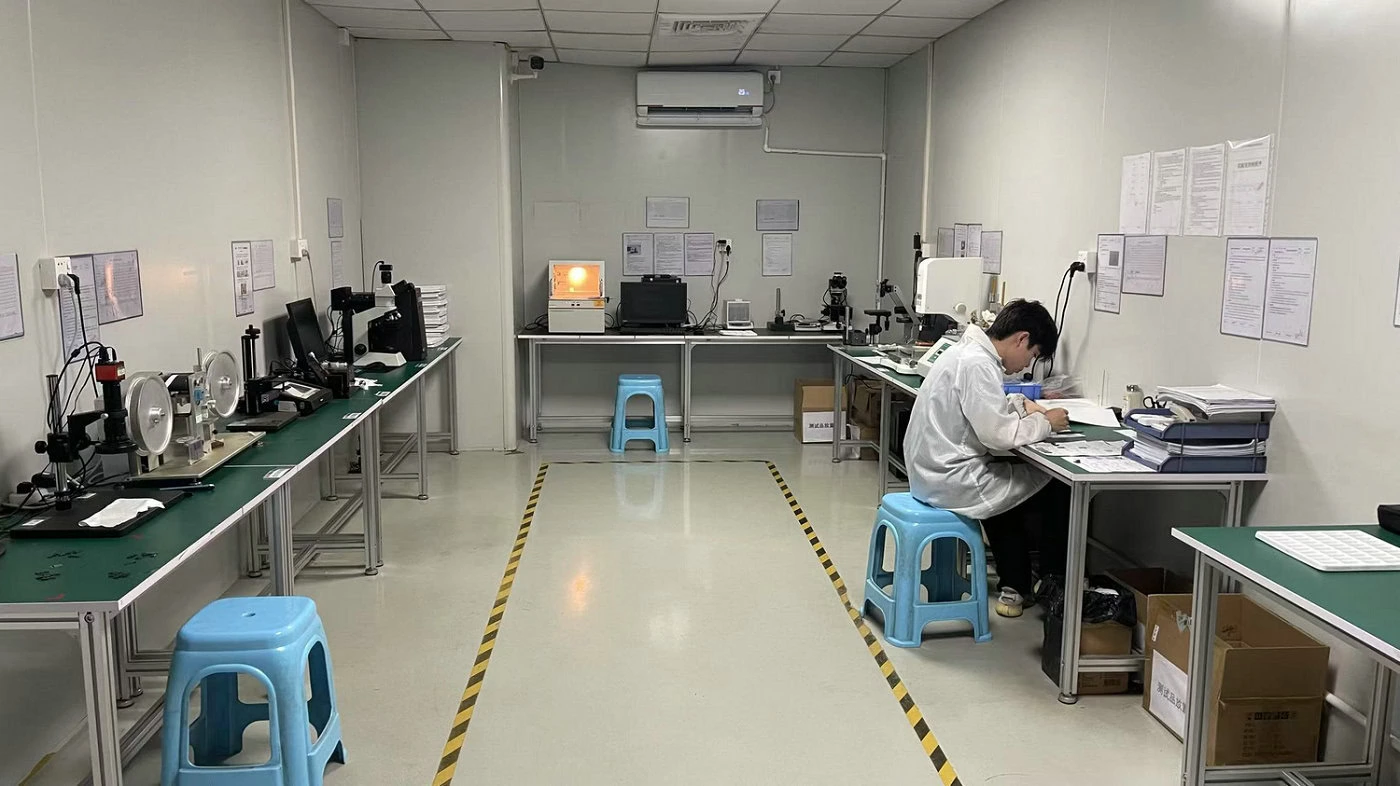
Secondary operations are not complete until the final part condition is verified. Dimensional results, surface condition, coating condition, and acceptance requirements should be checked after the confirmed final process step.
| Capability Label | Meaning | Typical Use |
|---|---|---|
| In-house | Operation can be performed within XTMIM’s confirmed internal process range. | Selected post-sintering machining, sizing-related support, surface cleaning, selected finishing steps, and in-house PVD vacuum coating for suitable projects. |
| XTMIM-supported | XTMIM can support, coordinate, and control the route when suitable. | Magnetic finishing, mechanical finishing, and selected surface-finishing requirements that need coordinated process support. |
| Partner-supported | Specialized external partner may be required. | Electroplating, electropolishing, special heat treatment, nitriding, special coating, selected testing. |
| Project-dependent | Used only when drawing, application, cost, and performance target justify it. | HIP, special hardening, joining, special coating systems, uncommon post-treatment routes. |
For projects where finishing changes appearance, coating condition, roughness, or functional dimensions, review XTMIM’s MIM inspection and testing capability and define the final acceptance condition before sample approval.
Engineering Risks When Secondary Operations Are Specified Incorrectly
Secondary operations can improve selected features, but they can also increase cost, lead time, and inspection complexity if they are specified incorrectly.
| Mistake | Why It Matters | Better Review Method |
|---|---|---|
| Specifying tight tolerance on every dimension | Increases machining, inspection, and cost without improving real function. | Separate critical dimensions from general MIM dimensions. |
| Expecting sizing to fix severe warpage | Sizing can improve selected shape issues, not repair major process instability. | Review sintering support, geometry, and shrinkage compensation. |
| Treating machining as a general correction method | Too much machining reduces the near-net-shape advantage of MIM. | Machine only functional holes, threads, datums, or mating surfaces. |
| Adding coating without checking final fit | Coating thickness may affect assembly or sliding clearance. | Define coating area, thickness, masking, and final inspection condition. |
| Polishing all surfaces without functional reason | May round edges, change appearance, and increase manual cost. | Identify cosmetic and functional surfaces separately. |
| Heat treating without distortion review | Hardness may improve, but dimensions may shift. | Define heat treatment sequence and inspection timing. |
| Ignoring final inspection after finishing | A part may pass before coating or heat treatment but fail after it. | Confirm final acceptance condition after all secondary operations. |
| Using vague surface notes | “Polish” or “finish surface” is not enough for production control. | Define roughness, appearance area, coating, cleaning, or corrosion requirement. |
What to Send for Secondary Operation Review
To review whether a MIM part can remain as-sintered or requires secondary operations, send enough information for the engineering team to evaluate both geometry and final application requirements.

Drawing & Geometry
- 2D drawing with tolerance notes
- 3D CAD model
- Critical dimensions and general dimensions
- Datum strategy and inspection method
- Functional holes, threads, mating surfaces, and sealing areas
Material & Performance
- Material grade or material family
- Hardness, strength, wear, or magnetic property requirement
- Heat treatment requirement if known
- Application environment, load, corrosion exposure, or assembly condition
Surface & Production
- Surface finish, cosmetic surface, or roughness requirement
- Coating, PVD, plating, passivation, or cleaning requirement
- Coating thickness and masking area if applicable
- Annual volume and production expectation
- Acceptance standard or inspection method
FAQs About MIM Secondary Operations
Do all MIM parts need secondary operations?
No. Many MIM parts can be used in the as-sintered condition when the design, tooling compensation, material selection, and sintering control are properly matched. Secondary operations are only used when selected features need tighter dimensions, improved surface condition, adjusted material properties, coating, or special application performance.
Should MIM parts be used as-sintered or post-processed?
MIM parts should remain as-sintered when the geometry, dimensions, surface condition, material properties, and inspection requirements are already acceptable. Post-processing should be used only for selected features that need tighter fit, better surface condition, coating, heat treatment, or project-specific performance control.
Is sizing the same as machining?
No. Sizing, coining, and dimensional calibration usually improve shape, flatness, profile, or local fit through controlled calibration or deformation. Machining removes material to create or finish holes, threads, datum surfaces, mating surfaces, or other critical features.
Is surface finishing the same as post-sintering machining?
No. Post-sintering machining controls dimensions and functional features. Surface finishing controls surface appearance, roughness, cleanliness, corrosion behavior, coating readiness, or functional surface performance.
What is the difference between MIM surface finishing and heat treatment?
Surface finishing changes the surface condition, appearance, cleanliness, roughness, corrosion behavior, or coating readiness of a MIM part. Heat treatment focuses on material performance such as hardness, strength, wear resistance, stress condition, or magnetic behavior. They may both be used on the same project, but they solve different engineering problems.
Can heat treatment be combined with the MIM sintering process?
In some cases, material properties can be influenced during the sintering cycle through atmosphere, temperature profile, cooling condition, and material-specific process control. Separate heat treatment may still be required when hardness, strength, wear resistance, magnetic behavior, or application performance cannot be achieved through the standard sintering route alone.
Are all secondary operations performed in-house by XTMIM?
No. XTMIM supports secondary operations through different routes depending on the process and project requirement. Some operations are performed in-house, some are XTMIM-supported, some may require qualified partner support, and some are reviewed case by case.
Can PVD coating be used on MIM parts?
Yes. PVD coating can be used on suitable MIM parts when wear resistance, appearance, or functional surface performance is required. Coating area, surface preparation, masking, thickness, material compatibility, and final dimension should be reviewed before production planning.
What information should I send before requesting secondary operations?
Send the 2D drawing, 3D model, material grade, critical dimensions, surface finish notes, coating or PVD requirements, hardness target, annual volume, application environment, and inspection criteria. This helps determine whether the part can remain as-sintered or needs sizing, machining, surface finishing, heat treatment, or project-dependent post-treatment.
How do secondary operations affect MIM part cost?
Secondary operations increase cost when they add fixtures, machining time, calibration tooling, manual finishing, coating, heat treatment, inspection steps, or additional handling. The cost impact is usually reasonable when post-processing is limited to critical features.
Send Your Drawing for MIM Secondary Operation Review
If your MIM part has precision holes, threads, datum surfaces, flatness requirements, hardness targets, corrosion requirements, cosmetic surfaces, PVD or coating notes, or assembly-critical features, secondary operations should be reviewed before tooling.
Send your 2D drawing, 3D model, material requirement, critical tolerances, surface finish notes, coating requirement, hardness target, annual volume, and application environment. XTMIM can help evaluate which features can remain as-sintered and which features may require sizing, post-sintering machining, surface finishing, heat treatment, or project-dependent post-treatment.
Reviewed by XTMIM Engineering Team
This content was reviewed from the perspective of MIM drawing review, feedstock-to-sintering process control, sintering shrinkage evaluation, sizing and dimensional calibration, post-sintering machining allowance, surface finishing effects, PVD and coating review, heat treatment distortion risk, datum planning, and final inspection requirements for custom MIM parts.
The content is intended to help engineers and purchasing teams understand when secondary operations are technically necessary, when as-sintered MIM is the better cost-controlled choice, and what information should be confirmed before quotation.
Technical Reference Notes
Secondary operations should be reviewed against the actual drawing, material condition, application requirement, and inspection method. Do not specify post-processing based only on a generic material name, a broad surface requirement, or a general assumption that all MIM parts need finishing.
The references below are used for engineering context. Final secondary operation requirements should be confirmed according to the customer drawing, material grade, tolerance strategy, application environment, and inspection condition.