MIM Project Resource
MIM FAQ
Common questions before starting a metal injection molding project.
Quick answer: This metal injection molding (MIM) FAQ helps engineers, sourcing teams, project managers, and supplier quality teams make better early decisions before tooling or quotation. It answers common questions about what metal injection molding is, when a part may be suitable, which design features increase risk, how material and tolerance choices affect the process, why tooling and annual volume matter, and what information should be prepared for RFQ review. Use this page as a practical first filter: read the short answers, identify the topic that matches your project risk, then move to the related checklist, RFQ guide, or drawing review path for deeper evaluation.
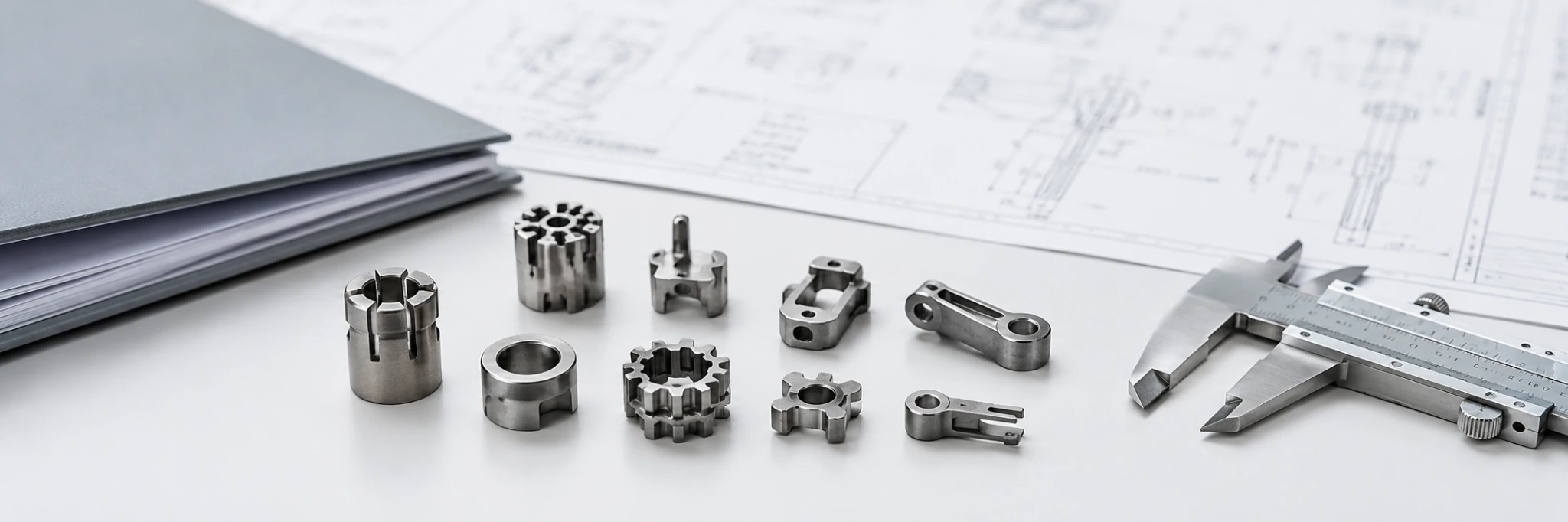
Core conclusion: A useful MIM FAQ should help users connect questions with project review actions.
How to Use This MIM FAQ
This page is designed as a practical question-and-answer resource within the MIM project resources area, not a complete process guide or material database. Use the FAQ categories below to find the right starting point, then move to the relevant XTMIM resource, checklist, or RFQ page when you need deeper review.
Basics
MIM process questions
Use this category if you need a simple explanation of metal injection molding, feedstock, debinding, sintering, and how MIM differs from plastic injection molding.
Engineering Review
Part suitability questions
Use this category if you need to judge whether a small metal part, complex geometry, or CNC-to-MIM candidate deserves a formal MIM review.
RFQ Path
Quotation and project questions
Use this category if you are preparing drawings, materials, tolerances, annual volume, secondary operations, and inspection requirements for quotation.
What this FAQ does
Short answers and routing
It gives direct engineering answers, identifies the next review question, and points users to MIM project checklists, the RFQ Preparation Guide, or drawing review.
What this FAQ does not do
No final feasibility promise
It does not replace drawing review, tooling review, material confirmation, tolerance negotiation, or inspection planning. Final feasibility still depends on the actual project inputs.
Resource boundary: The FAQ gives short engineering answers. Detailed design rules, material selection, tolerance review, supplier evaluation, and RFQ preparation should be handled through the linked XTMIM resource pages and project checklists.
MIM Basics
These questions help users understand what MIM is before moving into part design, material selection, tolerance review, or RFQ preparation.
What is metal injection molding?
Metal injection molding is a manufacturing process that combines fine metal powder with a binder system to create moldable feedstock. The feedstock is injection molded, debound to remove binder, and sintered so the metal part densifies and shrinks toward its final size. For a deeper process overview, start with the MIM process page.
How does the MIM process work in simple terms?
MIM starts with prepared feedstock, shapes the part by injection molding, removes binder during debinding, and then sinters the brown part at high temperature. The mold must account for shrinkage, and the final result depends on material, geometry, sintering support, and inspection strategy.
What is MIM feedstock?
MIM feedstock is a prepared mixture of fine metal powder and binder. It must flow during injection molding while still allowing binder removal and sintering later. Feedstock behavior affects filling, green part strength, debinding stability, shrinkage, and final quality.
Is MIM the same as plastic injection molding?
No. MIM uses injection molding concepts, but the molded green part is not the final part. It must pass through debinding and sintering before becoming a metal component. This is why MIM design review must consider shrinkage, green part handling, sintering distortion, and final inspection.
What types of parts are usually considered for MIM?
MIM is usually considered for small metal parts with complex geometry, fine features, thin sections, internal or external details, and repeat production demand. If the part is simple, very large, or low-volume, another process may be more practical.
Engineering takeaway: MIM should be reviewed as a full process chain. A part that fills in the mold still needs to survive green handling, debinding, sintering shrinkage, possible secondary operations, and final inspection.
Part Suitability and Design Questions
Part suitability should be reviewed across the full MIM process chain, not only by the CAD shape. Geometry, material, tolerance, volume, secondary operations, and inspection all affect whether a part is a good candidate.
How do I know if my part is suitable for MIM?
A part may be suitable for MIM when it is small, metal, geometrically complex, and expected to run at repeat production volume. The first screening should review part size, wall thickness, material, critical dimensions, annual volume, and secondary operations. Use the MIM suitability checklist for a more structured review.
What part size is usually better for MIM?
MIM is generally more suitable for small and medium-small precision components than for large heavy parts. Larger parts increase feedstock use, mold filling difficulty, debinding time, sintering support risk, and shrinkage control concerns.
Can MIM make thin walls and small features?
MIM can support thin walls and small features when material, geometry, filling behavior, green handling, debinding, and sintering are reviewed together. Long thin sections, isolated ribs, sharp transitions, and delicate features require careful DFM review before tooling. For broader geometry and design guidance, use the MIM Design Guide.
What design features increase MIM risk?
Higher-risk features include abrupt wall-thickness changes, long unsupported sections, deep blind holes, very thin ribs, heavy mass concentration, narrow slots, sharp internal corners, and tight datum relationships across sintered features. The MIM DFM design checklist can help organize these review points.
When should a part stay CNC machined instead of moving to MIM?
A part may stay CNC machined when volume is low, geometry is simple, the part is large, or critical CNC-style tolerances are required across many surfaces. MIM becomes more attractive when complex geometry repeats at production volume and tooling cost can be spread across the project.
Quick suitability screen: A part is usually worth a MIM review when it combines small size, complex geometry, repeat production volume, feasible material selection, realistic tolerance strategy, and clear inspection priorities. If one of these items is missing, the project may still be possible, but the RFQ should identify the missing information before tooling discussion.

Core conclusion: A MIM candidate should be reviewed across the full process chain, not only by CAD shape.
Material, Tolerance, and Secondary Operation Questions
Material choice, sintering shrinkage, tolerance strategy, and secondary operations should be reviewed together because they affect cost, performance, inspection, and production stability.
What materials can be used in MIM?
MIM can process many metal material families, but the practical choice depends on available feedstock, sintering route, performance requirements, geometry, cost target, and supplier experience. Stainless steel, low-alloy steel, and soft magnetic materials are common review areas. Start with MIM materials when the material route is unclear.
Can stainless steel parts be made by MIM?
Yes. Stainless steel is a common material family for MIM parts, but grade selection should match corrosion resistance, strength, hardness, magnetic behavior, finishing needs, and application environment. The material should be reviewed with the part geometry and process route, not only by alloy name.
Can MIM achieve tight tolerances?
MIM can meet many useful dimensional requirements, but very tight functional features may require sizing, machining, grinding, or another secondary operation. The drawing should separate critical-to-function dimensions from non-critical dimensions. Use the tolerance and shrinkage checklist for early review.
Why does sintering shrinkage matter?
Sintering shrinkage matters because the part is molded larger than its final size and then densifies during sintering. Shrinkage affects mold compensation, dimensional control, distortion risk, support strategy, and inspection planning.
When are sizing, machining, heat treatment, or surface finishing needed?
Secondary operations are needed when the as-sintered MIM part cannot meet all final functional, dimensional, mechanical, or cosmetic requirements. These operations may include sizing, machining, heat treatment, surface finishing, coating, or additional inspection depending on the drawing and application.
| Review topic | Why it matters | What to confirm before RFQ |
|---|---|---|
| Material route | Material affects feedstock availability, sintering behavior, mechanical performance, finishing options, and cost. | Target grade, performance requirement, environment, heat treatment need, and whether an alternative grade is acceptable. |
| Tolerance strategy | MIM dimensions are affected by shrinkage, geometry, datum structure, and inspection method. | Critical dimensions, non-critical dimensions, functional surfaces, datum scheme, and whether post-sintering operations are allowed. |
| Secondary operations | Machining, sizing, heat treatment, finishing, or coating may change cost, lead time, and inspection scope. | Which features truly need secondary operations and which can remain as-sintered. |
Engineering takeaway: Do not approve material, tolerance, and finishing requirements as separate decisions. In MIM, these choices interact through tooling compensation, sintering shrinkage, secondary operations, and inspection planning.
Cost, Tooling, Volume, and RFQ Questions
MIM cost and quotation quality depend on more than part weight. Tooling, annual volume, material, complexity, secondary operations, inspection scope, and RFQ completeness all affect the project review.
Why does MIM require tooling?
MIM requires tooling because feedstock is injected into a mold cavity. The tool must consider part shape, gate location, ejection, shrinkage allowance, and possible correction after sampling. Tooling is one reason MIM is usually better suited to repeat production than one-off parts.
What production volume makes MIM worth reviewing?
There is no universal volume threshold for every MIM project. The decision depends on part size, complexity, tooling cost, material, secondary operations, inspection requirements, and the current manufacturing route. Review both tooling amortization and unit cost instead of only asking for the lowest unit price. For a broader cost review, see metal injection molding cost.
What information is needed for a MIM quotation?
A useful MIM RFQ should include a 2D drawing, 3D model, material requirement, tolerance requirements, critical dimensions, annual volume, surface finishing needs, heat treatment needs, inspection requirements, and application background. The MIM RFQ Preparation Guide explains this package in more detail.
Why can two MIM supplier quotes be different?
Two quotes can differ because suppliers may make different assumptions about material, tooling scope, cavities, secondary operations, inspection level, polishing, heat treatment, packaging, yield risk, or project support. Buyers should compare what is included and excluded, not only the final price line.
How can I reduce quotation back-and-forth?
Provide complete drawings, 3D files, material expectations, annual volume, critical dimensions, functional surfaces, finishing requirements, and inspection needs early. A complete package helps the supplier review moldability, shrinkage, secondary operations, inspection scope, and quotation assumptions before tooling discussion.
RFQ mini checklist: Prepare the 2D drawing, 3D model, material or performance requirement, annual volume, critical dimensions, secondary operation needs, inspection requirements, and application background before requesting a formal MIM quotation.
Composite field scenario for engineering training
A buyer sends only a 3D model and asks for a MIM unit price. The model shows a small stainless steel part with thin ribs, two precision holes, cosmetic surfaces, and one threaded feature. Without a 2D drawing, annual volume, material grade, tolerance requirements, finishing requirement, and inspection plan, the supplier cannot know whether the holes should be molded or machined, whether the thread is formed after sintering, or whether the tooling cost can be justified by volume.
A better RFQ package includes the 2D drawing, 3D model, target material, annual volume, critical dimensions, finishing requirements, and application background. This allows the supplier to review moldability, shrinkage, secondary operations, inspection scope, and quotation assumptions before tooling discussion.

Core conclusion: MIM quotation quality depends on drawing, material, volume, tolerance, finishing, and inspection information.
Quality, Inspection, and Supplier Review Questions
Supplier evaluation should connect price with engineering review, tooling feedback, process route, inspection method, sample approval, and production handoff.
What quality checks are common for MIM parts?
Common MIM quality checks may include dimensional inspection, visual inspection, material confirmation, density-related review, hardness testing where relevant, surface condition review, and checks related to secondary operations. The exact plan depends on the drawing, material, application, and tolerance requirements.
What defects should be reviewed during MIM development?
Development review may consider short shots, cracks, green part damage, binder-related issues, sintering distortion, surface defects, dimensional variation, and problems caused by secondary operations. The main risk depends on part geometry and application requirements.
How should buyers evaluate a MIM supplier?
Buyers should look beyond unit price. Important review points include engineering support, material experience, tooling review, trial molding feedback, debinding and sintering capability, secondary operation planning, inspection method, communication quality, and RFQ scope clarity. The supplier evaluation checklist can support this review.
What should be checked before moving from sample approval to production?
Before production handoff, confirm the drawing revision, critical dimensions, sample inspection results, material condition, secondary operation scope, packaging requirements, production volume plan, and any remaining risks from tooling or process correction.
- Check whether the supplier explains material and process assumptions clearly.
- Confirm tooling review, sampling feedback, and correction responsibility.
- Review inspection methods before comparing only unit price.
- Separate sample approval requirements from production handoff requirements.
- Ask which dimensions are expected as-sintered and which may need secondary operations.
- Confirm whether quotation scope includes finishing, heat treatment, machining, packaging, and inspection.
Project Review and Next-Step Resources
Use the table below to choose the next resource based on your current question. This keeps the FAQ page concise while still giving engineering and sourcing teams a clear path to deeper project review.
| If your question is about... | Start with this XTMIM resource | Why it helps |
|---|---|---|
| Whether the part is suitable for MIM | MIM suitability checklist | Reviews geometry, part size, material, volume, and basic process fit. |
| Design risks, wall thickness, features, and DFM | MIM DFM design checklist | Helps identify geometry risks before tooling discussion. |
| Material choice and grade review | Material selection checklist | Connects material choice with performance, process, and cost factors. |
| Tolerances, shrinkage, and critical dimensions | Tolerance and shrinkage checklist | Separates as-sintered dimensions from features that may need secondary operations. |
| Supplier comparison and sourcing review | Supplier evaluation checklist | Supports quote comparison, engineering communication, and supplier risk review. |
| Inspection and quality review | MIM quality inspection checklist | Helps define inspection priorities before sample approval or production handoff. |
| RFQ package preparation | MIM RFQ Preparation Guide | Explains what project information should be prepared before quotation. |
| Direct project review | Submit Drawing for Review | Moves from general FAQ reading to drawing-based engineering review. |

Core conclusion: The next step after FAQ reading is to prepare project inputs for engineering review.
Technical Sources for MIM Process Context
The external sources below are used only for general MIM process background. They do not replace project-specific drawing review, material confirmation, tolerance agreement, inspection planning, or customer specification review.
- Metal Injection Molding Association: What is MIM? — process context for MIM feedstock, green part handling, debinding, brown part formation, and sintering.
- ASME: Metal Injection Molding or Metal Additive Manufacturing — engineering context for MIM as a process option for small, complex metal parts and process selection discussions.
Standards and Project Confirmation Note
This FAQ does not claim certification, approval, guaranteed tolerance, or fixed performance for every MIM project. Material selection, inspection standards, tolerance requirements, and quality acceptance criteria should be confirmed by the project drawing, customer specification, application environment, and agreed inspection plan.
Submit Your Drawing for MIM Review
If you are not sure whether your part is suitable for MIM, prepare the 2D drawing, 3D file, material requirement, annual volume, and critical dimensions. XTMIM can review the project from a manufacturing and RFQ perspective before tooling decisions are made.