XTMIM Factory Tour for Custom MIM Project Evaluation
XTMIM is a Dongguan-based manufacturer established in 2016, with approximately 220 employees and MIM manufacturing as a core capability for small, complex, and precision metal parts. The factory tour shows the production environment behind custom projects, including MIM/CIM molding equipment, green part handling, in-house debinding, sintering resources, engineering and tooling review, quality control, inspection, and shipment handoff. Factory evidence helps buyers evaluate manufacturing capability before RFQ, while final project feasibility still requires drawing-based DFM review.
If you are comparing suppliers, review our broader capabilities overview together with the drawing-based engineering review process. For a specific project, XTMIM still needs drawings, CAD files, material requirements, critical dimensions, surface requirements, estimated annual volume, and application background.
Quick Answer: What Manufacturing Capabilities Does XTMIM Provide?
XTMIM supports custom MIM projects from drawing review and tooling coordination through injection molding, green part handling, debinding, sintering, inspection planning, final inspection, packing, and shipment handoff. Injection molding and debinding are handled in-house. Sintering capability includes batch vacuum and continuous / belt furnace routes. Prepared feedstock is purchased as pellets rather than compounded in-house, while most mold manufacturing is coordinated with tooling partners; XTMIM supports trial molding and tool-correction review internally. The same factory environment also includes shared MIM/CIM molding and thermal-processing equipment where the process requirements are compatible.
Factory Snapshot: What Buyers Can Verify
Factory information should help buyers verify supplier reality without exposing customer projects or confidential process details. XTMIM provides general factory identity, production environment, and core manufacturing resource information for MIM-focused precision component projects.
| Factory Information | What It Shows | Why It Matters for Buyers |
|---|---|---|
| Established in 2016 | Company background | Provides operating-history context for supplier evaluation. |
| Dongguan, Guangdong, China | Manufacturing location | Helps sourcing teams understand the manufacturing base and logistics discussion point. |
| Approx. 220 employees | Factory team scale | Provides context for the engineering, production, inspection, and project-support organization. |
| Injection molding and debinding handled in-house | Core process control | Connects key MIM production stages directly with XTMIM’s factory operations. |
| Batch vacuum and continuous / belt sintering routes | Thermal-processing capability | Supports route selection according to material, geometry, production requirements, and process risk. |
| MIM/CIM shared production equipment | Manufacturing platform | Reflects the shared injection and thermal-processing equipment used where MIM and CIM project requirements are compatible. |
What XTMIM Handles In-House and What Is Coordinated
Custom MIM projects combine factory production, tooling work, material supply, engineering review, inspection, and outside specialist support. XTMIM separates these responsibilities clearly so buyers can understand which stages are handled directly in the factory and which stages are coordinated with qualified suppliers or tooling partners.
| Project Stage | XTMIM Role | How It Is Handled |
|---|---|---|
| Feedstock | Material selection and project requirement review | Prepared feedstock is purchased as pellets; feedstock compounding is not presented as an in-house process. |
| Tooling | DFM input, tooling review, trial molding, and tool-correction feedback | Most mold manufacturing is coordinated with tooling partners, while trial molding and correction review can be supported internally. |
| Injection molding | Production molding and trial molding | Handled in-house using the factory’s MIM/CIM molding equipment. |
| Green part handling | Part transfer, tray placement, and preparation for debinding | Managed as part of the factory production flow to reduce deformation, handling damage, and contamination risk. |
| Debinding | Binder removal before sintering | Handled in-house as part of the controlled production route. |
| Sintering | Thermal-processing route selection and production execution | Capability includes batch vacuum sintering and continuous / belt furnace routes. |
| Inspection and handoff | Drawing-based inspection planning, final review, packing, and shipment preparation | Integrated into project handoff; inspection depth and any specialized testing are confirmed against project requirements. |
What Buyers Can Verify at XTMIM
The factory tour connects visible production areas with the manufacturing questions that matter in custom MIM projects. Buyers can verify XTMIM’s production environment, MIM/CIM molding equipment, in-house debinding, sintering resources, tooling and engineering review, inspection areas, confidentiality practices, and shipment preparation before moving into project-specific DFM and RFQ discussion.
Real Manufacturing Facility
The tour shows production areas, part handling areas, inspection areas, and shipment preparation areas so buyers can verify that XTMIM is connected to the manufacturing work behind custom MIM projects.
Core MIM Production Flow
XTMIM’s production flow connects molding, green part handling, debinding, sintering, and post-sintering handoff. This matters because variation introduced early in the process may only become visible after thermal processing.
Tooling and Trial Support
XTMIM connects tooling review with gate position, parting line, ejection, shrinkage compensation, sintering support, trial-sample feedback, and dimensional correction.
Engineering Review Environment
Engineering review focuses on whether the part can be molded, debound, sintered, inspected, and produced repeatedly before tooling and production decisions are finalized.
Quality and Inspection Areas
The tour shows where parts are checked, measured, reviewed, and released. Final inspection supports shipment release, while process control remains important throughout molding, debinding, sintering, and post-sintering operations.
Shipment and Project Handoff
Packaging, warehousing, shipment preparation, and record control help show whether the factory can support repeat orders and production handoff.
Factory Tour Verification Checklist for MIM Buyers
When reviewing a MIM factory tour or arranging a site visit, buyers should check whether the visible factory areas match the risks of the actual part. A clean workshop photo is useful, but it should be connected to MIM process control and project communication.
- Does the factory show real molding, debinding, sintering, inspection, and handoff areas?
- Can the supplier explain how green part handling affects distortion, cracks, scratches, and sintering stability?
- Is tooling review connected with gate position, ejection, shrinkage compensation, and trial feedback?
- Are quality control points shown before final inspection, not only after production is complete?
- Can inspection resources be linked to critical dimensions, material requirements, and customer acceptance criteria?
- Does the supplier protect customer drawings, part numbers, process parameters, and shipment information?
- Is the RFQ process based on drawings, CAD files, material requirements, tolerances, and annual volume?
- Does the supplier avoid absolute claims such as guaranteed tolerance or zero defects without project review?
MIM Production Areas: Molding, Debinding and Sintering
XTMIM’s MIM manufacturing areas support the core process flow from injection molding through green part handling, debinding, sintering, post-sintering handling, and inspection handoff. Injection molding and debinding are handled in-house, while sintering capability includes batch vacuum and continuous / belt furnace routes. The same factory environment also includes shared MIM/CIM equipment where the process requirements are compatible. Project feasibility and production planning still depend on geometry, material, tooling status, inspection requirements, delivery schedule, and process risk.
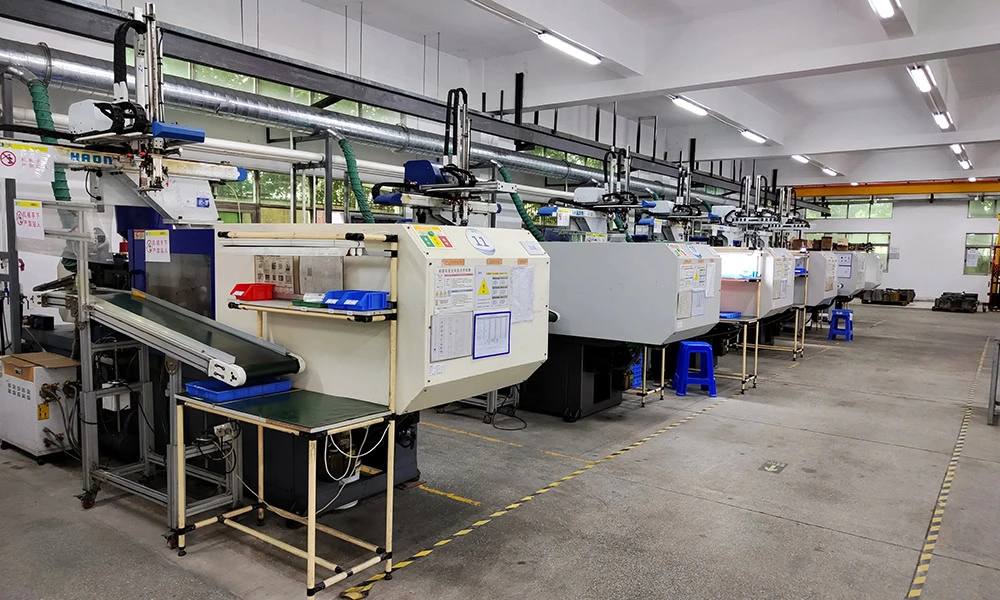
MIM/CIM Molding Area
The molding area supports the injection stage where metal powder and binder feedstock is formed into green parts. In practice, green part quality affects later process stability. Short shots, flow marks, gate-related stress, uneven packing, weak features, or handling damage may not always be fully visible at first, but they can influence debinding and sintering results.
For supplier evaluation, buyers should not only ask how many molding machines a factory has. They should ask how the supplier reviews geometry, wall thickness, gate position, ejection risk, and critical dimensions before tooling.
Green Part Handling and Tray Placement
Green part handling is often underestimated during supplier evaluation. A molded part must be transferred, placed, and prepared for later stages without deformation, scratches, contamination, or unsupported loading. For small and complex MIM parts, handling quality can influence cracks, warpage, appearance defects, and final dimensional stability.
- Can the geometry be filled consistently?
- Are thin walls, holes, slots, or undercuts at risk?
- Can the green part be handled without deformation?
- Is the gate position compatible with appearance and dimensions?
- Are critical dimensions realistic for as-sintered production?
- Do selected features require sizing or secondary operations?

Debinding Area
Debinding removes binder from the molded part before sintering. The debinding stage is a critical transition because the part is no longer only a molded shape; it must maintain structural integrity while binder is removed. Poor debinding control can contribute to cracks, deformation, contamination, or sintering instability.
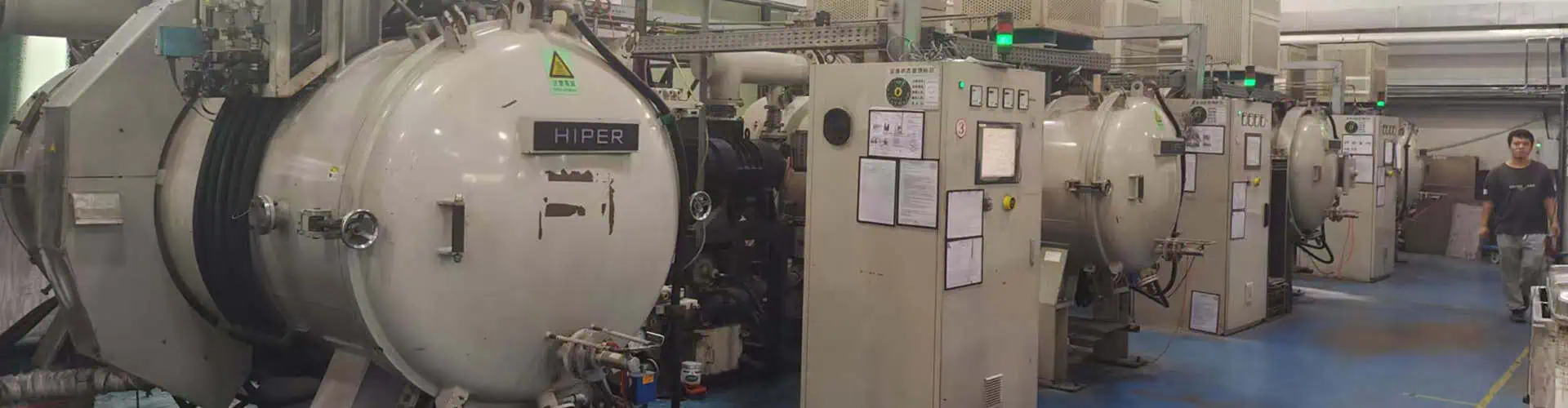
XTMIM’s debinding furnace area is included in the factory tour. Specific debinding methods, process windows, and parameters are confirmed according to project requirements and handled as project-specific process information rather than general operating data.

Sintering Area
Sintering is where the MIM part reaches final density and undergoes significant shrinkage. This stage affects dimensional stability, mechanical properties, surface condition, and distortion risk. XTMIM’s sintering resources include vacuum sintering furnaces and continuous sintering furnace lines, which support different production and process requirements.
From a design review perspective, sintering capability should be discussed together with part geometry. Thin features, unsupported flat sections, asymmetric wall thickness, sharp corners, or long slender sections may need support strategy, tooling compensation, or post-sintering correction planning.

Tooling and Engineering Review Areas
MIM factory capability depends heavily on tooling decisions. A factory tour should therefore include engineering and tooling-related areas, not only production machines. For many custom projects, early mistakes in tooling strategy can cause repeated sample correction, dimensional drift, surface defects, gate marks, or unnecessary secondary operations.
Tooling Support Connected with Shrinkage Compensation
MIM tooling must consider shrinkage behavior, gate design, ejection, parting line, feature stability, and post-sintering measurement. Most mold manufacturing is coordinated with tooling partners, while XTMIM supports engineering review, trial molding, tool-correction feedback, and production validation around the mold.
For buyers, the key issue is not only who machines the mold, but whether tooling decisions are connected with sintering shrinkage, geometry risk, trial results, and first-sample correction before production release.

Drawing-Based Engineering Review
Before tooling, the engineering team should review the drawing and identify risk areas. This review may include material suitability, wall thickness, holes, slots, undercuts, gate location, surface finish requirements, critical dimensions, and inspection method.
For sourcing teams, this matters because a low quotation without early engineering review can lead to higher cost later through repeated sample correction, tooling modification, secondary machining, or delayed production approval.
Trial Feedback Before Production Release
Trial samples should be reviewed before production release. The review should compare actual sample results against drawing requirements, inspection points, material expectations, surface condition, and assembly or function requirements.
For MIM projects, a trial is not only a visual approval step. It is a feedback loop between tooling, molding, debinding, sintering, sizing, finishing, and inspection. This is where manufacturing evidence becomes project-specific engineering judgment.
Quality Control and Inspection Environment
Factory evidence should show how quality is controlled during production, not only how parts are checked at the end. In MIM, dimensional and appearance problems may come from molding variation, green part handling, debinding instability, sintering distortion, sizing inconsistency, surface treatment, or inspection method mismatch.
In-Process Quality Control Points
For production projects, process flow documentation may include defined process characteristics, product characteristic checks, SOPs, parameter check records, in-process inspection records, and shipment records. The exact documentation level should depend on project risk, customer requirements, and production stage.
| Process Area | What Should Be Controlled | Why It Matters |
|---|---|---|
| Incoming inspection | Material identity, batch control, basic acceptance checks | Prevents material mix-up and early process risk. |
| Molding | Green part appearance, size tendency, molding stability | Influences debinding and sintering results. |
| Green part handling | Tray placement, deformation, scratches, contamination | Reduces cracking, warpage, and appearance defects. |
| Debinding | Structural integrity, appearance, process stability | Supports safe transition to sintering. |
| Sintering | Shrinkage behavior, density-related stability, distortion risk | Determines final part condition and dimensional trend. |
| Sizing / shaping | Selected dimensional correction and form stability | Helps support critical dimensions when applicable. |
| Final inspection | Drawing-based dimensional and visual checks | Confirms shipment readiness against agreed criteria. |
| Packing / shipment | Identification, quantity, protection, records | Supports customer receiving and repeat order control. |
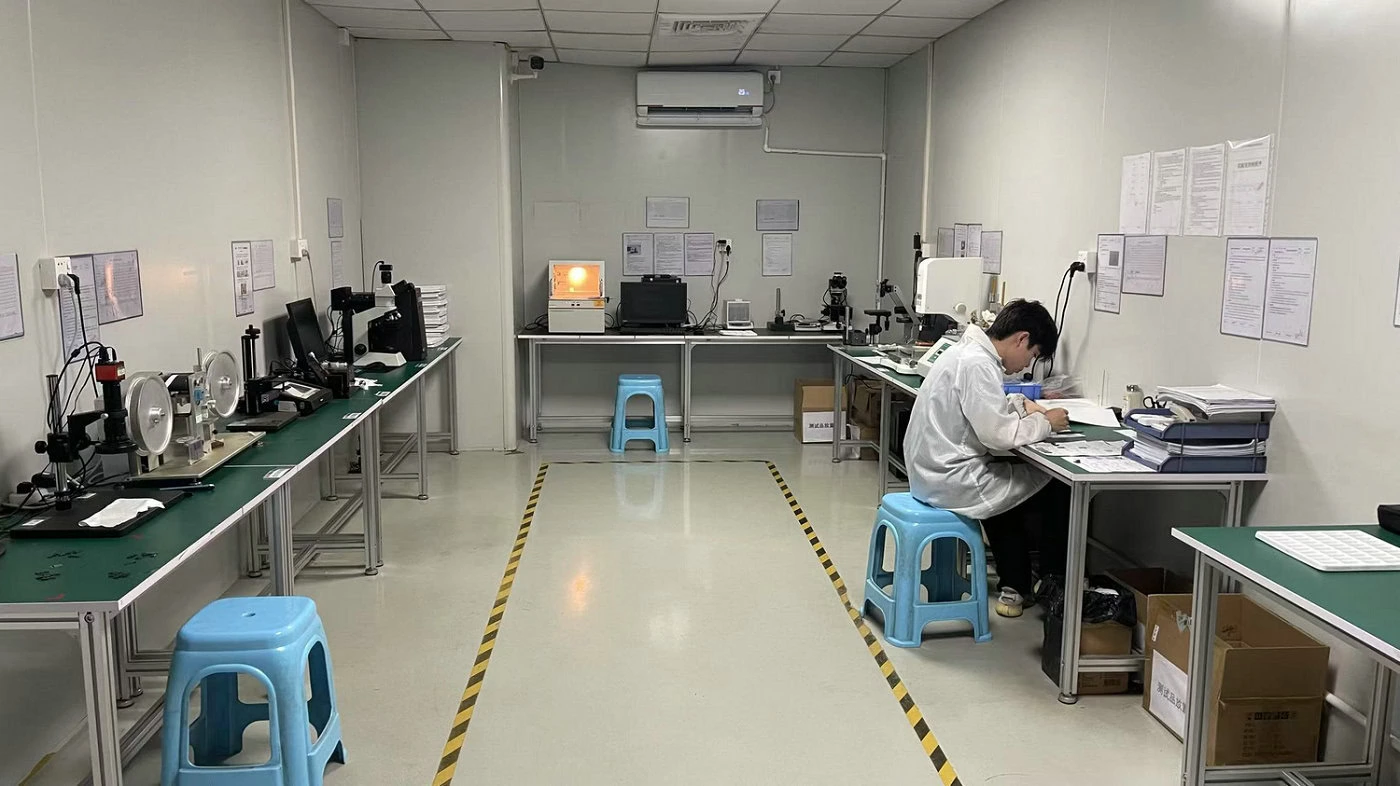
Inspection Room and Measurement Resources
Manufacturing handoff is supported by dimensional, mechanical, material, surface, and reliability testing resources. These may include CMMs, optical measuring machines, 3D scanning, hardness testing, tensile testing, metallographic equipment, roughness testing, salt spray testing, and environmental test chambers.
The inspection plan should not be assumed from a machine list. It should be confirmed according to drawing requirements, critical dimensions, material grade, surface requirements, application environment, and customer acceptance criteria.
View inspection and testing resources
Inspection Depends on Drawing Requirements
Different MIM parts require different inspection strategies. A decorative component may require surface appearance, roughness, color consistency, and wear-related checks. A structural component may require dimensional stability, hardness, tensile properties, or functional gauge inspection. A small precision component may require CMM, OMM, pin gauge, or fixture-based measurement.
The supplier evaluation question should be: can the factory connect inspection resources with the real drawing requirements?
Post-Sintering Handling, Finishing and Shipment Preparation
Post-sintering operations should be presented carefully. Some parts may require sizing, shaping, tumbling, magnetic polishing, sandblasting, laser marking, passivation, heat treatment, or other finishing support. These operations are not automatically required for every part. They should be selected according to drawing requirements, surface condition, tolerance strategy, material behavior, and customer acceptance criteria.
Post-Sintering Sizing and Shaping Support
Sizing or shaping may help selected dimensions, flatness, or form requirements after sintering. However, it should not be treated as a way to correct every design or tolerance problem. If the part is unstable after sintering, the root cause may be geometry, tooling compensation, support strategy, or inspection datum selection.
Finishing and Marking Support
Tumbling, magnetic polishing, sandblasting, laser marking, and other finishing processes may be used when required. Finishing can affect appearance, edge condition, surface roughness, and customer acceptance, so the required finish should be defined before production release.
Packing, Warehousing and Shipment Preparation
Packaging and shipment preparation should protect the parts and support receiving inspection. Packaging may need to consider part geometry, surface sensitivity, quantity, labeling, and customer handling requirements.

What We Do Not Show Publicly for Confidentiality Reasons
Customer confidentiality limits what can be shown in a factory tour. XTMIM does not disclose customer drawings, customer logos, project names, production orders, furnace recipes, process parameter screens, or confidential parts when presenting manufacturing capability.
Many MIM projects involve proprietary geometry, functional assemblies, customer-specific materials, or commercial launch schedules. Disclosing this information can create confidentiality risk for existing customers.
Virtual or On-Site Factory Visit Discussion
For qualified projects, a virtual or on-site factory visit can be discussed by appointment. Before arranging a visit, it is usually more efficient to share drawings, CAD files, material requirements, tolerance requirements, and project background so the discussion can focus on manufacturability, tooling risk, inspection planning, and production handoff. Some production areas, project records, customer parts, and process parameters may remain restricted for confidentiality and safety reasons.
Factory Tour FAQ
Can a factory tour prove that my part is suitable for MIM?
No. A factory tour can help you verify the supplier’s production environment, engineering review areas, inspection resources, and quality control setup. However, MIM suitability depends on part geometry, wall thickness, material grade, tolerance requirements, annual volume, surface expectations, and application risk. A drawing-based DFM review is still required before tooling or production planning.
What factory areas should I look for when evaluating a MIM supplier?
A useful MIM factory tour should show molding, green part handling, debinding, sintering, post-sintering handling, tooling review, engineering communication, quality control, inspection, packaging, and shipment preparation areas. These areas are more meaningful than office photos or generic finished-part displays.
Why are some drawings, part details, or equipment screens not shown clearly?
Customer drawings, part numbers, process parameters, furnace recipes, batch records, and inspection reports may contain confidential information. A professional factory tour should protect customer information while still showing the real manufacturing environment and process-related areas.
Why does this factory tour focus mainly on MIM?
This factory tour focuses mainly on MIM because MIM is XTMIM’s current core project focus. The factory’s injection, handling, debinding, and sintering environment also includes equipment that can support relevant CIM production stages. CIM still requires ceramic-specific feedstock, material control, debinding and sintering review, and application-based engineering, so CIM projects are evaluated according to their own process requirements.
What information should I send before requesting a factory-based project review?
You should send 2D drawings, 3D CAD files, material requirements, tolerance requirements, critical dimensions, surface finish expectations, estimated annual volume, and application background. If the part is currently made by CNC, casting, stamping, or another process, sharing the current manufacturing issue can also help the engineering review.
Can inspection equipment alone guarantee part quality?
No. Inspection equipment supports verification, but quality in MIM depends on process control across molding, green part handling, debinding, sintering, sizing, finishing, and final inspection. The inspection plan should be confirmed according to the drawing, material, critical dimensions, surface requirements, and customer acceptance criteria.
Can customers arrange an on-site factory visit?
Factory visits may be discussed by appointment depending on project stage, confidentiality requirements, and visitor arrangements. Before a visit, it is usually more efficient to share drawings, material requirements, and project background so the discussion can focus on manufacturability, tooling risk, inspection needs, and production planning.
Request a Factory-Based MIM Project Review
If you are evaluating a supplier for custom MIM parts, send your drawings and project information to XTMIM for an engineering-based review. This is most useful for small, complex, precision metal components where molding feasibility, sintering shrinkage, material selection, critical dimensions, surface condition, and inspection planning affect project success.
- 2D drawings and 3D CAD files
- Material grade or target performance
- Critical dimensions and tolerance requirements
- Surface finish or appearance requirements
- Estimated annual volume
- Application background and current manufacturing issue, if applicable
XTMIM’s engineering team can review process suitability, tooling risk, shrinkage compensation needs, critical dimension strategy, inspection method, production feasibility, and factory-visit discussion points before tooling or production planning.