Request a Metal Injection Molding Quote

Share your drawing, material requirements, annual volume, tolerance needs, or application details. Our engineering team will review your MIM project and respond with technical feedback or a quotation.

MIM Solution for High-Volume Small Metal Parts

High-Volume Small Metal Parts Manufacturing with MIM

For high-volume metal parts manufacturing, MIM is worth reviewing when a compact component combines stable repeat demand, useful three-dimensional geometry, defined material requirements, and a product life that can support tooling and validation.

Repeat Production

Tooling Economics

Stable Part Quality

Scalable Inspection

MIM Solution for High-Volume Small Metal Parts

High-Volume Small Metal Parts Manufacturing with MIM

Metal injection molding is worth reviewing when a compact metal component combines stable repeat demand, useful three-dimensional geometry, defined material requirements, and a product life that can support tooling and validation. The decision is not based on volume alone. Part design, tolerance strategy, secondary operations, inspection capacity, and production-release requirements must work as one manufacturing system.

XTMIM helps engineering and sourcing teams screen whether a small metal part is a strong MIM candidate, which requirements need engineering review before tooling, and what information is required to build a repeatable production route.

Repeat Production Tooling Economics Stable Part Quality Scalable Inspection
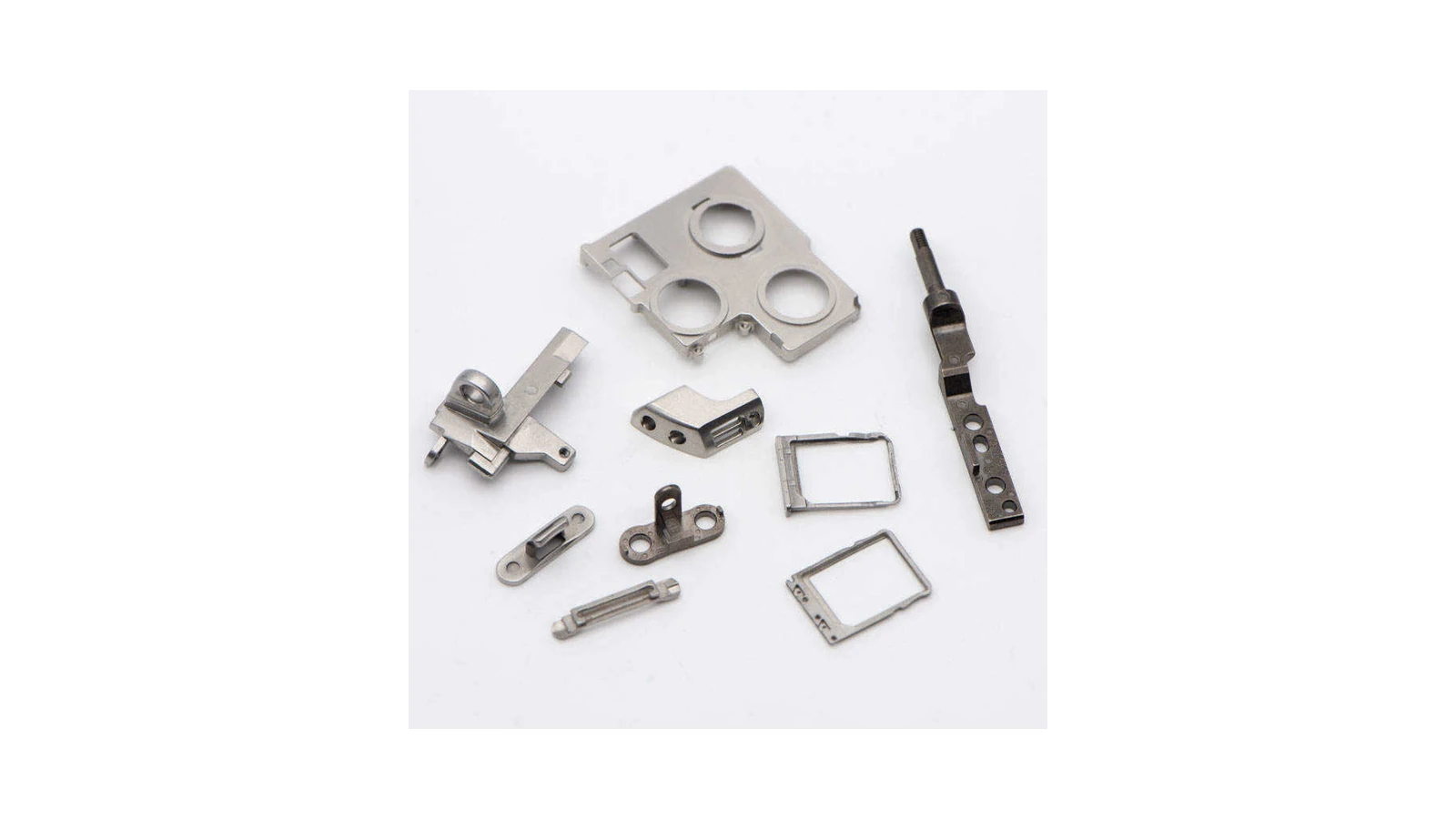
Real small MIM metal parts with compact feature-rich geometry
Best-Fit Signal Compact size + stable demand + useful geometry + defined quality requirements
Real XTMIM MIM part evidence. These small feature-rich parts illustrate the scale and geometry commonly reviewed for repeat-production MIM projects.

Quick Answer

When Does MIM Make Sense for High-Volume Small Metal Parts?

MIM is usually worth reviewing when a small metal component will be produced repeatedly over a defined project life, contains geometry that can replace several machining or assembly steps, and can use a realistic tolerance hierarchy instead of requiring machining-level precision on every surface. The project also needs an available MIM material route, a design stable enough to justify tooling, and inspection requirements that can be repeated across production batches.

High volume by itself is not enough. A large, simple plate, block, or long shaft may still fit machining, stamping, conventional powder metallurgy, casting, or another process better. MIM creates the most value when production scale and feature integration work together without making molding, debinding, sintering, finishing, or inspection unstable.

Engineering boundary: The right question is not “Can this part be molded?” It is “Can this part be tooled, validated, produced, inspected, and released repeatedly at an acceptable total manufacturing cost?”
Production-Scale Problems

Why Small Metal Parts Become Difficult to Scale

A small component may be easy to prototype but difficult to reproduce economically. Production pressure often appears through operation count, capacity, assembly complexity, and quality-control load rather than through part size alone.

01

Unit Cost Does Not Scale

Each part may still require several machining operations, manual loading, deburring, polishing, tapping, cleaning, or individual inspection. Even when demand increases, the cost structure remains tied to repeated labor and machine time.

02

Capacity Becomes a Bottleneck

Machine hours, fixtures, operators, outsourced operations, or inspection equipment can restrict output. Adding more capacity may increase coordination and variation without creating a stable production system.

03

Assembly Uses Too Many Components

A functional mechanism may depend on separate brackets, pins, retainers, inserts, or stamped details. At volume, assembly labor, tolerance stack-up, handling, and missing-component risk can become larger than the cost of any single piece.

04

Part-to-Part Variation Increases

Tool wear, multiple fixtures, manual operations, supplier handoffs, and inconsistent datum use can create variation that becomes visible only after production grows and functional assemblies are reviewed statistically.

High-Volume Fit Evaluator

Check Whether a Small Metal Part Is Ready for High-Volume MIM

A useful screening decision separates strong fit signals from conditions that still require engineering review. A poor fit should be identified before tooling—not after sample cost and schedule have already increased.

Strong Fit

Signals that normally justify a feasibility review

  • Demand is stable enough to evaluate total project volume, not only one purchase order.
  • The design is close to release and major interfaces are unlikely to change frequently.
  • Several functional features can be created in the molded geometry.
  • Only selected dimensions or surfaces require special finishing or tighter control.
  • The required alloy is available through a practical MIM feedstock route.
  • The component can be supported, handled, debound, sintered, and inspected as a repeatable part.

Needs Engineering Review

Conditions that may be feasible after design or process changes

  • Annual demand is expected to grow but the forecast and product life remain uncertain.
  • Wall thickness, local mass, long arms, broad flats, or unsupported areas may create distortion risk.
  • The drawing applies tight CNC-style tolerances to most dimensions.
  • Threads, holes, sealing faces, bearing surfaces, or cosmetic areas may need secondary operations.
  • The part is small enough that handling, fixturing, or measurement access becomes difficult.
  • Multi-cavity tooling is being considered before cavity balance and quality-control needs are understood.

Usually Poor Fit

Signals that another route may be more practical

  • Production volume is low, irregular, or dominated by frequent design revisions.
  • The component is large and simple, such as a basic plate, block, or long shaft.
  • Nearly every surface and dimension requires precision machining after sintering.
  • The material or final property requirement has no stable MIM supply or validation route.
  • There is no realistic plan to amortize tooling, trials, fixtures, and qualification work.
  • The project expects a direct process swap without DFM, shrinkage, inspection, or finishing review.

What to Send for an Initial Production Review

Provide a 2D drawing and 3D model, target alloy, estimated monthly and annual demand, expected project life, critical dimensions, surface or heat-treatment requirements, current manufacturing route, known cost or capacity concerns, and any inspection or packaging expectations. These inputs are more useful than a volume number alone.

Volume Economics

How Production Volume Changes the MIM Cost Structure

MIM shifts cost toward tooling, engineering, validation, and process setup before repeat production begins. Whether that investment is justified depends on the complete project life and the cost of the finished, accepted component—not on a universal minimum order quantity.

Tooling Must Be Amortized Across a Real Forecast

A one-time tooling quotation does not determine project economics by itself. The review should consider expected monthly demand, annual demand, product life, spare-part requirements, design maturity, mold maintenance, potential cavity count, and the probability of engineering changes.

Post-Sintering Work Can Still Control Unit Cost

If every part needs extensive machining, grinding, polishing, heat treatment, coating, or full dimensional inspection, high molding output may not translate into a low accepted-part cost. Critical operations should be identified before tooling so the MIM body and secondary route are designed together.

Cost Factor Low or Uncertain Repeat Demand Stable High-Volume Demand Engineering Question
Tooling amortization Tooling and validation create a high cost per accepted part. Investment can be distributed across the expected product life. What is the realistic total demand before design revision or end of life?
Process setup Small batches repeatedly absorb setup, scheduling, and release effort. Stable production can use repeatable batch planning and control methods. Are order patterns stable enough to support production planning?
Secondary operations Manual or precision finishing can dominate the unit cost. Operations should be limited to selected CTQ features or functional surfaces. Which features truly require machining, sizing, grinding, tapping, or finishing?
Inspection Custom checks and small-lot setup create high inspection effort. Stable gauges, sampling logic, fixtures, and CTQ plans can be developed. Can the specification be converted into a scalable inspection route?
Design change Tool rework or replacement risk remains high. Design maturity protects the value of the production tool. Are interfaces, material, critical dimensions, and assembly conditions frozen?

Technical reference: the Metal Powder Industries Federation overview of MIM describes the process as suitable for complex shapes in large quantities and notes that high production rates may be supported through multi-cavity tooling. Actual cavity strategy and economics still require project-specific review.

Related decision support: review tooling amortization by annual volume when evaluating the relationship between tooling investment, expected demand, and unit-price structure.

Part Design Boundaries

What Part Characteristics Support High-Volume MIM?

The strongest candidates are not simply “small parts.” They combine a manageable part envelope with useful feature integration, balanced geometry, and a clear distinction between general dimensions and critical interfaces.

Compact Part Envelope

The part must be practical to mold, eject, handle, load, debind, sinter, unload, and inspect in production. Small diameter or thin-section parts also need enough stiffness and measurement access for repeat handling.

Useful Feature Integration

Holes, slots, bosses, ribs, locking details, curved surfaces, locating features, and local functional geometry can improve MIM value when they reduce separate operations or assembly without creating excessive tooling risk.

Balanced Geometry

Wall transitions, local mass, unsupported spans, long arms, broad flats, and support surfaces influence filling, binder removal, shrinkage, distortion, and fixture needs. A visually compact part can still have an unstable mass distribution.

Selective Critical Features

Assembly datums, sealing faces, bearing interfaces, locating holes, gear relationships, and motion surfaces should be identified as CTQ. General geometry should not inherit unnecessary precision from a prototype or CNC drawing.

Choose the correct review path: Detailed feature-density and tooling-direction questions belong on the Complex Geometry Metal Parts page. Fine holes, thin ribs, handling limits, and inspection access at miniature scale belong on the Miniaturized Metal Components page. Existing machined parts that need process conversion belong on the CNC-to-MIM Conversion page.

High-Volume Production System

Building a Repeatable Production Route for Small MIM Parts

Output is not created by molding alone. Tooling, injection, debinding, sintering, secondary operations, inspection, and release criteria must be connected so that production can repeat the approved part—not only make an acceptable sample once.

01

Tooling and Cavity Planning

Review gate location, venting, ejection, cavity balance, wear areas, maintenance access, and whether cavity count is compatible with stable filling and inspection capacity.

02

Injection Stability

Control filling behavior, short shots, weld lines, flash, green-part weight, ejection condition, and handling damage before downstream variation is locked into the batch.

03

Debinding and Sintering Load Planning

Connect material, section thickness, loading density, support method, furnace route, shrinkage behavior, and distortion-sensitive orientation.

04

Secondary Operation Control

Apply sizing, machining, heat treatment, surface finishing, or PVD only where the specification and function justify the added cost and variation.

05

Batch Release

Define dimensional, visual, material, surface, and functional checks around the approved drawing and CTQ plan before production volume increases.

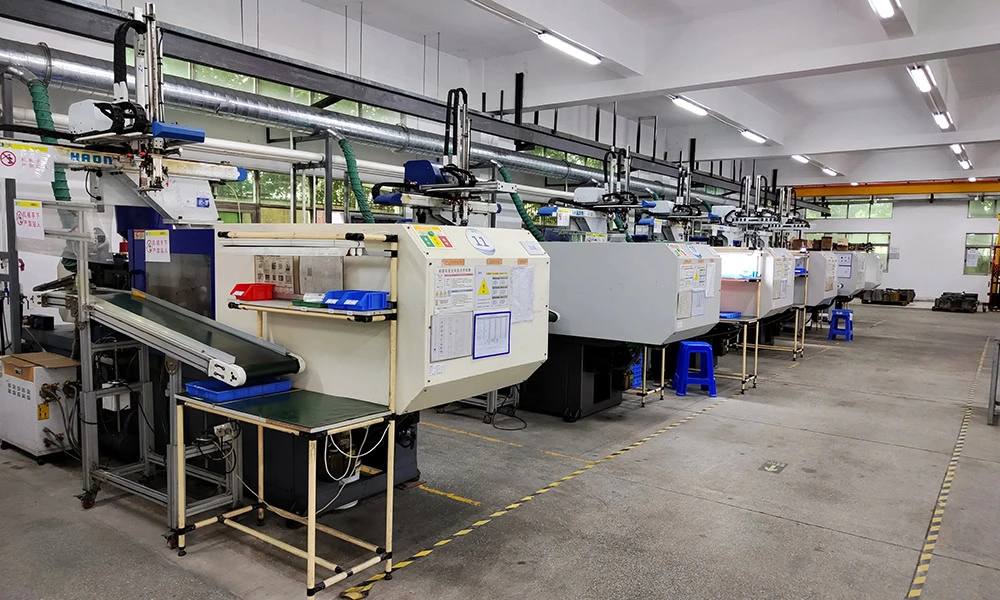
Real XTMIM metal injection molding workshop for repeat small-part production
Real XTMIM injection molding workshop. Production planning must connect machine capacity, mold condition, process settings, green-part handling, and downstream release requirements.
!

Multi-cavity tooling is not an automatic cost solution

More cavities can increase output, but they can also increase cavity-balance, wear, maintenance, dimensional-correlation, sampling, and inspection demands. Cavity count should follow demonstrated process capability and production economics, not a volume target in isolation.

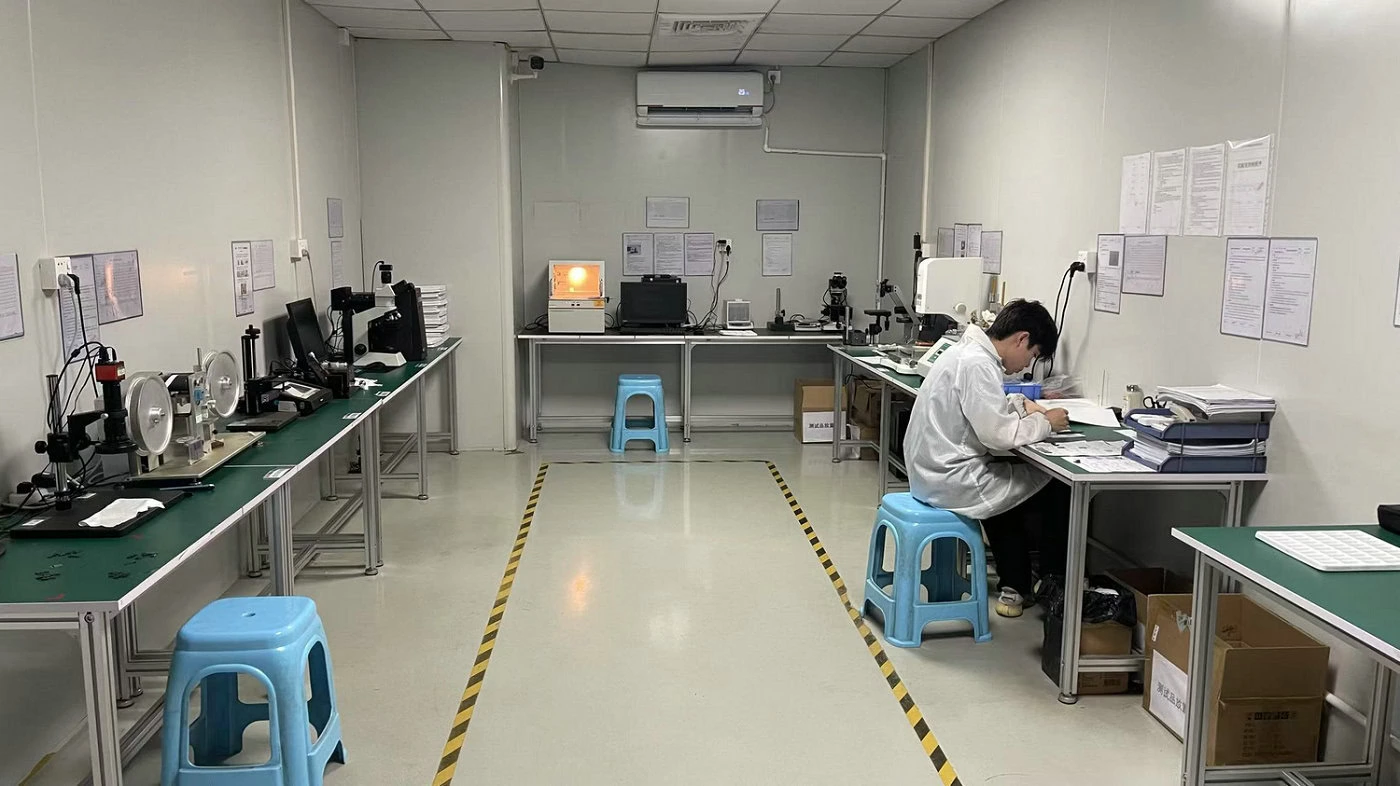
Real XTMIM inspection workshop for dimensional and quality review of MIM parts
Real XTMIM inspection workshop. High-volume acceptance requires CTQ priorities, suitable measurement access, repeatable methods, and a practical batch-release plan.

Tolerance and Inspection at Scale

Plan Tolerances Around Function, Process, and Production Inspection

High-volume precision does not mean applying the tightest possible tolerance to every dimension. A production drawing should distinguish general as-sintered geometry from functional interfaces that need tighter process control, sizing, machining, grinding, reaming, or dedicated inspection.

The inspection method must also scale. A measurement that works for a few development samples may be too slow, destructive, inaccessible, or operator-dependent for repeat production. CTQ definition, datum strategy, gauge access, sampling logic, material verification, and cosmetic acceptance should be reviewed before the production tool is released.

Review MIM tolerance planning →
Review inspection and testing capability →
Feature Type Typical Control Route Main Production Risk Review Before Tooling
General external geometry Mold compensation, process stability, sintering control Global shrinkage, local distortion, datum drift Part orientation, support, measurement datum, drawing tolerance logic
Locating or assembly surface Process control, sizing, or selective machining Assembly shift or stack-up error Functional datum, mating part condition, gauge method
Functional hole or bore As-formed review, reaming, drilling, or machining where required Diameter, roundness, position, access Pin or shaft fit, tool access, inspection access
Cosmetic surface Mold surface, handling control, finishing, visual criteria Flow marks, contact marks, color or texture variation Viewing zone, acceptable defect limit, finishing route
Motion, sealing, or wear interface CTQ control plus material, heat-treatment, or secondary-finishing review Functional failure despite acceptable general dimensions Load, wear pair, hardness, surface condition, mating geometry

Materials and Secondary Operations

Material and Finishing Decisions for High-Volume Small Parts

Material selection should start from function and verification requirements, then be checked against feedstock availability, molding and sintering behavior, heat-treatment needs, corrosion or wear conditions, and the inspection plan.

Strength and Wear

Low-alloy steels, precipitation-hardening stainless steels, martensitic stainless steels, and other wear-oriented materials may be reviewed when load, hardness, contact stress, and heat treatment are defined.

Corrosion Resistance

304, 316L, 17-4 PH, and other stainless routes should be selected around environment, strength, surface condition, heat treatment, and the difference between alloy name and final MIM part condition.

Magnetic or Functional Performance

Soft-magnetic, controlled-expansion, nickel, cobalt, copper, or other special materials may require application-specific property, density, heat-treatment, surface, or dimensional validation.

Finishing and Post-Processing

Sizing, machining, heat treatment, polishing, passivation, coating, PVD, and other operations must be included in the production economics and batch-control plan rather than added after tooling.

Use the MIM Material Selection Guide to define the alloy review path and the Secondary Operations page to separate as-sintered requirements from post-sintering work.

Representative Part Families

Small Metal Part Families Commonly Reviewed for High-Volume MIM

These categories are representative screening examples, not guaranteed process approvals. Final suitability depends on drawing geometry, material, tolerance, finishing, inspection, and project volume.

Levers and Latches

Compact actuation parts may combine pivots, stops, engagement features, contact faces, and assembly geometry that would otherwise require several operations or components.

Brackets and Frames

Small supports, carriers, and frames may integrate mounting points, ribs, pockets, alignment features, and local strength without a separate welded or fastened assembly.

Gears and Motion Components

Repeated motion parts require review of tooth or profile definition, datum relationships, material and heat treatment, wear interfaces, secondary finishing, and inspection method.

Connector and Locking Hardware

Compact locking, retention, connector, and engagement parts may benefit from near-net-shape geometry when strength, wear, edge condition, and assembly fit are controlled.

Housings and Structural Inserts

Small housings, carriers, inserts, and internal frames may combine several functional features, but broad flats, thin sections, cosmetic surfaces, and assembly datums require specific review.

Tool and Mechanism Components

Small industrial parts may require strength, hardness, corrosion resistance, dimensional repeatability, and a predictable contact surface after heat treatment or finishing.

Project Development Path

From Feasibility Review to Stable Volume Production

A high-volume project should move through controlled decisions. Each stage must produce enough evidence for the next step; a successful sample is not the same as a released production process.

Drawing and Demand Review

Confirm function, geometry, current process, material, forecast, project life, cost pressure, CTQ dimensions, and acceptance needs.

DFM and Material Confirmation

Review molding direction, wall and mass balance, gate and ejection risk, shrinkage, support, feedstock route, finishing, and inspection access.

Tooling Development

Coordinate mold design review, tool build, mold arrival, trial preparation, cavity strategy, maintenance needs, and correction priorities.

T1 / T2 / T3 Sampling

Use trial stages to identify filling, ejection, green-part, debinding, sintering, dimensional, cosmetic, and secondary-operation issues.

Dimensional and Functional Validation

Compare samples with the approved drawing, CTQ plan, material condition, assembly, surface, and functional requirements.

Production Release and Batch Control

Define the approved process route, inspection method, release criteria, records, maintenance feedback, and change-control expectations.

MIM tooling engineering review using part drawings before high-volume production
Engineering review before tooling. Demand, geometry, material, CTQ dimensions, shrinkage-sensitive features, finishing, and inspection requirements should be resolved before production assumptions are locked.

Process Selection Boundary

When MIM Is Better—and When Another Process May Be Better

The best production process is the one that matches geometry, material, volume, change frequency, tolerance structure, finishing, inspection, and total accepted-part cost. High-volume demand does not make MIM the automatic answer.

Manufacturing Situation Likely Route to Review Why
Low volume, prototypes, or frequent design changes CNC machining or metal 3D printing Tool-free or lower-tooling routes preserve flexibility before the design stabilizes.
High volume with mainly flat sheet geometry Stamping Progressive forming may be more efficient when the design follows sheet-metal geometry and directional forming limits.
Larger components with casting-friendly geometry Die casting or investment casting Part size, alloy route, wall structure, tooling economics, and finishing needs may align better with casting.
Simple axis-aligned powder-metal geometry Conventional powder metallurgy Compaction may be economical when geometry follows pressing direction and does not need injection-molded feature freedom.
Small, feature-rich, repeat-demand metal component Metal injection molding Tooling-based production and near-net-shape feature integration may reduce repeated machining or assembly.
MIM body with selected precision interfaces MIM plus secondary machining or sizing The molded body carries general geometry while selected CTQ surfaces receive additional control.

FAQ

High-Volume Small Metal Parts Manufacturing FAQs

What production volume makes MIM worth reviewing?
There is no universal production-volume threshold that makes MIM economical. The review should consider tooling and validation cost, monthly and annual demand, expected project life, design maturity, cavity strategy, material, secondary operations, inspection, and the cost of the accepted finished part. A stable multi-year forecast can be more meaningful than one large purchase order.
Are all small metal parts suitable for high-volume MIM?
No. A part can be small but still be a poor MIM candidate if it is geometrically simple, produced irregularly, likely to change, unavailable in a suitable feedstock, difficult to support during sintering, or dependent on precision machining across nearly every surface. Small size must be reviewed together with geometry, volume, material, tolerance, finishing, and inspection.
Can MIM hold tight tolerances in mass production?
MIM can support controlled dimensions, but the tolerance plan should distinguish general as-sintered geometry from CTQ interfaces. Shrinkage, part geometry, datum strategy, cavity correlation, support, material, furnace loading, and inspection method all affect production consistency. Selected holes, faces, fits, or wear surfaces may still require sizing or secondary machining.
Can multi-cavity tooling reduce unit cost?
Multi-cavity tooling can increase output and improve tooling amortization when filling, cavity balance, wear, ejection, dimensional correlation, maintenance, and inspection remain stable. It can also increase tool complexity and quality-control demands. Cavity count should be selected from project economics and demonstrated process capability rather than volume alone.
Which materials are suitable for high-volume MIM parts?
Common MIM routes include stainless steels, low-alloy steels, soft-magnetic materials, and selected special alloys. Suitability depends on available feedstock, required strength, hardness, corrosion or wear environment, magnetic or thermal behavior, heat treatment, surface condition, density expectations, and the inspection method. The alloy name alone is not enough to approve a project.
What information is needed for a production feasibility review?
Send the 2D drawing, 3D model, material requirement, monthly and annual demand, expected project life, critical dimensions, surface and heat-treatment requirements, current manufacturing route, current cost or capacity concern, functional or assembly conditions, and inspection or packaging expectations. Clear CTQ and forecast information makes the initial review more useful.

Next Step

Send a High-Volume Small Metal Part for Production Feasibility Review

Share the drawing, model, material, production forecast, CTQ dimensions, finishing, functional requirements, and current manufacturing concern. XTMIM can screen whether the part is a strong MIM candidate, needs design or tolerance changes, should use a hybrid MIM-plus-machining route, or is better suited to another process.

  • 2D drawing and 3D model
  • Monthly and annual demand
  • Expected project life
  • Material and condition
  • CTQ dimensions and datums
  • Surface and heat treatment
  • Current process or cost pressure
  • Inspection and packaging needs