Metal Injection Molding Resources for Part Design, Process Selection, and Project Review
Use this metal injection molding resources hub to choose the right next step before tooling, quotation, or production planning. Engineers, buyers, and OEM project teams can quickly move to MIM process learning, part suitability checks, material and tolerance review, supplier evaluation, RFQ preparation, or drawing-based engineering review.
In practice, MIM projects are often delayed when geometry, material, tolerance, sintering shrinkage, secondary operations, and inspection requirements are reviewed too late. This page helps you decide what to read first, which checklist to use, and what information to prepare before requesting a quote or submitting drawings.
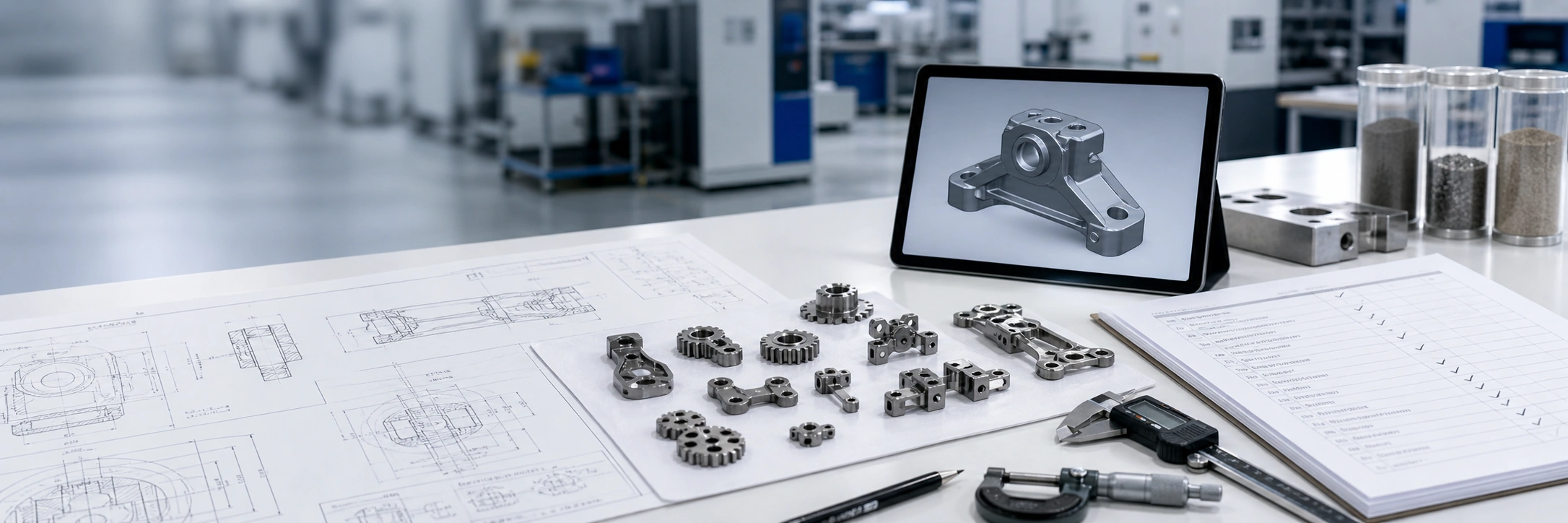
Choose the Right MIM Resource for Your Project Stage
Not every visitor needs the same resource. A user learning the process needs a different path from a buyer comparing suppliers or an engineer with drawings ready for manufacturability review. Start with the resource group that matches your current decision.

Core conclusion: A resources page should reduce decision friction. Users should be able to choose the next resource according to their stage: learning, suitability checking, technical validation, or project submission.
Learn MIM Technology
Start here if you need to understand how metal injection molding works before comparing it with CNC machining, casting, stamping, PM, or other manufacturing routes.
Check Part Suitability
Start here if you already have a part concept, drawing, or application requirement and need to judge whether MIM is suitable before tooling or quotation.
Review Technical Proof
Start here if you need to evaluate manufacturing experience, material references, project examples, or technical evidence before selecting a MIM supplier.
Start a MIM Project
Start here if you are preparing for quotation, supplier communication, OEM / ODM project discussion, or drawing-based engineering review.
Project Checklists & Engineering Review
MIM is not selected only by material name, part size, or target cost. Before tooling, the practical question is whether the part geometry, wall thickness, feature complexity, gate location, tolerance targets, shrinkage behavior, secondary operations, and inspection method can work together in a stable production route.
The checklists below are intended to make early review more structured. They help engineers and sourcing teams identify missing information before quotation and reduce the risk of discovering major design or tolerance problems after tooling has already started.
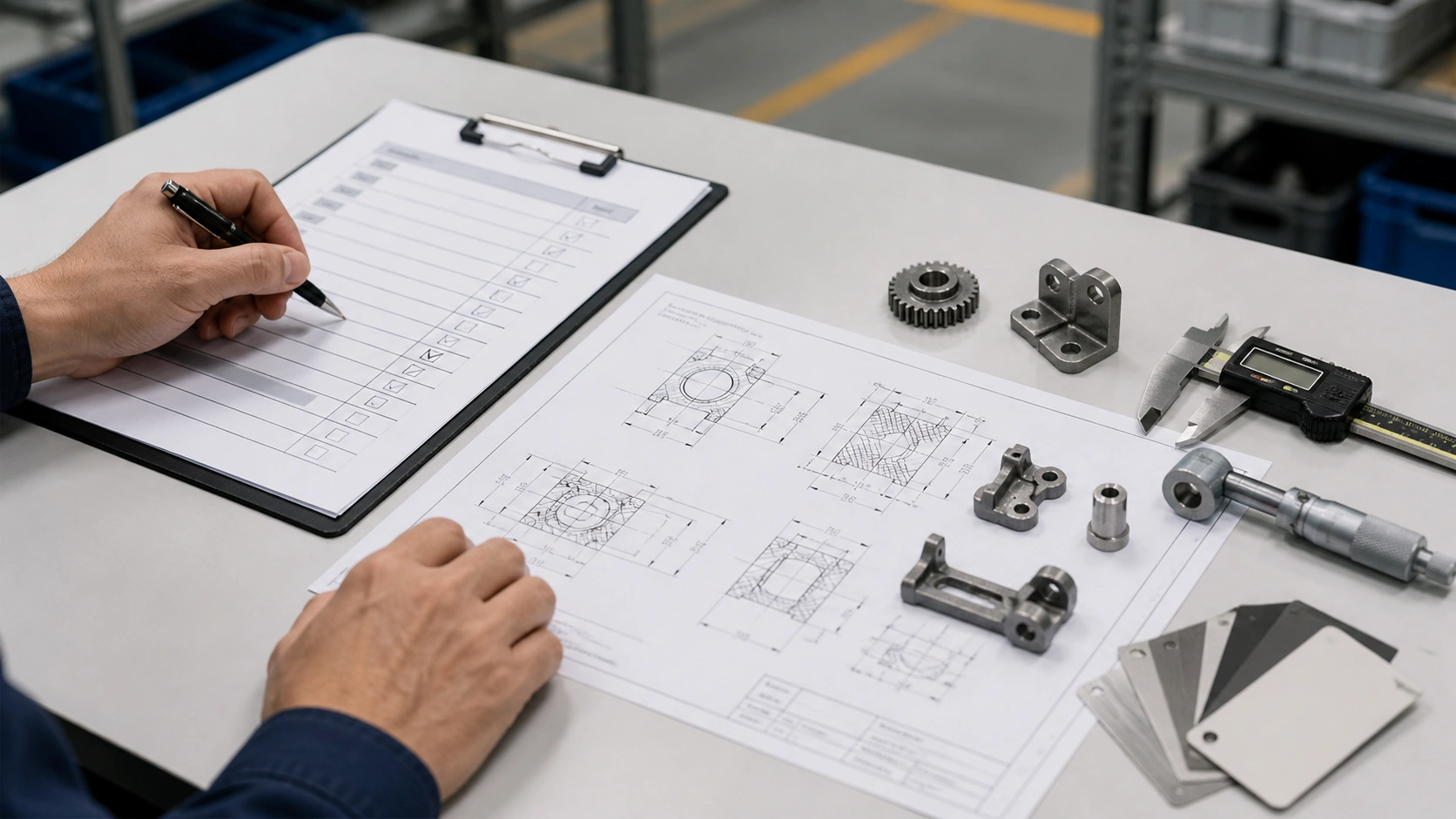
Core conclusion: A MIM project checklist is not a formality. It helps identify geometry, material, tolerance, shrinkage, and supplier capability risks before tooling begins.
MIM Project Checklists
Use the MIM Project Checklists hub when you need a structured review path before starting a metal injection molding project. It connects suitability, material selection, tolerance planning, shrinkage risk, secondary operations, and supplier evaluation into one practical decision flow.
Best for: project managers, sourcing teams, product development engineers, and OEM customers preparing early project information.
MIM Suitability Checklist
Use this checklist to judge whether a small, complex metal part is a good candidate for metal injection molding. The review should include part geometry, wall thickness, weight, feature complexity, material requirement, annual volume, tolerance expectations, and secondary operation needs.
Best for: design engineers and product teams comparing MIM with CNC machining, die casting, investment casting, stamping, or powder metallurgy.
Material Selection Checklist
Material selection affects corrosion resistance, hardness, strength, wear behavior, magnetic performance, heat treatment response, and cost. This checklist helps users prepare material requirements before engineering review or RFQ.
Best for: engineers comparing stainless steels, low alloy steels, soft magnetic alloys, titanium alloys, controlled expansion alloys, or other MIM material families.
Tolerance & Shrinkage Checklist
MIM parts shrink during sintering, and not every dimension carries the same risk. This checklist helps users identify critical dimensions, thin walls, distortion-sensitive features, datum requirements, inspection points, and possible secondary machining needs.
Best for: mechanical engineers, quality engineers, and project teams reviewing tight tolerance areas before tooling.
Supplier Evaluation Checklist
A MIM supplier should be evaluated not only by price, but also by engineering review capability, tooling compensation experience, material support, process control, inspection methods, and communication quality.
Best for: sourcing managers, supplier quality engineers, and OEM / ODM decision makers comparing MIM suppliers.
Which Checklist Should You Use First?
Choose the checklist according to your current risk: part feasibility, material selection, tolerance control, supplier evaluation, or RFQ preparation.
Why Early Checklist Review Matters
| Review Point | Engineering Finding | Better Action Before Tooling |
|---|---|---|
| What problem occurred | A small metal bracket looked suitable for MIM, but two thin arms and a tight hole-to-hole tolerance created shrinkage and distortion risk. | Flag critical dimensions before tooling and define which features require direct MIM control and which may need secondary machining. |
| Why it happened | The initial RFQ focused on material and price, while wall thickness transition, datum strategy, and sintering support were not reviewed. | Use the suitability and tolerance checklist before quotation, not after tool design begins. |
| Real system cause | The part was treated as a purchasing item instead of a process chain involving feedstock flow, green part handling, debinding, sintering shrinkage, and inspection. | Review geometry, material, shrinkage, tolerance, secondary operations, and inspection together. |
| How it was corrected | The team adjusted tolerance classification, confirmed functional datums, and separated cosmetic surfaces from critical fit dimensions. | Send 2D drawings, 3D files, material requirement, tolerance targets, and application background for early review. |
| How to prevent recurrence | Use a structured checklist before RFQ and confirm whether the part is a MIM candidate before committing to tooling cost. | Start with the MIM Suitability Checklist and Tolerance & Shrinkage Checklist, then submit drawings for engineering review. |
Learning & MIM Articles
Use this section if you are still learning how MIM works, comparing manufacturing routes, or building technical understanding before project review. The goal is not to read every article, but to understand enough about the MIM process chain to ask better project questions.
For a full process overview, start with the Metal Injection Molding page. For shorter answers, use the FAQ and technology article paths below.
MIM Blog
The MIM Blog includes general articles, technical explanations, application discussions, and project-oriented guidance for users who want to understand metal injection molding from different angles.
MIM Drawing & DFM Questions
MIM Drawing & DFM Questions answers common design-for-manufacturing questions before a metal injection molding project moves into tooling. Articles in this category discuss part geometry, wall thickness, holes, slots, undercuts, ribs, threads, tolerances, critical dimensions, shrinkage allowance, secondary machining, and drawing preparation for MIM quotation.
Industry Insights
Industry Insights cover MIM applications, manufacturing trends, industry-specific part requirements, supply chain considerations, and process selection topics for different markets.
MIM FAQ
The MIM FAQ gives quick answers to common questions about part suitability, materials, tolerance, tooling, cost drivers, production volume, surface finish, secondary operations, and RFQ preparation.

Proof, Data & Technical References
Before selecting a MIM supplier, users often need more than a general explanation of the process. They need evidence that connects part geometry, material behavior, tooling compensation, sintering shrinkage, inspection strategy, and production feasibility.
This section helps engineering and sourcing teams review whether MIM is relevant to their application and whether a supplier can discuss manufacturing risks behind small, complex, high-density metal parts.
Core conclusion: Case studies, material references, and white papers should support supplier evaluation. They should not be treated as decorative content or generic marketing proof.
Case Studies
Case studies should show how MIM is applied to real engineering problems: part geometry, application requirements, material selection, tooling or sintering risk, inspection focus, and manufacturing outcome.
Project Gallery
The Project Gallery provides visual references for common MIM part types, structural features, application categories, and material families.
View Project Gallery
MIM Material Property Reference
The MIM Material Property Reference provides quick guidance for corrosion resistance, strength, hardness, density, magnetic behavior, heat treatment response, and application suitability. It should be used as a starting point, not as a substitute for final material specification.
White Papers
White Papers are intended for deeper technical references on MIM process selection, design review, material selection, tolerance planning, quality control, and manufacturing risk evaluation.
Use Standards as Reference Points, Not as a Substitute for Project Review
MIM material and design decisions should be checked against the actual drawing, alloy requirement, heat treatment condition, tolerance class, inspection plan, and application environment. Industry references such as MPIF Standard 35-MIM and MIMA design resources can help engineers discuss MIM materials and design expectations, but final requirements should be confirmed through the project specification and supplier engineering review.
Final acceptance should follow the approved drawing, purchase specification, inspection plan, approved samples, and supplier agreement rather than a general resource page alone.
Publication and project teams should verify the latest edition and applicability of any formal standard before using it as a contract, drawing, or inspection requirement.
Start a MIM Project with the Right Technical Information
A useful MIM inquiry usually requires more than a part name or a target price. The more complete the technical information, the easier it is to review manufacturability, material suitability, tolerance risk, tooling requirements, secondary operations, inspection needs, and production feasibility.
Use the following project-start resources according to your current readiness. If the drawing is not final, you can still send the current version with known material, tolerance, volume, and application requirements for early feasibility review.

Core conclusion: A high-quality MIM inquiry is not only a price request. It should provide enough engineering information to review manufacturability, material suitability, tolerance risk, and production feasibility.
RFQ Preparation Guide
Use the RFQ Preparation Guide before requesting a quote. It explains what information helps the engineering team review a MIM project more accurately.
Submit Drawing for Review
Use this path if you already have drawings and want early engineering feedback before tooling or quotation. A drawing-based review can help identify MIM suitability, geometry risks, material concerns, tolerance limitations, shrinkage sensitivity, and possible secondary operation needs.
Request a Quote
Use this path when your project requirements are clear enough for quotation. It is suitable for projects with defined drawings, materials, quantities, tolerances, surface finish requirements, and production expectations.
OEM / ODM Project Inquiry
Use this path for custom MIM development projects, long-term production planning, OEM / ODM component programs, or early-stage manufacturing feasibility discussions.
Useful Information to Prepare Before Review
Before a MIM supplier can give meaningful feedback, the engineering team needs to understand both the part and its application. The following information helps reduce guesswork during early review.
- 2D drawings
- 3D CAD files
- Material requirements
- Tolerance targets
- Surface finish requirements
- Heat treatment or secondary operation needs
- Estimated annual volume
- Application environment
- Current manufacturing method if replacing CNC, casting, die casting, stamping, or PM
- Quality or inspection requirements
Suggested Reading Paths for Common MIM Questions
Use this MIM resource selection table to choose the next page by project need. It helps avoid the common mistake of reading broad MIM content when the real issue is material selection, tolerance risk, supplier evaluation, or RFQ readiness.
| If You Want To... | Recommended Path |
|---|---|
| Understand MIM from the beginning | MIM FAQ → Technology Articles → Metal Injection Molding Overview |
| Check whether your part fits MIM | MIM Suitability Checklist → Tolerance & Shrinkage Checklist → Submit Drawing for Review |
| Select a suitable material | Material Selection Checklist → MIM Material Property Reference |
| Compare suppliers | Supplier Evaluation Checklist → Case Studies |
| Prepare quotation information | RFQ Preparation Guide → Request a Quote |
| Start a custom OEM / ODM project | OEM / ODM Project Inquiry → Submit Drawing for Review |
| Review engineering proof | Case Studies → Project Gallery → White Papers |
| Check tolerance or shrinkage risk | Tolerance & Shrinkage Checklist → Submit Drawing for Review |
Need Engineering Review Before Tooling?
If your part includes thin walls, small holes, undercuts, complex geometry, tight tolerance areas, sintering distortion risk, or uncertain material requirements, early engineering review is more useful than waiting until tooling has started.
XTMIM can review whether the part is a suitable MIM candidate and identify early risks related to geometry, material, tooling compensation, shrinkage, sintering distortion, secondary machining, and inspection. This does not replace final design approval, but it helps clarify what should be checked before tooling, trial production, or volume production.
- Geometry suitability
- Material suitability
- Feedstock and molding risk
- Debinding and sintering risk
- Shrinkage and distortion sensitivity
- Tolerance and secondary machining needs
- Inspection and quality control requirements
- Cost and production feasibility
MIM Resources FAQ
These answers help users choose the right resource before moving into project review or RFQ preparation.
What MIM resource should I read first?
If you are new to metal injection molding, start with the MIM FAQ and Technology Articles. If you already have a drawing or part concept, start with the MIM Suitability Checklist or Submit Drawing for Review.
How do I know if my part is suitable for MIM?
A part is usually worth reviewing for MIM when it is small, complex, difficult to machine economically, and expected to run at a meaningful production volume. Key review points include geometry, wall thickness, material, critical tolerances, sintering shrinkage risk, secondary operations, and inspection requirements. Start with the MIM Suitability Checklist before requesting a quote.
What information is needed for a MIM quote?
A useful MIM quote usually requires 2D drawings, 3D CAD files, material requirements, tolerance targets, surface finish needs, heat treatment or secondary operation requirements, estimated annual volume, application environment, and any current manufacturing method. If some information is not final, send the current version and clarify what is still open for engineering review.
Do I need a drawing before contacting XTMIM?
A drawing is not always required for early discussion, but it is strongly recommended for accurate manufacturability review and quotation. If you do not have a final drawing, you can still prepare a part concept, material requirement, application background, tolerance expectation, and estimated annual volume.
Which checklist should I use before requesting a quote?
If you are not sure whether the part fits MIM, start with the MIM Suitability Checklist. If material or tolerance is the main concern, use the Material Selection Checklist and Tolerance & Shrinkage Checklist before sending RFQ information.
Are case studies enough to evaluate a MIM supplier?
Case studies are useful, but they are not enough by themselves. A supplier should also be evaluated by engineering review capability, material support, tooling experience, process control, inspection methods, communication quality, and project responsiveness. The MIM Supplier Evaluation Checklist can help structure that review.
Can XTMIM review material and tolerance risks before tooling?
Yes. Material and tolerance risk review is most useful before tooling begins. To support the review, provide drawings, 3D files, material requirements, tolerance targets, surface requirements, application environment, and estimated annual volume through the drawing review path.