Share your drawing, material requirements, annual volume, tolerance needs, or application details. Our engineering team will review your MIM project and respond with technical feedback or a quotation.
Fe-8Ni is an iron-nickel low alloy steel used in metal injection molding (MIM) for small, complex structural components. Explore its mechanical properties, carbon content, heat-treatment conditions, and manufacturing considerations. XTMIM helps engineers evaluate material suitability, critical tolerances, and production feasibility before tooling.
Low Alloy Steel MIM Parts & Image Reference Catalogue
Explore low-alloy steel MIM part references by material grade, starting with 4605. Material-verified examples are identified separately from unconfirmed part photos and illustrations. A workbook category is not proof that the individual pictured part uses that grade.
Source status: 9 records have documented grade descriptions (including two with separate image-use restrictions); 6 image references lack part-specific grade or photograph matching. These examples come from third-party publications, not XTMIM production projects. Image reproduction rights require confirmation.
4605 Archive
7 entries · 5 documented MIM-4605 parts and 2 unmatched image references
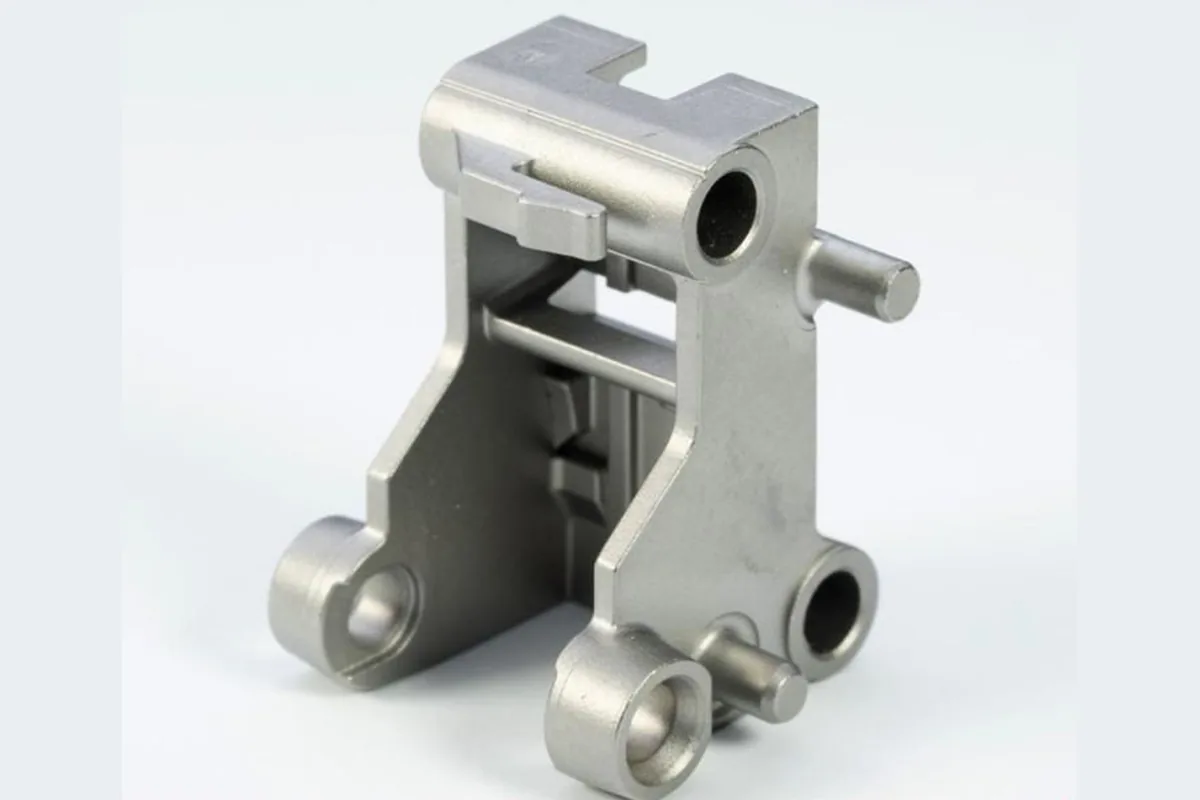
U-shaped clamp body with bosses and pin features. Published as an MIM-4605 part; the source discusses filling, cooling and venting around unequal sections.
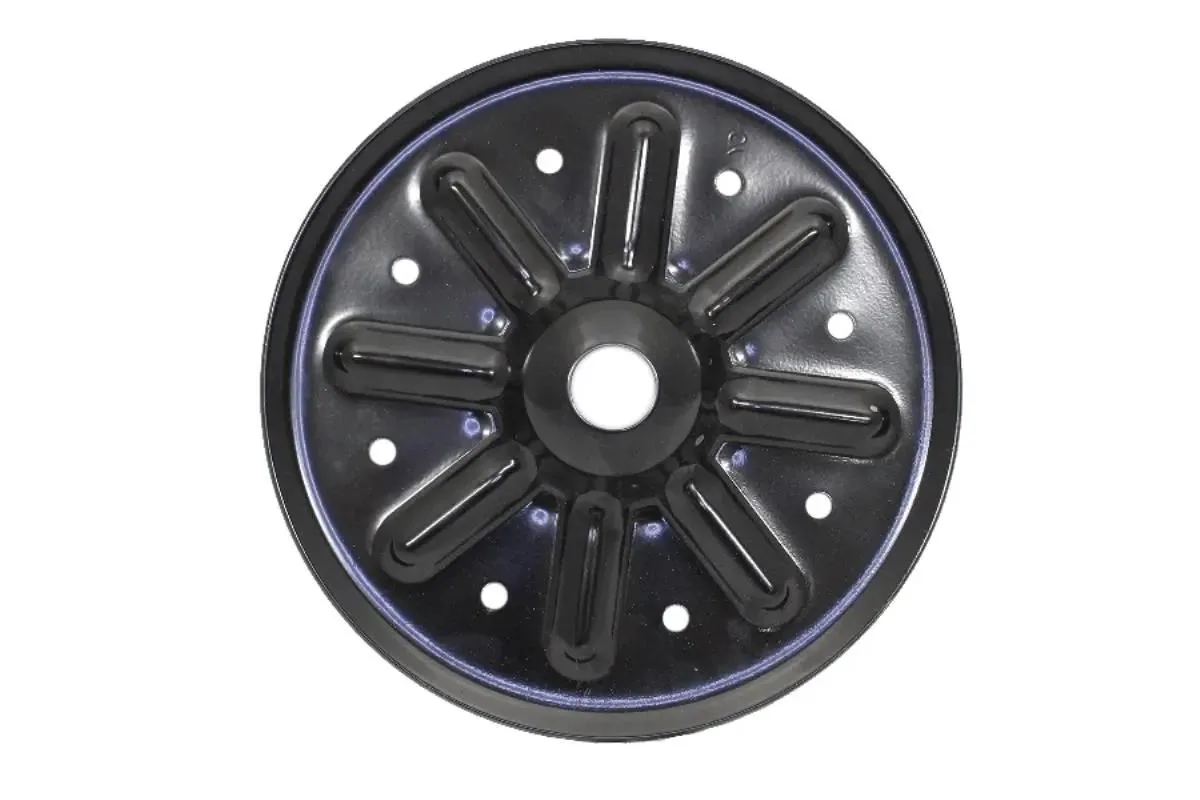
Photograph shows a central opening, radial ribs and surrounding holes. A separate MIM-4605 shock-absorber plate case exists, but this photo has not been matched to that part.
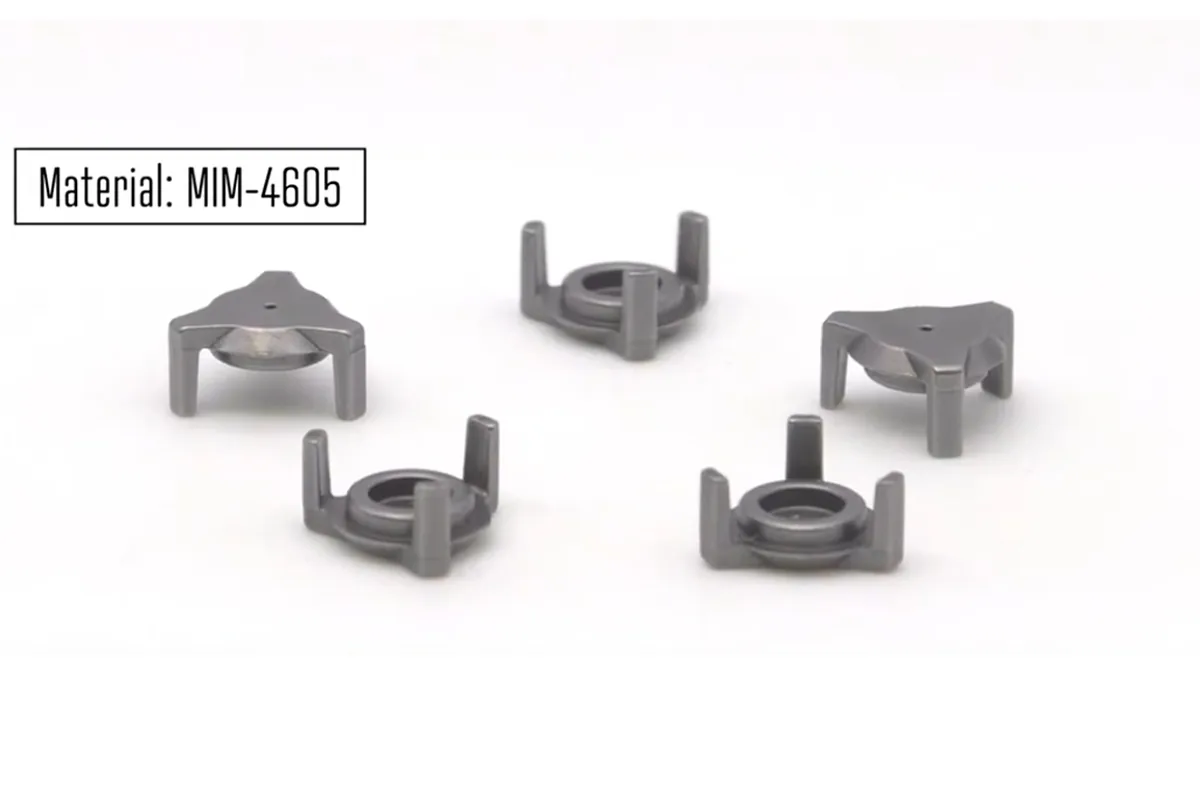
Small three-legged valve component for diesel fuel injection. The published case highlights outside diameter, leg perpendicularity and sintering support.
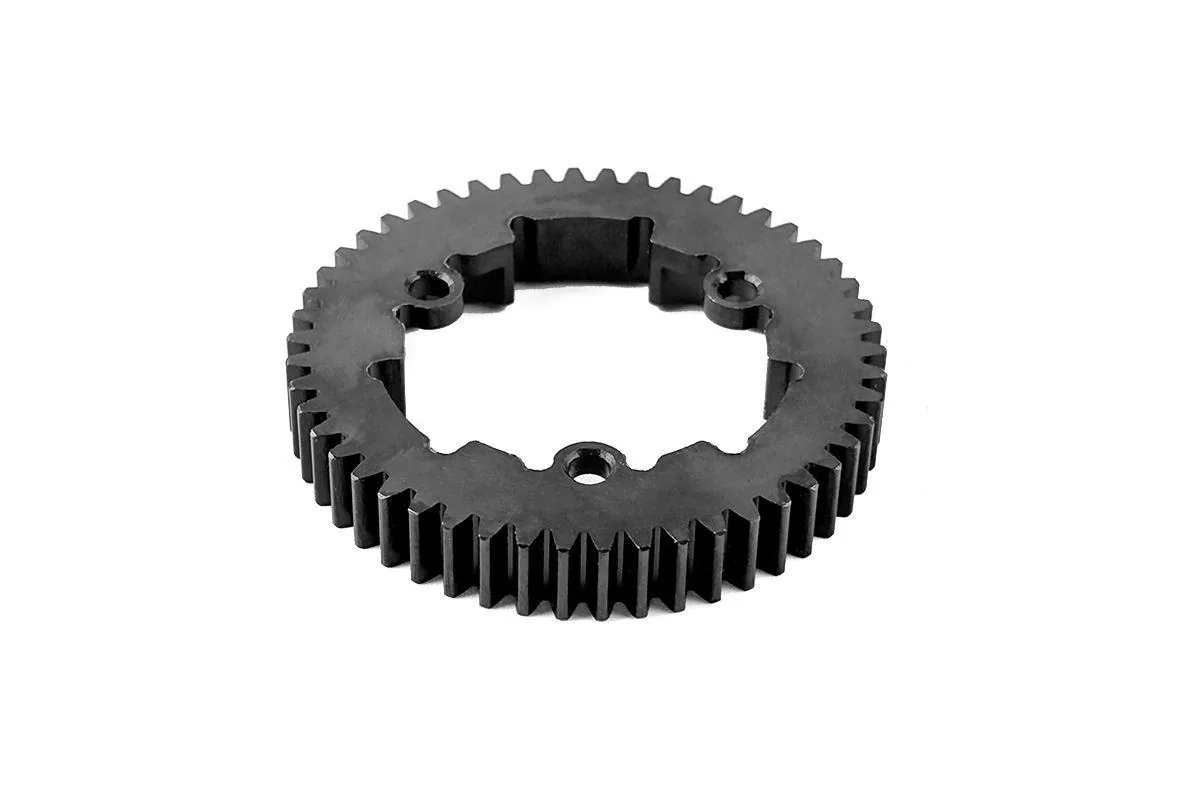
Ring-shaped component with exterior teeth and internal engagement details. The related page describes an MIM-8620 pinion ring, but its figure caption differs; this photo-to-part mapping is unresolved.
Published right- and left-hand threaded inserts used in a folding-roof clamp and hinge mechanism. Original photograph contains an unrelated third-party brand marking.
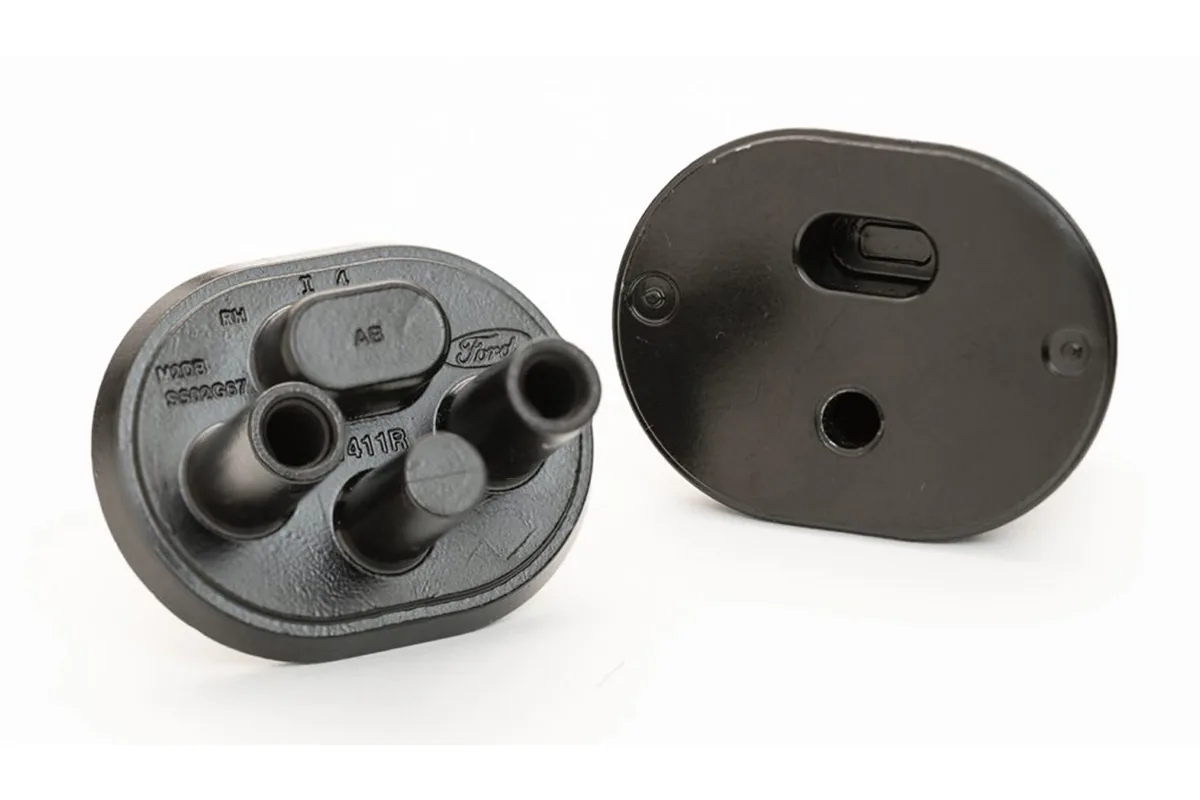
Three-piece quick-disconnect fitting. The original source also documents a restricted end use; retained only for internal material research, not public site use.
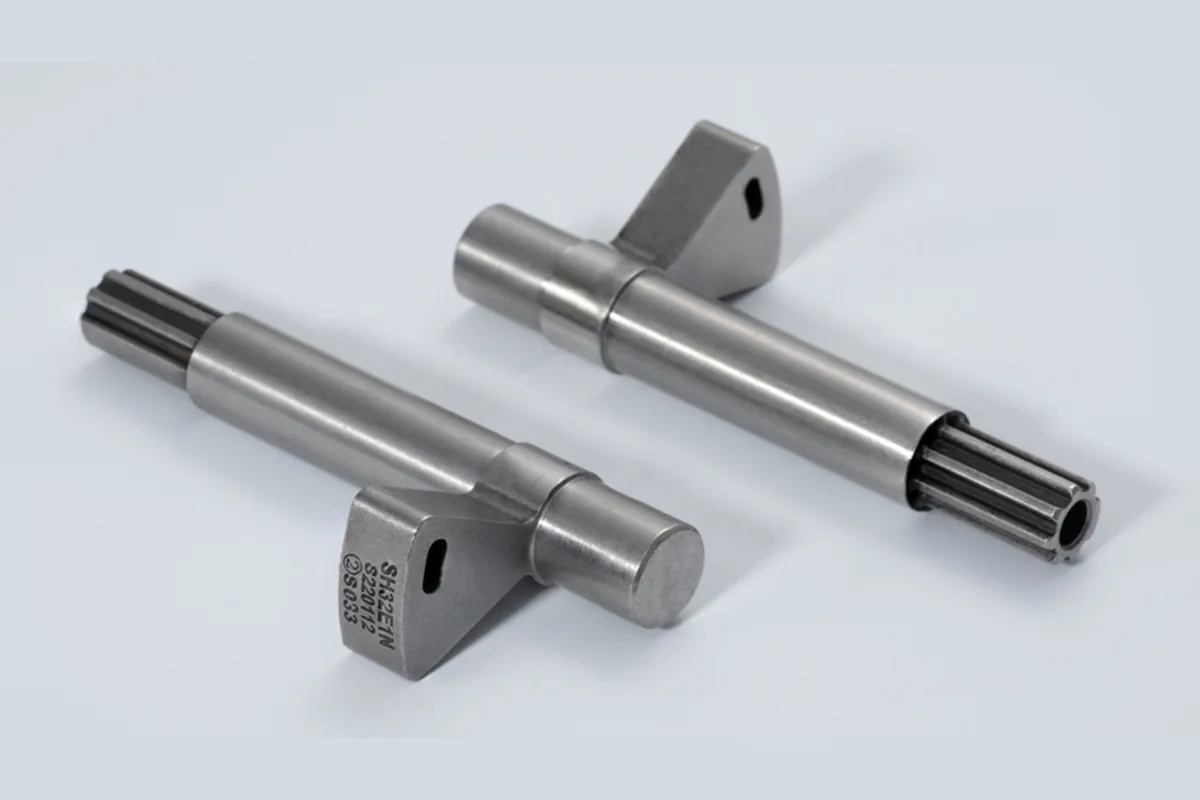
Splined ratchet shaft for an electronic parking-brake mechanism. The cited source identifies AISI 4140-equivalent steel and special sintering fixtures to control geometry.
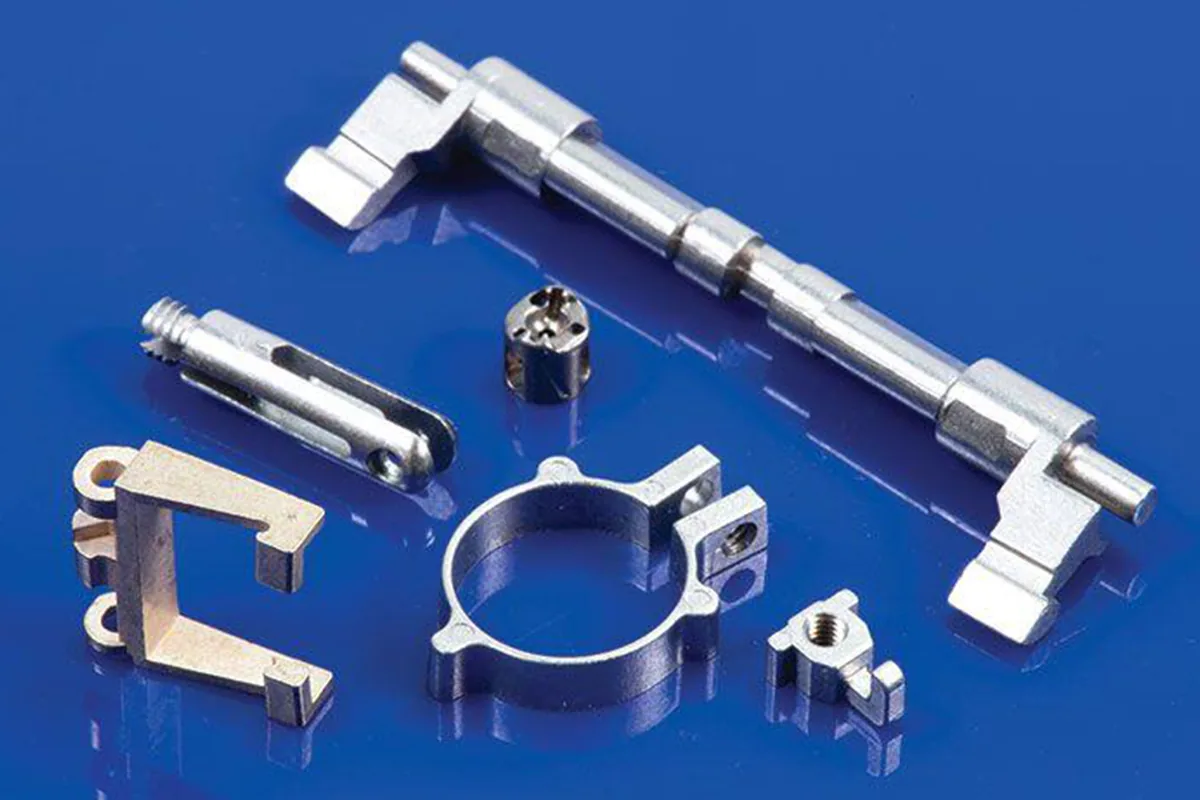
Several shafts, a split clamp, brackets and small connectors on a blue background. Individual alloy, manufacturing route and end-use are not established by the available photo record.
Rendered image of toothed gripper jaws. Zimmer Group has discussed MIM gripper applications, but this artwork does not prove the displayed parts are MIM 4340.
Source: Zimmer / PIM International reference · Archive 28
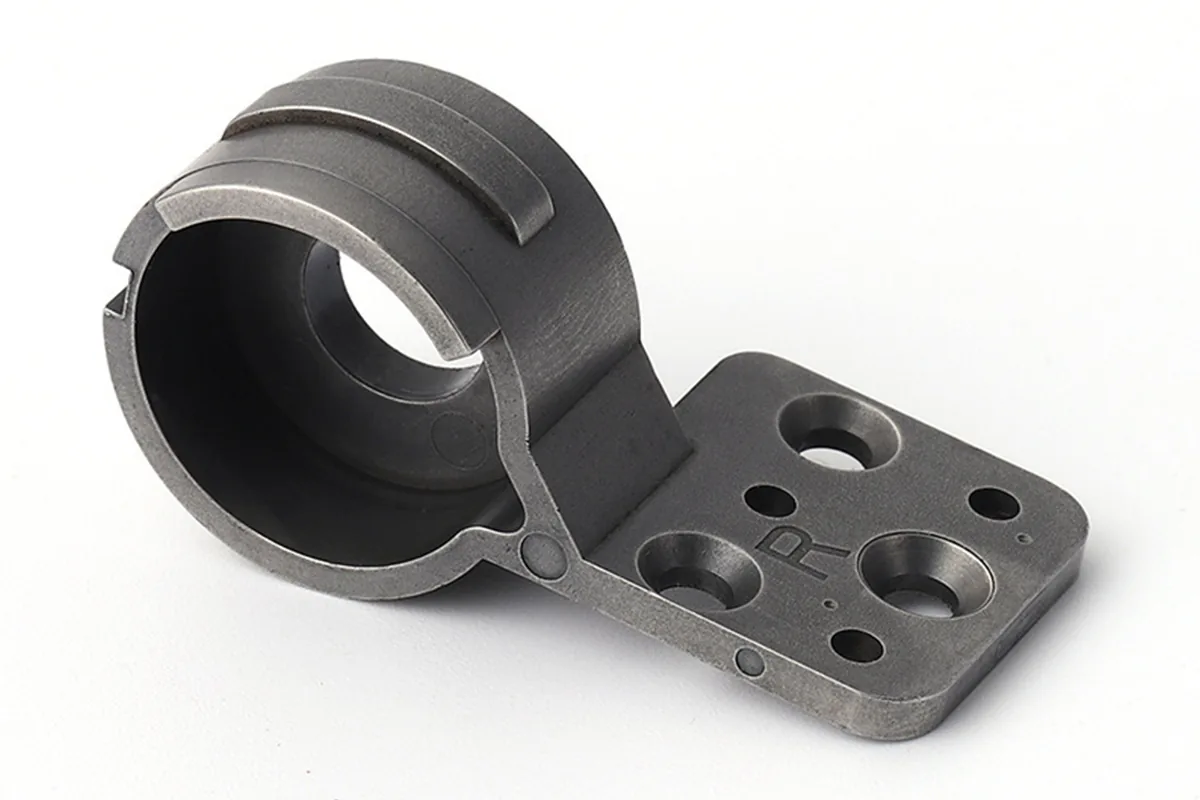
Split cylindrical clamp and flat mounting plate with holes. Shown in a 4340-related supplier promotion; the pictured part’s alloy, process and application are not verified.
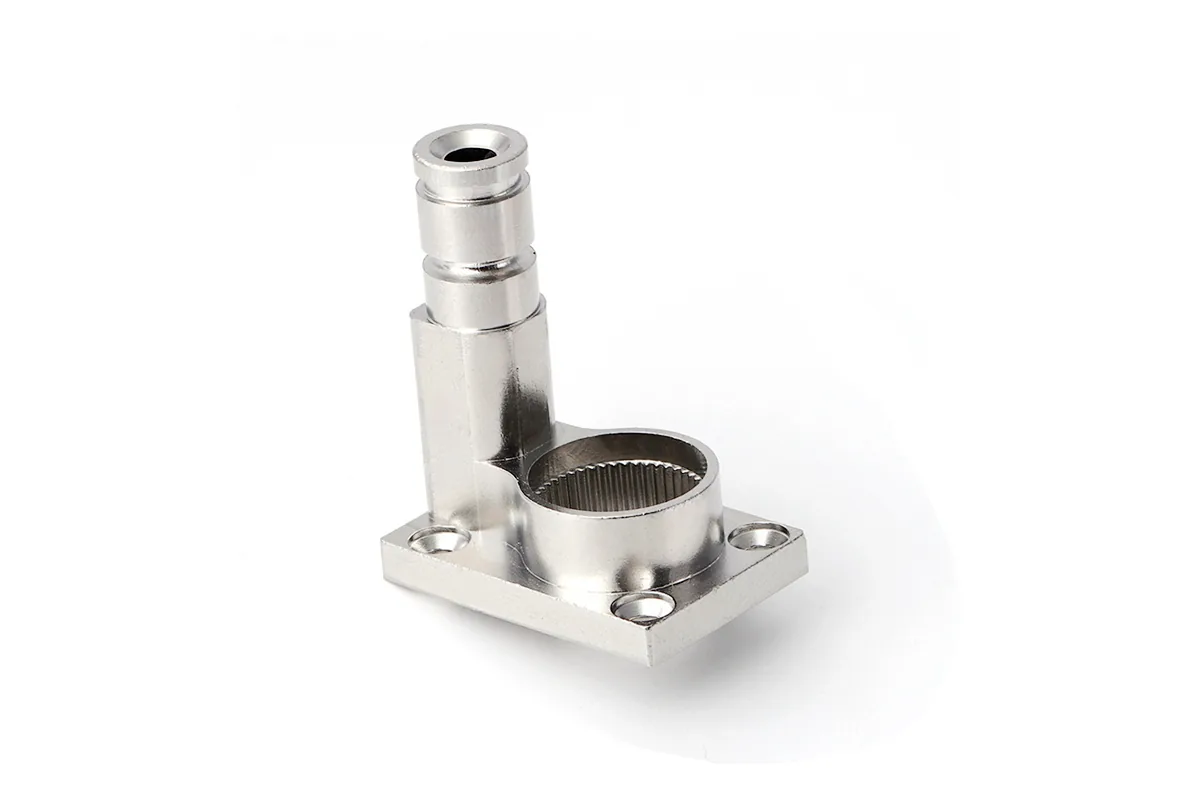
Flanged part with an internal spline, mounting holes and raised stepped post. A 4340-themed marketing image does not independently confirm the specific pictured part’s material.
Fe-8Ni is a candidate low-alloy steel for small, complex MIM structural parts. Before using it in metal injection molding (MIM), confirm whether the drawing calls for low-carbon MIM-2700-type steel or a carbon-containing Fe-Ni grade. The final material condition, loads, service environment, dimensions and inspection criteria determine whether the finished part can meet its requirements.
For small, intricate parts made in recurring volumes, MIM may reduce secondary machining and assembly. The material still needs to meet the part’s load, environmental and inspection requirements. A published Fe8Ni laptop-hinge cam demonstrates one industrial application, but that part used a higher-carbon, molybdenum-containing composition—not low-carbon MIM-2700.
Consider
Small, complex structural components that need an iron-nickel low alloy steel and are suitable for MIM production.
Verify
Carbon level, applicable designation, as-sintered or heat-treated condition, performance targets and critical final dimensions.
Reconsider
Applications dominated by corrosion resistance, soft-magnetic specifications, extreme wear or simple low-volume geometry.
What Is Fe-8Ni MIM Steel, and Which Material Grade Do You Need?
Fe-8Ni describes an iron-based alloy family containing approximately 8% nickel. In metal injection molding, it is associated with low alloy steels, not corrosion-resistant stainless steels or the soft magnetic MIM alloys selected primarily for specified magnetic response. The Metal Injection Molding Association's materials list places Fe8%Ni in the low-alloy category and separately lists magnetic alloys.
Fe-8Ni, FN08 and MIM-2700: Understanding the Designations
Engineering drawings and supplier material lists may use Fe-8Ni, Fe8Ni or Fe08Ni as descriptive names. FN08 is also used in supplier literature, while ASTM B883 includes MIM-2700. Ecrimesa's material table associates its low-carbon FN08(00) with MIM-Fe8Ni-210 under ISO 22068:2012 and MIM-2700 under the older ASTM/MPIF reference used in that table. When matching names across drawings, purchase orders and supplier datasheets, verify the suffix, chemistry and material state. An unsuffixed “FN08” entry is not a complete material specification.
Name in a drawing or material list
How to interpret it
What to check
Fe-8Ni / Fe8Ni / Fe08Ni
Broad Fe-Ni material description or spelling variation.
Require a controlling grade, composition limits and final part condition.
FN08 / FN08(00)
Traditional supplier names; suffix use differs among material tables.
Check the actual carbon range instead of assuming FN08 always means low-carbon.
MIM-2700
A low-alloy MIM designation in ASTM B883.
Specify the ASTM edition, chemistry and acceptance requirements.
MIM-Fe8Ni-210
ISO-style low-carbon Fe8Ni designation shown in Ecrimesa's cross-reference.
Confirm the specified ISO grade and controlling edition.
MIM-Fe8NiC variants / FN0805
Carbon-containing Fe-Ni routes shown in supplier tables.
Do not substitute automatically for low-carbon MIM-2700; compare carbon, mechanical condition and intended performance.
Material-name references: ASTM B883-24, the Ecrimesa MIM material table, and the Tamau material table (see technical sources below).
Low-Carbon and Carbon-Containing Fe-8Ni Grades
Carbon content is a critical distinction between Fe-8Ni material variants. In Tamau’s published low-carbon FN08 / MIM-2700 listing, nickel is 6.5–8.5 wt% and carbon is no more than 0.1 wt%. Its FN0805 listing specifies 0.4–0.7 wt% carbon and different as-sintered strength and elongation values. Ecrimesa also lists low-carbon FN08(00) separately from carbon-containing FN08 grades.
Grade confirmation before tooling: If a drawing specifies only “Fe-8Ni,” identify whether it requires low-carbon MIM-2700-type steel or a defined carbon-containing Fe8NiC grade. Confirm the standard, composition limits and matching feedstock before tool manufacture.
ISO 22068:2012 covers composition and mechanical/physical requirements for specified sintered MIM materials. ASTM B883-24 is an ASTM reference for its listed MIM grades, including MIM-2700. Neither standard makes all commercial Fe-8Ni formulations interchangeable. For example, the published hinge-cam alloy below contains approximately 0.5% Mo and 0.66% C. It cannot be substituted for the low-carbon grade in the property table without engineering approval. The component specification must define the controlling grade, final condition and acceptance tests.
What Mechanical Properties Can Fe-8Ni MIM Parts Achieve?
Fe-8Ni mechanical properties vary with carbon content, processing and the final as-sintered or heat-treated condition. Strength, elongation and hardness values are only comparable when their material grades and test states are defined.
Chemical Composition and As-Sintered Properties
Tamau’s 2024 MIM material table reports separate supplier-published values for low-carbon FN08 / MIM-2700 and carbon-containing FN0805 in the as-sintered condition. The > symbols denote the supplier’s reported lower bounds; they are not XTMIM production guarantees.
Supplier material / state
Ni (wt%)
C (wt%)
Density (g/cm³)
Yield strength (MPa)
Tensile strength (MPa)
Elongation
Hardness
FN08 / MIM-2700 As-sintered
6.5–8.5
≤0.1
>7.6
>210
>380
>20%
>120 HV
FN0805 As-sintered
6.5–8.5
0.4–0.7
>7.6
>400
>700
>5%
>150 HV
Data source: Tamau Italia, MIM Materials, Rev. 202401A (English table linked below). These values describe Tamau's reported material categories and conditions; they are not XTMIM qualification results. Ecrimesa publishes its own grade-specific data, which must not be combined with another supplier's values as if they were one specification.
The nickel and carbon figures are selected composition values, not complete chemistry specifications. Tamau lists iron as the balance in both grades and manganese at no more than 0.5 wt% for FN0805.
In these supplier listings, FN0805 has a higher reported minimum tensile strength but a lower minimum elongation than low-carbon FN08. A latch or spring-loaded contact subjected to repeated movement therefore needs more than a tensile-strength comparison: actual loading, deformation, fatigue life and failure mode must also be considered.
How Carbon Content and Heat Treatment Change Performance
Carbon affects microstructure, hardness, strength and ductility; atmosphere and binder removal during debinding and sintering can also change retained carbon. Tamau separately reports 300–510 HV for its heat-treated FN0805 category, compared with >150 HV for the same supplier's as-sintered category. That heat-treated range is a supplier-specific example, not a target for MIM-2700 or a guarantee for a different Fe8NiC composition. Define the treatment route and final-state acceptance tests before interpreting these figures.
Property or condition
How it affects a material decision
What the drawing or test plan must state
Strength and elongation
Assess load capacity and deformation tolerance together; supplier minima are not interchangeable across states.
Required tensile / proof strength, elongation, specimen basis and approved state, if specified.
Hardness and heat treatment
Hardening can alter the surface or bulk response but may also affect dimensions.
Final treatment, hardness range and measurement location / method.
Sintered density
Residual porosity and microstructure can influence consistency.
Density requirement and test method when performance-critical.
Final tolerance
Dimensions must be assessed in the condition in which the part will be accepted.
Whether inspection follows sintering, heat treatment, machining or coating.
For production acceptance, specify whether mechanical properties are to be demonstrated on standard test specimens, representative coupons or finished components, and at which process stage. Tensile coupon results describe the tested material condition; they do not, by themselves, establish the fatigue life, wear resistance or fracture resistance of an actual locking face or thin-section feature. A part-specific load or cycle test may be necessary when those functions govern service life. Do not substitute wrought-bar data or a different heat-treatment state for evidence from the proposed MIM route.
Do not mix material states: low-carbon FN08 / MIM-2700 is listed in the as-sintered condition, while FN0805 has a different carbon range and separately reported heat-treated hardness. These results do not form one combined Fe-8Ni specification. For hardness acceptance, also define the test scale, applied load and measurement location.
When Is Fe-8Ni Suitable for MIM Parts?
Fe-8Ni is worth evaluating when a component needs structural Fe-Ni alloy behavior and the geometry and production volume make MIM attractive. Selection begins with the component’s function. A locking face, pin interface or load-transfer feature has specific strength, ductility, wear and dimensional-fit requirements regardless of the industry in which it is used.
Suitable Part Requirements and Geometries
Potential applications include compact latch components, mechanical brackets, connector bodies, precision locking features and multi-feature structural parts. These are candidate uses; suitability depends on the specified grade and working conditions, and no XTMIM Fe-8Ni production history is claimed.
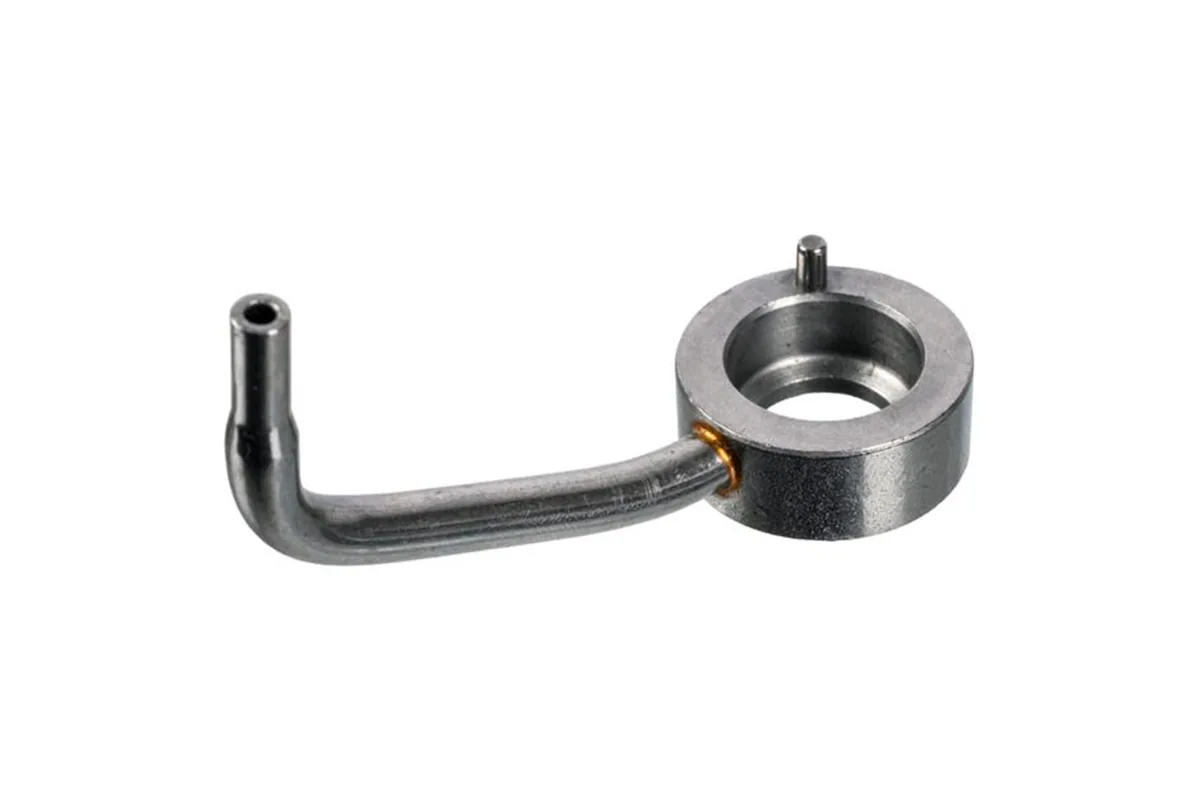
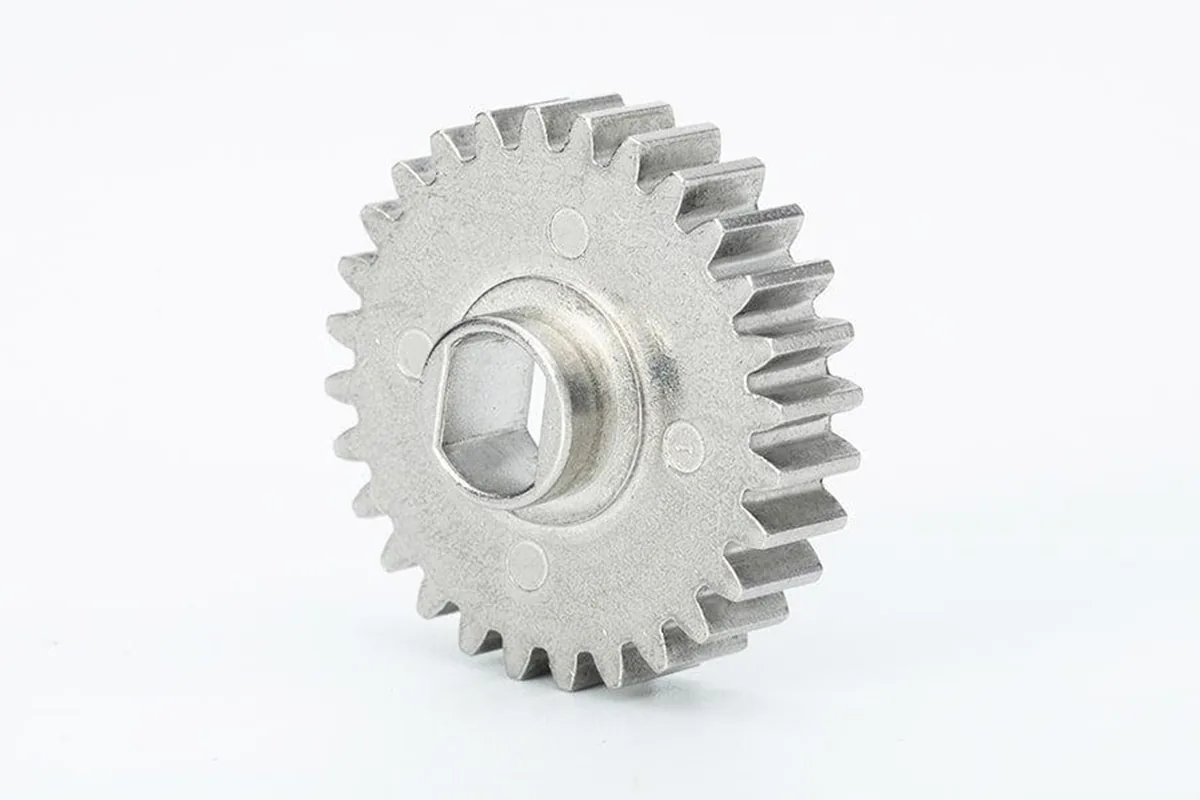
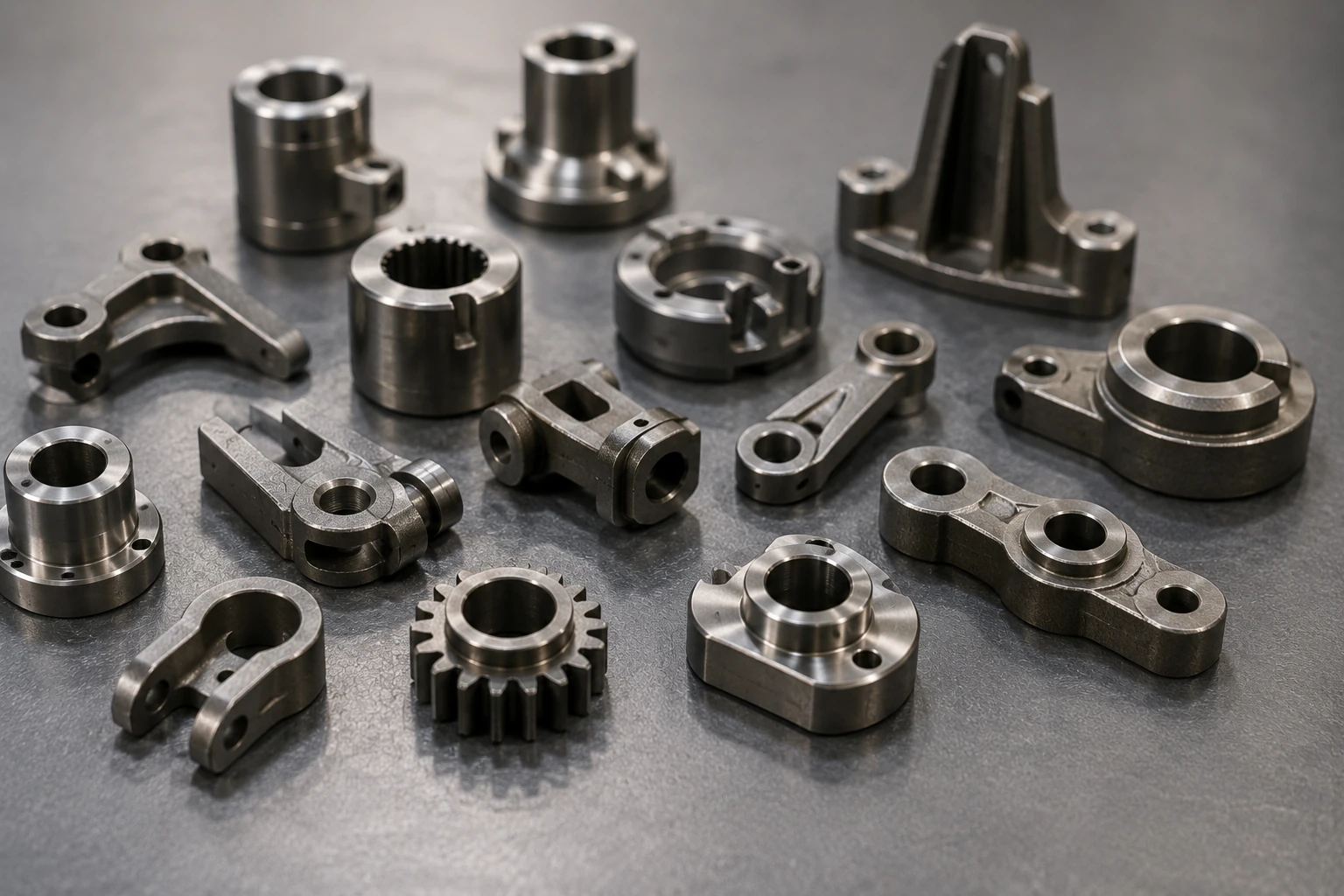
Illustrative structural-part geometries. The pictured parts have not been verified as Fe-8Ni components and are not material or production certification evidence.
Part requirement
Why Fe-8Ni MIM may be considered
Decision check
Small, detailed geometry
MIM can consolidate features such as bosses, slots and shaped interfaces when tooling is justified.
Review wall balance, parting and gating, sintering support and final dimensions.
Structural load transfer
Low-alloy Fe-Ni material routes offer different strength / ductility options.
Define actual load case, safety margin, failure mode and material state.
Controlled fit or motion
Complex mating features can be formed near net shape.
Check wear, contact geometry, tolerance stack-up and machining allowance.
Repeat production
Tooling may be amortized across a sufficient quantity of identical parts.
Compare annual demand and full MIM cost against CNC or other processes.
For conversion from CNC, verify the final sintered or treated material properties rather than assuming the new part behaves exactly like machined bar stock. A drawing-based MIM DFM review identifies features that may need adjustment before tooling. Tooling is a repeat-production investment: a small one-off sample order may make CNC more practical, while sustained demand can justify evaluating MIM's tooling, finishing and unit-cost trade-offs. The break-even volume depends on tooling cost, part complexity, finishing operations and expected demand.
Application Limits and Selection Risks
Fe-8Ni is not stainless steel. Nickel in an Fe-Ni low-alloy designation does not establish stainless-level corrosion resistance. If outdoor humidity, aggressive chemicals or repeated moisture exposure are dominant requirements, corrosion-resistant alloys or validated protection systems deserve a separate review. If wear life, fatigue or a specified soft-magnetic response controls the design, quantify that requirement rather than assuming the Fe-8Ni designation proves suitability.
Screen-out conditions: Consider another material or process if the design requires corrosion resistance that unprotected Fe-8Ni cannot support; if an alternative mechanical property cannot be verified; if the geometry is large and simple; or if production quantity is too low to justify MIM tooling. A coating may help in some environments, but its corrosion life and functional effects must also be validated.
What Affects the Manufacturing Quality of Fe-8Ni MIM Parts?
A correctly specified Fe-8Ni alloy can still fail acceptance because of low density, distortion or an incorrect final mechanical condition. Verify powder/feedstock availability, retained carbon, sintering consistency, heat-treatment dimensional changes and final-state inspection. For the overall production sequence, see the MIM manufacturing process.
Feedstock, Debinding and Carbon Control
Before a mold is approved, confirm that the proposed Fe-8Ni grade has an available and technically suitable powder/feedstock route. An alloy's appearance in an industry material list does not prove that a particular supplier holds it in stock or has already qualified a production cycle. Binder removal and sintering atmosphere can change retained carbon and therefore the microstructure and mechanical response of carbon-sensitive Fe-Ni steels. MIM technical literature identifies carbon control across debinding and sintering as an important production variable. The supplier should define the target final carbon range, the material records that establish it and the agreed verification stage.
A drawing specifying low-carbon MIM-2700 must not be quoted using carbon-containing FN0805 feedstock merely because both are called Fe-8Ni. Such a change requires engineering acceptance of the composition and mechanical state. A supplier's incoming powder or feedstock record alone also does not establish the carbon level of a finished sintered component if the processing route can change carbon retention.
Fe-8Ni debinding research: a study of injection-moulded Fe–8Ni mixed powders found that binder composition, debinding atmosphere and temperature affected distortion and subsequent sintered density. These experimental conditions are not universal production settings. Qualify the selected feedstock and debinding/sintering cycle through trials, then check the resulting material against the drawing instead of copying parameters from another alloy. See Takekawa, 1991, Journal of the Japan Society of Powder and Powder Metallurgy.
Sintering, Heat Treatment and Dimensional Stability
Sintering shrinkage is designed into MIM tooling, yet asymmetric geometry, varying wall thickness and unsupported features can create distortion. Density and microstructure must be sufficiently consistent for the required mechanical properties. Heat treatment introduces another potential dimension-change step; critical holes, locking features, flatness and assembly interfaces should be inspected in the final condition.
Where tight fits or functional surfaces are unavoidable, secondary machining can be planned after sintering or treatment instead of requiring every critical feature to be achieved directly by the mold. For critical dimensions, use the MIM tolerances and shrinkage compensation guidance to plan process allowances and final measurements.
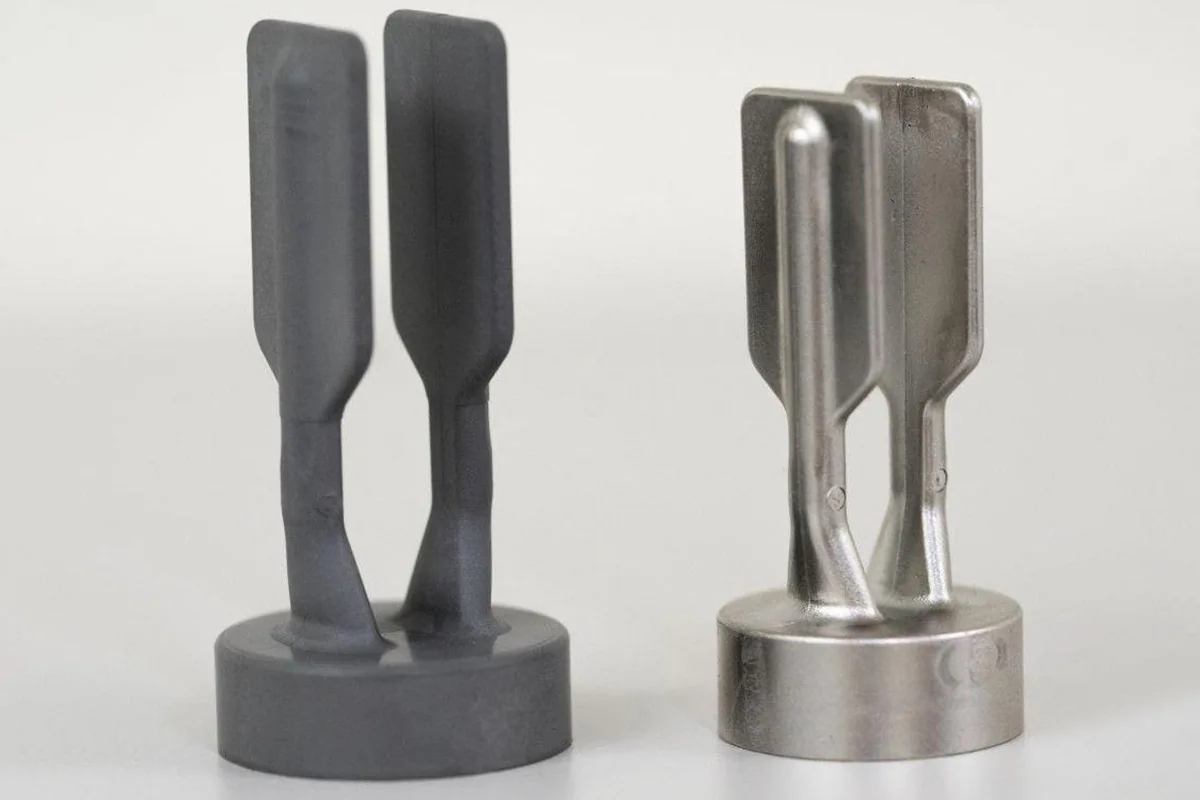
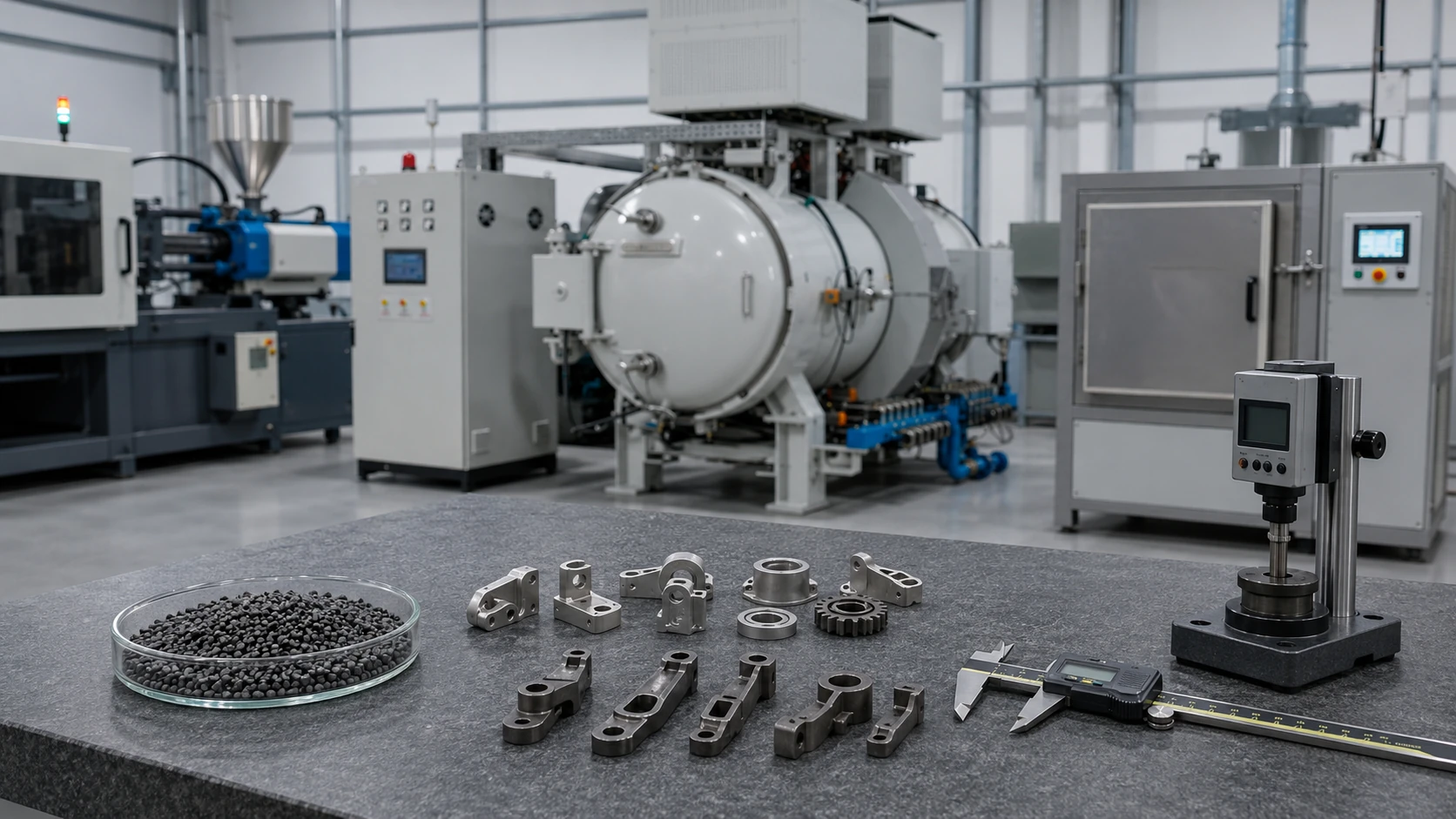
Illustrative process-and-inspection context. This image is not evidence that the depicted parts were produced in Fe-8Ni or tested by XTMIM.
Inspection and Acceptance of Finished Parts
For finished-part approval, confirm what evidence establishes that the delivered part meets the defined requirement. Specify chemical analysis, mechanical testing, density checks, critical dimensions or functional tests according to the drawing and project risk.
Potential failure or uncertainty
Why it matters
Verification or preventive action
Wrong grade or carbon condition
Can change hardness, strength and elongation relative to the drawing.
Confirm approved feedstock and chemistry limits; agree on whether carbon is tested on sintered coupons or finished samples and at what stage.
Insufficient sintered consistency
Porosity and density variation can undermine repeatable performance.
Specify the required density and/or mechanical tests, their measurement method and sampling plan where performance is critical.
Feature distortion during sintering
May shift bores, slots, flatness or mating surfaces.
Use DFM, sintering supports, tolerance analysis and trial measurements.
Heat-treatment dimensional change
Functional features may no longer fit after hardening.
Set the final condition, critical datums and the stage of dimensional inspection.
Unspecified wear or corrosion condition
Approval based on nominal strength may miss the actual service failure.
Define contact, environmental exposure, surface treatment and necessary functional tests.
Acceptance sequence for a Fe-8Ni project: approve the exact grade and composition limit before tooling; use the first sintering trial to check the agreed chemistry/density evidence and key dimensional behaviour; then check hardness and functional fits after heat treatment and finishing if those steps apply. Agree on first-article and production-lot sampling before recurring orders. Carbon/oxygen analysis, density tests, mechanical coupons and functional cycling should be specified only where the part's risk and contractual requirements justify them.
When a latch drawing specifies final hardness after heat treatment, dimensional checks made only in the as-sintered state can miss distortion that later affects assembly. Inspect mating dimensions after treatment and reserve machining allowance where required.
When Should You Consider an Alternative to Fe-8Ni?
Only evaluate substitutions when the drawing allows them or the engineer is still selecting a material. The correct comparison is between the properties required of the finished part and verified candidate material conditions, not between alloy names or nickel percentages in isolation.
When specified magnetic performance or simple low-volume geometry is the real design driver.
Verify the magnetic performance or manufacturing economics before choosing structural Fe-8Ni MIM.
Different MIM grades have been documented in working components. GKN Sinter Metals documented a passenger-car manual-transmission shift lever in Fe-2% Ni, case hardened after sintering (PIM International automotive application). INDO-MIM documented a U-shaped power-tool clamp body in MIM-4605, where venting and cooling were important to avoid voids and weld lines (2023 MPIF awards coverage). Both are other-grade examples, not Fe-8Ni parts or evidence of XTMIM production. Their materials and process requirements were defined for their respective functions.
A substitute is justified only when it meets the same functional and acceptance requirements. Compare candidate grades at relevant conditions and obtain engineering approval before changing the drawing or feedstock.
What Must Be Confirmed Before Fe-8Ni Tooling and RFQ?
Before quoting and cutting a mold, convert the material choice into a testable drawing and acceptance package. A supplier cannot reliably price Fe-8Ni on the basis of alloy name alone, because feedstock route, treatment, precision requirements and annual demand all affect manufacturing cost and technical risk.
Material, Drawing and Acceptance Requirements
Required input
Decision it enables
2D drawing and 3D CAD, including datums and critical features
Assess MIM geometry, shrinkage and dimensional risks, and any post-machining needs.
Material grade and standard edition, including equivalence permission
Prevent substitution between low-carbon and carbon-containing Fe-Ni routes without approval.
Final material condition, strength, ductility or hardness targets
Select relevant feedstock and sintering / heat-treatment route and its acceptance tests.
Functional surfaces, fit and tolerance requirements
Decide which dimensions need final-state inspection or secondary machining.
Service conditions: load, wear, environment, temperature and coating
Check whether Fe-8Ni actually meets the functional need or requires another alloy.
Annual volume, sample plan and required reports
Evaluate tooling economics, trial production and measurable approval criteria.
Qualification and production release sequence:
Before tooling: freeze the grade/standard edition, allowable equivalents, product geometry, critical datums and required material state. Resolve feedstock availability and who approves a change in chemistry.
At first moulded/sintered samples: review actual shrinkage and distortion, density and chemistry evidence where specified, and whether planned machining allowances are sufficient.
After final treatment: verify agreed hardness or mechanical test results and the dimensions/fit after heat treatment, finishing or coating, whichever applies.
Before repeat production: approve the accepted sample and document inspection methods, lot sampling, nonconformance decisions and change-control requirements.
If the grade or inspection condition is not yet settled, record it as an open technical decision in the RFQ rather than making assumptions. For a fuller documentation checklist, see the MIM RFQ preparation guide.
Proceed to DFM
Grade, material state and part requirements are specified; ask the manufacturer to confirm feedstock, tooling and acceptance feasibility.
Validate first
Material state, actual strength or distortion behavior is uncertain; agree on evidence and a trial plan before production approval.
Review alternatives
Corrosion, wear, magnetic behavior or geometry conflicts with the proposed Fe-8Ni route; approve a different material or process only after comparison.
Review your Fe-8Ni MIM part before tooling
Send the drawing, material note, functional requirements and estimated volume. XTMIM can review the candidate material route, DFM concerns, finishing requirements and the information needed for a realistic quotation. Feedstock availability and final material properties remain subject to project-specific confirmation.