
MIM Materials / Material Properties
Magnetic MIM Materials
Magnetic MIM materials are reviewed when a small, complex metal part needs magnetic or soft magnetic behavior in addition to strength, density, dimensional stability, and manufacturability.
Quick answer: magnetic MIM material selection is not only about choosing a magnetic alloy name. The project team must confirm whether the required magnetic response can be achieved after feedstock molding, debinding, sintering, heat treatment, secondary operations, and final inspection.
A useful early review should define the magnetic function, not just the material family. If the requirement is only general magnetic attraction, the review route may differ from a true soft magnetic performance requirement. Engineers should submit geometry, target magnetic behavior, application environment, tolerance requirements, surface condition, annual volume, and inspection expectations before tooling.
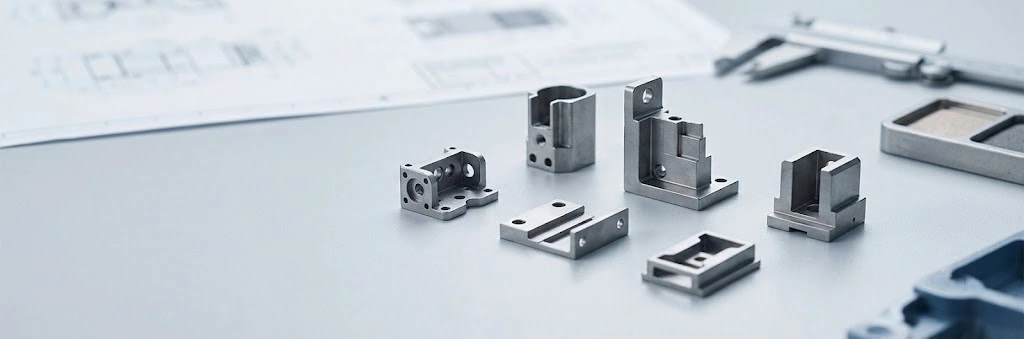
Core conclusion: Magnetic MIM material selection should be reviewed together with part geometry, sintering route, and final inspection requirements.
What Are Magnetic MIM Materials?
Magnetic MIM materials are metal injection molding material routes selected because the finished part needs a defined magnetic response. This may include soft magnetic behavior, general magnetic attraction, or a functional magnetic response inside a compact metal component. In MIM, magnetic behavior should be treated as a material and process requirement, not only as a material label.
A common mistake is to ask whether a material is magnetic without explaining the functional requirement. A latch component, a sensor-related component, a small actuator part, and a magnetic core-like part may all require different review logic. Some projects mainly need magnetic response, while others need a balance between magnetic behavior, corrosion resistance, strength, wear resistance, surface finish, and dimensional stability.
Soft magnetic MIM materials are usually reviewed when the part needs magnetic response with low magnetic retention after the external magnetic field is removed. This is different from applications requiring permanent magnet behavior. XTMIM should review the drawing, part function, required material family, and process route before confirming whether MIM is suitable for the project.
Start with function
The material route should be selected from the required magnetic behavior, operating environment, and inspection target, not only from a general material name.
Review sintering condition
Density, sintered structure, heat treatment, and secondary operations may influence the finished part condition and should be reviewed before tooling.
Submit the requirement early
Magnetic requirements should be communicated before quotation so the supplier can review material feasibility, geometry risk, and inspection planning together.
When Do Magnetic Properties Matter in MIM Part Design?
Magnetic properties matter when the part function depends on magnetic response, not only on shape or mechanical strength.
If the part must guide magnetic flux, respond to a magnetic field, interact with a sensor, operate inside an electromagnetic assembly, or maintain a predictable magnetic response after sintering, the requirement should be stated before quotation and tooling.
From a design review perspective, magnetic requirements should be confirmed early because they can influence material choice, sintering route, heat treatment, secondary operations, and inspection planning. If the project team only identifies the magnetic requirement after tool design, the material route may need to be changed, which can affect shrinkage compensation, dimensional control, cost, and lead time.
Magnetic MIM Material Families to Review
Several material families may be considered when a MIM part requires magnetic or soft magnetic behavior. The right route depends on the required magnetic response, mechanical load, corrosion environment, geometry, tolerance, post-treatment plan, and expected production volume.
Fe-Si, Fe-Ni, and Fe-Co
Soft magnetic routes are often reviewed for compact components where magnetic response is a key functional requirement. These routes should be reviewed through specific material pages such as Fe-3%Si MIM material, Fe-50Ni MIM material, and Fe-50Co soft magnetic MIM material.
Practical magnetic response
Some low-alloy steel for MIM routes may show magnetic behavior and may fit projects where magnetic response is secondary to mechanical strength, cost, or general structural function.
Stainless steel and corrosion
Some stainless steels may be magnetic or partially magnetic depending on alloy family and processing condition, but stainless steel should not be selected as a magnetic material route unless the magnetic requirement is clearly defined.
For broader material navigation, review MIM Materials, material property selection, and the related soft magnetic MIM materials family page before moving into a specific Fe-Si, Fe-Ni, or Fe-Co material route.
| Review Step | Engineering Question | Why It Matters |
|---|---|---|
| Define the magnetic function | Does the part need soft magnetic behavior, general magnetic response, or only incidental attraction? | The answer changes which material family should be reviewed first. |
| Check the geometry | Can the small features, wall thickness, mass distribution, and critical surfaces fit MIM manufacturing logic? | A suitable material does not solve geometry-driven sintering or tolerance risk. |
| Review process condition | Does the magnetic requirement depend on sintering condition, heat treatment, density, or secondary operations? | The final magnetic response can depend on the finished part condition, not only the starting alloy family. |
| Confirm inspection expectations | Will the project require dimensional inspection only, or also magnetic property confirmation? | Inspection scope affects quotation, supplier review, and production planning. |

Core conclusion: Soft magnetic MIM materials should be selected by functional requirement, not by material name alone.
How the MIM Process Can Affect Magnetic Performance
The final magnetic behavior of a MIM part is influenced by more than alloy selection. Feedstock quality, molding stability, debinding control, sintering route, final density, heat treatment, and secondary operations may all affect the finished part.
Density, porosity, and sintered structure
MIM aims to produce high-density small metal parts, but final density, residual porosity, and sintered microstructure still matter. For magnetic applications, these factors may influence how consistently the part responds in service. If a drawing includes magnetic requirements, the engineering team should review whether the geometry, wall thickness, and sintering behavior can support stable results.
For more process background, review how debinding and sintering affect part quality in MIM.
Sintering route and atmosphere-related risk
Sintering conditions can influence final material behavior. Temperature profile, furnace route, atmosphere control, carbon and oxygen sensitivity, and part support during sintering can affect both dimensional stability and material condition. For magnetic MIM materials, the project team should discuss whether the required property depends on a specific sintered condition or subsequent heat treatment.
Heat treatment and secondary operations
Some magnetic material routes may require heat treatment or controlled post-sintering processing to support the intended final condition. Secondary operations such as machining, sizing, polishing, coating, or PVD, where applicable to the project, may also affect the finished part surface or stress condition. These operations should be reviewed carefully when magnetic response is important.
| Process Factor | Why It Matters | What Can Go Wrong | RFQ Review Point |
|---|---|---|---|
| Final density and porosity | May influence how consistently the finished part responds in service. | Magnetic response may vary if the final structure is not suitable for the functional requirement. | Confirm whether magnetic response needs formal inspection. |
| Sintering route | Can affect material condition, shrinkage behavior, and dimensional stability. | Distortion or unsuitable material condition may affect assembly and performance. | State whether the part has critical magnetic and dimensional areas. |
| Heat treatment | May be required for some material routes or final conditions. | Skipping or changing thermal processing may affect the final material condition. | Clarify whether post-sintering thermal processing is expected. |
| Secondary operations | Machining, sizing, polishing, coating, or PVD may affect cost, lead time, and final condition. | Late changes to finishing or machining can change quotation assumptions. | List required and optional operations before quotation. |

Core conclusion: Magnetic performance should be reviewed together with the full MIM process route, not only the starting material family.
Design and Manufacturing Boundaries for Magnetic MIM Parts
A magnetic material route does not automatically make a part suitable for MIM. The geometry, wall thickness, feature size, gate location, tolerance requirements, surface condition, and post-treatment plan must also fit MIM manufacturing logic.
Geometry, wall thickness, and feature risk
MIM is useful for small, complex metal components with features that may be difficult or costly to machine from solid stock. However, very thick sections, large mass differences, unsupported thin features, and long slender geometries may increase distortion or dimensional risk during sintering.
Tolerance and distortion review
Magnetic parts often work inside assemblies where dimensional stability matters. If the part must fit into a magnetic circuit, sliding mechanism, sensor housing, or actuator assembly, tolerance and distortion review should be completed before tooling.
Surface finishing or machining after sintering
Surface condition may matter for assembly, corrosion exposure, wear contact, or magnetic function. If the part requires machining, polishing, passivation, coating, or PVD, these operations should be stated early. Secondary operations can affect cost, lead time, and inspection planning.
For magnetic MIM materials, the project team should avoid assuming that every finishing route is neutral to the magnetic function. When the property is critical, the final process sequence should be reviewed as part of the material selection.
For broader geometry, wall thickness, and tolerance guidance, review the MIM Design Guide.
Engineering review point: separate critical magnetic working surfaces, assembly dimensions, cosmetic surfaces, and non-critical dimensions before tooling. This helps the supplier understand where tight control is required and where standard MIM expectations may be acceptable.

Core conclusion: A magnetic material route is only practical when the part geometry and manufacturing requirements also fit MIM.
Magnetic MIM Material Selection Table
The following table is intended for early engineering review. It should not replace a material datasheet, production validation, or final supplier review.
| Material Route | When to Review | Key Engineering Question | Main Risk to Confirm |
|---|---|---|---|
| Fe-Si soft magnetic route | When soft magnetic response is a main functional requirement. | Does the application require silicon-iron behavior and stable post-sintering condition? | Magnetic response, heat treatment, and dimensional stability. |
| Fe-Ni soft magnetic route | When nickel-iron soft magnetic behavior is relevant. | Does the part require high permeability-type behavior or a specific magnetic response? | Material cost, process condition, and final inspection plan. |
| Fe-Co soft magnetic route | When iron-cobalt behavior is required for the design concept. | Is the performance requirement strong enough to justify this material route? | Material route suitability, processing sensitivity, and cost. |
| Low-alloy magnetic route | When magnetic response is secondary to strength or cost. | Is moderate magnetic behavior enough for the application? | Overestimating magnetic performance. |
| Stainless steel route | When corrosion resistance is also important. | Is corrosion resistance more important than magnetic response? | Selecting stainless steel for the wrong primary requirement. |
Material selection note: no magnetic performance value should be assumed until the project defines the required test method, acceptance criteria, final process condition, and inspection scope. The table above is for early route screening, not for guaranteed magnetic performance.
This table should guide the first discussion only. Final selection should be based on drawings, application requirements, material availability, processing feasibility, and inspection expectations.
RFQ Inputs for Magnetic MIM Material Review
A useful RFQ for magnetic MIM materials should include both manufacturing information and functional information. If the project only provides a part name and a target material, the review may miss important risks.
Prepare project information
- 2D drawing and 3D model if available.
- Target material or material family, if already known.
- Description of the magnetic function.
- Whether the part requires soft magnetic behavior or only general magnetic response.
- Critical dimensions and tolerance requirements.
Clarify process and inspection needs
- Application environment, including temperature, corrosion, wear, and assembly conditions.
- Required secondary operations such as heat treatment, machining, polishing, passivation, coating, or PVD where applicable.
- Expected annual volume and production stage.
- Inspection expectations for dimensions, material condition, surface condition, or magnetic response.
| RFQ Input | Why XTMIM Needs It | Typical Risk If Missing |
|---|---|---|
| Magnetic function | Helps identify whether the requirement is soft magnetic, general magnetic response, or only secondary behavior. | The wrong material family may be reviewed first. |
| 2D / 3D drawing | Allows geometry, wall thickness, gate area, tolerance, and sintering distortion review. | The quote may ignore manufacturability or tooling risk. |
| Application environment | Clarifies corrosion, temperature, wear, assembly, and surface condition requirements. | The material may satisfy magnetic response but fail environmental requirements. |
| Inspection expectations | Defines whether dimensional inspection alone is enough or whether material or magnetic confirmation is needed. | The production control plan may be incomplete. |
Composite field scenario for engineering training: a compact functional metal component requires soft magnetic response, small features, and stable dimensions after sintering. The project team compares Fe-Si, Fe-Ni, and Fe-Co routes, then confirms whether the magnetic requirement, geometry, post-treatment, and inspection plan are realistic before tooling.

Core conclusion: Magnetic MIM RFQs should include both manufacturing data and functional magnetic requirements.
When Not to Use MIM for Magnetic Parts
MIM is not always the best route for magnetic parts. If the part is large, simple, flat, very low-volume, or better suited to a conventional forming or pressing route, another process may be more practical.
If the magnetic requirement is extremely strict and depends on a material or process route outside MIM capability, the project should be reviewed before any tooling decision.
This boundary is important because the best process is not always the most technically complex process. The right route should match the geometry, performance requirement, annual volume, and total project cost. For application-oriented examples, review soft magnetic parts.
FAQ About Magnetic MIM Materials
Can MIM be used for magnetic or soft magnetic parts?
Yes, MIM can be reviewed for small complex parts that require magnetic or soft magnetic behavior, but the final route depends on material family, sintering condition, part geometry, heat treatment, and inspection requirements.
Which magnetic MIM material should I choose first?
Start with the functional requirement. If soft magnetic behavior is critical, Fe-Si, Fe-Ni, or Fe-Co routes may be reviewed. If magnetic response is secondary to strength or cost, some low-alloy routes may be considered. If corrosion resistance is also important, stainless steel trade-offs should be reviewed.
Does sintering affect magnetic performance in MIM parts?
Yes. Sintering can influence final density, microstructure, dimensional stability, and material condition. These factors may affect magnetic response, so magnetic requirements should be reviewed together with sintering and post-treatment planning.
Is heat treatment required for magnetic MIM materials?
It depends on the material route and the target final condition. Some projects may require heat treatment or controlled post-sintering processing. The requirement should be confirmed before quotation and tooling.
What information should I send for a magnetic MIM material RFQ?
Send drawings, 3D files if available, target material or material family, magnetic function, required tolerance, application environment, secondary operation requirements, expected volume, and inspection expectations.
Engineering Review Note
Review Your Magnetic MIM Material Requirement Before Tooling
If your component requires magnetic or soft magnetic behavior, submit the drawing, material target, application background, and expected magnetic function before tooling. XTMIM can review whether the part geometry, material route, sintering process, secondary operations, and RFQ information are suitable for a MIM project discussion.