
MIM Material Properties
Biocompatible MIM Materials
Biocompatible MIM materials are not selected by material grade alone. From a design review perspective, biocompatible metal injection molding materials should be evaluated by intended contact condition, application environment, MIM process route, surface finish, post-processing, cleaning requirement, and final validation responsibility.
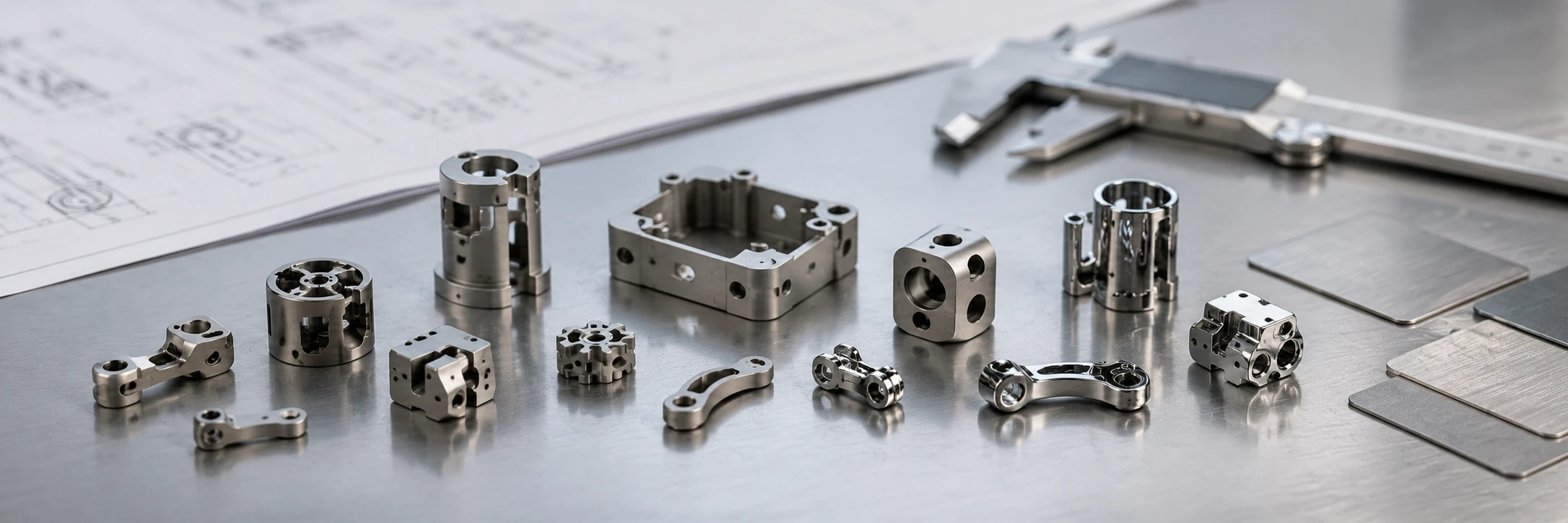
Core conclusion: Biocompatibility-sensitive MIM projects require material and process review, not material grade selection alone.
What Are Biocompatible MIM Materials?
Biocompatible MIM materials are metal injection molding material options that may be considered for parts used in biocompatibility-sensitive applications. These applications may include medical device assemblies, dental or orthodontic components, wearable device parts, consumer contact components, or other small precision metal parts where contact with skin, body fluids, cleaning chemicals, or sensitive environments may matter.
The key point is that biocompatible is not only a material label. It is an application-specific engineering requirement. Material selection should be reviewed together with intended use, contact type, contact duration, surface condition, cleaning route, post-processing, and final evaluation responsibility. For broader material-property context, review the MIM material properties page.
Biocompatibility Is an Application-Specific Requirement
A MIM material may be suitable for one contact-sensitive project and unsuitable for another. The difference may come from the contact environment, cleaning route, surface finish, exposure duration, or final device requirement. For example, a stainless steel part used inside a dry assembly has a different review path from a part exposed to sweat, cleaning agents, oral contact, or repeated handling.
In production, this matters because the supplier cannot confirm final biological suitability only from a drawing title or material grade. The engineering team must understand the intended use condition before reviewing material, surface treatment, inspection, and process cost.
Why MIM Material Selection Must Include Surface and Process Review
MIM is a powder-based manufacturing process. The final component depends on feedstock consistency, injection molding, debinding, sintering, shrinkage control, secondary operations, and inspection. For biocompatibility-sensitive projects, the final surface is especially important. A polished and cleaned surface may behave differently from an as-sintered surface.
Passivation, electropolishing, machining, tumbling, coating, or ultrasonic cleaning can affect cost, lead time, and the final inspection plan. Before tooling, the project team should confirm whether the drawing requires a specific finish, roughness target, cleaning method, or third-party validation.
| Review Area | Why It Matters | What to Confirm Before RFQ |
|---|---|---|
| Material family | Defines the starting point for corrosion, strength, wear, density, and cost review. | 316L, titanium alloy, cobalt-chromium alloy, special stainless steel, or open to alternatives. |
| Contact condition | Changes the level of surface, cleaning, and validation attention required. | Skin contact, oral contact, cleaning exposure, fluid contact, or non-contact assembly. |
| Surface condition | The finished surface may influence cleaning, corrosion behavior, and contact performance. | As-sintered, polished, passivated, machined, coated, or customer-defined finish. |
| Validation responsibility | Supplier-side process review is not the same as final biological evaluation. | Whether the customer, third party, or project owner will define and perform final validation. |
Common MIM Material Families for Biocompatibility-Sensitive Parts
Several MIM material families may be reviewed for biocompatibility-sensitive projects. The right choice depends on application requirements, corrosion exposure, mechanical load, wear risk, weight limit, surface finish, and validation responsibility.

Core conclusion: Different material families serve different corrosion, weight, wear, and surface requirements.
316L Stainless Steel for Corrosion-Resistant Contact Parts
316L stainless steel is often considered when a project requires corrosion resistance, stainless appearance, and good manufacturability for small precision components. In MIM projects, 316L may be suitable for housings, small device components, wearable parts, contact hardware, and corrosion-sensitive assemblies.
The main review point is that 316L should not be treated as automatic proof of final biocompatibility. The project team should review chloride exposure, cleaning chemicals, surface finish, passivation requirement, and final contact condition.
Titanium Alloys for Lightweight and High-Sensitivity Applications
Titanium alloys for MIM may be considered when the part requires low weight, corrosion resistance, and a high-value material direction for sensitive applications. Titanium MIM projects usually require more careful review than common stainless steel projects.
Material control, oxygen pickup, sintering route, surface condition, and post-processing expectations can strongly affect feasibility and cost. Titanium should be reviewed as a project-specific material direction, not as automatic application approval.
Cobalt-Chromium Alloys for Wear and Strength Requirements
Cobalt-chromium alloys may be reviewed when the part needs strength, corrosion resistance, and wear-related performance. They are usually considered for higher-value, more demanding projects rather than simple contact hardware.
For MIM projects, cobalt-chromium requires careful review of moldability, polishing, machining allowance, sintering control, and final surface condition.
Special Stainless Materials for Specific Project Conditions
Some projects may need special stainless material options when standard stainless steel does not fully match corrosion, strength, surface, or application requirements. MIM PANACEA stainless and other project-specific stainless directions should be reviewed case by case.
Engineers should check material availability, feedstock route, sintering behavior, heat treatment or surface treatment needs, corrosion environment, and final inspection requirements.
| Material Family | Why Engineers Consider It | Typical Review Direction | RFQ Risk if Missing |
|---|---|---|---|
| 316L stainless steel | Corrosion resistance, stainless appearance, broad engineering familiarity | Surface finish, passivation, chloride exposure, cleaning | Underquoted finishing or passivation |
| Titanium alloys | Lightweight, corrosion resistance, high-value sensitive applications | Oxygen control, sintering route, surface condition, cost | Wrong material expectation or high cost surprise |
| Cobalt-chromium alloys | Strength, wear resistance, corrosion resistance | Polishing, machining, contact surfaces, validation | Material selected for name rather than function |
| Special stainless materials | Project-specific corrosion, surface, or strength needs | Feedstock availability, finishing route, final use | Unconfirmed material route before tooling |
If the main requirement is corrosion performance rather than biological contact evaluation, review the dedicated page for corrosion-resistant MIM materials. This page remains focused on material and process review for biocompatibility-sensitive requirements.
How to Select a Biocompatible MIM Material Before RFQ
Material selection should begin with the part application, not the material table. A design team may start with 316L, titanium alloy, or cobalt-chromium, but the supplier still needs application data to judge whether the material and process route are realistic. For broader grade comparison and material decision logic, review the MIM material selection guide.

Core conclusion: RFQ quality improves when contact and surface requirements are defined before material selection.
Start with Contact Type and Application Environment
The first question is what the part will contact. Contact with dry air, skin, sweat, cleaning liquid, oral environment, body fluid, or another metal surface can lead to different material and surface requirements.
Match Material Family to Corrosion, Strength, Wear, and Weight Needs
After contact condition is clear, engineers can narrow the material family. The wrong material choice can increase tooling risk, sintering difficulty, secondary operation cost, or validation burden.
Confirm Surface Finish, Passivation, and Cleaning Requirements
For sensitive-contact parts, the surface condition can be as important as the base alloy. If a customer requires passivation, polishing, ultrasonic cleaning, or controlled packaging, these requirements should be listed before quotation.
Define Who Owns Final Biological Evaluation
A MIM supplier can support material feasibility review, process review, surface operation planning, and inspection discussion. However, final biological evaluation is normally tied to the finished device, intended use, contact condition, and customer regulatory pathway.
| Review Factor | Required Question |
|---|---|
| Contact type | What will the part contact during use? |
| Contact duration | Is contact temporary, repeated, or long-term? |
| Environment | Sweat, chloride, cleaning chemical, oral environment, dry assembly, or other medium? |
| Surface finish | As-sintered, polished, passivated, machined, coated, or cleaned? |
| Secondary operations | Are polishing, machining, passivation, coating, or special cleaning required? |
| Validation owner | Supplier-side material and process review or customer-side biological evaluation? |
| Production volume | Prototype review, pilot run, or repeat production? |
| Responsibility Area | Supplier Review Can Support | Customer or Project Owner Must Define |
|---|---|---|
| Material route | Candidate MIM material family, feedstock route, sintering feasibility, and secondary operation discussion. | Required grade, acceptable alternatives, regulatory route, and final application requirement. |
| Surface and cleaning | Manufacturing feasibility for polishing, passivation, machining, cleaning, and inspection planning. | Contact-critical surfaces, cleaning acceptance criteria, packaging expectation, and validation method. |
| Testing and approval | Material and process documentation discussion when project requirements are clear. | Device-level biological evaluation, regulatory submission, and final approval responsibility. |
Need a material review before RFQ?
Send your drawing, preferred material, contact condition, surface requirement, and expected validation responsibility. XTMIM can review the MIM material and process route before tooling discussion.
Why Material Grade Alone Does Not Prove Biocompatibility
A material grade can support the initial selection, but it does not prove that the finished component is suitable for a specific biological contact condition. The finished part is influenced by the MIM route, sintered density, surface condition, secondary operations, cleaning, packaging, and final application.

Core conclusion: A suitable material grade still needs controlled surface and cleaning review.
Surface Condition Can Change Contact Behavior
The same alloy may present different contact behavior depending on surface roughness, oxide layer, passivation, polishing, machining marks, or residues. For small MIM components, fine features, thin walls, grooves, and internal corners can make cleaning and finishing more difficult than on simple machined parts.
Residues, Cleaning, and Post-Processing Matter
Biocompatibility-sensitive projects often require attention to residues and cleaning. Even if the material family is reasonable, secondary operations can introduce oils, polishing media, blasting media, machining coolant, or handling contamination.
Final Use Conditions Determine Testing Requirements
Testing requirements depend on final use. A part used in a wearable assembly may require a different review from a part used in an oral device, surgical instrument, diagnostic assembly, or internal device component. The supplier should not replace the customer final device-level evaluation.
Engineering boundary: Material and process review can identify suitable candidate routes, but final biocompatibility must be evaluated according to the finished part, intended use, contact condition, and applicable project requirements.
| Misunderstanding | Correct Engineering View |
|---|---|
| 316L is always biocompatible. | 316L may be a candidate, but final suitability depends on surface, cleaning, use condition, and testing. |
| Titanium alloy means implant-ready. | Titanium alloy selection must still consider the MIM route, oxygen control, surface state, and final validation. |
| Co-Cr is always acceptable for medical use. | Co-Cr may fit certain applications, but polishing, wear, machining, and intended use must be reviewed. |
| MIM process does not affect surface risk. | Debinding, sintering, secondary operations, and cleaning can affect final contact surfaces. |
This distinction is important for both engineering and sourcing teams. A quote based only on material name may miss finishing, cleaning, inspection, packaging, or documentation steps that are required by the final application.
MIM Process Factors That Affect Biocompatibility-Sensitive Projects
The MIM process can support small, complex, high-density metal components, but process control still matters. For sensitive projects, the supplier should review feedstock route, injection molding, debinding, sintering, secondary operations, surface finishing, cleaning, and inspection as one connected manufacturing path.

Core conclusion: Biocompatibility-sensitive MIM projects require connected review across sintering, surface finishing, cleaning, and inspection.
Feedstock and Sintering Consistency
MIM feedstock combines fine metal powder and binder. After injection molding, the binder is removed through debinding, and the part is densified during sintering. Dimensional shrinkage, sintering support, furnace atmosphere, and material behavior affect final geometry and surface condition.
Surface Roughness and Secondary Operations
MIM parts can achieve complex geometry, but as-sintered surfaces may not meet every contact-sensitive requirement. Some parts may need polishing, machining, tumbling, passivation, electropolishing, or coating.
Passivation, Polishing, and Cleaning Routes
Stainless steel projects may require passivation. Titanium or cobalt-chromium projects may require polishing or controlled cleaning depending on the application. If these requirements are not defined at RFQ, cost and lead time can be underestimated.
Inspection Points Before Production Release
Inspection for biocompatibility-sensitive MIM parts should not only focus on dimensions. Depending on the project, inspection may include material confirmation, surface condition, roughness, visual defects, secondary operation confirmation, cleaning status, and packaging condition.
| MIM Process Area | Possible Impact on Sensitive Projects | Review Before Production |
|---|---|---|
| Debinding and sintering | Can affect density, shrinkage, surface condition, and part stability. | Material maturity, sintering support, furnace route, and distortion risk. |
| Secondary operations | Can change surface roughness, dimensions, edges, and residue risk. | Machining allowance, polishing area, passivation route, and inspection method. |
| Cleaning and handling | Can affect contact surface cleanliness and packaging expectation. | Cleaning route, handling control, packaging request, and customer acceptance criteria. |
Application Scenarios for Biocompatible MIM Materials
Biocompatible MIM materials may be reviewed for several application categories. This section should be treated as application direction, not as a medical approval statement.
Medical Device Components
Medical device components may require corrosion resistance, small complex geometry, reliable surface condition, and controlled cleaning. MIM can be relevant when the part is small, complex, and difficult to machine economically at volume.
Dental and Orthodontic Parts
Dental and orthodontic parts may involve small size, complex geometry, polishing requirements, and corrosion exposure. Titanium alloys, cobalt-chromium alloys, or stainless steels may be reviewed depending on function and application.
Wearable and Skin-Contact Components
Wearable components may contact sweat, skin oils, cleaning agents, or repeated handling. 316L stainless steel, titanium alloys, and selected stainless materials may be considered, but nickel sensitivity, corrosion exposure, coating, polishing, and cleaning requirements should be reviewed.
Consumer Products with Contact Requirements
Some consumer products require contact-safe metal components even when they are not medical devices. Examples include small housings, clips, connectors, or precision metal inserts.
For application-oriented part categories, review MIM medical parts. This current page remains focused on material and process review for biocompatibility-sensitive requirements.
RFQ Checklist for Biocompatibility-Sensitive MIM Parts
A clear RFQ package helps the supplier review material feasibility, process risk, surface requirements, and cost. Without this information, the supplier may quote a basic MIM part that does not match the final application.
| Input | Why It Matters |
|---|---|
| 2D drawing | Defines tolerances, datums, and critical surfaces. |
| 3D model | Supports moldability and shrinkage review. |
| Preferred material | Narrows feasibility review. |
| Intended application | Connects material selection to use condition. |
| Contact condition | Determines sensitive-review direction. |
| Surface finish requirement | Affects cost, inspection, and lead time. |
| Cleaning/passivation requirement | Prevents quotation mismatch. |
| Testing/documentation requirement | Clarifies validation responsibility. |
| Annual volume | Determines MIM economic suitability. |

Core conclusion: Clear RFQ inputs help the supplier review material, process, surface, and cost before tooling.
Prepare the RFQ before asking only for price
A biocompatibility-sensitive MIM RFQ should include more than material grade. Prepare drawings, contact conditions, surface requirements, cleaning expectations, validation responsibility, and annual volume before quotation.
How XTMIM Supports Material and Process Review
XTMIM can support early material and MIM process review for small complex metal parts, including material family discussion, drawing review, manufacturability review, surface operation planning, and RFQ input clarification.
Material Feasibility Review
The engineering review can compare candidate materials such as 316L stainless steel, titanium alloys, cobalt-chromium alloys, and special stainless options based on part geometry, surface requirements, application environment, and production volume.
MIM Process Route Review
The process review can check whether the part is suitable for MIM injection, debinding, sintering, shrinkage control, secondary operations, and final inspection. For sensitive-contact projects, this review should include the surface and cleaning route, not only the base material.
Secondary Operation and Inspection Discussion
If the part requires polishing, passivation, machining, coating, or cleaning, these steps should be discussed before tooling. Inspection criteria should also be aligned early, especially for contact surfaces, cosmetic surfaces, critical dimensions, and post-processing areas.
Capability Boundary
XTMIM can review material feasibility, MIM process route, secondary operations, and inspection planning. Final biological evaluation, device-level validation, and regulatory approval depend on the finished product, intended use, contact condition, and customer-side requirements.
XTMIM can support material and process discussion based on confirmed MIM manufacturing experience, including in-house injection molding and debinding, as well as sintering route review across batch vacuum sintering and continuous belt furnace routes where suitable. This does not replace customer-side final validation or project-specific regulatory evaluation.
Discuss material, surface, and process requirements
Send the drawing, application condition, material preference, surface requirement, and expected validation responsibility. XTMIM can review whether the project is suitable for MIM before tooling discussion.
FAQs About Biocompatible MIM Materials
These questions help design and sourcing teams clarify material, surface, process, and validation boundaries before sending a biocompatibility-sensitive MIM RFQ.
Are MIM materials biocompatible?
Is 316L stainless steel suitable for biocompatible MIM parts?
Can titanium alloys be processed by MIM for sensitive-contact parts?
Is cobalt-chromium suitable for MIM medical or dental components?
Does XTMIM provide biocompatibility testing?
What should I send for a biocompatibility-sensitive MIM RFQ?
Technical References
The following external references may help engineering and sourcing teams review biological evaluation terminology, contact-condition logic, and MIM titanium standard context. They are provided for engineering background only and do not imply that XTMIM or any specific part is certified, approved, or endorsed by these organizations.
- ISO 10993-1: Biological evaluation of medical devices - Useful background for risk-based biological evaluation terminology.
- FDA guidance on use of ISO 10993-1 - Useful background for intended use, contact condition, and medical-device submission context.
- FDA Biocompatibility Assessment Resource Center - Useful background for biocompatibility assessment terminology and device evaluation context.
- ASTM F2885 for MIM Ti-6Al-4V components - Useful technical context for metal injection molded Ti-6Al-4V components. This is not a general approval claim.
Send a biocompatibility-sensitive MIM project for review
For contact-sensitive parts, send the drawing, material preference, surface requirement, cleaning expectation, contact condition, and expected validation responsibility. XTMIM can review the material family, MIM process route, secondary operations, and inspection points before tooling discussion.