Tungsten Alloys for Metal Injection Molding
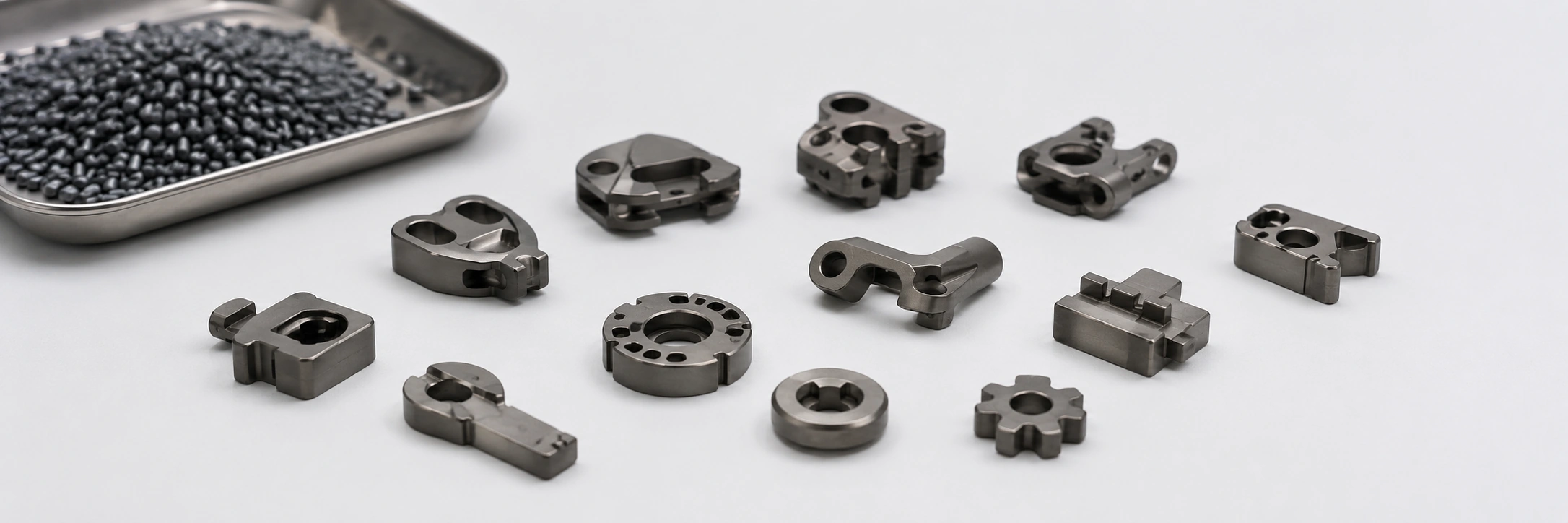
Tungsten alloys can be reviewed for metal injection molding when a project needs compact mass, high density, balance control, shielding-related design requirements, or a special thermal / electrical material route in a small or complex metal component. The key decision is whether the selected tungsten-based material family, part geometry, density target, tolerance requirement, and validation plan can be supported through the MIM process before tooling.
For engineering and RFQ review, tungsten heavy alloy, tungsten-copper, cemented carbide, and pure tungsten-based routes should not be treated as the same material choice. Each route has different feedstock availability, molding behavior, debinding risk, sintering behavior, shrinkage control, final density expectation, and inspection requirements.
Best Fit
Small, complex components that need compact mass, high density, balance, or controlled weight in a limited envelope.
Must Be Reviewed
Material family, prepared feedstock route, debinding stability, sintering behavior, density target, tolerance, and inspection method.
Usually Not Ideal
Large simple parts, unclear “tungsten” requirements, low-volume prototypes, or wear-only requirements better served by cemented carbide.
What Are Tungsten Alloys in Metal Injection Molding?
In metal injection molding, tungsten alloys usually refer to tungsten-based material routes reviewed for small, complex, high-density, or function-driven metal parts. The term should not be treated as one fixed material grade. A project may involve tungsten heavy alloy, tungsten-copper, cemented carbide, or another tungsten-containing route, but each option has a different function, processing behavior, cost structure, and validation requirement.
From a design review perspective, the first step is not to ask whether “tungsten” can be molded. The better question is: what function must the part achieve, and which tungsten-based material family can realistically support that function through MIM?

| Material Route | Main Function | MIM Review Focus | Engineering Role |
|---|---|---|---|
| Tungsten heavy alloy | Density, mass, balance, compact weight | Density target, final weight, shrinkage, distortion, tolerance, inspection | Primary route when density, compact mass, or balance drives material selection |
| Tungsten-copper | Thermal / electrical behavior with tungsten-based structure | Material route, feedstock availability, sintering behavior, dimensional control | Review when thermal or electrical function drives material selection |
| Cemented carbide / WC-Co | Wear resistance, abrasion, hard contact | Hardness, wear surface, edge condition, grinding allowance, inspection | Use the separate MIM cemented carbides guide for wear-focused applications |
| Pure tungsten-based route | Special refractory or functional requirement | Feasibility review before tooling | Requires project-specific feasibility review before tooling |
First-Pass Selection Within Tungsten Heavy Alloys
For high-density projects, “tungsten heavy alloy” still needs a more specific material direction. Use the options below for first-pass material screening, then confirm the actual composition, density, magnetic response, mechanical requirements, feedstock availability, sintering route, and inspection method before tooling.
| Heavy Alloy Direction | When It May Be Reviewed | What the RFQ Should Confirm |
|---|---|---|
| W-Ni-Fe heavy alloy | High density is required together with structural or mechanical performance in a compact balancing, counterweight, or functional component. | Specified grade or chemistry if required, density or final weight target, critical dimensions, mechanical requirements, magnetic-response limits, and inspection method. |
| W-Ni-Cu heavy alloy | The project specifies a Ni-Cu-binder heavy-alloy route or has composition / magnetic-response constraints that must be reviewed separately from W-Ni-Fe. | Specified chemistry, density or final weight target, magnetic-response requirement, mechanical requirements, feedstock availability, and validation method. |
| Higher-tungsten-content heavy alloy | Maximum density, stiffness, or attenuation is more important than maximizing attainable ductility within the selected heavy-alloy family. | Required density or mass, minimum mechanical / ductility requirement, part geometry, critical tolerances, inspection criteria, and any applicable material specification. |
Tungsten Heavy Alloys for Compact Mass and Density
Tungsten heavy alloys are normally considered when the project needs high density or compact mass within a limited design envelope. In MIM, this can be relevant for small precision components where increasing part size is not possible, but additional weight, balance, or mass concentration is needed.
This route is most meaningful when geometry also supports the MIM value proposition. If the component is small, complex, contains holes, ribs, steps, local thickness changes, or features that are expensive to machine from dense metal stock, MIM may be worth reviewing. If the part is large and simple, another manufacturing route may be more practical.
Tungsten-Copper and Project-Dependent Thermal / Electrical Requirements
Tungsten-copper routes may be reviewed when a project has a special combination of density, thermal behavior, and electrical performance requirements. This does not mean every tungsten-copper part is automatically suitable for MIM. Powder availability, feedstock stability, sintering route, final density, dimensional control, and inspection expectations must be confirmed early.
Why Cemented Carbide Should Be Reviewed Separately
Cemented carbide is not the same decision as tungsten heavy alloy. Cemented carbide is usually reviewed when wear resistance, hard contact, abrasion, or edge durability is the main functional requirement. Tungsten heavy alloy is mainly a density and mass decision.
This distinction matters because the wrong material family can lead to incorrect cost assumptions, unsuitable tooling expectations, unclear inspection requirements, and poor RFQ comparison.
When Should Engineers Consider MIM Tungsten Alloys?
Engineers should consider MIM tungsten alloys when the part needs both a tungsten-based material function and a geometry that benefits from injection molding. The material alone is not enough. MIM becomes more meaningful when the component is small, complex, difficult to machine efficiently, or requires repeated production after tooling validation.
High Density in Small or Complex Parts
High density is one of the main reasons to review tungsten heavy alloy MIM. A stainless steel or low-alloy steel part may not provide enough mass in the available space. Increasing the part size may not be possible because of assembly limits.
Balance, Counterweight, and Compact Mass Requirements
Some projects need controlled mass distribution rather than only material strength. A compact part may need to balance a moving assembly, add weight in a limited position, or maintain a specific center-of-gravity requirement.
Thermal / Electrical Review for Tungsten-Copper Routes
Tungsten-copper should be reviewed only when the functional requirement supports that material direction. The review should include material target, part size, wall thickness, critical surfaces, expected production volume, and required post-processing.
Complex Geometry That Is Difficult to Machine Economically
MIM is often considered when the geometry is too complex or wasteful for conventional machining at production volume. Tungsten-based materials can be difficult and costly to machine, especially when small features or repeated production requirements are involved.
| Project Signal | Why It Supports MIM Review | What Must Be Confirmed |
|---|---|---|
| Limited part envelope but higher mass required | Tungsten heavy alloy may increase compact mass without increasing part size | Target weight, density range, balance requirement, and inspection method |
| Small complex geometry with holes, ribs, slots, or local features | MIM may reduce machining waste and support repeated production | Wall thickness, gate position, parting line, ejection, sintering distortion risk |
| Production volume can justify tooling | MIM tooling becomes more reasonable when repeated production offsets tooling cost | Annual volume, production life, sample stage, and tooling expectation |
| Thermal / electrical function requires tungsten-copper review | Material route may support a special functional combination | Material route, final density, post-processing, validation method, and tolerance |
Tungsten Heavy Alloy vs Cemented Carbide: Do Not Treat Them as the Same Choice
A common mistake is to group tungsten heavy alloy and cemented carbide under the same “tungsten” decision. This can cause confusion during material selection, RFQ comparison, tooling review, and inspection planning.
| Functional Priority | Material Route to Review | Main Review Questions |
|---|---|---|
| High density, compact mass, balance, weight concentration | Tungsten heavy alloy | Density target, weight tolerance, sintering stability, distortion, inspection method |
| Wear resistance, abrasion, hard contact, edge durability | Cemented carbide | Wear surface, hardness expectation, edge condition, grinding allowance, inspection |
| Thermal / electrical behavior with tungsten-based material route | Tungsten-copper | Material route, feedstock feasibility, sintering control, post-processing, validation |
| General strength, corrosion resistance, or cost efficiency | Other MIM materials | Review stainless steel, low-alloy steel, copper alloy, or other routes through the MIM material selection guide |
Tungsten Heavy Alloy Is Mainly a Density and Mass Decision
Tungsten heavy alloy is usually reviewed when mass, density, balance, or compact weight is the primary function. The part may not need extreme wear resistance. Instead, the design may need more weight in a smaller envelope.
Cemented Carbide Is Mainly a Wear and Hard-Contact Decision
Cemented carbide is usually reviewed when the part must resist wear, abrasion, hard contact, or edge damage. If wear is the primary function, evaluate a cemented-carbide route separately from tungsten heavy alloy.
MIM Process Risks for Tungsten Alloy Parts
Tungsten alloy MIM projects require early process review because material function and manufacturability are closely connected. The project may look attractive from a material perspective but still become difficult if feedstock, molding, debinding, sintering, or inspection requirements are not aligned.

| Risk Area | What Can Go Wrong | Why It Matters Before RFQ |
|---|---|---|
| Powder and feedstock availability | Requested material route may be unavailable or unstable as MIM feedstock | Quotation and tooling decisions cannot be reliable without a feasible material route |
| Injection molding and green part handling | Short shot, fragile green features, gate issues, ejector marks, local weakness | Geometry and tooling risks should be reviewed before mold development |
| Debinding stability | Cracking, distortion, residue, unstable binder removal path | Debinding risk affects sintering quality, dimensional stability, and yield |
| Sintering, density, and shrinkage control | Density variation, shrinkage mismatch, distortion, dimensional drift | Critical dimensions, weight, and inspection requirements must be evaluated together |
| Secondary operations | Machining, grinding, surface treatment, or assembly requirements may change cost | Critical surfaces should be identified before tooling and quotation |
| Inspection planning | Density, weight, dimension, or function target may be unclear | Validation cannot be planned correctly without measurable acceptance criteria |
Powder and Feedstock Availability
MIM requires a suitable feedstock made from fine metal powder and binder. For tungsten alloy projects, the powder route and feedstock availability must be confirmed before tooling. XTMIM reviews and purchases prepared feedstock pellets when a suitable route is available; the feedstock should not be assumed as produced in-house.
Injection Molding and Green Part Handling
Tungsten-based feedstocks can create molding and green part handling concerns depending on part geometry, wall thickness, feature size, and local transitions. Thin walls, sharp corners, deep holes, unsupported features, and uneven section thickness can increase molding risk.
Debinding Stability
Debinding removes binder from the molded green part before final sintering. Thick sections, trapped binder paths, sharp transitions, and complex internal features may create additional review concerns. These issues are easier to address during drawing review than after tooling has already been built.
Sintering, Density, and Shrinkage Control
Sintering is one of the most important steps for tungsten alloy MIM review. The part must reach the required density and dimensional condition while controlling shrinkage and distortion. The final result depends on material route, sintering behavior, part geometry, fixture strategy, and tolerance expectations.
Distortion, Cracking, and Dimensional Risk
Tungsten alloy parts may face distortion or cracking risk if the design contains uneven wall thickness, unsupported thin features, large flat sections, sudden section changes, or difficult debinding paths. These risks should be reviewed before tooling rather than after sample failure.
DFM Review for Tungsten Alloy MIM
For tungsten alloy MIM, DFM review should connect the material function with the actual molded geometry. A part may be suitable from a material perspective but risky from a MIM process perspective if the wall thickness, hole design, unsupported features, tolerance stack, or secondary operation plan is not realistic.
| DFM Item | Why It Matters | Review Before Tooling |
|---|---|---|
| Wall thickness balance | Uneven sections can increase molding, debinding, and sintering distortion risk | Identify thick-to-thin transitions, unsupported areas, and local mass concentration |
| Holes, slots, ribs, and thin features | Small features may affect green strength, ejection, and sintering stability | Review minimum feature size, tool direction, and critical tolerance areas |
| Gate, parting line, and ejector marks | MIM tooling decisions can affect cosmetic surfaces and functional dimensions | Mark critical surfaces and assembly areas before mold design |
| Density / weight requirement | Tungsten heavy alloy projects often depend on mass, not only geometry | Define target density, target weight, or acceptable range |
| Post-sintering operations | Machining, grinding, coating, marking, or assembly can change cost and lead time | Separate must-machine dimensions from normal MIM dimensions |
| Inspection plan | Final validation may require dimensions, weight, density, flatness, or assembly testing | Confirm what will be measured and how acceptance will be judged |
Design and RFQ Information Needed Before Tungsten Alloy MIM Review
A useful tungsten alloy MIM RFQ should include more than a material name. The supplier needs enough information to judge material feasibility, tooling risk, process route, inspection method, and cost structure.

Drawing and 3D Model Requirements
A 2D drawing and 3D model are important for early review. The 2D drawing should show tolerances, critical dimensions, surface requirements, datum references, and inspection notes.
Material or Functional Requirement
The RFQ should state whether the project requires a specific tungsten alloy grade or a functional result, such as compact mass, balance, thermal behavior, electrical behavior, or wear requirement.
Density, Weight, and Balance Targets
For tungsten heavy alloy projects, density and weight targets are often more important than a generic material name. If the part must meet a specific weight range or center-of-gravity requirement, this should be stated clearly.
Tolerance, Surface, and Secondary Operations
MIM can produce complex near-net-shape parts, but some critical dimensions may still require secondary operations depending on tolerance, surface finish, and assembly requirements.
| RFQ Input | Why It Matters |
|---|---|
| 2D drawing and 3D model | Supports geometry, tolerance, tooling, shrinkage, and inspection review |
| Target alloy or functional requirement | Helps determine whether tungsten heavy alloy, tungsten-copper, cemented carbide, or another route should be reviewed |
| Density, weight, or balance target | Clarifies the main reason to consider a tungsten alloy route |
| Critical dimensions and tolerance notes | Helps evaluate shrinkage risk, secondary operation needs, and inspection plan |
| Surface and secondary operation requirements | Affects machining, grinding, coating, marking, assembly, cost, and lead time |
| Expected annual volume | Determines whether tooling investment can be justified |
If the RFQ package is not ready, review the RFQ preparation guide before requesting a quotation.
When Tungsten Alloy MIM May Not Be the Right Choice
Tungsten alloy MIM is not suitable for every high-density or tungsten-based part. Reject the route early when geometry, production volume, or functional requirements do not justify MIM, because tooling can otherwise add cost without solving the engineering need.
| Choose Tungsten Alloy MIM When | Review Another Route When |
|---|---|
| Small complex part needs high density or compact mass | The part is large, simple, and easy to machine or press |
| Geometry is difficult or wasteful to machine at production volume | The project only needs a few prototypes and tooling is not justified |
| Density, weight, balance, or center-of-gravity requirement is defined | The drawing only says “tungsten” without a measurable functional target |
| The part benefits from near-net-shape molding | The main requirement is wear resistance and cemented carbide is a better fit |
Oversized or Simple Geometry Parts
If the part is large, simple, and easy to machine or press, MIM may not provide enough value. MIM is more useful when the geometry is small, complex, and repeated in production volume.
Wear-Only Requirements Better Served by Cemented Carbide
If the main requirement is wear resistance, abrasion resistance, or hard contact performance, cemented carbide may be a better material route than tungsten heavy alloy.
Low Volume Without Tooling Justification
If the project only needs a few prototypes, MIM tooling may not be justified. Machining, additive manufacturing, or another prototype route may be used first to validate geometry and function.
Unclear Material Target or Validation Requirement
If the drawing only states “tungsten” without density, weight, wear, thermal, electrical, or inspection requirements, the project is not ready for a reliable MIM review.
How XTMIM Reviews Tungsten Alloy MIM Projects
XTMIM reviews tungsten alloy MIM projects from material feasibility, geometry risk, tooling strategy, debinding and sintering route, secondary operations, and inspection requirements. The goal is to determine whether the part is suitable for MIM before tooling decisions are made.
1. Material and Feedstock Feasibility Review
The review starts with the target alloy or functional requirement. The team checks whether suitable prepared feedstock is available and whether the requested material family matches the part function.
2. Geometry and Tooling Risk Review
The drawing and 3D model are reviewed for wall thickness, holes, slots, ribs, undercuts, parting line, gate location, ejector marks, critical dimensions, and secondary operation needs.
3. Debinding and Sintering Route Review
XTMIM handles injection molding and debinding in-house. Sintering capability includes batch vacuum sintering and continuous / belt furnace routes, depending on material and project requirements.
4. Inspection and Secondary Operation Planning
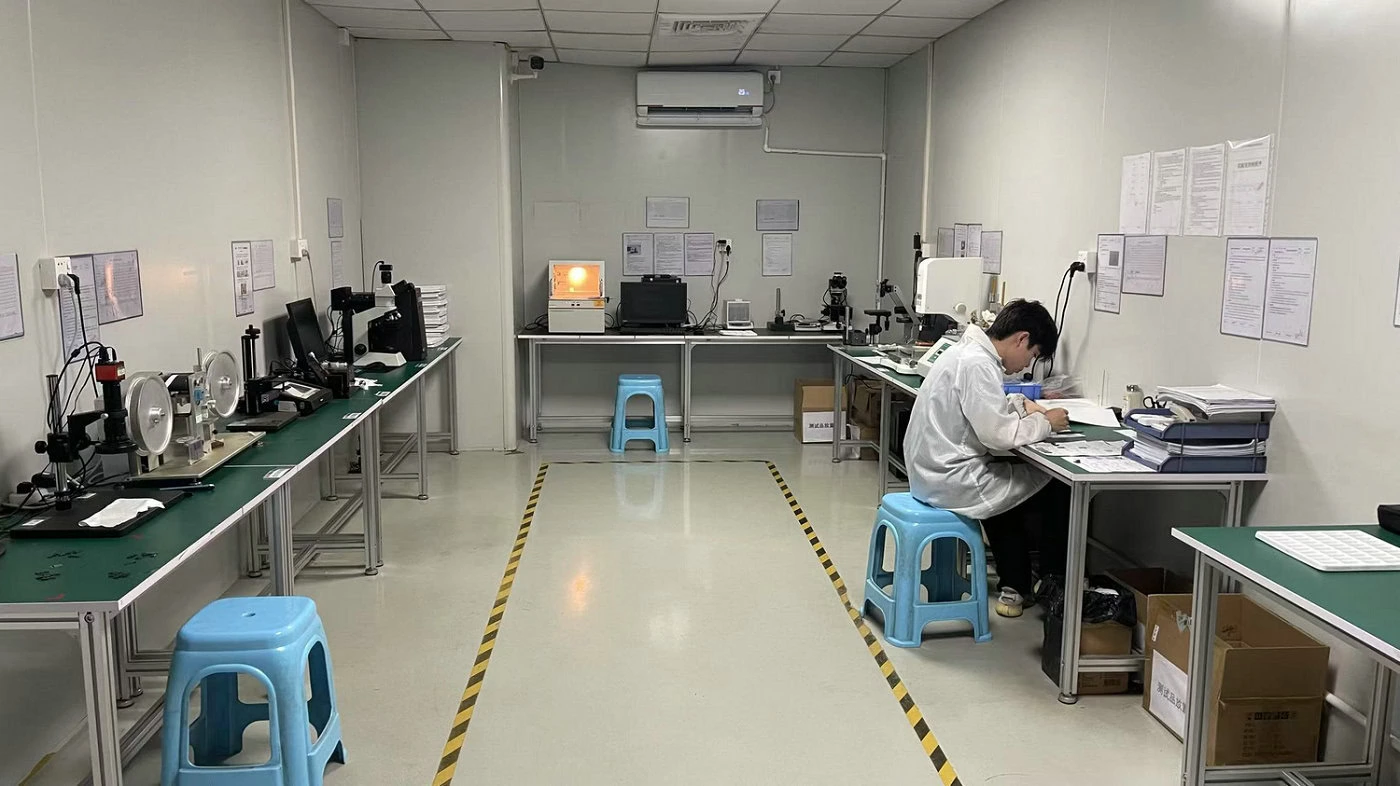
Inspection planning should be defined before tooling. The project team should confirm whether final inspection focuses on dimensions, density, weight, flatness, hole location, surface condition, or assembly function.
FAQ About MIM Tungsten Alloys
Can tungsten alloys be used in metal injection molding?
Yes, tungsten alloy routes can be reviewed for MIM when the part requires compact mass, high density, balance control, shielding-related function, or special thermal / electrical behavior. The final decision depends on alloy family, feedstock availability, part geometry, sintering behavior, tolerance requirements, and validation needs.
What is the difference between tungsten heavy alloy and cemented carbide in MIM?
Tungsten heavy alloy is mainly reviewed for density, mass, balance, or compact weight. Cemented carbide is mainly reviewed for wear resistance, hard contact, and abrasion resistance. They should not be treated as the same material choice.
Is tungsten alloy MIM suitable for very small high-density parts?
It can be suitable when the part is small, complex, and needs high density or controlled mass distribution. The drawing must still be reviewed for wall thickness, holes, critical dimensions, debinding stability, sintering distortion, and inspection requirements.
What information is needed for a tungsten alloy MIM RFQ?
A useful RFQ should include the 2D drawing, 3D model, target alloy or functional requirement, density or weight target, critical tolerances, surface requirements, secondary operations, inspection needs, and expected annual volume.
When should I avoid tungsten alloy MIM?
Tungsten alloy MIM may not be suitable for large simple parts, very low-volume prototypes, unclear material requirements, or applications where wear resistance is the primary function and cemented carbide would be more appropriate.
Can XTMIM confirm density or tolerance before reviewing the drawing?
No reliable confirmation should be made before reviewing the drawing, material target, geometry, tolerance requirements, and inspection method. Density and tolerance feasibility must be evaluated together with the material route and MIM process plan.
Submit a Tungsten Alloy MIM Project for Engineering Review
If your project requires a compact high-density metal component, tungsten heavy alloy, tungsten-copper, or another tungsten-based material route may be worth reviewing before tooling. Send the 2D drawing, 3D model, material target, density or weight requirement, tolerance notes, surface requirements, secondary operation needs, and estimated annual volume.
XTMIM can review whether a tungsten alloy MIM route is suitable, whether another material family should be considered, and what risks should be clarified before mold development.
Technical Reference and Validation Limits
ASTM B777-15(2026), Standard Specification for Tungsten Base, High-Density Metal, is a useful material-reference framework for machinable high-density tungsten-base metal. ASTM states that the specification uses test coupons for material-lot testing rather than actual finished parts, and that sintered properties can vary with part size and sampling location.
| Reference | What It Can Support | What It Does Not Confirm |
|---|---|---|
| ASTM B777-15(2026) | High-density tungsten-base material classification, material requirements, intended-use context, and coupon-based material testing. | XTMIM-specific MIM process window, finished-part density or tolerance capability, or production capability for a specific geometry. |
| Customer drawing and material specification | Part-specific alloy, density or weight, dimensions, tolerances, surfaces, application conditions, and acceptance requirements. | MIM feasibility until feedstock, geometry, tooling, debinding, sintering, secondary operations, and inspection are reviewed together. |
| Project-specific trial and inspection results | Validation of the actual part against agreed dimensions, density or weight targets, surface condition, and functional acceptance criteria. | A universal capability claim for every tungsten-alloy composition, geometry, tolerance, or production condition. |
Using ASTM B777 in an RFQ: ASTM B777 is a material specification, not a metal injection molding process specification. Apply it together with the actual drawing, material route, geometry, critical tolerances, post-sintering operations, and part-specific inspection plan before tooling.