MIM Materials · Special Alloys
Aluminum Alloys for Metal Injection Molding
Aluminum alloys can be considered for metal injection molding in specialized projects, but they should not be treated like standard stainless steel, low-alloy steel, or soft magnetic MIM materials. The real question is whether the aluminum powder, binder system, debinding route, sintering atmosphere, alloy chemistry, density target, and final property expectations can work together for the specific part.
For engineers and sourcing teams, aluminum MIM is worth reviewing when a small, lightweight metal part has complex geometry that is costly to machine or difficult to produce efficiently by other routes. Many aluminum parts, however, are still better suited to CNC machining, die casting, extrusion, PM, or metal 3D printing.
Quick answer: Aluminum MIM is possible in specialized cases, but it is not a routine replacement for CNC aluminum, die casting, extrusion, or common steel MIM. Before tooling, the project should be screened for powder/feedstock feasibility, oxide-related sintering risk, required properties, part size, geometry, tolerance, and annual volume. Not every aluminum alloy drawing is suitable for MIM; suitability must be confirmed by geometry, feedstock route, sintering risk, property expectation, and production volume.
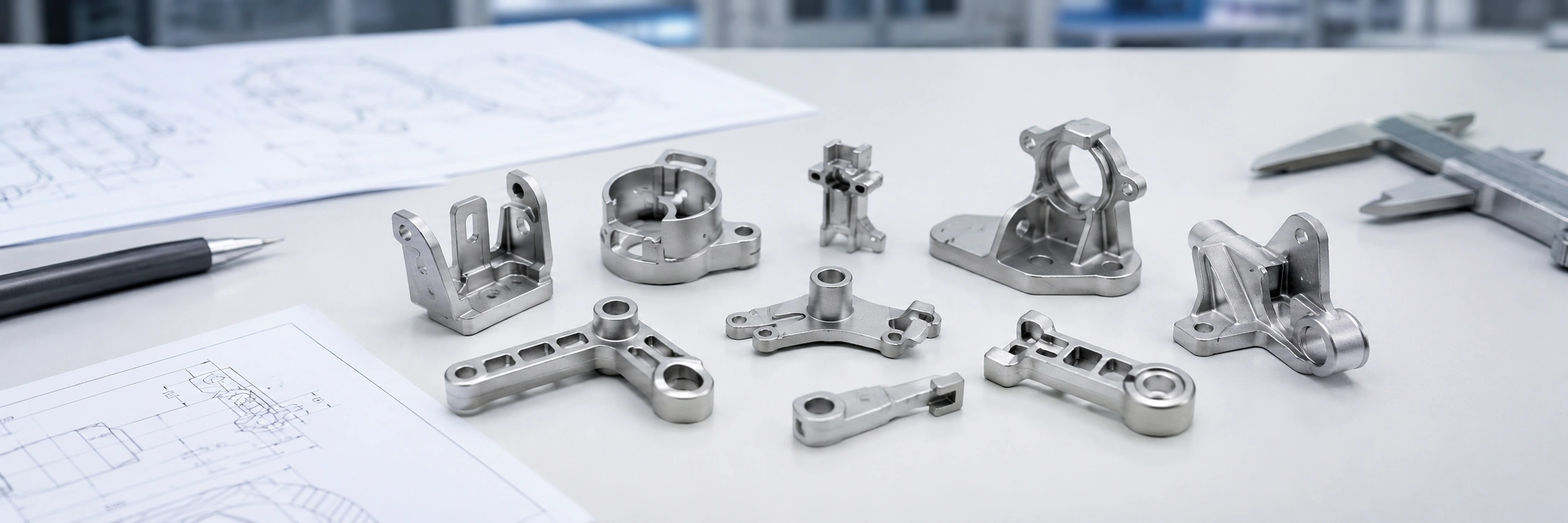
Core conclusion: Aluminum MIM is suitable only when geometry, material expectations, and process risks are reviewed together.
Can Aluminum Alloys Be Used in Metal Injection Molding?
Yes, aluminum alloys can be discussed for metal injection molding, but aluminum MIM is a specialized material route rather than a routine MIM materials choice. In common MIM production, stainless steels, low-alloy steels, soft magnetic alloys, nickel alloys, and some other materials are more widely used because their powder processing, debinding, sintering, and final density control are better established.
Aluminum is different. Aluminum powder naturally forms a stable oxide film on its surface. This oxide layer can interfere with particle bonding during sintering. At the same time, aluminum has a relatively low melting point compared with many metals used in MIM, so the process window for breaking through the oxide barrier and achieving useful densification is narrow.
| Feasibility Question | What a Good Candidate Usually Looks Like | When the Project Needs Caution |
|---|---|---|
| Is the part small and complex? | Small lightweight geometry with ribs, bosses, slots, thin features, or difficult machining details. | Large, simple, thick, or extrusion-like aluminum shapes usually fit other processes better. |
| Is aluminum required for function? | The project has a clear weight, conductivity, corrosion, or system-level reason for aluminum. | The material is only listed by habit, or another MIM alloy could meet the functional requirement. |
| Are properties flexible enough for validation? | The team can validate final density, strength, and dimensional performance by project review. | The part must exactly match wrought 6061-T6 or 7075-T6 properties without process validation. |
| Does annual volume support tooling? | The design is stable and repeat production can justify tooling and process development. | The part is still changing, volume is low, or prototype speed is more important than tooling economics. |
Why Aluminum MIM Is Not a Standard MIM Material Route
A common misunderstanding is to assume that any metal alloy used in CNC machining or die casting can also be converted directly to MIM. That is not true. MIM depends on fine metal powder, binder mixing, injection molding, debinding, sintering shrinkage, and final dimensional control. Each material system behaves differently during these steps.
For aluminum alloys, the oxide layer is the main technical barrier. If the oxide layer remains too stable during sintering, powder particles may not bond effectively. If the sintering temperature is pushed too high, the aluminum alloy may soften, distort, or enter an unstable processing window.
When Aluminum MIM May Still Be Worth Reviewing
Aluminum MIM may be worth reviewing when the part is small, lightweight, geometrically complex, and expensive to machine from billet. It may also be relevant when the design includes thin ribs, internal features, bosses, slots, or multi-axis machining requirements that increase CNC cost at higher annual volume.
If the required properties must match wrought 6061-T6, 7075-T6, or another standard wrought aluminum condition exactly, aluminum MIM may not be the safest route. The engineering review should focus on function first.
Why Aluminum MIM Is Technically Difficult
Aluminum MIM is difficult because aluminum powder does not behave like many common MIM metal powders during sintering. The oxide film, melting temperature, sintering atmosphere, binder removal, particle bonding, shrinkage, density, and post-processing assumptions all affect whether the final part can meet the application requirement.

Core conclusion: Oxide control and sintering window make aluminum MIM more difficult than common MIM steels.
Aluminum Oxide Film and Sintering Barriers
Aluminum powder particles are covered by a thin but stable oxide film. In MIM, sintering requires metal particles to bond and densify after binder removal. If the oxide film prevents sufficient particle contact or diffusion, the final part may have lower density, weaker bonding, or inconsistent properties.
Narrow Processing Window Below the Melting Point
Many MIM materials are sintered at high temperatures below their melting point. For aluminum, the usable window is more restrictive because the oxide layer is stable while the base metal has a relatively low melting point. This creates a difficult balance between densification and shape stability.
Binder Removal, Atmosphere, and Density Control
Debinding must remove the binder without damaging the fragile brown part before sintering. For aluminum MIM, oxygen exposure, residue, atmosphere selection, and powder chemistry can influence the final result, especially when density and mechanical requirements are important.
| Technical Risk | What Can Go Wrong | What to Confirm Before RFQ |
|---|---|---|
| Surface oxide layer | Insufficient particle bonding, lower density, unstable mechanical properties, or inconsistent sintering response. | Powder/feedstock route, sintering approach, density target, and acceptable validation method. |
| Narrow sintering window | Distortion, shape instability, incomplete densification, or excessive sensitivity to furnace conditions. | Part size, wall thickness, furnace route, expected shrinkage, and critical dimensions. |
| Binder removal | Brown part damage, residue, cracking risk, or contamination that affects sintering quality. | Debinding route, wall thickness, feature transitions, and part handling requirements. |
| Property expectation | Mismatch between requested wrought alloy behavior and powder-based MIM part performance. | Functional requirement, strength target, density requirement, surface requirement, and test method. |
| Dimensional control | Critical features may require secondary machining, sizing, or inspection after sintering. | Critical-to-function dimensions, tolerance class, datum scheme, and inspection plan. |
Engineering note: Aluminum MIM feasibility should be reviewed as a complete material-process-geometry system. A grade name such as 6061 or 7075 does not define the final MIM outcome by itself.
Suitable Aluminum MIM Part Conditions
Aluminum MIM is more likely to be worth reviewing when the part combines small size, low weight, complex geometry, and repeat production demand. The best candidates are usually compact metal parts where machining waste, multi-step machining, or assembly complexity becomes a problem.

Core conclusion: Geometry and volume must justify aluminum MIM before tooling.
Small Complex Lightweight Parts
A potential aluminum MIM candidate may include fine features, thin ribs, small bosses, internal slots, undercuts, or compact structural geometry. These features can be expensive to machine, especially when several setups or secondary operations are required.
Features That Are Expensive to Machine
Aluminum MIM may be considered when the current CNC route requires extensive material removal, multiple tool changes, tight feature alignment, or repeated secondary drilling and milling. If MIM can form several features near-net shape, it may reduce machining time after tooling validation.
When Material Savings and Geometry Matter
CNC machining from aluminum billet can generate significant material waste when the final part has a high material removal ratio. MIM may reduce waste by forming the part closer to final geometry, but the decision still depends on tooling, yield risk, secondary operations, inspection, and annual volume.
| Review Factor | Better Fit for Aluminum MIM Review | Higher Risk for Aluminum MIM |
|---|---|---|
| Part size | Small, compact, lightweight components. | Large housings, plates, covers, or thick blocks. |
| Geometry | Ribs, slots, bosses, small internal features, difficult machining details. | Simple profiles, large flat surfaces, extrusion-like shapes. |
| Volume | Stable design with repeat production potential. | Prototype-only, frequent design changes, uncertain demand. |
| Material expectation | Function-driven lightweight metal requirement. | Exact wrought aluminum property replacement without validation. |
| Secondary operations | Only selected critical holes, threads, sealing faces, or datums need finishing. | Most functional surfaces require tight machining after sintering. |
| Inspection | Critical dimensions can be clearly defined and checked by an agreed method. | The drawing has unclear tolerances, no datum logic, or unverified property assumptions. |
Unsuitable Projects for Aluminum Alloy MIM
Many aluminum parts should not be converted to MIM. A good feasibility review should help users avoid the wrong process, not only promote MIM. If another process is simpler, lower risk, or more economical, that route should be considered early.
Large Simple Aluminum Parts
Large simple parts are usually poor candidates for MIM. If the component is a housing, cover, bracket, plate, extrusion-like profile, or simple machined block, die casting, extrusion, stamping, CNC machining, or another process may be more practical.
Projects Requiring Standard Wrought Aluminum Properties
If the drawing requires properties that directly match wrought aluminum conditions such as 6061-T6 or 7075-T6, the project needs careful review. MIM parts are produced from powder, binder, debinding, sintering, and sometimes post-treatment, so final properties should not be assumed from wrought material designations.
Low-Cost Die Casting or Extrusion Applications
If the part is already well suited to aluminum die casting, extrusion, or high-speed CNC machining, aluminum MIM may not provide enough benefit. Aluminum MIM should be reviewed only when it offers a clear manufacturing reason.
Engineering caution: Aluminum MIM should not be selected only because the material is lightweight. The process must also make sense for geometry, volume, density target, tolerance, secondary operations, and supplier process capability.
| Project Situation | Likely Better Direction | Reason |
|---|---|---|
| One-off prototype or early design validation | CNC machining or metal 3D printing | Tooling is usually premature before the design is stable. |
| Large aluminum housing or cover | Die casting or CNC machining | MIM is usually strongest for small complex parts, not large simple aluminum structures. |
| Constant cross-section aluminum profile | Extrusion or CNC finishing | Extrusion is typically more logical for long profile-like shapes. |
| Exact wrought alloy property requirement | Wrought material plus machining, unless validation supports another route | Powder-based MIM properties should not be assumed to match wrought material conditions. |
Aluminum Alloy Families Discussed for MIM
Aluminum alloy names are useful starting points, but they are not enough to decide MIM feasibility. For special alloy MIM materials, the powder route, feedstock quality, binder system, sintering atmosphere, post-treatment, density target, and tolerance requirement may be more important than the alloy name alone.
6000-Series Aluminum Alloy Concepts
6000-series aluminum alloys are often associated with balanced strength, corrosion resistance, and machinability in conventional manufacturing. In an aluminum MIM discussion, a 6061-type expectation may appear when the customer wants a lightweight structural part with familiar engineering behavior.
A drawing that says “6061” does not automatically mean the part is suitable for MIM. The supplier must review whether a compatible powder and feedstock route is available and whether the final part must match a wrought aluminum condition.
High-Strength Aluminum Alloy Concepts
High-strength aluminum alloy concepts, including 7000-series expectations, require even more caution. These materials may be selected in conventional manufacturing when strength-to-weight ratio is important, but the MIM route may not deliver the same property profile without specialized validation.
Why Alloy Names Alone Are Not Enough for RFQ
For aluminum MIM, alloy name, part geometry, density requirement, tolerance, surface finish, and annual volume must be reviewed together. A supplier may need to recommend an alternative material or process if the requested aluminum alloy is not realistic for the required part.
| RFQ Item | Why It Matters |
|---|---|
| Target alloy or functional requirement | Confirms whether the request is material-specific or performance-driven. |
| 2D drawing and 3D CAD | Allows geometry, tolerance, and shrinkage review. |
| Critical dimensions | Identifies features that may need machining or special inspection. |
| Required strength or stiffness | Helps determine whether aluminum MIM is realistic. |
| Density or porosity requirement | Important for mechanical and functional performance. |
| Annual volume | Determines whether tooling investment can be justified. |
| Current process | Shows whether MIM is being compared with CNC, die casting, PM, or metal 3D printing. |
| Surface or coating requirement | May affect secondary operations and final inspection. |
Practical RFQ advice: If the customer is not sure which aluminum alloy is required, it is better to describe the function first: lightweight structure, corrosion environment, conductivity, stiffness, strength, surface requirement, or assembly role. A function-first RFQ gives the engineering team more room to judge whether aluminum MIM, another MIM alloy, CNC, die casting, PM, or 3D printing is more suitable. For broader special alloy comparison, review titanium alloys for MIM or copper alloys for MIM when lightweight or conductivity needs drive the material choice.
Aluminum MIM vs CNC, Die Casting, PM, and Metal 3D Printing
Aluminum MIM should be compared with other manufacturing processes before tooling. The right process depends on part size, complexity, volume, tolerance, material expectation, surface requirement, and development stage.

Core conclusion: Process choice should be based on part size, complexity, volume, and property expectations.
| Process | Better Fit | Limitations for This Topic | Common Review Trigger |
|---|---|---|---|
| Aluminum MIM | Small complex lightweight metal parts with repeat production potential. | Requires specialized feasibility review, powder/feedstock route, sintering control, and tooling. | The part has compact complex features and machining waste is high. |
| MIM vs CNC machining | Prototypes, low volume, tight-machined features, frequent design changes. | CNC can be costly for high material removal and complex multi-operation parts. | The design is still changing or volume does not justify tooling. |
| MIM vs die casting | Larger housings, covers, brackets, and high-volume aluminum parts. | Die casting may not suit very small precision features or certain internal geometries. | The part is a larger aluminum structure with casting-friendly geometry. |
| MIM vs PM | Simpler compacted geometries, porous or regular powder metallurgy parts. | PM is less suitable for highly complex injected geometries. | The design is regular and does not need MIM-level shape complexity. |
| MIM vs metal 3D printing | Low-volume complex validation or geometry exploration. | Metal 3D printing may be expensive for repeat production and may need post-processing. | The team needs to validate complex geometry before tooling. |
The decision should not be based on material alone. A small part made from aluminum may still be better machined. A larger part may be better die cast. A complex low-volume part may be better printed first. Aluminum MIM becomes more relevant when part complexity, volume, and material expectations support the MIM route.
Design and RFQ Review Points for Aluminum MIM Parts
Aluminum MIM RFQ review should begin with a complete technical package. A material name without drawing details is not enough for a reliable evaluation.
Drawing and 3D Model Requirements
The supplier should review both 2D drawings and 3D CAD files. The 2D drawing shows tolerances, critical dimensions, surface requirements, material callouts, inspection notes, and special features. The 3D model helps evaluate molding direction, wall thickness, ribs, slots, undercuts, gate location, parting line, shrinkage, and potential secondary operations.
Material and Property Expectations
The RFQ should explain why aluminum is required. Is the main goal weight reduction, conductivity, corrosion resistance, machinability, appearance, or replacement of a current CNC part? If the project specifically requires an aluminum alloy, the property expectations must be stated clearly.
Critical Dimensions and Post-Processing Needs
Holes, threads, sealing surfaces, bearing surfaces, flatness areas, and very tight tolerances may require secondary machining or sizing. These features should be marked on the drawing before quotation.
Annual Volume and Tooling Review
MIM requires tooling. For very low-volume projects, CNC machining or metal 3D printing may be safer. Aluminum MIM is more likely to be considered when the design is stable, annual volume supports tooling, and geometry creates a real manufacturing advantage.
| RFQ Package Item | Minimum Information to Provide | Engineering Review Purpose |
|---|---|---|
| 2D drawing | Tolerances, datums, critical dimensions, surface notes, material callout, inspection requirements. | Determines whether the part can be molded, sintered, inspected, and finished reliably. |
| 3D CAD model | STEP, Parasolid, or other neutral model format if available. | Supports parting, gating, shrinkage, wall thickness, and feature accessibility review. |
| Material expectation | Target alloy, functional reason for aluminum, or acceptable performance range. | Clarifies whether the project is grade-driven or function-driven. |
| Critical features | Threads, holes, flatness areas, sealing surfaces, bearing surfaces, or assembly datums. | Identifies secondary operations and inspection risk before pricing. |
| Annual volume | Prototype quantity, pilot quantity, and expected annual production quantity. | Checks whether tooling and process development can be justified. |
| Current manufacturing route | CNC, die casting, PM, 3D printing, extrusion, or other current process. | Shows why the team is considering aluminum MIM and what problem must be solved. |

Core conclusion: Drawing-based review is required before aluminum MIM quotation or tooling.
How XTMIM Reviews Aluminum Alloy MIM Feasibility
XTMIM reviews aluminum MIM projects as engineering feasibility cases. The review should not begin with a guaranteed production assumption. It should begin with drawing, material, function, and process risk.
Geometry Review
The geometry review checks whether the part is small enough, complex enough, and stable enough for MIM consideration. Wall thickness, ribs, holes, slots, bosses, sharp transitions, undercuts, and critical tolerance areas should be reviewed before tooling.
Material and Feedstock Review
The material review checks whether the requested aluminum alloy or functional requirement is realistic for a powder-based MIM route. Since feedstock availability and powder behavior affect feasibility, the review should not rely only on the alloy name on the drawing.
Process Risk Review
Process risk review considers debinding, sintering, density, distortion, secondary machining, inspection, and yield risk. Aluminum MIM may require more specialized control than common MIM materials, so the project team should confirm what must be achieved and what can be adjusted.
Alternative Process Recommendation
If aluminum MIM is not the best route, the engineering team should help compare alternatives. CNC machining, die casting, PM, metal 3D printing, or another material system may be more realistic depending on part size, volume, tolerance, and performance requirements.
Composite Field Scenario for Engineering Training
A small lightweight aluminum component is currently machined from billet. The part includes thin ribs, internal slots, small bosses, and several secondary drilling operations. The customer wants to know whether MIM can reduce machining waste and stabilize production cost at higher annual volume.
During feasibility review, the supplier checks whether aluminum MIM is technically realistic, whether the required properties must match wrought aluminum, whether the geometry justifies tooling, and whether die casting or CNC machining remains the safer route. The conclusion is not based only on the word “aluminum.” It is based on geometry, material expectation, density requirement, secondary operations, inspection method, and annual volume.
Send Your Aluminum MIM Drawing for Feasibility Review
Before requesting a price, share your drawing, 3D model, alloy expectation, critical dimensions, and annual volume. XTMIM can review whether aluminum MIM is realistic or whether CNC, die casting, PM, metal 3D printing, or another material route is safer.
FAQs About Aluminum Alloys for Metal Injection Molding
Can aluminum alloys be processed by metal injection molding?
Yes, aluminum alloys can be considered for MIM in specialized cases, but they are not routine MIM materials like stainless steel or low-alloy steel. The project should be reviewed for powder route, oxide control, sintering feasibility, density, geometry, and functional requirements.
Why is aluminum MIM more difficult than stainless steel MIM?
Aluminum powder has a stable surface oxide layer that can interfere with sintering. Aluminum also has a relatively low melting point, which limits the usable sintering window. This makes density, bonding, distortion, and final properties more difficult to control.
Is 6061 aluminum suitable for MIM?
A 6061-type requirement can be discussed during feasibility review, but the alloy name alone is not enough. The supplier must review feedstock availability, powder chemistry, sintering route, density target, heat treatment assumptions, and whether the final part must match wrought aluminum properties.
When should CNC machining or die casting be used instead of aluminum MIM?
CNC machining is often better for prototypes, low volume, tight-machined features, and changing designs. Die casting is often better for larger aluminum housings or high-volume parts with geometry suited to casting. Aluminum MIM should be reviewed when the part is small, complex, repeatable, and difficult to machine efficiently.
What information is needed for an aluminum MIM RFQ?
The RFQ should include a 2D drawing, 3D CAD model, target alloy or functional requirement, critical dimensions, expected annual volume, surface requirements, post-processing needs, and the current manufacturing process or problem.
Technical References
These references are included to support the page’s cautious engineering boundary around aluminum MIM feasibility.