مواد MIM المخصصة: تأهيل السبائك الراسخة للإنتاج
تحدد رسوماتك سبائك خارج قائمة مواد MIM القياسية لمعظم المصانع. السبائك موجودة بالفعل، وربما يكون مورد آخر قد نشر دليلاً على مسحوق MIM أو معالجته، ولكنك لا تزال بحاجة إلى مُصنّع قادر على تحويلها إلى أجزاء مؤهلة. بالنسبة لمُصنّع المعدات الأصلية (OEM) الأجنبي الذي يبحث عن تصنيع MIM في بر الصين الرئيسي، غالبًا ما يكمن التحدي في العثور على شريك محلي على استعداد لمراجعة هذه الأدلة وتأهيل السبائك على معدات مختلفة. أنت بحاجة إلى مادة أولية قابلة للتطبيق وعملية إنتاج، وموافقة على العينات، ومسار واقعي للطلبات المتكررة - وليس سبائك تم اختراعها حديثًا.
تراجع XTMIM الاستفسارات الخاصة بالسبائك الراسخة ولكن غير الروتينية حالة بحالة. يمكننا تقييم الرسومات، وأدلة المواد، وجاهزية الموردين، وقيود العملية، ومسارات التجارب المحتملة. قد تتطلب مساحيق السبائك المتخصصة والمواد الأولية المحببة شريكًا متخصصًا؛ وقد تتطلب إزالة المادة الرابطة والتلبيد فحوصات توافق المعدات أو دعمًا خارجيًا مؤهلاً. نؤكد خيارات الإنتاج المتاحة فقط بعد التحقق من متطلبات المواد والمعدات المحددة.
- سبائك محددة ومتطلب جزء محدد، وليس مجرد طلب لتكوين جديد.
- أي دليل متاح لمسحوق MIM، أو مادة أولية، أو تجربة، أو اختبار، أو إنتاج من موردين آخرين.
- رسم هندسي، ومتطلبات قبول، وخطة إنتاج مقصودة تبرر التجارب المرحلية.
إجابة سريعة: كيف تؤهل سبيكة MIM غير قياسية؟
عندما تحتاج إلى سبيكة MIM غير قياسية، ابدأ بمراجعة جدوى المواد قبل طلب أدوات الإنتاج. أرسل الدرجة الدقيقة، الرسم الهندسي، الخصائص المطلوبة، معايير الفحص، الطلب السنوي المتوقع، وأي سجلات اختبار MIM أو إنتاج موجودة. يجب على المصنع تأكيد العمليات التي يمكنه تنفيذها، وأين يلزم دعم متخصص للمواد الخام (feedstock)، وما إذا كانت معدات القولبة، وإزالة المادة الرابطة (debinding)، والتلبيد (sintering) الخاصة به يمكنها التعامل مع المادة. بمجرد الإجابة على هذه الأسئلة، اتفق على تجربة صغيرة قابلة للقياس. انتقل إلى عينات الأجزاء والإنتاج التجريبي فقط عندما تلبي المرحلة السابقة معاييرها المتفق عليها. إذا ظلت ملاءمة المواد الخام أو الفرن غير مؤكدة، فابحث في هذه الثغرات أو فكر في شريك خارجي مؤهل أولاً.
اطلب تأكيدًا منفصلاً لدرجة السبيكة، مسحوق MIM، المواد الخام المعبأة في حبيبات (pelletized feedstock)، ونتائج إنتاج الأجزاء النهائية. النجاح مع أحدها لا يثبت الآخرين.
هل سبائكك مؤهلة لعملية MIM؟
قد يحدد الرسم الهندسي سبائك UNS أو EN راسخة لم تقم مصانع MIM المختارة بمعالجتها من قبل. قد يكون لدى العميل بالفعل مواصفات للمسحوق، أو تقارير اختبار من المورد، أو أجزاء MIM مصنعة في مكان آخر. في هذه الحالة، عادةً ما يعني تطوير المواد المخصصة نقل الأساس التقني المتاح إلى مصنع جديد وتأهيل عمليته الخاصة للمكون الفعلي.
تأهيل السبائك الراسخة مقابل تطوير سبائك جديدة
تأهيل العملية يعني تقييم مادة موجودة مقابل توريد مادة التغذية (feedstock) الخاصة بالشركة المصنعة الجديدة، والقولبة، وإزالة المادة الرابطة، والتلبيد، والتشطيب، والفحص، وضوابط الإنتاج. تطوير سبيكة جديدة يبدأ بتركيبة غير مثبتة وقد يتطلب تصميمًا مكثفًا للسبائك، وإنتاج المسحوق، وأبحاث المادة الرابطة، وتطوير العملية الأساسي. نطاق المراجعة المقصود لـ XTMIM هو الأول: جدوى تصنيع السبائك الراسخة، مدعومة بأدلة خارجية موثوقة وخطة إنتاج واقعية. اختراع السبائك المفتوح ليس خدمة روتينية.
إذا كان يمكن تلبية الدرجة المحددة الخاصة بك بدلاً من ذلك بمادة MIM راسخة أو بديل معتمد، فيجب فحص هذا الخيار دون تغيير متطلبات الرسم الإلزامية بمبادرة من المورد. يعد الاستبدال المعتمد من العميل مختلفًا عن استبدال السبائك المحددة بصمت.
ما هي الأدلة الموجودة التي تجعل المادة جديرة بالمراجعة؟
اطلب من المصنع ومورد المسحوق تحديد الخطوات التي تم اختبارها بالفعل. قد يؤكد إدخال الكتالوج توفر المسحوق، بينما يوفر دليل على جزء مقولب وملبد ومفحوص أساسًا أقوى بكثير لتخطيط الإنتاج.
| الأدلة المتوفرة | ما تثبته | ما لا يزال يتعين على الشركة المصنعة الجديدة التحقق منه |
|---|---|---|
| درجة السبائك المعترف بها أو ورقة بيانات السبائك المشكلة/المصبوبة | الكيمياء المستهدفة والخصائص المرجعية موجودة. | ما إذا كان مسار MIM فعلي قد تم إثباته؛ اسم الدرجة وحده لا يكفي. |
| مسحوق معروض صراحةً لـ MIM | مسار توريد مسحوق مرشح موجود. | تركيبة المادة الرابطة، وتوفر المادة المغذية المحببة، ومعالجة وخصائص الجزء النهائي. |
| دليل على مادة التغذية MIM للمورد أو قطعة اختبار ملبدة | تم إثبات بعض خطوات مسار MIM. | قابلية النقل إلى المعدات الجديدة، والهندسة، والمواصفات، وسلسلة التوريد. |
| التحقق الفعلي من أجزاء MIM أو سجلات الإنتاج المتسلسل | دليل أقوى على أن المادة يمكن أن تدعم إنتاج المكونات في مكان آخر. | تجارب مستقلة، وقابلية التكرار، والتكلفة، والموافقة في المصنع الجديد. |
يمكن أن تفيد نتائج تقنية Binder Jetting، أو دمج مسحوق الليزر في طبقة السرير، أو الضغط والتلبيد التقليدي في اختيار المواد، ولكن خطوات القولبة وإزالة المادة الرابطة مختلفة. في حالة عدم وجود أساس MIM موثوق، ستحتاج XTMIM أولاً إلى دليل من متخصص قبل النظر في مشروع نقل العملية.
كيفية تقييم مُصنّع MIM مؤهل لسبائكك
عند البحث عن جزء MIM من سبيكة متخصصة في البر الرئيسي للصين، تجاوز قائمة المواد الموجودة على مواقع الموردين. يجب على المُصنّع المناسب مراجعة سجلات العمليات الحالية التي يُسمح لك بمشاركتها، وتحديد حدود معداته الخاصة، والاستعانة بمورد متخصص للمسحوق أو مادة التغذية عند الضرورة، وشرح ما يجب اختباره قبل الموافقة على القالب. الخبرة في الفولاذ المقاوم للصدأ الشائع وحدها لا تثبت الملاءمة لسبائك النحاس التي تنطوي على مخاطر تلبيد وتلوث مختلفة.
أسئلة حول القدرة
- ما هي عمليات MIM التي يتم إجراؤها داخليًا، وأيها تستخدم شركاء مؤهلين؟
- هل المصنع مؤهل لعائلة سبائك مماثلة أو قام بنقل مادة تغذية من مورد آخر؟
- هل يمكن لفريق الأدوات والقولبة لديه تقييم هندسة الجزء الفعلية ومخاطر الانكماش؟
- هل سيقوم المصنع بمراجعة تكوين الفرن الفعلي الخاص به قبل تقديم وعد بالتلبيد؟
أسئلة حول التعاون
- من يتصل بمورد المسحوق/مادة التغذية ويوثق مواصفات المواد؟
- ما هي السجلات الفنية السابقة التي يمكن مشاركتها بشكل قانوني، ومن سيعيد التحقق من خطوات العملية في المصنع الجديد؟
- ما هو الدليل الفني المطلوب قبل تحديد تجربة مدفوعة؟
- هل يمكن بدء المشروع بكميات تجريبية خاضعة للرقابة عندما تكون الكمية طويلة الأجل ذات مصداقية؟
- من يوافق على كل مرحلة، وكيف يتم الإبلاغ عن النتائج، وماذا يحدث إذا فشلت التجربة؟
ماذا تطلب كتابيًا: استجابة مفيدة من المورد تحدد المعدات والعمليات المتاحة بالفعل, العمل الذي يعتمد على شركاء متخصصين، و الأسئلة التي تتطلب تجارب. يوضح الجدول أدناه كيف تبدو الاستجابة القابلة للتنفيذ.
| نقطة مراجعة المورد | إجابة موثقة مفيدة | سبب طلب توضيح |
|---|---|---|
| ملكية العملية | أسماء من سيقومون بتقييم القولبة، وإزالة المادة الرابطة، وتوافق الفرن، والمادة الخام، والفحص النهائي؛ وتحديد أي شريك خارجي. | "يمكننا تصنيع أي سبيكة" دون تحديد حدود المعدات أو المهندسين المسؤولين. |
| دليل على جاهزية المواد | يفصل مادة MIM المسحوقة، والمادة المغذاة المحببة، والعينات المختبرة، والإنتاج المؤهل للأجزاء؛ ويحدد درجة السبيكة الدقيقة. | يستخدم ورقة بيانات سبيكة مشكلة، أو قائمة مسحوق SLM، أو نتيجة Binder Jetting كدليل على الإنتاج التسلسلي لـ MIM. |
| المعدات والتلوث | يقدم مراجعة لملاءمة الفرن، وموقع تجريبي معتمد، وخطة لمنع التداخل مع الإنتاج القائم. | يفترض أن فرنًا قائمًا على الحديد يمكنه معالجة سبائك النحاس المتخصصة لمجرد أن نطاق درجة حرارته كافٍ. |
| الموافقة على التجربة | يقترح اختبارًا محدودًا، ومعايير قبول مكتوبة، ومسؤوليات، وحدود تكلفة، وقرار بالمضي قدمًا / المراجعة / التوقف. | يطلب أدوات إنتاج كاملة أو يعد بأسعار إنتاج قبل التحقيق في المجهولات الحرجة. |
إذا لم تتم معالجة السبيكة مطلقًا على الخط المقترح، فيجب أن يحدد عرض الأسعار الموثوق به ما يظل مؤقتًا. تعتمد الخصائص النهائية، وسعر القطعة، والتزامات التسليم على إمدادات المواد المعتمدة، ومسار الفرن، والأدوات، واختبارات القبول.
تبدأ XTMIM بـ مراجعة الرسم والعملية لتحديد قيود التصنيع قبل مناقشة خطة تجريبية.
ما الذي يجب عليك مشاركته مع المصنع لمراجعة الجدوى الأولية؟
يُعد الاستفسار الأولي المفيد بمثابة ربط لثلاثة عناصر: رسم المكون، ومتطلبات المواد والأداء الخاصة به، وأي عمل سابق بتقنية MIM على هذا السبيكة. يكفي اسم الدرجة لبدء البحث عن المواد، ولكنه غير كافٍ لعرض أسعار الإنتاج. شارك سجلات المورد المتاحة فقط عندما يكون لديك إذن؛ يجب على المصنع الجديد أن يحدد شروط المعالجة الخاصة به.
- درجة السبيكة الدقيقة، المعيار الحاكم وحدود التركيب المطلوبة
- رسم ثنائي الأبعاد مع التفاوتات الحرجة، ورسم CAD ثلاثي الأبعاد، إن وجد
- وظيفة الجزء، ظروف التجميع وبيئة التشغيل
- أهداف قبول الجزء النهائي: الكثافة، الصلابة، القوة أو الخصائص الوظيفية
- أي مواصفات مسحوق MIM موجودة، بيانات المادة الأولية أو تقارير تجريبية
- جهات اتصال المورد أو الإذن لطلب وثائق إضافية للمسحوق/المادة الأولية
- أجزاء عينة قابلة للمقارنة أو دليل تصنيع معروف، عند إمكانية المشاركة
- متطلبات التشطيب السطحي، الطلاء، المعالجة الحرارية والفحص
- الحجم السنوي المتوقع، الكمية التجريبية، وخط الإنتاج المقصود
- الجدول الزمني والميزانية المستهدفة للتحقق الفني
- ما هي متطلبات المواد أو الأداء الإلزامية أو قابلة للتفاوض
If you only have a material specification: ask for an initial check of MIM powder and feedstock availability and possible furnace limitations. A meaningful part quotation will still require geometry, quantities and acceptance criteria. Any proposed change of grade needs the customer's engineering approval.
Example of a first inquiry: "Our component requires [exact alloy and standard] because of [mandatory function or specification]. We can share [drawings, required properties and existing MIM evidence], and expect [initial validation demand] followed by [estimated annual volume]. Can your team identify the available feedstock and sintering route, the documents needed for a feasibility decision, and the scope of an initial paid trial before production tooling?" The factory can then tell you which documents or decisions are missing before a trial can be priced.
How Does a Factory Assess Material and Process Feasibility?
Once the alloy and component requirements are clear, the factory checks the manufacturing sequence from powder to finished part. Even if suitable powder can be purchased, missing feedstock data, unstable binder removal, unsuitable sintering conditions or poor dimensional repeatability can prevent production.
Existing MIM Evidence, Powder and Feedstock Availability
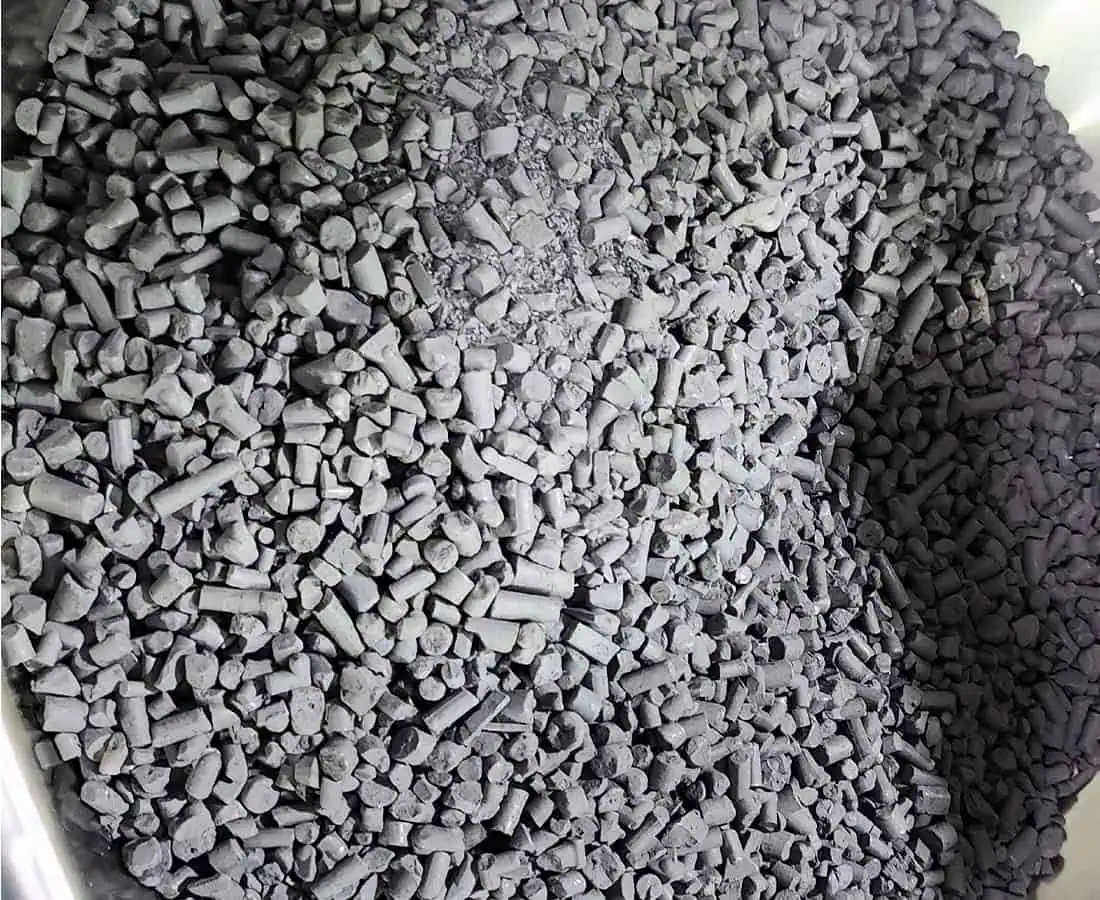
Start by verifying the exact grade, powder chemistry, particle characteristics, oxygen/impurity requirements, supplier capability, minimum order quantity and continuity of supply. A supplier may sell powder suitable for MIM without supplying a qualified pelletized feedstock. Another may have a feedstock formulation but no evidence that it matches the new part's binder-removal and sintering conditions.
The specialist powder or feedstock supplier normally prepares the material formulation and مادة تغذية MIM جاهزة للقولبة. XTMIM does not present powder atomization or powder-binder compounding as routine in-house operations. Any new feedstock arrangement must define responsibility for consistency, documentation and trials.
Records to request from the previous supplier: When transferring the material to a factory in China, request the powder certificate and batch information, feedstock or binder family, debinding method, sintering atmosphere, specimen description, post-treatment steps, measured properties and known defects, where disclosure is permitted. A redacted test report can still help the new factory judge the starting point without exposing a supplier's proprietary recipe. Laser powder-bed fusion and Binder Jetting records remain useful material references, but they do not replace injection-molding and debinding trials.
Injection Molding and Debinding Compatibility
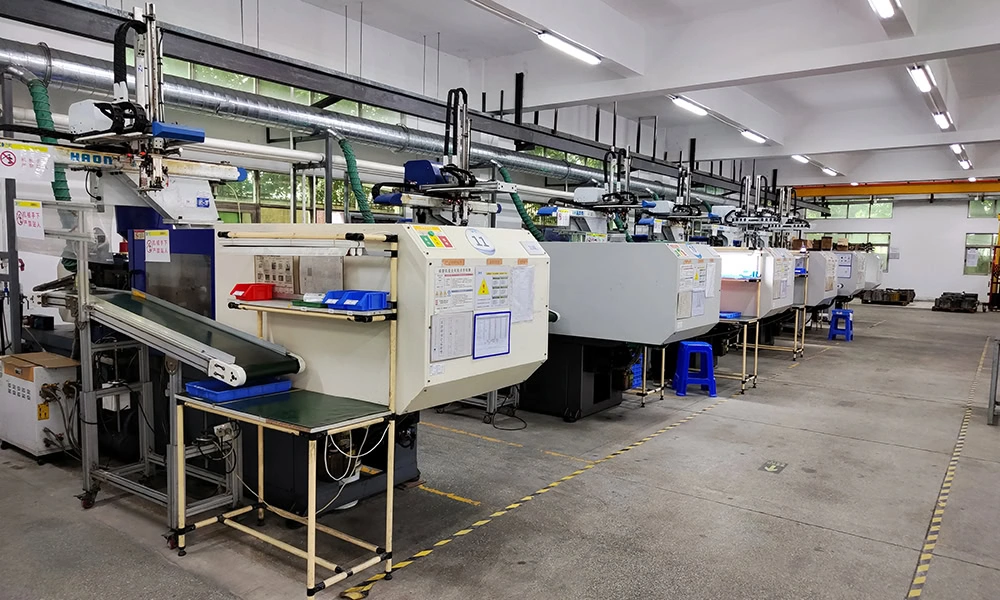
The factory must examine feedstock flow, filling of thin sections and features, green strength, gate effects, binder removal and distortion before committing to production tooling. Injection settings, binder systems and shrinkage data from another supplier may be useful starting evidence, but cannot be treated as automatically transferable. Material trials may require standard coupons, a suitable trial tool or representative geometry before an expensive production mold is commissioned.
Finished-Part Performance and Acceptance Requirements
Approval must be based on the finished, processed part, not on wrought-alloy datasheet values or powder chemistry alone. Agree in advance how chemistry, density, critical dimensions, shrinkage, surface condition, hardness, strength, thermal performance, coatings or other functional requirements will be measured. Where heat treatment or machining is needed, include it in the qualified route rather than promising properties from sintering alone.
| بوابة التأهيل | Question the factory must answer | Typical evidence before advancing |
|---|---|---|
| Material supply | Can the specified powder and feedstock be sourced consistently? | Supplier data, specification, traceability and trial quantity agreement |
| Molding and debinding | Can the feedstock form the target geometry and survive binder removal? | Representative trials, defect review and documented processing window |
| Sintering and dimensions | Can the selected equipment achieve the required density and stable shrinkage? | Actual furnace review, test pieces and dimensional measurements |
| الجزء النهائي | Do the final properties and features meet the customer acceptance plan? | Inspection, functional tests and customer-approved trial results |
Can Existing Sintering Equipment Support the New Alloy?
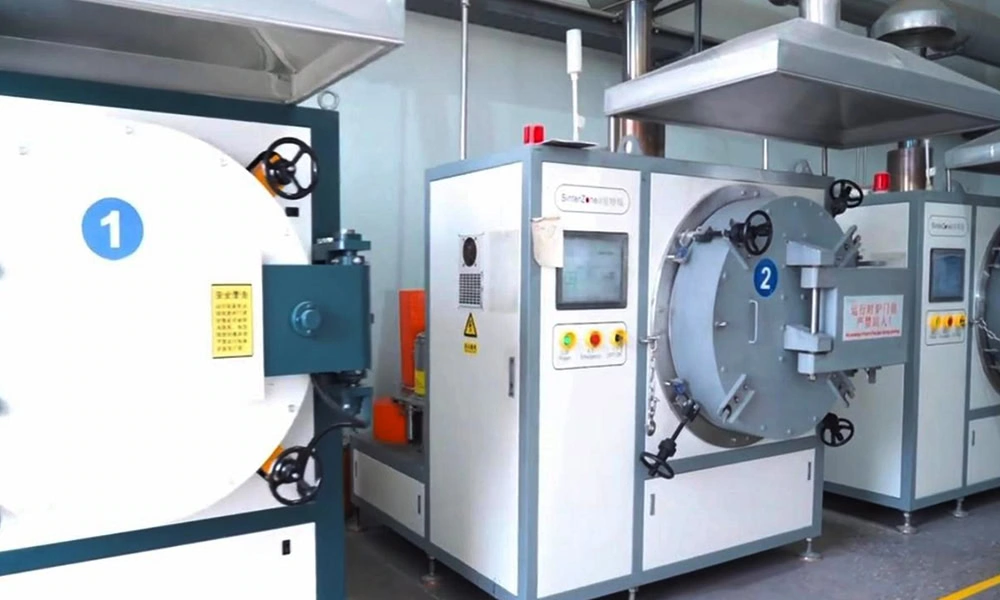
Before trialing a new alloy, the factory needs to check more than the furnace's maximum temperature. Furnace type, hot-zone and fixture materials, permitted gases, vacuum or pressure controls, binder exhaust, heating and cooling conditions, and potential contamination all affect whether the material can be processed. This is particularly important when the existing line primarily sinters iron-based alloys and the proposed material contains volatile or oxygen-sensitive constituents.
Furnace Atmosphere, Hot-Zone and Contamination Compatibility
Some copper-based alloys require careful oxygen control; some alloying elements create additional concerns about reactions or contamination. For Cu-Zn brass, zinc loss during high-temperature powder sintering is a documented risk. In a 2025 Cu-Zn powder study, increasing hydrogen in the tested atmosphere improved sintering behavior while increasing mass loss associated with zinc evaporation. This is a warning against assuming that one gas adjustment solves the problem, not a recommended furnace recipe. Possible zinc-bearing deposits, exhaust handling, final composition and subsequent iron-based production therefore need a deliberate equipment review. The research does not establish qualification of CW508L or CW510L MIM parts.
The furnace assessment should state whether the proposed atmosphere, fixtures and contamination controls can protect the required composition and properties without affecting existing orders. Until those conditions are confirmed, in-house sintering remains an option to assess rather than an available production process.
Process Adjustment, Equipment Modification or External Sintering?
| المسار المحتمل | متى يجب مراعاته | Required decision before a trial |
|---|---|---|
| Process adjustments within equipment limits | The furnace materials, gas system and operating range are already compatible. | Check supplier documentation, equipment limitations and trial controls. |
| Limited configuration changes | Fixtures, monitoring or approved handling arrangements need alteration. | Obtain equipment-provider approval and define cleaning, inspection and restoration requirements. |
| Dedicated furnace or major modification | Contamination, atmosphere or hardware restrictions prevent a safe shared route. | Confirm engineering scope, investment, downtime and production-volume justification. |
| Qualified external sintering partner | The current line is not a suitable location for specialty-alloy trials. | Confirm process traceability, part acceptance, responsibility and confidentiality arrangements. |
Some may be compatible with existing equipment after controlled trials; others may not be suitable at all. A modified furnace is not necessarily limited forever to one material, but switching back requires appropriate contamination-control and process requalification. XTMIM should only confirm a particular route after reviewing the actual equipment and project conditions.
Return-to-production controls: For materials that may produce volatile deposits, the trial plan should name the approved furnace or isolated location, required inspection and cleaning, and the person responsible for releasing equipment back to routine production. The process owner and equipment specialist must approve these controls before any Cu-Zn trial; XTMIM has not qualified a brass retrofit under the projects discussed here.
إن عملية تلبيد MIM page explains the underlying sintering stages; the additional checks here concern a new alloy on a specific production line.
What Do C18150 and Cu-Zn Brass Inquiries Reveal About MIM Qualification?
XTMIM has received inquiries involving C18150 copper-chromium-zirconium and CuZn37/CuZn42 brass. Both involve established alloy designations, but their outstanding manufacturing questions are different. The examples below describe the information available during initial assessment; neither has been qualified for production at XTMIM.
C18150 CuCrZr: From MIM Powder Availability to Factory Qualification
نقطة البداية: A project specifies a copper-chromium-zirconium alloy with functional and dimensional requirements. A supplier has indicated that specialty powder may be arranged to order, but the local project does not yet have confirmed pelletized MIM feedstock, validated processing data or firm material pricing.
Available material evidence: Sandvik publicly lists Osprey C18150 powder designed for Metal Injection Moulding. That makes a specialist powder supply worth investigating. XTMIM would still need pelletized feedstock, suitable injection and debinding conditions, a workable sintering route and finished-part testing. Published C18150 Binder Jetting results are not equivalent to an injection-molded MIM process.
Next review steps: Confirm the precise drawing grade and governing composition limits before obtaining a feedstock quotation; a callout such as CuCr1.3 must not be treated as interchangeable with UNS C18150 without a standards check and customer approval. Next, engage an MIM feedstock specialist, assess the actual furnace and possible post-sinter heat treatment, and agree on tests for the finished part's conductivity, mechanical performance, dimensions and coating requirements where specified. Wrought or powder-catalog properties cannot be promised for the finished MIM component.
First qualification milestone: Identify the supplier's confirmed powder offer, whether a binder-compatible MIM feedstock and appropriate debinding data actually exist, and the furnace route proposed for a limited test. If the feedstock or furnace route is not yet supported, the first quotation should cover investigation only. Passing a material coupon test would then support a separate decision on part-specific trials.
Current status: Candidate for further supplier-supported feasibility assessment; no verified XTMIM volume-production outcome is claimed. The Sandvik Osprey C18150 source is linked in the technical references below.
CuZn37 and CuZn42: When an Established Brass Grade Still Lacks MIM Readiness
نقطة البداية: An inquiry identifies CuZn37 (CW508L) or CuZn42 (CW510L), both recognized industrial brass grades, with associated material requirements. At the initial review stage, there is insufficient part-level information and no confirmed, transferable MIM feedstock and production route for these exact grades.
Key uncertainty: The existence of a conventional brass grade or powder is not proof of MIM suitability. Zn evaporation, final alloy composition, sintering atmosphere and possible deposits inside the furnace require investigation. Peer-reviewed Cu-Zn powder-sintering research identifies Zn-loss mechanisms, but that work does not establish a validated CW508L or CW510L MIM production process.
Next review steps: Request the full part drawings and acceptance criteria, confirm grade-specific MIM evidence and supplier support, assess equipment compatibility and possible external sintering, then consider trial and investment economics. A claim that a supplier can prepare powder is insufficient to authorize furnace modification or tooling.
Checks needed before a brass trial can be approved: If a qualified specialist proposes a technically acceptable route, record incoming alloy chemistry and compare it with the resulting sintered specimen against customer-defined limits. Document test conditions and evidence of zinc loss or equipment deposits where applicable, alongside density and dimensional response. This assessment has not produced an approved CuZn37/CuZn42 sintering recipe or accepted trial results. Certification and batch traceability must also be checked against the customer's material specification.
Current status: Insufficient evidence for an immediate production commitment; major equipment investment should not be approved without a viable trial basis and credible production plan. The Cu-Zn powder-sintering study is linked in the technical references below.
| نقطة مراجعة | C18150 CuCrZr inquiry | CuZn37 / CuZn42 brass inquiry |
|---|---|---|
| What is established? | Recognized grade and published MIM-oriented powder offering | Recognized brass grades; general Cu-Zn sintering-risk literature |
| What is missing for XTMIM? | Confirmed pelletized feedstock, actual process route and finished-part test results | Grade-specific MIM evidence, feedstock route, part details and furnace compatibility |
| Primary engineering risk | Process transfer, density, properties, heat treatment and repeatability | Zn loss, chemistry retention, equipment contamination and process uncertainty |
| Responsible next decision | Investigate supplier-supported material/process qualification | Gather evidence and assess feasibility before approving major trials or modifications |
For alloy-family context rather than the full qualification pathway, see سبائك النحاس للقولبة بالحقن المعدني (MIM).
What Must Be Agreed Before Specialty MIM Material Trials Begin?
Before purchasing trial feedstock or commissioning tooling, the customer and factory should agree on exactly what the first trial will test and how the results will be judged. The agreement should set the budget, pass/rework/stop conditions, data ownership, approval for repeat tests, and costs that will not be included in the eventual production unit price. A material trial should not imply an open-ended commitment to new-alloy research or equipment investment.
Trial Scope, Costs and Responsibility Allocation
| Agreement item | What to clarify before spending | Typical lead party |
|---|---|---|
| Material specification and usable evidence | Exact grade, required chemistry, document access and whether alternative materials are permitted | Customer with material supplier and factory |
| Powder and pelletized feedstock | Available stock, trial quantity, minimum order, preparation charge, documentation and batch traceability | Specialist powder/feedstock supplier |
| Molding, debinding and sintering trial | Test article, equipment route, number of iterations, constraints and what counts as an acceptable result | XTMIM and any qualified external process partner |
| Inspection and property tests | Methods, specimens, laboratory, acceptance limits, report format and who approves deviations | Customer and agreed testing parties |
| Tooling and possible furnace changes | What must be proven first; tooling cost, retrofit approval, line downtime and contamination controls | Joint approval, with appropriate equipment specialists |
| Commercial terms and decisions | Trial budget, payment responsibility, schedule assumptions, failed-trial treatment and stop criteria | Customer and XTMIM by written agreement |
Example trial brief: An OEM has a documented specialty-alloy powder source, but pelletized feedstock and a compatible furnace route have not yet been confirmed.
Question to answer: Can the agreed feedstock and approved equipment route produce representative specimens with acceptable binder removal, material chemistry and basic dimensional response, without creating an unaccepted furnace risk?
Evidence to collect: Source material and feedstock batch identification; supplier-declared processing constraints; approved trial location; observed defects; agreed incoming-versus-processed chemistry and physical checks; and the resulting inspection report. Exact test methods, sample quantities and thresholds must be agreed for the real project.
Go / revise / stop: Go only when the pre-agreed preliminary acceptance conditions are demonstrated; revise when a bounded corrective test is technically justified and funded; stop or change route when material supply, safety, equipment compatibility or customer-defined requirements cannot be met. Passing this trial authorizes only the next agreed phase, not production release.
A low initial trial quantity can be sensible when an OEM has a real annual demand and funds a staged qualification. That is different from a one-off purchase of a few finished parts with no production program. Specialty powder MOQs, test work and engineering time must be assessed against the anticipated life of the project.
Tooling risk: A production mold should not be fully specified around assumed shrinkage. MIM dimensional behavior depends on feedstock, geometry, binder removal, sintering conditions and secondary operations. Confirm enough of the material route first to avoid expensive compensation changes later. For general cost factors, see تكلفة القولبة بالحقن المعدني.
When Should a Specialty MIM Material Project Proceed, Pause or Change Route?
A useful feasibility response ends with a next action and the evidence needed to authorize it. An alloy may be technically possible but still need supplier records, a limited trial or a different manufacturing route before the project can proceed.
| قرار | Evidence or condition | الخطوة التالية الموصى بها |
|---|---|---|
| Proceed to defined trials | Credible MIM evidence or a supported feedstock route, suitable equipment strategy, clear acceptance criteria and a production case | Approve trial scope, responsibilities and test plan |
| Validate evidence first | Candidate MIM powder exists but feedstock, furnace fit or part-performance evidence is incomplete | Seek supplier records or conduct a limited preliminary assessment |
| Pause investment | Potential major retrofit or material development cost, but unclear demand, drawing or technical basis | Do not commit production tooling or equipment modification yet |
| Change route with approval | A proven material, heat treatment, finishing route or another manufacturing process may meet the functional requirement | Present options for customer engineering approval |
| Decline open-ended R&D | No credible MIM basis and the request would require inventing new alloy chemistry and a process from scratch | Explain the current qualification boundary; refer to appropriate research capability if needed |
Before proposing a substitute alloy: Pure copper is not an automatic replacement for C18150 or CuZn37/CuZn42 simply because a factory has a more established copper MIM process. A replacement must be checked against the specified chemistry, mechanical behavior, conductivity, joining or plating requirements and any contractual certification rules. When the alloy grade is mandatory, a proposed material change remains a customer engineering decision.
Even where a substitute can meet the functional target, the customer must approve changes to a mandatory grade or certification requirement. Separately, compare the expected annual demand with powder minimum orders, trial costs and any required equipment changes before releasing funds.
How Does a Specialty MIM Alloy Move from Trials to Volume Production?
Moving a specialty alloy into production requires more than a successful sintered specimen. The factory must verify the actual component, repeat results across controlled trial batches, and obtain approval for the material supply and manufacturing conditions before releasing volume orders.
Initial Material Trials Before Production Tooling
Resolve the highest-cost uncertainties before ordering dedicated production tooling. A supplier sample, standard test piece, existing evaluation tool or representative geometry may provide early evidence of binder removal, sintering, shrinkage and basic properties. Material test pieces can establish a starting process window, but part geometry, tolerance and function still need separate checks.
Part Samples and Small-Batch Production Validation
Treat prototype approval and pilot-production approval as separate decisions. The first verifies actual-part geometry, dimensions, density and required functionality; the second checks whether those results can be repeated under controlled trial-batch conditions, including scrap and process variation. The pilot report then provides the basis for judging whether the process is ready for repeat orders.
Production Qualification, Repeatability and Scale-Up
Release production only against the agreed component-specific acceptance plan, including incoming material checks, feedstock traceability, process and furnace controls, inspection methods, required secondary operations, change control and supplier continuity. A new batch, equipment change or alternate feedstock source may require additional approval rather than automatic use of the original trial results.
Record for future production orders: the feedstock and powder lots, the actual trial furnace route, the tooling or specimen revision, any approved heat treatment or plating, the sample size and inspection basis, observed defects and the customer disposition. On repeat orders, a changed powder source, binder/feedstock formulation, furnace configuration, secondary-processing step or critical drawing revision should trigger documented impact review and any required requalification. Keep the records with the approved process so later batches can be compared against the qualification conditions.
Evidence and drawing review. Check the specified grade, existing MIM records, part drawing and expected demand. List the missing information before contacting material suppliers.
Supplier and equipment route. Confirm a feedstock supplier, the molding and debinding approach, and where sintering could take place. Price the investigation before scheduling equipment.
Material/process trial. Test the agreed specimens or representative geometry. Compare recorded properties and defects with the approval criteria before proceeding.
Part samples and customer acceptance. Inspect the actual part geometry, dimensions and required properties. Customer feedback determines whether further tooling or process changes are needed.
Pilot production. Run a controlled batch and record consistency, inspection results, process variation and scrap. Confirm that the results are repeatable under the agreed conditions.
Controlled volume release. Release the approved supply chain, process specification, inspection plan and change-control responsibilities for subsequent orders.
The sequence can be shortened or extended according to the part and material risks. Each approved stage should leave enough records for the next production decision; a process used elsewhere still needs confirmation on the selected factory's equipment.
Discuss a Specialty Alloy MIM Qualification Project
If you are looking for a mainland China MIM manufacturing partner for a non-routine grade such as C18150, CuZn37 or CuZn42, send the exact material specification, any transferable MIM evidence, part drawing, functional acceptance targets and planned trial-to-production quantities. XTMIM can assess whether a supplier-supported qualification route is worth pursuing; a listed grade is not an assurance that the material is already in our production range.
After the first review, we can identify the missing technical records, propose a defined trial where appropriate, or explain why another material or manufacturing route is better suited to the project. Any production commitment depends on an agreed qualification result.
Send Your Drawings & Material RequirementsFrequently Asked Questions About Custom MIM Materials
هل تقوم XTMIM بتطوير سبيكة جديدة بالكامل من الصفر؟
لا. يركز النطاق الموصوف هنا على مراجعات الجدوى وتأهيل العمليات للسبائك الراسخة ذات الأدلة التقنية الموثوقة. إن الاختراع المفتوح لتراكيب سبائك جديدة وأنظمة MIM غير المثبتة ليس خدمة روتينية.
هل مسحوق المعدن الجاهز لـ MIM هو نفسه المادة الأولية الحبيبية المؤهلة؟
لا تُعد مادة المسحوق المعدني (MIM-oriented powder) مادة أولية ممكنة، بينما تتضمن مادة التغذية (feedstock) المُشكّلة في حبيبات نظام مادة رابطة (binder system) بمتطلباتها الخاصة للإعداد والقولبة وإزالة المادة الرابطة. يجب على المورد المتخصص تأكيد توفر مادة التغذية وملاءمتها قبل أن تتمكن المصانع الجديدة من التحقق من صحة العملية.
هل يتطلب كل سبيكة متخصصة تعديلاً في فرن التلبيد؟
لا. يعتمد التوافق على الفرن الفعلي، والجو المحيط، والمنطقة الساخنة، والتجهيزات، ومخاطر التلوث، ومواصفات المادة. يمكن تقييم بعض السبائك ضمن حدود المعدات الحالية؛ وقد يتطلب البعض الآخر تغييرات معتمدة، أو متخصصًا خارجيًا، أو قرارًا بعدم المتابعة.
هل يمكن بدء المشروع بدفعة تجريبية صغيرة؟
من المحتمل، نعم، عندما تكون التجربة مرحلة محددة لبرنامج إنتاج مستقبلي موثوق به وتم الاتفاق على تكاليف المواد والاختبار والأدوات. قد لا يبرر طلب واحد لأجزاء نهائية صغيرة بدون خطة إنتاج تأهيل مادة تغذية متخصصة.
هل يمكن لورقة بيانات مسحوق C18150 أن تضمن الموصلية النهائية لجزء MIM؟
لا تحدد تركيبة المسحوق وخصائص المواد المشكلة أو عمليات أخرى منشورة الموصلية لجزء MIM جديد. يعتمد الأداء النهائي على مادة التغذية المؤهلة، والتلبيد، والمعالجة الحرارية، واختبارات الجزء الفعلية مقابل مواصفات قبول متفق عليها.
ماذا لو كان لدي مواصفات السبيكة ولكن لم يكن لدي رسم للجزء بعد؟
قد يقوم المصنع بإجراء مراجعة أولية لتوافر المسحوق/مادة التغذية (feedstock) وقيود المعدات المحتملة. لا تزال قابلية تشكيل القالب الخاصة بالجزء، والانكماش، والتكلفة، والفحص، وجدوى الإنتاج تتطلب رسومات هندسية، ومتطلبات وظيفية، وحجم إنتاج تقديري.
المعايير والمراجع الفنية
Metal Injection Molding Association (MIMA): Process Overview describes the linked feedstock, molding, debinding and sintering stages. معيار MPIF 35-MIM (2025 edition) covers commonly specified MIM materials; it should not be taken as certification that all specialty alloys are standardized or that a new factory has qualified a listed grade.
Sandvik Osprey C18150 documents MIM-oriented CuCrZr powder. Watanabe et al., Sinterability of Cu-Zn Alloy Powders (2025) discusses zinc evaporation in powder sintering, not qualification of CW508L/CW510L MIM parts. Copper industry alloy designations identify CuZn37/CW508L and CuZn42/CW510L.
Use the customer drawing, applicable material specification, agreed test methods and recorded production results as the acceptance basis. For related technical background, see the دليل اختيار مواد MIM و عملية إزالة المادة الرابطة في MIM.