
تستحق الأجزاء المصنعة بتقنية MIM المقاومة للتآكل التقييم عندما يحتاج مكون معدني صغير ومعقد إلى إنتاج متكرر وأداء مقاومة للتآكل محدد لبيئة الخدمة الفعلية. تشمل الأمثلة الدعامات المدمجة، وأكمام الموصلات، والأطواق، والأغلفة الصغيرة، وأجهزة ملامسة السوائل المعقدة. يمكن للقولبة بالحقن المعدني دمج الميزات التي قد تتطلب بخلاف ذلك عدة خطوات تشغيل آلي أو تجميع، ولكنها ليست بالضرورة العملية المناسبة لكل جزء من الفولاذ المقاوم للصدأ. قبل تصنيع القوالب، قم بتقييم وسط التعرض، وسبائك المواد المتاحة ومسار MIM، والحالة بعد التلبيد، والأسطح الحرجة، وإمكانية الوصول للتشطيب، وحجم الإنتاج المتوقع، وكيف سيتم اختبار الجزء النهائي. لا تضمن درجة اسم مثل 316L وحدها مقاومة التآكل؛ يجب مراجعة الجزء النهائي ومتطلبات قبوله معًا. للحصول على عرض أسعار ذي معنى، قدم الرسومات، وظروف الخدمة، ومتطلبات الأسطح الحرجة، ومعايير القبول المقترحة.
- الأكثر وعدًا: أجزاء معدنية مخصصة صغيرة مقاومة للتآكل ذات ميزات ثلاثية الأبعاد معقدة وطلب إنتاج متكرر.
- يجب التحقق من: التعرض الفعلي، والأسطح الحرجة، وقدرة المواد/العملية، واختبارات الأداء المتفق عليها.
- بديل محتمل: CNC للأحجام المنخفضة جدًا أو الأجزاء البسيطة؛ الختم للأشكال المناسبة من الصفائح المعدنية.
ما هي الأجزاء المعدنية المخصصة المقاومة للتآكل المناسبة لتقنية MIM؟
لـ أجزاء مخصصة مقاومة للتآكل و مكونات مقاومة للتآكل، ابدأ بالهندسة الهندسية للمكون وأسطح عمله. تستحق تقنية MIM المراجعة عندما يجمع الجزء المعدني الصغير بين التجاويف، أو النتوءات، أو الأكمام، أو الفتحات، أو ميزات التثبيت المتعددة التي قد تتطلب بخلاف ذلك تشغيلًا آليًا أو تجميعًا مكثفًا. يجب أن يحدد الرسم أيضًا الأسطح التي تظل مكشوفة، أو تلامس معدنًا آخر، أو تحبس السائل، أو تتطلب تشطيبًا بعد التلبيد. تحدد هذه التفاصيل ما إذا كان شكل الجزء المرشح عمليًا، وليس مجرد تسميته الصناعية.
هذه أشكال الأجزاء المرشحة قد تستفيد من تقنية MIM، ولكن الملاءمة لا تزال تعتمد على الرسم، وسبائك المعدن المختارة، والمعالجة السطحية المخطط لها، وظروف التشغيل. يتم تغطية تطبيقات أخرى قائمة على الهندسة في أجزاء MIM للمكونات المعدنية الصغيرة المعقدة.
| جزء مخصص تمثيلي | لماذا قد تكون تقنية MIM مفيدة | منطقة حرجة للتآكل لتحديدها | السؤال الأول لمراجعة الرسم |
|---|---|---|---|
| دعامات مدمجة ومكونات دعم | تدمج النتوءات، وفتحات التثبيت، وميزات الدعم المشكلة. | الحواف المكشوفة، أو مناطق التلامس، أو الرطوبة المحتبسة عند المثبتات. | ما هي الأسطح التي تظل مرئية أو مبللة بعد التجميع؟ |
| أغلفة الموصلات والأكمام المصغرة | يجمع بين التجاويف والفتحات الصغيرة وهندسة الواجهة. | أسطح التزاوج، أو التجويفات الضيقة، أو الواجهات المعدنية المتباينة. | هل يمكن تشطيب وفحص التجويفات والواجهات الحرجة؟ |
| حلقات، أطواق، وإطارات صغيرة | قد يقلل من الحاجة إلى تشغيل متكرر للتفاصيل الصغيرة المتكاملة. | الأسطح التجميلية، الحواف الحادة، والمناطق المنزلقة أو المتلامسة. | هل المنطقة المكشوفة زخرفية، وظيفية، أم كليهما؟ |
| مكونات صغيرة تتلامس مع السوائل | قد تشكل ممرات معقدة مدمجة أو ميزات داعمة. | جيوب احتجاز السوائل، أسطح الختم، والأسطح الداخلية. | ما هي معايير السوائل والضغط والنظافة والتسرب التي تنطبق؟ |
| حاويات صغيرة ومكونات سبائك مخصصة | يدعم الأشكال ثلاثية الأبعاد المعقدة للتصنيع المتكرر. | التشطيب المرئي، والشقوق، والميزات الموضعية بعد التشغيل الآلي. | ما هي المناطق التي تحتاج إلى تشطيب أو نتيجة اختبار محددة؟ |
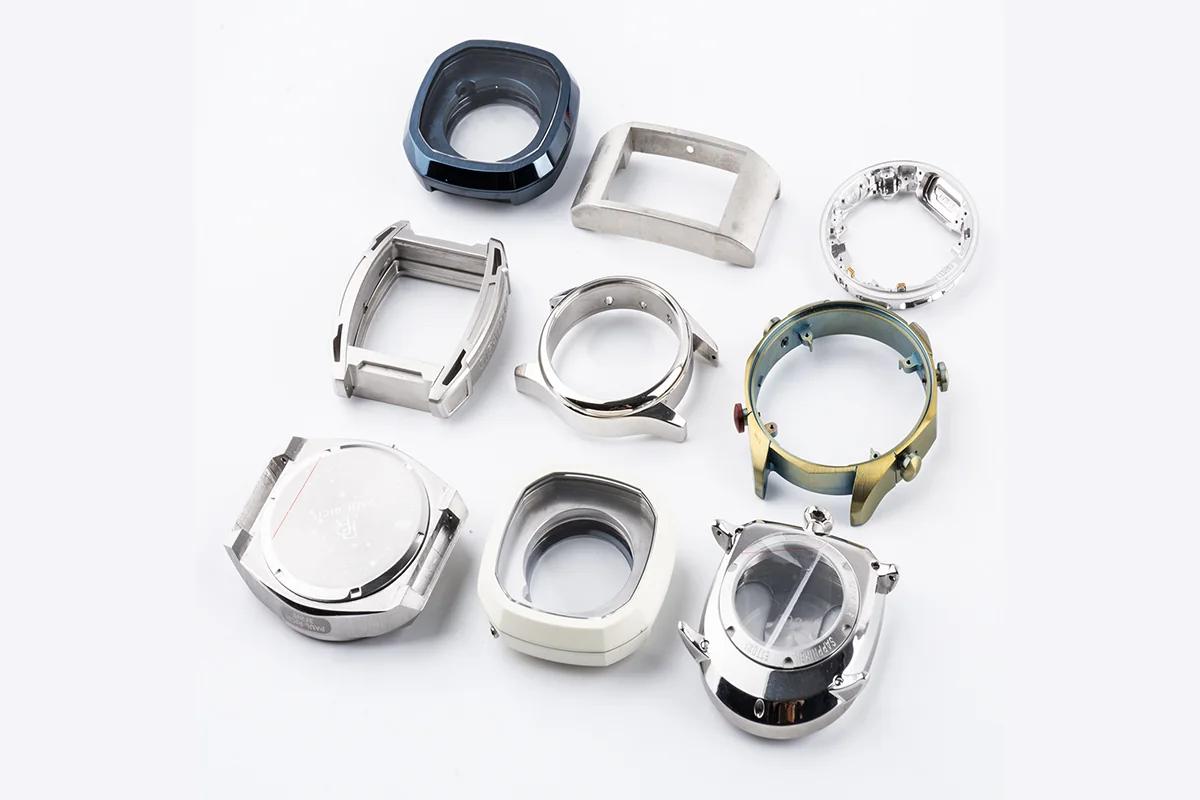
خبرة XTMIM في علب الساعات: قامت XTMIM بتصنيع مكونات علب الساعات المعدنية عبر مشاريع متعددة. يمكن لهذه الأجزاء المدمجة أن تجمع بين غلاف خارجي جمالي مع فتحات للأزرار، وميزات تثبيت داخلية، وتفاصيل تركيب، وأسطح تتلامس مع الجلد أو عوامل التنظيف. متطلباتها ليست موحدة عبر العلبة بأكملها.
قرارات التصنيع والتشطيب: لكل رسم هندسي، قم بتأكيد ما إذا كانت تقنية MIM مناسبة للهندسة والحجم المخطط له؛ حدد الأسطح التي قد تتطلب تشغيلًا آليًا ثانويًا، أو تلميعًا، أو تنظيفًا، أو طلاءً محددًا. يجب اختيار المادة وطريقة التشطيب للجزء الفعلي بدلاً من افتراض أن كل علبة ساعة هي 316L أو تتلقى نفس المعالجة.
مراجعة التآكل والرسم الهندسي: حدد المناطق المواجهة للجلد، والأسطح التي يتم تنظيفها بشكل متكرر، وواجهات الأزرار والأختام، ومناطق الفحص التجميلي، وأي متطلبات للطلاء أو التشطيب السطحي. لا يثبت التلميع أو مظهر PVD وحده مقاومة للعرق أو التعرض للكلوريد أو اختبار تآكل محدد؛ اتفق على معايير القبول المطبقة.
ما هي ظروف التعرض التي يجب أن يتحملها الجزء النهائي؟
"مقاوم للتآكل" ليس متطلبًا هندسيًا كاملاً. المكون المعرض بشكل متقطع لتكثف داخلي يواجه مشكلة مختلفة عن المكون الذي يتم تنظيفه بشكل متكرر بمحلول كيميائي أو تجميعه حيث يمكن أن يبقى شيء يحتوي على الكلوريد في شق. قبل اختيار درجة أو إصدار أدوات التصنيع، حدد ما يصل إلى الجزء، وكم مرة، ولأي مدة، وما هو الفشل الذي سيكون غير مقبول.
الوسائط المسببة للتآكل وظروف الخدمة الفعلية
صف وسط التلامس الفعلي, بتركيزه حيثما كان معروفًا، ودرجة الحرارة، والمدة، والتكرار، وما إذا كان الجزء يُشطف أو يُجفف أو يُترك رطبًا. بالنسبة للتجميعات، حدد المواد المجاورة والمناطق التي يتعذر الوصول إليها بعد التركيب. تساعد هذه التفاصيل المهندس في تحديد ما إذا كان مسار الفولاذ المقاوم للصدأ العام يستحق المراجعة أو ما إذا كانت هناك حاجة إلى اختبارات توافق واختبارات خاصة بالمشروع.
| بيئة الخدمة | ما يجب على المشتري تحديده | لماذا يغير المراجعة الهندسية |
|---|---|---|
| الرطوبة أو التكثف | دورة الرطب/الجاف، التركيب الداخلي أو الخارجي، الأسطح المرئية. | قد تكون الرطوبة المحلية وجودة التشطيب والواجهات المغلقة مهمة. |
| ملامسة الجلد والعرق | مدة التلامس، روتين التنظيف، مناطق مستحضرات التجميل وملامسة الجلد. | المظهر، نسيج السطح، ملاءمة المواد، وأي متطلبات منتج قابلة للتطبيق تحتاج إلى مراجعة. |
| التعرض للكلوريدات أو المحاليل الملحية | مصدر الملح، التركيز أو الاختبار المطبق، مدة التلامس، التصريف. | لا يمكن تأسيس حساسية التآكل الموضعي من اسم درجة عام. |
| عوامل التنظيف أو سوائل العملية | الهوية الكيميائية، التركيز، درجة الحرارة، وتكرار التنظيف. | يجب تأكيد التوافق الكيميائي وطريقة التشطيب أو التنظيف. |
| السائل حول ختم وظيفي | نوع السائل، فترة التلامس، ضغط الختم، متطلبات التسرب والنظافة. | يمكن أن تكون حالة السطح والهندسة الحرجة مهمة بنفس قدر أهمية السبيكة الاسمية. |
مخاطر التآكل الوظيفي والتجميلي
قد يفشل الغلاف المرئي في تلبية متطلباته بسبب التلطخ حتى لو كان لا يزال يعمل. قد يبدو طوق الختم مقبولاً ولكنه يصبح غير مناسب إذا تعرض سطح التزاوج للتنقر، أو تدهورت جودته، أو تجاوز التسرب الحد المتفق عليه. بالنسبة لقوس أو موصل، قد يكون التآكل عند واجهة التلامس أكثر أهمية من العلامات السطحية في أماكن أخرى. حدد المناطق التجميلية والوظيفية والمخفية بشكل منفصل على الرسم، وتحديد وضع الفشل لكل منها. هذا يخلق نقطة انطلاق مفيدة لاختيار المواد واختبار القبول لاحقًا.
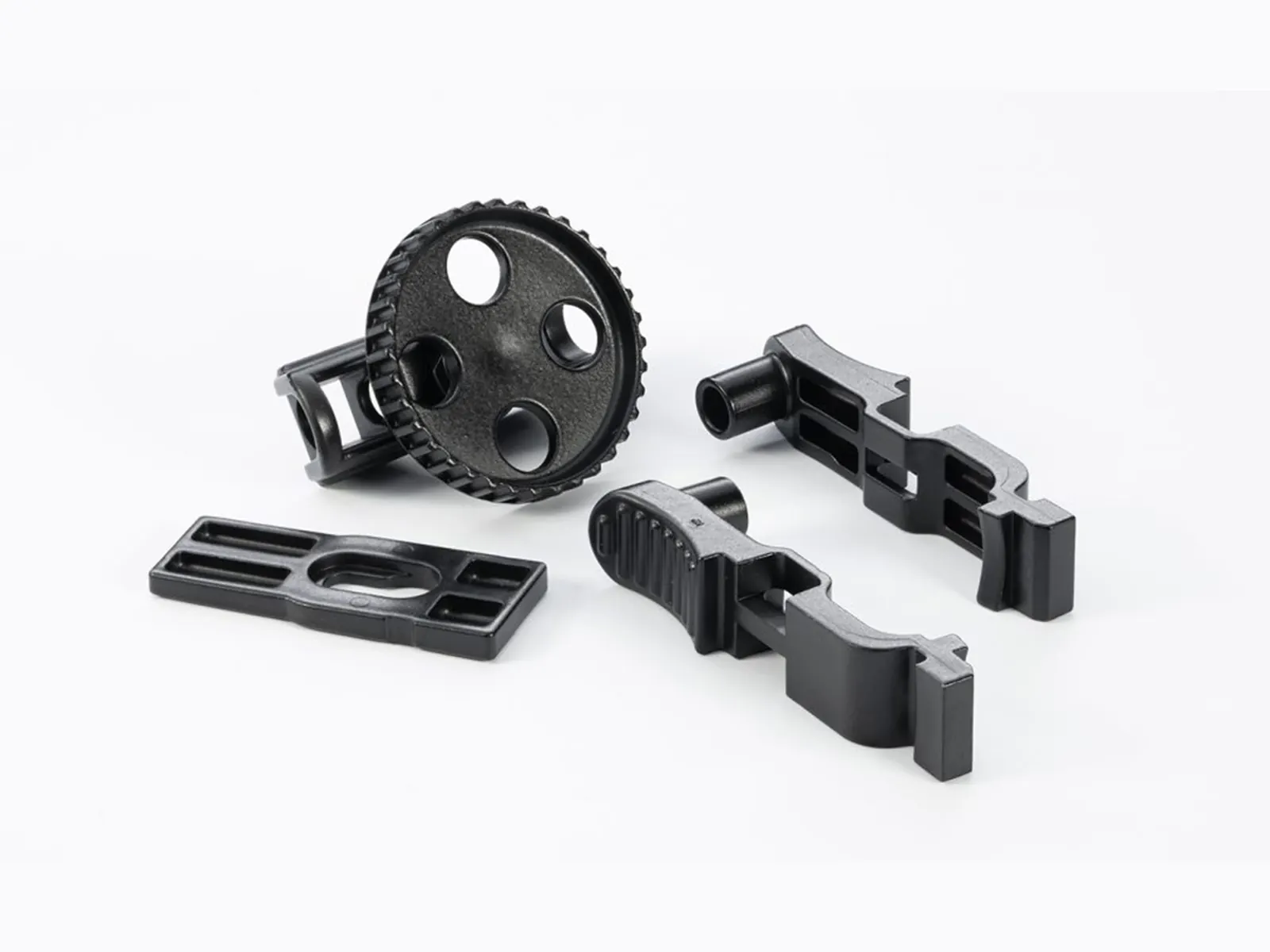
مزلاج كابل تحت الماء: استخدمت MPP و Schilling Robotics تجميع مزلاج MIM من 316L مكون من أربعة أجزاء وخمس قطع لمنتج كابل تحت الماء. وفقًا للحالة المنشورة، فإن التصميم البلاستيكي السابق تمدد وتشقق؛ كما تلقى التجميع المعدني طلاءً منخفض الاحتكاك ومقاومًا للتآكل.
قيد التصميم: تناول التحول إلى المعدن مشكلة ميكانيكية، بينما كانت الخدمة تحت الماء لا تزال تتطلب الاهتمام بالحماية السطحية وظروف التلامس. تحديد 316L وحده لن يصف الحل الكامل أو معايير قبوله.
للأجهزة المعرضة للمياه المالحة: حدد وسيط التلامس، والأسطح المتزايدة، والمواصفات المطلية أو النهائية، وطريقة التحقق. ملاحظة عامة "درجة بحرية" لا يمكن أن تحل محل معايير قبول التآكل المتفق عليها.
متى يكون MIM منطقيًا للأجزاء المقاومة للتآكل؟
تُعدّ دراسة الجدوى التصنيعية وملاءمة مقاومة التآكل فحوصات منفصلة. قد يكون الجزء سهل القولبة ولكنه يتطلب وصولاً سطحياً غير مقبول أو تكاليف تشطيب باهظة. وقد يُصنع جزء آخر من سبيكة مقاومة للتآكل ولكنه بسيط للغاية أو بكميات قليلة جداً لا تبرر تكلفة قالب MIM. اختر العملية فقط بعد النظر في الهندسة، والطلب المتوقع، واستراتيجية التفاوتات، والعمليات الثانوية، وتكلفة التحقق من صحة الجزء النهائي.
الهندسة، حجم الإنتاج، وملاءمة أدوات التصنيع
تصبح تقنية MIM جذابة عادةً عندما يتم تكرار هندسة معقدة صغيرة بما يكفي لتوزيع تكاليف القالب على الإنتاج، وعندما يمكنها دمج ميزات تتطلب عادةً عدة خطوات تشغيل آلي. قد تكون الجدران الرقيقة، والثقوب الصغيرة، والفتحات، والميزات التي تشبه التجاوزات (undercuts) ممكنة، ولكن كل منها يتطلب مراجعة لعمليات القولبة، وإزالة المادة الرابطة، والتلبيد. قد لا تزال التفاوتات المحلية الضيقة أو أسطح الإغلاق الخاصة تتطلب تشطيباً بآلات CNC بعد التلبيد.
| إشارة المشروع | القرار الأولي | السبب / الإجراء قبل الالتزام |
|---|---|---|
| الأشكال المعقدة الصغيرة المقاومة للتآكل مع ميزات مدمجة | مرشح MIM | مراجعة مادة التغذية (feedstock)، وإطلاق القالب، والانكماش، والوصول السطحي. |
| الطلبات المتكررة مع رسومات ثابتة وحجم كبير | مرشح MIM | تقدير إجمالي تكاليف أدوات التصنيع، وتكلفة الوحدة، ومخاطر الخردة، والعمليات الثانوية. |
| التجاويف الحرجة، أو أسطح الإغلاق المسطحة، أو التفاوتات المحلية الضيقة جداً | مراجعة هندسية مطلوبة | تأكيد الأبعاد التي ستبقى كما بعد التلبيد مقابل الأبعاد التي سيتم تشغيلها آلياً. |
| جزء كبير بسيط هندسياً | يُفضل عادةً البديل | قارن بين التصنيع باستخدام الحاسب الآلي (CNC)، والتصنيع المعدني، والختم، أو الصب حسب الاقتضاء. |
| نماذج أولية فقط أو حجم سنوي منخفض غير مؤكد | يُفضل عادةً البديل | Avoid a tooling investment before the design and demand stabilize. |
| Severe chemical/chloride exposure or safety-critical function | Qualification required | Validate the actual material, process route, final surface, and testing plan; this is not automatically a MIM process rejection. |
عندما تكون عملية تصنيع أخرى أكثر عملية
لـ corrosion-resistant low-volume stainless steel spare parts, CNC machining can be more sensible because it avoids dedicated injection tooling and allows design changes. Stamping is often more suitable for relatively flat sheet-metal geometry, while casting or machining may be more practical for larger parts; conventional PM may favor simpler compaction-friendly shapes. These are conditional judgments, not universal cost rankings. For a detailed CNC comparison, see MIM مقابل التصنيع باستخدام الحاسب الآلي.

Five-port analytical flow block: A 316L MIM component for gas-chromatography equipment connects five ports through two internal gas channels. MIMA describes multi-side mold slides and hydraulic core pulls to form the 90-degree passages; the remaining secondary operation was tapping pre-formed holes.
Reported project result: The documented benefit was geometric integration and manufacturing cost, not demonstrated corrosion life. MIMA reports approximately 40% savings over the casting-plus-machining route used in that project. That figure is specific to the documented comparison and is not a general MIM cost guarantee.
For intersecting flow passages: Assess mold-core movement, access for cleaning, any leakage tests, and production volume before comparing MIM with machining.
How Do Material, Sintering, and Surface Finishing Affect the Final Part?
A corrosion-resistant alloy designation alone does not define the performance of the finished component. Material chemistry, sintered condition, contamination, exposed geometry, and surface finishing affect different aspects of the result. For custom corrosion-resistant alloy parts with complex geometry, these factors need to be evaluated alongside dimensional, appearance, and service requirements.
Material Fit for Corrosion and Mechanical Requirements
الفولاذ المقاوم للصدأ 316L is commonly reviewed when general corrosion performance is a primary requirement; however, it is not immune to all chloride environments and may not meet higher hardness or strength needs. 304-family stainless steel can suit some less demanding applications, subject to exposure and process validation. 17-4 PH is often considered when higher strength is important, but its heat-treatment condition and corrosion performance must be evaluated together. Hardened grades such as 420 or 440C introduce a different hardness/corrosion balance. No grade is universally best, and datasheets for wrought materials cannot replace validation of a finished MIM component.
| اتجاه المادة الأولي | Why it might be shortlisted | ما يجب التحقق منه |
|---|---|---|
| الفولاذ المقاوم للصدأ 316L | General corrosion resistance with small complex metal parts. | Actual medium, strength needs, MIM feedstock/process route, and finished surface. |
| 304-family stainless steel | Applications with exposure conditions compatible with the grade. | Chloride/cleaner exposure, processing quality, and acceptance criteria. |
| فولاذ مقاوم للصدأ 17-4 PH | Strength-driven components needing corrosion review. | Heat-treatment condition, resulting properties, and real corrosion conditions. |
| Other hard or specialty alloys | Special hardness, wear, or environment requirements. | Availability of proven MIM feedstock, factory capability, cost, and qualification; do not assume routine production. |
Compare alloy properties in the مواد MIM المقاومة للتآكل guide, then confirm the shortlisted grade against the actual component geometry, production route, and exposure conditions.
Sintered Condition, Density, and Surface Integrity
MIM uses feedstock injection, debinding, and sintering to produce the finished metal geometry. Feedstock consistency, binder removal, sintering atmosphere and temperature control, final density, residual porosity, and local distortion can affect mechanical integrity and surface quality. Their influence on corrosion performance depends on the alloy and exposure conditions; a measured density value or a nominal material specification alone does not prove corrosion resistance. Where the application is demanding, confirm which part properties, surface conditions, and production checks will be measured rather than relying on an as-sintered appearance claim.
Cleaning, Polishing, and Passivation for Critical Surfaces
An as-sintered surface may be acceptable in a protected noncritical area, while a visible face, sliding interface, or seal may need polishing or localized machining. Cleaning and, when applicable, chemical passivation should be considered as specified processes with agreed inspection criteria—not generic assurances that stainless steel can never stain or pit. For suitable stainless steel parts, ASTM A380/A380M addresses cleaning and related surface treatment practices, while ASTM A967/A967M addresses chemical passivation requirements. The applicable process and access to hidden features must be confirmed for the actual part.
| Finished surface zone | Possible manufacturing concern | Question for engineering review |
|---|---|---|
| وجه تجميلي مرئي | Staining, scratches, inconsistent polishing, or appearance variation. | What appearance and finishing acceptance standard applies? |
| Functional sealing or mating face | Tool marks, dimensional mismatch, residual contamination, or leakage. | Is post-sinter machining, surface inspection, or leak testing required? |
| Hidden pocket or small bore | Limited cleaning, polishing, treatment, or inspection access. | Can the area be reached and verified after finishing? |
| Dissimilar-metal interface | Potential galvanic conditions if electrically coupled in an electrolyte. | What are the mating alloys, contact conditions, and exposure? |
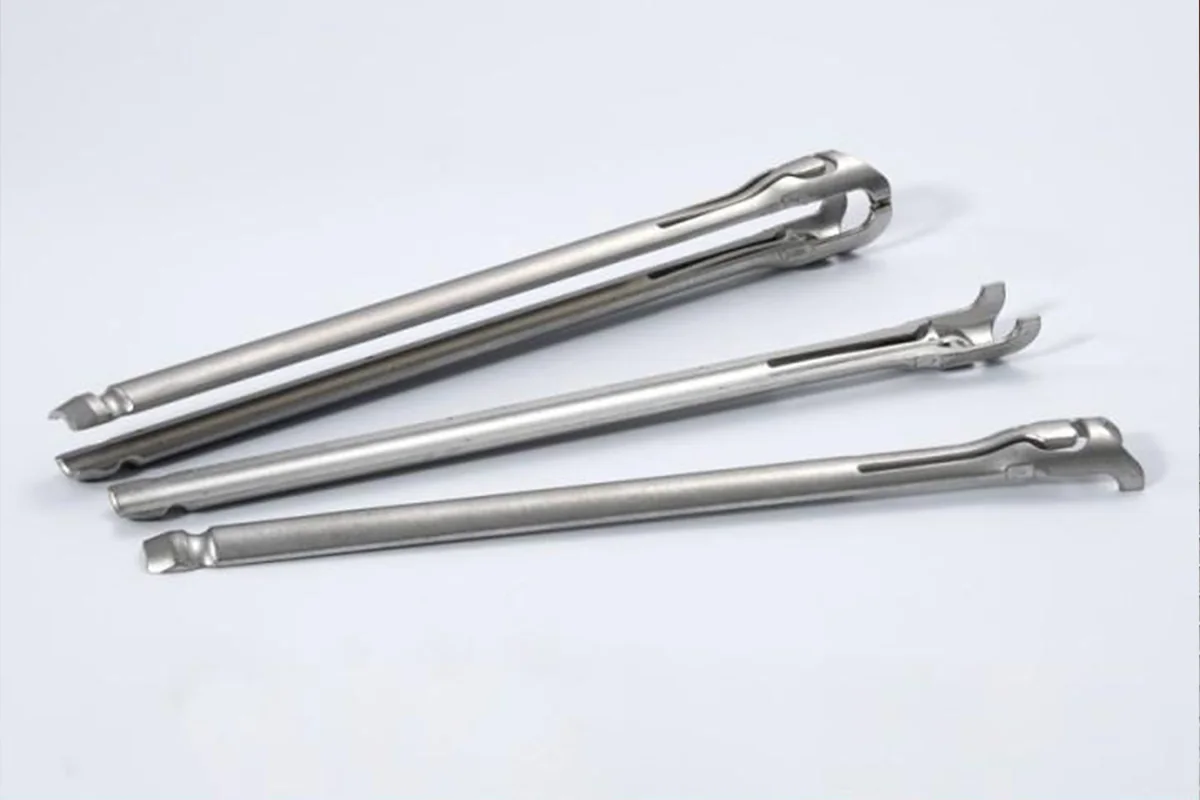
17-4 PH MIM shaft assembly: MIMA documents a shaft for a single-use surgical suturing instrument. The approximately 178 mm component was manufactured as two MIM sections, followed by laser welding, finish machining, internal reaming, heat treatment, sandblasting, and passivation.
Process constraint: Achieving the required dimensions and surface condition involved several operations beyond MIM sintering. Passivation is a documented production step in this project, not evidence that another 17-4 PH component will meet a particular corrosion-test threshold.
For assemblies with critical surfaces: Specify the weld locations, machined areas, hidden passages, heat-treatment condition, and post-processing inspection before quotation.
Which Design Features Create Corrosion Risks, and How Can They Be Controlled Before Tooling?
A geometry that can be molded may still trap liquid, prevent thorough cleaning, or restrict inspection after assembly. For corrosion-resistant MIM components, DFM therefore needs to address fluid retention, surface accessibility, and dissimilar-metal contact as well as wall thickness and sintering shrinkage. Resolve these concerns before mold steel is cut.
Blind Holes, Internal Pockets, and Trapped Fluids
Deep blind slots, sharp re-entrant corners, and enclosed cavities may hold process residues or service fluids, particularly when rinsing and drying access is restricted. An effective review asks whether drainage, cleaning access, a design radius, or an alternative geometry is possible without changing the part's required function. Where a blind feature cannot be altered, the team needs a feasible cleaning and inspection method rather than an unsupported claim that passivation will reach every surface equally.
Sealing Surfaces, Mating Interfaces, and Finishing Access
Mark the sealing land, sliding faces, visible areas, contact-metal interfaces, and critical dimensional features on the 2D drawing. If a sealing surface needs a flatness, roughness, or leakage result that is not practical as-sintered, include the secondary machining and final inspection route early. Gate vestiges or sintering distortion must also be considered where they intersect cosmetic or functional zones. These decisions change mold design, unit cost, and verification planning.
| Drawing feature / issue | Potential failure mechanism | Pre-tooling prevention or check |
|---|---|---|
| Deep blind pocket or narrow internal slot | Retained fluid, residue, and difficulty cleaning or inspecting. | Review drainage, opening geometry, washing method, and inspection access. |
| زاوية داخلية حادة | Hard-to-clean localized region and possibly unfavorable stress geometry. | Consider a functional radius and confirm molding/finishing feasibility. |
| Thin wall beside a critical edge | Distortion in sintering and inconsistent finished-surface geometry. | Check wall balance, support, shrinkage allowance, and final dimensions. |
| Seal or tightly fitted bore | Leakage, poor surface contact, or failure of the local finish. | Define surface/size requirements and whether CNC finishing is required. |
| Gate mark on visible or sealing face | Local finish and functional interference. | Agree gate location and postprocessing before tool design. |
| Dissimilar metal in a wet assembly | Possible galvanic attack if electrically coupled in conductive liquid. | Check contact pair, isolation strategy, exposure, and test expectations. |
Design example (hypothetical): blind slot beside a sealing face. A miniature stainless steel sleeve may be moldable but retain cleaning liquid in a blind slot, while the nearby seal needs a controlled machined finish. Before tooling, confirm the fluid exposure, drainage path, sealing-surface machining and inspection, and the applicable corrosion and leakage limits. Changing the stainless steel grade alone would not resolve the trapped-liquid or finishing issue.
Internal channels need separate validation: The 316L analytical flow block described above shows that moving mold cores can form complex internal passages. That manufacturing capability does not prove the passages can be cleaned, coated, dried, or inspected for a different corrosive fluid. For wetted components, evaluate surface access and the final test method separately from moldability.
How Should Corrosion Performance Be Specified and Verified?
For a custom component, the useful question is not simply "Does 316L resist corrosion?" It is "What test and acceptance result will demonstrate that this finished part meets its actual use requirement?" A complete specification states the condition of the sample, the method and exposure, the surfaces to inspect, and what constitutes failure. It should also say who owns the verification work.
Translate Service Requirements into Relevant Test Conditions
Salt-spray methods such as ISO 9227:2022 و ASTM B117-26a may be relevant for an agreed accelerated exposure. Neither standard supplies a universal product pass/fail threshold, and hours in a salt-spray chamber cannot by themselves predict service life. For a part exposed to a specific cleaner or process fluid, an agreed test using the actual contact medium may be more informative. Passivation-treatment checks under ASTM A967/A967M address treatment effectiveness; they are not, by themselves, proof of long-term suitability in every operating environment.
| متطلبات المشروع | Possible verification direction | Must be agreed before testing |
|---|---|---|
| Resistance under a specified salt-spray exposure | Appropriate ISO 9227 / ASTM B117 salt-spray procedure, when relevant. | Test type, sample finish, duration, exposed areas, and pass/fail criteria. |
| Resistance to a specific cleaning agent | Defined exposure to the named chemical and operating cycle. | Chemical, concentration, temperature, time, repetition, and inspection points. |
| Chemically passivated stainless steel surface | Selected passivation treatment and verification under ASTM A967/A967M where applicable. | Grade, pretreatment, specified treatment, and acceptance checks. |
| Cosmetic no-stain requirement | Agreed visual inspection after the relevant exposure. | Reference appearance, inspection lighting, zones, and allowable change. |
| Fluid-contact component with a seal | Corrosion exposure plus separate functional or leakage evaluation, as required. | Test pressure or operating condition, allowable leakage, and critical surfaces. |
Define Sample Conditions and Acceptance Criteria
Record whether samples are as-sintered, polished, passivated, machined, or fully assembled; surface treatment can change the test outcome. Separate material identity and dimensional acceptance عن surface-finish acceptance و corrosion/functional acceptance. If a customer names a test standard but does not state the specimen condition, duration, inspection method, and failure threshold, those acceptance details still need agreement before production.
For demanding, regulated, or safety-critical applications, confirmation may require customer-led validation or an agreed third-party laboratory. Quotation acceptance must not be confused with a promise that the part has passed a test not yet performed.
What Should You Provide for a Corrosion-Resistant MIM Parts RFQ?
A useful quotation begins with enough information to separate manufacturing feasibility from unfinished requirements. If you are comparing a custom corrosion-resistant parts manufacturer or a stainless steel MIM parts supplier, share more than a material name and rough annual quantity. The following inputs help the engineer check the shape, exposure, finishing, testing, and commercial route in one review.
| مدخلات طلب عرض الأسعار (RFQ) | المعلومات المطلوب تقديمها | What it enables the manufacturer to assess |
|---|---|---|
| رسم ثنائي الأبعاد (2D) وملف CAD ثلاثي الأبعاد (3D) | PDF dimensions/tolerances, marked critical areas, STEP or other usable model. | Moldability, shrinkage, machining, tool design, and fit requirements. |
| متطلبات المواد | Specified grade or current alloy; property priorities if the grade is not fixed. | Available feedstock/process capability and alternative candidates. |
| Actual corrosion environment | Fluid/chemical, concentration, exposure time, temperature, moisture cycles. | Compatibility questions, surface strategy, and validation scope. |
| Surface and functional zones | Cosmetic areas, sealing faces, mating/sliding interfaces, hidden pockets. | Finishing access, secondary machining, and inspection needs. |
| Processing/finishing requirements | Polishing, cleaning, passivation, special finish or coating requirements. | Available process route, cost and any external capability checks. |
| Test and acceptance criteria | Named method, sample condition, duration, allowable corrosion or leakage. | Verification plan, responsibility, and uncertainty before production. |
| Volumes and project stage | Prototype quantity, forecast annual demand, target production schedule. | Whether tooling is economical and how the program should be phased. |
| Existing manufacturing issues (if any) | Current CNC, casting, or stamping limitations; defects or cost target. | Whether conversion to MIM creates genuine manufacturing value. |
What Needs to Be Confirmed During XTMIM Engineering Review?
During the initial review, XTMIM can assess whether the part is a reasonable MIM candidate, whether the requested grade has an established manufacturing route, and which tooling, sintering, machining, finishing, and inspection constraints need attention. The review should distinguish the factory's confirmed in-house operations from any special process or external testing that still needs to be arranged. For nonroutine alloys or unusually aggressive environments, feasibility and test responsibility must be confirmed rather than assumed. Any final corrosion result depends on the approved production route and an agreed validation plan.
Prepare your files using the دليل إعداد طلب عرض الأسعار, or submit a drawing directly for a part-specific response. A quotation can identify assumptions and outstanding test requirements; it should not be interpreted as a corrosion-performance guarantee before validation.
Request a drawing-based review for your corrosion-resistant metal component.
Share the model, expected volume, environmental exposure, critical surfaces, and any required acceptance standard. XTMIM can then review the practical MIM manufacturing route and identify the issues requiring confirmation.
المراجع الفنية والنطاق
MPIF Standard 35-MIM (2025) provides a basis for specifying MIM material grades. ASTM A380/A380M-25 addresses cleaning, descaling, and passivation practices for stainless steel; ASTM A967/A967M-25 covers chemical passivation treatments and associated checks. ISO 9227:2022 و ASTM B117-26a describe salt-spray tests. These references specify methods or material criteria within their respective scopes; none establishes that an untested part has met its particular service-life, use-environment, or customer acceptance requirements. Use the applicable specification edition and agree project-specific criteria.
Qualification limits: Part-form tables and engineering examples identify possible geometry and surface risks; they are not corrosion-test results. Confirm material availability, achievable finishing, inspection methods, and test responsibility against the actual part drawing and intended service conditions.
Published case evidence: The subsea latch assembly, analytical flow block, and 17-4 PH shaft document manufacturing approaches described in publicly available third-party case studies. Their original sources are linked beside each photograph. These are not XTMIM projects or qualification data for a different part, material condition, or corrosion environment.