
Corrosion-resistant MIM parts are worth evaluating when a small, complex metal component needs repeatable production and corrosion performance defined for its actual service environment. Examples include compact brackets, connector sleeves, collars, small housings, and intricate fluid-contact hardware. Metal injection molding can consolidate features that would otherwise require several machining or assembly steps, but it is not automatically the right process for every stainless steel part. Before tooling, evaluate the exposure medium, available alloy and MIM route, sintered condition, critical surfaces, finishing access, anticipated production volume, and how the finished part will be tested. Corrosion resistance is not guaranteed by a grade name such as 316L alone; the finished part and its acceptance requirements must be reviewed together. For a meaningful quotation, provide drawings, service conditions, critical surface requirements, and the proposed acceptance criteria.
- Most promising: small corrosion-resistant custom metal parts with complex 3D features and repeat production demand.
- Must verify: real exposure, critical surfaces, material/process capability, and agreed performance tests.
- Possible alternative: CNC for very low volumes or simple parts; stamping for suitable sheet-metal shapes.
Which Custom Corrosion-Resistant Metal Parts Are Suitable for MIM?
Para custom corrosion-resistant parts y corrosion-resistant hardware, start with the component geometry and its working surfaces. MIM is worth reviewing when a small metal part combines cavities, bosses, sleeves, slots, or multiple mounting features that could otherwise require extensive machining or assembly. The drawing should also identify which surfaces remain exposed, touch another metal, trap liquid, or require finishing after sintering. These details determine whether a candidate part form is practical, not its industry label alone.
Estos candidate part forms may benefit from MIM, but suitability still depends on the drawing, selected alloy, planned surface treatment, and operating conditions. Other geometry-based applications are covered in MIM parts for small complex metal components.
| Representative custom part | Why MIM may be useful | Corrosion-critical area to define | First drawing review question |
|---|---|---|---|
| Compact brackets and support hardware | Integrates bosses, mounting holes, and shaped support features. | Exposed edges, contact areas, or trapped moisture at fasteners. | Which surfaces remain visible or wet after assembly? |
| Connector housings and miniature sleeves | Combines cavities, small openings, and interface geometry. | Mating surfaces, narrow bores, or dissimilar-metal interfaces. | Can critical bores and interfaces be finished and inspected? |
| Rings, collars, and small frames | May reduce repeated machining of integrated small details. | Cosmetic faces, sharp edges, and sliding or contacting regions. | Is the exposed area decorative, functional, or both? |
| Miniature fluid-contact components | May form compact complex passages or support features. | Fluid-retaining pockets, sealing lands, and internal surfaces. | What fluid, pressure, cleanliness, and leakage criteria apply? |
| Small enclosures and custom alloy components | Supports complex 3D profiles for repeat manufacturing. | Visible finish, crevices, and localized post-machined features. | Which regions need a specified finish or test result? |
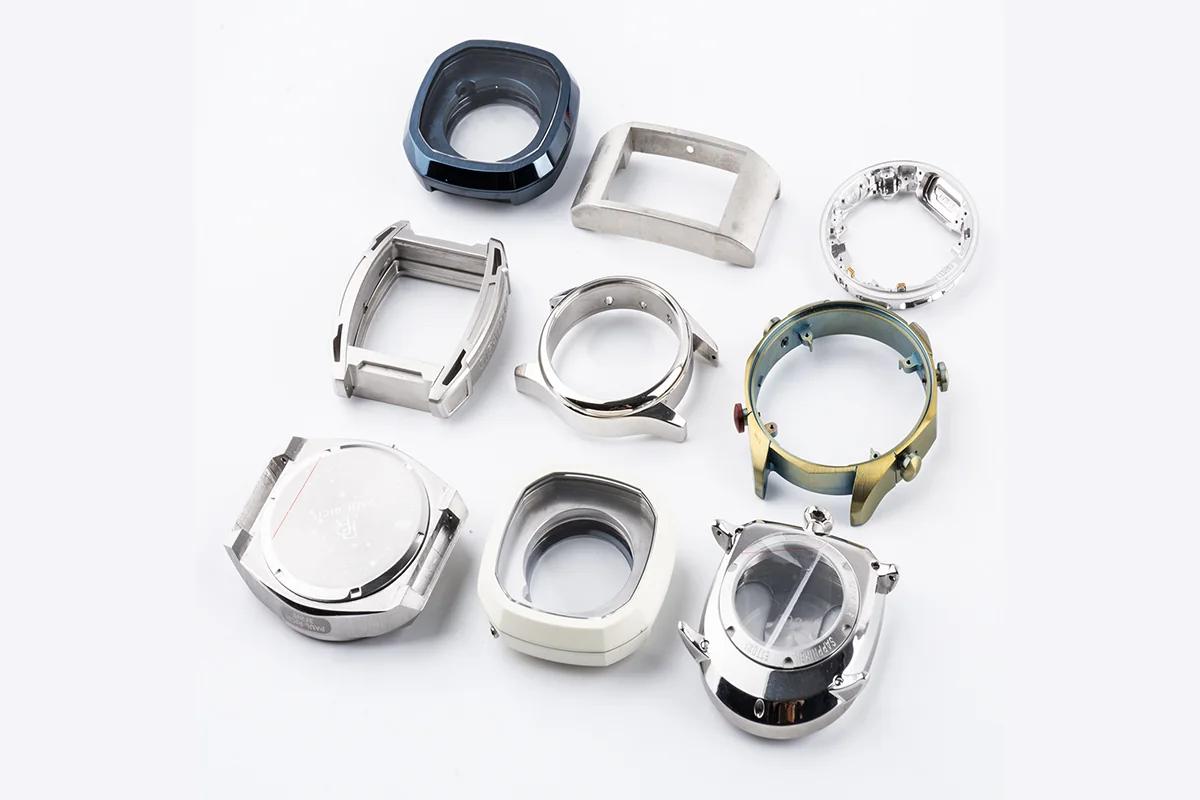
XTMIM watch-case experience: XTMIM has manufactured metal watch-case components across multiple projects. These compact parts can combine a cosmetic outer shell with button openings, inner seating features, mounting details and surfaces that contact skin or cleaning agents. Their requirements are not uniform across the entire case.
Manufacturing and finishing decisions: For each drawing, confirm whether MIM is appropriate for the geometry and planned volume; identify surfaces that may require secondary machining, polishing, cleaning or a specified coating. The material and finishing route must be selected for the actual part rather than assuming every watch case is 316L or receives the same treatment.
Corrosion and drawing review: Mark skin-facing areas, frequently cleaned surfaces, button and seal interfaces, cosmetic inspection zones, and any coating or surface-finish requirements. Polishing or PVD appearance alone does not establish resistance to sweat, chloride exposure or a defined corrosion test; agree on the applicable acceptance criteria.
What Exposure Conditions Must the Finished Part Withstand?
"Corrosion resistant" is not a complete engineering requirement. A component exposed occasionally to indoor condensation faces a different problem from one repeatedly cleaned with a chemical solution or assembled where chloride-containing liquid can remain in a crevice. Before choosing a grade or releasing tooling, define what reaches the part, how often, for how long, and what failure would be unacceptable.
Corrosive Media and Actual Service Conditions
Describe the medio de contacto real, its concentration where known, temperature, duration, frequency, and whether the part is rinsed, dried, or kept wet. For assemblies, identify adjacent materials and the areas inaccessible after installation. These details help an engineer determine whether a general stainless steel route is worth reviewing or whether project-specific compatibility and testing are required.
| Ambiente de servicio | What the buyer should specify | Why it changes the engineering review |
|---|---|---|
| Humidity or condensation | Wet/dry cycle, indoor or outdoor installation, visible surfaces. | Local moisture retention, finish quality, and enclosed interfaces may matter. |
| Skin contact and sweat | Duration of contact, cleaning routine, cosmetic and skin-contact zones. | Appearance, surface texture, material suitability, and any applicable product requirements need review. |
| Chloride or saline exposure | Salt source, concentration or applicable test, contact duration, drainage. | Localized corrosion sensitivity cannot be established from a generic grade name. |
| Cleaning agents or process fluids | Chemical identity, concentration, temperature, and cleaning frequency. | Chemical compatibility and finishing or cleaning method need confirmation. |
| Liquid around a functional seal | Fluid type, contact period, seal pressure, leakage and cleanliness requirements. | Surface condition and critical geometry can be as important as the nominal alloy. |
Functional and Cosmetic Corrosion Risks
A visible housing may fail its requirement because of staining even when it still functions. A sealing collar may look acceptable yet become unsuitable if a mating surface pits, its finish degrades, or leakage exceeds an agreed limit. For a bracket or connector, corrosion at a contact interface may be more consequential than superficial marks elsewhere. Mark the cosmetic, functional, and concealed zones separately on the drawing, and define the failure mode for each. This creates a useful starting point for material selection and later acceptance testing.
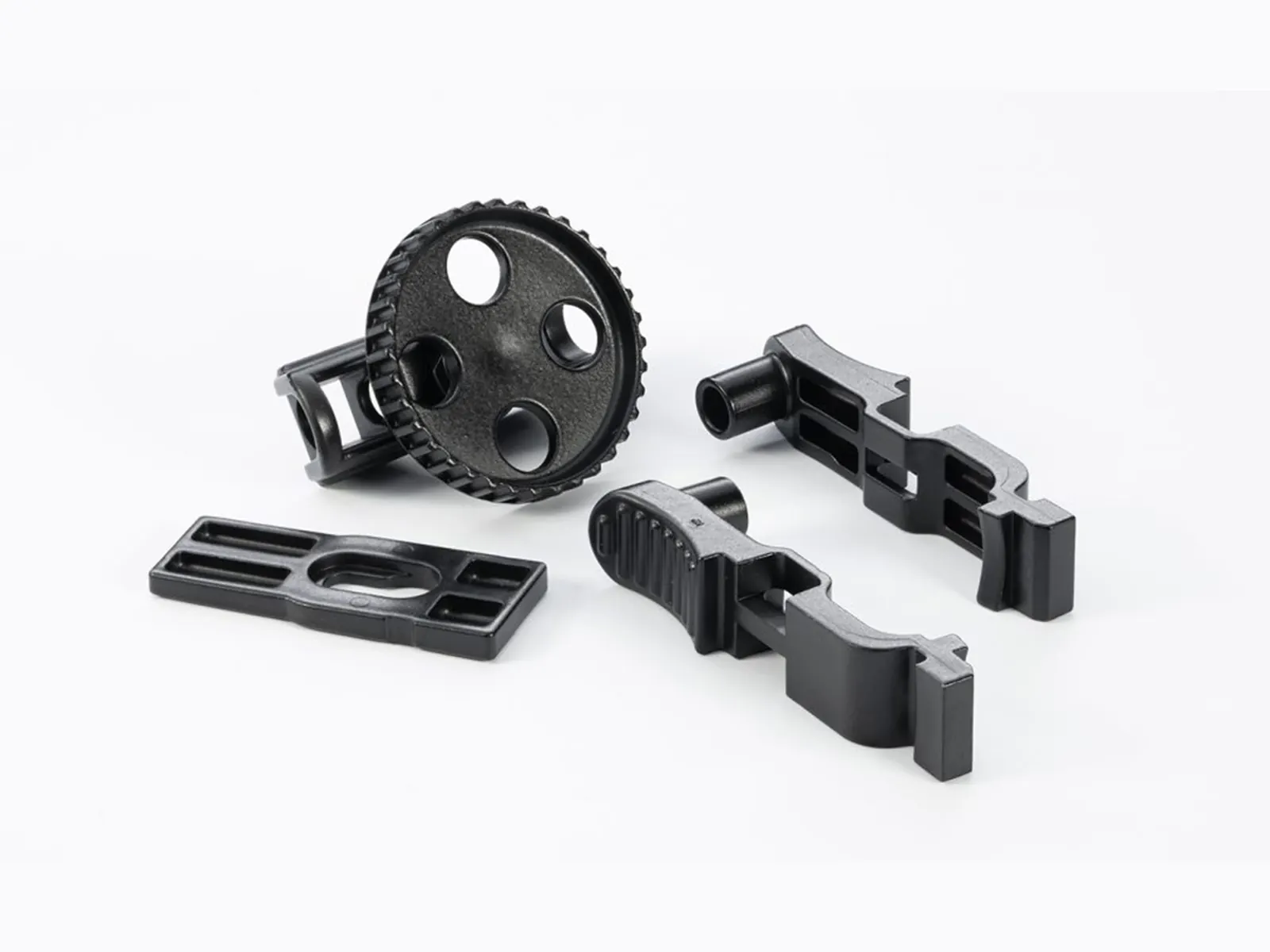
Subsea cable latch: MPP and Schilling Robotics used a four-part, five-piece MIM 316L latch assembly for a subsea cable product. According to the published case, the earlier plastic design stretched and cracked; the metal assembly also received a low-friction, corrosion-resistant coating.
Design constraint: The switch to metal addressed a mechanical problem, while subsea service still required attention to surface protection and contact conditions. Specifying 316L alone would not describe the complete solution or its acceptance criteria.
For saltwater-exposed hardware: Identify the contact medium, mating surfaces, coating or finishing specification, and verification method. A generic "marine-grade" note cannot replace agreed corrosion acceptance criteria.
When Does MIM Make Sense for Corrosion-Resistant Parts?
Manufacturing feasibility and corrosion suitability are separate checks. A part may be easy to mold but require unacceptable surface access or finish costs. Another part may be made from a corrosion-resistant alloy yet be too simple or too low-volume to justify MIM tooling. Select the process only after considering geometry, anticipated demand, tolerance strategy, secondary operations, and the cost of validating the finished part.
Geometry, Production Volume, and Tooling Suitability
MIM typically becomes attractive when a small complex geometry is repeated enough to distribute mold costs across production, and when it can integrate features that otherwise need several machining steps. Thin walls, small holes, slots, and certain undercut-like features may be possible, but each requires molding, debinding, and sintering review. Tight local tolerances or special sealing faces may still require CNC finishing after sintering.
| Señal de proyecto | Decisión inicial | Reason / action before commitment |
|---|---|---|
| Small corrosion-resistant complex shapes with integrated features | Candidato MIM | Review feedstock, mold release, shrinkage, and surface access. |
| Repeat orders with stable drawing and significant volume | Candidato MIM | Estimate total tooling, unit cost, scrap risk, and secondary operations. |
| Critical bores, flat seals, or very tight local tolerances | Revisión de ingeniería requerida | Confirm which dimensions remain as-sintered versus machined. |
| Large, geometrically simple part | Alternative usually preferred | Compare CNC, fabrication, stamping, or casting as applicable. |
| Prototype-only or uncertain low annual volume | Alternative usually preferred | Avoid a tooling investment before the design and demand stabilize. |
| Severe chemical/chloride exposure or safety-critical function | Qualification required | Validate the actual material, process route, final surface, and testing plan; this is not automatically a MIM process rejection. |
Cuando otro proceso de fabricación es más práctico
Para corrosion-resistant low-volume stainless steel spare parts, CNC machining can be more sensible because it avoids dedicated injection tooling and allows design changes. Stamping is often more suitable for relatively flat sheet-metal geometry, while casting or machining may be more practical for larger parts; conventional PM may favor simpler compaction-friendly shapes. These are conditional judgments, not universal cost rankings. For a detailed CNC comparison, see MIM vs mecanizado CNC.

Five-port analytical flow block: A 316L MIM component for gas-chromatography equipment connects five ports through two internal gas channels. MIMA describes multi-side mold slides and hydraulic core pulls to form the 90-degree passages; the remaining secondary operation was tapping pre-formed holes.
Reported project result: The documented benefit was geometric integration and manufacturing cost, not demonstrated corrosion life. MIMA reports approximately 40% savings over the casting-plus-machining route used in that project. That figure is specific to the documented comparison and is not a general MIM cost guarantee.
For intersecting flow passages: Assess mold-core movement, access for cleaning, any leakage tests, and production volume before comparing MIM with machining.
How Do Material, Sintering, and Surface Finishing Affect the Final Part?
A corrosion-resistant alloy designation alone does not define the performance of the finished component. Material chemistry, sintered condition, contamination, exposed geometry, and surface finishing affect different aspects of the result. For custom corrosion-resistant alloy parts with complex geometry, these factors need to be evaluated alongside dimensional, appearance, and service requirements.
Material Fit for Corrosion and Mechanical Requirements
acero inoxidable 316L is commonly reviewed when general corrosion performance is a primary requirement; however, it is not immune to all chloride environments and may not meet higher hardness or strength needs. 304-family stainless steel can suit some less demanding applications, subject to exposure and process validation. 17-4 PH is often considered when higher strength is important, but its heat-treatment condition and corrosion performance must be evaluated together. Hardened grades such as 420 or 440C introduce a different hardness/corrosion balance. No grade is universally best, and datasheets for wrought materials cannot replace validation of a finished MIM component.
| Dirección inicial del material | Why it might be shortlisted | Qué debe verificarse |
|---|---|---|
| acero inoxidable 316L | General corrosion resistance with small complex metal parts. | Actual medium, strength needs, MIM feedstock/process route, and finished surface. |
| 304-family stainless steel | Applications with exposure conditions compatible with the grade. | Chloride/cleaner exposure, processing quality, and acceptance criteria. |
| Acero inoxidable 17-4 PH | Strength-driven components needing corrosion review. | Heat-treatment condition, resulting properties, and real corrosion conditions. |
| Other hard or specialty alloys | Special hardness, wear, or environment requirements. | Availability of proven MIM feedstock, factory capability, cost, and qualification; do not assume routine production. |
Compare alloy properties in the materiales MIM resistentes a la corrosión guide, then confirm the shortlisted grade against the actual component geometry, production route, and exposure conditions.
Sintered Condition, Density, and Surface Integrity
MIM uses feedstock injection, debinding, and sintering to produce the finished metal geometry. Feedstock consistency, binder removal, sintering atmosphere and temperature control, final density, residual porosity, and local distortion can affect mechanical integrity and surface quality. Their influence on corrosion performance depends on the alloy and exposure conditions; a measured density value or a nominal material specification alone does not prove corrosion resistance. Where the application is demanding, confirm which part properties, surface conditions, and production checks will be measured rather than relying on an as-sintered appearance claim.
Cleaning, Polishing, and Passivation for Critical Surfaces
An as-sintered surface may be acceptable in a protected noncritical area, while a visible face, sliding interface, or seal may need polishing or localized machining. Cleaning and, when applicable, chemical passivation should be considered as specified processes with agreed inspection criteria—not generic assurances that stainless steel can never stain or pit. For suitable stainless steel parts, ASTM A380/A380M addresses cleaning and related surface treatment practices, while ASTM A967/A967M addresses chemical passivation requirements. The applicable process and access to hidden features must be confirmed for the actual part.
| Finished surface zone | Possible manufacturing concern | Question for engineering review |
|---|---|---|
| Cara visible cosmética | Staining, scratches, inconsistent polishing, or appearance variation. | What appearance and finishing acceptance standard applies? |
| Functional sealing or mating face | Tool marks, dimensional mismatch, residual contamination, or leakage. | Is post-sinter machining, surface inspection, or leak testing required? |
| Hidden pocket or small bore | Limited cleaning, polishing, treatment, or inspection access. | Can the area be reached and verified after finishing? |
| Dissimilar-metal interface | Potential galvanic conditions if electrically coupled in an electrolyte. | What are the mating alloys, contact conditions, and exposure? |
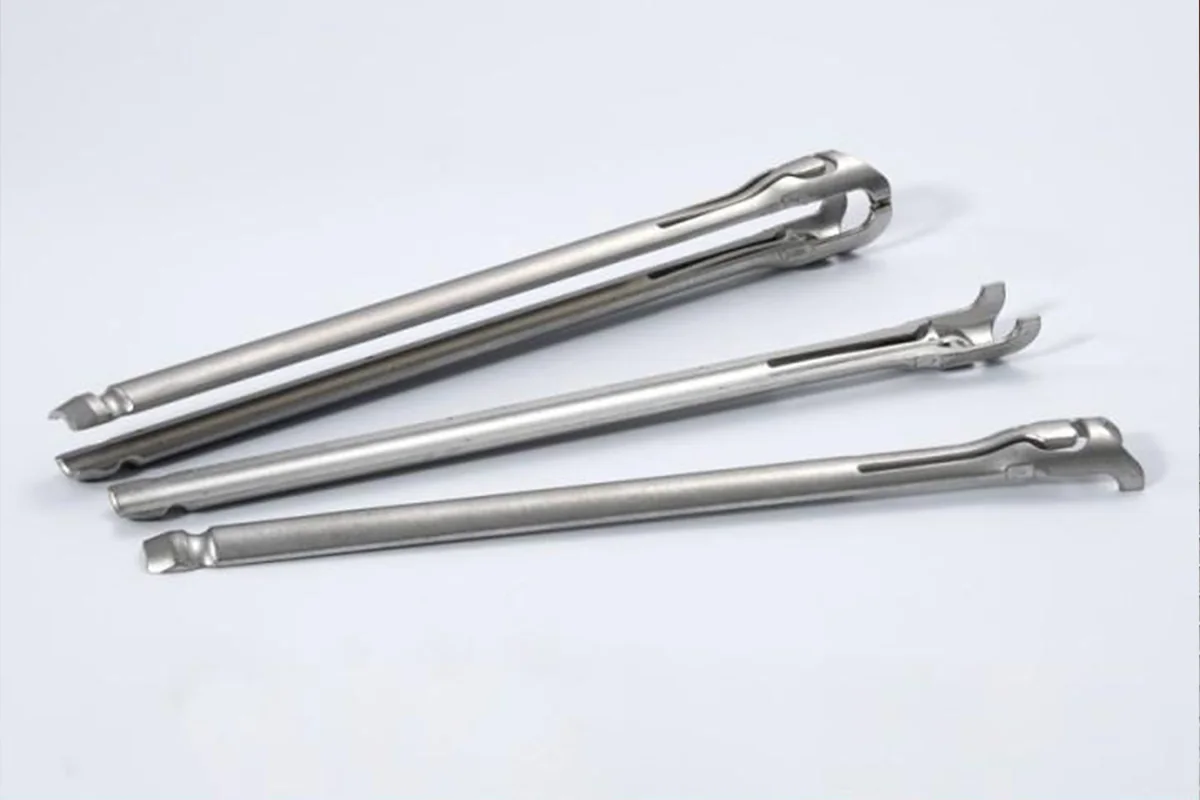
17-4 PH MIM shaft assembly: MIMA documents a shaft for a single-use surgical suturing instrument. The approximately 178 mm component was manufactured as two MIM sections, followed by laser welding, finish machining, internal reaming, heat treatment, sandblasting, and passivation.
Restricción del proceso: Achieving the required dimensions and surface condition involved several operations beyond MIM sintering. Passivation is a documented production step in this project, not evidence that another 17-4 PH component will meet a particular corrosion-test threshold.
For assemblies with critical surfaces: Specify the weld locations, machined areas, hidden passages, heat-treatment condition, and post-processing inspection before quotation.
Which Design Features Create Corrosion Risks, and How Can They Be Controlled Before Tooling?
A geometry that can be molded may still trap liquid, prevent thorough cleaning, or restrict inspection after assembly. For corrosion-resistant MIM components, DFM therefore needs to address fluid retention, surface accessibility, and dissimilar-metal contact as well as wall thickness and sintering shrinkage. Resolve these concerns before mold steel is cut.
Blind Holes, Internal Pockets, and Trapped Fluids
Deep blind slots, sharp re-entrant corners, and enclosed cavities may hold process residues or service fluids, particularly when rinsing and drying access is restricted. An effective review asks whether drainage, cleaning access, a design radius, or an alternative geometry is possible without changing the part's required function. Where a blind feature cannot be altered, the team needs a feasible cleaning and inspection method rather than an unsupported claim that passivation will reach every surface equally.
Sealing Surfaces, Mating Interfaces, and Finishing Access
Mark the sealing land, sliding faces, visible areas, contact-metal interfaces, and critical dimensional features on the 2D drawing. If a sealing surface needs a flatness, roughness, or leakage result that is not practical as-sintered, include the secondary machining and final inspection route early. Gate vestiges or sintering distortion must also be considered where they intersect cosmetic or functional zones. These decisions change mold design, unit cost, and verification planning.
| Drawing feature / issue | Potential failure mechanism | Pre-tooling prevention or check |
|---|---|---|
| Deep blind pocket or narrow internal slot | Retained fluid, residue, and difficulty cleaning or inspecting. | Review drainage, opening geometry, washing method, and inspection access. |
| Esquina interna afilada | Hard-to-clean localized region and possibly unfavorable stress geometry. | Consider a functional radius and confirm molding/finishing feasibility. |
| Thin wall beside a critical edge | Distortion in sintering and inconsistent finished-surface geometry. | Check wall balance, support, shrinkage allowance, and final dimensions. |
| Seal or tightly fitted bore | Leakage, poor surface contact, or failure of the local finish. | Define surface/size requirements and whether CNC finishing is required. |
| Gate mark on visible or sealing face | Local finish and functional interference. | Agree gate location and postprocessing before tool design. |
| Dissimilar metal in a wet assembly | Possible galvanic attack if electrically coupled in conductive liquid. | Check contact pair, isolation strategy, exposure, and test expectations. |
Design example (hypothetical): blind slot beside a sealing face. A miniature stainless steel sleeve may be moldable but retain cleaning liquid in a blind slot, while the nearby seal needs a controlled machined finish. Before tooling, confirm the fluid exposure, drainage path, sealing-surface machining and inspection, and the applicable corrosion and leakage limits. Changing the stainless steel grade alone would not resolve the trapped-liquid or finishing issue.
Internal channels need separate validation: The 316L analytical flow block described above shows that moving mold cores can form complex internal passages. That manufacturing capability does not prove the passages can be cleaned, coated, dried, or inspected for a different corrosive fluid. For wetted components, evaluate surface access and the final test method separately from moldability.
How Should Corrosion Performance Be Specified and Verified?
For a custom component, the useful question is not simply "Does 316L resist corrosion?" It is "What test and acceptance result will demonstrate that this finished part meets its actual use requirement?" A complete specification states the condition of the sample, the method and exposure, the surfaces to inspect, and what constitutes failure. It should also say who owns the verification work.
Translate Service Requirements into Relevant Test Conditions
Salt-spray methods such as ISO 9227:2022 y ASTM B117-26a may be relevant for an agreed accelerated exposure. Neither standard supplies a universal product pass/fail threshold, and hours in a salt-spray chamber cannot by themselves predict service life. For a part exposed to a specific cleaner or process fluid, an agreed test using the actual contact medium may be more informative. Passivation-treatment checks under ASTM A967/A967M address treatment effectiveness; they are not, by themselves, proof of long-term suitability in every operating environment.
| Requisito del proyecto | Possible verification direction | Must be agreed before testing |
|---|---|---|
| Resistance under a specified salt-spray exposure | Appropriate ISO 9227 / ASTM B117 salt-spray procedure, when relevant. | Test type, sample finish, duration, exposed areas, and pass/fail criteria. |
| Resistance to a specific cleaning agent | Defined exposure to the named chemical and operating cycle. | Chemical, concentration, temperature, time, repetition, and inspection points. |
| Chemically passivated stainless steel surface | Selected passivation treatment and verification under ASTM A967/A967M where applicable. | Grade, pretreatment, specified treatment, and acceptance checks. |
| Cosmetic no-stain requirement | Agreed visual inspection after the relevant exposure. | Reference appearance, inspection lighting, zones, and allowable change. |
| Fluid-contact component with a seal | Corrosion exposure plus separate functional or leakage evaluation, as required. | Test pressure or operating condition, allowable leakage, and critical surfaces. |
Define Sample Conditions and Acceptance Criteria
Record whether samples are as-sintered, polished, passivated, machined, or fully assembled; surface treatment can change the test outcome. Separate material identity and dimensional acceptance desde surface-finish acceptance y corrosion/functional acceptance. If a customer names a test standard but does not state the specimen condition, duration, inspection method, and failure threshold, those acceptance details still need agreement before production.
For demanding, regulated, or safety-critical applications, confirmation may require customer-led validation or an agreed third-party laboratory. Quotation acceptance must not be confused with a promise that the part has passed a test not yet performed.
What Should You Provide for a Corrosion-Resistant MIM Parts RFQ?
A useful quotation begins with enough information to separate manufacturing feasibility from unfinished requirements. If you are comparing a custom corrosion-resistant parts manufacturer or a stainless steel MIM parts supplier, share more than a material name and rough annual quantity. The following inputs help the engineer check the shape, exposure, finishing, testing, and commercial route in one review.
| Entrada de RFQ | Información a proporcionar | What it enables the manufacturer to assess |
|---|---|---|
| Dibujo 2D y CAD 3D | PDF dimensions/tolerances, marked critical areas, STEP or other usable model. | Moldability, shrinkage, machining, tool design, and fit requirements. |
| Requisito de material | Specified grade or current alloy; property priorities if the grade is not fixed. | Available feedstock/process capability and alternative candidates. |
| Actual corrosion environment | Fluid/chemical, concentration, exposure time, temperature, moisture cycles. | Compatibility questions, surface strategy, and validation scope. |
| Surface and functional zones | Cosmetic areas, sealing faces, mating/sliding interfaces, hidden pockets. | Finishing access, secondary machining, and inspection needs. |
| Processing/finishing requirements | Polishing, cleaning, passivation, special finish or coating requirements. | Available process route, cost and any external capability checks. |
| Test and acceptance criteria | Named method, sample condition, duration, allowable corrosion or leakage. | Verification plan, responsibility, and uncertainty before production. |
| Volumes and project stage | Prototype quantity, forecast annual demand, target production schedule. | Whether tooling is economical and how the program should be phased. |
| Existing manufacturing issues (if any) | Current CNC, casting, or stamping limitations; defects or cost target. | Whether conversion to MIM creates genuine manufacturing value. |
What Needs to Be Confirmed During XTMIM Engineering Review?
During the initial review, XTMIM can assess whether the part is a reasonable MIM candidate, whether the requested grade has an established manufacturing route, and which tooling, sintering, machining, finishing, and inspection constraints need attention. The review should distinguish the factory's confirmed in-house operations from any special process or external testing that still needs to be arranged. For nonroutine alloys or unusually aggressive environments, feasibility and test responsibility must be confirmed rather than assumed. Any final corrosion result depends on the approved production route and an agreed validation plan.
Prepare your files using the Guía de preparación de RFQ, or submit a drawing directly for a part-specific response. A quotation can identify assumptions and outstanding test requirements; it should not be interpreted as a corrosion-performance guarantee before validation.
Request a drawing-based review for your corrosion-resistant metal component.
Share the model, expected volume, environmental exposure, critical surfaces, and any required acceptance standard. XTMIM can then review the practical MIM manufacturing route and identify the issues requiring confirmation.
Referencias técnicas y alcance
MPIF Standard 35-MIM (2025) provides a basis for specifying MIM material grades. ASTM A380/A380M-25 addresses cleaning, descaling, and passivation practices for stainless steel; ASTM A967/A967M-25 covers chemical passivation treatments and associated checks. ISO 9227:2022 y ASTM B117-26a describe salt-spray tests. These references specify methods or material criteria within their respective scopes; none establishes that an untested part has met its particular service-life, use-environment, or customer acceptance requirements. Use the applicable specification edition and agree project-specific criteria.
Qualification limits: Part-form tables and engineering examples identify possible geometry and surface risks; they are not corrosion-test results. Confirm material availability, achievable finishing, inspection methods, and test responsibility against the actual part drawing and intended service conditions.
Published case evidence: The subsea latch assembly, analytical flow block, and 17-4 PH shaft document manufacturing approaches described in publicly available third-party case studies. Their original sources are linked beside each photograph. These are not XTMIM projects or qualification data for a different part, material condition, or corrosion environment.