
ما هي المكونات المعدنية الطبية الشائعة المرشحة لتقنية MIM؟
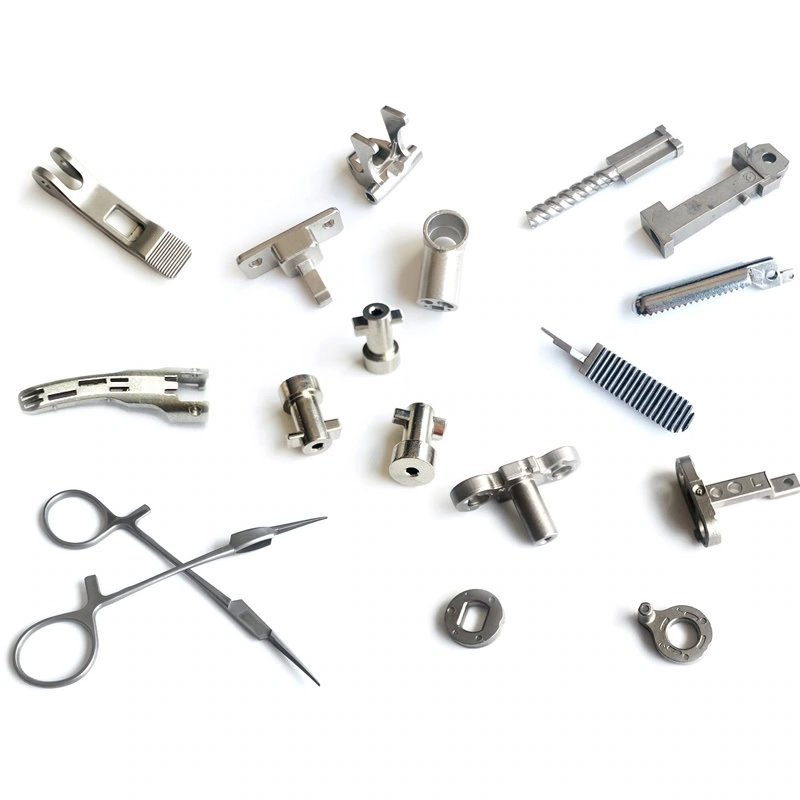
أجزاء MIM الطبية هي مكونات معدنية مدمجة تُستخدم في آليات المنظار، ومعدات الأسنان وتقويم الأسنان، والأدوات الجراحية، والتجميعات التشخيصية. نقطة البداية المفيدة هي الوظيفة الميكانيكية للجزء - الحركة، التحديد، القفل، الاتصال، أو الدعم - بدلاً من اسم الجهاز. توضح الأمثلة أدناه أنواع الميزات التي قد تبرر استخدام تقنية MIM، ولكن لا يزال يتعين مراجعة كل رسم هندسي بشكل فردي فيما يتعلق بالمواد، والتفاوتات، وحجم الإنتاج.
مكونات معدنية حقيقية من XTMIM MIM، معروضة كمرجع هندسي فقط؛ هذه ليست أجزاء مؤهلة للأجهزة الطبية.
يمكن تركيز التجاويف الصغيرة، وميزات التحديد، وواجهات الاقتران في جزء مدمج. وجودها هو سبب لفحص الرسم الهندسي، وليس دليلاً على أن المكونات المصورة مؤهلة للاستخدام الطبي.
| عائلة الأجزاء | مكونات معدنية تمثيلية | الوظائف والميزات الميكانيكية | تابع إلى |
|---|---|---|---|
| أجزاء آلية المناظير الداخلية | موصلات المفصلات، كتل القيادة، وصلات مصغرة، أقفال، وأدلة | نقل الحركة أو تحديد مواقع الأعضاء المتحركة؛ فتحات صغيرة، شقوق، وواجهات اقتران | أجزاء منظار داخلي |
| أجزاء الأسنان وتقويم الأسنان | أقواس تقويم الأسنان، عناصر تثبيت، حوامل صغيرة، وموصلات أدوات | تحديد مواقع المكونات أو تثبيتها أو ربطها؛ شقوق دقيقة، أسطح تلامس، وحواف محكومة | أجزاء أسنان |
| أجزاء آلية الأدوات الجراحية | قطع قفل غير قاطعة، وصلات محورية، موصلات، وآليات مقابض | قفل وتدوير وتحديد مواقع تجميعات الأدوات؛ خلوص الاقتران ومناطق التلامس الوظيفية | أجزاء الأدوات الجراحية |
| آليات تشخيصية وأدوات طبية مدمجة | حوامل المستشعرات، أغلفة صغيرة، حوامل منزلقة، حشوات تحديد مواقع، ومثبتات | أجزاء تحديد الموضع أو الدعم داخل المعدات؛ نقاط مرجعية للتركيب وميزات هيكلية مدمجة | مراجعة رسم المكون الفعلي ووظيفته |
مكونات المناظير والأجهزة قليلة التدخل الجراحي
تستخدم أنظمة المفاصل في المناظير قضبان قفل، وموصلات، ووحدات دفع، وأدلة لتحديد الموضع أو نقل الحركة عبر أداة مدمجة. قد تكون الثقوب الصغيرة والمقاطع المتدرجة مناسبة للتشكيل بالشكل القريب من الشكل النهائي (near-net-shape)، بينما يجب التحكم في موقع المحور، وخلوص الدليل، والأسطح المتزاوجة، والمقاطع الرقيقة بعد التلبيد. توضح مكونات MIMA المنشورة أدناه كيف يمكن دمج العديد من الميزات ثلاثية الأبعاد في أجزاء معدنية مصغرة.
لإجراء تقييم مفصل على مستوى الميزة، بما في ذلك المخاطر الخاصة بالهندسة، انتقل إلى صفحة أجزاء المناظير بتقنية MIM.
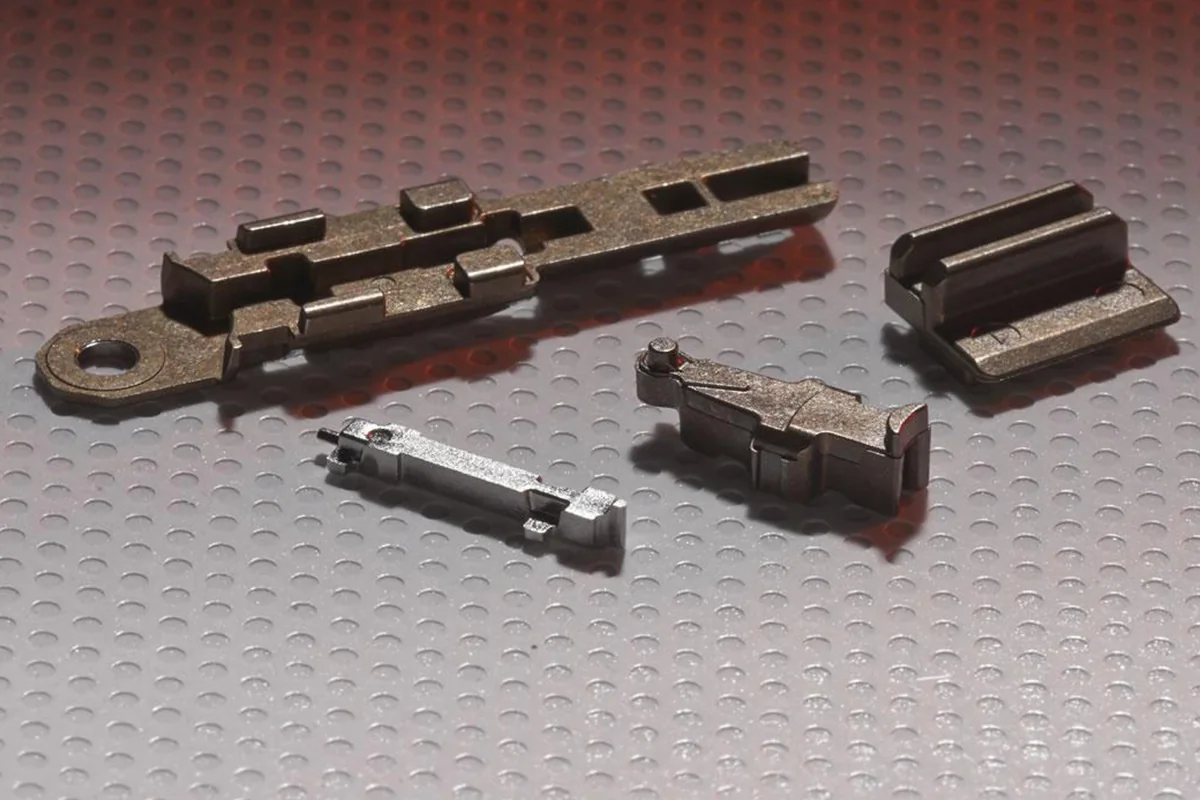
تحدد MIMA قضيب قفل للمفاصل، وموصل، ووحدة دفع، ودليل سكين مصنوعة باستخدام MIM 17-4 و MIM 420. تفيد تقارير حالتها المنشورة بأنه تم إنتاج ميزات ثلاثية الأبعاد معقدة بشكل أساسي بالشكل القريب من الشكل النهائي (net shape)، مع تشغيل آلي محدود. لا تحدد أي سبيكة تم استخدامها لكل جزء على حدة.
ما يجب التحقق منه في جزئك: في الرسم الجديد، تحقق من إشراك القفل، ومسار التوجيه، ومواقع المحور، والخلوص مع المكونات المجاورة، وأي الواجهات تحتاج إلى تشغيل نهائي أو فحص.
مكونات الأسنان وتقويم الأسنان
تعتبر أقواس تقويم الأسنان، وميزات التثبيت، وموصلات أدوات طب الأسنان أمثلة للمكونات المعدنية الصغيرة ذات التفاصيل الحرجة للوظيفة. يمكن للقوس أن يلبي حجمه الإجمالي ولكنه لا يزال يفشل في الأداء إذا كان مجرى السلك المقوس، أو قاعدة الربط، أو الحواف النهائية غير صحيحة. تعتمد متطلبات المواد والسطح الخاصة به على الجزء المقصود ويجب تحديدها قبل التصنيع.
للحصول على مراجعة أكثر تفصيلاً لمجاري الأقواس، وأسطح التلامس، ومتطلبات التشطيب، تابع إلى صفحة أجزاء تقويم الأسنان بتقنية MIM.
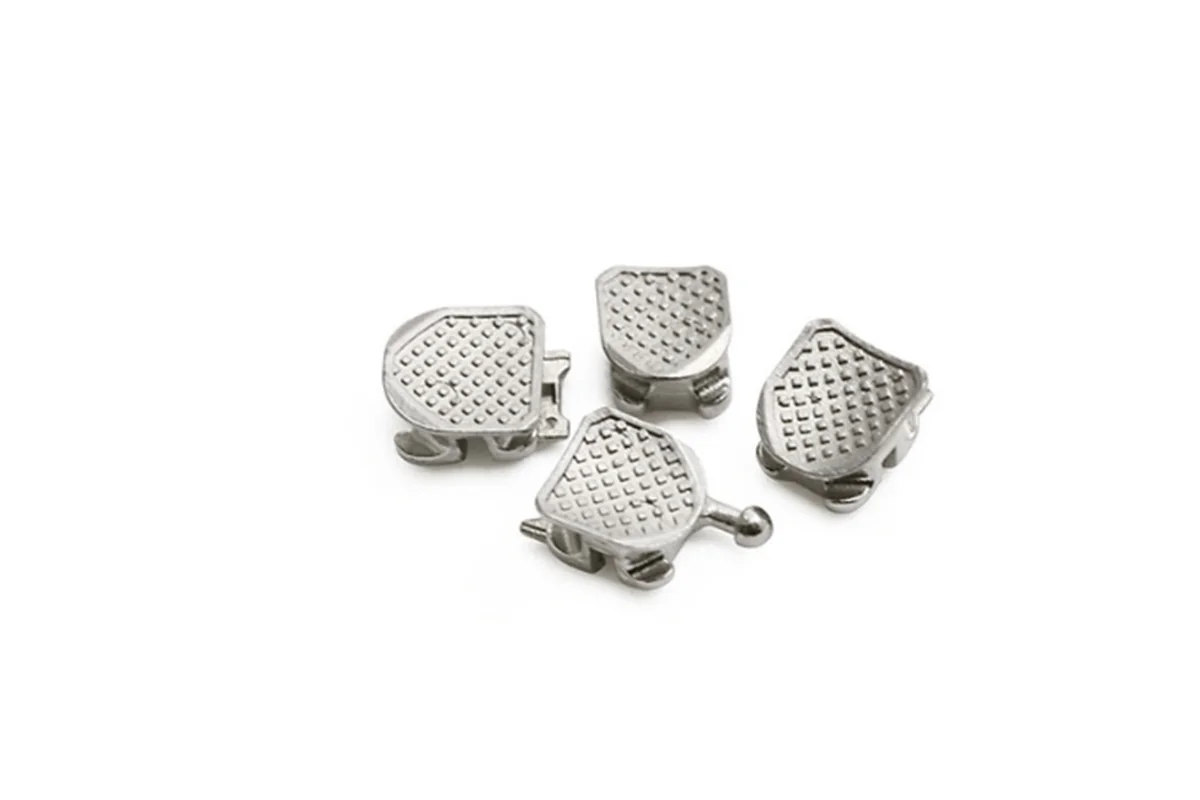
يسرد المورد قوسًا من الفولاذ المقاوم للصدأ 17-4 PH بقياس 3.29 × 5.10 مم ويحدد الطحن المغناطيسي كعملية لاحقة. تصف هذه الأرقام وخطوات التشطيب هذه العينة المنشورة فقط؛ فهي ليست حدود تصميم أو مواصفات تصنيع لأقواس أخرى.
ما يجب التحقق منه في جزئك: لطلب عرض أسعار لقوس، ميز مجرى السلك المقوس الوظيفي ومناطق التلامس عن محيطه العام. حدد الشوائب المسموح بها، والحواف، ونسيج القاعدة، ومتطلب السطح النهائي.
مكونات آلية الأدوات الجراحية
يمكن أن تشمل الأقفال غير القاطعة، وروابط المحور، والموصلات، وآليات المقبض ميزات مدمجة مناسبة لمراجعة MIM. بالنسبة للجزء القفل، فإن هندسة الإشراك، واتجاه الحمل، وخلوص التزاوج، والتآكل، والحواف الحساسة للشوائب تكون أكثر أهمية من فئة الأداة. تؤكد مكونات الملقط المنشورة من قبل الشركة المصنعة أدناه على عائلة حقيقية من الأجزاء المصنعة بتقنية MIM، ولكن واجباتها الميكانيكية الدقيقة تتطلب رسمًا بدلاً من التخمين البصري.

CASTEM identifies these miniature components as 17-4 PH MIM parts for forceps. The published sample establishes the material and part family, but it does not disclose detailed assembly fits or the individual components’ exact working loads.
ما يجب التحقق منه في جزئك: Specify the actual mating surfaces, pivot clearance, gripping or locking forces where relevant, and inspection datums; they cannot be inferred from the photo.
Other compact medical mechanisms: Diagnostic equipment and other assemblies may contain similar miniature holders, sliders, and retainers. Check whether the part is fixed, moves against another component, or carries a functional load; identical part names can conceal very different interface requirements.
Why Might Complex Medical Part Geometries Benefit from MIM?
A metal part with multiple cross-holes, guide surfaces, offsets or intricate transitions can demand several machining setups. MIM may form much of that geometry in one molded component, reducing repeated cutting and handling. The advantage depends on whether the part can be molded, released from the tool, debound and sintered without losing its critical geometry; the need for finishing and production volume still affects cost.
Multiple small holes, slots, ribs, or changes in section can make subtractive machining and handling more involved. Tooling feasibility, parting direction, and delicate features still need review.
Combining locating, connecting, or guiding features may reduce separate manufacturing or assembly steps when the component can be molded and sintered reliably.
Once the design is stable, repeated production can spread tooling and development costs over a sufficient number of components. The economic benefit depends on total finishing and inspection needs.
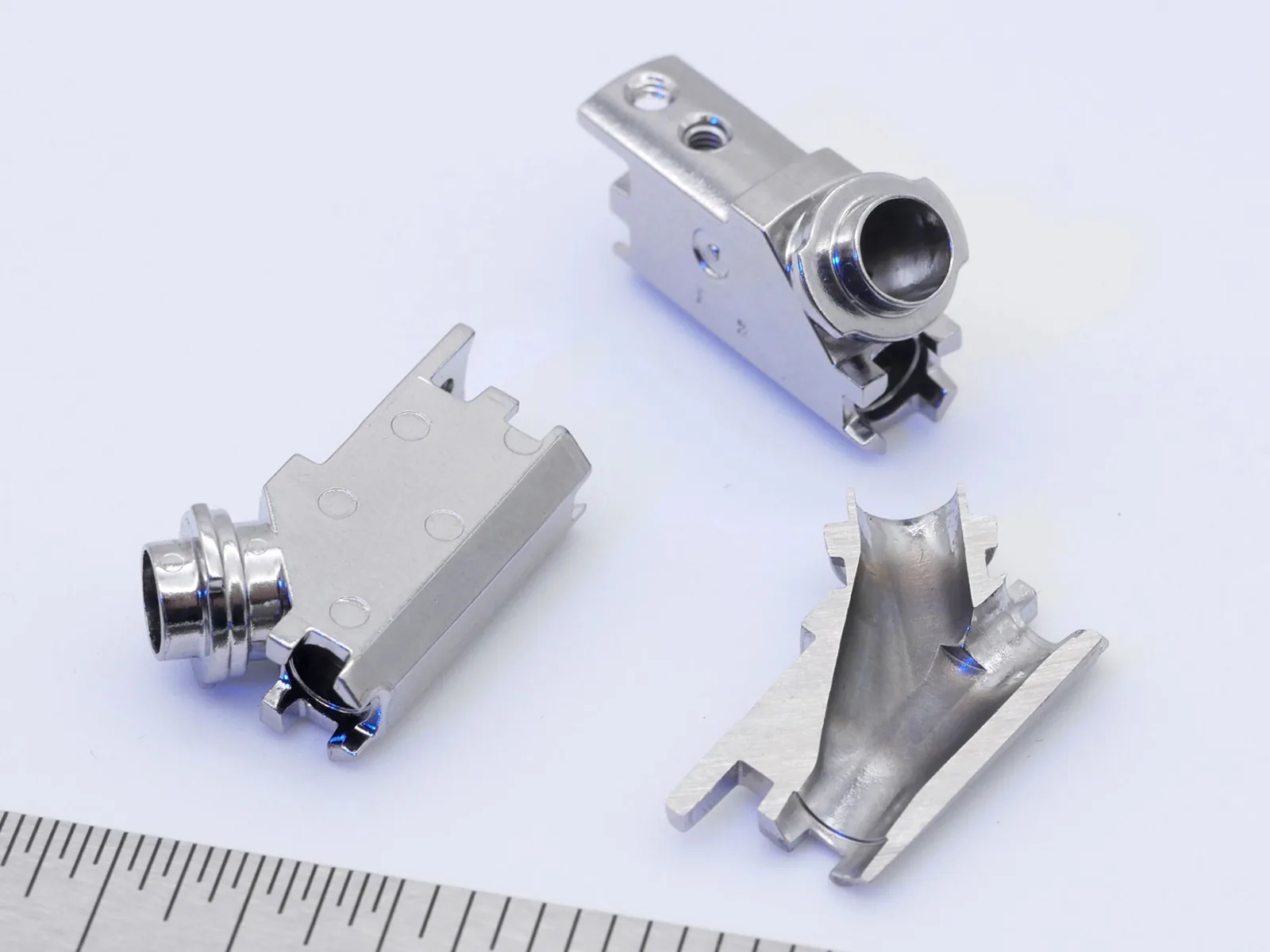
MIMA reports that one 17-4 PH (H900) MIM component replaced two previously welded pieces. The design needed three angular mold slides, a local threaded insert and ceramic trays to support the part during sintering. Cable guideways and camera-location dimensions remained function-critical.
ما يجب التحقق منه في جزئك: Part consolidation can remove a joint and reduce finishing at a welded interface, but only if the mold can release the geometry and sintering support protects the relevant datums and surfaces.
Complexity alone does not make MIM economical. Tool slides, sintering fixtures, critical finishes and expected volume belong in the comparison. See the دليل عملية MIM for the manufacturing sequence and نظرة عامة على MIM من EPMA للحصول على سياق العملية العامة.
How Can You Tell Whether a Medical Part Is Suitable for MIM?
Screen the actual component before requesting tooling. Even very small precision metal parts are not automatically suitable for MIM; the relevant question is whether the proposed geometry, material, finishing, and inspection requirements can be achieved economically at the expected production volume.
| عامل المراجعة | Good candidate for MIM review | Needs further engineering review | Consider alternative processes |
|---|---|---|---|
| حجم وشكل الجزء | Compact, multi-feature geometry where near-net shaping may remove machining steps | Very fine features, difficult demolding, thin sections, or distortion-sensitive geometry | Large or simple geometry that is cheaper to produce another way |
| مسار المادة | Established MIM alloy route appears to meet the intended part function | Special material condition, corrosion exposure, or performance requirements need confirmation | No validated feedstock or manufacturing route for the required material |
| التفاوتات الحرجة | General features can be formed while selected critical interfaces are controlled or finished | Several critical dimensions depend on tooling, shrinkage, or post-sintering correction | Nearly all functional surfaces require extensive precision machining |
| حجم الإنتاج | Repeat orders may justify tooling and process development | Annual volume and lifetime demand are uncertain | Very small one-off batches or prototypes without a volume plan |
| Design stability and finishing | Stable drawing with achievable finish and inspection scope | Design is still changing or final acceptance criteria remain open | Frequent redesigns or finishing cost erase the molding advantage |
Use the matrix as a screening tool: A favorable shape and production volume justify a DFM review, not a production guarantee. Resolve any critical material condition, fragile feature or assembly tolerance before tooling. Low volumes and extensive machining may favor another manufacturing route.
If annual volume is uncertain or extensive finishing is unavoidable, compare the proposed route with التصنيع باستخدام الحاسب الآلي (CNC) before committing to MIM tooling.
What Should Be Checked Before Tooling a Medical MIM Part?
A promising initial fit is not enough to release tooling. First identify the interfaces and performance requirements that control the finished component. The drawing should show which features can remain as-sintered and which may need tighter control, secondary machining or specific inspection.
Material Requirements and Service Conditions
Begin with the load, corrosion or cleaning environment, mechanical contacts, and final material state expected of the metal component. Stainless steels can be considered for many small precision parts, but alloy choice cannot be made solely from the device category. For example, 316L may be considered where corrosion behavior is important, while 17-4 PH may be reviewed where higher strength is needed; the actual properties depend on the final material condition and verified manufacturing route. Refer to مواد الفولاذ المقاوم للصدأ MIM for grade-level information.
Material grade alone does not establish suitability for patient contact or implantable use. The device owner must separately define and verify any use-specific material, biological, or regulatory requirements.
Critical Dimensions and Assembly Interfaces
Mark the dimensions that control fit or movement: pivot holes, locating datums, mating faces, slots, and clearances. A linkage can pass an overall dimensional check yet still bind if its critical hole position or mating surface is incorrect. Separate ordinary as-sintered dimensions from critical-to-function dimensions before defining inspection and potential machining. General dimensional expectations must be assessed against the actual material, geometry, tooling, sintering route, and feature location.
For further planning detail, see the دليل تصميم تفاوتات MIM; it does not replace the drawing-specific capability review.
Wall Thickness, Fine Features and Sintering Distortion
Sudden wall-thickness transitions, long thin arms, unsupported sections, and fine grooves can increase the risk of feedstock-flow defects, debinding damage, or non-uniform shrinkage. A feature may look moldable in CAD but distort or become difficult to support during sintering. Engineers should therefore review part orientation, feature stability, mold ejection, and support requirements before tooling. No single universal minimum wall or tolerance value is appropriate for every medical MIM component.
Example — offset arm and pivot hole: An offset thin arm may shift during debinding or sintering even if the outline is moldable. Review support and orientation, then decide whether the pivot hole needs final machining. This is an illustrative geometry, not a reported customer defect.
Functional Surfaces and Secondary Operations
Identify the surfaces that must slide, pivot, seal, engage, or contact another part. Such features may require burr control, deburring, polishing, grinding, CNC finishing, or passivation rather than relying entirely on the as-sintered condition. Requirements should distinguish cosmetic appearance from function-critical finish, edge condition, and acceptance criteria. The selected operation must suit the actual alloy, geometry, and component use.
| ميزة وظيفية | لماذا تحتاج إلى مراجعة | Possible engineering response |
|---|---|---|
| Pivot or locating hole | Position and diameter affect movement or assembly | Set functional datums; assess final drilling, reaming, or other precision finishing if needed |
| Sliding or bearing face | Surface condition affects friction, wear, and clearance | Specify functional roughness and consider localized machining or polishing |
| Locking edge or contact interface | Burrs and corner condition can affect engagement | Define edge acceptance and a suitable deburring or finishing plan |
| سطح معرض للتآكل | Material and finish must match service conditions | Review alloy condition and suitable finishing or passivation requirements |
| Inspection datum or CTQ feature | Part acceptance depends on measurable functional criteria | Agree on datum scheme, inspection method, and acceptance requirements |
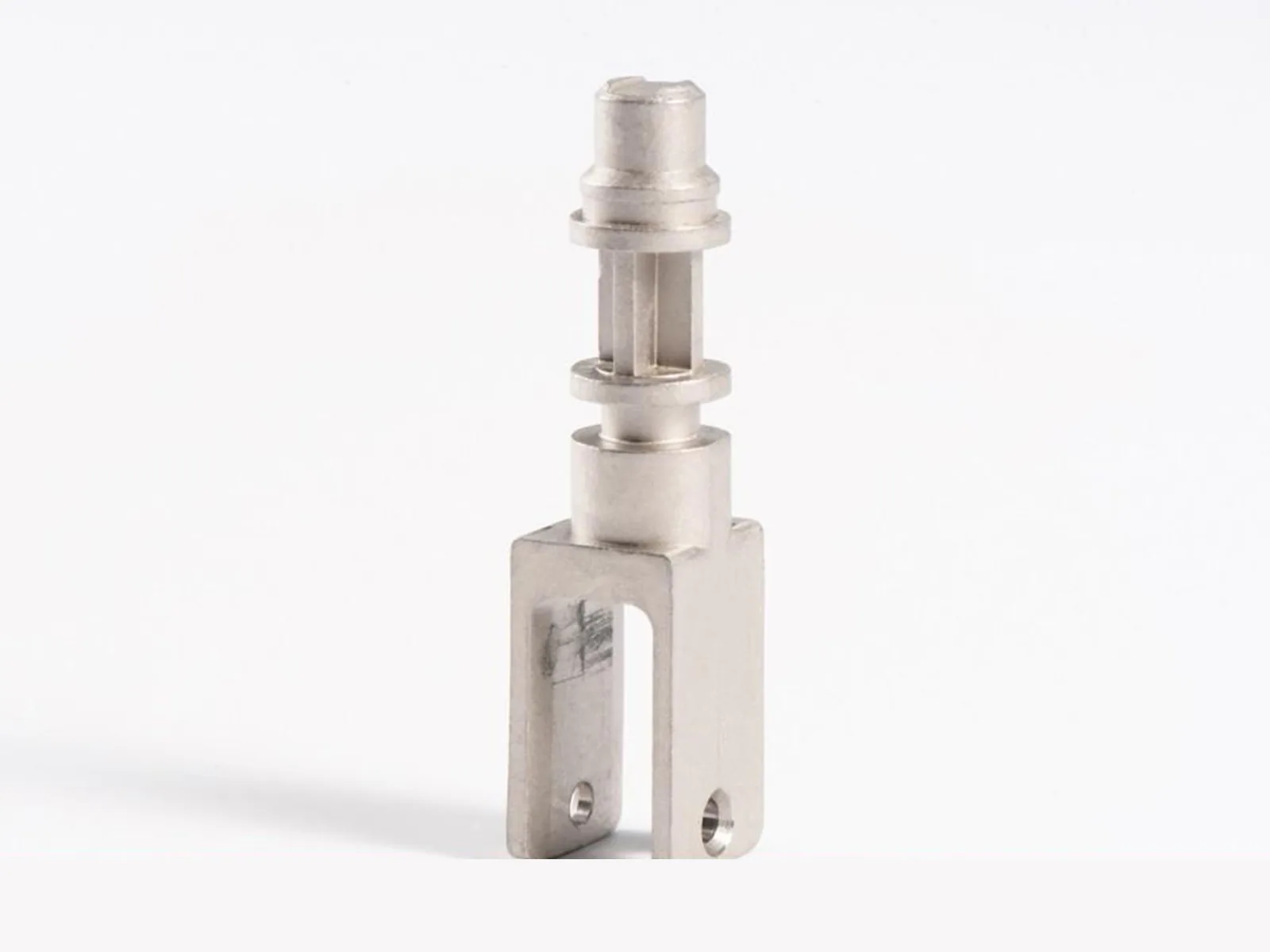
MIMA describes this 304L stainless steel latch as requiring minor machining and value-added assembly with a roller and rivet. It also reports the use of 3D-printed fixtures for the assembly operation.
ما يجب التحقق منه في جزئك: A feasibility review should separate the as-sintered latch geometry from finished shaft and engagement surfaces, roller/rivet installation and final mechanism inspection.
Secondary operations depend on the alloy, geometry and acceptance criteria; they are not a fixed finishing sequence. See التشطيب السطحي لتقنية MIM for related process details.
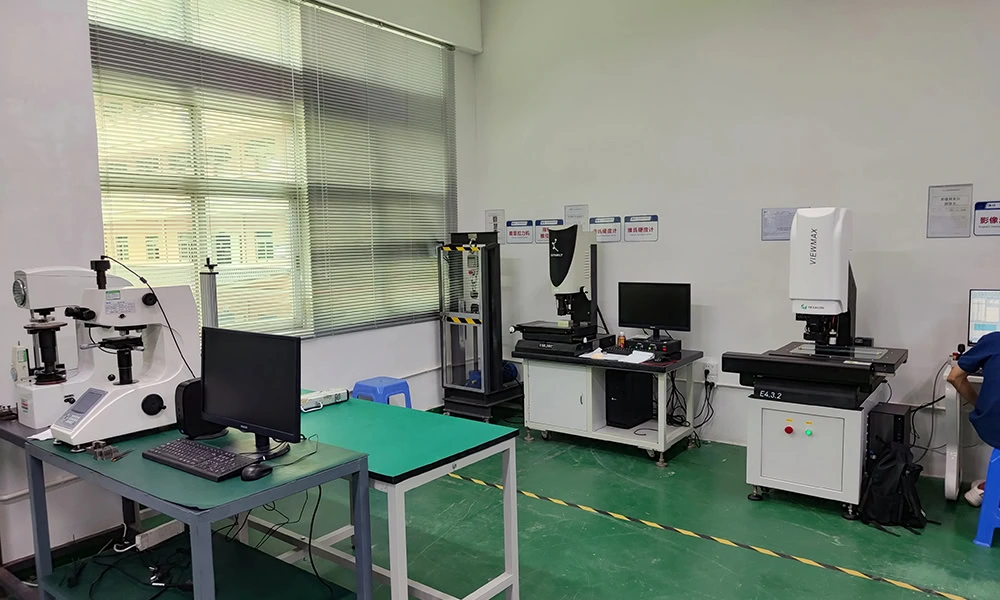
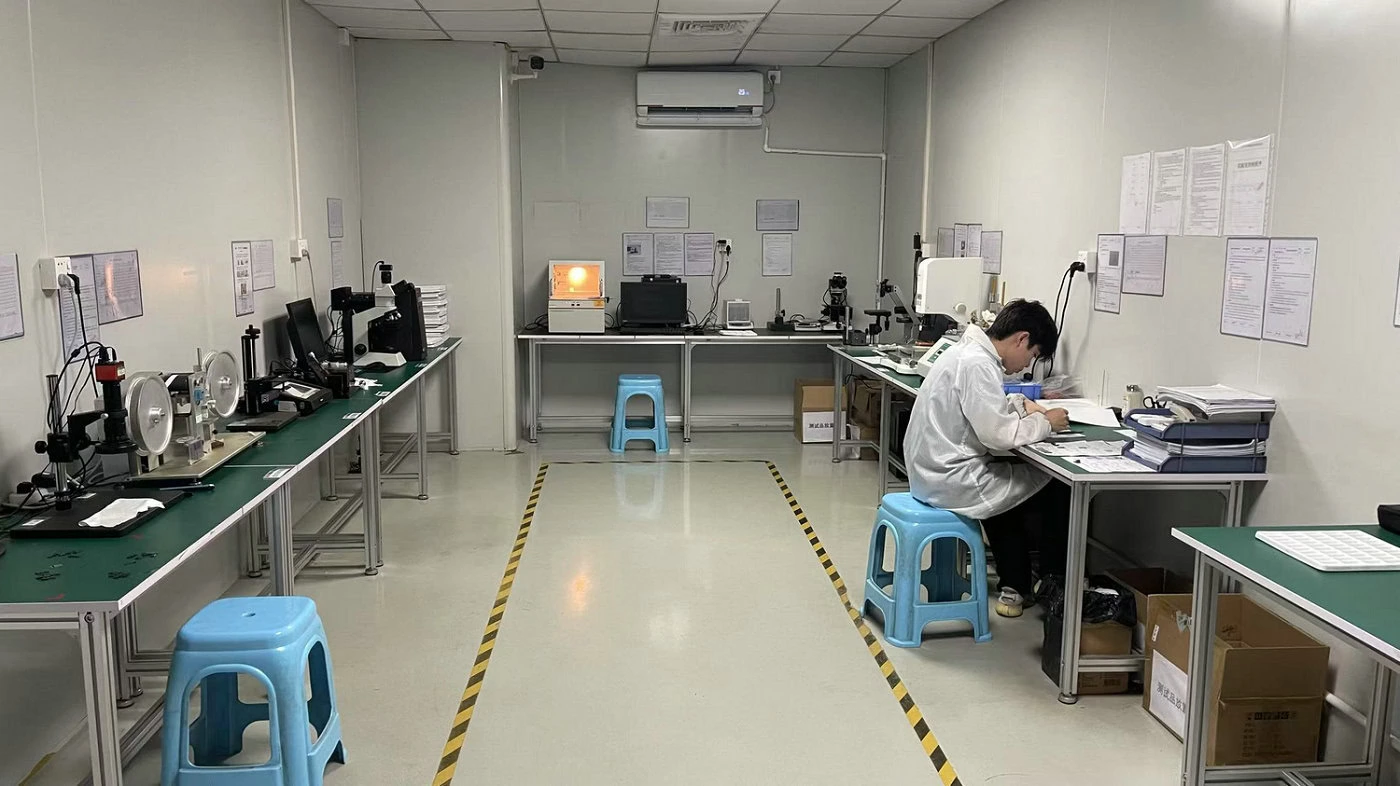
تخطيط الفحص: Mark critical-to-quality (CTQ) dimensions, mating clearances, drawing datums, functional edges, and surface acceptance criteria before quotation. The relevant inspection method must suit each feature; see فحص واختبار XTMIM for general capability information.
مرجع المادة: معيار MPIF 35-MIM provides material specification guidance for metal injection molded parts. It is a starting point for selecting and checking a material route, not evidence that a particular finished component meets its drawing requirements. The endoscope application example and general MIM process reference are linked in the relevant sections above.
What Information Is Needed for a Medical MIM Part Review?
A useful MIM feasibility review starts with the component drawing, material, critical interfaces, expected quantity and finished-part requirements—not just the medical device name. These inputs help define tooling-sensitive features, sintering risks, local finishing and the inspection steps needed for quotation.
Defines geometry, tooling direction, detailed features, and drawing requirements.
Helps identify a feasible material route and relevant final-condition questions.
Separates functional interfaces from ordinary geometry and indicates inspection needs.
Identifies possible machining, polishing, and other surface work.
Prototype quantity, annual volume, and drawing status help assess tooling economics and design maturity.
Service conditions, contacts, and special acceptance requirements clarify the component's actual manufacturing constraints.
Scope of the review: XTMIM can assess the proposed component's MIM manufacturability, material route, tooling-sensitive features, and possible finishing steps. Device-level approval, sterilization or clinical validation, and final product qualification remain separate project responsibilities.
For other applications, browse أجزاء MIM. For detailed medical subassemblies, use the endoscope, dental or surgical instrument pages linked in the part-family section above.
Ready for a component-level MIM feasibility review? Share your technical drawing and the requirements above so XTMIM can assess whether the proposed metal component is worth manufacturing by MIM.