
بالنسبة لجزء دقيق صغير، فإن اختيار معدن ذي سمعة طبية ليس كافياً. ابدأ بالأسطح التي قد تتلامس مع الجسم، والمتطلبات الميكانيكية، والظروف التي يجب أن يتحملها الجزء النهائي.
خيارات المواد في لمحة: الفولاذ المقاوم للصدأ 316L, التيتانيوم النقي تجارياً، Ti-6Al-4V، وسبائك مختارة سبائك الكوبالت-كروم يمكن اعتبارها لمشاريع MIM محددة حساسة للتلامس. يعتمد الاختيار النهائي على ظروف التلامس، والأداء الميكانيكي ومقاومة التآكل للسبائك، وتوفر مسار تصنيع MIM مثبت، والسطح النهائي. ينتمي التقييم البيولوجي للأجهزة الطبية، حيثما ينطبق ذلك، إلى خطة إدارة المخاطر الموثقة للمنتج؛ ولا يمكن أن يحل تعيين المادة محلها.
هل يتطلب جزء MIM هذا مراجعة مادة حساسة للتوافق الحيوي؟
قبل اختيار سبيكة MIM لمكون حساس للتلامس، صف التعرض الفعلي. لا تتطلب آلية جافة ومغلقة في أداة طبية بالضرورة نفس متطلبات الاتصال البيولوجي مثل مشبك خارجي يلامس المريض، أو مكون فموي، أو وصلة مسار سائل. بالنسبة للأجهزة الطبية، يقوم فريق المنتج بتقييم ما إذا كان الاتصال المباشر أو غير المباشر بالجسم يتطلب تقييمًا للسلامة البيولوجية. قد تتبع المنتجات الاستهلاكية متطلبات مختلفة متعلقة بالاتصال.
تحديد الاتصال المباشر أو غير المباشر أو عدم وجود اتصال بالجسم
حدد الأسطح، إن وجدت، التي تلامس الجلد السليم، أو الأسطح المخاطية، أو الجلد المخترق، أو الأنسجة، أو الدم، أو سائل يصل لاحقًا إلى الجسم. ميّز الاتصال المباشر عن التعرض غير المباشر من خلال مسار سائل للجهاز. إذا كان الجزء لديه لا يوجد اتصال مباشر أو غير مباشر بالجسم، فلا تفترض أن تقييمًا بيولوجيًا وفقًا لمعيار ISO 10993 مطلوب لمجرد أن التجميع يُستخدم في بيئة طبية؛ قد تظل مواصفات المنتج والتصنيع الأخرى سارية المفعول.
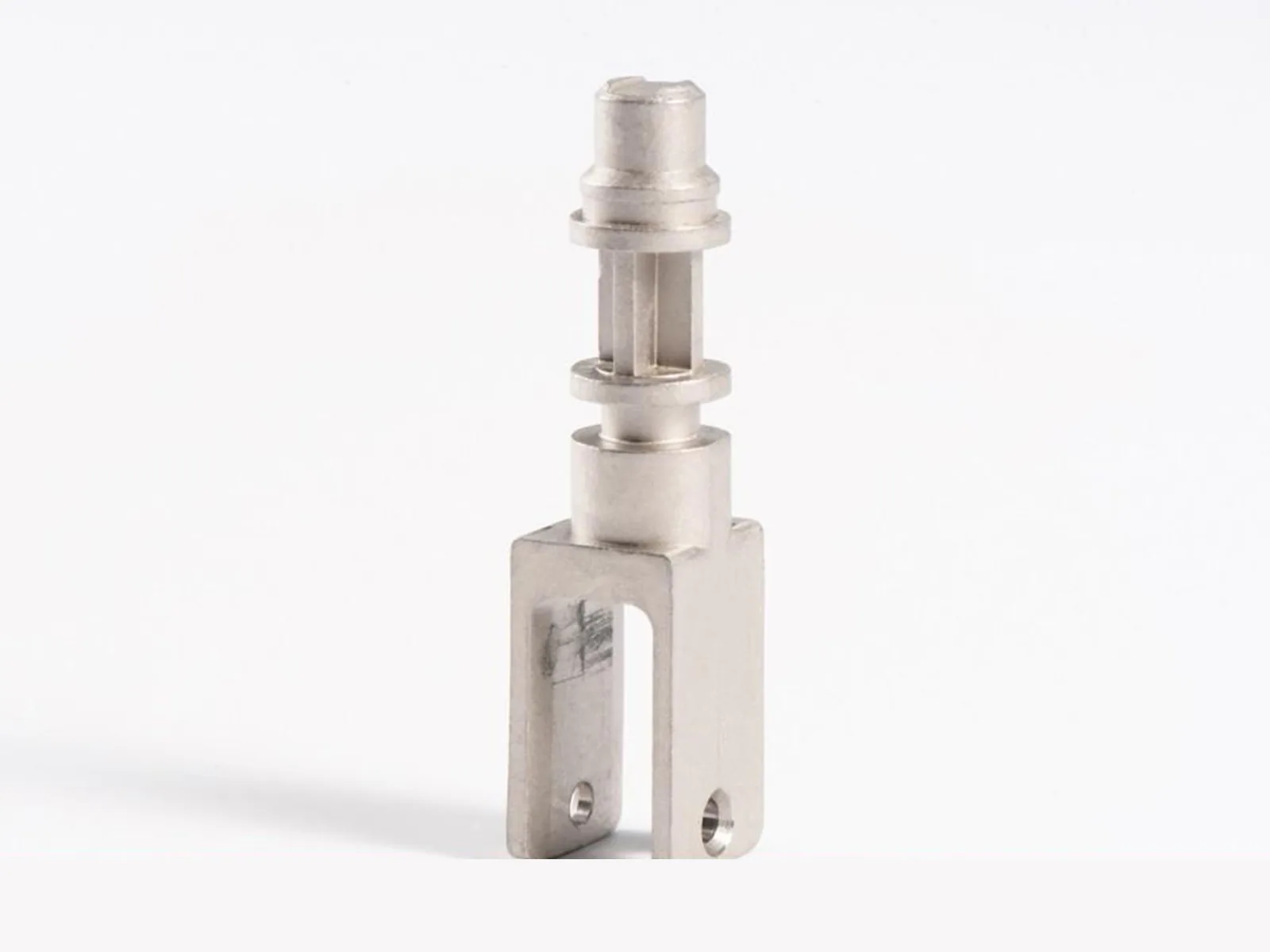
مزلاج باب مضخة IV مصنّع بتقنية MIM من الفولاذ 304L
إن حافظة MIMA يوثق مزلاجًا يقفل مكونًا متزاوجًا في مضخة وريدية. يستخدم الفولاذ المقاوم للصدأ 304L بتقنية MIM، يليه تشغيل آلي طفيف وتجميع بكرة وبرشام. الوظيفة المنشورة ميكانيكية؛ لم يتم توثيق مسار ملامسة المريض. بالنسبة لجزء مشابه، حدد أولاً ما إذا كان أي سطح يلامس المريض مباشرة أو عبر مسار السائل. إذا لم يكن الأمر كذلك، فقد تكون المتطلبات الحاكمة هي بدلاً من ذلك الحمل، والتآكل، والتعرض للتنظيف، ودقة التجميع.
| حالة الجزء | تركيز مراجعة المواد | يجب على مالك المشروع تقديم المدخلات |
|---|---|---|
| مغلق، لا توجد آلية ملامسة للجسم | القوة المطلوبة، التآكل، مقاومة التآكل، توافق التنظيف، وضوابط جودة الجهاز | تأكيد عدم وجود مسار اتصال مباشر أو غير مباشر |
| ملامسة متكررة مع الجلد السليم | التشطيب السطحي، التعرض للعرق، احتمالية إطلاق المعدن، والتنظيف | منطقة التلامس، تكرار الاستخدام، السوق المستهدف، والأسطح الملامسة للجلد |
| التلامس الفموي، المخاطي، أو الجلد المخترق | الحالة السطحية، الكيمياء المادية، التنظيف، وخطة تقييم خاصة بالتطبيق | مسار الأنسجة/التلامس الدقيق، المدة، ومالك التقييم المعين |
| التعرض غير المباشر عبر مسار سائل الجهاز | السطح المبلل، المستخلصات المحتملة، بقايا التنظيف، وتوافق السوائل | مسار السائل، التعرض اللاحق، والأدلة المطلوبة |
تحديد مدة التلامس وبيئة الخدمة
تسجيل ما إذا كان التلامس موجزًا، متكررًا، أو مستمرًا، بما في ذلك تكرار الاستخدام المتوقع وعمر الخدمة. قم أيضًا بتسجيل العرق، السوائل المحتوية على الكلوريد، عوامل التنظيف، التطهير، الرطوبة، درجة الحرارة، وأي ظروف تعقيم. هذه هي مدخلات هندسية؛ يجب على فريق المنتج المسؤول تحديد فئة التعرض المطبقة واستراتيجية التقييم لجهاز طبي منظم. لا تقم بتعيين فئة اتصال بيولوجي بمجرد جمع ساعات الاستخدام العرضي.; مدخلات هندسية؛ يجب على فريق المنتج المسؤول تحديد فئة التعرض المطبقة واستراتيجية التقييم لجهاز طبي منظم. لا تقم بتعيين فئة اتصال بيولوجي بمجرد جمع ساعات الاستخدام العرضي.
فصل احتياجات التلامس البيولوجي عن المتطلبات الميكانيكية
اذكر متطلبات الجزء العادية بشكل منفصل: الحمل، الصلابة أو التآكل، بيئة التآكل، الوزن، الأبعاد، التفاوتات، والتشطيب السطحي. يمكن أن يتمتع المادة بأداء تآكل جذاب ومع ذلك تتطلب تقييمًا خاصًا بالتلامس.; مواد MIM المقاومة للتآكل are not automatically acceptable for every intended contact. Once these inputs are defined, shortlist candidate alloys. For other property-led requirements, use the MIM material properties overview; it is a broader selection hub, not a biological approval list.
For medical devices, the applicable risk-management approach is described in ISO 10993-1:2025 و FDA's biocompatibility assessment guidance.
Which MIM Materials Should You Consider for Biocompatibility-Sensitive Parts?
Start with the contact and performance requirements from Section 1. Then compare materials using the same questions: What requirement makes this alloy a candidate? What limits its use? Is there a proven MIM production route? What evidence is still missing? These are candidate materials for defined applications; final suitability still depends on the part and its documented requirements.
316L Stainless Steel: A Common Starting Candidate
فولاذ MIM 316L المقاوم للصدأ is a practical starting point when corrosion resistance, small complex geometry, and an established stainless MIM supply route matter. It can be considered for housings, hardware, instrument mechanisms, and some contact-exposed components, provided the final application and surface requirements are reviewed.
Important limit: 316L contains nickel. It must not be marketed as nickel-free or universally skin-safe. Where the intended market or application has nickel-release or sensitization requirements, specify the actual acceptance criteria and test method for the finished contact surface. Chloride exposure, passivation, polishing, and cleaning must also be assessed; a 316L grade certificate is not evidence of completed biological evaluation. If the required release performance cannot be demonstrated for the proposed finish, compare a different material or redesign the contact surface rather than assume that passivation alone solves the issue.
CP Titanium and Ti-6Al-4V: When Titanium Is Worth Considering
التيتانيوم النقي تجاريًا و Ti-6Al-4V may be worth investigating when mass, corrosion performance, or the specified mechanical properties favor titanium over stainless steel. They are different grades with different property and chemistry requirements; do not treat “medical titanium” as a single interchangeable material.
Titanium MIM requires particular attention to powder and feedstock availability, contamination and interstitial-element limits (including oxygen where specified), debinding and sintering conditions, final surface condition, and production cost. Publication of an MIM titanium material standard does not demonstrate that XTMIM—or any particular supplier—has a qualified production route for the customer's part.
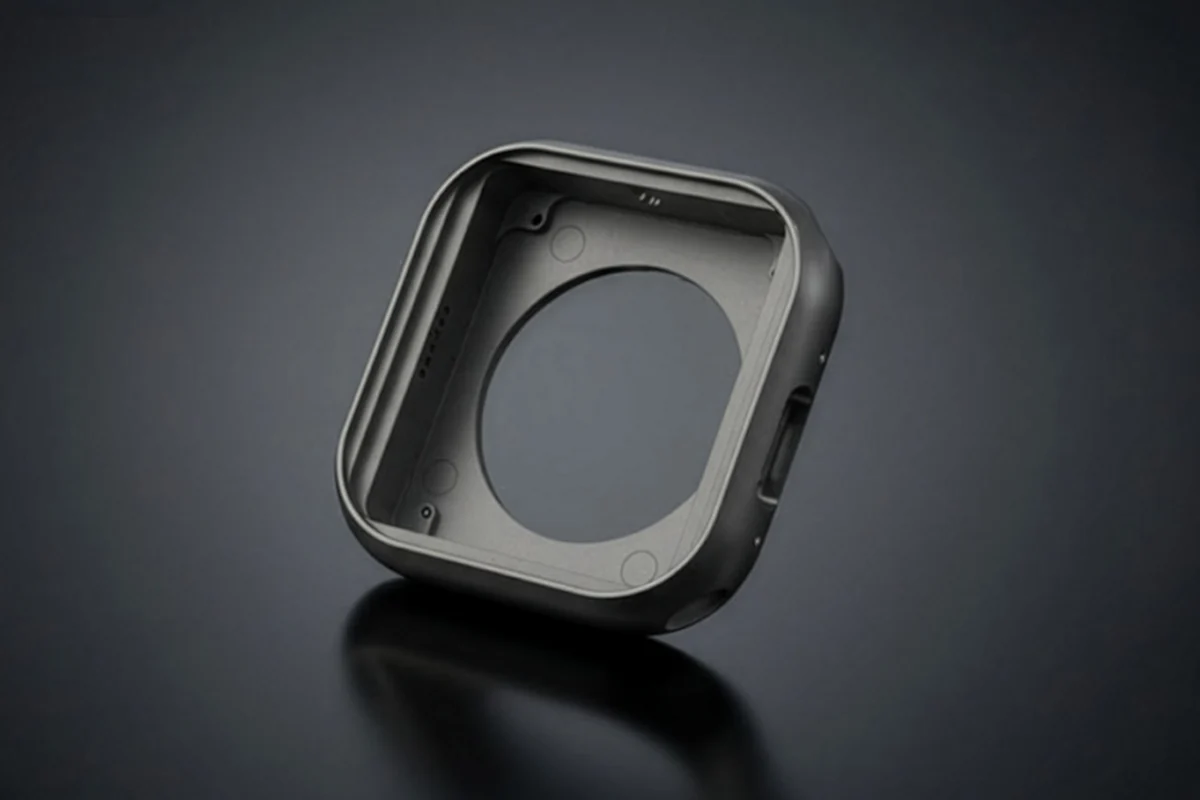
Titanium MIM Wearable-Device Housing
مُدخل industry report on MTIG shows a wearable-device housing manufactured using titanium MIM. It demonstrates that this form can be produced by that manufacturer; it does not identify the exact titanium grade or establish skin-contact testing. For sourcing, request the specified CP Ti or Ti-6Al-4V grade, the available feedstock and sintering route, contact-surface locations and finished-surface requirements.
Cobalt-Chromium and Specialty Stainless Steels: Conditional Alternatives
سبائك الكوبالت والكروم may enter the shortlist where wear, strength, and corrosion performance are important. The exact alloy composition, potential wear debris, polishing access, and chemistry of the finished surface need investigation. Co-Cr as a family name is not sufficient to specify a contact-sensitive part.
Selected specialty stainless grades, including PANACEA stainless or other project-specific options, may also warrant evaluation when conventional stainless grades do not meet the specification. Confirm the grade's actual composition and any relevant metal-release requirement; then verify that suitable feedstock and a repeatable MIM route exist قبل approving tooling. These are conditional candidates, not an assertion of standard XTMIM stock or qualified production.
| Candidate family | Consider when... | Main trade-off or limit | Next evidence to request |
|---|---|---|---|
| الفولاذ المقاوم للصدأ 316L | A common corrosion-resistant, small-part MIM route is preferred | Nickel content; exposure-dependent corrosion and finish concerns | Exact material specification, contact surfaces, finishing route and any applicable release criteria |
| CP titanium | Low mass and suitable corrosion behavior are priorities and grade properties fit | Qualified titanium MIM route, interstitial chemistry and cost | Specified grade, feedstock/sintering capability, chemistry and final property requirements |
| Ti-6Al-4V | The project's strength-to-weight and alloy requirements justify it | Distinct alloy chemistry, process qualification and acceptance standard | Exact alloy standard and qualified manufacturing/inspection route |
| Co-Cr or specialty stainless | Wear, strength, specific corrosion or chemistry requirements narrow the options | Grade-specific contact, polishing, supply and validation risks | Alloy specification, reliable feedstock source, surface and testing requirements |
For broader material comparisons not limited to contact-sensitive uses, see the دليل اختيار مواد MIM و مركز مواد MIM. Those pages address general grade selection; this page focuses on contact-driven material decisions.
هل يمكن تصنيع السبيكة المختارة بشكل موثوق بواسطة تقنية MIM؟
Contact requirements and biological-evaluation responsibilities must be defined from the start. In parallel, each shortlisted alloy must pass a manufacturing feasibility gate before tooling is committed. MIM depends on a workable powder-and-binder feedstock, a controlled debinding and sintering route, achievable geometry and tolerances, and a production volume that justifies tooling. A successful material datasheet review does not establish these conditions, and a feasible process does not replace product-specific evaluation.
Powder, Feedstock, and Proven Processing Routes
Ask whether the exact alloy—not just its general family—has a currently available feedstock and a repeatable production history. A powder supplier's ability to supply a powder does not mean a manufacturer has already qualified feedstock preparation, injection molding, debinding, or sintering. Nonstandard alloys may require additional technical verification or may be unsuitable for the current project.
Sintering and Part Geometry Limitations
Sintering atmosphere, alloy chemistry, shrinkage, distortion, density, and the geometry of thin sections or deep features all affect the finished component. Titanium and other special alloys can need materially different controls from the commonly used iron-based MIM route. Verify the actual part's critical dimensions, support strategy, acceptable surface condition, and any post-sinter machining—not merely a generic claim that the factory owns a furnace.
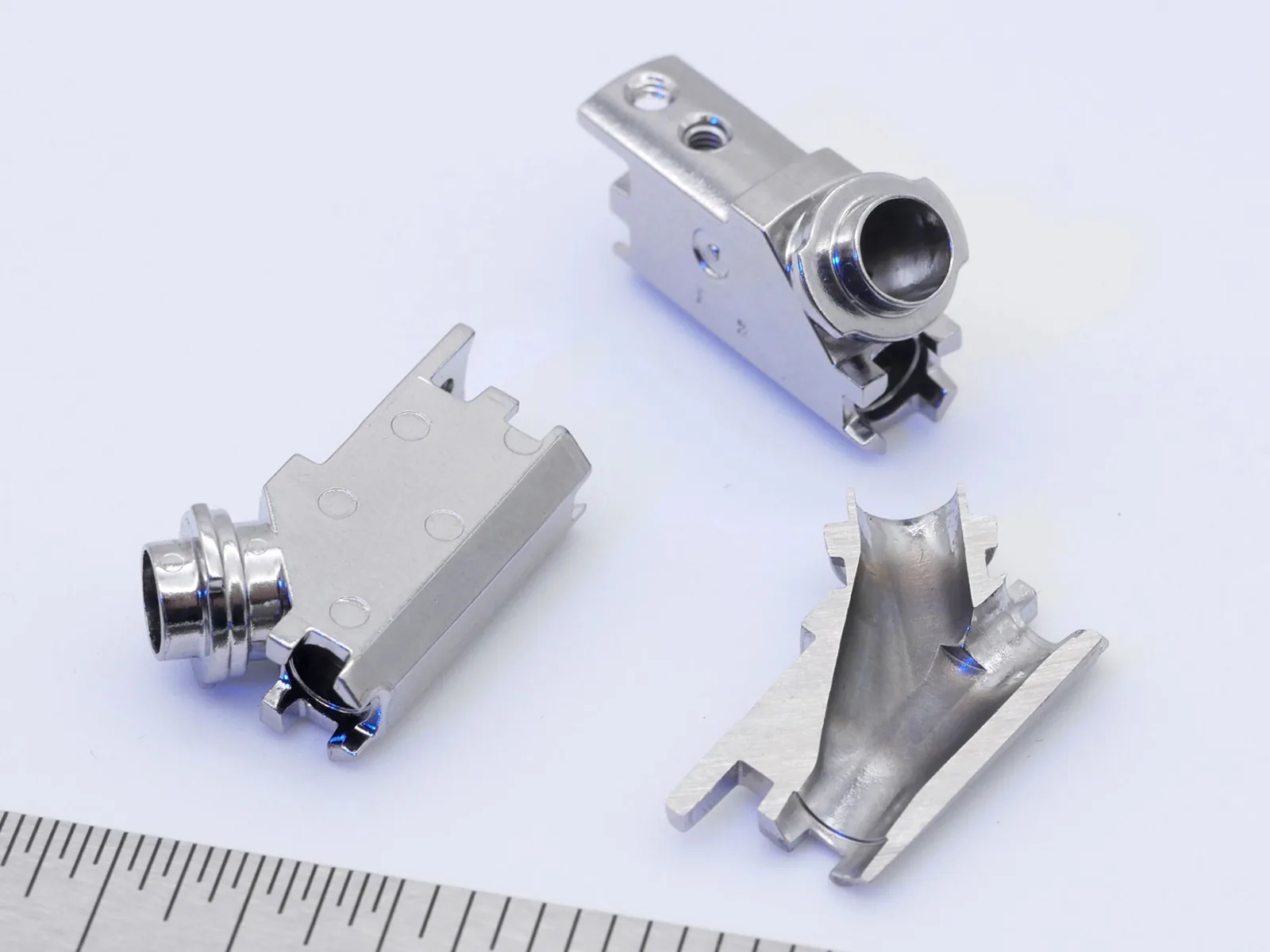
17-4PH MIM Surgical-Camera K-Mount
A دراسة حالة MIMA describes a 17-4PH H900 surgical-camera mounting component made as one MIM part instead of two welded pieces. Three angular slides formed the complex passage; dedicated ceramic supports helped reduce sintering distortion. Smooth cable-guiding edges and camera positioning remained critical. The lesson for a similar RFQ is to define tooling access, critical dimensions, edge finish and support conditions before committing to the mold. This case demonstrates manufacturing control, not biological-contact approval.
Production Volume and Manufacturing Consistency
The project also needs an economic and repeatability check. Tooling cost, sampling cycles, batch traceability, inspection scope and secondary operations can make MIM unattractive for a low-volume or frequently changing design. A complex small part with stable repeat demand may justify the route; a handful of parts requiring unusual feedstock and intensive validation may not. Compare alternatives where the volume or process risk does not support MIM.
| بوابة الجدوى | Evidence that supports progression | Pause the quotation or tooling decision if... |
|---|---|---|
| الدرجة الدقيقة ومادة التغذية (Feedstock) | Grade and supply route are specified and supplier-confirmed | Only a generic alloy family or an untested powder offer exists |
| إزالة المادة الرابطة والتلبيد | Factory can identify a compatible, controlled route and required chemistry checks | The selected alloy has no demonstrated route or key process risks are unknown |
| Part geometry and tolerances | Drawing review finds achievable critical features and planned post-processing | Unresolved distortion, wall, recess, or contact-surface access risks remain |
| Production and inspection | Volume, cost drivers, acceptance criteria and evidence needs are defined | Volume cannot justify tooling or the requested inspection package is unspecified |
How Can MIM Processing Affect the Final Contact Surface?
Manufacturability is not the same as finished-contact suitability. After forming and sintering, machining, polishing, passivation, coatings, cleaning and handling can alter the surface that actually contacts the user or the product environment. Review the final, production-representative state rather than inferring contact behavior from the raw alloy name or nominal sintered density.
As-Sintered Surfaces vs. Finished Contact Surfaces
As-sintered surfaces may be acceptable for some hidden mechanical features, but a contact-critical face may need specified roughness, polishing or another controlled finish. Narrow grooves, blind holes, intersecting edges and small recesses can prevent tools or cleaning media from reaching every functional surface. A good roughness result on an accessible outer face does not prove that an internal recess meets the same condition.
Surface Treatments, Cleaning, and Manufacturing Residues
Polishing media, blasting media, machining coolants, passivation chemicals, coating processes, handling and packaging can introduce or retain substances on the finished part. Stainless passivation, removal of manufacturing residues, and sterilization (when applicable) are سبائك مرشحة مختلفة processes with different acceptance criteria. None on its own establishes biocompatibility. If coating is part of the contact surface, the relevant finished coating and its durability also enter the evaluation.
Inspection of Contact-Critical Features
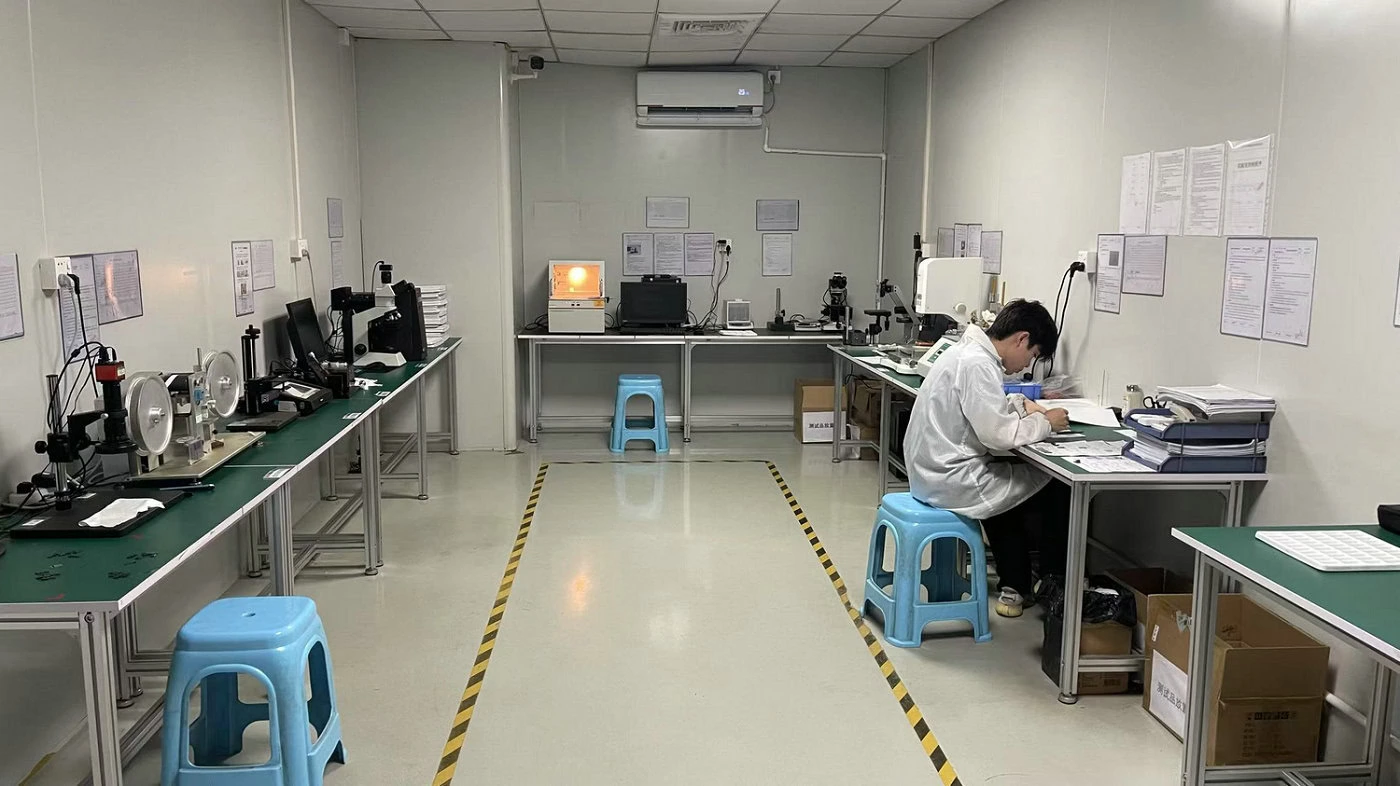
Mark contact-critical areas on the drawing and specify measurable criteria appropriate to the design: dimensional checks, visual surface defects, roughness where relevant, finishing coverage, material/lot identity, and cleaning evidence when required. A high relative-density value alone cannot demonstrate that a surface is free of contaminants or accessible for cleaning. Agree the evidence owner and inspection method before moving to production release.
If a specified contact-critical recess cannot be reached by the proposed finishing/cleaning method, and no validated alternative inspection or cleaning approach is available, do not assume that a polished outer face represents the whole component. Before freezing tooling, either change the geometry, change the finishing/cleaning route, or agree on a production-representative verification plan for that recess.
External touch surface
Confirm finish, expected contact medium, permitted coating or passivation, and any market-specific metal-release requirement.
Blind recess or slot
Review whether polishing, rinsing and inspection can reach the entire contact-relevant geometry.
Machined or polished feature
Identify process-media residue risks, material removal allowance and the final inspection state.
Cleaned and packed part
Specify the cleaning acceptance method, handling and packaging conditions, and the responsible sign-off party.
What Evidence Is Needed to Evaluate the Finished MIM Part?
A credible material review separates material specification, manufacturing and inspection evidence، و the finished product's applicable biological or contact-related evaluation. These may involve different organizations and acceptance criteria. Specify what each record must demonstrate and which acceptance criteria apply to the finished part.
Material Specifications Are Not Proof of Finished-Part Biocompatibility
Alloy certificates, chemistry reports and material property standards support the identity and performance of a metal grade. For MIM material specifications, references such as معيار MPIF 35-MIM can help engineers agree on material requirements. They are لا biological safety approvals for a finished part. Likewise, ASTM F2885-17(2023) covers specified MIM Ti-6Al-4V components for surgical implant applications; citing that specialized standard does not establish that XTMIM manufactures qualified implant components.
Medical Device Evaluation vs. Consumer Contact Requirements
For medical devices with direct or indirect body contact, ISO 10993-1:2025 provides the general framework for biological safety evaluation within risk management. Depending on the device and the evaluation plan, ISO 10993-18:2020 can inform chemical characterization, including substances relevant to manufacturing. The applicable standard edition, evaluation endpoints, testing strategy, and submission requirements must be determined for the specific product and market.
A consumer watch case or strap component is not automatically a medical device. For example, EU REACH Annex XVII, entry 27, restricts nickel release from specified articles intended for direct and prolonged skin contact, including wrist-watch cases and straps. The listed limit for those contact surfaces is 0.5 µg/cm²/week; piercing posts and certain coated products are subject to additional provisions. This is a market- and product-category-specific release requirement, لا an ISO 10993 certificate or a general declaration that all stainless contact parts comply. The product owner must confirm applicability and the relevant test method.
Who Defines Testing, Documentation, and Acceptance Criteria?
The product owner or designated regulatory/quality team defines the intended use, contact route, applicable requirements, acceptable evidence and final approval. A MIM supplier can assess manufacturing feasibility and agree on available material, process, surface, and inspection records. A qualified laboratory may perform specified testing. The responsibilities must be written into the project plan rather than assumed at the quotation stage.
Define a production-representative evidence state. For a device-specific biological assessment, the product owner should establish whether the tested item adequately represents the final finished device, including relevant manufacturing, finishing, cleaning, packaging and sterilization steps. The FDA's biocompatibility assessment resource explicitly distinguishes evaluation of the final finished form from approval of individual raw materials. If the alloy, supplier, feedstock route, coating or cleaning process changes after the evidence package is agreed, document the change and let the designated product team assess comparability and any need for further work; retesting is not automatically required in every case.
| دليل | ما يمكن أن يثبته | Who confirms or supplies it | ما لا يثبته هذا |
|---|---|---|---|
| Material grade and chemistry | Specified alloy identity or measured composition | Material supplier and MIM manufacturer as agreed | Finished-device biological safety |
| Production and inspection records | Agreed process controls, dimensions and defined surface condition | MIM manufacturer within confirmed capability | All chemical/biological risks without further assessment |
| Cleaning and surface evidence | Compliance with the agreed cleaning/finish acceptance method | Assigned process owner and/or testing provider | Automatic suitability for every contact duration or market |
| Product-specific biological or contact evaluation | Results against the approved application-specific evaluation plan | Product owner with qualified evaluators/laboratories | A general approval of that alloy for unrelated products |
How Do You Decide Whether to Proceed with a Candidate MIM Material?
Use the contact definition, candidate alloy, MIM production route, finished-surface review and evaluation plan together. The first RFQ decision is not simply “biocompatible” or “not biocompatible.” It is whether there is enough information and practical manufacturing evidence to continue engineering development.
| القرار الأولي | عندما ينطبق | Responsible next action |
|---|---|---|
| المتابعة إلى المراجعة الهندسية | Contact and performance requirements are defined, a feasible candidate route exists, and outstanding evidence can be planned | Review drawing, supplier route, surface specification and quotation scope |
| Further verification required | Candidate material looks promising, but contact conditions, feedstock, cleaning or required validation remain uncertain | Resolve the missing information or request targeted feasibility evidence before tooling |
| Do not proceed with the current MIM route | A required grade/route is unavailable, a critical feature cannot be made/finished, or economic and evidence risks are unacceptable | Reconsider the material, geometry, volume, supplier or manufacturing process |
These are preliminary material/manufacturing project gates. “Proceed” means proceed to engineering review—not biological approval, regulatory clearance, or a final product release decision.
Example: A Wearable Metal Part with Repeated Skin Contact
Illustrative scenario. A watch-case connector touches skin repeatedly and is exposed to perspiration. A designer proposes 316L because it can meet the small-part geometry and corrosion requirements. Needed first: identify the actual contact face, intended market, contact frequency, finish and cleaning route. If the finished article falls under a nickel-release requirement, the specified surface must be assessed against that requirement; the 316L name is not sufficient. القرار: further verification is required before the surface is approved. Titanium may be considered only after its precise grade, MIM route, finishing and cost are checked.
Example: A Non-Implant Medical Equipment Mechanism Part
Illustrative scenario. A latch is enclosed within diagnostic equipment. The product team confirms that it has no direct patient contact or indirect exposure through a fluid path. The key requirements are reliable engagement, stability under cleaning chemicals, repeatable dimensions and annual production volume. Needed first: confirm the candidate stainless grade, feedstock route, distortion controls and assembly tests. القرار: the project can proceed to MIM engineering review once those inputs are documented; its medical setting alone does not establish a need for ISO 10993 testing of the latch.
For component-category examples rather than material-selection decisions, see أجزاء MIM للأجهزة الطبية أو medical device components industry page.
What Should You Send for an MIM Material Review or RFQ?
Once you have a preliminary material direction, send a complete engineering input package. A quote based only on “316L,” “titanium,” or “medical grade” can omit the most expensive or difficult parts of the project: contact-critical finishing, cleaning, special inspection, production qualification and documentation.
| مدخلات طلب عرض الأسعار (RFQ) | ما يجب تحديده | Why it matters for evaluation |
|---|---|---|
| رسم ثنائي الأبعاد ونموذج ثلاثي الأبعاد | Dimensions, datums, tolerances, wall features and contact-critical areas | Moldability, shrinkage, inspection and finishing accessibility |
| التطبيق المقصود | Product type, functional role and whether it is a medical device or consumer item | Defines the governing project requirements |
| حالة التلامس | Direct/indirect/no body contact, location, duration, frequency and environment | Sets the appropriate material and surface review path |
| اتجاه المادة | Exact required grade or acceptable candidate alternatives; key performance constraints | Checks feedstock availability and material/route feasibility |
| Finished surfaces | Roughness or finish criteria, polishing, passivation, coating and exposed features | Controls geometry-dependent surface operations |
| التنظيف والمناولة | Required cleaning method, residue criteria, packaging or sterilization interfaces if applicable | Prevents an incomplete manufacturing quotation |
| Testing and documentation | Applicable standards, acceptance criteria and who owns product evaluation | Distinguishes supplier records from final product-level verification |
| Sampling and annual volume | Prototype quantity, target annual demand and expected program stability | Determines tooling feasibility and production economics |
Ask for a written supplier review outcome, not only a unit price: the proposed alloy and its exact grade; whether its feedstock and sintering route are established, require validation, or are unavailable; which finishing and inspection operations are included in the quotation; which contact-related checks remain the product owner's responsibility; and any design or volume assumptions that could change price or feasibility. Do not release tooling against an unspecified “medical-grade” material description.
If the specified combination cannot be produced reliably, ask the supplier to identify a qualified alternative alloy or process, together with its effect on performance, surface requirements and cost.
Request an engineering review before committing to tooling.
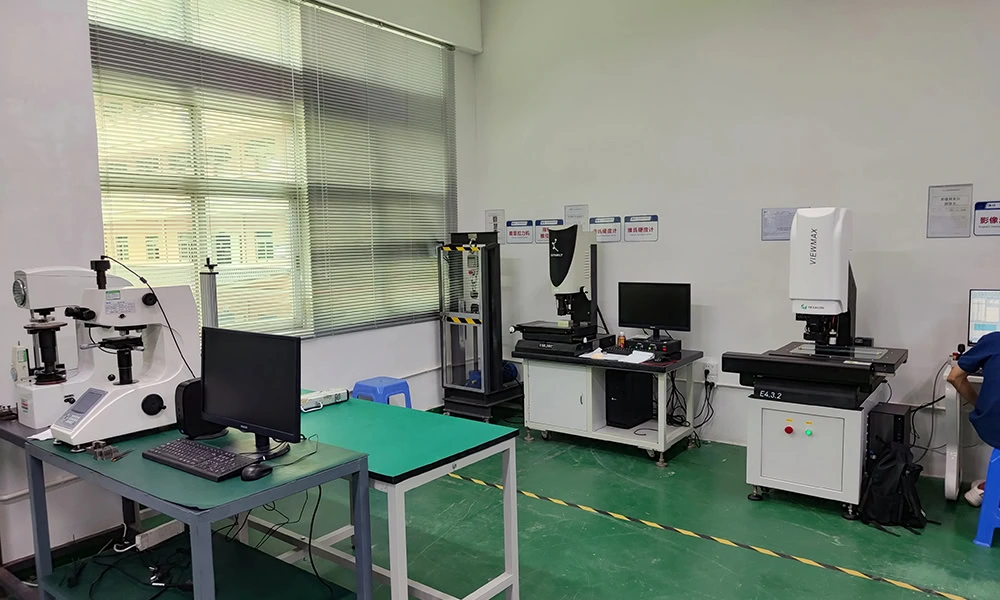
XTMIM can discuss MIM part geometry, candidate material routes, suitable production operations and agreed inspection needs. Availability of special-alloy processing, controlled cleaning documentation or external testing must be confirmed case by case. Final biological evaluation, device validation and regulatory approval are not implied.
You may also review XTMIM's inspection and testing capabilities و the RFQ preparation guide for manufacturing inputs.
Additional project-review questions
هل يمكن إعادة استخدام تقرير التوافق الحيوي السابق لـ 316L بعد تغيير السبيكة أو مورد MIM؟
ليس تلقائيًا. قد يؤدي وجود سبيكة جديدة، أو مورد جديد، أو مسار إنتاج جديد، أو حالة سطح نهائي مختلفة إلى تغيير الأدلة المادية والتصنيعية. يجب على مالك المنتج توثيق قابلية المقارنة وتحديد ما إذا كانت هناك حاجة إلى توصيف كيميائي إضافي أو تقييم بيولوجي.
ماذا لو كان سبيكة متخصصة متاحة كمسحوق ولكن ليس كمادة تغذية MIM مؤهلة؟
تعامل مع الأمر على أنه فجوة في جدوى التصنيع. قبل تصنيع القالب، تحقق مما إذا كان المورد يمكنه توفير مادة تغذية مناسبة ومسار مثبت لإزالة المادة الرابطة والتلبيد، بالإضافة إلى خصائص الجزء المطلوبة ونطاق الفحص. إذا لم يكن هذا المسار راسخًا، فراجع سبيكة بديلة مثبتة أو عملية تصنيع بديلة.
ما هي التغييرات التي قد تتطلب مراجعة أخرى لسطح التلامس بعد الموافقة على العينة؟
قد تؤثر التغييرات في السبيكة أو مادة التغذية (feedstock)، أو مسار التلبيد، أو التشغيل الآلي، أو التلميع، أو التخميل، أو الطلاء، أو مواد التنظيف الكيميائية، أو واجهة التعقيم، أو التعبئة والتغليف على البقايا السطحية أو الكيميائية النهائية. يجب على فريق التصنيع الإبلاغ عن التغييرات ذات الصلة، ويجب على مالك المنتج تقييم الحاجة إلى تأهيل أو اختبار محدّث.