
Weichmagnetische MIM-Teile für Magnetschalter, Sensoren und Aktuatoren
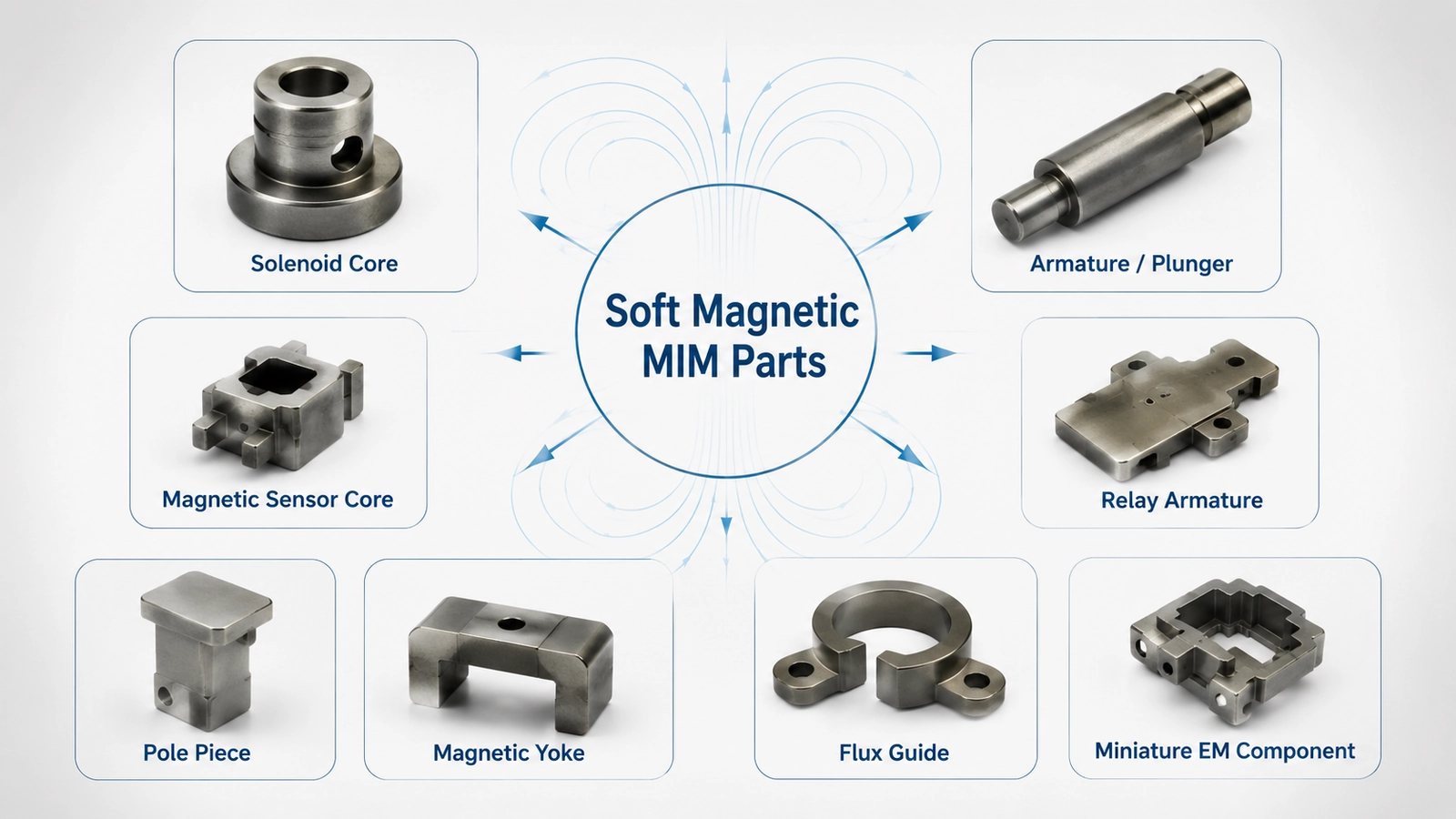
Weichmagnetische MIM-Teile sind kleine, im Metallpulverspritzguss hergestellte Komponenten, die dazu dienen, magnetischen Fluss in kompakten elektromagnetischen Baugruppen zu führen, zu konzentrieren, zu schalten oder darauf zu reagieren. Es handelt sich nicht um Permanentmagnete. Für Produktentwickler ist die entscheidende Frage, ob das Bauteil eine weichmagnetische Funktion mit kleiner Größe, komplexer dreidimensionaler Geometrie, wiederholtem Produktionsbedarf und Merkmalen kombiniert, die sich wirtschaftlich nur schwer spanend oder pressend herstellen lassen. Typische Kandidaten sind Magnetspulenkerne, Anker, Magnetkern-Sensoren, Polschuhe, Joche, Flussleiter und Miniatur-Aktuator-Teile. Die Werkstoffbezeichnung allein reicht für eine zuverlässige Projektentscheidung nicht aus. Dichte, Restporosität, magnetischer Pfad, Luftspalt, Wärmebehandlung, Oberflächenzustand, Sinterschwindung und Prüfverfahren beeinflussen alle die endgültige Leistung. Lesen Sie weiter, wenn Ihr Bauteil weichmagnetisches Verhalten, kritische Montageflächen, Bewegungsspiel oder eine zeichnungsbasierte Prüfung vor dem MIM-Werkzeugbau erfordert.
Was sind weichmagnetische MIM-Teile?
Weichmagnetische MIM-Teile sind metallpulverspritzgegossene Komponenten aus weichmagnetischen Werkstoffsystemen oder ausgewählten magnetischen Legierungen. Ihre Funktion besteht darin, unter einem angelegten Feld magnetisiert zu werden und die Magnetisierung zu reduzieren, wenn das Feld entfernt wird. Dies unterscheidet sie von Permanentmagneten, die darauf ausgelegt sind, Magnetismus beizubehalten.
In einem Metallpulverspritzguss Projekt muss die weichmagnetische Funktion zusammen mit dem gesamten MIM-Prozess betrachtet werden: Feines Metallpulver und Binder werden als Feedstock aufbereitet, das Bauteil wird spritzgegossen, der Grünling wird gehandhabt, der Binder wird beim Entbindern entfernt, und die Komponente wird gesintert, um ihre endgültige Metallstruktur zu erreichen. Das Endergebnis hängt von der Materialauswahl, der Sinterdichte, der Geometrie, der Wärmebehandlung, dem Oberflächenzustand und der anwendungsbezogenen Validierung ab.
Aus Sicht der Konstruktionsprüfung geht es auf dieser Seite um weichmagnetische MIM-Teile, nicht um allgemeine magnetische Baugruppen. Sie behandelt keine Seltenerdmagnete, Ferrit-Permanentmagnete, Magnetgummi, große Motorblechpakete oder Transformatorkerne. Für die umfassendere Bauteilbibliothek beginnen Sie mit der MIM-Teileübersicht.
Weichmagnetische Funktion, nicht Permanentmagnetfunktion
Ein häufiger Fehler ist die Verwendung von “magnetische Teile” als breite Kategorie. Das führt zu Verwirrung. Ein Magnetkern, ein magnetisches Joch oder ein Sensorpolstück benötigt normalerweise weichmagnetisches Verhalten: Es muss ein Magnetfeld effizient leiten oder darauf reagieren. Ein Permanentmagnet hingegen wird ausgewählt, um Magnetismus zu halten.
Für die MIM-Bewertung ist diese Unterscheidung wichtig, da sich Materialwahl, Wärmebehandlung, Dichte, Kohlenstoff- und Sauerstoffkontrolle sowie Prüfanforderungen unterscheiden. Ein weichmagnetisches Teil sollte als funktionale Komponente innerhalb eines magnetischen Kreises betrachtet werden, nicht nur als geformtes Metallstück.
Wann MIM für weichmagnetische Komponenten geeignet ist
MIM sollte in Betracht gezogen werden, wenn das Teil klein, geometrisch komplex und durch Zerspanen, Stanzen oder konventionelles Pulverpressen wirtschaftlich schwer herstellbar ist. Die stärksten Projekte kombinieren in der Regel magnetische Funktion mit kompakter Geometrie, wiederholtem Produktionsbedarf und Merkmalen, die einzeln durch Zerspanen kostspielig hinzuzufügen wären.
Kleine Größe und komplexe magnetische Geometrie
MIM wird dann wertvoll, wenn das weichmagnetische Teil Merkmale wie gestufte Kerne, Querbohrungen, Sacklöcher, Nuten, dünne Abschnitte, kleine Positionierungsmerkmale, integrierte Montageansätze, nicht-achsensymmetrische 3D-Geometrien oder komplexe flussführende Oberflächen aufweist.
Diese Merkmale können in der spanenden Bearbeitung teuer, im Pressen durch Pulverpressen schwierig oder für das Stanzen ungeeignet sein. MIM kann viele dieser Merkmale nahezu endkonturnah abbilden, jedoch muss die Konstruktion hinsichtlich Feedstock-Fließverhalten, Anschnittlage, Grünling-Handhabung, Entbindern, Sinterschwindung und Verzugsrisiko überprüft werden.
Großserienproduktion mit integrierten Merkmalen
Die Kosten für das MIM-Werkzeug müssen durch das Produktionsvolumen gerechtfertigt sein. Für ein einfaches Kleinserien-Prototyp kann die CNC-Bearbeitung praktikabler sein. Für ein Bauteil in hoher Stückzahl mit mehreren kleinen Merkmalen kann MIM die Nachbearbeitung und Montageabhängigkeit reduzieren.
| Projektzustand | Warum dies die MIM-Auswahl unterstützt |
|---|---|
| Kleines Metallbauteil | MIM ist am stärksten bei kompakten Präzisionsteilen, bei denen das Werkzeug kleine Merkmale konsistent wiederholen kann. |
| Komplexe 3D-Geometrie | Das Werkzeug kann Merkmale integrieren, die bei der spanenden Bearbeitung einzeln hinzugefügt werden müssten. |
| Wiederholter Produktionsbedarf | Die Werkzeugkosten können über die Stückzahl verteilt werden, wenn die Konstruktion stabil ist. |
| Funktionale magnetische Anforderung | Werkstoff, Dichte, Wärmebehandlung und magnetische Validierung können anhand der Anwendung überprüft werden. |
| Kritische Montageflächen | Sekundäroperationen können nur dort geplant werden, wo die Funktion sie erfordert. |
| Stabiles Design vor dem Werkzeugbau | MIM ist besser, wenn die Geometrie, die kritischen Abmessungen und die Leistungsanforderungen definiert sind. |
Magnetische Leistung hängt von mehr als der Materialauswahl ab
Die Werkstoffgüte allein definiert nicht die magnetische Leistung. In der Produktion kann das weichmagnetische Verhalten durch Sinterdichte, Restporosität, Kohlenstoff- und Sauerstoffgehalt, Sinteratmosphäre, Wärmebehandlung oder Glühung, Oberflächenzustand, Spannungen durch Sekundäroperationen, endgültige Bauteilgeometrie, Kontinuität des magnetischen Pfades und kundenspezifische Prüfmethoden beeinflusst werden.
Aus diesem Grund ist eine frühzeitige Werkstoffprüfung wichtig. Wenn die Zeichnung Permeabilität, Koerzitivfeldstärke, magnetisches Flussverhalten, Hystereseverhalten, Zugkraft, Schaltverhalten oder einen kundenspezifischen Magnettest vorschreibt, sollten diese Anforderungen vor dem Werkzeugbau mitgeteilt werden.
Häufige weichmagnetische MIM-Teile
Die folgenden Bauteiltypen werden üblicherweise für weichmagnetische MIM-Projekte in Betracht gezogen. Die Liste ist keine Zusage, dass jede Geometrie mittels MIM herstellbar ist. Sie ist ein Ausgangspunkt für die DFM-Prüfung, Materialeignung und Angebotsanfrage.

| Weichmagnetischer Bauteiltyp | MIM-Eignung | Technischer Schwerpunkt |
|---|---|---|
| Magnetspulenkerne | Hoch | Komplexe Kerngeometrie, Bohrungen, Schultern, Magnetpfad und Montageschnittstellen. |
| Magnetanker / Tauchanker | Hoch bis bedingt | Gleitflächen, Rundheit, Oberflächenbeschaffenheit, Spiel und magnetisches Ansprechverhalten. |
| Magnetische Sensorkerne | Hoch | Miniaturgeometrie, Positionierungsmerkmale, stabile Polfläche und Magnetpfad. |
| Relaisanker | Bedingt | Bewegung, Ebenheit, Ansprechkonsistenz, Materialverhalten und Montagespalt. |
| Polstücke | Hoch | Flusskonzentration, Montageposition, Kontaktfläche und Spaltkontrolle. |
| Magnetjoche | Bedingt | Kleine komplexe Joche eignen sich besser für MIM als große einfache Joche. |
| Flussleiter | Hoch | Magnetpfadsteuerung und integrierte Geometrie in kompakten Geräten. |
| Miniatur-Elektromagnetkomponenten | Hoch | Kleine Größe, Wiederholgenauigkeit und Integration mehrerer Merkmale. |
Magnetspulenkerne und Tauchanker
Magnetspulenkerne und Tauchanker gehören zu den vielversprechendsten Anwendungen für weichmagnetischen MIM, wenn sie klein und geometrisch komplex sind. Diese Teile können abgestufte Durchmesser, Führungsmerkmale, kleine Löcher, Schlitze oder Montageansätze aufweisen. Die wichtigen Prüfpunkte sind nicht nur die Außenmaße, sondern auch der magnetische Pfad, die Gleitpassung, die Oberflächengüte, die Rundheit und die Maßhaltigkeit nach dem Sintern.
Ein Magnetspulenkern mit einer beweglichen Oberfläche erfordert möglicherweise eine Nachbearbeitung, auch wenn die Hauptgeometrie durch MIM geformt wurde. Die Konstruktion sollte identifizieren, welche Oberflächen magnetisch kritisch sind, welche Oberflächen bewegungskritisch sind und welche Abmessungen den Montageabstand bestimmen. Überprüfen Sie für Projekte mit engen Passflächen auch MIM-Teile mit engen Toleranzen.
Sensor-Kerne und Polschuhe
Magnetische Sensorkerne und Polschuhe benötigen oft kleine Abmessungen, präzise Positionierung und ein stabiles magnetisches Verhalten. MIM kann geeignet sein, wenn das Bauteil Montagedetails, kompakte magnetische Geometrien oder Merkmale aufweist, die sich maschinell in großen Stückzahlen nur schwer wiederholen lassen.
Diese Seite ersetzt keine vollständige Sensor-Hardware-Seite. Für breitere Sensor-Gehäuse, Einsätze, Halterungen und Präzisionsstrukturen siehe MIM-Sensorteile. Diese Seite konzentriert sich ausschließlich auf weichmagnetische Komponenten innerhalb oder um das Sensorsystem.
Magnetische Teile für Relais und Aktuatoren
Relaisanker, Aktuatorkerne und kleine elektromagnetische Funktionsteile können für MIM geeignet sein, wenn sie eine kleine komplexe Geometrie und stabile Wiederholbarkeit erfordern. Sie erfordern jedoch eine sorgfältige Prüfung, wenn das Teil Federverhalten, dünne flexible Abschnitte, enge Luftspaltkontrolle oder wiederholte Bewegung aufweist.
Der Lieferant sollte prüfen, ob das MIM-Material, die Wärmebehandlung und die Endbearbeitungsroute sowohl die magnetische Ansprechempfindlichkeit als auch die mechanische Funktion unterstützen können. Ein Teil, das magnetisch akzeptabel, aber mechanisch instabil ist, wird in der Anwendung dennoch versagen.
Weichmagnetische MIM-Werkstoffe und magnetische Leistungsfaktoren
Weichmagnetische MIM-Teile können Eisenbasis-, Fe-Ni-, Fe-Si-, Fe-Co- oder ausgewählte ferritische Edelstahl-Materialtypen verwenden, abhängig von der magnetischen Reaktion, der Korrosionsumgebung, der mechanischen Belastung und dem Kostenziel. Bevor Sie den bauteilspezifischen Weg festlegen, überprüfen Sie die zugehörige weichmagnetische MIM-Werkstoffe Familienseite, um die Materialtypen Fe-3Si, Fe-50Ni und Fe-50Co zu vergleichen. Diese Seite sollte keine vollständige Materialdatenbank werden. Der Zweck hier ist zu erklären, welche Materialfragen vor der RFQ geprüft werden müssen.

So beschreiben Sie magnetische Anforderungen in einer RFQ
Bei weichmagnetischen MIM-Projekten reicht “magnetisches Material” für die technische Prüfung nicht aus. Käufer sollten beschreiben, wie das Bauteil in der Baugruppe oder Prüfvorrichtung bewertet wird. Die folgende Tabelle hilft, magnetische Leistungserwartungen in nützliche RFQ-Eingaben umzuwandeln.
| Magnetische Anforderung | Was der Käufer angeben sollte | Warum dies für die MIM-Prüfung wichtig ist |
|---|---|---|
| Permeabilität oder magnetisches Ansprechverhalten | Zielwert, bevorzugte Materialrichtung oder kundenspezifische Prüfmethode, falls verfügbar. | Hilft bei der Bewertung, ob Materialrichtung, Dichte, Wärmebehandlung und Geometrie das geforderte magnetische Verhalten unterstützen können. |
| Koerzitivfeldstärke oder Entmagnetisierungsverhalten | Maximalwert, Referenzanforderung oder anwendungsbezogene Akzeptanzmethode. | Das weichmagnetische Verhalten hängt vom Materialzustand, der Wärmebehandlung, den Eigenspannungen und der Prozesskontrolle ab. |
| Zugkraft, Hubkraft oder Schaltverhalten | Montageprüfbedingung, Gegenstücke, Spulenzustand, Luftspalt und Arbeitshub. | Die magnetische Systemleistung hängt oft vom gesamten magnetischen Kreis ab, nicht nur vom MIM-Teil allein. |
| Kritischer Luftspalt oder Polflächenzustand | Kritische Oberflächen, Bezugspunktstrategie, Ebenheit, Oberflächengüte und Passgeometrie. | Kleine Änderungen im Spalt, der Polfläche oder der Ausrichtung können das magnetische Verhalten in kompakten elektromagnetischen Geräten beeinflussen. |
| Erwartung an Wärmebehandlung oder Glühen | Kundenspezifischer Zustand, Angebot des Lieferanten erlaubt oder nicht, und Nachbearbeitungssequenz. | Die Wärmebehandlung kann das magnetische Verhalten, die Spannungsentlastung, den Oberflächenzustand und die endgültige Dimensionsstabilität beeinflussen. |
| B-H-Kurve oder kundenspezifische Validierung | Prüfverfahren, Probenzustand, Vorrichtungsanforderung und Akzeptanzkriterien. | Verhindert Verwechslungen zwischen Materialdaten und der Leistung des montierten Produkts. |
Typische Materialrichtungen
| Werkstoffrichtung | Typischer Grund für die Berücksichtigung | Prüfhinweis |
|---|---|---|
| Eisenbasierte weichmagnetische Legierungen | Kostensensitives magnetisches Verhalten und allgemeine elektromagnetische Funktion. | Korrosionsbelastung und magnetische Eigenschaften müssen geprüft werden. |
| Fe-Ni-Legierungen | Hochpermeable Ausrichtung für ausgewählte magnetische Anwendungen. | Dichte, Wärmebehandlung und Prüfverfahren der Anwendung sind entscheidend. |
| Fe-Si-Legierungen | Überlegungen zum weichmagnetischen Verhalten und elektrischen Ansprechverhalten. | Sprödigkeit, Verarbeitungsweg und Geometrie müssen überprüft werden. |
| Fe-Co-Legierungen | Höhere magnetische Leistungsrichtung für anspruchsvolle Anwendungen. | Kosten und Verarbeitungsanforderungen können höher sein. |
| Ferritische Edelstahlrichtungen | Magnetisches Verhalten mit Korrosionsbeständigkeitsanforderungen. | Die magnetische Leistung kann von spezialisierten weichmagnetischen Legierungen abweichen. |
Was beeinflusst die magnetische Leistung bei der MIM-Produktion?
Die weichmagnetische Leistung wird durch die Prozesskontrolle beeinflusst. Bei MIM umfassen die Schlüsselfaktoren die Konsistenz des Feedstocks, die Qualität des Spritzgießens, die Handhabung des Grünlings, die Stabilität des Entbinderns, die Sinteratmosphäre, die Enddichte, das Mikrogefüge, die Wärmebehandlung oder das Glühen, die Dimensionsstabilität und die Spannungen durch sekundäre Bearbeitung.
Ein häufiger Fehler ist es, einen magnetischen Werkstoffnamen zu fordern, ohne die Anwendungsanforderung zu definieren. Ingenieure sollten angeben, ob das Bauteil nach Permeabilität, magnetischer Flussantwort, Koerzitivfeldstärke, Hystereseverhalten, Zugkraft, Schaltverhalten oder einem Systemtest bewertet wird.
Wann die Werkstoffauswahl frühzeitig geprüft werden sollte
Die Werkstoffauswahl sollte frühzeitig geprüft werden, wenn das Bauteil spezifizierte magnetische Eigenschaften, kleine Luftspalte, hohe Schaltgeschwindigkeiten, Korrosionseinwirkung, gleitende oder bewegte Kontakte, dünne Wandstärken, spanende Nachbearbeitung oder Schleifen, Wärmebehandlungsanforderungen oder kundenspezifische Validierungstests aufweist. Für weitergehende Unterstützung prüfen Sie MIM-Werkstoffauswahl und Prüfung weichmagnetischer Legierungen.
MIM vs. PM, CNC, Stanzen, Laminate und SMC für weichmagnetische Bauteile
MIM ist nicht automatisch der beste Weg für jedes weichmagnetische Bauteil. Die Prozessauswahl hängt von Geometrie, Stückzahl, magnetischer Leistung, Toleranzen, Oberflächenanforderungen und Prüfverfahren ab. Viele einfache magnetische Teile können besser durch PM-Pressen, CNC-Bearbeitung, Stanzen, Laminate oder SMC-Magnetkerntechnologien gefertigt werden.

| Verfahren | Geeigneter für | Weniger geeignet für | Abgrenzung zu MIM |
|---|---|---|---|
| MIM | Kleine, komplexe, 3D-weichmagnetische Teile. | Große einfache Kerne und Teile mit sehr geringem Volumen. | Am besten, wenn magnetische Funktion mit kompakter Geometrie und Produktionsbedarf kombiniert wird. |
| PM-Pressen | Einfache Formen mit klarer Pressrichtung. | Hinterschnitte, Querlöcher und komplexe 3D-Details. | PM kann für einfache weichmagnetische Formen wirtschaftlicher sein. Siehe Pulvermetallurgie für den gepressten und gesinterten Weg. |
| CNC-Bearbeitung | Prototypen, Kleinserienteile und einfache Magnetkerne. | Komplexe Teile in hohen Stückzahlen. | Nützlich vor dem MIM-Werkzeugbau, aber teuer für die Serienproduktion. |
| Stanzen / Lamellierungen | Motorkerne, Transformatorkerne und verlustarme geschichtete Strukturen. | 3D-integrierte Formen. | Besser für viele elektrische Kernanwendungen. |
| SMC / Pulvermagnetkerne | Komplexe Flusswege oder Hochfrequenz-Magnetkernanwendungen. | Präzise kleine Metallteile mit detaillierten Merkmalen. | Kann in manchen Anwendungen die Anforderungen an Magnetkerne besser erfüllen als MIM. |
Konstruktions- und DFM-Risiken für weichmagnetische MIM-Teile
Weichmagnetische MIM-Teile sollten sowohl als Metallteile als auch als magnetische Kreiskomponenten betrachtet werden. Ein Design, das mechanisch akzeptabel erscheint, kann dennoch Probleme bei der magnetischen Leistung, Bewegung oder Prüfung verursachen.

Unterbrechung des magnetischen Pfads
Löcher, Schlitze, scharfe Übergänge, dünne Stege und plötzliche Querschnittsänderungen können den magnetischen Fluss unterbrechen oder konzentrieren. Manchmal sind diese Merkmale für die Montage erforderlich, sollten jedoch im Hinblick auf den magnetischen Pfad überprüft werden.
Aus Sicht der Designprüfung lautet die Frage nicht nur: “Kann diese Form gespritzt werden?” Die besseren Fragen sind: Welche Oberflächen führen den magnetischen Fluss, welche Luftspalte steuern die Leistung, welche Merkmale sind nur mechanisch, welche Ecken oder Löcher können Flusskonzentration verursachen, und welche Oberflächen müssen nach dem Sintern oder der Nachbearbeitung stabil bleiben?
| Fehlermodus | Wahrscheinliche Ursache | Prüfpunkt vor Werkzeugbau |
|---|---|---|
| Luftspaltvariation | Sinterverzug, unklare Bezugsstrategie oder unzureichende Kontrolle der Passflächen. | Identifizieren Sie luftspaltbezogene Maße, Polflächenanforderungen und die Prüfmethode nach dem Sintern. |
| Inkonsistenz der Polfläche | Unklare Definition kritischer Oberflächen, lokale Schwindungsabweichungen oder nicht eingeplante Nachbearbeitung. | Markieren Sie Polflächen, Kontaktbereiche sowie funktionale Ebenheits- oder Oberflächenanforderungen auf der Zeichnung. |
| Magnetische Antwortdrift nach der Bearbeitung | Eigenspannungen, Änderungen des Oberflächenzustands oder nicht überprüfte Wärmebehandlungssequenz. | Bestätigen Sie, ob Sekundäroperationen Spannungsarmglühen, Glühen oder eine magnetische Validierung nach der Endbearbeitung erfordern. |
Schwindung und Sinterverzug
MIM-Teile schrumpfen während des Sinterns. Werkzeugkompensation kann die vorhersagbare Schwindung ausgleichen, aber das Verzugsrisiko steigt bei langen dünnen Abschnitten, ungleichmäßiger Wandstärke, asymmetrischer Geometrie und ungestützten Merkmalen. Bei weichmagnetischen Komponenten kann Verzug auch Luftspalte, Bewegungsspiel und magnetische Ausrichtung beeinträchtigen.
Wenn ein Teil kritische Anforderungen an Konzentrizität, Ebenheit, Geradheit oder Spaltkontrolle hat, sollten diese vor der DFM-Prüfung deutlich auf der Zeichnung markiert werden.
Bewegungsflächen und Passungen für die Montage
Magnetspulenanker, Anker und Aktuatorkomponenten können kontrolliertes Gleiten oder wiederholbare Bewegungen erfordern. Auch wenn der MIM-Prozess die Hauptform erzeugt, können für bewegungskritische Oberflächen Nachbearbeitungen erforderlich sein.
- Bohrungs- oder Wellenpassung;
- Rundheit;
- Geradheit;
- Gratkontrolle;
- Oberflächenrauheit;
- Verschleißfläche;
- Beschichtungs- oder Endbearbeitungsanforderung;
- Magnetisches Verhalten nach der Nachbearbeitung.
Scharfe Übergänge, dünne Wände und lokale Dichteschwankungen
Scharfe Querschnittsänderungen können das Risiko beim Spritzgießen, Entbindern und Sintern erhöhen. Dünne Wände können Füllschwierigkeiten oder Verformungsrisiken verursachen. Lokale Dichteunterschiede können sowohl die mechanische Festigkeit als auch die magnetische Konsistenz beeinträchtigen.
Ein besseres Design verwendet oft fließendere Übergänge, realistische Wandstärken, eine klare Bezugsstrategie und definierte kritische Bereiche, anstatt enge Toleranzen auf jede Oberfläche anzuwenden.
Komplexes Fallszenario für die technische Schulung: Kolben eines Solenoiden klemmt nach der Montageerprobung
Qualitätsprüfungen für weichmagnetische MIM-Komponenten
Die Qualitätskontrolle für weichmagnetische MIM-Teile sollte dimensionale, werkstoffliche, prozessbezogene und magnetische Validierungen kombinieren. Der erforderliche Prüfplan hängt von der Anwendung, der Kundenspezifikation, dem Werkstoffsystem und dem Fertigungsweg ab.
Maßhaltigkeitsprüfung
Die Maßhaltigkeitsprüfung sollte sich auf funktionskritische Bereiche konzentrieren, anstatt überall unnötig enge Toleranzen anzuwenden. Wichtige Bereiche können luftspaltbezogene Maße, Montagebezugspunkte, Gleitdurchmesser, Anschlagflächen, Polflächengeometrie, Bohrungspositionen, Ebenheits- oder Konzentrizitätsanforderungen sowie sekundär bearbeitete Oberflächen umfassen.
Messmethoden können KMG, optische Messung, Mikrometer, Lehren oder kundenspezifische Prüfvorrichtungen umfassen. Die Methode sollte dem funktionalen Risiko entsprechen.
Dichte- und Gefügeprüfung
Dichte und Gefüge können sowohl die mechanischen als auch die magnetischen Eigenschaften beeinflussen. Bei MIM-Bauteilen hängt die Sinterdichte vom Werkstoff, Pulver, Bindersystem, Entbindern, Sinterbedingungen, Bauteilgeometrie und Prozesskontrolle ab.
Es sollte keine einheitliche Dichteangabe für alle weichmagnetischen MIM-Teile gelten. Lieferant und Kunde sollten festlegen, welche Dichte- oder Gefügenachweise für das Projekt erforderlich sind.
Magnetische Eigenschaftsvalidierung
Je nach Anwendung kann die magnetische Validierung Permeabilität, Koerzitivfeldstärke, Flussantwort, Hystereseverhalten oder systembezogene Funktionstests umfassen. Manche Projekte erfordern einen werkstoffbezogenen Test, andere einen Test der montierten Baugruppe.
Der Schlüssel liegt darin, die Akzeptanzmethode frühzeitig festzulegen. Wenn der Kunde nur eine Zeichnung ohne magnetische Prüfanforderungen liefert, kann der Lieferant die Fertigbarkeit prüfen, aber nicht allein die endgültige Anwendungsleistung bestätigen.
Bestätigung der Wärmebehandlung oder des Glühens
Weichmagnetische Eigenschaften können eine Wärmebehandlung oder ein Glühen erfordern. Sekundäre Bearbeitungen, die mechanische Spannungen einführen, können ebenfalls das magnetische Verhalten beeinflussen und eine Überprüfung erfordern. Eine Wärmebehandlung kann das Funktionsverhalten in manchen Anwendungen verbessern, kann aber auch mit Maßhaltigkeit, Oberflächenbeschaffenheit und Prüfplanung interagieren.

Komplexes Szenario für die technische Schulung: Sensor-Polschuh bestand Maßprüfung, fiel aber bei der magnetischen Reaktion durch
Wann MIM nicht die richtige Wahl ist
MIM sollte nicht nur deshalb gewählt werden, weil ein Teil magnetisch ist. Es sollte gewählt werden, wenn das Teil eine weichmagnetische Funktion mit kleiner Größe, komplexer Geometrie, integrierten Merkmalen und einer Produktionsmenge kombiniert, die den Werkzeugbau rechtfertigt.
Große lamellierte Kerne
Große Motorkerne und Transformatorkerne gehören in der Regel zu Lamellierungen, Elektroband, SMC oder anderen magnetischen Kernrouten und nicht zu MIM.
Einfache PM-ähnliche Formen
Einfach gepresste magnetische Ringe, Blöcke oder Joche mit klarer Pressrichtung können durch PM-Pressen und Sintern wirtschaftlicher sein.
Prototypen mit sehr geringen Stückzahlen
Wenn sich das Design noch ändert oder nur wenige Prototypen benötigt werden, kann die CNC-Bearbeitung vor dem MIM-Werkzeugbau praktischer sein.
- Teile, die hauptsächlich lamellierte magnetische Strukturen erfordern;
- Teile, die eine Kontrolle der Hochfrequenzverluste erfordern, die besser durch Lamellierungen oder SMC bedient werden;
- einfache weichmagnetische PM-Formen mit klarer Pressrichtung;
- Teile, deren magnetische Leistung durch den gewählten Werkstoff und Prozessweg nicht validiert werden kann;
- große einfache Joche, bei denen Zerspanen, Pulvermetallurgie oder Fügen wirtschaftlicher sind.
RFQ-Checkliste für weichmagnetische MIM-Teile
Ein nützliches RFQ-Paket sollte es dem Entwicklungsteam ermöglichen, Geometrie, Material, magnetische Funktion, Toleranzrisiko, Werkzeugmachbarkeit, Wärmebehandlungsanforderungen und Prüfanforderungen zu prüfen. Eine Zeichnung allein reicht oft nicht aus, wenn das Teil eine weichmagnetische Funktion hat.
Verwandte weichmagnetische MIM-Teiletypen für zukünftige Prüfung
Einige weichmagnetische Teiletypen verdienen möglicherweise eigene Unterseiten, wenn genügend reale Produktbilder, technische Beispiele und Suchanfragen vorhanden sind. In der aktuellen Phase sollte diese Seite die Hauptendseite für weichmagnetische MIM-Teile bleiben und Benutzer nur dann zu zukünftigen Unterthemen weiterleiten, wenn die Inhalte eigenständig bestehen können.
| Zukünftiger Seitenkandidat | Aktuelle Empfehlung | Grund |
|---|---|---|
| MIM-Magnetspulenkerne | Höchste Priorität | Klare Anwendungsabsicht und hoher technischer Wert. |
| MIM-Magnetsensorkerne | Zurückstellen | Nützlich, aber Überschneidung mit der Seite für Sensorteile vermeiden. |
| MIM-Aktuator- und Relaisteile | Zurückstellen | Besser zuerst gruppieren, bevor aufgeteilt wird. |
| MIM-Polschuhe | Als Modul belassen | Suchvolumen möglicherweise zu gering für eine eigenständige Seite. |
| MIM-Motorkerne | Nicht empfohlen | Suchintention gehört oft zu Blechpaketen, SMC oder Elektroband. |
FAQ: Weichmagnetische MIM-Teile
Wofür werden weichmagnetische MIM-Teile verwendet?
Weichmagnetische MIM-Teile werden in kleinen elektromagnetischen Komponenten eingesetzt, die magnetischen Fluss führen, konzentrieren, schalten oder darauf reagieren müssen. Typische Beispiele sind Magnetspulenkerne, Tauchanker, Anker, Magnet sensorkerne, Relaisteile, Polschuhe, Joche und Flussleiter.
Sind weichmagnetische MIM-Teile dasselbe wie Permanentmagnete?
Nein. Weichmagnetische MIM-Teile sind dafür ausgelegt, sich unter einem angelegten Feld zu magnetisieren und die Magnetisierung zu reduzieren, wenn das Feld entfernt wird. Dauermagnete sind darauf ausgelegt, den Magnetismus beizubehalten. Dieser Unterschied wirkt sich auf die Materialauswahl, Wärmebehandlung, Prüfmethode und Anwendungsvalidierung aus.
Kann MIM Magnetspulenkerne und Anker herstellen?
Ja, MIM kann für kleine Magnetspulenkerne und Anker geeignet sein, wenn die Teile eine komplexe Geometrie, integrierte Funktionen und einen wiederholten Produktionsbedarf aufweisen. Bewegliche Oberflächen, Luftspalte, Magnetpfad, Oberflächenzustand und Anforderungen an die Wärmebehandlung sollten vor dem Werkzeugbau überprüft werden.
Ist MIM für Motorkerne oder Transformatorkerne geeignet?
In der Regel nicht als Hauptverfahren. Die meisten Motorkerne und Transformatorkerne werden besser durch Blechpakete, Elektroband, SMC oder andere Magnetkerntechnologien hergestellt. MIM eignet sich eher für kleine, komplexe 3D-Magnetkomponenten als für große, lamellierte Kernstrukturen.
Welche Materialien werden für weichmagnetische MIM-Teile verwendet?
Mögliche Materialrichtungen umfassen eisenbasierte Legierungen, Fe-Ni-Legierungen, Fe-Si-Legierungen, Fe-Co-Legierungen und ausgewählte ferritische Edelstahlsysteme. Die endgültige Auswahl hängt von der magnetischen Leistung, Korrosionsbelastung, Festigkeit, Kosten, Geometrie und Validierungsanforderungen ab.
Wie schneidet MIM im Vergleich zu PM für weichmagnetische Komponenten ab?
PM-Pressen kann für einfache weichmagnetische Formen mit einer klaren Pressrichtung wirtschaftlicher sein. MIM ist besser geeignet, wenn das Teil eine kleine Größe, komplexe 3D-Geometrie, Querbohrungen, Hinterschneidungen, integrierte Merkmale oder bearbeitungsintensive Details aufweist.
Benötigen weichmagnetische MIM-Teile eine Wärmebehandlung oder ein Glühen?
Einige weichmagnetische MIM-Teile benötigen möglicherweise eine Wärmebehandlung oder ein Glühen, um das magnetische Verhalten zu verbessern oder Spannungen abzubauen. Dies hängt vom Material, den Sekundäroperationen, den Anwendungsanforderungen und der Prüfmethode des Kunden ab. Dies sollte während der Projektprüfung bestätigt werden.
Welche Informationen werden für ein Angebot für weichmagnetische MIM-Teile benötigt?
Eine aussagekräftige RFQ sollte 2D-Zeichnungen, 3D-CAD-Dateien, Zielmaterial, magnetische Leistungsanforderungen, kritische Abmessungen, Oberflächenanforderungen, Wärmebehandlungsbedarf, Prüfspezifikationen, Anwendungshintergrund und geschätzte Jahresstückzahl enthalten.
Weichmagnetische MIM-Teile prüfen lassen
Senden Sie für kleine weichmagnetische Teile wie Magnetspulenkerne, Anker, Sensorkerne, Relaiskomponenten, Polschuhe, Joche und miniaturisierte Aktuatorteile Ihre 2D-Zeichnung, 3D-CAD-Datei, Materialziel, magnetische Leistungsanforderung, kritische Abmessungen, Oberflächenanforderung, Wärmebehandlungsanforderung, Anwendungshintergrund und geschätzte Jahresstückzahl.
Das XTMIM-Engineering-Team kann prüfen, ob MIM geeignet ist, welche Merkmale ein Werkzeug- oder Sinterrisiko darstellen könnten, ob eine sekundäre Nachbearbeitung erforderlich sein könnte und welche magnetischen oder dimensionalen Anforderungen vor der Werkzeug- oder Produktionsplanung bestätigt werden sollten.
Normen und technische Referenzhinweise
Normen und Verbandsreferenzen können die Werkstoffspezifikation, die Überprüfung von Prozessgrenzen und die technische Kommunikation unterstützen, sollten jedoch nicht die projektspezifische DFM-Prüfung ersetzen. Weichmagnetische MIM-Teile erfordern weiterhin eine Bestätigung auf Basis der Zeichnungsgeometrie, Materialrichtung, Sinterverhalten, Wärmebehandlung, Prüfmethode und anwendungsspezifischer Validierung.