
Der Metallpulverspritzguss (MIM) kann ein praktikabler Weg für kleine, komplexe Metallkomponenten für Uhren sein, die eine wiederholbare Produktion, integrierte Funktionen und eine kontrollierte Endmontage erfordern. Geeignete Kandidaten sind Schließen- und Schnallenmechanismen, Armbandglieder, Armbandadapter, Knöpfe, Verbinder und ausgewählte interne Beschläge. Ein Teil ist nicht geeignet, nur weil es klein oder aus Metall ist: Seine Geometrie, das erwartete Produktionsvolumen, der Materialweg, sichtbare Oberflächen, kritische Passungen, die Oberflächenbearbeitung und die Inspektion müssen alle zusammenpassen.
Für kundenspezifische Uhrenbeschläge sind die Hauptfragen, ob die Teilegeometrie MIM rechtfertigt, welche Merkmale eine sekundäre Bearbeitung erfordern und wie die fertigen Oberflächen die Anforderungen an Aussehen und Montage erfüllen werden. Gehäuse, Lünetten, Anstöße und Gehäuseübergänge erfordern eine spezifischere Bewertung; siehe die technische Prüfung von Uhrengehäuseteilen anstatt ein Uhrengehäuse wie gewöhnliche kleine Beschläge zu behandeln.
Prüfen vor der Wahl von MIM
- Uhrenkomponenten, deren Geometrie und Wiederholungsvolumen für MIM geeignet sein können.
- Wenn integrierte Funktionen den Werkzeugbau rechtfertigen oder CNC und Stanzen besser geeignet sind.
- Material-, Hautkontakt-, Aussehens- und Montageanforderungen, die die Machbarkeit beeinflussen.
- Was bei fertigen Mustern zu prüfen und mit einer RFQ einzureichen ist.
Welche Arten von Metallkomponenten für Uhren können für MIM evaluiert werden?
Ein verdeckter Sperrarm mit Aussparungen, Stiftmerkmalen und Anschlägen kann mehr von MIM profitieren als eine breite kosmetische Abdeckung mit einfacher Geometrie. Schnallen, Glieder, Knöpfe und Verbinder sind geeignete Anwendungen; die tatsächliche Lieferfähigkeit und Herstellbarkeit hängen von der Teilezeichnung, der Legierung, der Produktionsnachfrage und den Oberflächenanforderungen ab.
Schnallen, Schließen und Verriegelungskomponenten
Dornschließen, Klappbügelarme, Schnappverriegelungsmerkmale, Schließenrahmen und kleine Verriegelungskomponenten können gekrümmte Profile, Anschläge, Dornlöcher und integrierte mechanische Details kombinieren. Eine MIM-Prüfung sollte die Lastrichtung, den Verschleißkontakt, die Schnappbewegung und ob die endgültige Oberflächenbeschaffenheit die Verriegelung oder den Freiraum verändert, untersuchen.
Ein Schnapparm mit integrierten Anschlägen und Aussparungen für die Schnappverriegelung kann mehrere Bearbeitungsaufspannungen vermeiden. Eine einfache flache Schnallenplatte kann dagegen wirtschaftlicher gestanzt werden.
Armbandglieder, Bandanstöße und Verbinder
Bandglieder, Endglieder, Seitenlaschen, Bandanstöße, Schnellverschlussverbinder und Hardware für die Gehäuse-zu-Band-Verbindung können wiederholte Geometrien mit kontrollierten Verbindungsflächen erfordern. Konstrukteure sollten die Dornpassung, die Kantenverrundung, die Bewegung von Glied zu Glied, den Beschichtungsaufbau und die kosmetische Konsistenz über verschiedene Chargen hinweg berücksichtigen.
Flache Bandplatten werden oft gestanzt. Gliederverbindungen mit dreidimensionalen Verriegelungs- oder Positionierungsmerkmalen verdienen eine genauere MIM-Prüfung, insbesondere wenn dasselbe Teil in wiederholter Produktion benötigt wird.
Tasten und kleine interne Uhrenkomponenten
Seitentasten-Metallkappen, Tastenhalterungen, Miniaturwinkel, kleine Einsätze und kompakte interne Rahmen können in Betracht gezogen werden, wenn ihre Geometrie schwer oder unwirtschaftlich zu bearbeiten oder zu stanzen ist. Wichtige Anforderungen sind Hubspiel, Lochposition, Montagekräfte und der Schutz dünner Details während der Verarbeitung.
Eine Krone oder ein Aufzugshebel ist kein automatischer MIM-Kandidat: Rändelungen, Dichtungen, rotierende Schnittstellen oder enge zylindrische Passungen können die Bearbeitung oder eine hybride Lösung begünstigen.
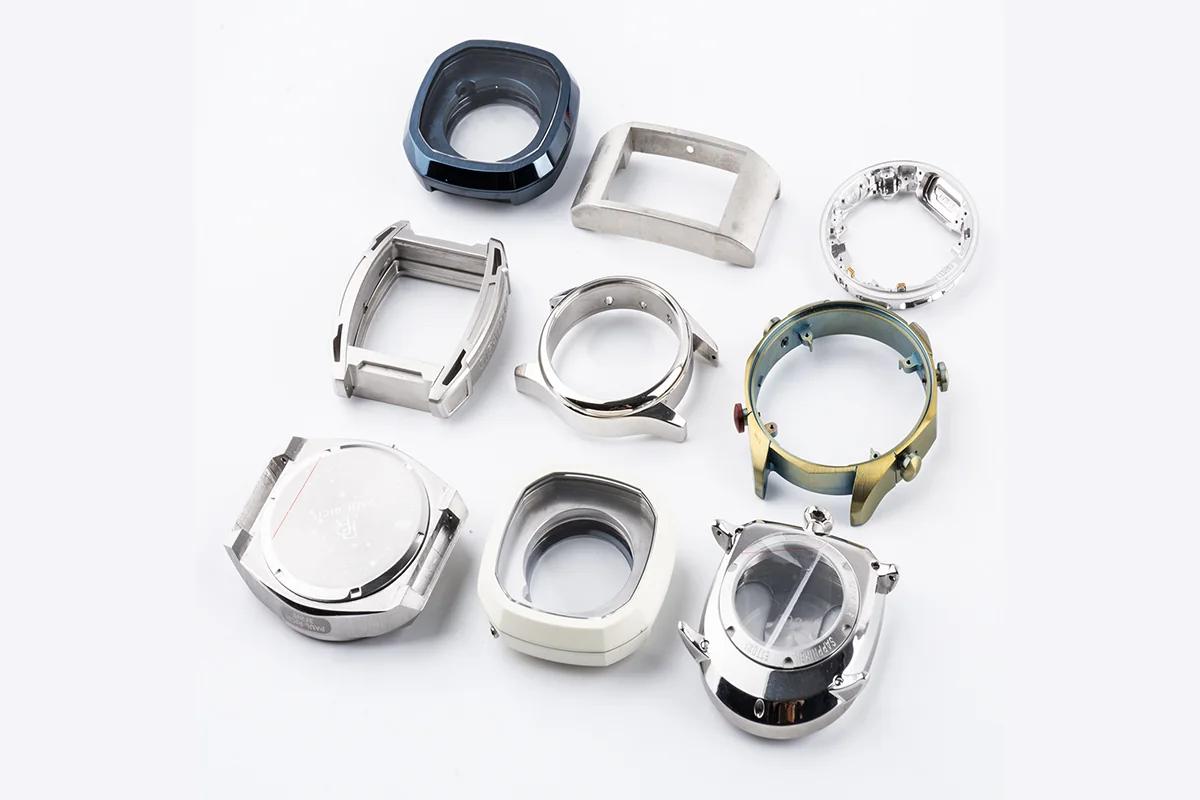
ZCMIM: 316L Uhrengehäusekomponenten
316L Gehäuseteile: ZCMIM präsentiert MIM-Gehäusekomponenten aus 316L-Edelstahl mit Nachbearbeitungsoptionen wie Polieren, Magnetläppen, Sandstrahlen und PVD. Dies sind Gehäusekomponenten; sie demonstrieren keine Produktion von Schließen oder Armbandgliedern.
Nachbearbeitung nach dem Sintern: Die Near-Net-Shape-Fertigung eliminiert den Nachbearbeitungsplan nicht. Sichtbare Flächen und Schnittstellen können unterschiedliche Oberflächenbearbeitungen und Inspektionsbedingungen erfordern; das Material und der Verarbeitungsweg müssen für jeden Lieferanten bestätigt werden.
Spezifische Prüfung für Uhrengehäuse: Gehäusespezifische Geometrie-, Dichtungs- und Schnittstellenanforderungen werden auf der speziellen Seite für MIM-Uhrengehäuseteile behandelt; die Eignung von Schnallen und Gliedern muss separat bewertet werden.
Quelle: ZCMIM Uhrenteile-Galerie.
Wann ist MIM die richtige Fertigungsroute für Uhrenteile?
MIM kann die Bearbeitungsaufspannungen für ein kompaktes Teil mit integrierten dreidimensionalen Merkmalen reduzieren. Der Vorteil hängt vom Wiederholungsvolumen, den Werkzeugkosten, der Ausbeute und der Endbearbeitung ab. Vergleichen Sie die vollständige Fertigteil-Route, einschließlich Bearbeitung, Polieren, Beschichten, Inspektion und Montage – nicht nur auf der gesinterten Form allein.
Komplexe Geometrien und integrierte Funktionsmerkmale
Doppelkurven, Verriegelungsvertiefungen, integrierte Anschläge und andere dreidimensionale Merkmale, die mehrere Bearbeitungsschritte erfordern würden, können für MIM vorteilhaft sein. Hinterschneidungen und schwer zu entformende Merkmale müssen jedoch gegen den tatsächlichen Werkzeugmechanismus, den Auswerferpfad und den Sinterplan geprüft werden. Eine Geometrie, die umfangreiche Sekundärbearbeitungen erfordert, kann den erwarteten Vorteil zunichtemachen.

Leatherman Tread: Integrierte 17-4 Edelstahl-Glieder
Integrierte Werkzeug-Glieder-Konstruktion:PIM International berichtete, dass Leatherman Tread MIM zur Herstellung komplexer 17-4 Edelstahl-Armbandglieder verwendete, die jeweils mehrere funktionale Werkzeugprofile kombinierten. Ein verwandtes Uhrensystem wurde ebenfalls angeboten.
Rolle von MIM:Das Gliederdesign veranschaulicht, wie MIM nicht-planare Merkmale integrieren kann, die sonst mehrere Operationen erfordern würden. Ein herkömmliches Uhrenarmbandglied mit einfacherer Geometrie bietet möglicherweise nicht den gleichen wirtschaftlichen Vorteil.
Vergleich mit Standardgliedern:Das Tread war eher ein tragbares Multitool als ein herkömmliches Uhrenarmband. Sein Herstellungsansatz sollte nicht als Beweis dafür gewertet werden, dass ein bestimmtes Uhrenglied wirtschaftlich im MIM-Verfahren (Metallpulverspritzguss) hergestellt werden kann.
Quelle: Bericht von PIM International, 2015.
Produktionsvolumen und Werkzeugökonomie
Wiederkehrende Nachfrage und stabile Zeichnungen sind wichtig, da ein kundenspezifisches MIM-Werkzeug und ein Mustervalidierungsprozess eine Vorabinvestition erfordern. Für viele Routineprojekte von XTMIM sind etwa 5.000 Stück ein nützlicher Ausgangspunkt für die Diskussion der MIM-Ökonomie., kein universelles technisches Minimum oder eine automatische Angebotsverpflichtung. Sehr geringe Stückzahlen, unsichere Nachfrage über die gesamte Lebensdauer oder häufige Überarbeitungen sollten einen Vergleich mit der Zerspanung auslösen. Der Stückpreis muss das erwartete Lebenszeitvolumen, die Werkzeugamortisation, die Ausbeute, die Sekundärbearbeitungen und die Inspektion widerspiegeln – nicht allein die Produktionsmenge.
Wann CNC, Stanzen oder Hybridfertigung besser geeignet sind
Die Zerspanung ist oft sinnvoller für Prototypen, häufige Designänderungen, präzise gedrehte Merkmale und kleine kundenspezifische Chargen. Stanzen kann für flache oder dünnwandige Geometrien wirtschaftlich sein. Ein Hybridverfahren kann MIM für kompakte komplexe Formen nutzen, während kritische Bohrungen, Dichtungssitze oder Kontaktflächen nach dem Sintern bearbeitet werden. Vergleichen Sie die tatsächlichen Angebotsannahmen, anstatt jedes Verfahren als inhärent am günstigsten zu betrachten.
| Projektbedingung | Anfängliche Prozessrichtung | Grund zur Bestätigung vor der Werkzeugerstellung |
|---|---|---|
| Kleine, komplexe Schließe oder ein Verbinder mit integrierten Merkmalen und stabilem Wiederholungsvolumen | MIM ist eine Bewertung wert | Können Merkmale zuverlässig geformt und gesintert werden, mit begrenzter Nachbearbeitung? |
| Sichtbares oder bewegliches Bauteil mit engen Passungen nach Beschichtung | MIM + gezielte technische Prüfung | Können die Anforderungen an Oberflächengüte, Bewegung und Inspektion gemeinsam erfüllt werden? |
| Prototyp, Ersatzteil oder Design mit häufigen Änderungen bei geringen Stückzahlen | CNC oft zunächst vorzuziehen | Würde sich die Werkzeuginvestition vor einer weiteren Designrevision amortisieren? |
| Einfache flache Armbandplatte oder unkomplizierter geformter Streifen | Stanzen oder Bearbeiten kann vorzuziehen sein | Bietet MIM genügend Geometrie- oder Montagekonsolidierung, um seine Kosten zu rechtfertigen? |
| Nahezu jede kritische Oberfläche muss nach dem Sintern CNC-bearbeitet werden | Vergleichen Sie CNC- und Hybridrouten sorgfältig | Bleibt ein nennenswerter Kostenvorteil oder Zeitvorteil durch MIM übrig? |
Wie sollten Materialien für kundenspezifische MIM-Uhrteile ausgewählt werden?
Wählen Sie ein Material anhand der Funktion der Komponente und ihres Endzustands: Festigkeit oder Verschleiß an einer Verriegelungsfläche, Korrosionsbelastung bei Hautkontakt, gewünschte Farbe und Oberflächenerscheinung sowie Kompatibilität mit der geplanten Sinter- und Nachbearbeitungsroute. Eine veröffentlichte Legierungsspezifikation gibt mögliche Materialeigenschaften an; sie dient beweist dazu, dass ein bestimmtes Werk die qualifizierte MIM-Feedstock- und Produktionsroute für diese Legierung hat.
Materialeigenschaften basierend auf der Teilefunktion
Edelstahl ist oft ein praktischer Ausgangspunkt für Uhrenkomponenten. Eine Güteklasse der 316L-Familie kann für Korrosionsbelastung und poliertes Aussehen in Betracht gezogen werden; 17-4 PH kann für stärkere Verriegelungs- oder Strukturkomponenten bewertet werden, wobei Wärmebehandlung und Korrosionsanforderungen in die Bewertung einbezogen werden. Die genaue Güteklasse und die Tests am fertigen Teil sind wichtiger als der Name der Legierungsfamilie.
Titanlegierungen können für gewichtssensible Designs geeignet sein, während Wolframlegierungen manchmal dort in Betracht gezogen werden, wo hohe Dichte funktional ist. Beide können Feedstock, Ofenatmosphären, Kontaminationskontrolle und Fertigungsbedingungen erfordern, die außerhalb der routinemäßigen Edelstahl-MIM-Produktion liegen. XTMIM müsste eine geeignete Material- und Ofenroute bestätigen, bevor es eine davon als MIM-Option anbietet.
Hautkontakt, Korrosion und Oberflächenkompatibilität
Schließenrückseiten, Armbandglieder, Verbinder und einige Gehäuseteile können mit Haut, Schweiß, Reinigungsmitteln und Metallstiften aus unterschiedlichen Metallen in Kontakt kommen. Bewerten Sie Korrosion, galvanische Wechselwirkung, Beschichtungsverschleiß und Nickelabgabe für die vorgesehene Serviceumgebung. Für Artikel, die in der EU verkauft werden und für direkten und längeren Hautkontakt bestimmt sind, REACH Anhang XVII, Eintrag 27 begrenzt die Nickelabgabe auf 0,5 µg/cm²/Woche von den Kontaktteilen; die Beschränkung betrifft auch beschichtete Artikel. Vereinbaren Sie relevante Tests am Fertigprodukt, wie z. B. EN 1811, falls zutreffend, mit dem Kunden. Ein Edelstahlgüteklassenname oder eine dekorative Beschichtung allein beweist keine Konformität.
A Studie von 2024 an MIM 316L- und 904L-Uhrenglied-Proben berichtete Nickelabgabe über dem zitierten EU-Grenzwert für Hautkontakt für seine getesteten MIM-Muster und ein unter den Studienbedingungen schlechteres Korrosionsverhalten im Vergleich zu konventionell hergestellten Vergleichsprodukten. Das Ergebnis ist kein universelles Urteil über diese Güten oder eine Feststellung über XTMIM-Teile: Es zeigt, warum das tatsächliche Feedstock, die Sinterqualität, die Oberflächenbearbeitung und fertigteilprüfung matter.
Material Availability and Validated MIM Production Routes
Before tooling, confirm the exact alloy specification, available MIM feedstock, expected sintering response, finishing route and any performance testing. If a customer requests a low-nickel-release material direction, a candidate such as PANACEA-Edelstahl may warrant separate review, but neither its name nor published material description establishes a qualified production route or final compliance. Material changes after tooling may alter shrinkage compensation and cost.
| Materialrichtung | Potential watch-part need | Must verify before quotation / tooling |
|---|---|---|
| 316L-family stainless steel | Visible, corrosion-conscious links, clasps and connectors | Actual grade/feedstock, density and finishing route; corrosion and skin-contact requirements |
| 17-4 PH Edelstahl | Higher-strength functional hardware | Heat-treatment route, corrosion needs, final hardness and critical fits |
| Special stainless material direction | Specific customer corrosion or nickel-release targets | Material availability, verified processing, finished-part testing and applicable market criteria |
| Titanium or tungsten alloy concepts | Lightweight or high-density specialized components | Whether a separately qualified MIM feedstock, furnace and production route actually exists; otherwise evaluate another process or supplier |
For alloy-family information beyond a watch project's immediate choice, consult Edelstahlwerkstoffe für MIM und den MIM-Werkstoffzentrale.
How Do Cosmetic and Assembly Requirements Affect Watch Part Design?
Watch hardware is often judged in its finished, assembled state. A clasp may look excellent but drag after coating; a connector may have correct as-sintered dimensions but lose fit after polishing. Before tooling, separate surfaces that must look uniform from those that carry load, slide, latch, seal or locate another component.
Define Cosmetic and Functional Surface Zones
Mark visible faces, protected surfaces, edge-treatment zones, potential gate marks, parting-line limitations and contact surfaces on the drawing. A polished outer clasp arm can tolerate a different surface route from its internal locking face; a quick-release connector may require a cosmetic outer shell but an uncoated or tightly controlled mating surface. This mapping drives tool design, finishing allowance and inspection priorities.
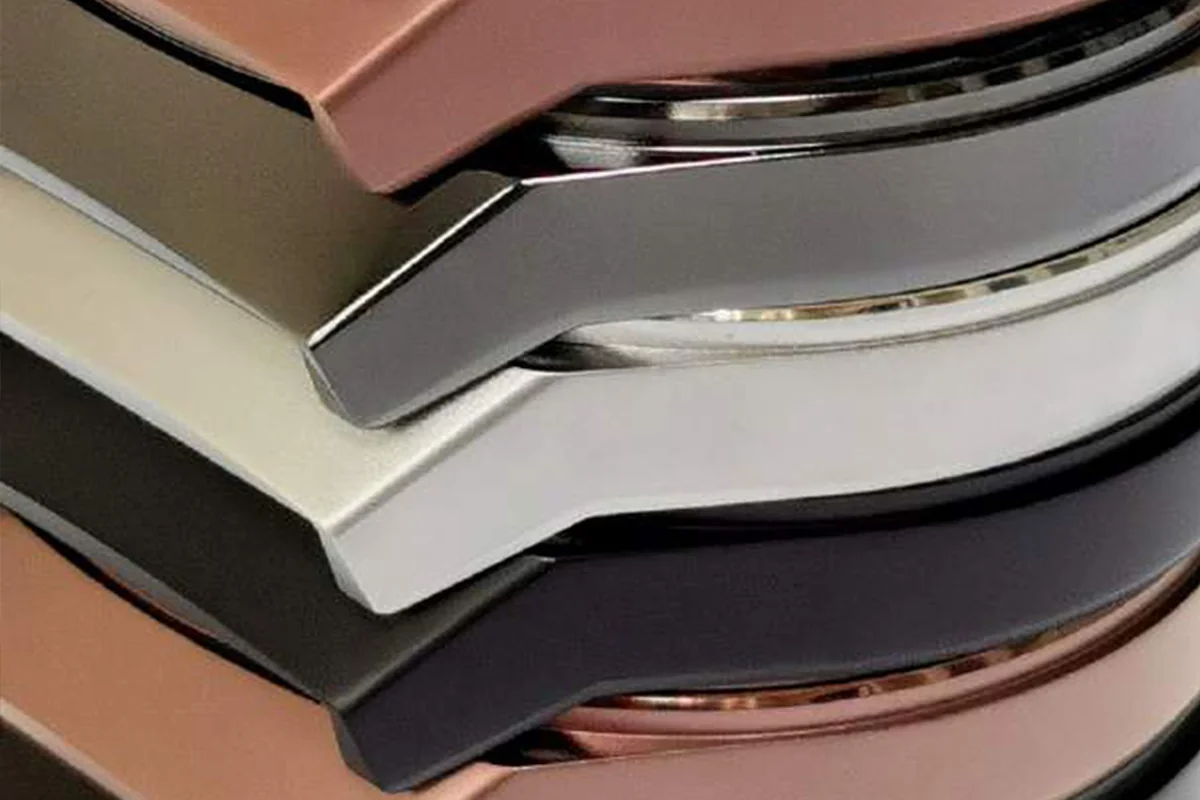
ElementPlus: Ti-6Al-4V Surface-Finish Variants
Surface-finish examples:PIM International published images of Ti-6Al-4V MIM smartwatch-case components showing different surface-finish and coating appearances during an ElementPlus development programme.
Finishing specifications:The same nominal shape can require different machining allowances, masking and final inspections depending on its finish. Color alone does not identify the coating chemistry, thickness or wear performance.
For moving hardware:The published parts are smartwatch housings, not buckles. For a moving clasp or connector, the finish needs to be evaluated together with contact pressure, clearance and wear surfaces.
Protect Assembly Fit After Polishing and Coating
Polishing and brushing may remove material or soften edges; plating and PVD may add material or change friction and wear behavior. The size and direction of these effects depend on the selected process and part geometry. Watch links, buttons, adapters and clasp mechanisms should be reviewed for movement clearance, pin fit, latch engagement and final edge condition nach the planned finishing route.
Possible clasp-fit problem: A clasp arm may move freely before coating but bind at its engagement face afterward. Identify the contact surfaces, coating and masking plan, acceptable clearance and test method before approving samples. This is a possible failure mode, not an XTMIM customer case.
Welche Designrisiken müssen vor der MIM-Werkzeugerstellung geprüft werden?
Once the desired material, cosmetic result and assembly function are clear, DFM checks whether the geometry can be molded, handled, debound, sintered and finished consistently. Tooling compensation alone cannot solve every thin-feature, visible-surface or functional-fit risk.
Shrinkage, Wall Balance and Sintering Distortion
Debinding removes the binder and leaves a fragile powder structure; most dimensional shrinkage occurs later, during sintering densification. Actual shrinkage and distortion depend on the alloy, feedstock, wall geometry, support and furnace conditions. Thin clasp arms, uneven wall transitions and long connectors may need geometry changes or specialized support. Shrinkage compensation and achievable tolerances must be set from the selected material and process data.
Gate, Parting Line and Tooling Restrictions
Injection gates and mold parting lines must be placed with the final appearance and functionality in mind. A mark that is acceptable on the hidden rear of a buckle may be unacceptable on a polished front surface. Mold release, side actions, small features and green-part handling may create limits even when the CAD geometry appears feasible.
Critical Dimensions and Machining Allowances
Separate general dimensions from critical bores, pin locations, sealing or mating faces, button travel and latch clearances. Decide which can be controlled through MIM and which may require sizing or post-sinter CNC machining. Specify dimensions for the final finished state; avoid applying a generic MIM tolerance to every feature.
Alliance Watch Clasp — Powder/Binder Separation Study (2015). A published PIM simulation study examined powder-binder segregation in a watch-band clasp manufactured by the French PIM specialist Alliance. The part had demanding cosmetic requirements. Simulated low-powder-concentration regions were identified as risks for defects that could become visible after polishing.
Tooling implication: On a high-visibility clasp, feedstock flow and gate placement affect the quality of surfaces that will later be polished. Polishing cannot reliably remove defects caused by powder/binder separation. The study concerns Alliance; it is not evidence of XTMIM using SIGMASOFT or manufacturing that part.
Study and original figure: PIM International, March 2015, p. 20, Fig. 1 — watch clasp particle-concentration simulation.
| Pre-tooling risk | Possible watch-part consequence | Required review or decision |
|---|---|---|
| Unbalanced walls or thin projections | Distortion or handling damage in clasp arms, connectors and small frames | Check wall transitions, support and trial-part inspection |
| Gate or parting line on a visible surface | Cosmetic rejection after polish or coating | Agree protected zones and acceptable mark locations |
| Critical holes, latch faces or pin centers | Inconsistent movement, pin fit or assembly | Identify critical dimensions and any secondary machining allowance |
| Finishing allowance not defined | Loss of edge shape or mating clearance | Plan final-state dimensions and finish sequence before tooling |
| Fragile green-part features | Damage before densification | Review ejection, transfer, handling and support method |
General moldability and design principles are covered in the MIM-Konstruktionsleitfaden. The watch-specific decision is whether a particular critical or cosmetic feature can be produced and approved at the expected volume.
How Are MIM Watch Parts Finished and Approved for Production?
Successful molding and sintering produce a manufactured component, but not necessarily a deliverable watch part. The finished route may require local machining, sizing, edge control, polishing, brushing, plating or PVD, followed by functional and visual approval. The actual sequence should reflect which features must remain precise through every operation.
Abfolge von Sekundärbearbeitung und Oberflächenveredelung
Where a latch face, pin hole or button interface demands tighter control than the selected as-sintered process can achieve, plan a targeted CNC or sizing operation. Schedule cosmetic finishing with allowances for material removal, edge rounding and any coating. Surface processes should be specified in a way that can be inspected and reproduced—not just as a color name or a generic “premium finish”.
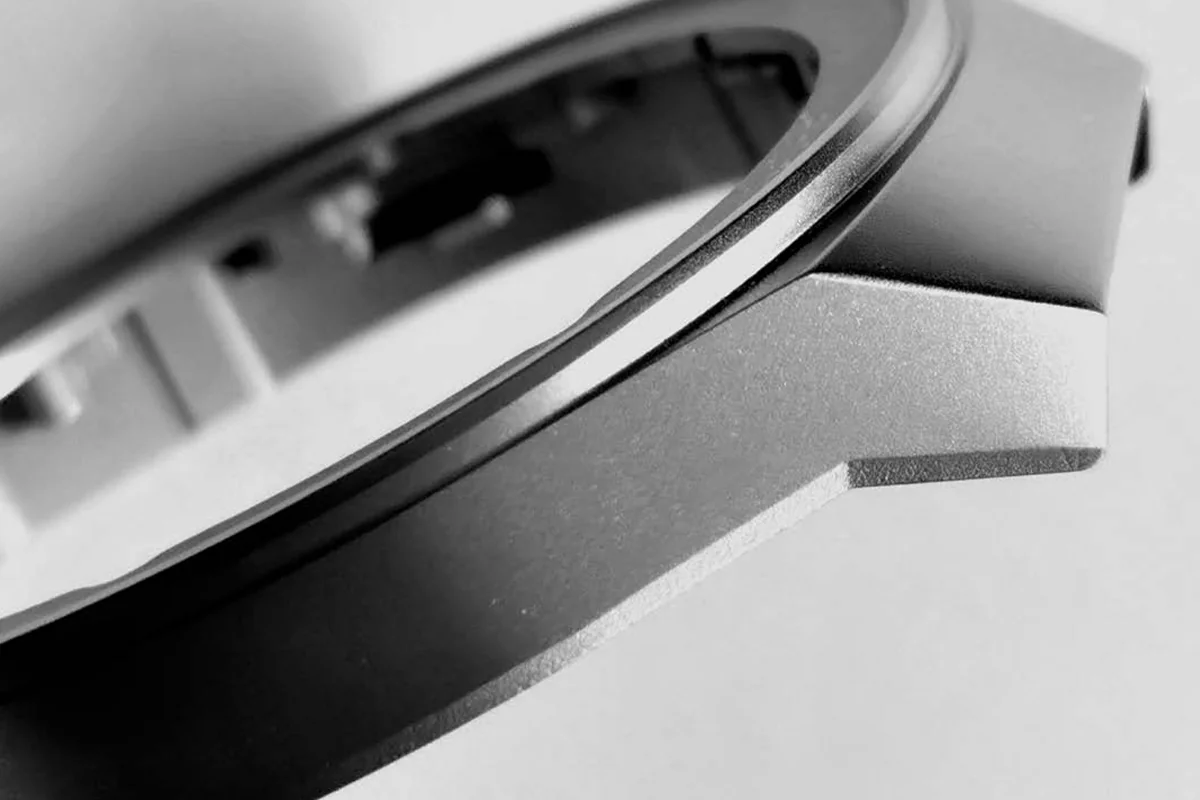
ElementPlus: Ti-6Al-4V Smartwatch Housing Pilot
Pilot production:ElementPlus reported pilot-scale Ti-6Al-4V MIM smartwatch housings. Molding formed much of the complex geometry, while selected tight-tolerance interfaces were CNC machined after sintering.
Kritische Schnittstellen:Define each interface by its required finished state: as-sintered, CNC-machined, polished or coated. That sequence determines the allowance, inspection point and true delivered-part cost.
Produktionsqualifizierung:The published example was a pilot programme. It does not establish repeat-production capability for titanium at XTMIM or across other suppliers.
Quelle: PIM International, December 2020, Fig. 5 and article.
Final-State Dimensional, Cosmetic and Functional Inspection
Inspect the finished condition that the customer will actually receive. After sintering, check geometry and distortion before further processing; after targeted machining, measure critical bores or mating faces; after polishing, inspect edges and cosmetic consistency; after coating, check finish coverage and clearance; and in final assembly, confirm the clasp movement, button travel or link articulation specified on the drawing. The supplier and buyer should agree inspection stages, measurement methods and acceptance limits for the features that are critical to that part.
| Prüfpunkt | Was ist zu bestätigen | Why the customer needs it |
|---|---|---|
| Inspektion im gesinterten Zustand | Geometry, distortion, feature integrity and selected dimensions | Identifies basic MIM process or tooling issues before downstream work |
| After CNC or sizing | Critical bores, pin locations, latch faces and datum relationships | Confirms critical fit features on the relevant process state |
| After polishing, brushing or coating | Edges, surface quality, finish consistency, protected faces and any coating-related fit change | Prevents an appearance improvement from causing a mechanical rejection |
| Final assembly / customer acceptance | Clasp operation, button travel, link articulation, pin engagement and agreed visual limits where applicable | Validates the actual finished watch component, not merely the unfinished part |
Sample Approval and Production Consistency
Customer approval should be based on the agreed alloy and finish, critical dimensions, assembly function and inspection criteria. Approved samples become a reference for later batches, supported by in-process controls and final inspection. Passing a first cosmetic sample alone does not establish production yield or long-run dimensional consistency.
How Can Buyers Verify a Supplier's Capability for MIM Watch Parts?
A supplier should be able to explain how the proposed alloy, tooling, sintering, finishing and inspection will achieve the specified watch-part function. A polished sample can demonstrate surface appearance, but it does not by itself establish dimensional repeatability, material qualification or production yield.
Relevant Component and Surface Finish Evidence
Relevant evidence includes manufactured clasp, link or connector samples, close-up views of functional and cosmetic surfaces, and finished-part measurements or approved reference samples. The category maps and DFM diagrams on this page illustrate engineering decisions; they are not records of XTMIM manufacturing every pictured component.
Manufacturing, DFM and Inspection Capabilities
XTMIM supports MIM injection molding, debinding and sintering, followed where appropriate by CNC secondary machining and selected finishing operations such as polishing and PVD. The available process steps must still be matched to the requested alloy and part geometry. In a drawing review, confirm gate location, wall balance, critical fits, finishing zones and inspection methods, along with any tests required before approving production.
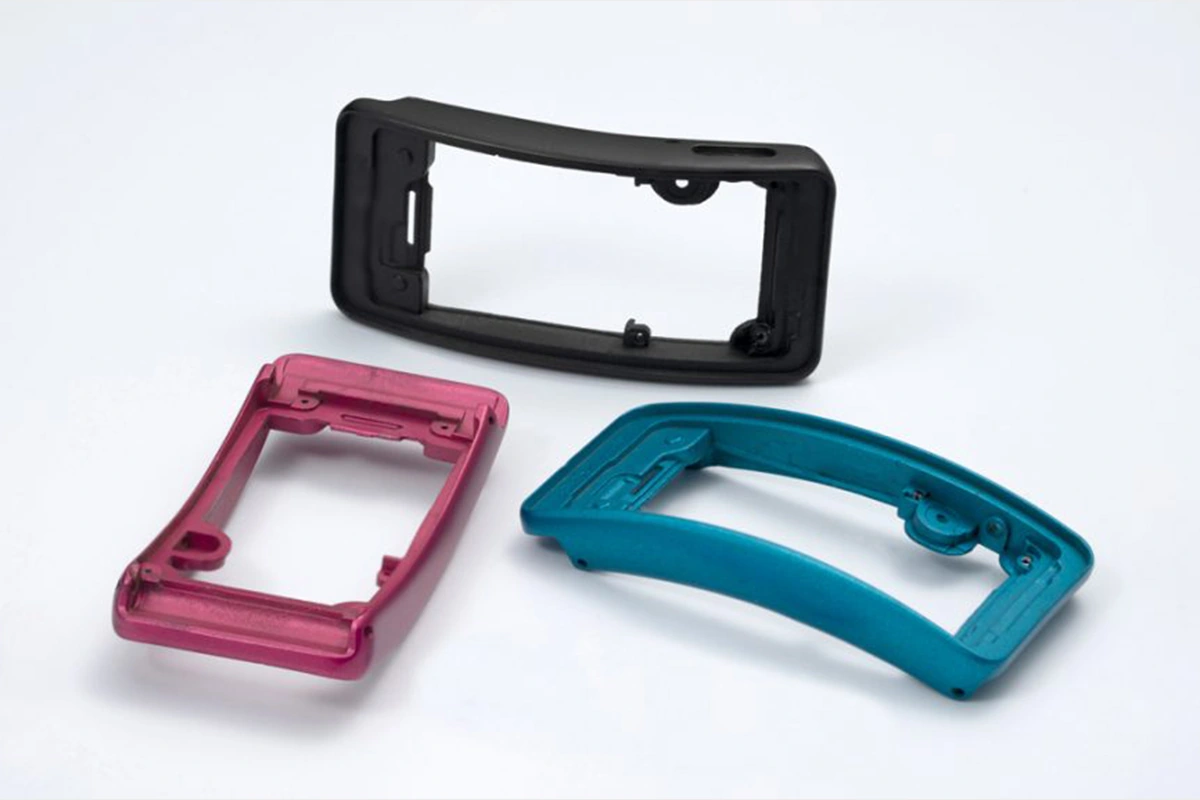
MPIF 2024: Aluminum MIM Smartwatch Case
Awarded smartwatch case:MPIF named Hangzhou Sino-MIM Technology Group a 2024 Award of Distinction recipient for an aluminum-alloy MIM smartwatch case. The project involved thin complex sections, feedstock-flow and molding challenges, mirror polishing of curved faces and subsequent anodizing for color variants.
Useful supplier evidence:The award identifies a specific manufacturer and part/process combination. For a new project, comparable evidence would include the proposed alloy route, finished geometry, surface condition, process controls and inspection criteria.
What the award does not establish:The award notice does not specify the exact aluminum grade or project tolerances. It cannot be used to qualify another supplier or to claim XTMIM production of aluminum MIM smartwatch cases.
Quelle: MPIF 2024 Design Excellence Awards, electronics category.
| Anzufordernde Nachweise | What it helps verify | Was noch bestätigt werden muss |
|---|---|---|
| Actual manufactured component or approved finish sample | Representative shape, surface appearance and workmanship | Whether the part uses the requested alloy, tolerance and full production route |
| Drawing-specific DFM feedback | Understanding of tooling, shrinkage, visible surfaces and assembly risks | How identified risks will be checked in trial samples |
| Inspection plan for the finished part | How critical dimensions, cosmetic zones and function would be accepted | Agreed methods, sample size and pass/fail criteria for this project |
Case attribution: The linked case photos document work attributed to the named external companies, not XTMIM customer projects. They illustrate process decisions; XTMIM production capability and acceptance criteria must be confirmed against the submitted drawing and approved samples.
For the wider manufacturer service scope beyond watch components, visit Metallpulverspritzguss-Dienstleistungen von XTMIM. Other part families can be explored through the MIM-Teile-Hub.
What Is Needed for a Watch Parts MIM Feasibility Review and Quote?
To assess a custom watch part, engineering needs more than a target unit price and a 3D shape. The drawing package should identify critical dimensions, material and finish requirements, annual volume and assembly conditions. Distinguish fixed requirements from preferences so the proposed MIM route and its alternatives can be evaluated consistently.
Required Drawings, Specifications and Production Information
Geometry and critical functions
- 2D drawing and 3D CAD file, if available
- Critical dimensions, tolerances and datums
- Pin, hole, latch, travel or mating interfaces
- Operating load or functional test expectations
Material and finished surfaces
- Required alloy or performance target
- Polish, brush, coating, plating or PVD specification
- Cosmetic zones, contact areas and masking needs
- Any skin-contact, corrosion or wear criteria
Production and approval plan
- Annual forecast and expected order size
- Prototype, tooling, sampling or production stage
- Target launch schedule and design status
- Photos or reference samples where useful
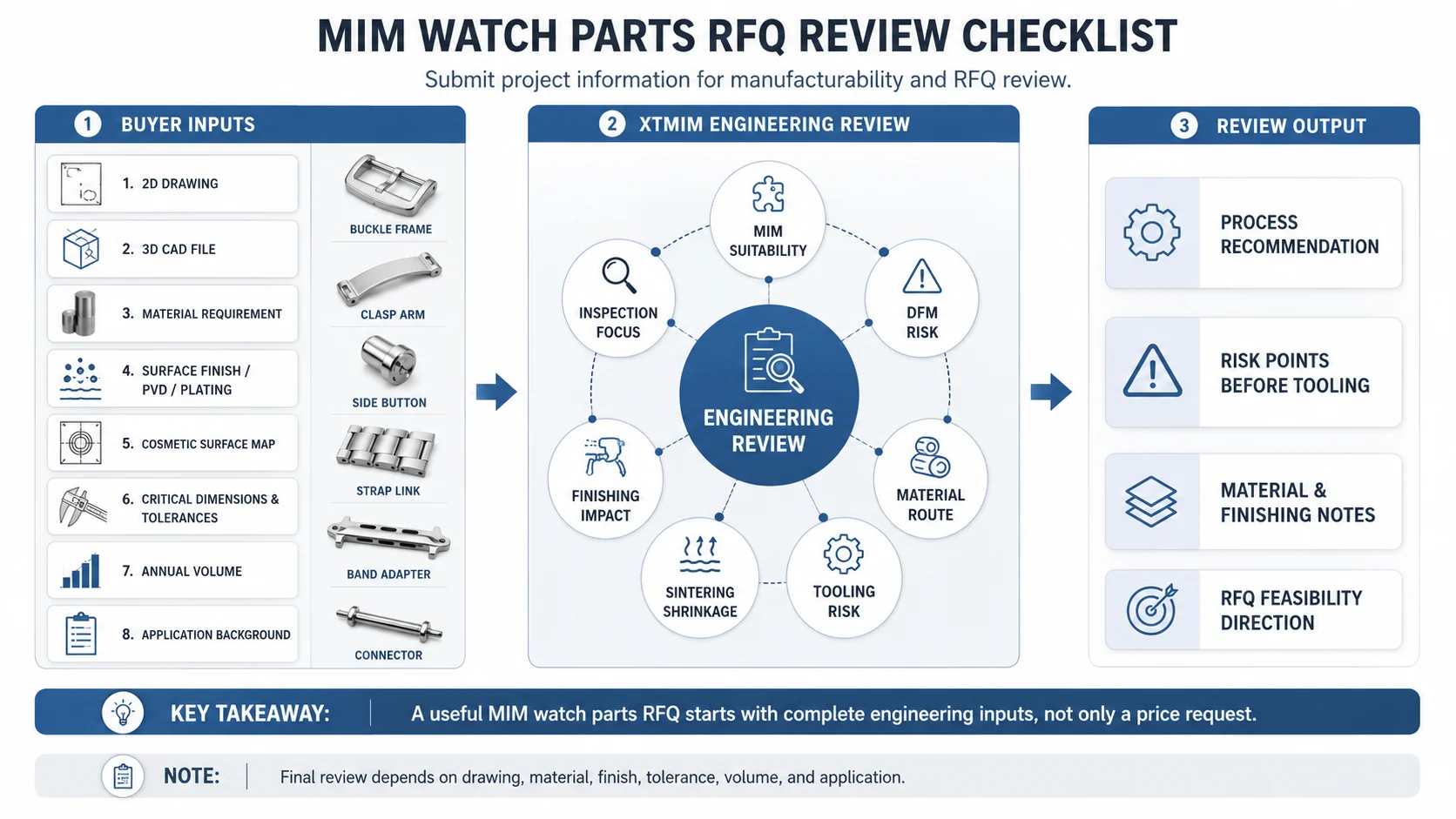
What the Engineering Review Should Confirm
With the information above, the review should identify whether MIM is a reasonable option, which feedstock and sintering route can actually be supported, which features need tooling changes or post-sinter machining, how cosmetic and functional surfaces will be protected, and what sample checks must occur before production approval. A preliminary review can identify major risks; final capability, unit price and quality acceptance may still depend on detailed DFM and trial samples.
| Initial project status | Empfohlener nächster Schritt | Benötigte Nachweise für die Entscheidung |
|---|---|---|
| Complex, repeat-production component with clear specifications | Proceed to drawing-based MIM feasibility review and RFQ | Confirmed material, geometry, tooling plan and proposed sample acceptance |
| Material, final coating or critical tolerance remains uncertain | Resolve constraints and identify necessary trial validation | Revised drawings, surface-zone map or test criteria |
| Low quantity, simple shape or heavy machining requirement | Compare CNC, stamping or hybrid production before MIM tooling | Comparable process assumptions and projected lifetime volume |
Senden Sie Ihre Uhrenteil-Zeichnungen zur MIM-Prüfung
Share the 2D/3D geometry, target material, critical dimensions, cosmetic and mating surfaces, finish requirements, forecast and project stage. XTMIM can use these inputs to discuss the appropriate manufacturing route and identify the checks needed before quotation, tooling and sample approval.