
Kurze Antwort: Ziehen Sie Titan-MIM in Betracht, wenn ein definiertes Zielgewicht, eine spezifische Anforderung an die Einsatzumgebung oder eine erforderliche Titanlegierung einen Vorteil bietet, der seine Material- und Prozesskontrollen rechtfertigt. Beginnen Sie mit Edelstahl-MIM, wenn eine geeignete Güte die Anforderungen an Last, Korrosion, Aussehen und Toleranzen erfüllt und eine besser qualifizierte, kostengesteuerte Produktionsroute bietet.
Titan ist nicht automatisch fester, härter oder korrosionsbeständiger als jede Edelstahlgüte. Vergleichen Sie die spezifizierten Legierungen im fertigen MIM-Zustand und prüfen Sie die tatsächliche Geometrie, die Einsatzumgebung, die Feedstock-Verfügbarkeit, den Sinterprozess und die Kosten pro akzeptiertem Teil, bevor Sie das Werkzeug freigeben.
Welche Projektanforderungen ändern tatsächlich die Entscheidung Titan vs. Edelstahl?
Bevor Sie Legierungsdatenblätter vergleichen, trennen Sie die Anforderungen, die nicht fehlschlagen dürfen, von den Präferenzen, die gegen Kosten eingetauscht werden können. Ein Vergleich von Edelstahl gegen Titan ist nur sinnvoll, nachdem diese Anforderungen für das tatsächliche Teil definiert wurden.
Beginnen Sie mit der Komponente, nicht mit dem Metall. Für ein dünnes Gehäuse kann eine spezifizierte Höchstmasse wichtiger sein als die Nennfestigkeit der Legierung. Für eine lasttragende Klinke können Steifigkeit, Ermüdung und Kontaktverschleiß das Design bestimmen. Für einen häufig gereinigten Mechanismus können die tatsächliche chemische Belastung und die endgültige Oberfläche beides dominieren.
| Zu definierende Einschränkung | Muss erfüllt werden oder verhandelbar? | Was ändert die Wahl zwischen Ti und Edelstahl | Anzufordernde Nachweise |
|---|---|---|---|
| Maximale Teilemasse / Systemmasse | Muss erfüllt werden, wenn das Design eine verifizierte Gewichtsgrenze hat. | Titan wird zu einem ernsthaften Kandidaten, wenn seine geringere Dichte ein relevantes Gewichtsproblem löst. | CAD-Volumen und ein Massenbudget auf Montageebene. |
| Last, Steifigkeit, Ermüdung und Verschleiß | Muss normalerweise erfüllt werden. | Bewerten Sie die genaue Legierung, den endgültigen MIM-Zustand, die Kontaktpaare und ob Konstruktionsänderungen zulässig sind. | Lastfall, Kontaktflächen, Lebensdauerziel, Prüfmethode. |
| Korrosion und Reinigungsbelastung | Muss erfüllt werden, wenn ein Ausfall die Funktion oder Sicherheit beeinträchtigt. | Vergleichen Sie genaue Güten unter dem tatsächlichen Medium, anstatt allgemeine Korrosionsrankings zu verwenden. | Details zu Schweiß-/Salz-/Reinigungsmitteln, Dauer, Temperatur, Reinigungszyklus. |
| Kosmetisches und funktionales Finish | Muss für definiertes Aussehen oder Dichtflächen erfüllt werden. | Oberflächenbearbeitung, Grenzwerte für Oberflächenschäden, Beschichtungsverträglichkeit und Zugänglichkeit können die Materialwahl beeinflussen. | Oberflächenzonen, Rauheit, Beschichtungsspezifikationen, visuelle Kriterien. |
| Kosten, Jahresvolumen und Qualifizierung | Kompromiss, sofern nicht vertraglich oder gesetzlich festgelegt. | Ein geringer Leistungsvorteil rechtfertigt möglicherweise keine spezielle Materialprozessroute. | Ziel-Jahresstückzahlen, Budget, Genehmigungs- und Rückverfolgbarkeitsregeln. |
Wenn ein Material nach dem vollständigen MIM-Prozessweg eine geforderte Last, ein Betriebsmedium, eine Abmessung oder eine spezifizierte Güte nicht erfüllen kann, sollte es nicht einfach ausgewählt werden, weil eine andere Eigenschaft attraktiv erscheint.
Wenn beide Kandidaten jede zwingende Anforderung erfüllen, wägen Sie die tatsächlichen Teilegewichtseinsparungen, die Komplexität der Oberflächenbearbeitung, die nachgewiesene Produktionsfähigkeit, die akzeptierten Teilekosten und die Lieferkontinuität ab.
Die Auswahl sollte zuerst die funktionalen Anforderungen, dann die nachgewiesene MIM-Herstellbarkeit und zuletzt die Projektökonomie erfüllen. Für andere Legierungsfamilien siehe MIM-Werkstoffen oder die MIM-Materialauswahl-Leitfaden.
Wie schneiden Titan und Edelstahl bei fertigen MIM-Teilen ab?
Das Wort "Titan" kann für reines kommerzielles Titan oder eine Legierung wie Ti-6Al-4V stehen; "Edelstahl" kann 316L, 17-4 PH, 420 oder eine andere Güte bedeuten. Der endgültige MIM-Zustand, die Wärmebehandlung, die Dichte und der Oberflächenzustand bestimmen, welche veröffentlichten Eigenschaften anwendbar sind.
| Entscheidungseigenschaft | Titan-Route | Edelstahl-Route | Praktische Auswirkung auf das Teiledesign |
|---|---|---|---|
| Dichte / Masse | Referenzdichte Ti-6Al-4V: ca. 4,43 g/cm³. | Referenzdichte 316L: ca. 8,0 g/cm³. | Bei gleichem Feststoffvolumen ist Titan erheblich leichter; prüfen Sie, ob die absolute Masseneinsparung relevant ist. |
| Steifigkeit | Basismetallmodul von Ti-6Al-4V: ca. 110 GPa. | Basismetallmodul von 316L: ca. 200 GPa. | Bei identischer Geometrie biegt sich das steifere Material unter elastischer Belastung im Allgemeinen weniger; tatsächliche MIM-Daten und Geometrie sind weiterhin maßgebend. |
| Festigkeit / Härte | CP-Titan und Ti-6Al-4V weisen unterschiedliche Festigkeitsniveaus auf; der MIM-Zustand ist entscheidend. | 316L, 17-4 PH, 420 und 440C dienen unterschiedlichen Anforderungen an Festigkeit, Härte und Verschleißfestigkeit. | Wählen Sie spezifische Legierungen und Behandlungszustände, nicht eine generische Bezeichnung wie Titan-gegen-Stahl. |
| Korrosionsverhalten | Schützende Oxidschicht kann in vielen Anwendungen wirksam sein; die Leistung ist umgebungsspezifisch. | Die Legierung und der Oberflächenzustand jeder Edelstahlsorte sind entscheidend. | Identifizieren Sie die tatsächliche chemische und reinigungsbezogene Exposition, bevor Sie Materialien einstufen. |
| Oberfläche und Aussehen | Oberflächenvorbereitung und dekorative Prozesse erfordern sorten- und geombiespezifische Versuche. | Viele etablierte Polier-, Passivierungs- und PVD-Verfahren sind für geeignete Edelstahlsorten verfügbar. | Geben Sie funktionale und kosmetische Kriterien an; gehen Sie nicht davon aus, dass ein Finish für jede Sorte zugelassen ist. |
Diese Dichte- und Elastizitätsmodulwerte sind Referenzeigenschaften für die angegebenen Basislegierungen, beweist garantierte Eigenschaften von fertigen MIM-Teilen. Die NBS/NIST Ti-6Al-4V Zusammenstellung und den 316/316L Herstellerdatenblatt die zugrundeliegenden Werte liefern. Die endgültige Abnahme muss den spezifizierten MIM-Materialzustand und relevante Tests auf Teilebene verwenden.
Gewichtseinsparung vs. Steifigkeit und Teilegeometrie
Bei gleichem theoretischem Festvolumen ist Ti-6Al-4V (ca. 4,43 g/cm³) etwa 45 % leichter als 316L Edelstahl (ca. 8,0 g/cm³). Ein Beispiel mit 1 cm³ Festvolumen wiegt etwa 4,43 g gegenüber 8,0 g: ein Unterschied von 3,57 g. Screening-Methode: multiplizieren Sie das feste CAD-Volumen des Teils in cm³ mit ca. 3,57 g/cm³, um die Gewichtseinsparung bei unveränderter Geometrie abzuschätzen. Die tatsächliche Masse des MIM-Teils hängt von der Enddichte, der Oberflächenbearbeitung und etwaigen Designänderungen ab.
Geringere Dichte bedeutet nicht größere Steifigkeit. Der Elastizitätsmodul beträgt ca. 110 GPa für Ti-6Al-4V und ca. 200 GPa für 316L. Bei gleicher Geometrie und Belastung kann eine Titanhalterung im elastischen Bereich stärker durchbiegen. Die Änderung der Rippendicke oder der Querschnittsgeometrie kann die Steifigkeit wiederherstellen, aber diese Modifikation ändert auch die Masse des Teils und das Schwindungsverhalten beim MIM-Sintern. Fragen Sie, ob die Montageebene Gewichtseinsparung signifikant ist, bevor Titan als Anforderung behandelt wird.
Festigkeit, Ermüdung, Härte und Verschleißfestigkeit
Vergleichen Sie nicht "Titanfestigkeit" mit "Stahlfestigkeit", ohne beide Güten zu nennen. Reintitan und Ti-6Al-4V erheblich unterscheiden; daher 316L und wärmebehandelbar 17-4 PH. Härtbare Edelstahlsorten können relevant sein, wenn Gleitverschleiß oder hohe Härte wichtig sind. Ist Titan ein weiches Metall? Das lässt sich nicht pauschal für Titan als Werkstofffamilie beantworten: Reintitan und Ti-6Al-4V weisen kein einheitliches Härtungsniveau auf, und eine gehärtete Edelstahlsorte kann sich wieder anders verhalten.
Das Verhältnis von Festigkeit zu Gewicht ist erst dann hilfreich, wenn Lastpfad und Geometrie bekannt sind. Ermüdung bei zyklischer Belastung, Reibung an einem Stift, Kantenfestigkeit und Fressen an metallischen Kontaktflächen können ein Material ausschließen, das in einer einfachen Zugfestigkeitstabelle hervorragend aussieht. Die MIM-Dichte, Restporosität, der Sauerstoffgehalt, die Wärmebehandlung und der Oberflächenzustand können das Ergebnis des fertigen Teils weiter verändern. Bestätigen Sie die Leistung mit dem spezifizierten MIM-Zustand und entsprechenden Tests, anstatt einen Wert von einem Schmiedestab zu übernehmen.
Korrosionsbeständigkeit und Einsatzumgebung
Titan bildet eine schützende Oxidoberfläche und kann in bestimmten korrosiven Umgebungen ein starker Kandidat sein. Edelstahlsorten basieren auf einer chromreichen passiven Oberfläche, weisen aber je nach Sorte und Expositionsbedingungen eine deutlich unterschiedliche Beständigkeit auf. Keines der Materialien bietet eine universelle Korrosionsimmunität. Chloride, Spalten, Oberflächenschäden, Kontakt mit ungleichen Metallen, Reinigungsmittel und Temperatur können das Ergebnis verändern.
Definieren Sie für am Körper getragene Geräte, die Hautkontakt haben, die Exposition gegenüber Schweiß und Kosmetikprodukten, anstatt anzunehmen, dass ein generisches Etikett "hypoallergen" oder "chirurgisch" die Eignung beweist. Spezifizieren Sie für medizinische Vorrichtungskomponenten Desinfektionsmittel, Reinigungszyklen und Kundenakzeptanzkriterien; ob eine Oberfläche konsistent gereinigt werden kann, kann ebenso wichtig sein wie die nominelle Massenkorrosionsbeständigkeit.
Anforderungen an Oberflächengüte, Passivierung und Beschichtung
Edelstahlteile können für Polieren, Bürsten, Strahlen, Passivieren und PVD geprüft werden, wenn dies für die gewählte Sorte und Oberflächengeometrie geeignet ist. Passivierungsbehandlungen für Edelstahl sollen den Oberflächenzustand verbessern, indem freies Eisen entfernt und die schützende Passivschicht gefördert wird; das Verfahren und die Verifizierung müssen spezifiziert werden. Die native Oxidoberfläche von Titan und ihre Vorbereitung sind anders: Ein Passivierungsrezept für Edelstahl darf nicht als austauschbar mit einer Titanbehandlung angenommen werden.
Definieren Sie für beide Wege Rauheit, Kantenerscheinung, Beschichtungsdicke, Haftung, kosmetische Zonen, Maskierung und Maßänderungen nach der Oberflächenbearbeitung. Ein sichtbares Gehäuse kann das Projekt scheitern lassen, selbst wenn die chemische Zusammensetzung und die Zugfestigkeitseigenschaften akzeptabel sind, wenn der Zugang zum Polieren oder die Wiederholbarkeit der Oberflächenbearbeitung vor der Werkzeugerstellung nicht berücksichtigt wurde.
Eine Zeichnung für medizinische Geräte, die passiviertes 316L vorsieht, sollte die Edelstahlsorte, die Behandlungssequenz und die Verifizierungsmethode definieren. Der Austausch durch Titan ändert sowohl das Material als auch die Anforderungen an die Oberflächenbehandlung; ein Passivierungsverfahren für Edelstahl ist nicht automatisch für Titan geeignet.
Für Daten auf Sortenebene, überprüfen Sie Titanlegierungen für MIM und MIM-Edelstahlsorten bevor das endgültige Material spezifiziert wird.
Welche MIM-Fertigungsgrenzen könnten die Materialwahl beeinflussen?
Selbst wenn ein Material das theoretische Konstruktionsziel erfüllt, ist der tatsächliche Metallpulverspritzgussweg möglicherweise nicht geeignet. Die Verfügbarkeit des Feedstocks, das Entbindern, das kontrollierte Sintern, das Dimensionsverhalten und der Nachweis der fertigen Eigenschaften bestimmen, ob eine vorgeschlagene Sorte für den Werkzeugbau freigegeben werden kann.
Kann die erforderliche Materialsorte als MIM-Feedstock bezogen werden?
Der Metallpulverspritzguss verwendet eine qualifizierte Mischung aus Metallpulver und Binder als Feedstock. Die Verfügbarkeit muss für die spezifizierte Sorte, geprüft werden, nicht nur für die allgemeine Bezeichnung "Titan" oder "Edelstahl". Die Fähigkeit eines Anbieters, Pulver für die additive Fertigung zu liefern, beweist nicht automatisch, dass ein passender MIM-Feedstock und eine entsprechende Verarbeitungshistorie vorhanden sind.
Die Verfügbarkeit von vorbereitetem Feedstock, Mindestabnahmemengen, Dokumente zur Chemie und Rückverfolgbarkeit, Chargenkonsistenz und Kompatibilität beim Entbindern gehören zur anfänglichen Lieferantenprüfung. Bei XTMIM-Projekten ist vorbereiteter Feedstock ein zugekaufter Fertigungsinput, keine Inhouse-Compoundierung. Eine Titansorte darf erst für die Produktion zugesagt werden, wenn ein kompatibler Herstellungs- und Inspektionsweg bestätigt wurde.
Wie beeinflussen Entbindern, Sintern und Kontamination das Endteil?
Nach dem Einspritzen muss der Binder ohne Rissbildung oder unannehmbare Rückstände entfernt werden. Das Sintern verdichtet dann das braune Teil. Titan hat eine starke Affinität zu interstitiellen Verunreinigungen, einschließlich Sauerstoff und Kohlenstoff; die Binderentfernung, Handhabung und Ofenbedingungen können die Kontamination und die endgültige Duktilität beeinflussen. Dies ist eine materiell andere Qualifizierungsherausforderung, als anzunehmen, dass ein bekannter Edelstahlzyklus einfach wiederverwendet werden kann.
Forschung zu saubere Titan-MIM-Bindersysteme dokumentiert die Bedeutung der Kontrolle von Zwischengitterverunreinigungen. Experimental and simulated Ti-6Al-4V sintering research also shows why shrinkage and support strategy must be validated for the actual geometry. These published examples establish technical possibilities, not a particular supplier's qualified manufacturing capability. Stainless steel also requires controlled debinding and sintering, although established stainless MIM routes are generally more widely available.
Can MIM Meet the Part's Tolerances and Acceptance Requirements?
Both titanium and stainless steel MIM parts shrink during sintering. Tooling compensation depends on feedstock, wall transitions, geometry, gates, supports, and final density. Long thin features, uneven cross-sections, sharp transitions, deep holes, and cosmetic faces may distort or become costly to correct. A grade change can therefore force a new review of shrinkage allowances and tooling design.
Before approving the route, separate dimensions that can remain as-sintered from those needing machining, sizing, grinding, or fixture-supported sintering. Define how the supplier will measure them, not merely an average nominal tolerance. The MIM-Toleranzleitfaden provides broader design context; final capability must be verified for the actual drawing and material condition.
Published manufacturing evidence, not a general MIM guarantee: In an ElementPlus Ti-6Al-4V watch-case pilot reported in 2020, most complex case features were formed by MIM, while some tight-tolerance features still needed CNC machining. The company also reported sintered density above 99% for its tested route. These are fallspezifische Ergebnisse, not tolerance, density or cost promises for another supplier. Ask what was actually measured on your required grade and geometry before authorising tooling.
| Machbarkeits-Gate | Can proceed when... | Hold or reject the route when... | Who must verify |
|---|---|---|---|
| Specified grade / feedstock | A traceable feedstock route exists for the exact grade and target quantity. | Only an approximate alloy is offered, or qualified feedstock is unavailable. | Powder or feedstock supplier and MIM manufacturer. |
| Entbindern / Sintern | Binder removal and atmosphere control are documented for this route. | Contamination limits or sintering controls cannot be demonstrated. | Manufacturing engineer and qualified process owner. |
| Geometry / shrinkage | DFM, tooling compensation, sintering support, and corrections are feasible. | Distortion-sensitive features cannot meet the print or cannot be inspected. | MIM tooling and process engineering. |
| Acceptance properties | Required chemistry, density, mechanical properties, and surface results have defined tests. | Customer expects wrought-bar properties without equivalent MIM qualification. | Quality engineer and customer. |
| Production evidence | Sample and repeat-run qualification expectations are agreed. | The supplier has no validated capability yet and the schedule assumes immediate scale-up. | Customer and manufacturing supplier. |
Critical stop condition: The existence of a published titanium MIM standard or research process does not validate any specific factory's feedstock, furnace setup, impurity control, tolerances or production yield. Request evidence for the proposed route; otherwise hold the tooling decision.
How Should Cost and Production Risk Affect the Material Choice?
The relevant number is the cost of a qualified, accepted production component, not simply the price of one kilogram of metal powder. A more expensive alloy can still be justified if its unique benefit is essential; an unnecessary special-material route can turn an otherwise practical MIM design into a costly project.
Is titanium more expensive than stainless steel for MIM production? For many common project comparisons, titanium is likely to carry a higher material and qualification burden than established stainless-steel grades. But there is no responsible universal premium: the actual difference depends on grade, feedstock sourcing, process qualification, finishing, acceptance yield, and order size. Use comparable quotations with the same part geometry, specifications, volume, and inspection scope.
| Cost or risk driver | How titanium may change the project | What to compare in the quote |
|---|---|---|
| Vorbereitetes Feedstock | Special-alloy availability, order size, and procurement risk may be less favorable. | Confirmed grade, material specification, supplier MOQ, material price basis. |
| Process controls | Atmosphere, contamination monitoring, and sintering validation can add complexity. | Qualified route, process checks, sample qualification, applicable testing. |
| Werkzeugbau und Entwicklung | Material-specific shrinkage and distortion behavior may require additional trials. | Mold design, sample iterations, support strategy, validation responsibilities. |
| Accepted-part yield | Scrap or rework risk matters more than nominal powder cost alone. | Cost per accepted part, defect limits, measurement plan. |
| Finishing and inspection | Cosmetic finish, masking, machining, or extra testing can materially change cost. | All secondary operations and acceptance criteria on the same quotation basis. |
| Volume and continuity | Tooling amortization and supply reliability depend on forecast volume. | Prototype quantity, annual demand, ramp-up plan, supply-change provisions. |
Make the comparison at accepted-part level. For example, a low quote based on raw powder or unqualified samples is not equivalent to a quote that includes required chemistry testing, controlled sintering, secondary machining, cosmetic inspection, and rejected-unit risk. Ask the supplier what evidence the price includes and what remains subject to trial.
Production volume also changes the result. Small, complex parts with repeat orders may justify MIM tooling; very low quantities or simple geometry can favor another manufacturing route. If volume or geometry is uncertain, the economic case for either MIM material is not yet established. The broader cost factors are explained in Metallpulverspritzguss-Kosten.
Quote comparison rule: Ask both suppliers to quote the same drawing revision, grade/alternate policy, annual quantity, surface and inspection specification. Compare tooling and trial charges separately from the recurring price per akzeptiert part. A low as-molded price is not a better offer if more items fail dimensional, cosmetic, chemistry or functional acceptance after sintering and finishing.
Entscheidungsregel: Choose titanium only if its measurable part-level benefit and required technical qualification justify the additional total project burden. If a qualified stainless grade meets every must-have requirement, stainless may be the more defensible starting route.
How Does the Material Choice Change Across Typical Part Designs?
Different part requirements can lead to different material choices. Independent manufacturer reports document both titanium and stainless MIM components in wearables and non-implant medical equipment. These are applications with different geometries and acceptance criteria, not a controlled head-to-head material trial.
Wearable Housings: When Does Lower Weight Justify Titanium?
Consider a compact wearable housing with complex geometry, visible external surfaces, sealing details, and repeat production demand. If the product has a documented weight target and the housing is a substantial fraction of total device mass, titanium's lower density may deliver a meaningful benefit. But if the housing is only a tiny share of device weight, the total product saving may be too small to justify the change.
Visible housings must also meet polishing or brushing requirements, PVD color, edge consistency, assembly-fit tolerances, and corrosion behavior after sweat exposure. A suitable stainless grade may be preferable when cost and repeatable surface quality dominate. Titanium remains an option when the measured weight benefit is worth qualifying its MIM and finishing processes.
| Wearable design condition | Most useful comparison | Implikationen der Entscheidung |
|---|---|---|
| Low overall device weight is a measured requirement | Mass saving based on actual CAD volume and assembly contribution. | Titanium deserves a feasibility review if the saving is material to product function. |
| Visual appearance and finish consistency dominate | Polishing, edge consistency, masking, PVD trial, cosmetic inspection. | Do not choose by metal name alone; qualify the entire finish route. |
| Extremely tight sealing or assembly features | Datum control, sintering distortion, selective machining and post-finish fit. | Either material may need a hybrid MIM-plus-machining process. |
| Kostensensible Serienproduktion | Qualified route, supplier continuity, accepted-part cost. | A stainless grade may be the better starting point if weight is not decisive. |
Two published watch-case examples show established use of Ti-6Al-4V and 316L MIM for different products. They do not establish relative cost, yield or performance under identical production conditions.
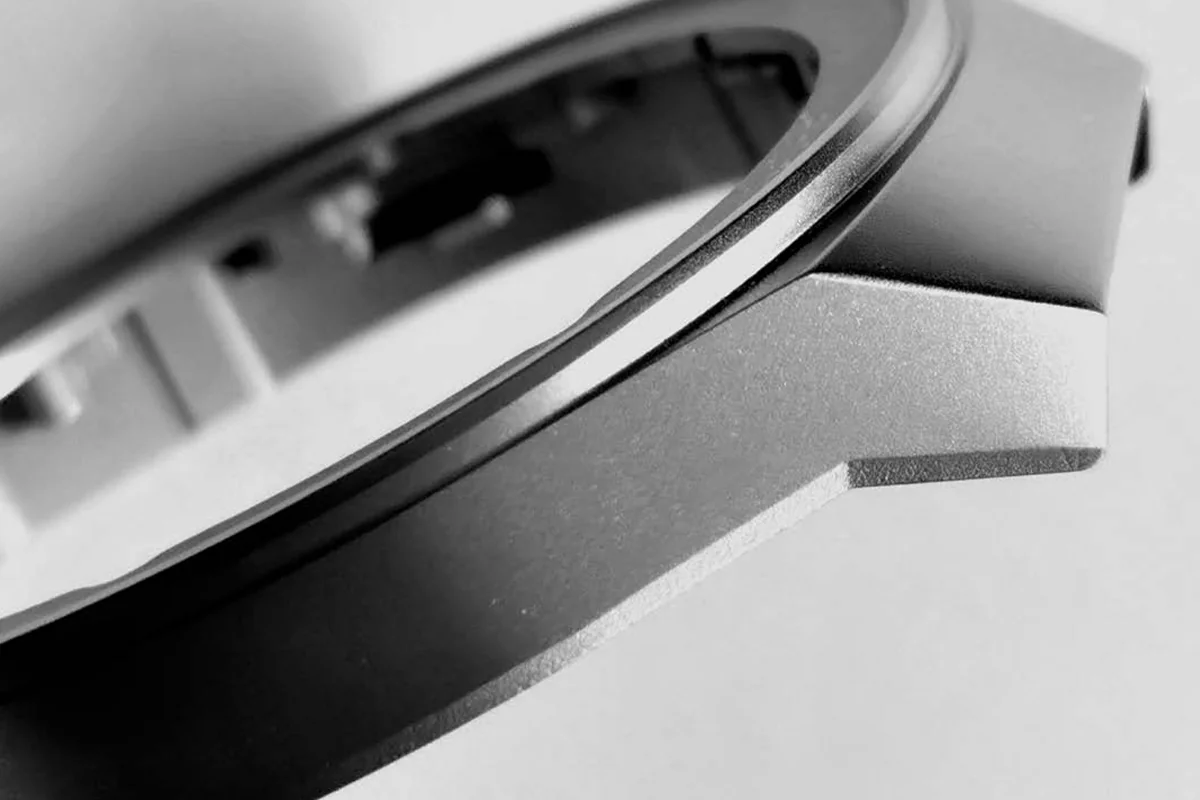
Ti-6Al-4V smartwatch case — ElementPlus
ElementPlus described a Ti-6Al-4V MIM watch-case development in which complex housing details could be molded and selected precision areas machined afterward. The published account concerns pilot development; it does not establish universal production yield or as-sintered tolerances.
Material-selection relevance: A lower-density alloy can be useful for a weight-constrained housing, but the selected finish, assembly datum, and post-machining requirements still determine viability.
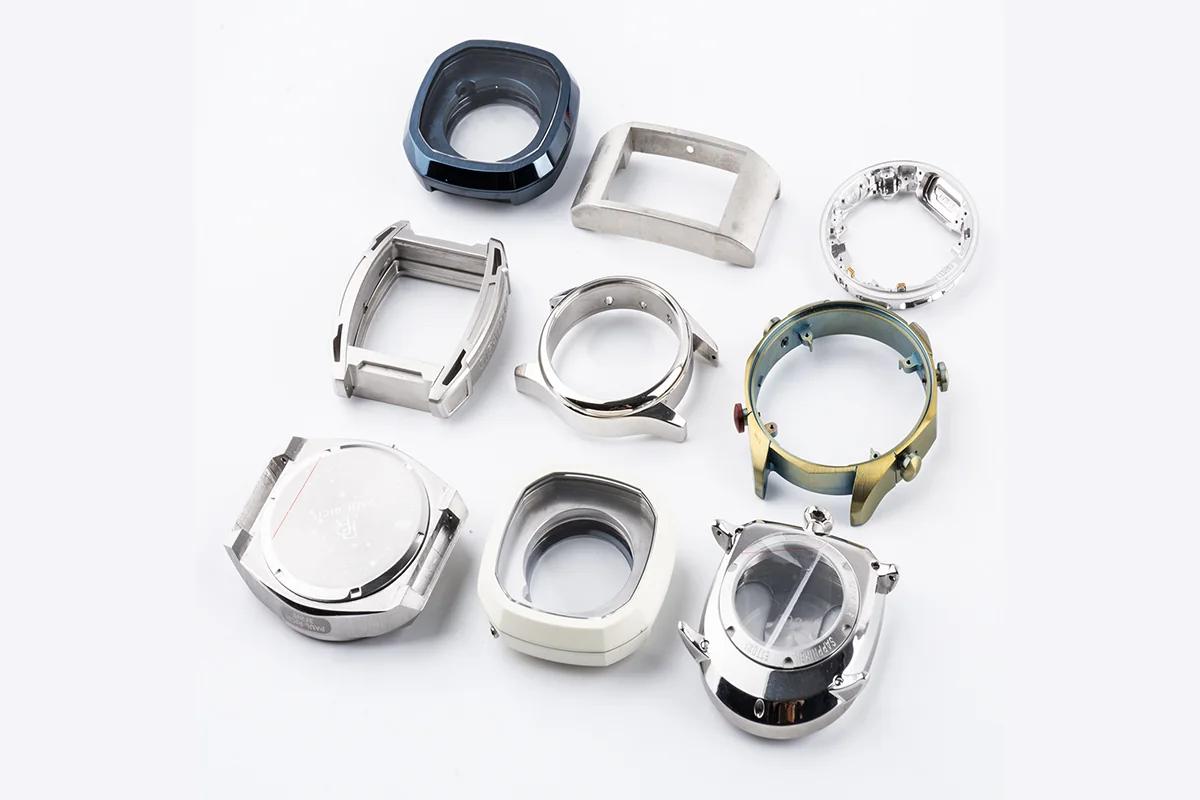
316L watch cases and smartwatch housings — ZCMIM
ZCMIM identifies square and round 316L stainless steel watch-case parts made by MIM. Its published gallery lists finishing routes such as magnetic polishing, sandblasting, polishing and PVD, depending on the individual component.
Material-selection relevance: When the design is driven by surface appearance and repeatable finishing rather than maximum weight reduction, a qualified 316L MIM route may be a practical starting point.
A 2026 MTIG industry case also reports titanium MIM wearable-device housings. The source does not identify the exact alloy grade of the pictured part, so it should not be used as proof of a specific titanium grade or another supplier’s production capability.
Non-Implant Medical Device Parts: How Do Cleaning and Material Requirements Affect the Choice?
For non-implant medical instruments and equipment, the choice depends on cleaning chemicals, access to internal corners, surface condition, edge quality, exact material grade and acceptance tests. Stainless steel and titanium use different passive-surface and finishing routes; the customer’s passivation requirement must be checked for the selected grade rather than transferred from one alloy to another.
A stainless 316L component with a defined cleaning and passivation process may be appropriate if the drawing and customer specification allow it. Titanium normally develops its own protective oxide film and requires a different surface-treatment review; a stainless-steel passivation callout cannot simply be transferred to a titanium drawing. A titanium route may be relevant when a specified grade or verified service benefit requires it. Both need application-specific qualification. Terms such as "surgical stainless" or "medical grade titanium" cannot replace the material specification, tests or applicable approval process; this is not an implant-suitability claim.
| Non-implant mechanism requirement | Why this changes material review |
|---|---|
| Repeated cleaning or disinfectant contact | Identify actual agents and temperature; verify alloy and finish compatibility. |
| Passivierte Edelstahloberfläche | Define relevant grade, cleaning/passivation method, and acceptance; do not equate passivation with certification. |
| Titanium oxide surface behavior | Confirm exact alloy, surface treatment, and exposure; the passive film does not independently prove device suitability. |
| Complex miniature geometry | Check blind pockets, crevices, burr control, cleanability, and inspection access. |
| Customer/regulatory requirement | Specify the governing standard and evidence; this article does not grant medical or implant approval. |
The published titanium handle and stainless steel equipment bracket serve different functions. Together, they show why material requirements must follow part function and qualification; they are not interchangeable specimens in a controlled test.
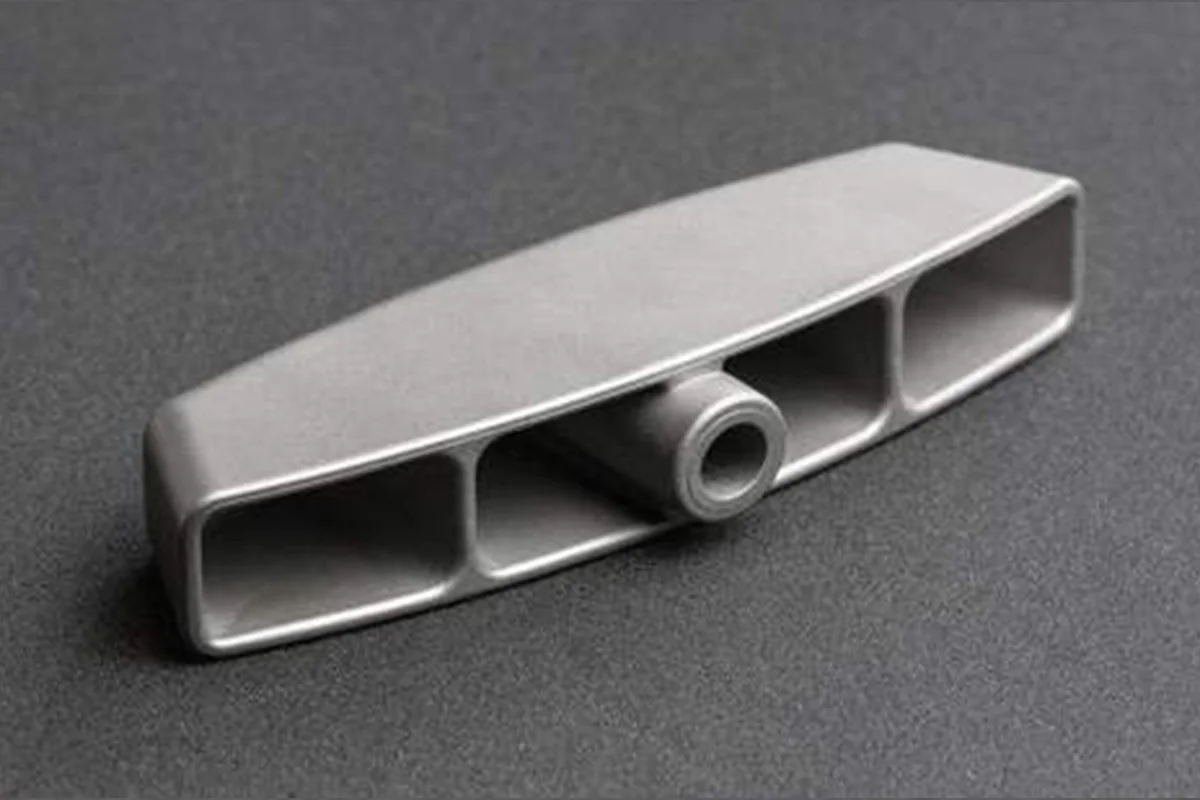
Ti-6Al-4V orthopaedic surgical-instrument handle — Element 22
A PIM International feature identifies an approximately 80 g Ti-6Al-4V MIM handle used as an orthopaedic surgical-instrument component. Its hollow geometry is documented, but the publication does not provide complete cleaning or sterilization qualifications.
Material-selection relevance: The example demonstrates a specific titanium MIM instrument component, not blanket medical approval, implant suitability, or proof that titanium is preferable for every medical mechanism.
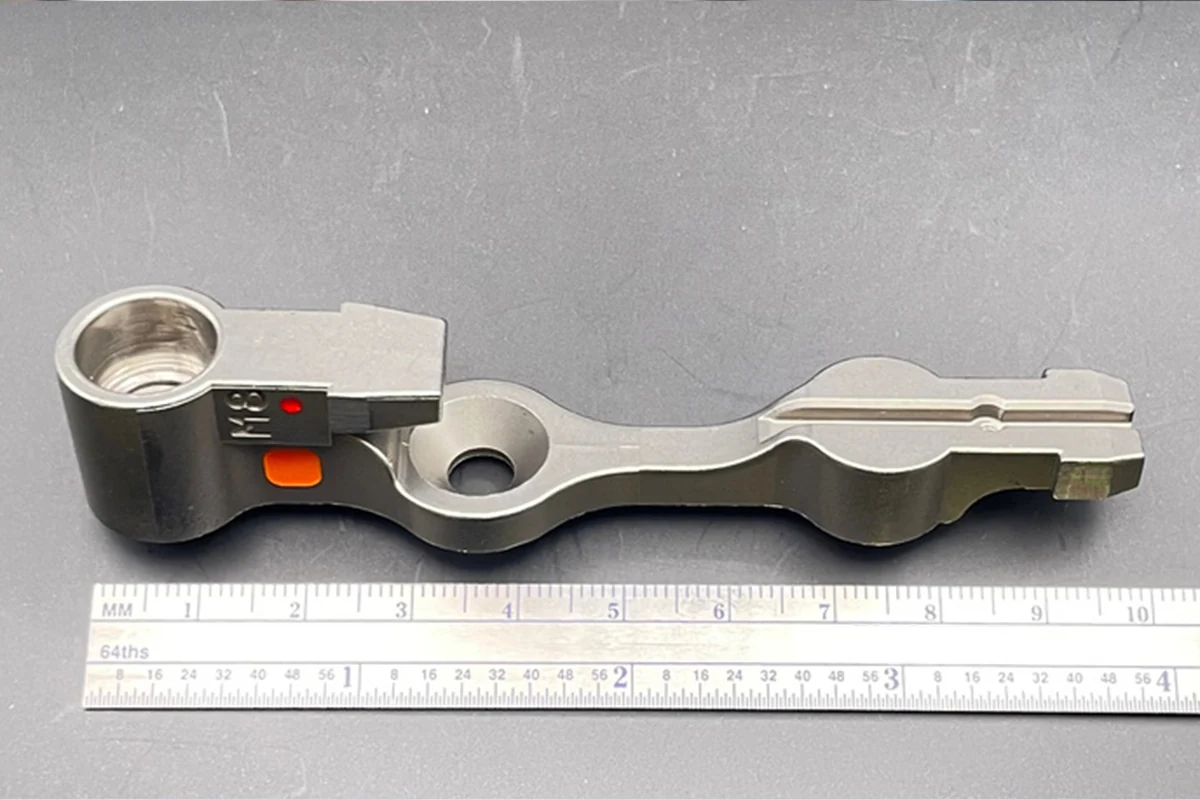
316L portable digital X-ray equipment bracket — CASTEM
CASTEM lists a stainless steel 316L MIM bracket for a portable digital X-ray diagnostic device. The manufacturer confirms the material and application category, but does not publish the bracket’s exact operating load, cleaning chemistry, tolerance or production volume.
Material-selection relevance: A corrosion-resistant stainless grade can be appropriate for medical-equipment hardware when it meets the actual specification; the device application alone does not require titanium.
Grade specificity matters: The same CASTEM brochure identifies other components as 17-4 PH MIM forceps parts, illustrating why a medical mechanism needing a different strength response may require a different stainless grade rather than a titanium substitution. The manufacturer does not disclose the exact role of each forceps subcomponent. Source: CASTEM medical MIM samples.
Grenze der Evidenz: The four photographs document third-party manufacturer or publication examples. They are not XTMIM production records, comparative material tests, or evidence of XTMIM titanium MIM qualification.
Related application details are covered under MIM medical-device components und wearable-device components.
How to Choose Between Titanium and Stainless Steel for Your MIM Part?
The matrix below combines mandatory performance requirements, material grade, the supplier’s demonstrated MIM capability, and total project cost. Each result is conditional: an otherwise attractive material must be rejected or paused when a required property or production route cannot be verified.
| Projektsituation | Erste Richtung | Condition that can overturn the choice |
|---|---|---|
| Verified weight reduction is required and consequential. | Evaluate titanium first. | Reject or pause if feedstock, mechanical properties, cost, or qualified sintering route cannot be supported. |
| Stainless grade meets corrosion, strength, and wear requirements. | Evaluate stainless steel first. | Reopen titanium if weight, customer specification, or a tested environmental limitation makes stainless unacceptable. |
| High hardness or sliding contact is the priority. | Review suitable stainless grades first. | Check actual wear pair, hardness condition, lubrication and potential titanium surface engineering. |
| A specified titanium grade is mandatory. | Titanium route, subject to feasibility. | A grade requirement does not waive qualification of MIM feedstock, chemistry, sintering, and final properties. |
| Small weight saving with no demonstrated function benefit. | Prefer a validated stainless route where it meets the print. | Compare accepted-part cost; do not pay for nominal material prestige alone. |
| No supplier can demonstrate the required chemistry, dimensional control, or quality evidence. | Stop before tooling. | Resolve grade or specification, test method and route ownership; consider another qualified process or supplier. |
The selected grade must pass three checks together: it meets the drawing and service requirements, the supplier can demonstrate a suitable MIM and finishing route, and the total cost of accepted parts is viable.
What Must Be Verified Before You Lock the Material and MIM Tooling?
A material decision is ready for tooling only when the customer requirements and the supplier's feasibility evidence agree. An attractive comparison chart cannot replace a documented grade, controlled manufacturing route, drawing review, and agreed acceptance criteria.
| Projekteingabe | Customer should define | Supplier must demonstrate or confirm |
|---|---|---|
| Geometrie | 2D drawing, 3D CAD, critical datums, threads, slots and thin features. | MIM feasibility, gates, sintering supports, post-machining need. |
| Material | Requested grade, alternate grades allowed, performance priority. | Exact available feedstock, chemistry basis, processed-part data. |
| Betriebsmedium | Load history, sweat, moisture, disinfectants, corrosion or wear conditions. | Relevant grade suitability and test / finishing proposal. |
| Prüfung | Critical tolerances, surface roughness, cosmetic acceptance, required tests. | Measurement approach, achievable capability, material test evidence. |
| Wirtschaftlichkeit | Prototype quantity, forecast annual volume, cost and delivery targets. | Tooling, samples, total accepted-part cost, qualification plan. |
| Qualifizierung | Customer-specific standards, controlled-use requirements, documentation needs. | Which requirements are already validated and which require development or external qualification. |
Minimum material-specific verification: For a proposed titanium MIM route, ask which final-part oxygen, carbon and nitrogen limits, density and mechanical acceptance properties apply, and who will test them. For a proposed 316L or 17-4 PH MIM route, confirm the exact grade, final condition, heat-treatment requirements where relevant, corrosion/surface tests and dimensional capability. The applicable values must come from the project specification and appropriate standard, not from an unrelated marketing datasheet.
Include both candidate grades and their allowable alternatives in the same RFQ package, alongside the drawing and test requirements. For document preparation, see the MIM-RFQ-Vorbereitungsleitfaden. If a supplier has not qualified a titanium route, that limitation must be clear before quotation or tooling.
Standards and medical-use boundary
ASTM B883-24 concerns MIM materials including ferrous grades; MPIF Standard 35-MIM (2025 edition) identifies MIM titanium grades and additional stainless specifications. ASTM F2885-17(2023) has a particular scope for MIM Ti-6Al-4V components used in surgical-implant manufacture. None of these standards automatically certifies a factory or grants approval to a customer's finished device. The correct specification and qualification path must be determined for the actual use.
Technische Referenzen
The sources below support the stated material properties, manufacturing constraints and published part examples. They are not XTMIM material test reports or manufacturer certifications.
- MPIF Standard 35-MIM (2025): official edition announcement - scope and added MIM titanium grades.
- ASTM B883-24: Metallpulverspritzguss (MIM) Materialien - scope for ferrous and selected other MIM materials.
- U.S. National Bureau of Standards: Ti-6Al-4V properties, Table 4 - compiled density (4.43 g/cm3) and Young's modulus (110 GPa); not sintered MIM qualification data.
- Alleima: Sanmac 316/316L product datasheet - reference density (8.0 g/cm3) and Young's modulus (200 GPa at 20 C) for bar stock, not MIM acceptance data.
- Lim et al., Powder Technology (2024): titanium MIM clean-binder feedstock - impurity control and binder-removal engineering considerations.
- Su et al., Materials (2022): Ti-6Al-4V sintering simulations and experiments - evidence for geometry-dependent shrinkage, deformation and support effects.
- ASTM F2885-17(2023) - limited scope for selected MIM Ti-6Al-4V surgical-implant components.
- ElementPlus Ti-6Al-4V MIM Gehäuse für Smartwatches — PIM International, Dec. 2020, pp. 86–87; supplier-reported pilot, sintered-density/finishing information and watch-case images.
- ZCMIM: MIM-Uhrenteile Galerie — Manufacturer-published 316L MIM watch-case and smartwatch-shell examples, dimensions and post-treatment routes.
- MTIG Titan-MIM-Gehäuse für Wearables (2026) — PIM International, Feb. 2026; manufacturer-reported titanium wearable case, exact grade of pictured part not published.
- Element 22 Ti-6Al-4V MIM chirurgischer Griff — PIM International, June 2020, Fig. 10; approx. 80 g MIM Ti-6Al-4V surgical instrument handle.
- Musterkatalog für CASTEM MIM-Medizinteile — CASTEM Technology Labs, MIM Samples page; 316L X-ray equipment bracket and 17-4PH forceps parts (PART-115 and PART-117).
Need an engineering material decision before tooling?
Send the drawing and CAD model with candidate grades, operating environment, critical tolerances, finishing and estimated volume. The engineering review should confirm which route is already supported and which requirements still need sample testing before tooling approval.