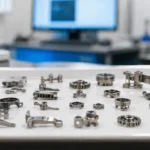
Home Blogs MIM 재료 선택 시 고려사항 마르텐사이트계 스테인리스강 (MIM) MIM 재료 선택 시 고려사항 빠른 답변: 마르텐사이트계 스테인리스강은 열처리가 가능한 스테인리스강 계열로, 작고 복잡한 부품에 경도, 내마모성, 기계적 강도와 함께 적절한 내식성이 필요할 때 MIM에 사용됩니다. 최대 경도만으로 선택해서는 안 됩니다. 엔지니어…
MIM 재료 선정 노트
빠른 답변: Martensitic stainless steel is a heat-treatable stainless steel family used in MIM when small, complex parts need hardness, wear resistance and mechanical strength together with moderate corrosion performance. It should not be selected by maximum hardness alone. Engineers must also review corrosion exposure, impact and toughness needs, grade and feedstock availability, sintering response, heat-treatment movement, critical dimensions and the inspection plan. MIM 420 is commonly reviewed for a more balanced hardness, corrosion and toughness direction, while MIM 440C is reviewed when higher hardness and wear resistance dominate. Final selection must be made against the drawing, operating environment and functional failure mode.
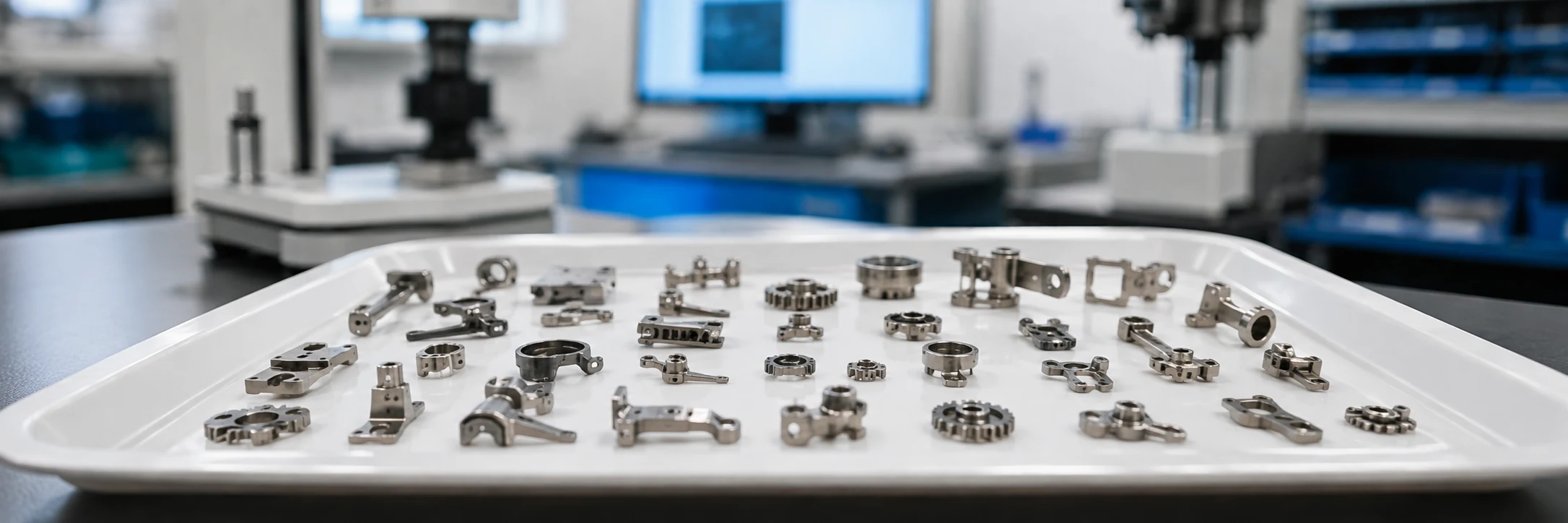
엔지니어링 핵심: Material selection should connect component geometry, microstructure, heat treatment and the required inspection route.
MIM에서 마르텐사이트계 스테인리스강이란 무엇인가요?
Martensitic stainless steels are chromium-containing stainless alloys that can develop a hardened martensitic structure through an appropriate thermal route. Their value in MIM is the combination of heat-treatment response and the ability to form small, intricate components through injection molding before debinding and sintering.
This material family is most useful when the component needs more than corrosion resistance alone. Contact surfaces, repeated sliding, local wear, compressive loading or retention features may create a genuine need for higher hardness. Increasing hardness, however, can reduce toughness and make distortion control, surface condition and dimensional verification more important.
검토할 가치가 있을 때
- 마모 또는 접촉 표면이 있는 작고 복잡한 부품
- 소결 후 경화가 필요한 부품
- 개별적으로 가공하기에 비용이 많이 드는 형상
- 전용 금형 제작을 정당화할 수 있는 생산량
- 적절한 스테인리스강 특성이 여전히 요구되는 적용 분야
다른 재료가 더 적합한 경우
- 심각한 부식 노출이 주요 요구 사항인 경우
- 경도보다 높은 연성 또는 충격 인성이 더 중요한 경우
- 부품이 크거나, 형상이 단순하거나, 소량만 필요한 경우
- 도면이 소결 및 열처리 시 움직임을 수용할 수 없는 경우
- 경도 요구사항은 기능적으로 필수적이지 않습니다
더 넓은 재료군 개요를 보려면 MIM용 스테인리스강 . 등급 선택은 부품의 기능, 환경 및 요구되는 최종 상태에 따라 좁혀져야 합니다.
구성, 피드스톡 및 야금 특성
Chromium supports stainless behavior, while carbon contributes to hardening potential. The finished result does not depend on nominal chemistry alone. Prepared feedstock, molding consistency, debinding, sintering atmosphere, carbon control and subsequent heat treatment all influence the final material condition.
The Metal Injection Molding Association lists 420 and 440 series materials within the ferritic and martensitic stainless steel family available for MIM, while also advising users to confirm actual alloy or substitute availability with the selected supplier. MIMA 재료 범위
ASTM B883-24, the Standard Specification for Metal Injection Molded (MIM) Materials, includes MIM-420 and MIM-440 as martensitic stainless steel compositions. The standard confirms these as established ferrous MIM material designations, but the actual grade, condition and project requirements still need to be defined for the component. ASTM B883-24

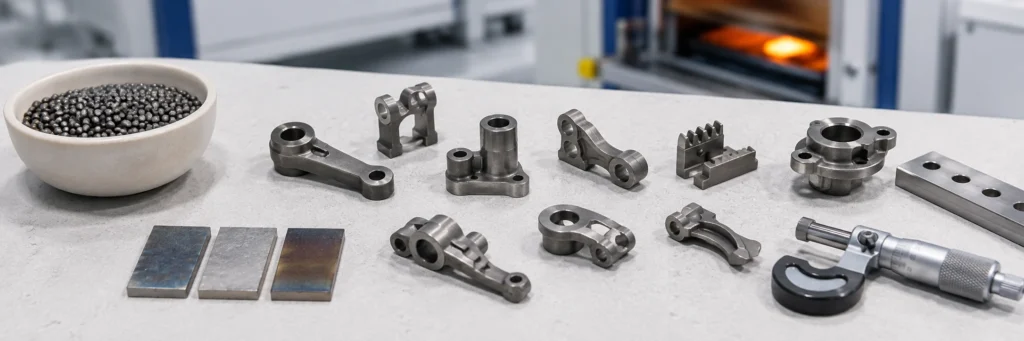
엔지니어링 핵심: 피드스톡의 외관만으로는 해당 재료가 MIM 420, MIM 440C 또는 다른 스테인리스강 등급인지 확인할 수 없습니다. .
재료 및 공정 검토 참고 자료
| 재료 또는 공정 변수 | 중요성 | 엔지니어링 검토 조치 |
|---|---|---|
| 합금 화학 조성 | 크롬, 탄소 및 등급별 첨가물은 경화성, 내식성, 인성 및 내마모성에 영향을 미칩니다. . | “마르텐사이트계 스테인리스강”만 명시하는 대신 실제 등급과 최종 상태를 확인하십시오. ” |
| 준비된 피드스톡 | 피드스톡은 의도된 합금 경로와 일치해야 하며 개별 연구에서 사용된 수정된 재료와 다를 수 있습니다. . | Confirm grade availability and the production feedstock route before final tooling release. |
| 탈지, 소결 분위기 및 탄소 제어 | These variables influence density, porosity, shrinkage, surface decarburization, microstructure and the condition entering heat treatment. | Review the complete thermal route together with critical dimensions and support strategy rather than treating nominal chemistry as the only input. |
| 열처리 | Develops the required hardened condition but can also change size, flatness, residual stress and toughness. | Define the functional hardness target and dimensional acceptance plan together. |
| 표면 상태 및 후처리 | Surface condition can affect corrosion response, appearance, contact behavior and final fit. | Clarify whether polishing, passivation, coating, machining or another secondary operation is required. |
A published investigation of MIM 420 examined samples processed in graphite and molybdenum-lined furnaces and reported differences in surface decarburization, microstructure and hardness response. The study supports a practical RFQ rule: material chemistry, furnace environment and heat treatment must be reviewed as one process route. Study-specific feedstock chemistry should not be transferred directly to an unrelated production RFQ. MIM 420 사례 검토 .
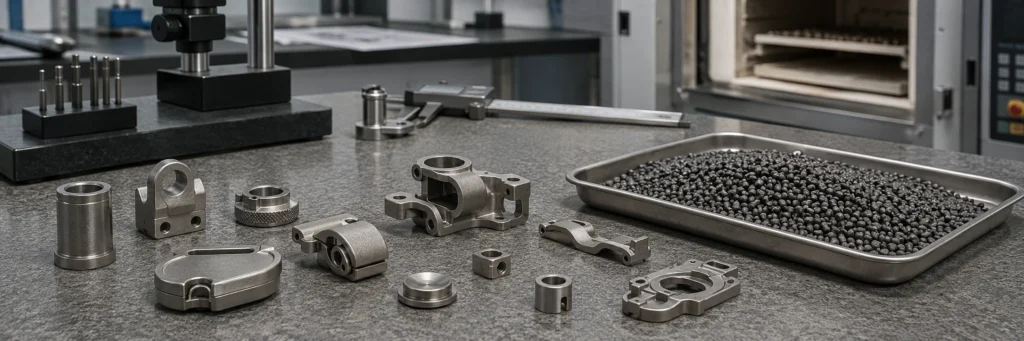
주요 엔지니어링 포인트: A datasheet can describe a material, but it does not determine whether the complete MIM route will meet a particular drawing. Geometry, thermal movement, inspection datums and the final hardness condition still require project-specific review.
경도, 내마모성, 강도 및 내식성 상충 관계
Martensitic stainless steel is usually selected because hardness and wear behavior matter to the component function. The highest attainable hardness is not automatically the best specification. A more aggressive hardened condition may increase dimensional-control difficulty, reduce impact tolerance or create an unnecessary processing and inspection burden.
| 프로젝트 요구사항 | 마르텐사이트계 스테인리스강이 적합한 이유 | 추가로 확인해야 할 사항 |
|---|---|---|
| 슬라이딩 또는 반복 접촉 | 열처리 경도는 국부적인 내마모성을 향상시킬 수 있습니다. | 접촉 응력, 윤활, 표면 마감 및 상대 재질. |
| 작은 고정 또는 잠금 기능 | 강도와 경도는 모서리 또는 기능 내구성을 지원할 수 있습니다. | 충격 하중, 노치 민감도 및 열처리 변형. |
| 부식성 작동 환경 | 많은 저합금강보다 뛰어난 스테인리스 특성을 제공합니다. | 실제 화학 물질, 습기, 온도, 세척 주기 및 표면 상태. |
| 정밀한 치수 관계 | MIM은 복잡한 형상을 하나의 부품으로 통합할 수 있습니다. | 소결 수축, 열처리 후 이동, 기준면 및 후속 사이징. |
| 대량 생산 복잡 형상 | MIM은 반복적인 기계 가공 및 조립 공정을 줄일 수 있습니다. | 금형 경제성, 연간 생산량, 게이트 위치 및 형상 실현 가능성. |
The material choice should start with the functional failure mode: wear, deformation, corrosion, fracture, dimensional drift or surface damage. Specifying hardness without identifying the failure mode can drive the project toward an unnecessarily aggressive material condition.
마모가 주요 고장 모드인 경우, 더 넓은 선택 요인을 검토하십시오 내마모성 MIM 재료 특정 등급을 수정하기 전에.
열처리 및 경도 발현
Martensitic stainless steel reaches its intended properties through a controlled hardening and tempering route selected for the actual alloy and component geometry. The thermal cycle must be treated as part of the manufacturing plan, not as an isolated finishing step added after dimensional decisions are complete.
| 검토 단계 | 엔지니어링 질문 | 무시할 경우 발생할 수 있는 문제 |
|---|---|---|
| 소결 상태 | 밀도와 형상이 계획된 열처리 경로에 적합합니까? | Property variation, dimensional instability or inconsistent surface condition. |
| 경화 경로 | 실제로 요구되는 최종 경도 및 기능 성능은 무엇입니까? | 과도한 사양, 취성 또는 불필요한 공정 비용 발생. |
| 템퍼링 조건 | 경도와 인성을 어떻게 균형 맞춰야 할까요? | 적절한 기능적 인성이 없는 높은 경도. |
| 치수 제어 | 열처리 전후에 어떤 치수를 확인해야 합니까? | 도면 요구 사항을 벗어나는 중요 형상. |
| 최종 검사 | 경도 및 치수는 어디에서 어떻게 검증됩니까? | 실질적인 승인 방법이 없는 명목상의 사양입니다. |
Thin sections, asymmetric mass distribution, long unsupported features and sharp transitions can respond differently during thermal processing. For critical dimensions, the project team may need to plan tooling compensation, sintering support, sizing, machining or a specific inspection sequence rather than relying on a single final measurement.
경화 가능한 다양한 재료를 평가하는 엔지니어는 다음도 검토할 수 있습니다. 열처리 가능 MIM 재료 .
마르텐사이트계 스테인리스강이 MIM 부품에 사용되는 이유
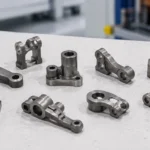
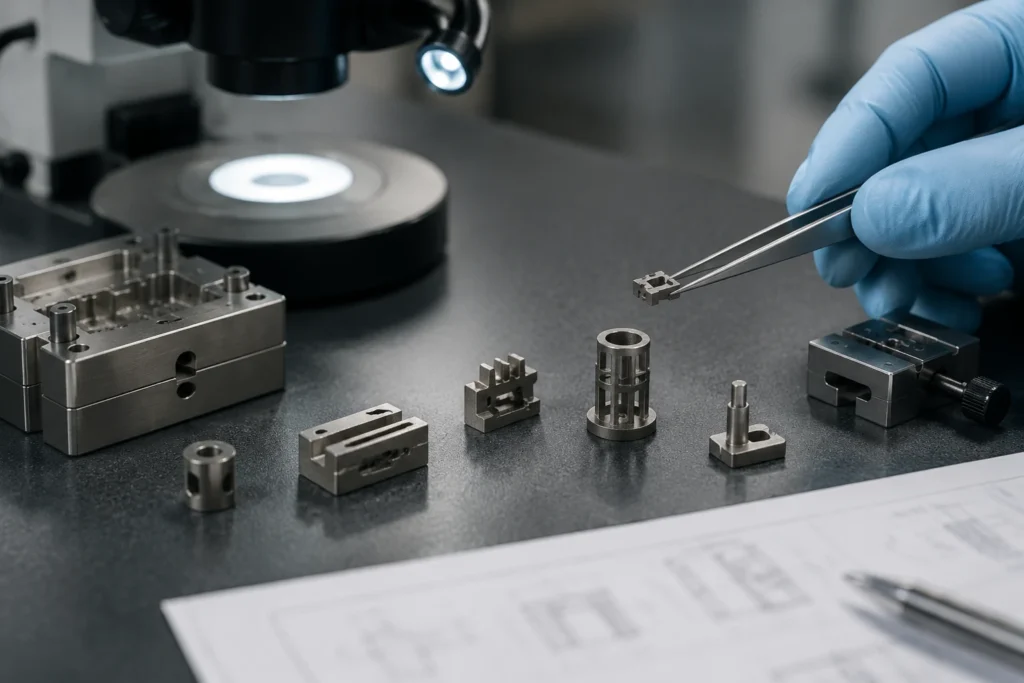
MIM is most relevant when a part combines complex shape, small dimensions, repeatable production volume and material-performance requirements that would otherwise require extensive machining or assembly. Martensitic stainless steels add a useful hardening route for components with wear surfaces, retaining features, local contact stress or durability requirements.

엔지니어링 핵심: 이 일러스트레이션은 형상 및 부품 통합 논의를 지원하며, 특정 합금 등급을 확인하거나 확정된 XTMIM 생산 배치를 묘사하는 것은 아닙니다. .
애플리케이션 유형 및 검토 우선순위
| 부품 유형 | 마르텐사이트계 스테인리스강 검토 이유 | 주요 검토 질문 |
|---|---|---|
| 잠금, 고정 또는 관절 부품 | 국부적인 접촉부 및 반복적인 움직임에는 경도와 기계적 내구성이 필요할 수 있습니다. . | 충격 인성이 중요합니까? 어떤 표면이 하중을 받습니까? 형상이 열처리 변형을 견딜 수 있습니까? |
| 가이드, 데이터, 탭 및 슬라이딩 접촉 기능 | Wear resistance and dimensional stability may be more important than high ductility. | What is the counterface material, lubrication condition, surface finish and permitted wear? |
| Small medical-device mechanism components | MIM can consolidate compact geometry while a martensitic grade provides a hardenable material route. | What corrosion, cleaning, biocompatibility, surface and regulatory requirements apply to the actual project? |
| Precision frames and support components | Strength, stiffness and compact integrated features may support part consolidation. | Which flatness, runout and datum relationships must remain stable through sintering and heat treatment? |
| Wear-sensitive industrial mechanism parts | Higher hardness may improve contact durability where repeated machining would otherwise be required. | Is MIM volume commercially justified? Which surfaces require secondary sizing, machining or finishing? |
Public MIMA case studies document MIM 420 in compact medical-device mechanism parts and precision frames, and 440C in industrial printer datums and support tabs. These examples demonstrate possible application directions; they do not establish automatic suitability for another drawing or operating environment. Review the association examples for endoscopic device parts , a MIM 420 compression frame 및 440C printer datums and tabs .
대표 엔지니어링 시나리오
A small actuator component may include a contact edge, a cross-hole, a thin arm and a locating surface. The drawing initially specifies only “martensitic stainless steel” and a high hardness target.
문제: The specification does not identify whether wear, corrosion, compressive strength or edge retention is the real functional need.
Likely cause: Material selection was made from a general datasheet before reviewing geometry, heat-treatment movement and the inspection datum strategy.
엔지니어링 처리: Confirm the operating environment, contact condition, required toughness, actual critical dimensions, preferred grade and final inspection method before tooling release. The team can then decide whether the feature should remain as-molded, be sized after sintering or receive a secondary operation after heat treatment.
This type of review is more useful than selecting an alloy from hardness alone. The project decision should connect material, geometry, process route and acceptance method.
Choosing a Martensitic Stainless Steel Grade for MIM
Grade selection should begin with the component’s functional priority rather than with a direct search for the hardest available martensitic grade. MIM 420 and MIM 440C are two common review directions within this material family: 420 is generally considered when hardness, corrosion behavior and toughness need a more balanced response, while 440C is reviewed when higher hardness and wear resistance carry greater weight. Geometry, impact risk and thermal movement can change that decision.

엔지니어링 핵심: Grade selection should follow the component’s hardness, wear, toughness, corrosion and dimensional priorities rather than a preference for the highest possible hardness.
| 선정 요소 | MIM 420 Review Direction | MIM 440C Review Direction |
|---|---|---|
| Primary performance priority | Balanced hardness, corrosion behavior and toughness. | Higher hardness and wear resistance carry greater weight. |
| Wear demand | Moderate wear or contact requirements. | More demanding wear or edge-retention conditions. |
| Toughness sensitivity | Often the first direction to review when a more balanced response is needed. | Requires closer review where impact, thin sections or stress concentrations exist. |
| 치수 위험성 | Heat-treatment movement still requires planning. | Final condition may require tighter control of thermal processing and inspection. |
Use the detailed material pages for MIM 420 스테인리스강 및 MIM 440C 스테인리스강 when grade-specific properties are required. For a dedicated head-to-head choice, use the 420 vs 440C stainless steel comparison .
Process and Quality Risks to Review Before Tooling
This section focuses on what can go wrong during the material and thermal route. The objective is to identify the failure mechanism before tooling so the process plan can address it instead of relying on final inspection to detect it later.
| Potential Risk | Likely Engineering Cause | Review or Prevention Action |
|---|---|---|
| Hardness response outside the functional need | Material condition, section thickness or thermal-route variation. | Define the required final condition and review whether the selected route can achieve it without unnecessary brittleness or process burden. |
| 열처리 변형 | Asymmetric geometry, residual stress or unsupported thin features. | Review support, sizing, machining allowance and the sequence of thermal and dimensional-control operations. |
| Unexpected brittleness | Hardness specified without sufficient toughness consideration. | Connect the hardened condition to impact, bending and stress-concentration risks. |
| Corrosion performance below expectation | Environment, surface condition or grade choice not fully defined. | Review the actual exposure conditions and whether another grade or surface route is more appropriate. |
| Dimensional mismatch after processing | Sintering shrinkage and heat-treatment movement evaluated as separate problems. | Build one dimensional-control strategy covering tooling compensation, sintering support, sizing and any post-treatment correction. |
Inspection Planning for Martensitic Stainless Steel MIM Parts
Inspection answers a different question from process-risk review: how will the finished part be verified against its functional requirements? The acceptance plan should connect each critical characteristic to a defined measurement stage, datum or test method instead of checking every part characteristic with the same routine.
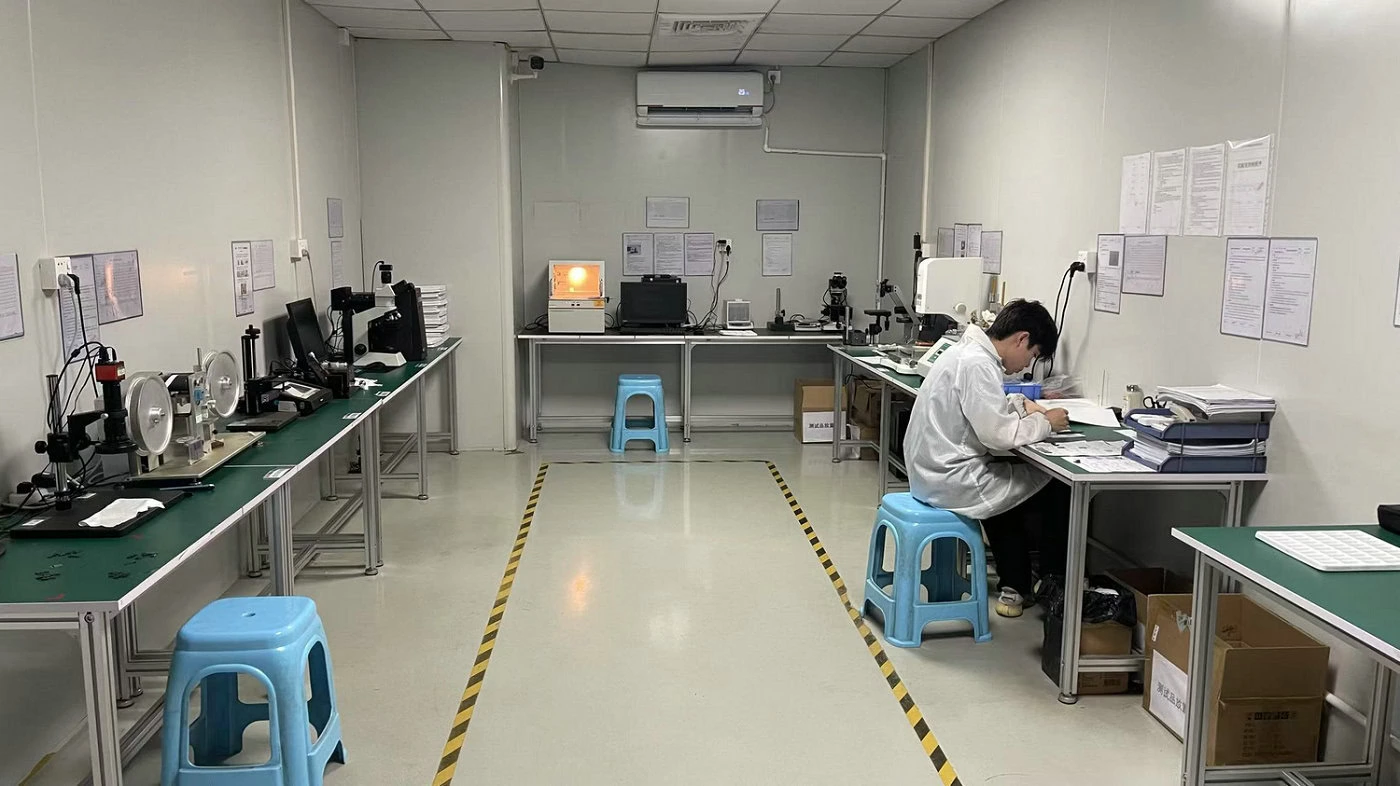
엔지니어링 핵심: Inspection scope should be defined by the drawing, functional risks and required material condition rather than inferred from a generic grade name.
| 검사 항목 | What It Verifies | Acceptance Planning |
|---|---|---|
| Hardness / final material condition | Confirms that the intended hardened condition was achieved. | Define the relevant measurement location, method and reporting requirement where hardness is functionally critical. |
| 중요 치수 및 데이텀 | Verifies final geometry after shrinkage, sizing and thermal processing. | Identify CTQ features, functional datums and the stage at which final acceptance is measured. |
| Flatness or runout | Checks shape stability on thermally sensitive functional surfaces. | Define the functional surface, datum relationship and acceptance limit. |
| 표면 상태 | Verifies the specified contact, appearance or corrosion-related finish. | Match the check to the required as-sintered, polished, passivated, coated or machined condition. |
| Density or internal condition, when required | Supports material and process consistency where the function justifies it. | Add this validation only when the drawing, qualification plan or functional risk requires it. |
What to Include in a Martensitic Stainless Steel MIM RFQ
The RFQ section should answer one practical question: what information must the supplier receive to review material suitability, tooling feasibility and the final acceptance route? Send the inputs that define function and manufacturing risk; detailed inspection methods can then be agreed during engineering review.
| RFQ 입력 | Why the Engineering Team Needs It |
|---|---|
| 2D 도면 및 3D 모델 | Provides geometry, tolerances, datums, undercuts and tooling-direction information for feasibility review. |
| Requested grade or performance target | Clarifies whether the project requires a specific alloy, a hardness range or a broader functional material outcome. |
| Operating environment and functional loading | Shows whether corrosion, wear, impact, bending, compression or edge retention is driving material selection. |
| Critical dimensions, CTQs and functional datums | Identifies the features that must survive sintering, heat treatment, sizing and any secondary operation. |
| Annual volume and program life | Helps determine whether dedicated MIM tooling and process development are commercially appropriate. |
| Surface and secondary-operation requirements | Clarifies machining, polishing, coating, passivation, assembly or other final-condition requirements. |
The MIM RFQ 준비 가이드 provides the broader project-information checklist for supplier review.
자주 묻는 질문
마르텐사이트계 스테인리스강과 오스테나이트계 스테인리스강의 차이점은 무엇인가요?
Martensitic stainless steel can be hardened through heat treatment and is usually selected when hardness, wear resistance and mechanical strength are important. Austenitic stainless steels are generally chosen for stronger corrosion resistance, ductility and non-hardening behavior. The correct family depends on the component function and environment.
마르텐사이트계 스테인리스강은 모든 부식 환경에 적합합니까?
No. Martensitic stainless steel provides stainless behavior, but corrosion exposure still needs to be reviewed against the specific grade, surface condition, chemicals, moisture, temperature and cleaning process. A more corrosion-resistant material family may be preferable when corrosion is the dominant failure risk.
더 높은 경도 사양이 항상 MIM 부품의 성능을 향상시키나요?
No. Higher hardness can improve wear resistance, but it may reduce toughness, increase distortion sensitivity and create additional inspection requirements. The hardness target should be linked to an actual functional need such as wear, contact stress or edge durability.
엔지니어는 MIM 420과 MIM 440C 중 어떤 것을 선택해야 할까요?
MIM 420 is generally reviewed for a more balanced combination of hardness, corrosion behavior and toughness. MIM 440C is reviewed when higher hardness and wear resistance are more important. Geometry, impact risk, thermal movement and the final inspection plan must also be considered.
마르텐사이트계 스테인리스강은 자성을 띱니까?
Martensitic stainless steels are generally ferromagnetic because of their microstructure. Magnetic response should not be used as the only method for confirming a specific grade, material condition or finished-part performance. Where magnetic behavior is functionally important, define the required test condition and acceptance method in the drawing or RFQ. Worldstainless provides an overview of stainless steel magnetic properties .
마르텐사이트계 스테인리스강 MIM 검토를 위해 어떤 정보를 보내야 합니까?
Send the 2D drawing, 3D model, material or performance requirement, hardness expectation, operating environment, loading or wear condition, critical dimensions, annual volume and any required secondary operations or surface treatments.
기술 참고 자료
- ASTM B883-24 — Standard Specification for Metal Injection Molded (MIM) Materials . Ferrous MIM material specification that includes MIM-420 and MIM-440 as martensitic stainless steel compositions.
- Metal Injection Molding Association — Materials Range . MIM material families, 420 and 440 series availability direction and supplier availability guidance.
- PIM International — A Microstructural Investigation of 420 Martensitic Stainless Steel Processed by MIM . Technical research covering feedstock chemistry, furnace environment, decarburization, microstructure and heat-treatment response.
- Nickel Institute — Design Guidelines for the Selection and Use of Stainless Steels . General engineering guidance for stainless steel family selection and property trade-offs.
- Worldstainless — Mechanical and Physical Properties of Stainless Steel . Reference overview covering magnetic behavior across stainless steel families.
Review Your Martensitic Stainless Steel MIM Project
Share the drawing, material target, hardness requirement, operating environment and expected volume. The engineering review can then focus on grade selection, MIM feasibility, thermal-process risks, critical dimensions and the required inspection route.