Ana Sayfa Bloglar MIM Malzeme Seçimi Notları MIM için Martensitik Paslanmaz Çelik MIM Malzeme Seçimi Notları Hızlı Cevap: Martensitik paslanmaz çelik, küçük, karmaşık parçaların sertlik, aşınma direnci ve mekanik mukavemet ile birlikte orta düzeyde korozyon performansı gerektirdiği durumlarda MIM'de kullanılan, ısıl işlem görebilen bir paslanmaz çelik ailesidir. Yalnızca maksimum sertliğe göre seçilmemelidir. Mühendisler …
MIM Malzeme Seçimi Notları
Hızlı cevap: Martensitic stainless steel is a heat-treatable stainless steel family used in MIM when small, complex parts need hardness, wear resistance and mechanical strength together with moderate corrosion performance. It should not be selected by maximum hardness alone. Engineers must also review corrosion exposure, impact and toughness needs, grade and feedstock availability, sintering response, heat-treatment movement, critical dimensions and the inspection plan. MIM 420 is commonly reviewed for a more balanced hardness, corrosion and toughness direction, while MIM 440C is reviewed when higher hardness and wear resistance dominate. Final selection must be made against the drawing, operating environment and functional failure mode.
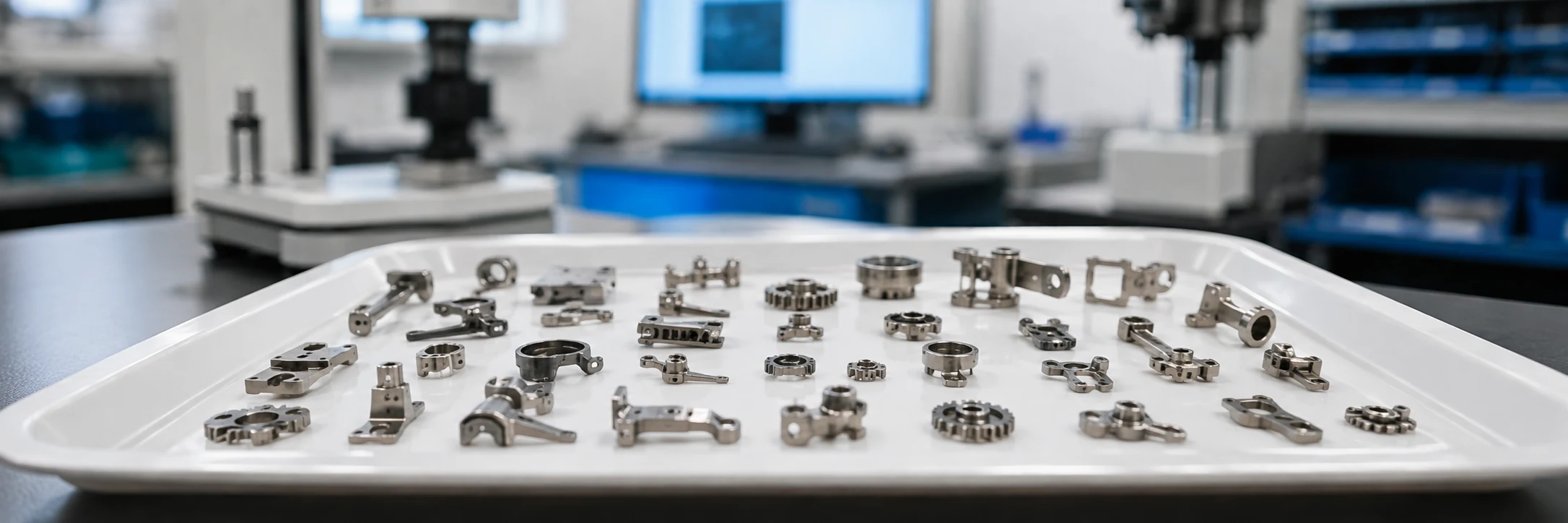
Mühendislik çıkarımı: Material selection should connect component geometry, microstructure, heat treatment and the required inspection route.
MIM'de Martensitik Paslanmaz Çelik Nedir?
Martensitic stainless steels are chromium-containing stainless alloys that can develop a hardened martensitic structure through an appropriate thermal route. Their value in MIM is the combination of heat-treatment response and the ability to form small, intricate components through injection molding before debinding and sintering.
This material family is most useful when the component needs more than corrosion resistance alone. Contact surfaces, repeated sliding, local wear, compressive loading or retention features may create a genuine need for higher hardness. Increasing hardness, however, can reduce toughness and make distortion control, surface condition and dimensional verification more important.
Gözden Geçirmeye Değdiğinde
- Aşınma veya temas yüzeylerine sahip küçük, karmaşık parçalar
- Sinterleme sonrası sertleştirme gerektiren bileşenler
- Tek tek işlenmesi pahalı olacak özellikler
- Özel kalıp üretimini haklı çıkarabilecek üretim hacimleri
- Orta düzey paslanmaz çelik davranışının hala gerekli olduğu uygulamalar
Başka Bir Malzemenin Daha İyi Olabileceği Durumlar
- Şiddetli korozyon maruziyeti baskın gereksinimdir
- Sertlikten daha önemli olan yüksek süneklik veya darbe tokluğudur
- Parça büyük, geometrik olarak basittir veya yalnızca düşük hacimde gereklidir
- Teknik resim, sinterleme ve ısıl işlem hareketlerini karşılayamıyor
- Sertlik gereksinimi işlevsel olarak gerekli değildir
Daha geniş bir malzeme ailesi genel bakışı için şuraya bakın MIM için paslanmaz çelik . Malzeme seçimi daha sonra bileşen işlevine, ortama ve gerekli nihai duruma göre daraltılmalıdır.
Bileşim, MIM Besleme Stoğu ve Metalurjik Özellikler
Chromium supports stainless behavior, while carbon contributes to hardening potential. The finished result does not depend on nominal chemistry alone. Prepared feedstock, molding consistency, debinding, sintering atmosphere, carbon control and subsequent heat treatment all influence the final material condition.
The Metal Injection Molding Association lists 420 and 440 series materials within the ferritic and martensitic stainless steel family available for MIM, while also advising users to confirm actual alloy or substitute availability with the selected supplier. MIMA Malzeme Aralığı
ASTM B883-24, the Standard Specification for Metal Injection Molded (MIM) Materials, includes MIM-420 and MIM-440 as martensitic stainless steel compositions. The standard confirms these as established ferrous MIM material designations, but the actual grade, condition and project requirements still need to be defined for the component. ASTM B883-24

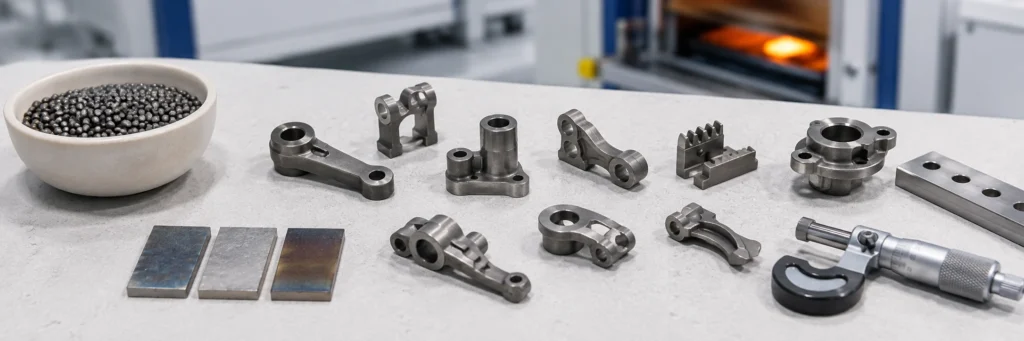
Mühendislik çıkarımı: Besleme stoğunun görünümü tek başına malzemenin MIM 420, MIM 440C veya başka bir paslanmaz çelik kalitesi olup olmadığını teyit edemez. .
Malzeme ve Süreç İnceleme Referansı
| Malzeme veya Süreç Değişkeni | Neden Önemlidir | Mühendislik İncelemesi Eylemi |
|---|---|---|
| Alaşım kimyası | Krom, karbon ve dereceye özgü katkılar sertleşebilirliği, korozyon davranışını, tokluğu ve aşınma tepkisini etkiler. . | Confirm the actual grade and final condition instead of specifying only “martensitic stainless steel.” |
| Hazırlanmış besleme stoğu | Besleme stoğu, amaçlanan alaşım rotasıyla eşleşmeli ve bireysel araştırma çalışmalarında kullanılan modifiye edilmiş malzemelerden farklı olabilir. . | Nihai kalıp salımından önce stok kalitesi uygunluğunu ve üretim besleme stoğu rotasını onaylayın. . |
| Bağlayıcı giderme, sinterleme atmosferi ve karbon kontrolü | Bu değişkenler yoğunluğu, poroziteyi, sinterleme büzülmesini, yüzey karbon kaybını, mikro yapıyı ve ısıl işlem öncesi durumu etkiler. | Sadece nominal kimyayı girdi olarak kabul etmek yerine, kritik boyutlar ve destek stratejisi ile birlikte tam termal rotayı gözden geçirin. . |
| Isıl işlem | Gerekli sertleştirilmiş durumu geliştirir ancak aynı zamanda boyut, düzlük, artık gerilim ve tokluğu da değiştirebilir. | Fonksiyonel sertlik hedefini ve boyutsal kabul planını birlikte tanımlayın. |
| Yüzey durumu ve ikincil işlemler | Yüzey durumu korozyon tepkisini, görünümü, temas davranışını ve nihai uyumu etkileyebilir. | Parlatma, pasivasyon, kaplama, talaşlı işleme veya başka bir ikincil işlemin gerekli olup olmadığını netleştirin. |
A published investigation of MIM 420 examined samples processed in graphite and molybdenum-lined furnaces and reported differences in surface decarburization, microstructure and hardness response. The study supports a practical RFQ rule: material chemistry, furnace environment and heat treatment must be reviewed as one process route. Study-specific feedstock chemistry should not be transferred directly to an unrelated production RFQ. MIM 420 çalışmasını inceleyin .
Temel mühendislik noktası: Bir veri sayfası bir malzemeyi tanımlayabilir, ancak MIM rotasının tamamının belirli bir çizimi karşılayıp karşılamayacağını belirlemez. Geometri, termal hareket, muayene referans noktaları ve son sertlik durumu hala projeye özel inceleme gerektirir.
Sertlik, Aşınma Direnci, Mukavemet ve Korozyon Ödünleşimleri
Martensitic stainless steel is usually selected because hardness and wear behavior matter to the component function. The highest attainable hardness is not automatically the best specification. A more aggressive hardened condition may increase dimensional-control difficulty, reduce impact tolerance or create an unnecessary processing and inspection burden.
| Proje Gereksinimi | Martensitik Paslanmaz Çeliğin Neden Uygun Olabileceği | Hala Kontrol Edilmesi Gerekenler |
|---|---|---|
| Kayma veya tekrarlanan temas | Isıl işlem görmüş sertlik, yerel aşınma direncini artırabilir. | Temas gerilimi, yağlama, yüzey kalitesi ve karşı yüzey malzemesi. |
| Küçük tutma veya kilitleme özelliği | Mukavemet ve sertlik, kenar veya özellik dayanıklılığını destekleyebilir. | Darbe yüklemesi, çentik hassasiyeti ve ısıl işlem deformasyonu. |
| Aşındırıcı çalışma ortamı | Birçok düşük alaşımlı çeliğin ötesinde paslanmazlık davranışı sağlar. | Gerçek kimyasallar, nem, sıcaklık, temizleme döngüsü ve yüzey durumu. |
| Sıkı boyutsal ilişki | MIM, karmaşık geometrileri tek bir bileşende birleştirebilir. | Sinterleme büzülmesi, ısıl işlem sonrası hareket, referans noktaları ve ikincil boyutlandırma. |
| Yüksek hacimli karmaşık geometri | MIM, tekrarlanan talaşlı işleme ve montaj işlemlerini azaltabilir. | Kalıp ekonomisi, yıllık hacim, yolluk konumu ve parça fizibilitesi. |
Malzeme seçimi, fonksiyonel arıza modu ile başlamalıdır: aşınma, deformasyon, korozyon, kırılma, boyutsal sapma veya yüzey hasarı. Arıza modu belirlenmeden sertlik belirtmek, projeyi gereksiz yere agresif bir malzeme koşuluna yönlendirebilir.
Aşınma birincil arıza modu olduğunda, daha geniş seçim faktörlerini gözden geçirin aşınmaya dayanıklı MIM malzemeleri belirli bir sınıfı sabitlemeden önce.
Isıl İşlem ve Sertlik Geliştirme
Martensitic stainless steel reaches its intended properties through a controlled hardening and tempering route selected for the actual alloy and component geometry. The thermal cycle must be treated as part of the manufacturing plan, not as an isolated finishing step added after dimensional decisions are complete.
| İnceleme Aşaması | Mühendislik Sorusu | Göz Ardı Edilirse Olası Sorun |
|---|---|---|
| Sinterlenmiş Durum | Planlanan ısıl işlem rotası için yoğunluk ve geometri uygun mu? | Özellik değişimi, boyutsal kararsızlık veya tutarsız yüzey durumu. |
| Sertleştirme rotası | Gerçekte hangi nihai sertlik ve fonksiyonel performans gerekiyor? | Aşırı şartname, gevreklik veya gereksiz işlem maliyeti. |
| Temperleme durumu | Sertlik ve tokluk nasıl dengelenmelidir? | Yeterli fonksiyonel tokluk olmadan yüksek sertlik. |
| Boyutsal kontrol | Hangi boyutlar ısıl işlemden önce ve sonra kontrol edilmelidir? | Kritik özelliklerin çizim gereksiniminin dışına çıkması. |
| Son muayene | Sertlik ve boyutlar nerede ve nasıl doğrulanacak? | Pratik kabul yöntemi olmayan nominal bir spesifikasyon. |
İnce kesitler, asimetrik kütle dağılımı, uzun desteksiz özellikler ve keskin geçişler, termal işlem sırasında farklı tepki verebilir. Kritik boyutlar için proje ekibinin, tek bir nihai ölçüme güvenmek yerine kalıp telafisi, sinterleme desteği, boyutlandırma, işleme veya özel bir inceleme sırası planlaması gerekebilir.
Daha geniş bir sertleştirilebilir malzeme yelpazesini değerlendiren mühendisler ayrıca şunları da inceleyebilir: ısıl işlem görebilen MIM malzemeleri .
Neden Martensitik Paslanmaz Çelik MIM Bileşenleri İçin Kullanılır
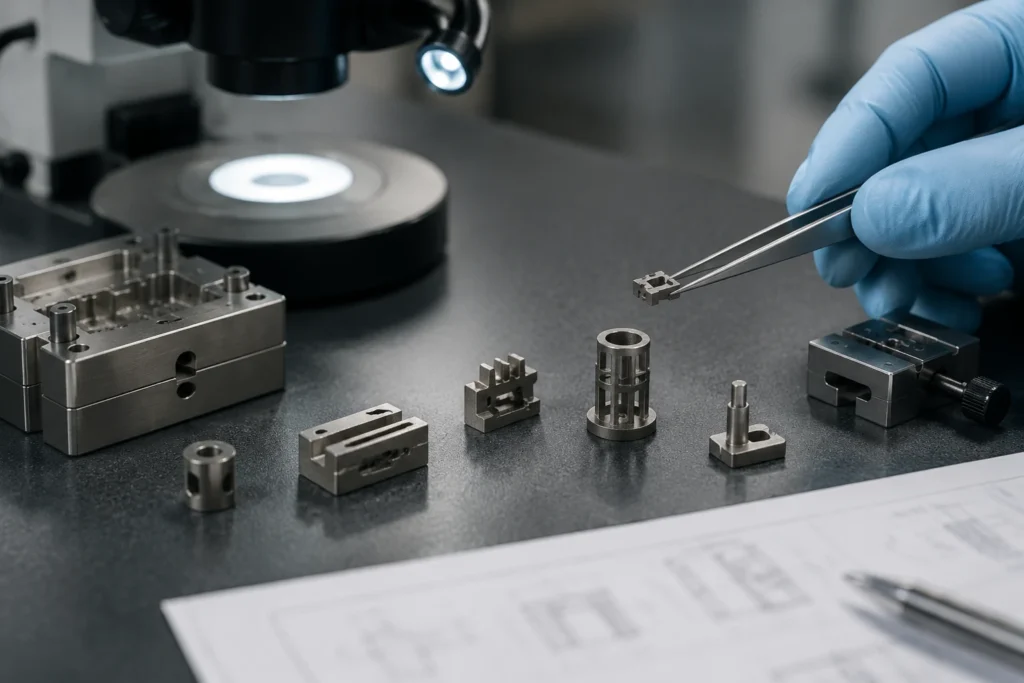
MIM is most relevant when a part combines complex shape, small dimensions, repeatable production volume and material-performance requirements that would otherwise require extensive machining or assembly. Martensitic stainless steels add a useful hardening route for components with wear surfaces, retaining features, local contact stress or durability requirements.

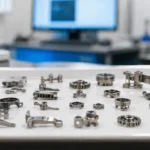
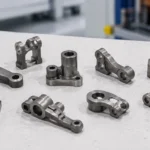
Mühendislik çıkarımı: The illustration supports the geometry and part-consolidation discussion; it does not verify a specific alloy grade or depict a confirmed XTMIM production batch.
Uygulama Arketip ve İnceleme Öncelikleri
| Bileşen Arketipi | Martensitik Paslanmaz Çeliğin Neden İncelenmesi Gerekebilir | Kritik İnceleme Soruları |
|---|---|---|
| Kilitleme, tutma veya mafsal bileşenleri | Yerel temas kenarları ve tekrarlanan hareket, sertlik ve mekanik dayanıklılık gerektirebilir. | Darbe tokluğu önemli mi? Hangi yüzeyler yük taşıyor? Geometri, ısıl işlem hareketini tolere edebilir mi? |
| Kılavuzlar, referans noktaları, tırnaklar ve kayar temas özellikleri | Aşınma direnci ve boyutsal kararlılık, yüksek sünekliğe göre daha önemli olabilir. | Karşı yüzey malzemesi, yağlama koşulu, yüzey kalitesi ve izin verilen aşınma nedir? |
| Küçük tıbbi cihaz mekanizma bileşenleri | MIM, kompakt geometriyi birleştirebilirken, martensitik bir sınıf sertleştirilebilir bir malzeme yolu sağlar. | Gerçek projede hangi korozyon, temizlik, biyouyumluluk, yüzey ve düzenleyici gereksinimler geçerlidir? |
| Hassas çerçeveler ve destek bileşenleri | Mukavemet, rijitlik ve kompakt entegre özellikler parça birleştirmeyi destekleyebilir. | Hangi düzlük, salgı ve referans noktası ilişkileri sinterleme ve ısıl işlem boyunca kararlı kalmalıdır? |
| Aşınmaya duyarlı endüstriyel mekanizma parçaları | Higher hardness may improve contact durability where repeated machining would otherwise be required. | Is MIM volume commercially justified? Which surfaces require secondary sizing, machining or finishing? |
Public MIMA case studies document MIM 420 in compact medical-device mechanism parts and precision frames, and 440C in industrial printer datums and support tabs. These examples demonstrate possible application directions; they do not establish automatic suitability for another drawing or operating environment. Review the association examples for endoskopik cihaz parçaları , bir MIM 420 sıkıştırma çerçevesi ve 440C yazıcı veri noktaları ve sekmeleri .
Temsili Mühendislik Senaryosu
Küçük bir aktüatör bileşeni, bir temas kenarı, bir enine delik, ince bir kol ve bir konumlandırma yüzeyi içerebilir. Çizim başlangıçta yalnızca “martensitik paslanmaz çelik” ve yüksek sertlik hedefi belirtmektedir.
Sorun: Spesifikasyon, aşınma, korozyon, basma dayanımı veya kenar tutma özelliğinin gerçek fonksiyonel ihtiyaç olup olmadığını belirtmemektedir.
Olası Neden: Material selection was made from a general datasheet before reviewing geometry, heat-treatment movement and the inspection datum strategy.
Mühendislik Yönetimi: Confirm the operating environment, contact condition, required toughness, actual critical dimensions, preferred grade and final inspection method before tooling release. The team can then decide whether the feature should remain as-molded, be sized after sintering or receive a secondary operation after heat treatment.
Bu tür bir inceleme, yalnızca sertliğe göre bir alaşım seçmekten daha faydalıdır. Proje kararı, malzemeyi, geometrisini, işlem rotasını ve kabul yöntemini birbirine bağlamalıdır.
MIM için Martensitik Paslanmaz Çelik Sınıfı Seçimi
Sınıf seçimi, mevcut en sert martensitik sınıf için doğrudan bir arama ile değil, bileşenin işlevsel önceliği ile başlamalıdır. MIM 420 ve MIM 440C, bu malzeme ailesi içinde iki yaygın inceleme yönüdür: 420 genellikle sertlik, korozyon davranışı ve tokluğun daha dengeli bir yanıt gerektirdiği durumlarda dikkate alınırken, 440C daha yüksek sertlik ve aşınma direncini önem kazandığı durumlarda incelenir. Geometri, darbe riski ve termal hareket bu kararı değiştirebilir.

Mühendislik çıkarımı: Grade selection should follow the component’s hardness, wear, toughness, corrosion and dimensional priorities rather than a preference for the highest possible hardness.
| Seçim Faktörü | MIM 420 İnceleme Yönü | MIM 440C İnceleme Yönü |
|---|---|---|
| Birincil performans önceliği | Dengeli sertlik, korozyon davranışı ve tokluk. | Daha yüksek sertlik ve aşınma direnci daha fazla ağırlık taşır. |
| Aşınma talebi | Orta düzeyde aşınma veya temas gereksinimleri. | Daha zorlu aşınma veya kenar tutma koşulları. |
| Tokluk hassasiyeti | Daha dengeli bir yanıt gerektiğinde genellikle ilk gözden geçirilen yöndür. . | Darbe, ince kesitler veya gerilim yoğunlaşmalarının bulunduğu yerlerde daha yakından incelenmesi gerekir. |
| Boyutsal risk | Isıl işlem hareketi hala planlama gerektirir. | Son durum, termal işlem ve muayene üzerinde daha sıkı bir kontrol gerektirebilir. |
Ayrıntılı malzeme sayfalarını MIM 420 paslanmaz çelik ve MIM 440C paslanmaz çelik sınıfa özgü özellikler gerektiğinde kullanın. Özel bir karşılaştırma için 420'ye karşı 440C paslanmaz çelik karşılaştırmasını kullanın .
Kalıplama Öncesi İncelenmesi Gereken Süreç ve Kalite Riskleri
Bu bölüm, malzeme ve termal süreç sırasında nelerin ters gidebileceğine odaklanmaktadır. Amaç, kalıplama öncesinde arıza mekanizmasını belirleyerek, sürecin sonradan tespit etmek yerine bu duruma müdahale edebilmesini sağlamaktır.
| Potansiyel Risk | Olası Mühendislik Nedeni | İnceleme veya Önleyici Eylem |
|---|---|---|
| Sertlik yanıtı fonksiyonel ihtiyacın dışında | Malzeme durumu, kesit kalınlığı veya termal yol varyasyonu. | Gerekli nihai durumu tanımlayın ve seçilen yolun gereksiz gevreklik veya işlem yükü olmadan bunu başarabilip başaramayacağını gözden geçirin. . |
| Isıl işlem deformasyonu | Asimetrik geometri, kalıntı gerilim veya desteksiz ince özellikler. | Destek, boyutlandırma, işleme payı ve termal ve boyutsal kontrol işlemlerinin sırasını gözden geçirin. . |
| Beklenmedik gevreklik | Yeterli tokluk dikkate alınmadan belirtilen sertlik. | Sertleştirilmiş durumu darbe, bükülme ve gerilim yoğunlaşma riskleriyle ilişkilendirin. . |
| Beklentinin altında korozyon performansı | Ortam, yüzey durumu veya malzeme seçimi tam olarak tanımlanmamış. | Gerçek maruz kalma koşullarını ve başka bir malzeme veya yüzey yolunun daha uygun olup olmadığını gözden geçirin. . |
| İşlem sonrası boyutsal uyumsuzluk | Sinterleme büzülmesi ve ısıl işlem hareketi ayrı sorunlar olarak değerlendirildi. | Build one dimensional-control strategy covering tooling compensation, sintering support, sizing and any post-treatment correction. |
Martensitik Paslanmaz Çelik MIM Parçaları İçin Muayene Planlaması
Inspection answers a different question from process-risk review: how will the finished part be verified against its functional requirements? The acceptance plan should connect each critical characteristic to a defined measurement stage, datum or test method instead of checking every part characteristic with the same routine.
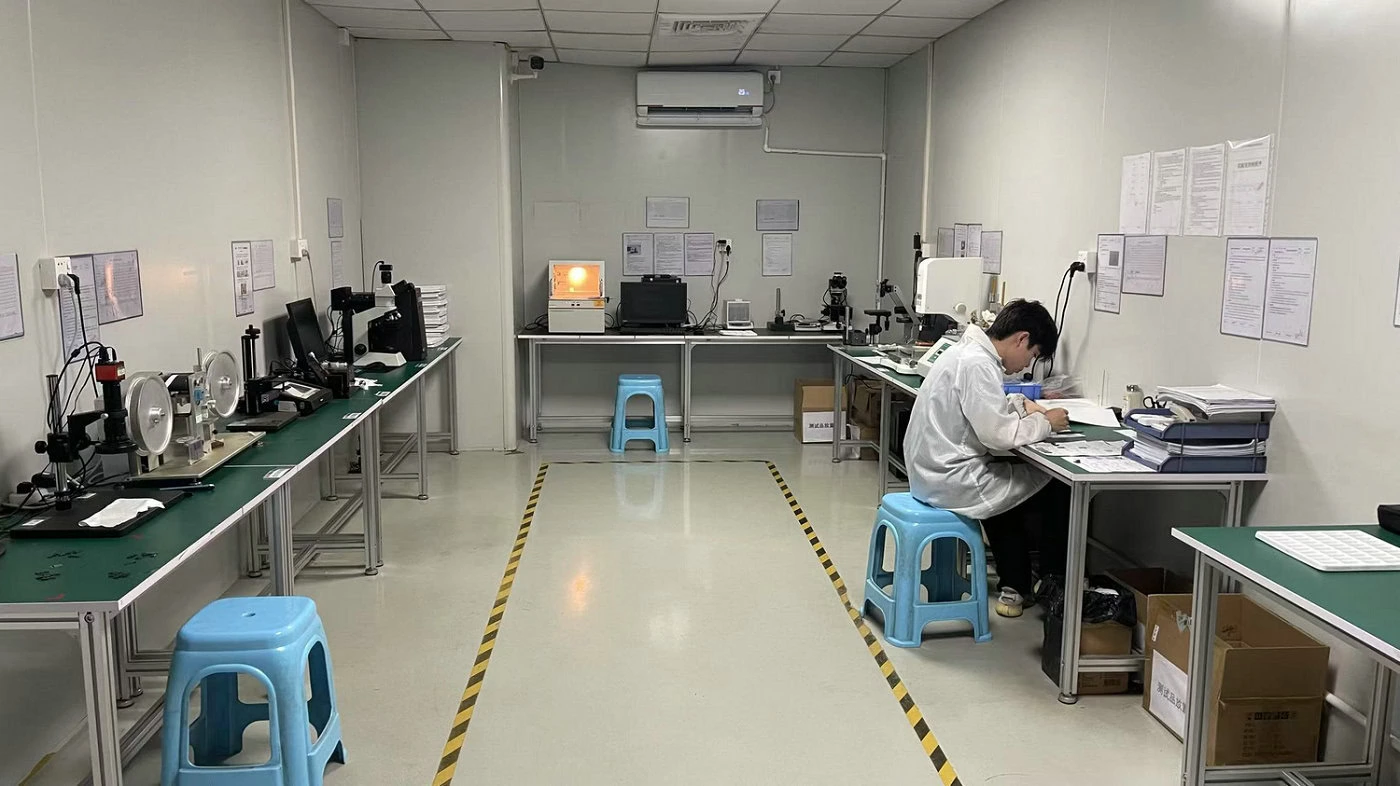
Mühendislik çıkarımı: Inspection scope should be defined by the drawing, functional risks and required material condition rather than inferred from a generic grade name.
| Muayene Kalemi | Ne Doğruluyor | Kabul Planlaması |
|---|---|---|
| Sertlik / nihai malzeme durumu | Niyet edilen sertleştirilmiş durumun elde edildiğini onaylar. | Define the relevant measurement location, method and reporting requirement where hardness is functionally critical. |
| Kritik boyutlar ve referans noktaları | Sinterleme büzülmesi, boyutlandırma ve ısıl işlem sonrası nihai geometriyi doğrular. | Identify CTQ features, functional datums and the stage at which final acceptance is measured. |
| Flatness or runout | Checks shape stability on thermally sensitive functional surfaces. | Define the functional surface, datum relationship and acceptance limit. |
| Yüzey durumu | Verifies the specified contact, appearance or corrosion-related finish. | Match the check to the required as-sintered, polished, passivated, coated or machined condition. |
| Density or internal condition, when required | Supports material and process consistency where the function justifies it. | Add this validation only when the drawing, qualification plan or functional risk requires it. |
What to Include in a Martensitic Stainless Steel MIM RFQ
The RFQ section should answer one practical question: what information must the supplier receive to review material suitability, tooling feasibility and the final acceptance route? Send the inputs that define function and manufacturing risk; detailed inspection methods can then be agreed during engineering review.
| RFQ Girdisi | Why the Engineering Team Needs It |
|---|---|
| 2B çizim ve 3B model | Provides geometry, tolerances, datums, undercuts and tooling-direction information for feasibility review. |
| Requested grade or performance target | Clarifies whether the project requires a specific alloy, a hardness range or a broader functional material outcome. |
| Operating environment and functional loading | Shows whether corrosion, wear, impact, bending, compression or edge retention is driving material selection. |
| Critical dimensions, CTQs and functional datums | Identifies the features that must survive sintering, heat treatment, sizing and any secondary operation. |
| Annual volume and program life | Helps determine whether dedicated MIM tooling and process development are commercially appropriate. |
| Surface and secondary-operation requirements | Clarifies machining, polishing, coating, passivation, assembly or other final-condition requirements. |
The MIM Teklif Talebi Hazırlama Rehberi provides the broader project-information checklist for supplier review.
Sıkça Sorulan Sorular
Martensitik paslanmaz çeliği östenitik paslanmaz çelikten ayıran nedir?
Martensitic stainless steel can be hardened through heat treatment and is usually selected when hardness, wear resistance and mechanical strength are important. Austenitic stainless steels are generally chosen for stronger corrosion resistance, ductility and non-hardening behavior. The correct family depends on the component function and environment.
Martensitik paslanmaz çelik her aşındırıcı ortam için uygun mudur?
No. Martensitic stainless steel provides stainless behavior, but corrosion exposure still needs to be reviewed against the specific grade, surface condition, chemicals, moisture, temperature and cleaning process. A more corrosion-resistant material family may be preferable when corrosion is the dominant failure risk.
Daha yüksek bir sertlik spesifikasyonu, bir MIM parçasının performansını her zaman iyileştirir mi?
No. Higher hardness can improve wear resistance, but it may reduce toughness, increase distortion sensitivity and create additional inspection requirements. The hardness target should be linked to an actual functional need such as wear, contact stress or edge durability.
Mühendisler MIM 420 ve MIM 440C arasında nasıl seçim yapmalı?
MIM 420 is generally reviewed for a more balanced combination of hardness, corrosion behavior and toughness. MIM 440C is reviewed when higher hardness and wear resistance are more important. Geometry, impact risk, thermal movement and the final inspection plan must also be considered.
Martensitik paslanmaz çelik manyetik midir?
Martensitic stainless steels are generally ferromagnetic because of their microstructure. Magnetic response should not be used as the only method for confirming a specific grade, material condition or finished-part performance. Where magnetic behavior is functionally important, define the required test condition and acceptance method in the drawing or RFQ. Worldstainless provides an overview of stainless steel magnetic properties .
Martensitik paslanmaz çelik MIM incelemesi için hangi bilgiler gönderilmelidir?
Send the 2D drawing, 3D model, material or performance requirement, hardness expectation, operating environment, loading or wear condition, critical dimensions, annual volume and any required secondary operations or surface treatments.
Teknik Referanslar
- ASTM B883-24 — Standard Specification for Metal Injection Molded (MIM) Materials . Ferrous MIM material specification that includes MIM-420 and MIM-440 as martensitic stainless steel compositions.
- Metal Injection Molding Association — Materials Range . MIM material families, 420 and 440 series availability direction and supplier availability guidance.
- PIM International — A Microstructural Investigation of 420 Martensitic Stainless Steel Processed by MIM . Technical research covering feedstock chemistry, furnace environment, decarburization, microstructure and heat-treatment response.
- Nickel Institute — Design Guidelines for the Selection and Use of Stainless Steels . General engineering guidance for stainless steel family selection and property trade-offs.
- Worldstainless — Mechanical and Physical Properties of Stainless Steel . Reference overview covering magnetic behavior across stainless steel families.
Review Your Martensitic Stainless Steel MIM Project
Share the drawing, material target, hardness requirement, operating environment and expected volume. The engineering review can then focus on grade selection, MIM feasibility, thermal-process risks, critical dimensions and the required inspection route.