
Bağlayıcı Giderme, Kahverengi Parça Stabilitesi ve Sinterlemeye Hazırlık
İçinde metal enjeksiyon kalıplama, bağlayıcı giderme, sinterlemeden önce kalıplanmış yeşil parçadan bağlayıcının kontrollü bir şekilde uzaklaştırılmasıdır. Amaç, kalan bağlayıcı ve ayrışma gazları için açık kaçış yollarına sahip, gözenekli ancak elle tutulabilir bir kahverengi parça oluşturmaktır.
Bu sayfa, MIM bağlayıcı giderme sürecine ilişkin ana rehberdir. Bağlayıcı kimyası, et kalınlığı, kaçış mesafesi, parça desteği ve proses doğrulamasının çatlama, kabarma, deformasyon, artık karbon ve nihai sinterleme stabilitesini nasıl etkilediğini açıklar. Ayrıntılı rota özel kontroller, ayrı olarak solvent ile bağlayıcı giderme süreci ve termal bağlayıcı giderme süreci rehberlerinde ele alınmaktadır.
Mühendislik incelemesi için temel soru, bir parçanın enjeksiyonla kalıplanıp kalıplanmadığı değil, bağlayıcının, kırılgan toz yapısına zarar vermeden kontrollü bir hızda geometriden çıkıp çıkamayacağıdır. MIM sinterleme.
Hızlı Cevap: MIM Sürecinde Bağlayıcı Giderme Ne İşe Yarar?
Bağlayıcı giderme, kalıplanmış bir MIM yeşil parçasından birincil bağlayıcıyı uzaklaştırır ve ikincil bir omurga parçanın şeklini korumasına yardımcı olurken birbirine bağlı bir gözenek ağı oluşturur. Elde edilen kahverengi parça kırılgandır ancak termal işlem sırasında kalan bağlayıcının kaçması ve sinterleme sırasında metal tozunun yoğunlaşması için hazırlanır.
| Mühendislik Sorusu | Bağlayıcı Giderme Gereksinimi |
|---|---|
| Ne çıkarılmalı? | Sadece yüzeydeki kontaminasyon değil, tam parça hacminin içindeki çıkarılabilir bağlayıcı fazı. |
| Neler sabit kalmalıdır? | Toz yapısı, kritik özellikler ve taşıma ve yükleme için gereken herhangi bir ana bağlayıcı. |
| Neler oluşturulmalıdır? | Aşırı iç basınç olmadan kalan bağlayıcının ve gazların kaçmasına izin veren açık gözenekli kanallar. |
| Neler önlenmelidir? | Çatlama, kabarma, şişme, çökme, taşıma hasarı, kalıntı bağlayıcı ve sinterleme sonrası düzensiz büzülme. |
Proses sınırı: Bu ana sayfa, eksiksiz bağlayıcı giderme karar yolunu açıklamaktadır. Rota özelindeki işletme detayları, burada tekrarlanmak yerine solvent ve termal bağlayıcı giderme alt sayfalarında yer almalıdır.
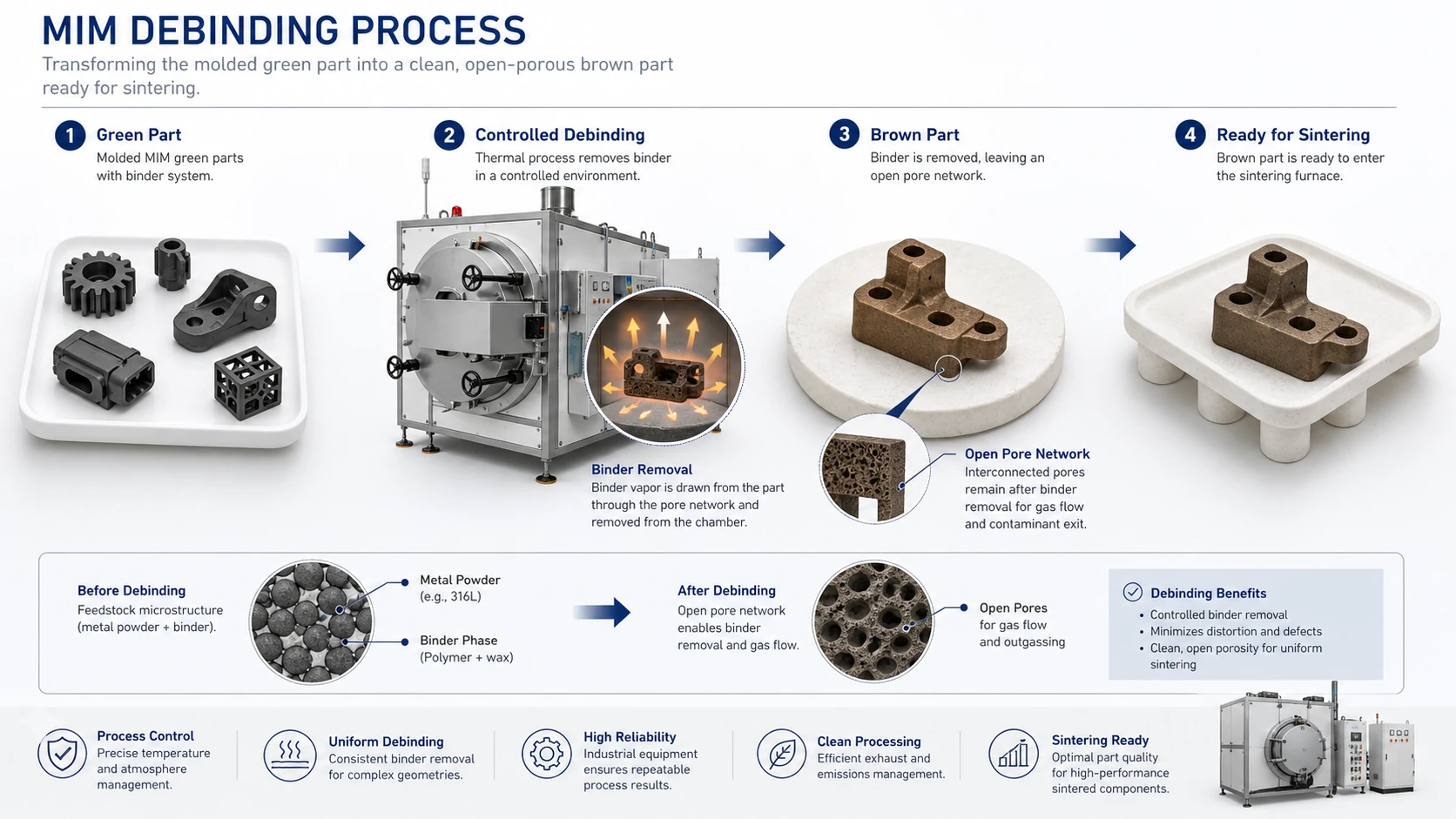
Çizim Notu: Bu, temsili bir mühendislik diyagramıdır, bir müşteri parçası fotoğrafı veya üretim testi sonucu değildir.
Mühendislik çıkarımı: Kahverengi parça, kalan bağlayıcının ve gazların daha sonraki ısıtmada kaçması için açık gözenekli kanallar kazanırken yeterli yapısal desteği korumalıdır.
Metal Enjeksiyon Kalıplamada Bağlayıcı Giderme Nedir?
Metal enjeksiyon kalıplama besleme stoğu, ince metal tozunu çok bileşenli bir bağlayıcı ile birleştirir, böylece malzeme enjeksiyon kalıplama sırasında akabilir. Kalıplama sonrası bağlayıcı geçicidir: çıkarılabilir faz, sinterleme sırasında metal parçacıklarının bağlanıp yoğunlaşabilmesinden önce parçadan ayrılmalıdır.
Kalıplanmış bileşen yeşil parça olarak adlandırılır. Birincil bağlayıcı fazı çıkarıldıktan sonra, gözenekli bir kahverengi parça haline gelir. Kahverengi parça genel geometriyi korur ancak sınırlı mukavemete sahiptir, bu nedenle taşıma, tepsiye yükleme, setter teması ve fırına transfer kontrol altında tutulmalıdır.
The MIMA proses genel bakış aynı aşamalı prensibi tanımlar: ilk aşama bağlayıcının çoğu, ikincil bir ana yapının son termal çıkarma ve yoğunlaşmadan önce geçici olarak parça geometrisini koruduğu şekilde çıkarılır.
Yeşil Parçadan Kahverengi Parçaya Ne Değişir?
Bağlayıcı giderme, yalnızca yüzeyi temizlemek yerine parça hacmi boyunca ilerler. Çıkarılabilir faz ayrıldıkça, yüzeyden içe doğru birbirine bağlı gözenekler oluşur. Bu kanallar, kalan bağlayıcının veya ayrışma gazlarının sonraki ısıtma sırasında hapsolma riskini azaltır.
Süreç, kullanılabilir bir dengeyi korumalıdır: kaçış yolları oluşturmak için yeterli bağlayıcı çıkarılmalı, ancak zayıf özelliklerin elleçleme ve fırın yüklemesini atlatması için yeterli geçici destek kalmalıdır.
Bağlayıcı Giderme Neden Kontrol Edilmelidir?
Giderme çok hızlı olursa, çekirdek güvenli bir kaçış yoluna sahip olmadan dış bölge bağlayıcısını kaybedebilir, bu da gerilime veya iç gaz basıncına neden olur. Kararlı bir gözenek ağı oluşmadan bağlayıcı yumuşarsa, desteksiz alanlar çökebilir. Giderme tamamlanmazsa, kalıntı karbon kontrolünü, atmosfer tepkisini, yoğunlaşmayı ve nihai özellikleri etkileyebilir.
Bu nedenle kalın kesitler, kör delikler, derin yuvalar, kapalı özellikler, ani duvar geçişleri ve büyük desteksiz yüzeyler, ince, açık ve düzgün geometrilere göre daha fazla inceleme gerektirir.

Çizim Notu: Süreç açıklamasını temsil eden mühendislik çizimi; müşteri parçası, üretim kaydı veya ölçülmüş kusur sonucu olarak sunulmamıştır.
Temel sonuç: Bağlayıcı gidermenin temel mühendislik amacı, sadece bağlayıcıyı hızlı bir şekilde uzaklaştırmak değil, kontrollü iç gözenek kanalları oluşturmaktır.
Bağlayıcının uzaklaştırılması genellikle dış yüzeyden iç merkeze doğru ilerler. Dış bölge, merkezden çok daha hızlı bağlayıcı giderirse, parçada iç basınç veya gerilim dengesizliği oluşabilir. Bu nedenle, kalın kesitler, kör delikler ve uzun bağlayıcı giderme yolları daha yavaş ve daha dikkatli kontrol edilen bağlayıcı giderme koşulları gerektirir.
Neden MIM Bağlayıcı Giderme Süreci Sinterlemeden Önce Kritik Öneme Sahiptir
Bağlayıcı giderme kritiktir çünkü sinterleme, kararlı bir kahverengi parça yapısına bağlıdır. Bağlayıcı doğru şekilde uzaklaştırılmamışsa, sinterleme fırını temel nedeni düzeltmeyecektir. Birçok durumda, sinterleme sorunu daha görünür hale getirir.
Bir parça enjeksiyon kalıplamadan sonra kabul edilebilir görünse bile, iç bağlayıcı giderme yolu kontrol edilmezse bağlayıcı giderme veya erken sinterleme sırasında başarısız olabilir. Deneyimli MIM üreticileri, kalıplama, bağlayıcı giderme ve sinterlemeyi üç izole adım olarak değil, birbirine bağlı tek bir süreç zinciri olarak değerlendirir.
Bağlayıcı Giderme, Kalan Bağlayıcı İçin Çıkış Yolları Oluşturur
Bağlayıcı gidermenin amacı her zaman tüm bağlayıcıyı bir kerede uzaklaştırmak değildir. Birçok MIM sisteminde, birincil bağlayıcı önce uzaklaştırılırken, son termal uzaklaştırmadan önce kahverengi parçayı desteklemek için bir miktar omurga bağlayıcı kalır.
Birincil bağlayıcının kontrollü bir şekilde uzaklaştırılması, açık gözenek kanalları oluşturur. Bu kanallar, kalan bağlayıcının ve ayrışma gazlarının ısıtma sırasında çıkmasına izin verir. Bu çıkış yolları olmadan, parça içinde gaz basıncı birikerek çatlama, kabarma veya iç kusurlara neden olabilir.
Bağlayıcı Giderme, Yüksek Sıcaklık Büzülmesinden Önce Şekli Korur
Sinterleme, parçanın büzülmesine ve yoğunlaşmasına neden olur. MIM'de büzülme beklenir ve kalıplama takımı, aşırı boyut faktörü aracılığıyla buna göre tasarlanır. Ancak, büzülme kararlı ve öngörülebilir olmalıdır.
Bağlayıcı giderme, düzensiz gözenek yapısı, iç çatlaklar, kısmi çökme veya yerel bağlayıcı kalıntısı oluşturursa, sinterleme aşaması düzensiz büzülmeye neden olabilir. Nihai parçada deformasyon, boyutsal sapma, yoğunluk değişimi veya yüzey kusurları görülebilir.
Bağlayıcı Giderme Karbonu, Gevrekliliği ve Mekanik Özellikleri Etkiler
Bağlayıcı giderme işlemi ayrıca nihai malzeme kalitesini de etkiler. Tamamlanmamış bağlayıcı giderme, karbon kalıntısı veya kirlilik bırakabilir. Malzeme sistemine, sinterleme atmosferine ve termal profile bağlı olarak bu, karbon içeriğini, korozyon davranışını, manyetik performansı, sertliği, sünekliği veya mukavemeti etkileyebilir.
Paslanmaz çelikler, düşük alaşımlı çelikler, kontrollü genleşme alaşımları ve manyetik alaşımlar için bağlayıcı giderme ve sinterleme atmosferi birlikte gözden geçirilmelidir. Bir besleme stoğu sistemi için işe yarayan bir profil körü körüne başkasına kopyalanmamalıdır.
MIM'de Kullanılan Ana Bağlayıcı Giderme Yöntemleri
Tam MIM bağlayıcı giderme süreci katalitik, solvent, termal, sulu veya kombine giderme aşamalarını kullanabilir. Yöntem seçimi, bağlayıcı kimyası ve besleme stoğu mimarisi ile başlar, ardından duvar kalınlığı, ekstraksiyon mesafesi, özellik desteği, fırın rotası, malzeme hassasiyeti ve üretim ölçeği dikkate alınır.
Tek başına bir metal sınıfı döngüyü tanımlamaz. Tek bir genel “316L bağlayıcı giderme sıcaklığı” veya “17-4PH bağlayıcı giderme süresi” istemek, bağlayıcı sistemlerindeki, toz yüklemesindeki, geometrideki, ekipmandaki ve atmosferdeki farklılıkları göz ardı eder. Mühendislik sorusu şudur: Bu besleme stoğu ile hangi giderme mekanizması uyumludur ve parça şeklini kaybetmeden bağlayıcıyı serbest bırakabilir mi?
Bu ana kılavuz, mevcut rotaları ve bunların seçim mantığını karşılaştırır. Özel solvent ile bağlayıcı giderme süreci ve termal bağlayıcı giderme süreci detaylı yöntem riskleri ve kontrolleri için sayfalar. Bu Metal enjeksiyon kalıplama hakkında EPMA genel bakışı daha geniş bir süreç bağlamı sağlar.

Çizim Notu: Süreç açıklamasını temsil eden mühendislik çizimi; müşteri parçası, üretim kaydı veya ölçülmüş kusur sonucu olarak sunulmamıştır.
Temel sonuç: Tüm MIM parçaları için evrensel bir bağlayıcı giderme yöntemi yoktur. Doğru rota, bağlayıcı kimyasına, besleme stoğu sistemine, parça kalınlığına ve geometriye bağlıdır.
Katalitik bağlayıcı giderme genellikle POM bazlı bağlayıcı sistemleriyle kullanılır. Solvent bağlayıcı giderme, gözenek kanalları oluşturmak için çözünür bir bağlayıcı fazını çıkarır. Termal bağlayıcı giderme, kontrollü ısıtma yoluyla bağlayıcıyı giderir. Her yöntemin kendi ekipmanı, kontrol noktaları ve kusur riskleri vardır.
Katalitik Bağlayıcı Giderme
Katalitik bağlayıcı giderme, genellikle POM bazlı bağlayıcı sistemleri ve Catamold tipi besleme stokları ile ilişkilidir. Bu işlemde, bağlayıcı kontrollü bir asit buharı atmosferinde, genellikle termal bağlayıcı gidermeye kıyasla nispeten düşük bir sıcaklıkta ayrıştırılır. Reaksiyon yüzeyden içeri doğru ilerleyerek, parçanın şeklini korumasına yardımcı olurken gözenek kanalları oluşturur.
The BASF Catamold katalitik bağlayıcı giderme referansı POM bazlı besleme stoğu ve asit katalizli bağlayıcı gidermeyi anlamak için faydalı bir teknik kaynaktır. Üretimde bu yöntem, doğru ekipman, asit buharı kontrolü, egzoz arıtma ve besleme stoğu uyumluluğu gerektirir.
Solvent ile Bağlayıcı Giderme
Solvent ile bağlayıcı giderme yeşil parçayı uyumlu bir çözücüye daldırarak çözünebilir bir bağlayıcı bileşenini giderir. Çözünür faz çıkarıldıkça, parça içinde gözenek kanalları oluşur. Solvent ile bağlayıcı giderme işleminden sonra, kalan bağlayıcı genellikle termal işlem veya sinterleme sırasında giderilir.
Ana riskler arasında şişme, çatlama, kurutma kusurları, çözücü kalıntısı ve daha kalın kesitlerde düzensiz çıkarma yer alır.
Termal Bağlayıcı Giderme
Termal bağlayıcı giderme parçayı kontrollü bir sıcaklık profili ve atmosfer altında ısıtarak bağlayıcıyı giderir. Parça ısıtıldıkça bağlayıcı kademeli olarak ayrışır veya buharlaşır.
Sıcaklık çok hızlı yükselirse, yeterli kaçış kanalı oluşmadan bağlayıcı ayrışabilir. Bu, iç basınç, kabarma, çatlama veya lokal çökme gibi sorunlara neden olabilir.
Sulu veya Su Bazlı Bağlayıcı Giderme
Sulu bağlayıcı giderme, su bazlı çözünür bir bağlayıcı bileşenini çıkarmak için suyu kullanır. Yalnızca belirli bağlayıcı sistemleri için uygundur. Su bazlı bağlayıcı gidermeden sonra, parça genellikle kalan bağlayıcıyı çıkarmak ve sinterlemeye hazırlamak için termal işlem gerektirir.
Evrensel bir çözüm olarak görülmemelidir. Kurutma çatlakları, eksik çıkarma ve geometriyle ilgili çıkarma farklılıkları hala kontrol edilmelidir.
| Bağlayıcı Giderme Yöntemi | Ana Mekanizma | Uygun Olduğu Durumlar | Temel Riskler |
|---|---|---|---|
| Katalitik bağlayıcı giderme | Asit buharı, belirli bağlayıcı sistemlerini parçalar | POM bazlı besleme stokları, yüksek hacimli MIM | Asit kontrolü, egzoz güvenliği, besleme stoğu uyumluluğu |
| Solvent ile bağlayıcı giderme | Solvent, çözünebilir bağlayıcı fazını çıkarır | Seçilmiş bağlayıcı sistemleri, hassas parçalar | Şişme, çatlama, kurutma kusurları, solvent kalıntısı |
| Termal bağlayıcı giderme | Isı, bağlayıcıyı ayrıştırır veya buharlaştırır | Geniş fırın tabanlı sistemler | Kabarma, uzun çevrim süreleri, deformasyon, iç basınç |
| Sulu bağlayıcı giderme | Su, suda çözünür bağlayıcıyı giderir | Suda çözünür bağlayıcı sistemleri | Kurutma çatlakları, eksik giderme, geometri sınırlamaları |
Bağlayıcı Sistemi ve Besleme Stoğu Bağlayıcı Gidermeyi Nasıl Etkiler
Besleme stoğu, bağlayıcı gidermeyi etkileyen en güçlü faktörlerden biridir. A MIM besleme stoğu sadece “metal tozu” değildir. Metal enjeksiyon kalıplama sırasında akacak ve ardından bağlayıcı giderme ve sinterleme sırasında bağlayıcıyı salacak şekilde tasarlanmış, metal tozu ve bağlayıcının bir karışımıdır.
Bu nedenle, aynı metal adına sahip iki malzeme, farklı bağlayıcı sistemleri kullanmaları durumunda hala farklı bağlayıcı giderme koşulları gerektirebilir.
Bağlayıcı Kimyası, Fırın Ayarlarından Önce Gelir
The MIM bağlayıcı sistemi sinterleme öncesi bağlayıcı giderme rotasını belirler. POM bazlı katalitik bir sistem, balmumu-polimer solvent sistemi ve termal olarak bağlayıcısı giderilebilen bir bağlayıcı sistemi aynı şekilde işlenemez.
Proje incelemesi açısından, bir metal sınıfı seçip ardından sabit bir bağlayıcı giderme döngüsü istemek yeterli değildir. Üretici, bağlayıcı türünü, toz yüklemesini, toz-bağlayıcı dağılımını, yeşil parçanın yoğunluğunu, et kalınlığını, beklenen büzülmeyi ve sinterleme sırasındaki atmosfer gereksinimlerini anlamalıdır.
Toz Yüklemesi ve Bağlayıcı Dağılımı
Toz yüklemesi hem kalıplama davranışını hem de bağlayıcı giderme davranışını etkiler. Toz-bağlayıcı karışımı homojen değilse, yeşil parçanın bazı bölgelerinde farklı bağlayıcı içeriği veya yeşil yoğunluk olabilir. Bağlayıcı giderme sırasında bu yerel farklılıklar düzensiz gözenek oluşumuna neden olabilir.
Bu durum, yerel çatlamalara, sinterleme sonrası düzensiz büzülmeye, yoğunluk değişimlerine, zayıf kenarlara ve partiler arasında kararsız boyutlara yol açabilir.
Aynı Malzeme Adı Neden Farklı Bağlayıcı Giderme Parametreleri Gerektirebilir?
Yaygın bir alıcı hatası, her 316L, 17-4PH, 4605, 4140 veya Fe-Ni alaşımının aynı bağlayıcı giderme profilini kullandığını varsaymaktır. Gerçekte, bağlayıcı giderme, besleme stoğu tedarikçisine, bağlayıcı sistemine, parça geometrisine ve fırın rotasına bağlıdır.
Bu nedenle, bağlayıcı giderme, sabit bir parametre tablosu yerine projeye özel bir süreç inceleme kalemi olarak ele alınmalıdır. Malzeme seçimi, yeşil parça kalıplama kalitesi, bağlayıcı giderme rotası ve sinterleme profili birlikte incelenmelidir.
Parça Geometrisinin Bağlayıcı Giderme Kararlılığını Nasıl Etkilediği
Parça geometrisi, bağlayıcı gidermeyi güçlü bir şekilde etkiler. Kalıplanması kolay bir parça, bağlayıcısının giderilmesi zor olabilir. Bu durum, özellikle parçaların genellikle küçük, karmaşık ve işleme veya dökümün verimsiz olacağı için özellikle seçildiği MIM için geçerlidir.
Bir DFM (Üretilebilirlik İçin Tasarım) perspektifinden, kalıplama takımı (tooling) öncesinde bağlayıcı giderme riski gözden geçirilmelidir. Et kalınlığı, kör özellikler, destek yüzeyleri ve bağlayıcı kaçış yolları, kahverengi parçanın çatlaklar, kabarcıklar veya yerel çökme olmadan sinterlemeye ulaşıp ulaşamayacağını etkiler.

Çizim Notu: Süreç açıklamasını temsil eden mühendislik çizimi; müşteri parçası, üretim kaydı veya ölçülmüş kusur sonucu olarak sunulmamıştır.
Temel sonuç: Enjeksiyon kalıplanabilen bir parça, geometrisi bağlayıcı giderilmesini kısıtlıyorsa veya kahverengi parça desteğini zayıflatıyorsa, bağlayıcısının giderilmesi zor olabilir.
Kalın kesitler bağlayıcı giderme mesafesini artırır. Kör delikler ve derin yuvalar gaz kaçışını kısıtlar. İnce duvarlar ve düz desteksiz alanlar, bağlayıcı giderildikten sonra kırılgan hale gelebilir. Bu geometrik riskler, bağlayıcı giderme, sinterleme büzülmesi ve nihai boyutsal kararlılığı etkilediği için MIM kalıplama takımı öncesinde gözden geçirilmelidir.
Et Kalınlığı ve Bağlayıcı Giderme Mesafesi
Et kalınlığı, bağlayıcı giderme faktörlerinin en önemlilerinden biridir. Kesit ne kadar kalınsa, bağlayıcı giderme yolu o kadar uzun olur. Dış bölge, iç çekirdekten daha hızlı bağlayıcı giderirse, iç gerilim ve gaz basıncı oluşabilir.
Kalın kesitler daha yavaş bağlayıcı giderme döngüleri, daha uzun bekleme süresi, değiştirilmiş geometri, iyileştirilmiş destek, ayarlanmış yolluk ve kalıplama stratejisi veya ek sinterleme riski incelemesi gerektirebilir.
Kör Delikler, Derin Yuvalar ve Kapalı Boşluklar
Kör delikler ve derin yuvalar bağlayıcı kaçışını kısıtlayabilir. Bu özellikler kalın duvarlar veya keskin geçişlerle birleştiğinde risk daha yüksektir.
DFM incelemesi sırasında mühendisler, geometrinin aşırı basınç birikimi olmadan bağlayıcı giderilmesine ve gaz salınımına izin verip vermediğini kontrol etmelidir.
İnce Duvarlar, Düz Kesitler ve Desteklenmeyen Alanlar
İnce duvarlar ve geniş düz yüzeyler farklı bir risk türü oluşturur. Bu alanlar daha hızlı bağlayıcı giderme işlemine tabi tutulabilir, ancak kahverengi parça deformasyona direnemeyecek kadar zayıf olabilir.
Düz parçalar, ince nervürler, uzun kollar ve desteklenmeyen çıkıntılı bölümler dikkatlice tasarlanmış setter desteği gerektirebilir. Destek yetersizse, parça sinterleme öncesinde veya sırasında sarkabilir, bükülebilir veya deforme olabilir.
Yaygın Bağlayıcı Giderme Hataları ve Kök Nedenleri
Bağlayıcı giderme hataları, bağlayıcı giderme aşamasında, kahverengi parça elleçlemesinden sonra veya erken sinterleme sırasında ortaya çıkabilir. Çoğu durumda, kök neden işlem zincirinin daha önceki bir aşamasında başlar.
Bir parça yeşil parça olarak kabul edilebilir görünebilir ancak iç yoğunluk değişimi, hapsolmuş hava, bağlayıcı ayrışması, duvar kalınlığı dengesizliği veya agresif bir bağlayıcı giderme profili nedeniyle bağlayıcı giderme sırasında başarısız olabilir.

Çizim Notu: Süreç açıklamasını temsil eden mühendislik çizimi; müşteri parçası, üretim kaydı veya ölçülmüş kusur sonucu olarak sunulmamıştır.
Temel sonuç: Çoğu bağlayıcı giderme hatası rastgele değildir. Genellikle bağlayıcı sistemi, parça geometrisi, giderme hızı, destek yöntemi ve termal profil arasındaki uyumsuzluktan kaynaklanırlar.
Çatlama, hızlı bağlayıcı giderme veya gerilim dengesizliğinden kaynaklanabilir. Kabarcıklanma genellikle hapsolmuş gazı veya eksik gözenek oluşumunu gösterir. Çarpılma ve sarkma, zayıf kahverengi parça mukavemeti ve yetersiz destek ile ilgilidir. Kalıntı bağlayıcı, karbon veya sinterleme ile ilgili özellik sorunlarına yol açabilir.
Çatlama
Çatlama, bağlayıcı giderme ile ilgili en yaygın kusurlardan biridir. Bağlayıcı gidermenin çok hızlı olması, iç bağlayıcının kaçamaması veya çözücü şişmesinin iç gerilim yaratması durumunda meydana gelebilir.
Olası nedenler arasında hızlı bağlayıcı giderme, aşırı ısıtma hızı, çözücü şişmesi, düzensiz yeşil yoğunluk, zayıf yolluk konumu, ani duvar kalınlığı değişiklikleri, zayıf yeşil parça elleçleme ve bağlayıcı giderme sırasında yetersiz destek yer alır.
Kabarcık oluşumu
Kabarcıklanma, parça yüzeyinin altında iç gaz basıncının oluşmasıyla meydana gelir. Bu genellikle bağlayıcının veya ayrışma gazının yeterince hızlı kaçamadığı anlamına gelir.
Köpüklenmeler yalnızca kozmetik değildir. İç bağlayıcı giderme hatasını gösterebilir ve nihai yoğunluğu ve mukavemeti etkileyebilir.
Çarpılma ve Sarkma
Çarpılma ve sarkma genellikle zayıf kahverengi parça mukavemeti, yetersiz destek veya bağlayıcı giderme sırasındaki termal yumuşama ile ilişkilidir.
MIM'de destek tasarımı sonradan düşünülen bir şey değildir. Kahverengi parçalar gözenekli ve kırılgandır. Yüklenme şekilleri nihai parça geometrisini etkileyebilir.
Kalıntı Bağlayıcı ve Karbon Sorunları
Bağlayıcı tamamen veya öngörülebilir şekilde giderilmezse, kalıntı karbon veya kirlilik sinterlemeyi ve nihai özellikleri etkileyebilir.
Malzeme sistemine bağlı olarak karbon kontrolü sertliği, mukavemeti, sünekliği, korozyon direncini, manyetik özellikleri, boyutsal kararlılığı ve yüzey durumunu etkileyebilir.
Kirlilik ve Yüzey Kusurları
Bağlayıcı giderme, atmosfer, fırın temizliği, bağlayıcı kalıntısı, solvent kalıntısı veya setter malzemesi kontrol edilmezse yüzey lekeleri, renk bozulmaları, kirlilik veya reaksiyon izleri de oluşturabilir.
| Kusur | Olası Neden | Nerede Görünür | Önleme |
|---|---|---|---|
| Çatlama | Hızlı bağlayıcı giderme, şişme, düzensiz yeşil yoğunluk | Kahverengi parça veya sinterlenmiş parça | Daha yavaş profil, uygun solvent, daha iyi kalıplama kontrolü |
| Kabarcık oluşumu | Hapsolmuş gaz veya eksik gözenek kanalları | Bağlayıcı giderme veya erken sinterleme | Kontrollü ısıtma ve uygun gözenek oluşumu |
| Çarpılma | Zayıf kahverengi parça veya yetersiz destek | Kahverengi parça veya sinterlenmiş parça | Setter tasarımı, yükleme kontrolü, geometri incelemesi |
| Kalıntı karbon | Eksik bağlayıcı giderme | Nihai malzeme özelliği | Atmosfer kontrolü ve termal profil doğrulama |
| Yüzey lekeleri | Kirlenme veya bağlayıcı kalıntısı | Sinterlenmiş veya kahverengi yüzey | Temiz fırın, uyumlu destek, stabil atmosfer |
Üretimde Bağlayıcı Giderme Süreci Kontrol Noktaları
Stabil bir bağlayıcı giderme süreci, ekipmandan daha fazlasına bağlıdır. Süreç, malzeme anlayışı, proses profili, parça yükleme, doğrulama ve sinterlemeye bağlantı yoluyla kontrol edilmelidir.
XTMIM Sinterlemeden Önce Bağlayıcı Gidirmeyi Nasıl Kontrol Eder
XTMIM, bağlayıcı giderme işlemini şirket içinde yürütür ve bunu enjeksiyon kalıplama ile sinterleme arasında kontrollü bir geçiş olarak ele alır. İnceleme odağı evrensel bir kamu döngüsü değildir. Seçilen bağlayıcı giderme rotası, yükleme yöntemi, kahverengi parça durumu ve sinterlemeye devir işleminin, belirli besleme stoğu ve parça geometrisi için uygun olup olmadığıdır.
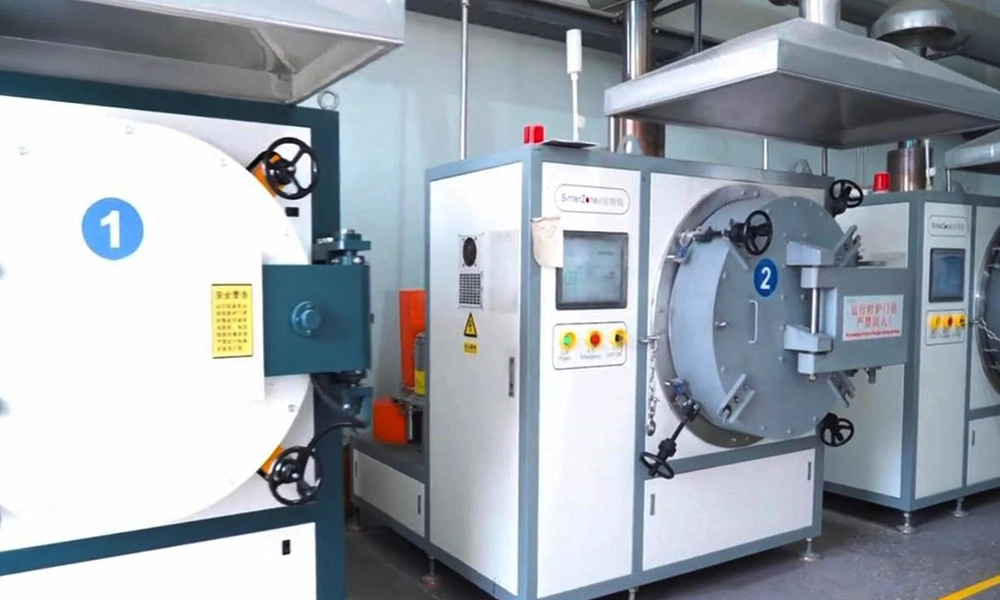
Proje bazlı kontrol: Kesin sıcaklık, süre, atmosfer, solvent, katalitik koşullar ve kabul limitleri, besleme stoğuna, geometriye, malzemeye ve nihai performans gereksinimlerine bağlıdır. Bunlar, genel bir kamu parametre tablosundan kopyalanmak yerine proje incelemesi ve deneme doğrulaması yoluyla teyit edilmelidir.

Çizim Notu: Süreç açıklamasını temsil eden mühendislik çizimi; müşteri parçası, üretim kaydı veya ölçülmüş kusur sonucu olarak sunulmamıştır.
Temel sonuç: Bağlayıcı giderme kalitesi, yalnızca bir bağlayıcı giderme fırınına sahip olmaya değil, kontrollü bir üretim iş akışına bağlıdır.
Güvenilir bir MIM bağlayıcı giderme süreci, yeşil parça muayenesini, uygun tepsi yüklemesini, kontrollü bağlayıcı giderme koşullarını, ağırlık kaybı veya bağlayıcı giderme oranı doğrulamasını, kahverengi parça muayenesini ve sinterlemeye stabil transferi içermelidir. Bu iş akışı, çatlakları, deformasyonu, kalıntı bağlayıcıyı ve nihai boyutsal kararsızlığı azaltmaya yardımcı olur.
Sıcaklık Profili ve Bekleme Süresi
Sıcaklık profili, bağlayıcı sistemine ve parça yapısına uymalıdır. Yavaş bir profil otomatik olarak daha iyi değildir ve hızlı bir profil otomatik olarak yanlış değildir. Profil, aşırı iç basınç, deformasyon veya kalıntı olmadan bağlayıcı gidermeye izin vermelidir.
Atmosfer, Asit Buharı, Solvent veya Vakum Kontrolü
Farklı bağlayıcı giderme rotaları farklı kontroller gerektirir. Katalitik bağlayıcı giderme için asit buharı konsantrasyonu, gaz akışı, sıcaklık ve egzoz arıtımı önemlidir. Solvent ile bağlayıcı giderme için solvent tipi, ekstraksiyon sıcaklığı, süresi, kurutma ve şişme kontrolü kritiktir. Termal bağlayıcı giderme için ısıtma hızı, atmosfer, akış, basınç ve fırın temizliği önemlidir.
Bağlayıcı Giderme Oranı veya Ağırlık Kaybı Doğrulaması
Parça sinterlemeye geçmeden önce bağlayıcı giderme işlemi doğrulanmalıdır. Süreç rotasına ve dahili kalite planına bağlı olarak doğrulama, ağırlık kaybı ölçümü, bağlayıcı giderme oranı kontrolü, görsel inceleme, kahverengi parça çatlak incelemesi, numune kesit incelemesi, sinterlenmiş yoğunluk doğrulaması, gerektiğinde karbon veya kimya kontrolü ve sinterleme sonrası boyutsal karşılaştırma içerebilir.
Kahverengi Parça Elleçleme ve Setter Tasarımı
Kahverengi parça, birçok pratik durumda kalıplanmış yeşil parçadan daha zayıftır. Gözeneklidir ve kaba elleçleme, nokta teması, istifleme basıncı veya desteksiz yükleme ile zarar görebilir.
İyi kahverengi parça elleçleme, stabil tepsi yükleme, uygun seramik setter desteği, parçalar arasında boşluk, ince veya düz alanlar için destek ve sinterlemeye kontrollü transfer içerir.
Bağlayıcı Giderme Projeleri İçin Proses Kontrol Noktaları
| Proses Aşaması | Kontrol Edilmesi Gerekenler | Yaygın Risk | Nihai Parçalar İçin Önemi | Tipik Doğrulama Yöntemi |
|---|---|---|---|---|
| Besleme stoğu seçimi | Bağlayıcı sistemi, toz yükleme, malzeme kalitesi | Yanlış bağlayıcı giderme rotası veya kararsız bağlayıcı giderme | Gözenek oluşumunu, karbon kontrolünü ve sinterleme stabilitesini etkiler | Besleme stoğu verileri incelemesi, malzeme onayı, deneme üretimi |
| Yeşil parça kalıplama | Yeşil yoğunluk, yolluk kalitesi, akış dengesi, iç gerilim | Yoğunluk değişimi, kaynak izleri, yolluk hasarı, gizli çatlaklar | Dengesiz yeşil parçalar genellikle dengesiz bir şekilde bağlayıcı giderir | Görsel muayene, ağırlık kontrolü, yeşil parça elleçleme incelemesi |
| Bağlayıcı giderme profili | Sıcaklık, süre, atmosfer, solvent veya asit buharı koşulu | Çatlama, kabarma, şişme, eksik bağlayıcı giderme | Kahverengi parçanın güvenli bir şekilde sinterlemeye girip giremeyeceğini belirler | Ağırlık kaybı kontrolü, bağlayıcı giderme oranı kaydı, kahverengi parça muayenesi |
| Kahverengi parça taşıma | Tepsi yükleme, setter teması, parça aralığı, transfer yöntemi | Köşe yontulması, sarkma, tepsi göçükleri, elleçleme çatlakları | Bu aşamadaki hasar nihai deformasyona veya hurdaya dönüşebilir | Yükleme kaydı, görsel muayene, destek incelemesi |
| Sinterleme geçişi | Kalan bağlayıcı çıkışı, atmosfer, destek, sinterleme büzülme yönü | Kalıntı karbon, çarpılma, yoğunluk değişimi, sinterleme distorsiyonu | Bağlayıcı giderme kalitesi, nihai boyutsal kontrolü doğrudan etkiler | Sinterlenmiş yoğunluk, boyut kontrolü, yüzey muayenesi, gerektiğinde sertlik kontrolü |
Bağlayıcı Giderme Enjeksiyon Kalıplama ve Sinterleme Arasındaki Köprüdür
Bağlayıcı giderme, aradaki köprüdür enjeksiyon kalıplama ve sinterleme. Enjeksiyon kalıplamadan kaynaklanan sorunlar genellikle bağlayıcı giderme sırasında ortaya çıkar ve bağlayıcı gidermeden kaynaklanan sorunlar genellikle sinterlemeden sonra nihai kusurlar haline gelir.
Yeşil Parça Kalitesi, Bağlayıcı Giderme Riskini Belirler
Yeşil parçada düzensiz yoğunluk, hapsolmuş hava, iç gerilim, zayıf yolluk dengesi, kaynak izleri veya zayıf kesme hasarı varsa, bağlayıcı giderme riski artar.
Örneğin, yerel yoğunluk değişimi olan yeşil bir parça düzensiz olarak bağlayıcı giderebilir. Yolluktan ayırma sırasında hasar görmüş ince bir köşe, bağlayıcı giderme sırasında çatlayabilir. Zayıf akış paketlemesi olan kalın bir kesit, termal işlem sırasında bağlayıcı ve gazı hapsedebilir.
Bağlayıcı Giderme Kalitesi, Sinterleme Kararlılığını Belirler
Bağlayıcı giderme tamamlanmamış veya düzensiz ise, sinterleme daha az öngörülebilir hale gelir. Nihai parçada distorsiyon, kararsız büzülme, çatlaklar, düşük yoğunluk, yüzey kusurları, karbonla ilgili özellik değişiklikleri veya zayıf mekanik tutarlılık görülebilir.
İyi Bir Son Parça Fırından Önce Başlar
Birçok MIM kusuru tek bir izole adımdan kaynaklanmaz. Bir zincirleme reaksiyonun sonucudurlar:
Örnek Mühendislik Senaryosu: Kalın Cidarlı MIM Parçada Bağlayıcı Giderme Riski
Senaryo açıklaması: Aşağıdaki örnek, kalın-ince MIM geometrilerinde yaygın olarak görülen bağlayıcı giderme risklerini birleştirmektedir. Mühendislik açıklaması için verilmiştir ve belirli bir müşteri projesini, üretim partisni veya ölçülen bir test sonucunu tanımlamaz.
Kompakt bir gövdeye, birkaç ince özelliğe ve bir kalın montaj boss'una sahip küçük bir paslanmaz çelik MIM bileşenini ele alalım. Geometri, bağlayıcı giderme sırasında çatlaklar geliştirirken başarılı bir şekilde kalıplanabilir ve bu çatlaklar sinterleme sonrası daha görünür hale gelir.
Geometri ve Süreç Durumu
Parça, kompakt bir montaj için tasarlanmıştı ve hem kalın yük taşıyan bir pabuca hem de çevresindeki ince fonksiyonel özelliklere sahipti. İlk çizim, kalıplama açısından MIM için uygun görünüyordu, ancak geometri, bağlayıcı giderme sırasında düzensiz bir bağlayıcı giderme mesafesi yarattı.
Olası Hata Modeli
Kalın pabucun ve daha ince nervürlerin arasındaki geçişin yakınında ince çatlaklar oluştu. Bazı parçalar sinterleme sonrası hafif deformasyon da gösterdi. Sorun tek bir fırın ayarından kaynaklanmıyordu. Duvar kalınlığı, yeşil yoğunluk, bağlayıcı kaçış yolu ve kahverengi parça desteği arasındaki etkileşimden kaynaklanıyordu.
Mühendislik Nedeni
Kalın montaj pabucu uzun bir bağlayıcı giderme yolu oluşturdu. Bağlayıcı giderme sırasında, dış yüzey gözenek kanalları oluşturmaya başladı, ancak iç çekirdek bağlayıcıyı daha yavaş saldı. Bağlayıcı giderme profili çok agresifse, bağlayıcı güvenli bir şekilde kaçamadan önce iç basınç gelişti. Aynı zamanda, pabucun etrafındaki daha ince özellikler, kalın bölgeden daha erken zayıflayarak bir gerilim dengesizliği yarattı.
İşlem Ayarı
- İşlevsel tasarımın izin verdiği yerlerde aşırı et kalınlığı azaltıldı.
- Kalın ve ince kesitler arasında daha pürüzsüz geçişler eklendi.
- Boss'un yakınındaki yolluk konumu ve yeşil parça yoğunluğu riski incelendi.
- Daha kalın kesit için bağlayıcı giderme profili ayarlandı.
- Seramik destek temasını ve kahverengi parça desteğini iyileştirildi.
- Sinterleme denemelerine geçmeden önce ağırlık kaybı ve kahverengi parça denetimi kullanıldı.
Beklenen Mühendislik Etkisi ve İnceleme Dersi
Bu ayarlamaların deneme riskini azaltması ve sinterleme stabilitesini iyileştirmesi beklenir, ancak sonuç proje özelinde kalıp denemeleri, kahverengi parça incelemesi, bağlayıcı giderme doğrulaması ve nihai boyutsal verilerle doğrulanmalıdır. Ana ders, fırın ayarlarının, bağlayıcıyı hapseden veya yeterli desteği olmayan bir geometriyi tam olarak telafi edemeyeceğidir.
Alıcılar Bir MIM Tedarikçisinin Bağlayıcı Giderme Yeteneğini Nasıl Değerlendirmeli
Satın alma ekipleri ve ürün mühendisleri için bağlayıcı giderme her zaman doğrudan denetlenebilir değildir. Ancak, bir tedarikçinin süreci anlayıp anlamadığını değerlendirmek mümkündür.
Sadece “MIM yapabiliriz” diyen bir tedarikçi, karmaşık parçalar için yeterli olmayabilir. Yüksek riskli geometriler için tedarikçinin bağlayıcı giderimini, kahverengi parça taşımasını ve sinterlemeye geçişi nasıl kontrol ettiğini sormalısınız.
Hangi Bağlayıcı Giderme Yönteminin Ürün Stoğunuza Uygun Olduğunu Sorun
Tedarikçi, projenin katalitik, solvent, termal, sulu veya kombine bağlayıcı giderme yöntemlerinden hangisini kullandığını açıklayabilmelidir. Cevap, sadece metal alaşım adı yerine besleme stoğu ve bağlayıcı kimyası ile ilgili olmalıdır.
Kahverengi Parça İşleme ve Ayarlayıcı Desteğini Kontrol Edin
Kahverengi parçaların nasıl yüklendiğini, desteklendiğini ve transfer edildiğini sorun. İnce duvarlar, düz kesitler, kırılgan nervürler ve asimetrik parçalar özel destek stratejileri gerektirebilir. Kötü kahverengi parça işleme, bağlayıcı giderme fırını profili doğru olsa bile çatlaklara ve deformasyona neden olabilir.
Bağlayıcı Giderme Tamamlama Doğrulaması Nasıl Yapılır Gözden Geçirin
Güvenilir bir tedarikçinin, bağlayıcı gidermenin sinterleme için yeterince tamamlandığını doğrulamak için bir yöntemi olmalıdır. Bu, ağırlık kaybı, bağlayıcı giderme oranı, görsel inceleme, numune kontrolleri veya sinterlenmiş parça doğrulaması içerebilir.
Bağlayıcı Giderme ve Sinterlemenin Birlikte Gözden Geçirildiğini Onaylayın
Bağlayıcı giderme, sinterlemeden ayrılmamalıdır. Bağlayıcısı giderilmiş kahverengi parça, sinterleme atmosferi, sıcaklık profili, destek yöntemi ve büzülme davranışı için hazır olmalıdır.
| Alıcı Sorusu | Neden Önemlidir |
|---|---|
| Bu besleme stoğu için hangi bağlayıcı giderme rotası kullanılacak? | Yanlış bağlayıcı giderme stratejisini önler. |
| Parçanın kalın kesitleri veya sınırlı bağlayıcı kaçış yolları var mı? | Çatlama ve kabarma riskini azaltır. |
| Kahverengi parçalar nasıl desteklenecek? | Çarpılma, sarkma ve taşıma hasarını azaltır. |
| Bağlayıcı giderme işleminin tamamlandığı nasıl doğrulanır? | Kalıntı bağlayıcı ve karbonla ilgili sorunları azaltır. |
| Bağlayıcı giderme, sinterleme büzülmesi ile birlikte mi incelenir? | Nihai boyutsal kararlılığı iyileştirir. |
| Kalıplama öncesinde bağlayıcı giderme riski tedarikçi tarafından incelenir mi? | Kalıp tamamlandıktan sonra pahalı yeniden tasarımları önler. |
Bağlayıcı Giderme ve Sinterleme Riski İncelemesi İçin Çiziminizi Gönderin
Eğer MIM parçanız kalın kesitlere, ince duvarlara, kör deliklere, derin yuvalara, düz alanlara veya sıkı boyutsal gereksinimlere sahipse, kalıplama öncesinde bağlayıcı giderme riski incelenmelidir.
XTMIM, çiziminizi tüm işlem zinciri boyunca inceleyebilir: besleme stoğu, enjeksiyon kalıplama, yeşil parça elleçleme, bağlayıcı giderme, sinterleme ve nihai muayene.
2B çiziminizi, 3B modelinizi, malzeme gereksiniminizi, tahmini yıllık hacminizi ve anahtar fonksiyonel boyutlarınızı bize gönderin. Mühendislik ekibimiz, parça geometrisinin, bağlayıcı giderme yolunun, kahverengi parça desteğinin ve sinterleme planının MIM üretimi için uygun olup olmadığını değerlendirmeye yardımcı olabilir.
MIM İncelemesi için Çizim GönderinMIM Bağlayıcı Giderme SSS
MIM'de bağlayıcı giderme nedir?
Bağlayıcı giderme, sinterleme öncesinde kalıplanmış bir MIM yeşil parçasından bağlayıcının kontrollü bir şekilde çıkarılmasıdır. Bu işlem, kalan bağlayıcı ve ayrışma gazları için çıkış yolları oluşturan gözenekli bir kahverengi parça oluşturur.
Yeşil parça ile kahverengi parça arasındaki fark nedir?
Yeşil parça, metal tozu ve bağlayıcı içeren kalıplanmış bileşendir. Kahverengi parça ise, çıkarılabilir bağlayıcı fazının büyük kısmının çıkarılmasından sonra ve nihai sinterlemeden önceki gözenekli, kırılgan bileşendir.
MIM için en iyi bağlayıcı giderme yöntemi hangisidir?
Evrensel olarak en iyi tek bir yöntem yoktur. Katalitik, solvent, termal, sulu veya kombine bağlayıcı giderme işlemi, bağlayıcı kimyasına, besleme stoğu türüne, geometriye, et kalınlığına, ekipmana ve nihai malzeme gereksinimlerine göre eşleştirilmelidir.
Kötü bağlayıcı giderme ne gibi kusurlara yol açabilir?
Yetersiz bağlayıcı giderme, çatlama, kabarma, şişme, eğilme, çökme, kalıntı bağlayıcı, karbonla ilgili özellik değişiklikleri, eksik yoğunlaşma, yüzey kusurları ve dengesiz sinterleme büzülmesine neden olabilir.
Kalın MIM kesitlerinin bağlayıcı gidermesi neden daha zordur?
Kalın kesitler, bağlayıcının ve gazların seyahat etmesi gereken mesafeyi artırır. Yüzey, çekirdeğin bağlayıcıyı salabileceğinden daha hızlı bağlayıcı giderirse, iç basınç veya gerilim dengesizliği çatlaklara, kabarcıklara veya gizli kusurlara neden olabilir.
Sinterleme sonrası bağlayıcı giderme kusurları giderilebilir mi?
Genellikle tam olarak değil. Sinterleme, mevcut çatlakları, deformasyonu, kalıntıları veya gözenekle ilgili sorunları daha görünür hale getirebilir, ancak bunların orijinal nedenini güvenilir bir şekilde ortadan kaldırmaz.
Bir çizimde bağlayıcı giderme riskini nasıl belirleyebilirim?
Kalın kesitleri, kör delikleri, derin yuvaları, kapalı boşlukları, ince desteksiz alanları, geniş düz yüzeyleri ve ani duvar geçişlerini inceleyin. Bu özellikler, bağlayıcı kaçış mesafesini, kahverengi parça mukavemetini ve setter desteğini etkiler.
MIM kalıplama öncesinde bağlayıcı giderme işlemi incelenmeli midir?
Evet. Kalıp imalatından önce bağlayıcı sistemi, et kalınlığı, yeşil parça yoğunluğu, kaçış yolları, destek stratejisi ve sinterleme büzülmesi gözden geçirilmelidir, çünkü geç geometrik değişiklikler maliyeti ve deneme süresini artırır.
Standartlar ve Teknik Referanslar
MIM boyutsal yeteneği, malzeme performansı ve süreç doğrulaması, projeye özel DFM incelemesi, deneme üretimi ve inceleme verileri aracılığıyla doğrulanmalıdır. Malzeme spesifikasyonu, süreç anlayışı ve mühendislik incelemesi için faydalı referanslar arasında şunlar yer almaktadır: MPIF Standard 35-MIM malzeme standartları, Metal enjeksiyon kalıplama prosesine genel bakış, EPMA MIM proses referansı, ve tedarikçiye özel besleme stoğu işleme kılavuzları, örneğin BASF Catamold işleme broşürü.
Bu referanslar, MIM malzemelerini, besleme stoğu davranışını, bağlayıcı giderme yöntemlerini, kahverengi parça hazırlığını ve sinterleme ile ilgili süreç kontrolünü anlamak için faydalıdır. Her proje için sabit üretim ayarları olarak kabul edilmemelidirler.
XTMIM, genel halka açık süreç parametrelerinin nihai üretim ayarları olarak kullanılmasını önermemektedir. Bağlayıcı giderme sıcaklığı, bekletme süresi, atmosfer, solvent rotası, katalitik sistem ve sinterleme profili, besleme stoğuna, parça geometrisine, et kalınlığına, malzeme kalitesine ve nihai uygulama gereksinimlerine göre doğrulanmalıdır.