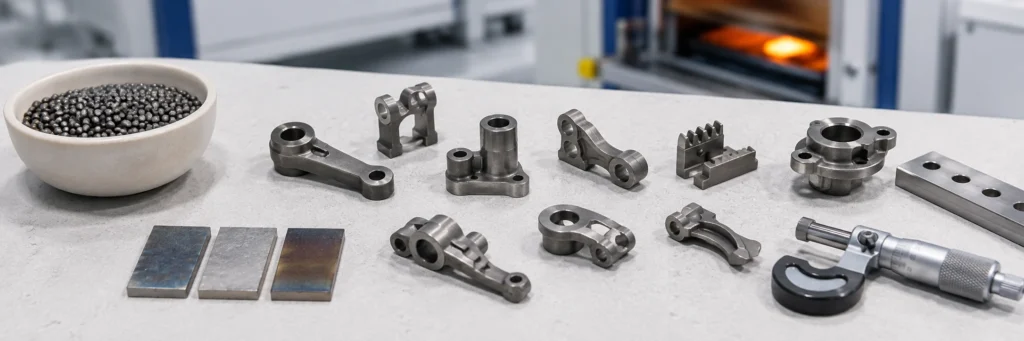
مدونة XTMIM اختيار مواد MIM ملاحظات حول الفولاذ المقاوم للصدأ المارتنسيتي لـ MIM ملاحظات حول اختيار مواد MIM إجابة سريعة: الفولاذ المقاوم للصدأ المارتنسيتي هو عائلة من الفولاذ المقاوم للصدأ القابل للمعالجة حرارياً والمستخدم في MIM عندما تحتاج الأجزاء الصغيرة والمعقدة إلى الصلابة ومقاومة التآكل والقوة الميكانيكية مع أداء تآكل معتدل. لا ينبغي اختياره بناءً على أقصى صلابة وحدها. المهندسون …
ملاحظات اختيار مواد MIM
إجابة سريعة: Martensitic stainless steel is a heat-treatable stainless steel family used in MIM when small, complex parts need hardness, wear resistance and mechanical strength together with moderate corrosion performance. It should not be selected by maximum hardness alone. Engineers must also review corrosion exposure, impact and toughness needs, grade and feedstock availability, sintering response, heat-treatment movement, critical dimensions and the inspection plan. MIM 420 is commonly reviewed for a more balanced hardness, corrosion and toughness direction, while MIM 440C is reviewed when higher hardness and wear resistance dominate. Final selection must be made against the drawing, operating environment and functional failure mode.
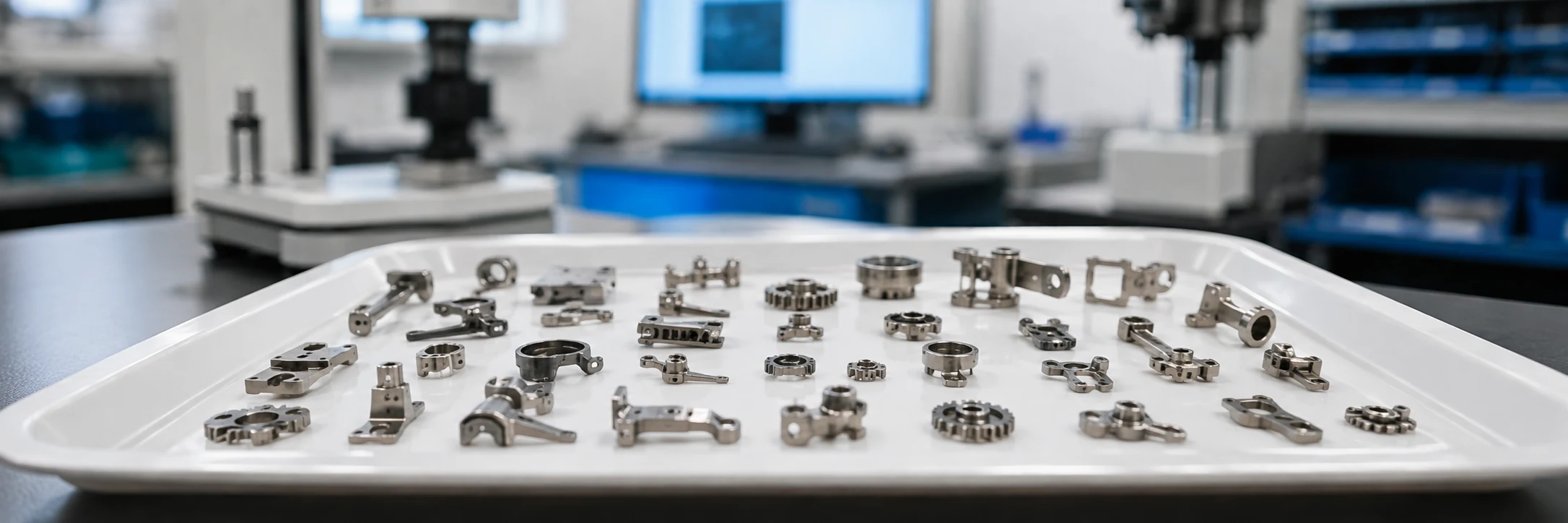
الخلاصة الهندسية: Material selection should connect component geometry, microstructure, heat treatment and the required inspection route.
ما هو الفولاذ المقاوم للصدأ المارتنسيتي في القولبة بالحقن المعدني (MIM)؟
Martensitic stainless steels are chromium-containing stainless alloys that can develop a hardened martensitic structure through an appropriate thermal route. Their value in MIM is the combination of heat-treatment response and the ability to form small, intricate components through injection molding before debinding and sintering.
This material family is most useful when the component needs more than corrosion resistance alone. Contact surfaces, repeated sliding, local wear, compressive loading or retention features may create a genuine need for higher hardness. Increasing hardness, however, can reduce toughness and make distortion control, surface condition and dimensional verification more important.
متى تستحق المراجعة
- أجزاء صغيرة ومعقدة ذات أسطح تآكل أو تلامس
- مكونات تحتاج إلى تصلب بعد التلبيد
- ميزات ستكون باهظة الثمن عند تشغيلها بشكل فردي
- أحجام الإنتاج التي يمكن أن تبرر تخصيص أدوات تصنيع مخصصة
- تطبيقات لا تزال تتطلب سلوكًا معتدلاً للفولاذ المقاوم للصدأ
متى قد تكون مادة أخرى أفضل
- التعرض الشديد للتآكل هو المتطلب السائد
- المرونة العالية أو مقاومة الصدمات أكثر أهمية من الصلابة
- الجزء كبير، بسيط هندسيًا، أو مطلوب فقط بكميات قليلة
- الرسم لا يمكنه استيعاب حركة التلبيد والمعالجة الحرارية
- متطلب الصلادة غير ضروري وظيفيًا
للحصول على نظرة عامة أوسع لعائلة المواد، راجع فولاذ مقاوم للصدأ لـ MIM . يجب بعد ذلك تضييق نطاق اختيار الدرجة وفقًا لوظيفة المكون، والبيئة، والحالة النهائية المطلوبة.
التركيب، مادة التغذية MIM، والخصائص المعدنية
Chromium supports stainless behavior, while carbon contributes to hardening potential. The finished result does not depend on nominal chemistry alone. Prepared feedstock, molding consistency, debinding, sintering atmosphere, carbon control and subsequent heat treatment all influence the final material condition.
The Metal Injection Molding Association lists 420 and 440 series materials within the ferritic and martensitic stainless steel family available for MIM, while also advising users to confirm actual alloy or substitute availability with the selected supplier. نطاق مواد MIMA
ASTM B883-24, the Standard Specification for Metal Injection Molded (MIM) Materials, includes MIM-420 and MIM-440 as martensitic stainless steel compositions. The standard confirms these as established ferrous MIM material designations, but the actual grade, condition and project requirements still need to be defined for the component. ASTM B883-24

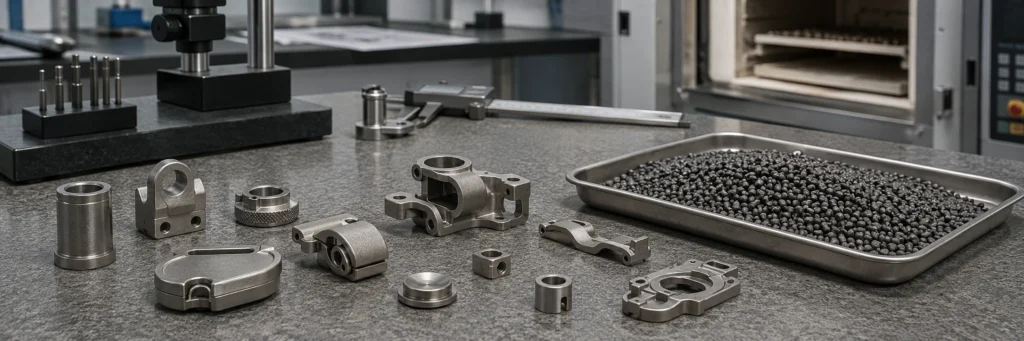
الخلاصة الهندسية: لا يمكن لمظهر المادة الأولية وحده تأكيد ما إذا كانت المادة هي MIM 420 أو MIM 440C أو درجة أخرى من الفولاذ المقاوم للصدأ.
مرجع مراجعة المواد والعمليات
| متغير المادة أو العملية | لماذا هو مهم | إجراء مراجعة هندسية |
|---|---|---|
| كيمياء السبائك | يؤثر الكروم والكربون والإضافات الخاصة بالدرجة على قابلية التقسية، والسلوك المقاوم للتآكل، والمتانة، والاستجابة للتآكل. . | قم بتأكيد الدرجة الفعلية والحالة النهائية بدلاً من تحديد “الفولاذ المقاوم للصدأ المارتنسيتي” فقط.” |
| مادة التغذية المحضرة | يجب أن تتطابق مادة التغذية مع مسار السبيكة المقصود ويمكن أن تختلف عن المواد المعدلة المستخدمة في دراسات بحثية فردية. . | تأكد من توفر الدرجة ومسار مادة التغذية الإنتاجية قبل الإصدار النهائي للقالب. . |
| إزالة المادة الرابطة، جو التلبيد والتحكم في الكربون | These variables influence density, porosity, shrinkage, surface decarburization, microstructure and the condition entering heat treatment. | Review the complete thermal route together with critical dimensions and support strategy rather than treating nominal chemistry as the only input. |
| المعالجة الحرارية | تطور الحالة المتصلبة المطلوبة ولكن يمكنها أيضًا تغيير الحجم، التسطيح، الإجهاد المتبقي والمتانة. | حدد هدف الصلابة الوظيفي وخطة القبول الأبعاد معًا. |
| الحالة السطحية والعمليات الثانوية | Surface condition can affect corrosion response, appearance, contact behavior and final fit. | Clarify whether polishing, passivation, coating, machining or another secondary operation is required. |
A published investigation of MIM 420 examined samples processed in graphite and molybdenum-lined furnaces and reported differences in surface decarburization, microstructure and hardness response. The study supports a practical RFQ rule: material chemistry, furnace environment and heat treatment must be reviewed as one process route. Study-specific feedstock chemistry should not be transferred directly to an unrelated production RFQ. مراجعة دراسة MIM 420 .
نقطة هندسية رئيسية: A datasheet can describe a material, but it does not determine whether the complete MIM route will meet a particular drawing. Geometry, thermal movement, inspection datums and the final hardness condition still require project-specific review.
المفاضلات بين الصلابة، مقاومة التآكل، القوة، ومقاومة الصدأ
Martensitic stainless steel is usually selected because hardness and wear behavior matter to the component function. The highest attainable hardness is not automatically the best specification. A more aggressive hardened condition may increase dimensional-control difficulty, reduce impact tolerance or create an unnecessary processing and inspection burden.
| متطلبات المشروع | لماذا قد يناسب الفولاذ المقاوم للصدأ المارتنسيتي | ما الذي لا يزال بحاجة إلى التحقق منه |
|---|---|---|
| التلامس المنزلق أو المتكرر | يمكن أن يحسن الصلابة المعالجة حرارياً المقاومة للتآكل الموضعي. | إجهاد التلامس، التشحيم، تشطيب السطح، ومادة السطح المقابل. |
| ميزة تثبيت أو إحكام صغيرة | قد تدعم القوة والصلابة متانة الحواف أو الميزات. | الحمل الصدمي، حساسية الشق، وتشوه المعالجة الحرارية. |
| بيئة تشغيل أكالة | يوفر سلوكًا مقاومًا للصدأ يتجاوز العديد من الفولاذات منخفضة السبائك. | المواد الكيميائية الفعلية، الرطوبة، درجة الحرارة، دورة التنظيف، وحالة السطح. . |
| علاقة أبعاد محكمة | يمكن لتقنية MIM دمج الأشكال الهندسية المعقدة في مكون واحد. | انكماش التلبيد، حركة ما بعد المعالجة الحرارية، نقاط الإسناد، والضبط الثانوي. . |
| هندسة معقدة بكميات كبيرة | قد تقلل القولبة بالحقن المعدني (MIM) من عمليات التشغيل الآلي والتجميع المتكررة. | اقتصاديات الأدوات، الحجم السنوي، موقع البوابة، وجدوى الميزات. |
يجب أن يبدأ اختيار المادة بوضع الفشل الوظيفي: التآكل، التشوه، التآكل، الكسر، الانحراف الأبعادي أو تلف السطح. تحديد الصلابة دون تحديد وضع الفشل يمكن أن يدفع المشروع نحو حالة مادة قاسية بشكل غير ضروري.
عندما يكون التآكل هو وضع الفشل الأساسي، قم بمراجعة عوامل الاختيار الأوسع لـ مواد MIM المقاومة للتآكل قبل تحديد درجة معينة.
المعالجة الحرارية وتطوير الصلابة
Martensitic stainless steel reaches its intended properties through a controlled hardening and tempering route selected for the actual alloy and component geometry. The thermal cycle must be treated as part of the manufacturing plan, not as an isolated finishing step added after dimensional decisions are complete.
| مرحلة المراجعة | سؤال هندسي | مشكلة محتملة في حال تجاهلها |
|---|---|---|
| حالة التلبيد | هل الكثافة والشكل الهندسي مناسبان لمسار المعالجة الحرارية المخطط له؟ | Property variation, dimensional instability or inconsistent surface condition. |
| مسار التقسية | ما هي الصلابة النهائية والأداء الوظيفي المطلوب فعليًا؟ | المواصفات المفرطة، الهشاشة، أو تكلفة عملية غير ضرورية. |
| حالة التقسية | كيف ينبغي الموازنة بين الصلابة والمتانة؟ | صلابة عالية بدون متانة وظيفية كافية. |
| التحكم الأبعادي | ما هي الأبعاد التي يجب فحصها قبل وبعد المعالجة الحرارية؟ | الميزات الحرجة تتحرك خارج متطلبات الرسم. |
| الفحص النهائي | أين وكيف سيتم التحقق من الصلابة والأبعاد؟ | مواصفات اسمية بدون طريقة قبول عملية. |
Thin sections, asymmetric mass distribution, long unsupported features and sharp transitions can respond differently during thermal processing. For critical dimensions, the project team may need to plan tooling compensation, sintering support, sizing, machining or a specific inspection sequence rather than relying on a single final measurement.
يمكن للمهندسين الذين يقيمون مجموعة أوسع من المواد القابلة للتصلب أيضًا مراجعة مواد MIM القابلة للمعالجة الحرارية .
لماذا يُستخدم الفولاذ المقاوم للصدأ المارتنسيتي لأجزاء MIM
MIM is most relevant when a part combines complex shape, small dimensions, repeatable production volume and material-performance requirements that would otherwise require extensive machining or assembly. Martensitic stainless steels add a useful hardening route for components with wear surfaces, retaining features, local contact stress or durability requirements.

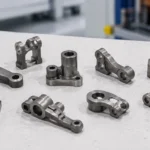
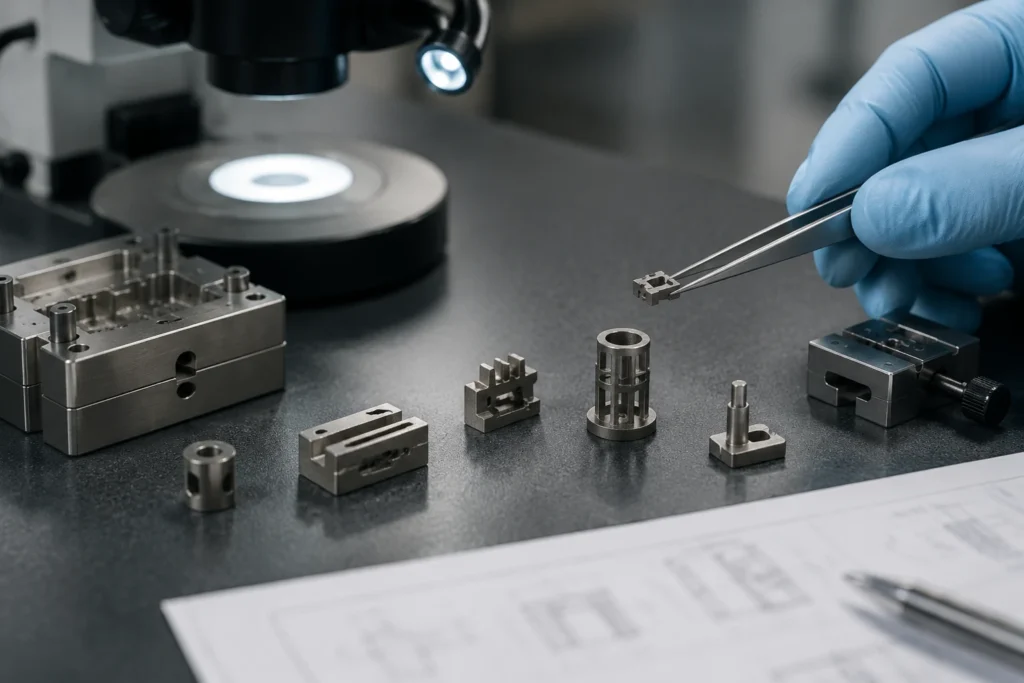
الخلاصة الهندسية: The illustration supports the geometry and part-consolidation discussion; it does not verify a specific alloy grade or depict a confirmed XTMIM production batch.
نماذج التطبيقات وأولويات المراجعة
| نموذج المكون | لماذا قد تتم مراجعة الفولاذ المقاوم للصدأ المارتنسيتي | أسئلة المراجعة الحاسمة |
|---|---|---|
| مكونات القفل أو التثبيت أو المفصلية | قد تتطلب حواف التلامس المحلية والحركة المتكررة صلابة ومتانة ميكانيكية. . | هل المتانة ضد الصدمات مهمة؟ أي الأسطح تحمل الحمل؟ هل يمكن للهندسة أن تتحمل حركة المعالجة الحرارية؟ |
| الأدلة، والمحاور، وعلامات التبويب، وميزات التلامس المنزلق | قد تكون مقاومة التآكل والاستقرار الأبعادي أكثر أهمية من المرونة العالية. | What is the counterface material, lubrication condition, surface finish and permitted wear? |
| Small medical-device mechanism components | MIM can consolidate compact geometry while a martensitic grade provides a hardenable material route. | What corrosion, cleaning, biocompatibility, surface and regulatory requirements apply to the actual project? |
| Precision frames and support components | Strength, stiffness and compact integrated features may support part consolidation. | Which flatness, runout and datum relationships must remain stable through sintering and heat treatment? |
| Wear-sensitive industrial mechanism parts | Higher hardness may improve contact durability where repeated machining would otherwise be required. | Is MIM volume commercially justified? Which surfaces require secondary sizing, machining or finishing? |
Public MIMA case studies document MIM 420 in compact medical-device mechanism parts and precision frames, and 440C in industrial printer datums and support tabs. These examples demonstrate possible application directions; they do not establish automatic suitability for another drawing or operating environment. Review the association examples for endoscopic device parts , a MIM 420 compression frame و 440C printer datums and tabs .
سيناريو هندسي تمثيلي
A small actuator component may include a contact edge, a cross-hole, a thin arm and a locating surface. The drawing initially specifies only “martensitic stainless steel” and a high hardness target.
المشكلة: The specification does not identify whether wear, corrosion, compressive strength or edge retention is the real functional need.
Likely cause: Material selection was made from a general datasheet before reviewing geometry, heat-treatment movement and the inspection datum strategy.
التعامل الهندسي: Confirm the operating environment, contact condition, required toughness, actual critical dimensions, preferred grade and final inspection method before tooling release. The team can then decide whether the feature should remain as-molded, be sized after sintering or receive a secondary operation after heat treatment.
This type of review is more useful than selecting an alloy from hardness alone. The project decision should connect material, geometry, process route and acceptance method.
Choosing a Martensitic Stainless Steel Grade for MIM
Grade selection should begin with the component’s functional priority rather than with a direct search for the hardest available martensitic grade. MIM 420 and MIM 440C are two common review directions within this material family: 420 is generally considered when hardness, corrosion behavior and toughness need a more balanced response, while 440C is reviewed when higher hardness and wear resistance carry greater weight. Geometry, impact risk and thermal movement can change that decision.

الخلاصة الهندسية: Grade selection should follow the component’s hardness, wear, toughness, corrosion and dimensional priorities rather than a preference for the highest possible hardness.
| عامل الاختيار | MIM 420 Review Direction | MIM 440C Review Direction |
|---|---|---|
| Primary performance priority | Balanced hardness, corrosion behavior and toughness. | Higher hardness and wear resistance carry greater weight. |
| Wear demand | متطلبات تآكل أو تلامس معتدلة. | ظروف تآكل أو احتفاظ بالحافة أكثر تطلبًا. |
| حساسية الصلابة والمتانة | Often the first direction to review when a more balanced response is needed. | Requires closer review where impact, thin sections or stress concentrations exist. |
| مخاطر الأبعاد | لا يزال الانتقال الحراري يتطلب تخطيطًا. | قد تتطلب الحالة النهائية تحكمًا أكثر صرامة في المعالجة الحرارية والفحص. . |
استخدم صفحات المواد التفصيلية لـ فولاذ MIM 420 المقاوم للصدأ و فولاذ MIM 440C المقاوم للصدأ عندما تكون الخصائص الخاصة بالدرجة مطلوبة. للاختيار المباشر والمقارن، استخدم مقارنة الفولاذ المقاوم للصدأ 420 مقابل 440C .
مخاطر العمليات والجودة التي يجب مراجعتها قبل تصنيع القالب
يركز هذا القسم على ما يمكن أن يحدث بشكل خاطئ أثناء المسار الحراري والمادي. الهدف هو تحديد آلية الفشل قبل تصنيع القالب حتى تتمكن خطة العملية من معالجتها بدلاً من الاعتماد على الفحص النهائي لاكتشافها لاحقًا.
| مخاطر محتملة | سبب هندسي محتمل | إجراء مراجعة أو وقاية |
|---|---|---|
| استجابة الصلابة خارج النطاق الوظيفي المطلوب | حالة المادة، سمك المقطع، أو تباين المسار الحراري. | Define the required final condition and review whether the selected route can achieve it without unnecessary brittleness or process burden. |
| تشوه المعالجة الحرارية | هندسة غير متماثلة، إجهاد متبقٍ، أو ميزات رفيعة غير مدعومة. | Review support, sizing, machining allowance and the sequence of thermal and dimensional-control operations. |
| هشاشة غير متوقعة | الصلادة المحددة دون مراعاة كافية للمتانة. | ربط الحالة المتصلدة بمخاطر الصدمات والانحناء وتركيز الإجهاد. . |
| أداء التآكل أقل من المتوقع | لم يتم تحديد البيئة أو حالة السطح أو اختيار الدرجة بشكل كامل. | Review the actual exposure conditions and whether another grade or surface route is more appropriate. |
| عدم تطابق الأبعاد بعد المعالجة | Sintering shrinkage and heat-treatment movement evaluated as separate problems. | Build one dimensional-control strategy covering tooling compensation, sintering support, sizing and any post-treatment correction. |
تخطيط الفحص لأجزاء MIM من الفولاذ المقاوم للصدأ المارتنسيتي
Inspection answers a different question from process-risk review: how will the finished part be verified against its functional requirements? The acceptance plan should connect each critical characteristic to a defined measurement stage, datum or test method instead of checking every part characteristic with the same routine.
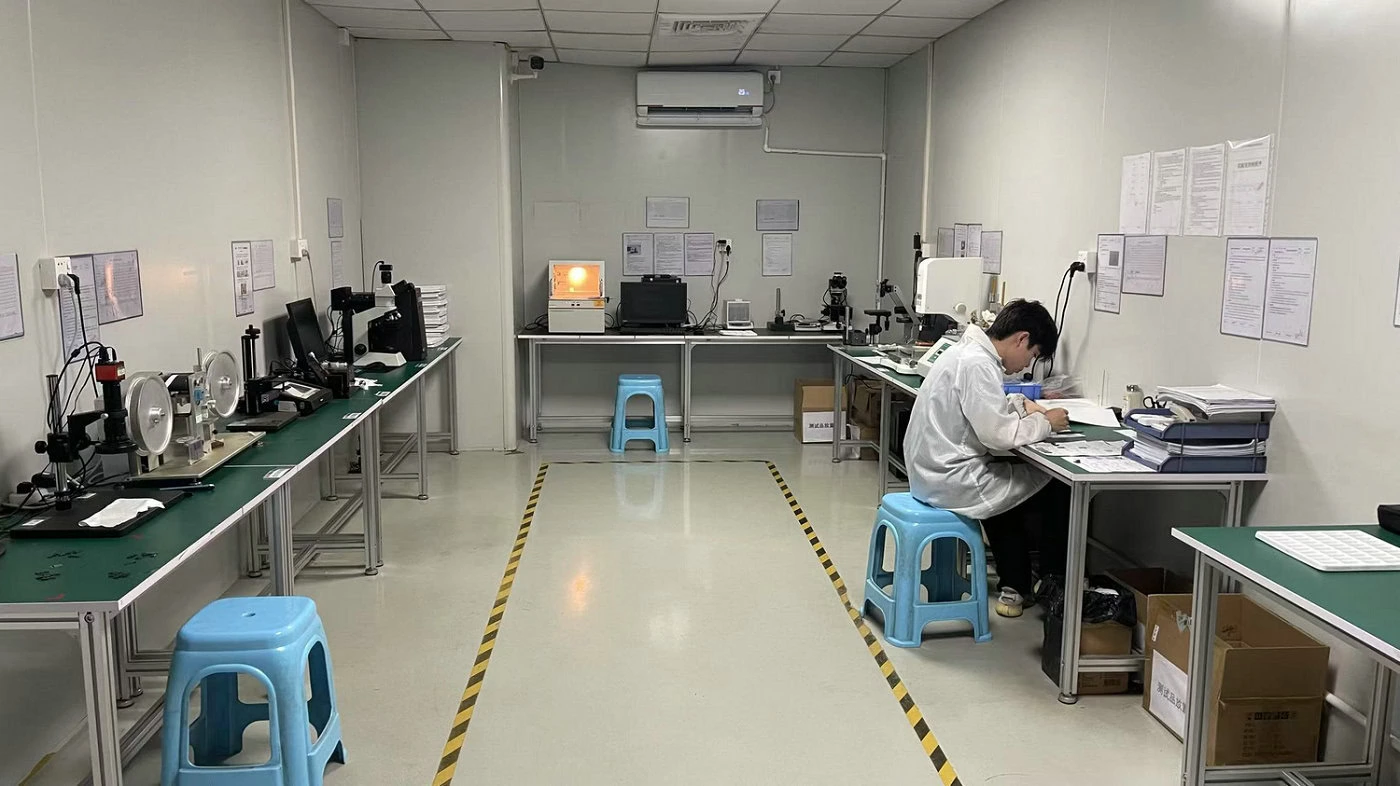
الخلاصة الهندسية: Inspection scope should be defined by the drawing, functional risks and required material condition rather than inferred from a generic grade name.
| بند الفحص | ما الذي يتحقق منه | تخطيط القبول |
|---|---|---|
| الصلابة / الحالة النهائية للمادة | يؤكد أن حالة التقسية المقصودة قد تم تحقيقها. | تحديد موقع القياس ذي الصلة وطريقته ومتطلبات الإبلاغ حيث تكون الصلابة حرجة وظيفياً. |
| الأبعاد الحرجة والمراجع | يتحقق من الهندسة النهائية بعد الانكماش والقياس والمعالجة الحرارية. | Identify CTQ features, functional datums and the stage at which final acceptance is measured. |
| التسطيح أو الاستدارة | يتحقق من استقرار الشكل على الأسطح الوظيفية الحساسة حرارياً. | تحديد السطح الوظيفي، علاقة المرجع، وحدود القبول. |
| حالة السطح | التحقق من التشطيب المحدد المتعلق بالاتصال، المظهر، أو التآكل. | مطابقة الفحص مع الحالة المطلوبة بعد التلبيد، التلميع، التخميل، الطلاء أو التشغيل الآلي. |
| الكثافة أو الحالة الداخلية، عند الحاجة. | دعم اتساق المواد والعمليات حيث تبرر الوظيفة ذلك. | إضافة هذا التحقق فقط عندما يتطلب الرسم، خطة التأهيل، أو المخاطر الوظيفية ذلك. |
ما الذي يجب تضمينه في طلب عرض أسعار (RFQ) للفولاذ المقاوم للصدأ المارتنسيتي المصنع بتقنية MIM
The RFQ section should answer one practical question: what information must the supplier receive to review material suitability, tooling feasibility and the final acceptance route? Send the inputs that define function and manufacturing risk; detailed inspection methods can then be agreed during engineering review.
| مدخلات طلب عرض الأسعار (RFQ) | لماذا يحتاج فريق الهندسة إليه |
|---|---|
| رسم ثنائي الأبعاد ونموذج ثلاثي الأبعاد | يوفر معلومات حول الهندسة، والتفاوتات، والمراجع، والنتوءات، واتجاه الأدوات لمراجعة الجدوى. |
| الدرجة المطلوبة أو هدف الأداء | يوضح ما إذا كان المشروع يتطلب سبيكة معينة، أو نطاق صلابة أو نتيجة مادية وظيفية أوسع. |
| بيئة التشغيل والحمل الوظيفي | يوضح ما إذا كانت التآكل، أو التآكل، أو الصدمات، أو الانحناء، أو الضغط، أو الاحتفاظ بالحواف هي المحرك الرئيسي لاختيار المواد. |
| الأبعاد الحرجة، ومقاييس الجودة الحرجة (CTQs)، والمراجع الوظيفية | يحدد الميزات التي يجب أن تتحمل التلبيد، والمعالجة الحرارية، والتحديد بالحجم، وأي عملية ثانوية. |
| الحجم السنوي وعمر البرنامج | يساعد في تحديد ما إذا كانت أدوات MIM المخصصة وتطوير العملية مناسبة تجارياً. |
| متطلبات السطح والعمليات الثانوية | يوضح متطلبات التشغيل الآلي، والتلميع، والطلاء، والتخميل، والتجميع، أو غيرها من متطلبات الحالة النهائية. |
إن دليل إعداد طلب عرض أسعار MIM يوفر قائمة تدقيق أوسع لمعلومات المشروع لمراجعة الموردين.
الأسئلة الشائعة
ما الذي يميز الفولاذ المقاوم للصدأ المارتنسيتي عن الفولاذ المقاوم للصدأ الأوستنيتي؟
Martensitic stainless steel can be hardened through heat treatment and is usually selected when hardness, wear resistance and mechanical strength are important. Austenitic stainless steels are generally chosen for stronger corrosion resistance, ductility and non-hardening behavior. The correct family depends on the component function and environment.
هل الفولاذ المقاوم للصدأ المارتنسيتي مناسب لكل بيئة تآكل؟
No. Martensitic stainless steel provides stainless behavior, but corrosion exposure still needs to be reviewed against the specific grade, surface condition, chemicals, moisture, temperature and cleaning process. A more corrosion-resistant material family may be preferable when corrosion is the dominant failure risk.
هل يؤدي تحديد الصلابة الأعلى دائمًا إلى تحسين مكون MIM؟
No. Higher hardness can improve wear resistance, but it may reduce toughness, increase distortion sensitivity and create additional inspection requirements. The hardness target should be linked to an actual functional need such as wear, contact stress or edge durability.
كيف يجب على المهندسين الاختيار بين MIM 420 و MIM 440C؟
MIM 420 is generally reviewed for a more balanced combination of hardness, corrosion behavior and toughness. MIM 440C is reviewed when higher hardness and wear resistance are more important. Geometry, impact risk, thermal movement and the final inspection plan must also be considered.
هل الفولاذ المقاوم للصدأ المارتنسيتي مغناطيسي؟
Martensitic stainless steels are generally ferromagnetic because of their microstructure. Magnetic response should not be used as the only method for confirming a specific grade, material condition or finished-part performance. Where magnetic behavior is functionally important, define the required test condition and acceptance method in the drawing or RFQ. توفر Worldstainless نظرة عامة على الخصائص المغناطيسية للفولاذ المقاوم للصدأ .
ما هي المعلومات التي يجب إرسالها لمراجعة الفولاذ المقاوم للصدأ المارتنسيتي المصنع بتقنية MIM؟
Send the 2D drawing, 3D model, material or performance requirement, hardness expectation, operating environment, loading or wear condition, critical dimensions, annual volume and any required secondary operations or surface treatments.
المراجع الفنية
- ASTM B883-24 — المواصفات القياسية لمواد القولبة بالحقن المعدني (MIM) . مواصفات مواد MIM الحديدية التي تشمل MIM-420 و MIM-440 كـ تركيبات فولاذ مقاوم للصدأ مارتنسيتي.
- جمعية القولبة بالحقن المعدني — نطاق المواد . اتجاه توفر عائلات مواد MIM، سلسلتي 420 و 440 وإرشادات توفر المورد .
- PIM International — A Microstructural Investigation of 420 Martensitic Stainless Steel Processed by MIM . بحث فني يغطي كيمياء المواد الخام (المادة المغذية)، بيئة الفرن، إزالة الكربنة، البنية المجهرية، والاستجابة للمعالجة الحرارية.
- معهد النيكل — إرشادات التصميم لاختيار واستخدام الفولاذ المقاوم للصدأ . General engineering guidance for stainless steel family selection and property trade-offs.
- الفولاذ المقاوم للصدأ — الخصائص الميكانيكية والفيزيائية للفولاذ المقاوم للصدأ . نظرة عامة مرجعية تغطي السلوك المغناطيسي عبر عائلات الفولاذ المقاوم للصدأ.
مراجعة مشروع MIM الخاص بك للفولاذ المقاوم للصدأ المارتنسيتي
Share the drawing, material target, hardness requirement, operating environment and expected volume. The engineering review can then focus on grade selection, MIM feasibility, thermal-process risks, critical dimensions and the required inspection route.