
تصف خصائص مواد MIM السلوك القابل للقياس لمادة مصبوبة بالحقن المعدني في حالة محددة. الخصائص التي يتم فحصها في أغلب الأحيان هي كثافة التلبيد، وقوة الشد والإنتاجية، والاستطالة، والصلابة، وسلوك التآكل والتآكل، والاستجابة المغناطيسية، والسلوك الحراري.
اسم السبيكة وحده لا يحدد أداء الجزء النهائي. قارن البيانات المرجعية الخاصة بـ MIM، وقم بتضييق نطاق درجات المواد ذات الصلة، وقم بتأكيد حالة التلبيد أو المعالجة الحرارية، وحالة السطح، وطريقة الاختبار قبل الموافقة على متطلب وظيفي.
ما هي خصائص المواد المهمة لأجزاء MIM؟
لا تصبح الخاصية مفيدة إلا عندما تتوافق مع وظيفة أو خطر فشل. قد يتطلب الرسم الذي يستدعي جزءًا ليكون "قويًا" هدفًا لقوة الخضوع، أو متطلبًا للصدمات، أو تقييمًا للإجهاد بدلاً من رقم شد واحد. الجزء الذي "يجب ألا يتآكل" يحتاج إلى نظام اتصال محدد، وليس مجرد قيمة صلابة. ابدأ بالمتطلب الوظيفي، ثم حدد الدليل اللازم لتقييمه.
الخصائص الميكانيكية: القوة، المطيلية، الصلابة، والمتانة
قوة الشد القصوى يصف أعلى إجهاد هندسي تم الوصول إليه في اختبار شد قياسي؛ قوة الخضوع يشير إلى بداية التشوه الدائم المحدد. الاستطالة يصف مطيلية الشد تحت طول معايرة وإجراء اختبار محددين، بينما المتانة تتعلق بامتصاص الطاقة أو مقاومة الشقوق في ظل ظروف تحميل ذات صلة. الصلادة يقيس المقاومة للخدش الموضعي باستخدام مقياس وطريقة معينة. هذه الخصائص مترابطة، ولكن لا يمكن لأحدها أن يحل محل الآخر بشكل موثوق.
بالنسبة لمزلاج مصغر، أو رافعة، أو مفصلة، أو دعامة، أو محور ترس، قم بتقييم الحمل المتوقع، والتعرض للصدمات، وسمك الجدار، وهندسة الزاوية، والإجهادات المحلية جنبًا إلى جنب مع قيم اختبار المواد. قد لا يزال من غير المناسب استخدام مادة ذات قوة شد عالية إذا كانت الهندسة تركز الإجهاد عند قسم رفيع.
خصائص السطح والبيئة: التآكل ومقاومة التآكل
التآكل هو استجابة النظام: يعتمد على المادتين المتلامستين، والحمل، والحركة، والتزييت، والحطام، والبيئة، والأسطح النهائية. مقاومة التآكل تعتمد بالمثل على الوسط المعرض، ودرجة الحرارة، وحالة السطح، والتلوث المتبقي، والتركيب المعدني النهائي للمادة. لا يمكن التقاط أي من الخاصيتين بواسطة درجة "أفضل مادة" عالمية.
على سبيل المثال، قد تتطلب الأجهزة الإلكترونية الرطبة، ومكونات الساعات المعرضة للعرق، والوصلات المنزلقة، والأقفال التي يتم تشغيلها بشكل متكرر، كلها مجموعات مختلفة من الأداء المقاوم للتآكل، وأداء التلامس، والأداء الجمالي.
الخصائص الفيزيائية والوظيفية: الكثافة، الاستجابة المغناطيسية، والسلوك الحراري
الكثافة الملبدة هو مؤشر جودة قابل للقياس ويمكن أن يكون مهمًا للقوة والأسطح الوظيفية والختم والمتطلبات الأخرى؛ يجب النظر في المسام المتبقية بشكل منفصل. الخصائص المغناطيسية، مثل النفاذية، والإكراه، وسلوك التشبع، مهمة عندما يعمل الجزء داخل مشغل أو مستشعر أو دائرة مغناطيسية. التمدد الحراري يصف التغير البعدي مع درجة الحرارة، بينما مقاومة الحرارة التشغيلية تتعلق بالخصائص المحتفظ بها أثناء التعرض لدرجات حرارة مرتفعة. إنهما متطلبان مختلفان.
قابلية المعالجة الحرارية يصف ما إذا كان يمكن تغيير خصائص الدرجة بواسطة معالجة محددة؛ وهي ليست بحد ذاتها قيمة صلابة أو دليلًا على ملاءمة الخدمة في درجات الحرارة العالية. وبالمثل، التوافق الحيوي هو تقييم للسلامة البيولوجية يعتمد على التطبيق، وليس خاصية مادية رقمية ثابتة يمكن أن يضمنها اسم درجة المادة وحده.
| متطلبات القطعة | الخاصية أو الدليل المطلوب فحصه | ما يجب تحديده |
|---|---|---|
| مقاومة الانحناء الدائم | إجهاد الخضوع وسلوك الحمل على مستوى الجزء | اتجاه الحمل، الهندسة، حالة المادة، معامل الأمان |
| مقاومة الكسر أو الصدم | الاستطالة، المتانة، اختبارات التعب أو الاختبارات الخاصة بالتطبيق | تاريخ التحميل، الميزات الحساسة للكسر، درجة الحرارة |
| الحفاظ على سطح التلامس | الصلادة ونتائج نظام التآكل | السطح المقابل، ضغط التلامس، الحركة، التشحيم |
| الصمود في بيئة أكالة | السلوك التآكلي تحت التعرض المحدد | الكيمياء، درجة الحرارة، المدة، حالة السطح |
| توفير وظيفة مغناطيسية أو حرارية | الاستجابة المغناطيسية، معامل التمدد الحراري (CTE) أو السلوك المعتمد على درجة الحرارة | نطاق المجال التشغيلي أو درجة الحرارة، هندسة التجميع |
كيف يمكن استخدام بيانات خصائص MIM لتقييم المواد المرشحة؟
استخدم البيانات الرقمية لاستبعاد الاتجاهات غير المناسبة بشكل واضح، ثم استخدم متطلبات الأداء لتحديد الدرجات لمزيد من التقييم. لا تقارن الأرقام من ظروف مواد مختلفة كما لو كانت قابلة للتبديل. القيم أدناه موثقة أرقام ورقة بيانات MIM لطرف ثالث; إنها مراجع توضيحية، وليست نتائج اختبارات إنتاج XTMIM، أو ضمانات للمشروع، أو حدود قبول MPIF الحالية.
قيم الخصائص المرجعية لدرجات MIM الشائعة
تشمل الأمثلة أدناه الفولاذ المقاوم للصدأ الأوستنيتي، والفولاذ المقاوم للصدأ المقوى بالترسيب، والفولاذ المقاوم للصدأ المارتنسيتي القابل للتصلب، والفولاذ منخفض السبائك. وهي تأتي من منتجين مستقلين مختلفين لـ MIM أو بيانات منتجين منشورة. الشروط، واتفاقيات الإبلاغ، وطرق الاختبار ليست متطابقة بالضرورة، لذا فإن الصفوف هي مراجع فحص، ليس اختبارًا مقارنًا خاضعًا للرقابة أو مواصفات مادة XTMIM.
| درجة MIM / حالة الإبلاغ | الكثافة (جم/سم³) | قوة الشد القصوى (MPa) | إجهاد الخضوع (MPa) | الاستطالة (%) / الأساس | الصلابة / المقياس | مصدر بيانات MIM الأصلي |
|---|---|---|---|---|---|---|
| MIM 316L بعد التلبيد | ≥7.6 | ≥450 | ≥140 (Rp0.2) | ≥40 (A10) | ≥100 HV10 | ورقة بيانات MIMplus 316L (2020) |
| MIM 17-4 PH بعد التلبيد | ≥7.5 | ≥790 | ≥650 (Rp0.2) | ≥3 (A10) | ≥270 HV10 | ورقة بيانات MIMplus 17-4 PH (2025) |
| MIM 17-4 PH معالج حرارياً؛ دورة المعالجة غير مذكورة | ≥7.5 | لم يتم الإبلاغ عنه | لم يتم الإبلاغ عنه | لم يتم الإبلاغ عنه | 360–440 HV10 | نفس الشيء ورقة بيانات MIMplus؛ الخصائص الأخرى ودورة المعالجة تحتاج إلى تأكيد |
| MIM 420 معالج حرارياً؛ دورة المعالجة غير مذكورة | 7.4 (نموذجي) | 1,370 (نموذجي) | 1,200 (نموذجي) | لم يتم الإبلاغ عنه | 44 HRC (نموذجي) | منتجات مسحوق متقدمة: ورقة بيانات الفولاذ المقاوم للصدأ بتقنية MIM |
| MIM 4605 بعد التلبيد | >7.55 | >600 | >400 (Rp0.2) | >5 (الأساس غير مذكور) | >150 HV (الحمل غير محدد) | جدول مواد MIM من TAMAU Italia (2024) |
لإجراء مقارنة بين الدرجات بشكل مباشر، احصل على النتائج التي تم إنتاجها وفقًا لمعايير وظروف العينات وحالات المعالجة المماثلة. يجب إضافة درجات إضافية، مثل MIM 440C أو السبائك المتخصصة، إلى مقارنة المشروع فقط عندما يمكن التحقق من درجة MIM الدقيقة وبيانات خصائصها.
تقترن حالات إنتاج MIM المنشورة هذه بدرجة محددة مع قياسات على مستوى المكون الفعلي. وهي تساعد في فصل قيم مرجع المواد عن النتائج المسجلة لجزء معين وظروف معالجة محددة.

كتلة تدفق MIM من مادة 316L: قياسات الخصائص المنشورة
تقارير MIMA للحالات كثافة تلبيد تبلغ 7.6 جم/سم³، قوة شد 520 ميجا باسكال، قوة خضوع 175 ميجا باسكال، وصلابة 67 HRB لأجل كتلة تدفق من مادة 316L تُستخدم في التحليل اللوني للغاز. يحتوي الجزء على قنوات غاز داخلية وخمسة منافذ.
ما الذي يجب التحقق منه: نتائج اختبار المواد تدعم تقييم الدرجة، لكن السجل المنشور لا يوفر حدًا رقميًا لمعدل التسرب. يحتاج مكون تدفق مشابه إلى معايير قبول خاصة به للضغط والتسرب والنظافة الداخلية.
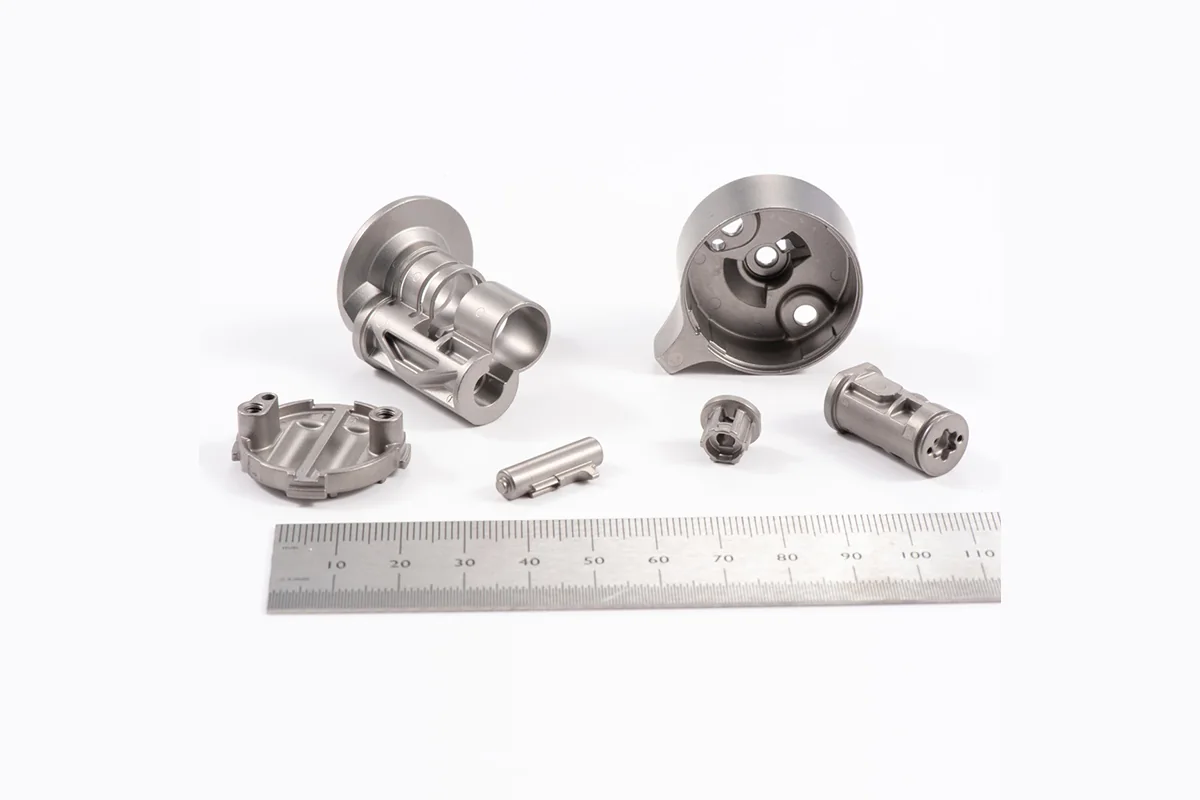
أجزاء أقفال الأبواب من مادة 17-4 PH H900: حالة المعالجة الحرارية مهمة
تحدد دراسة حالة MIMA/MPIF المنشورة لأقفال الأبواب MIM-17-4 PH مُعالج إلى H900, بكثافة 7.6 جم/سم³ وقوة شد 1,190 ميجا باسكال. لا يمكن استبدال نتائج المعالجة الحرارية الخاصة به بالقيم الموجودة في ورقة بيانات 17-4 PH بعد التلبيد أعلاه.
ما الذي يجب التحقق منه: بالنسبة لآلية القفل، حدد حالة المعالجة الحرارية والحمل الوظيفي. لا توفر الحالة العامة مجموعة كاملة من قيم الإنتاجية، والاستطالة، وعمر التآكل، أو قيم قبول الإجهاد.
حد المقارنة: تشير بيانات كتلة التدفق 316L وبيانات قفل H900 17-4 PH إلى منتجات وظروف معالجة مختلفة. تعامل معها كأمثلة موثقة منفصلة؛ يجب أن تأتي حدود القبول من مواصفات المشروع وخطة الاختبار.
مطابقة متطلبات الأداء مع اتجاهات المواد المرشحة
ابدأ بالخاصية المطلوبة، ثم تحقق من اتجاه المادة المحتمل، والقياس ذي الصلة، والحد. المصفوفة هي أداة فحص؛ يتطلب اعتماد الدرجة حالة المادة الفعلية ومعايير التطبيق.
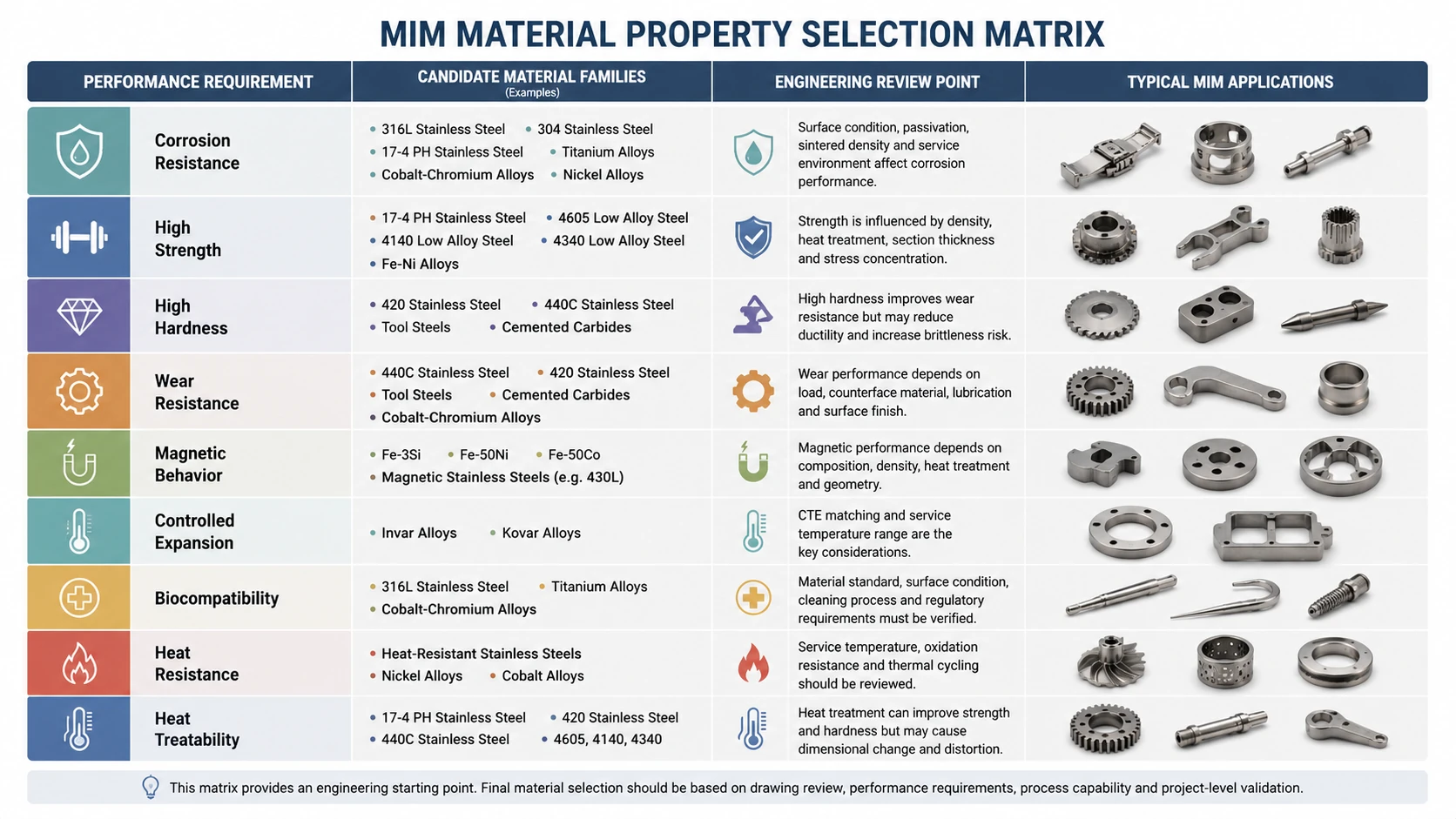
| متطلبات الأداء | الاتجاه المرشح | المقياس الرئيسي / المخاطر | التأكيد الهندسي | الدليل التفصيلي |
|---|---|---|---|---|
| قوة عالية | 17-4 PH؛ فولاذ سبائكي منخفض مثل 4605، 4140 أو 4340 | قوة الخضوع، قوة الشد، المتانة؛ تركيز الإجهاد المحلي | حالة المعالجة المطلوبة، التحميل، هندسة المقطع | مواد MIM عالية القوة |
| صلابة عالية | 420، 440C، درجات الفولاذ الأدوات أو الكربيد المختارة | مقياس الصلادة المحدد، خطر التشقق، الأبعاد بعد المعالجة | موقع الصلادة، الحالة النهائية، التعرض للصدمات | مواد MIM عالية الصلابة |
| مقاومة الاهتراء | فولاذ مقاوم للصدأ قابل للتصلب، سبائك فولاذية مختارة، مواد صلبة | وضع التآكل وأداء نظام التلامس؛ الصلادة وحدها غير كافية | السطح المقابل، الحمل، التشحيم، الدورات، تشطيب السطح | مواد MIM المقاومة للتآكل |
| مقاومة التآكل | 316L أو 304 فولاذ مقاوم للصدأ؛ 17-4 PH مختار أو سبائك خاصة عند الضرورة | البيئة الكيميائية أو الجوية الفعلية؛ حالة السطح والمسام | وسط التعرض، التنظيف، التخميل، طريقة القبول | مواد MIM المقاومة للتآكل |
| الاستجابة المغناطيسية | سبائك Fe-3Si، Fe-50Ni، Fe-50Co وسبائك مغناطيسية لينة أخرى مؤهلة | النفاذية، القسرية، التشبع، الهندسة والكثافة | الدائرة المغناطيسية وشرط الاختبار | مواد MIM المغناطيسية |
| استجابة المعالجة الحرارية | 17-4 PH، 420، 440C والفولاذ منخفض السبائك المختار | تغير الخواص مقابل التشوه أو تغير الأبعاد | جدول المعالجة المطلوب، الخاصية النهائية والتفاوت | مواد MIM القابلة للمعالجة الحرارية |
| متطلبات السلامة الطبية / البيولوجية | اتجاهات محتملة لـ 316L، التيتانيوم أو الكوبالت والكروم، تخضع للتأهيل | يتم تقييم السلامة البيولوجية للجهاز المقصود وسيناريو التلامس | الحالة النهائية للجهاز، التنظيف، التعرض، والمسار التنظيمي المطبق | مواد MIM متوافقة حيوياً |
| التمدد الحراري المتحكم فيه أو الخدمة في درجات حرارة مرتفعة | Invar / Kovar للتحكم في التمدد؛ فولاذ مقاوم للصدأ مختار مقاوم للحرارة أو سبائك النيكل للخدمة الساخنة | مطابقة CTE وخدمة الأكسدة هي متطلبات مختلفة | نطاق درجة الحرارة، المواد المتزاوجة، الدورة الحرارية وتوفر المواد | سبائك التمدد المتحكم به |
لتحقق أعمق خاص بدرجة معينة، راجع MIM 316L, MIM 17-4 PH, ، أو MIM 4605. The existence of a material page or a published standard does not establish that every manufacturing supplier has qualified that alloy for a particular project.
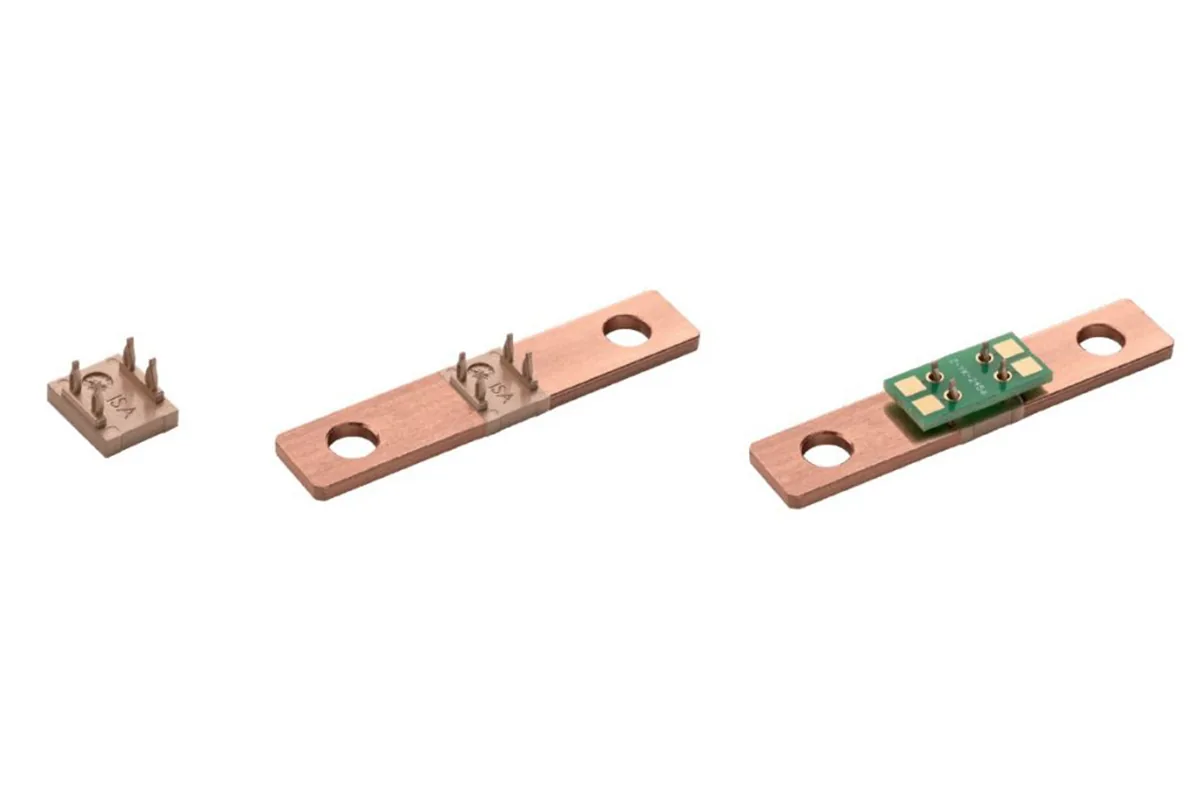
Copper-alloy 2C-MIM shunt: electrical properties across an assembly
Schunk describes a two-component MIM shunt combining a copper-alloy section with temperature-dependent electrical behavior and high-purity copper terminals for conductivity and soldered PCB connection.
ما الذي يجب التحقق منه: Specify conductivity over the operating temperature range, interface resistance and solder-joint requirements. The published example does not disclose exact alloy grades or numerical conductivity results. This is a specialized external process example, not a claimed standard XTMIM capability.
What Property Trade-Offs Matter in Real MIM Parts?
Hardness, strength, corrosion resistance and ductility must be judged against the likely failure mode. The two simplified design situations below are illustrations, while the photographed component cases are drawn from published industry examples.
Why Hardness Does Not Guarantee Wear Life
ضع في اعتبارك A miniature locking component is described only as "hardened stainless steel." Its edges repeatedly slide against a mating metal surface. Increasing hardness may resist indentation, but it does not establish the wear rate or prevent adhesive wear, galling, cracking, or surface damage. Those outcomes depend on contact geometry, counterface, lubrication, load, sliding distance, environment, and finished surface condition.
For the specified function, First identify the wear mechanism and actual surface-contact requirement; then compare a candidate material-and-treatment combination using a defined wear test or a representative assembly test. ASTM G99, for example, is a laboratory pin-on-disk or ball-on-disk procedure, and its results should not be assumed to reproduce every service condition.
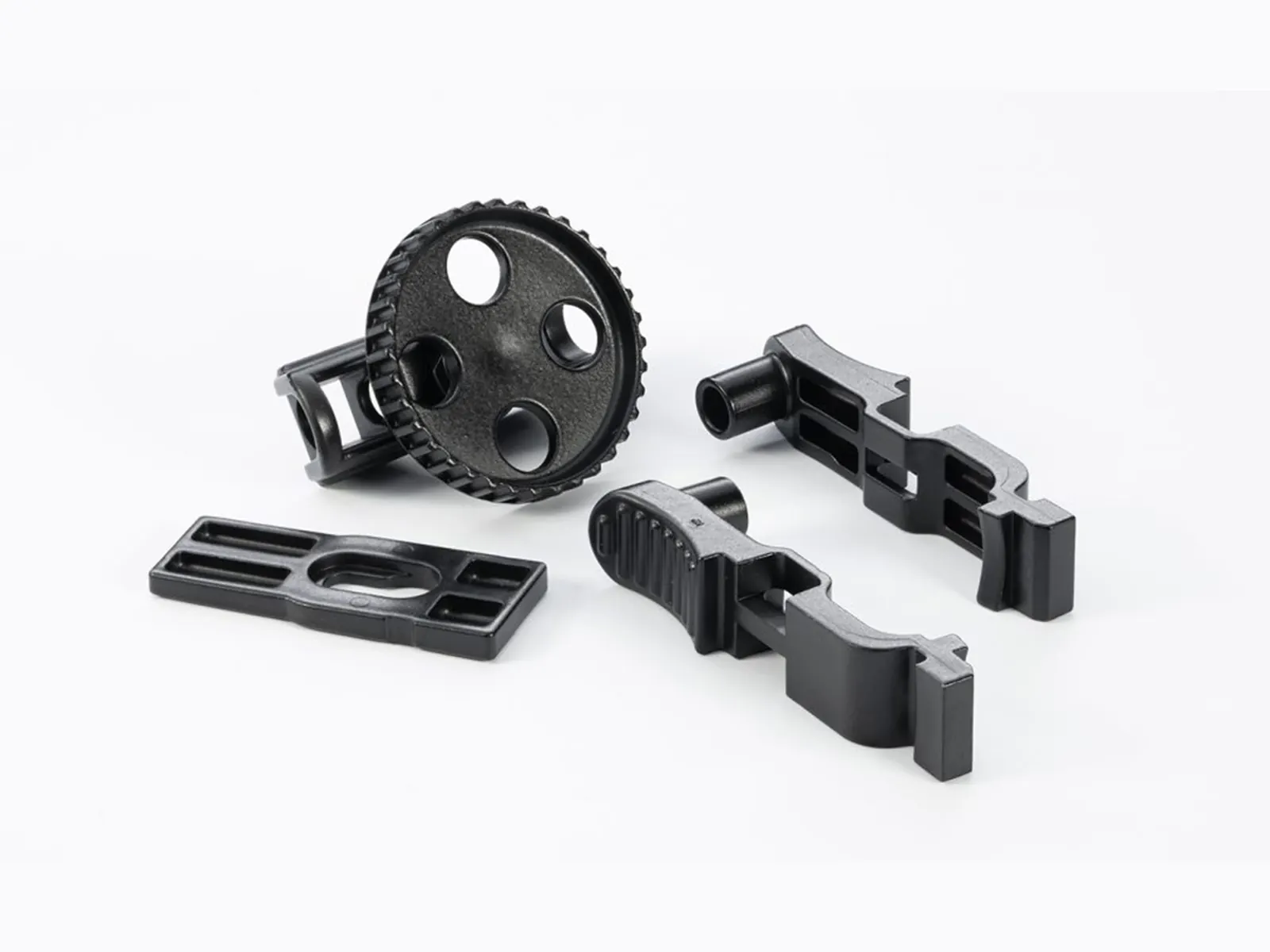
316L deep-ocean cable latch: wear and corrosion act together
The SeaNet cable-latch assembly uses four MIM part types across five pieces. The published case reports a change from plastic to MIM 316L to address stretching and cracking, together with a low-friction, corrosion-resistant coating.
ما الذي يجب التحقق منه: Grade, moving-contact geometry, coating and seawater exposure must be assessed as a system. The public award summary does not report a measured wear rate, coating lifetime or universal seawater qualification. Specify latch-cycle and corrosion acceptance tests for the actual use conditions.
Why Strength Must Be Considered with Ductility and Toughness
ضع في اعتبارك A thin-armed bracket must carry load and survive repeated assembly engagement. A grade with a higher reported tensile strength may look attractive, but permanent bending, local fracture, impact, and repeated loading each require a different evaluation. In some grades or treatment conditions, pushing strength or hardness higher can reduce ductility or alter the failure behavior.
For the specified function, Define the load path and critical section, distinguish tensile strength from yield strength and toughness, and evaluate the material in the final condition. Confirm whether a coupon-based property test is sufficient or whether a finished-part functional test is needed.
For corrosion-exposed parts, the same logic applies: a commonly corrosion-resistant alloy is only a candidate until the actual exposure medium and final surface condition are known. For heat-treated parts, any property increase must also be reconciled with dimensional change and assembly requirements.

4605 power-tool clamp body: material strength is not enough
This MPIF award example uses فولاذ سبائكي منخفض MIM-4605 in a U-shaped clamp body with integrated bosses and pin-like features. The reported manufacturing challenge was controlling cooling and venting to avoid voids and weld lines.
ما الذي يجب التحقق منه: Compare the actual load path with the wall transitions and critical molded regions. The report does not publish this component's yield strength, elongation or fatigue-life limits; those values cannot be inferred from the shape or material designation.
Why Can Finished MIM Part Properties Differ from Reference Values?
Published material figures describe a specified material and test state. Finished MIM parts are made by molding powder-binder feedstock, debinding, and sintering, followed by any required secondary operations. The grade name may be the same as a wrought or machined alloy, but the processing route, microstructure, porosity, and measured condition need not be identical. Nor should all MIM parts be assumed weaker: the appropriate comparison is between qualified conditions and the actual service requirement.
How Sintered Density, Porosity, and Chemistry Affect Properties
تلبيد MIM develops the final metal structure and density. Density is not just a number to copy into a datasheet: remaining pore volume, pore connectivity, pore shape, and location can matter to load-bearing sections, fatigue-sensitive features, corrosion exposure, leak-tightness, or functional surfaces. A density figure alone does not describe all those risks.
Powder chemistry and the debinding/sintering atmosphere also matter. Carbon, oxygen, nitrogen, and alloy composition can influence the resulting phases and properties, depending on the grade. For meaningful comparisons, require the same specified grade, relevant post-sintering state, and appropriate acceptance method. This is particularly important when a drawing specifies wrought-stock properties for a proposed MIM conversion.
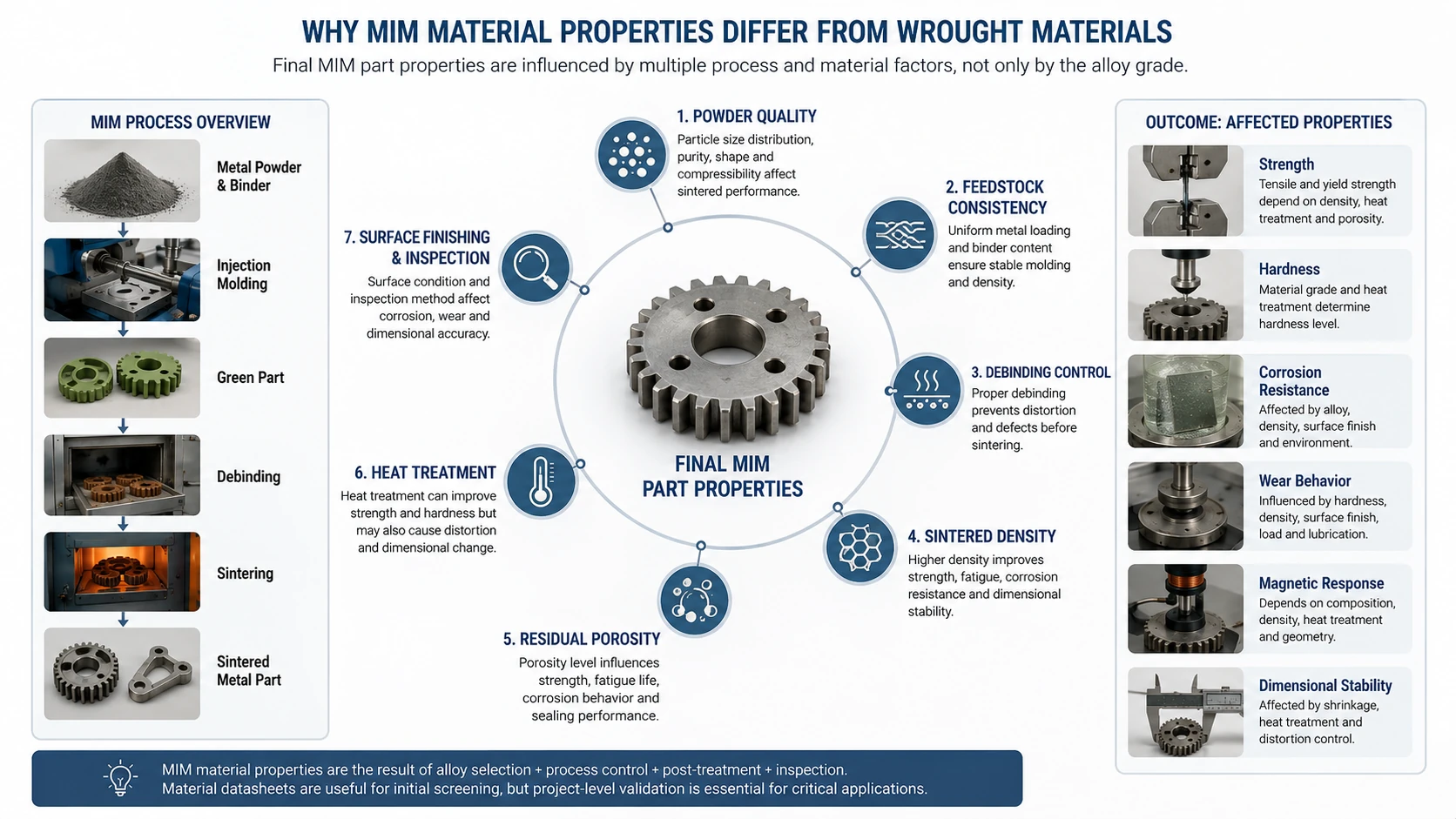
These process effects should be considered when interpreting a reference datasheet, especially for a part converted from CNC machining or casting.
How Heat Treatment and Surface Condition Affect Final Performance
Some MIM stainless and low alloy steel grades respond to post-sintering heat treatment that changes strength or hardness. However, the treatment may also influence distortion, flatness, and the amount of post-processing needed for a critical mating surface. The final condition, not merely the nominal grade, should appear in the material requirement.
As-sintered, machined, polished, passivated, and coated surfaces may respond differently to corrosion or wear. In a watch-hardware or sliding-contact application, the functional surface may be more important than the appearance of an untested specimen. Geometry further changes the picture: thin walls, sharp transitions, and load-bearing holes can create part-level risks even when a material coupon meets a specification.
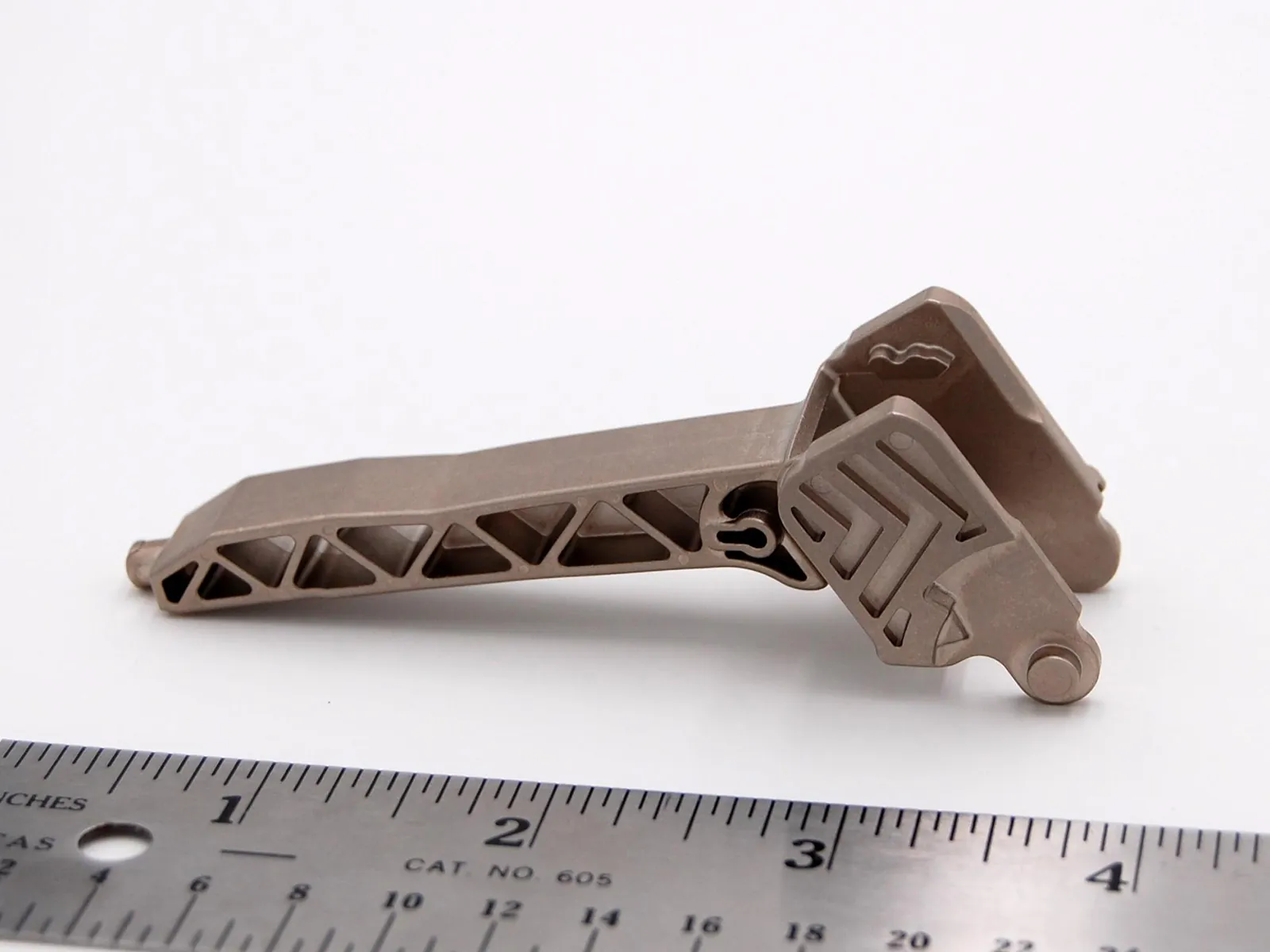
17-4 PH upper-beam handle: control distortion and functional dimensions
The published turbine-generator brush-holder case used a purpose-designed sintering support tray, followed by coining and one local machining operation for a critical dimension. Reported values include minimum density 7.5 g/cm³, yield strength 730 MPa, and hardness 36–42 HRC.
ما الذي يجب التحقق منه: A material property target does not replace a plan for sintering support, distortion control, inspection datums and the stage at which functional dimensions are finally measured.
How Should MIM Material Properties Be Verified?
A useful property requirement states not only what must be achieved but also كيف it will be tested, in which condition، و what counts as acceptance. Separate reference data from approved material specifications and project-specific evidence.
Reference Values vs. Verified Material Properties
A published typical or supplier figure used to understand potential performance and identify grades for further review.
A contractual or engineering limit linked to a material condition, drawing, applicable standard, and test method.
An appropriate test report or qualified part-level result tied to the actual material, process state, and acceptance plan.
Two samples bearing the same alloy designation can produce different results if their sintering conditions, heat-treatment histories, test-piece designs, surface states, or inspection methods are not equivalent. A reference value should not be published as an unconditional property guarantee.
Test Methods for Different Property Requirements
| Property to Verify | Method / Technical Basis | Conditions to Define | الأدلة المطلوبة |
|---|---|---|---|
| Strength and tensile ductility | ASTM E8/E8M-25 or another agreed metallic-material tensile method | Specimen geometry, material/heat-treatment state, loading, gauge length | Results for applicable coupon or part with stated strength, yield and elongation |
| الصلادة | ASTM E18-25 (Rockwell) or ASTM E92-26 (Vickers/Knoop), where applicable | Scale and load, test position, thickness, surface condition | Defined locations and measured values in the final condition |
| كثافة التلبيد والمسامية | ASTM B962-23 where the pore state fits the method; other qualified density/metallography methods as appropriate | Open/closed porosity, specimen suitability, impregnation if applicable | Density result, with pore evaluation where function requires it |
| Corrosion response | Application-specific exposure protocol; ASTM G31-21(2025) guides immersion-test design where applicable | Medium, temperature, duration, cleaning, finish, acceptance definition | Exposure-test report relevant to the intended environment |
| Wear and friction | ASTM G99-23 or an application-representative assembly/life test | Load, counterface, speed, travel, lubrication, temperature | Wear/friction results under documented test conditions |
| وظيفة مغناطيسية | Agreed magnetic material or finished-part response test | Field or frequency, magnetic circuit, heat treatment, geometry | Relevant permeability, coercivity, saturation or functional measurement |
| Thermal response | Specified CTE, thermal cycling, oxidation or hot-service evaluation | Temperature range, mating material, cycle count, environment | Results at the actual temperature and exposure regime |
| Biological safety, when applicable | Device-specific risk assessment; ISO 10993-1:2025 can be relevant | Intended use, contact type and duration, finished surface, cleaning | Appropriate device-level biological evaluation; no grade-name shortcut |
Methods do not set every acceptance limit by themselves. For example, a tensile-test procedure describes the measurement, while the applicable material specification or project drawing establishes the required result. For density, the correct method depends on whether the part is impermeable or has surface-connected porosity. For wear, laboratory results require care when extrapolating to a different contact system. A standardized test method explains how to measure a property; the applicable material or project specification defines the acceptance threshold.
Specimen Conditions and Acceptance Criteria
Before testing, state the exact grade, whether the material is as-sintered or heat-treated, the surface and cleaning condition, where the specimen comes from, how it will be tested, and what minimum, maximum, or tolerance range is acceptable. A standardized coupon may not represent all locally stressed features of a finished part, so geometry- or function-sensitive projects can also require component-level checks.

17-4 PH shaft-grounding guide: material tests plus assembly checks
The published MIMA/MPIF guide-section case lists minimum density 7.5 g/cm³ and hardness 23–25 HRC. It also describes customer-side functional and industry-standard testing with the mating assemblies.
ما الذي يجب التحقق منه: These results cannot be compared directly with the H900 lock-component figures without matching the test and treatment conditions. Specify both the required material properties and an assembly-level functional acceptance test.
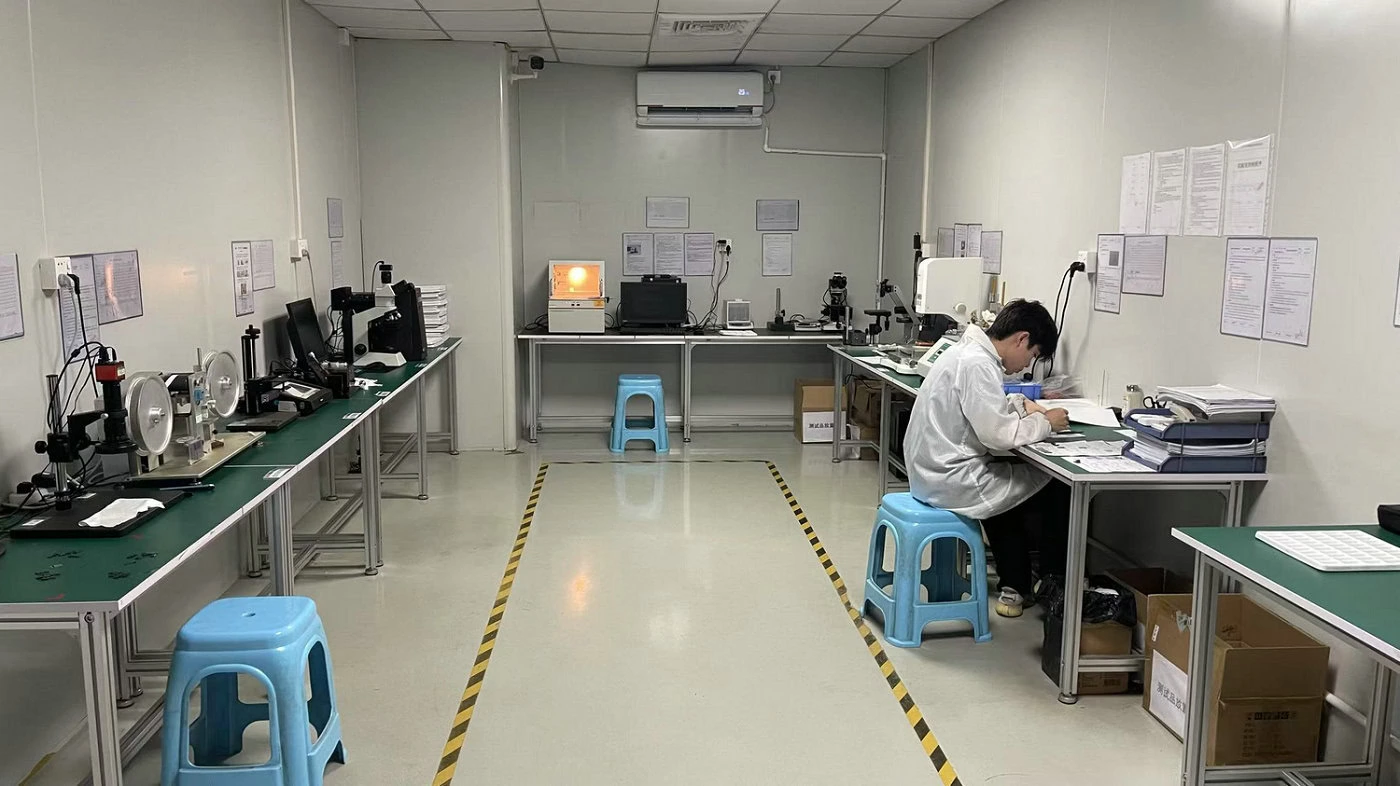
Inspection evidence must match the required property
Dimensional and visual inspection can confirm part geometry and surface-related acceptance points, but they do not by themselves demonstrate tensile strength, density, wear life or corrosion resistance. Those properties need suitable material tests, defined specimen or part conditions, and agreed acceptance criteria.
For project review: Identify which requirements are checked on finished parts and which need separate test reports or functional validation. The workshop photo illustrates inspection activities, not an unverified claim that every specialist material test is performed in-house.
What Must Be Confirmed for a Candidate MIM Material?
A candidate MIM grade is ready for engineering review when the required performance, material condition, verification method and unresolved manufacturing risks are documented together with the part drawing.
| Confirm Before Approval | Required Output | Example of an Incomplete Requirement |
|---|---|---|
| 1. Critical function and environment | Primary failure mode, operating conditions, secondary limits | "Strong enough" without load or duty cycle |
| 2. Candidate grade and state | Grade, as-sintered/heat-treated condition, critical surface state | "17-4 PH" without final condition |
| 3. Target property and units | Specified value/range, appropriate hardness scale or functional result | "High hardness" without test scale or location |
| 4. Verification and acceptance | Test method, specimen, acceptance criterion, required report | Material-table value used as acceptance evidence |
| 5. Remaining supplier/process risk | Feedstock, sintering, treatment and any geometry-sensitive confirmation | Assuming a published grade is already qualified in-house |
على سبيل المثال، "hardened stainless steel" is not a measurable acceptance requirement. Specify the required contact behavior, corrosion exposure, grade and treatment condition, critical dimensions, and agreed test method. This remains an illustrative requirement, not a claimed completed customer project.
Need the broader procedure for final grade selection? Continue to the دليل اختيار مواد MIM. For a wider list of available material families, refer to the نظرة عامة على مواد MIM. If your properties and geometry are ready for supplier review, submit the drawing for feasibility assessment.
Need to confirm a property requirement for a MIM part?
Provide the 2D drawing or 3D model, use environment, target property and units, critical feature, material candidate (if known), treatment/finish condition, and expected production volume. XTMIM can review the material direction and identify what manufacturing and validation questions remain open before production planning.
Standards and evidence boundaries
MPIF Standard 35-MIM، إصدار 2025 is the current MPIF/MIMA materials standard for metal injection molded parts. ASTM B883-24 covers specified ferrous MIM material classes. Both should be consulted in full when their grade and condition apply. Their existence does not mean the numerical values quoted above are current standard minimums.
For a project requiring biological safety evaluation of a medical device, the intended-use and risk-management framework is distinct from generic materials screening; consult the applicable device-specific requirements, including ISO 10993-1:2025 where relevant.
Technical references for this guide
- MIMplus material datasheets — producer-reported MIM 316L and 17-4 PH properties.
- Advanced Powder Products — MIM Stainless Steels — heat-treated MIM 420 typical figures.
- TAMAU Italia — MIM Materials Table — MIM 4605 as-sintered supplier limits.
- ASTM E8/E8M-25 — tensile testing of metallic materials.
- ASTM E18-25 — Rockwell hardness testing; ASTM E92-26 — Vickers and Knoop hardness testing.
- ASTM B962-23 — density testing of suitable PM products with surface-connected porosity.
- ASTM G99-23 — defined pin-on-disk / ball-on-disk wear and friction testing.
- ASTM G31-21(2025) — guidance for designing and interpreting laboratory immersion-corrosion tests.
- EPMA — overview of the metal injection moulding process and sintering.
- MIMA / MPIF — Door Lock Parts — 17-4 PH H900, documented density and tensile strength.
- MIMA / MPIF — EPR Flow Block Single Sensor — 316L material-property figures and complex fluid-channel design.
- PIM International / MPIF — 2023 Design Excellence Awards — 316L SeaNet latch assembly and 4605 power-tool clamp body.
- MIMA / MPIF — Upper Beam Handle — distortion control, post-sintering operations and specified material properties.
- MIMA / MPIF — Shaft Grounding Guide Section — measured hardness and density with assembly-level functional verification.
- PIM International / Schunk — 2C-MIM Copper Shunt — functional conductivity requirements and two-material fabrication.
Evidence note: Figures published by independent suppliers are examples, not a claim that XTMIM manufactures every listed grade or achieves those same values. Confirm current standards, feedstock availability, test methods, and part-level qualification for each quotation.