
MIM Parçaları · Düşük Alaşımlı Çelik Bileşenler
MIM Düşük Alaşımlı Çelik Parçalar
MIM düşük alaşımlı çelik parçaları, mukavemet, sertlik, aşınma davranışı, yük aktarımı, mekanik kavrama ve uygun maliyetli üretim açısından incelenen küçük mekanik bileşenlerdir. Bu sayfa, bir malzeme sınıfı indeksi değil, düşük alaşımlı çelik MIM parçaları vitrinidir. Temsili parçaları önce aile ve işleve göre düzenler, ardından takım öncesi mühendislik incelemesini desteklemek için malzeme yönünü, ısıl işlem beklentilerini, kritik boyutları ve RFQ gereksinimlerini kullanır.
Hızlı Cevap
Bir MIM parçaları vitrin sayfası için en net görüntüleme mantığı önce parça ailesi, sonra işlev ve üçüncü olarak malzeme yönüdür. 4605, 4140, 4340, Fe-2Ni, Fe-4Ni veya Fe-8Ni gibi sınıflar çizim incelemesini destekleyebilir, ancak yeterli gerçek örnek derinliği, bağımsız arama talebi ve malzeme sayfalarından net bir fark olmadıkça ayrı parça sayfası kategorileri haline gelmemelidir.
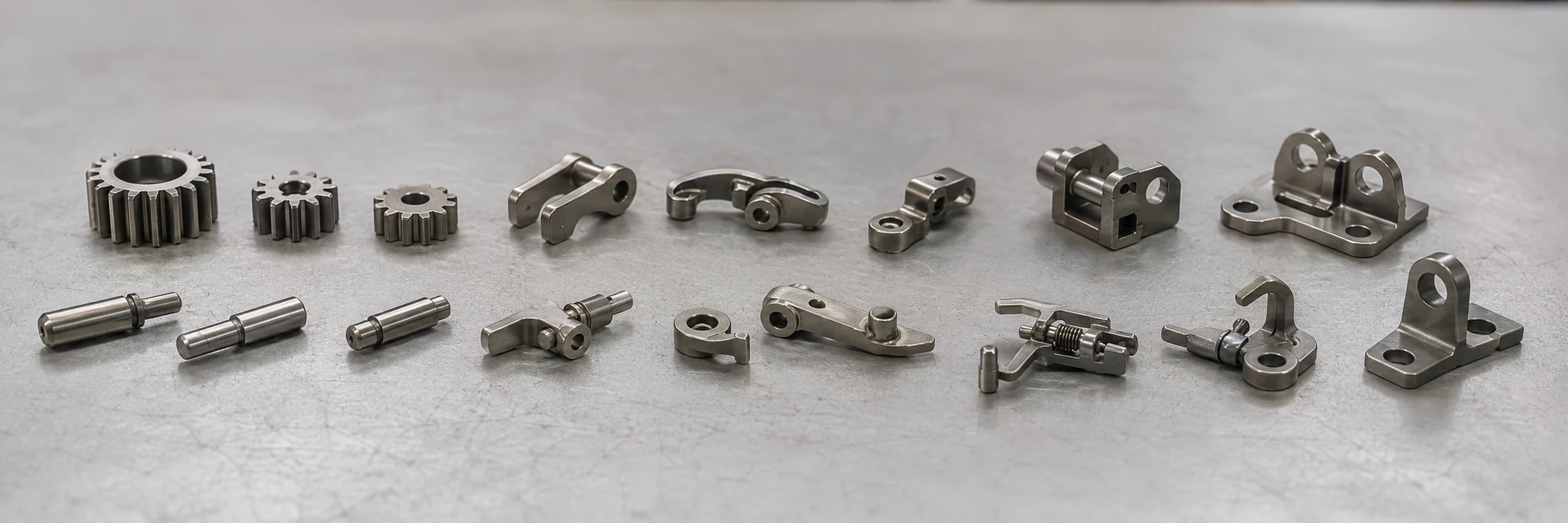
Temel sonuç: Düşük alaşımlı çelik MIM parçaları öncelikle parça ailesi ve işleve göre sunulmalı, malzeme sınıfları ise daha sonraki çizim incelemesini desteklemelidir.
Görüntüleme Mantığı
Düşük Alaşımlı Çelik MIM Parçaları Görüntüleme Mantığı
Düşük alaşımlı çelik parçalar yalnızca malzeme sınıfına göre görüntülenmemelidir. Bir çizim, malzeme satırında 4140, 4340, 4605 veya Fe-Ni yazdığı için kullanışlı hale gelmez. Pratik kural basittir: parçayı aileye göre sınıflandırın, mekanik işlevi inceleyin, ardından malzeme yönünü bir RFQ girdisi olarak kullanın.
Bu sayfanın neden parça ailelerini önce kullandığı
Bir “4140 parçası” dişli, mil, mandal, bağlantı, braket veya kayar bileşen olabilir. Sayfa esas olarak sınıfa göre bölünseydi, aynı parça türleri birden fazla malzeme altında tekrarlanır ve sayfa bir malzeme indeksi haline gelirdi, kullanışlı bir MIM parçaları vitrin yerine.
Malzeme yönü gösterimi nasıl destekler
Malzeme yönü hala önemlidir, ancak bir inceleme girdisi olarak en iyi şekilde çalışır. Düşük alaşımlı çelik, küçük bir mekanik bileşenin mukavemet, sertlik, aşınma davranışı, yük aktarımı veya uygun maliyetli performans gerektirmesi durumunda düşünülebilir. Bu sınıflandırma, parça ailesi yapısını değiştirmek yerine çizim incelemesini desteklemelidir.
Mühendislik içgörüsü: yalnızca malzeme sınıfına göre gruplama, RFQ incelemesini zayıflatabilir
Bir çizim incelemesi perspektifinden bakıldığında, yalnızca malzeme sınıfına göre gruplama genellikle gerçek proje sorusunu gizler. Küçük bir dişli, tespit pimi, mandal ve kompakt bir braket, hepsi düşük alaşımlı çelik yönü altında incelenebilir, ancak her birinin farklı kalıplama, sinterleme büzülmesi, ısıl işlem, yüzey ve muayene riskleri vardır. Fonksiyona öncelik veren bir gösterim, alıcının daha kullanışlı RFQ bilgileri göndermesine yardımcı olur.
| Görüntüleme Katmanı | Nasıl Kullanılır | Neden Önemlidir |
|---|---|---|
| Parça ailesi | Parçaları dişliler, pimler, pivotlar, mandallar, bağlantılar, braketler veya mekanizma bileşenleri olarak gruplandırın. | Bu, kullanıcıların kendi çizimlerini tanınabilir parça formlarıyla karşılaştırmalarına yardımcı olur. |
| Mekanik fonksiyon | Mukavemet, aşınma, yük aktarımı, mekanik kavrama, konumlandırma veya destek fonksiyonunu inceleyin. | Aynı malzeme yönü, farklı mekanik gereksinimlere hizmet edebilir. |
| MIM üretilebilirliği | Duvar dengesini, ince özellikleri, alt kesimleri, yolluk konumunu, sinterleme büzülmesini ve referans stratejisini kontrol edin. | MIM proje riski, yalnızca malzeme adından ziyade genellikle geometri ve muayene gereksinimlerinden kaynaklanır. |
| Malzeme yönü | Mühendislik incelemesi yönlendirmeleri olarak 4605, 4140, 4340, Fe-2Ni, Fe-4Ni veya Fe-8Ni kullanın. | Bu, parça sayfasının tekrarlanan bir malzeme sınıfı sayfasına dönüşmesini önler. |
| Teklif talebi (RFQ) incelemesi | Çizimi, malzeme hedefini, sertlik veya ısıl işlemi, kritik boyutları ve yıllık hacmi onaylayın. | Bu, proje ekibine üretilebilirliği ve teklif kapsamını değerlendirmek için yeterli bilgi sağlar. |
Temsili Bileşenler
Temsili Düşük Alaşımlı Çelik MIM Parça Aileleri
Düşük alaşımlı çelik MIM parçaları, mekanik parça aileleri olarak sergilenmek için en kullanışlı olanlardır. Amaç, mümkün olan her özel bileşeni göstermek değil, mühendislerin ve tedarik ekiplerinin düşük alaşımlı çelik inceleme yönlendirmesi altında hangi küçük, karmaşık, fonksiyonel metal parçaların yer alabileceğini tanımasına yardımcı olmaktır.

Temel sonuç: Parça ailesi, düşük alaşımlı çelik MIM parçaları için en net sergileme mantığıdır çünkü tek bir malzeme yönlendirmesi birden fazla mekanik bileşen türünü destekleyebilir.
| Parça Ailesi | Tipik Parça Örnekleri | Fonksiyonel İhtiyaç | Olası Malzeme Yönü | İnceleme Odağı |
|---|---|---|---|---|
| Şanzıman ve hareket bileşenleri | Küçük dişliler, sektör dişliler, mandal elemanları, tahrik özellikleri | Aşınma, sertlik, hareket aktarımı, boyutsal tutarlılık | 4605, 4140, 4340 | Diş geometrisi, göbek tasarımı, referans stratejisi, aşınma yüzeyleri |
| Miller, pimler, pivotlar ve konumlandırma parçaları | Pivot pimleri, konumlandırma pimleri, kilit pimleri, kompakt miller | Mukavemet, temas aşınması, uyum ve konumlandırma | 4605, Fe-Ni düşük alaşımlı çelik, 4140 | Çap kontrolü, düzlük, eşleşme uyumu, sinterleme sonrası boyutlandırma |
| Kilitleme, mandallama ve kavrama parçaları | Mandallar, kilitler, kancalar, kuplajlar, kavrama kolları | Mekanik kavrama, yerel gerilim, tekrarlanan temas | 4140, 4340, Fe-Ni düşük alaşımlı çelik | Temas yüzeyi, kenar radyüsü, ısıl işlem, distorsiyon riski |
| Kompakt braketler, bağlantı elemanları ve destek parçaları | Menteşe bağlantıları, kompakt braketler, destek blokları, takviye parçaları | Yapısal destek, yük aktarımı, küçük karmaşık geometriler | 4605, 4140 | Et kalınlığı, nervür tasarımı, delik konumu, düzlük |
| Aşınmaya maruz kalan mekanizma parçaları | Kelepçe elemanları, aktüatör parçaları, kızak blokları, durdurucu özellikler | Aşınma davranışı, sertlik, mekanik stabilite | 4140, 4340 | Temas yüzeyi, yüzey kalitesi, ikincil işlem rotası |
Parça ailesi gösterimi için MIM inceleme noktası
Bir parça ailesi gösterimi, yalnızca üretilebilirliği de yansıttığında faydalıdır. Düşük alaşımlı çelik MIM parçaları için inceleme, besleme stoğu davranışı, kalıplama özellikleri, yeşil parça elleçleme, bağlayıcı giderme riski, sinterleme büzülmesi, ikincil işlem planlaması ve son muayeneyi dikkate almalıdır. Bir parça dişli veya braket gibi görünüyorsa ancak sinterleme sonrası çok sayıda işlenmiş yüzey gerektiriyorsa, beklenen MIM avantajını sağlamayabilir.
Fonksiyon Bazlı Görüntüleme
Fonksiyona Göre Görüntüle: Mukavemet, Aşınma, Yük Aktarımı ve Mekanik Kenetlenme
Düşük alaşımlı çelik parçalar sayfası, kullanıcıların görsel parça ailesini çizimin arkasındaki fonksiyonla ilişkilendirmesine yardımcı olmalıdır. Bu, yaygın bir RFQ (Teklif Talebi) sorununu önler: parçanın montajda aslında ne yapması gerektiğini doğrulamadan önce bir malzeme sınıfı istemek.

Temel sonuç: Mukavemet, aşınma, yük aktarımı ve mekanik kenetlenme, bir malzeme sınıfı seçilmeden önce görüntüleme yolunu yönlendirmelidir.
Mukavemet Odaklı Parçalar
Kompakt bağlantılar, pivotlar, kilitleme parçaları, güçlendirilmiş ekler ve yük aktarım bileşenleri, çizim mekanik mukavemet gerektirdiğinde düşük alaşımlı çelik altında görüntülenebilir. İnceleme, yük yolu, kesit dengesi, gerilim geçişleri ve olası ikincil işlemleri kontrol etmelidir. Daha fazla fonksiyon odaklı örnek için şuraya bakınız: yüksek mukavemetli MIM parçaları.
Aşınma ve Temas Yüzeyi Parçaları
Dişliler, mandallar, pivotlar ve kayar özellikler, hangi yüzeylerin temas, dönme, darbe veya kaymaya maruz kaldığını belirlemelidir. Çizim sıkı aşınma yüzeyi kontrolü gerektiriyorsa, boyutlandırma, işleme, taşlama, ısıl işlem veya yüzey işlemleri RFQ sırasında tartışılmalıdır. İlgili örnekler altında incelenebilir: aşınmaya dayanıklı MIM parçaları.
Yük Aktarımı ve Mekanik Kilitleme Parçaları
Kilitleme ve kenetleme parçaları genellikle küçük temas yüzeyleri, kancalar, basamaklar, yuvalar, dişliler ve kompakt kuvvet aktarım özellikleri içerir. Bu detaylar MIM'i çekici kılabilir, ancak aynı zamanda besleme noktası konumu, kenar tanımı, sinterleme büzülmesi davranışı, ısıl işlem beklentileri ve muayene yüzeylerinin incelenmesini gerektirir.
Maliyete Duyarlı Mekanik Parçalar
Düşük alaşımlı çelik, korozyon direncini öncelikli gereksinim olmadığı durumlarda maliyet hassasiyeti olan mekanik bileşenler için düşünülebilir. Maliyet hala geometriye, kalıplamaya, yıllık hacme, ikincil işlemlere, muayene gereksinimlerine ve malzeme rotasına bağlıdır.
Teklif (RFQ) incelemesi için kompozit mühendislik senaryosu
Temsili bir teklif (RFQ) incelemesi senaryosunda, kompakt bir mandal ve pivot bileşeni, küçük karmaşık geometriye, yerel temas yüzeylerine ve mukavemet gereksinimine sahip olması nedeniyle düşük alaşımlı çelik MIM yönü için uygun görünebilir. Proje ekibinin, kalıplama öncesinde duvar kalınlığı dengesini, yolluk konumunu, sinterleme deformasyon riskini, ısıl işlem beklentisini, temas yüzeyi muayenesini ve herhangi bir fonksiyonel çapın boyutlandırma veya işleme gerektirip gerektirmediğini kontrol etmesi gerekmektedir.
Mühendislik İncelemesi
Düşük Alaşımlı Çelik Parçalar İçin MIM Üretim İnceleme Noktaları
Düşük alaşımlı çelik parçaların bir vitrini, parçaların MIM süreci için nasıl inceleneceğini de göstermelidir. XTMIM, çizimi kalıplama, bağlayıcı giderme, sinterleme, ikincil işlem ve muayene mantığı aracılığıyla değerlendirebilir. Amaç, malzeme adından bir sonuç garanti etmek değil, kalıplama öncesinde hangi proje risklerinin netleştirilmesi gerektiğini belirlemektir.
Geometri sinyali
İnce duvarlar, küçük delikler, yuvalar, undercut'lar, nervürler, yükseltiler ve keskin geçişler kalıplama öncesinde incelenmelidir.
İşlem sinyali
Kalıplama, yeşil parça elleçleme, bağlayıcı giderme ve sinterleme büzülmesi nihai geometriyi ve muayene planlamasını etkileyebilir.
İkincil işlem sinyali
Sertlik hedefleri, ısıl işlem, boyutlandırma, işleme, yüzey bitirme veya kaplama, teklif (RFQ) kapsamına dahil edilmelidir.
Muayene sinyali
Kritik boyutlar, fonksiyonel datumlar, temas yüzeyleri ve birleşen özellikler çizimde açıkça belirtilmelidir.
| İnceleme Alanı | Kontrol Edilecekler | Düşük Alaşımlı Çelik MIM Parçaları İçin Neden Önemlidir |
|---|---|---|
| Kalıplama Özellikleri | Kalıp ağzı alanı, ayırma hattı, ince duvar, ters açı, yerel kalın kesit, parça yönelimi | Bu özellikler kalıplanabilirliği, yeşil parça (molded part) tutmayı ve parçanın net şekle yakın kalıp alıp alamayacağını etkiler. |
| Bağlayıcı giderme ve sinterleme | Duvar dengesi, kesit değişiklikleri, desteksiz özellikler, deformasyon riski, sinterleme büzülme telafisi | Düşük alaşımlı çelik parçalar, ikincil işlemler planlanmadan önce genellikle sinterleme sonrası stabil boyutlara ihtiyaç duyar. |
| Isıl işlem ve sertlik | Hedef sertlik, gerekli durum, boyutsal değişim hassasiyeti, temas yüzeyi gereksinimleri | Isıl işlem, boyutları, muayene sırasını ve işlem sonrası bitirme ihtiyacını etkileyebilir. |
| İkincil işlemler | Boyutlandırma, işleme, taşlama, yüzey bitirme, kaplama veya yerel bitirme gereksinimleri | Çok fazla ikincil işlem, maliyeti değiştirebilir ve parça için MIM kullanmanın faydasını azaltabilir. |
| Kontrol stratejisi | Fonksiyonel yüzeyler, birleşme özellikleri, referans düzlemi, kritik boyutlar ve kabul kriterleri | Muayene öncelikleri, yalnızca malzeme sınıfına değil, parçanın fonksiyonuna uygun olmalıdır. |
Malzeme Yönelimi
Düşük Alaşımlı Çelik MIM Parçaları İçin Malzeme Yönü
Malzeme yönü, bu sayfa için ana ürün kategorisi değil, bir inceleme girdisidir. Detaylı malzeme tartışması, malzeme sayfalarında kalmalıdır. Bu parça sayfasında, malzeme adları bir parça ailesini çizim incelemesi, ısıl işlem beklentileri, ikincil işlemler ve RFQ kapsamı ile ilişkilendirmeye yardımcı olur. MIM için düşük alaşımlı çelik Malzeme yönü, parça gösterimini destekler, ancak parça ailesi yapısının yerini almamalıdır.

Temel sonuç: 4605, 4140, 4340 ve Fe-Ni düşük alaşımlı çelikler, ayrı parça sayfası kategorileri yerine çizim incelemesi için malzeme yönlendirmeleri olarak ele alınmalıdır.
| Malzeme Yönelimi | Bu Parça Sayfasında Kullanım | Tipik Parça Ailesi İlişkisi | İnceleme Notu |
|---|---|---|---|
| 4605 düşük alaşımlı çelik | Genel mekanik düşük alaşımlı çelik inceleme yönlendirmesi | Küçük dişliler, bağlantılar, braketler, pimler ve fonksiyonel ek parçalar | Teklif (RFQ) sırasında malzeme yönünü, sertliği, ikincil işlemi ve kritik boyutları onaylayın. |
| 4140 düşük alaşımlı çelik | Daha yüksek mukavemetli mekanik parça inceleme yönü | Kilitleme parçaları, yük aktarma elemanları, dişliler, pimler ve aşınmaya maruz kalan mekanizmalar | Kalıplama öncesinde geometri, ısıl işlem beklentisi ve muayene yüzeylerini inceleyin. |
| 4340 düşük alaşımlı çelik | Daha yüksek mukavemet veya tokluk odaklı inceleme yönü | Kompakt bağlantılar, mekanik kavrama parçaları, yük aktarma bileşenleri | Projenin bir malzeme sınıfı, bir performans hedefi veya fonksiyonel bir gereksinim gerektirip gerektirmediğini onaylayın. |
| Fe-2Ni düşük alaşımlı çelik / Fe-4Ni düşük alaşımlı çelik / Fe-8Ni düşük alaşımlı çelik | Mukavemet ve tokluk ayarı için Fe-Ni düşük alaşımlı inceleme yönü | Pimler, mandallar, bağlantılar, dişliler ve kompakt mekanik parçalar | Ayrı bir düşük alaşımlı çelik parça kategorisi olarak değil, bir malzeme yönü olarak kullanın. |
Neden şimdi 4140 / 4340 / 4605 parçaları alt sayfaları oluşturulmasın?
Mevcut sayfa mantığı, düşük alaşımlı çelik parçalarını kaliteye göre ayırmaktan kaçınmalıdır. Kalite bazlı alt sayfalar muhtemelen malzeme sayfalarını tekrarlayacak ve parça sergileme amacını zayıflatacaktır. Gelecekteki örnek derinliği genişlemeyi desteklerse, alt sayfalar yalnızca malzeme kalitesine göre değil, örneğin düşük alaşımlı çelik MIM dişliler veya düşük alaşımlı çelik pimler gibi parça ailelerine göre değerlendirilmelidir.
Parça Galerisi
Düşük Alaşımlı Çelik MIM Projeleri İçin Temsili Parça Galerisi
Bu bölüm, sabit bir katalog yerine görsel bir ürün ailesi galerisi olarak tasarlanmıştır. Düşük alaşımlı çelik MIM projelerinin çoğu, müşteri çizimlerine dayalı özel bileşenlerdir. Galeri, kullanıcıların kendi çizimlerini benzer mekanik parça işlevleriyle karşılaştırmalarına yardımcı olmalıdır.

Temel sonuç: Galeri, müşterilerin kendi özel çizimlerini benzer MIM parça aileleriyle görsel olarak karşılaştırmalarına yardımcı olmalıdır.
Dişli ve hareket parçaları
Bu grubu küçük dişliler, sektör dişliler, mandal elemanları ve tahrik özellikleri için kullanın. Diş geometrisini, göbek tasarımını, aşınma yüzeylerini ve referans stratejisini inceleyin.
Pim, mil ve pivot parçaları
Bu grubu kompakt pimler, pivotlar, konumlandırma parçaları ve kısa mil benzeri bileşenler için kullanın. Kritik çapları, düzlüğü, uyumu ve olası boyutlandırmayı inceleyin.
Mandal, mandal ve kuplaj parçaları
Yerel temas yüzeylerine sahip parçalar için bu grubu kullanın. Gerilim alanlarını, kenar radyüsünü, ısıl işlem beklentilerini ve deformasyon riskini gözden geçirin.
Braket, bağlantı ve destek parçaları
Bu grubu, büyük sac metal braketler veya CNC blokları yerine kompakt yapısal elemanlar için kullanın. Et kalınlığını, montaj yüzeylerini ve delik konumlarını gözden geçirin.
Seçim Yolu
Düşük Alaşımlı Çelik Parçanız İçin Görüntüleme Yolunu Nasıl Seçersiniz
Parçanın işleviyle başlayın, malzeme sınıfıyla değil. Ardından parçayı bir aileye eşleştirin, inceleme odağını belirleyin ve malzeme yönünün uygulamayı destekleyip desteklemediğini onaylayın.
| Parça Temel Olarak İhtiyaç Duyuyorsa... | Bunu Aşağıdaki Altında Görüntüleyin... | İnceleme Odağı | Olası Sonraki Adım |
|---|---|---|---|
| Hareket aktarımı | Şanzıman ve hareket bileşenleri | Diş profili, göbek tasarımı, aşınma yüzeyi, boyutsal kontrol | MIM dişli parçalarıyla karşılaştırın ve malzeme yönünü onaylayın. |
| Konumlandırma veya yerleştirme | Miller, pimler, pivotlar ve konumlandırma parçaları | Çap, düzlük, datum, geçme ve yüzey kalitesi | Miller ve pimler ile parça ailesi mantığını gözden geçirin. |
| Mekanik kilitleme | Mandallar, mandal pimleri, kancalar ve kuplaj parçaları | Temas gerilimi, yerel aşınma, kenar radyüsü, kavrama yüzeyi | Isıl işlem ve kritik fonksiyonel yüzeyleri onaylayın. |
| Kompakt yapısal destek | Braketler, bağlantı elemanları ve destek unsurları | Et kalınlığı, nervür tasarımı, delik konumu, düzlük | Parçanın büyük bir CNC veya sac metal parçası yerine MIM'e uygun olup olmadığını gözden geçirin. |
| Kayma veya tekrarlanan temas | Aşınmaya maruz kalan mekanizma parçaları | Sertlik hedefi, temas yüzeyi, sonlandırma ve ikincil işlem | RFQ sırasında malzeme yönünü ve sinterleme sonrası rotayı tartışın. |
1. Parça fonksiyonu ile başlayın
Bileşenin hareketi ilettiğini, bir düzeneği konumlandırdığını, bir mekanizmayı kilitlediğini, yük taşıdığını veya tekrarlanan temas gördüğünü belirleyin.
2. Malzeme yönünü eşleştirin
Düşük alaşımlı çelik sınıfı yönünü, parçayı sınıflandırmanın tek yolu olarak değil, bir mühendislik inceleme girdisi olarak kullanın.
3. İkincil işlemleri onaylayın
Kalıplama öncesinde ısıl işlem, sertlik hedefi, yüzey kalitesi, boyutlandırma, işleme veya muayene ihtiyaçlarını görüşün.
RFQ Hazırlığı
Düşük Alaşımlı Çelik MIM Parçaları İçin Çizim ve RFQ Bilgileri
Düşük alaşımlı çelik MIM parçaları için bir RFQ'da, çizim paketi hem geometriyi hem de malzeme yönünü incelemek için yeterli bilgi sağlamalıdır. Kritik boyutlar, toleranslar, sertlik, ısıl işlem, yüzey kalitesi veya muayene gereksinimleri tanımlanmamışsa, yalnızca 3D model genellikle yeterli değildir.

Temel sonuç: Faydalı bir düşük alaşımlı çelik MIM RFQ, çizimi, malzeme yönünü, ısıl işlemi veya sertlik hedefini, kritik boyutları ve yıllık hacmi içermelidir.
Kritik boyutların net bir şekilde gösterildiği 2B çizim ve 3B model.
Tercih edilen malzeme sınıfı, malzeme yönü veya fonksiyonel performans gereksinimi.
Sertlik hedefi, ısı işlemi beklenti veya gerekli yüzey durumu.
Fonksiyonel yüzeyler, birleşen parçalar, referans noktası gereksinimleri ve inceleme öncelikleri.
Yüzey kalitesi, kaplama, işleme, boyutlandırma veya diğer ikincil işlem gereksinimleri.
Yıllık hacim, üretim aşaması ve uygulama ortamı.
Teklif Talebi (RFQ) Tamamlama Notu
Düşük alaşımlı çelik MIM için bir teklif talebi, hem parça fonksiyonunu hem de malzeme beklentisini tanımladığında daha güçlüdür. Eğer bir teknik resimde sadece “düşük alaşımlı çelik” yazıyor ancak fonksiyonel yüzeyler, birleşen parçalar, sertlik hedefi, ısıl işlem beklentisi veya yıllık hacim belirtilmiyorsa, proje ekibinin teklif öncesinde ek bir inceleme turuna ihtiyacı olabilir.
Teklif Talebi (RFQ) öncesinde, mühendislik ve tedarik ekipleri ayrıca şunları da kullanabilir: MIM RFQ hazırlık rehberi teknik resim dosyalarını, malzeme yönünü, kritik boyutları ve proje gereksinimlerini organize etmek için.
SSS
Düşük Alaşımlı Çelik MIM Parçaları Hakkında SSS
Bu sorular, bu sayfayı düşük alaşımlı çelik MIM parçaları vitrini olarak nasıl kullanacağınız ve pratik bir teknik resim incelemesini nasıl hazırlayacağınız üzerine odaklanmaktadır.
Düşük alaşımlı çelik MIM parçaları malzeme kalitesine göre mi yoksa parça fonksiyonuna göre mi gruplandırılmalıdır?
XTMIM, özel düşük alaşımlı çelik MIM parçalarını çizimlerden inceleyebilir mi?
4140, 4340, 4605 veya Fe-Ni düşük alaşımlı çeliği ne zaman düşünmeliyim?
Düşük alaşımlı çelik MIM parçaları ısıl işlem için uygun mudur?
Düşük alaşımlı çelik MIM parçaları, paslanmaz çelik MIM parçalarından nasıl farklıdır?
Düşük alaşımlı çelik MIM parçaları için RFQ'ya ne göndermeliyim?
Mühendislik inceleme notu
Düşük alaşımlı çelik MIM parçaları, müşteri çizimine, malzeme yönelimine, uygulama ortamına, ısıl işlem beklentilerine, muayene gereksinimlerine ve projeye özel RFQ koşullarına göre incelenmelidir. Nihai parça performansını veya üretilebilirliğini tanımlamak için yalnızca malzeme sınıfı adları yeterli değildir.
Teknik Referanslar
MIM Malzeme İncelemesi İçin Teknik Referanslar
Bu referanslar, MIM parçaları için malzeme-standart bağlamını desteklemektedir. Bunlar yalnızca endüstriyel arka plan olarak dahil edilmiştir. Nihai malzeme yönelimi, ısıl işlem, ikincil operasyonlar ve kabul gereksinimleri hala müşteri çizimi ve proje RFQ'sundan doğrulanmalıdır.
MPIF Standartları — Standart 35-MIM
İlgililik: MPIF, Standard 35-MIM'i, metal enjeksiyon kalıplama (MIM) için yaygın olarak kullanılan malzemeleri kapsayan, açıklayıcı notlar ve tanımlar içeren bir standart olarak tanımlar.
MPIF Standard 35-MIM 2025 Baskısı
İlgililik: MPIF, metal enjeksiyon kalıplı parçalar için malzeme standartları olan Standard 35-MIM'in 2025 baskısını duyurdu. Bu, sayfanın malzeme yönelimini bir ürün kategorisi ikamesi yerine bir çizim incelemesi girdisi olarak kullanmasını desteklemektedir.
Düşük Alaşımlı Çelik Parça Çiziminizi MIM İncelemesi İçin Gönderin
2B çiziminizi, 3B modelinizi, hedef malzeme yöneliminizi, sertlik veya ısıl işlem beklentinizi, kritik boyutları ve yıllık hacminizi gönderin. XTMIM, düşük alaşımlı çelik MIM rotasının parça ailesi, işlevi ve üretim gereksinimlerine uygun olup olmadığını inceleyebilir.