
Ödeme Bileklikleri için MIM Giyilebilir Cihaz Parçaları
MIM giyilebilir cihaz parçaları, ödeme bileklikleri, NFC/RFID bileklikler, erişim kontrol bantları ve kompakt giyilebilir elektronik modüllerde kullanılan küçük metal bileşenlerdir. Bunlar, komple giyilebilir ürünler, saat kasaları, saat kayışları, silikon bileklikler, NFC çipleri, antenler, donanım yazılımı veya ödeme sistemleri değildir. Tasarım incelemesi açısından MIM, metal bir parçanın küçük boyut, karmaşık geometri, tekrarlanabilir montaj konumu, yerel dayanım, korozyona maruz kalma veya üretim hacminde işlenmesi veya damgalanması zor olan tekrarlanan kilitlenme/temas işlevlerini birleştirdiğinde önem kazanır. Tipik adaylar arasında modül tutucular, tutma çerçeveleri, mikro braketler, tutma klipsleri, konnektör yuvaları, pimler, pivotlar, kilit parçaları ve paslanmaz çelik insertler bulunur. Parçanız bir anten, cilt temas alanı, şarj kontağı, hareketli arayüz veya sıkı montaj boşluğu yakınında bulunuyorsa, kalıplamadan önce incelenmelidir.
Küçük, karmaşık, hacim odaklı; tutma, kilitleme, konumlandırma, temas desteği veya takviye işlevlerine sahip metal parçalar.
Saat kasaları, akıllı saat gövdeleri, kayışlar, silikon bantlar, NFC çipleri, antenler, donanım yazılımı veya komple ödeme cihazı montajı.
Et kalınlığı, küçük delikler, geçmeli bağlantı gerilimi, anten boşluğu, sinterleme büzülmesi, yüzey kalitesi ve tolerans birikimi.
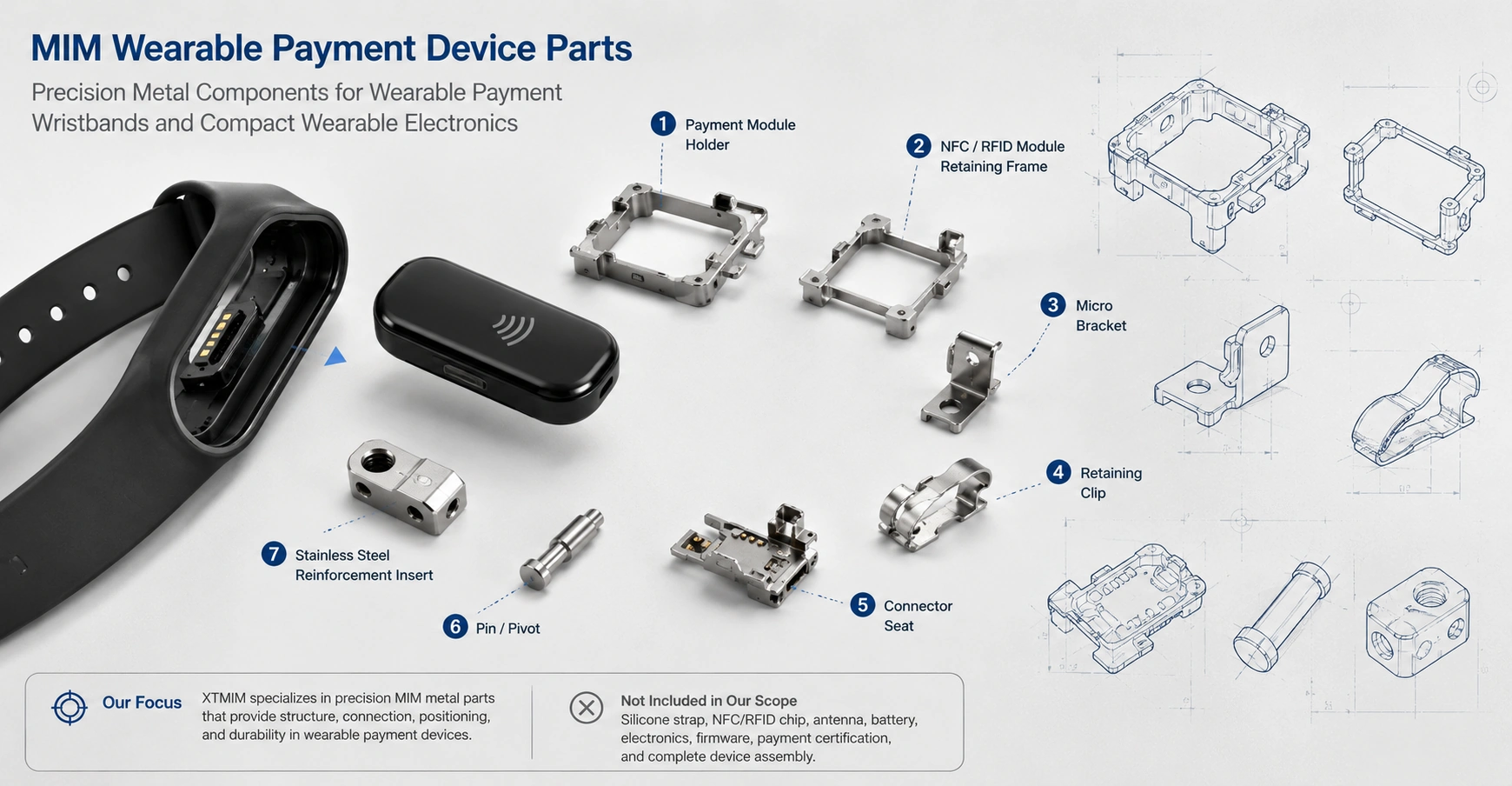
Metal Enjeksiyon Kalıplama ile Hangi Giyilebilir Cihaz Parçaları Üretilebilir?
Giyilebilir ödeme ve kompakt elektronik cihazlarda MIM fırsatı genellikle tüm giyilebilir ürünün içinde veya işlevsel modülün çevresinde bulunur. Tipik adaylar arasında tutucular, konumlandırma çerçeveleri, sabitleme klipsleri, konnektör destekleri, mandal parçaları, pimler, pivotlar ve takviye ekleri yer alır.
Bu parçalar genellikle plastik, silikon veya kompozit bir bileklik montajının içine sığacak kadar küçüktür, ancak yine de metal dayanımı, aşınma direnci, tekrarlanabilir konumlandırma veya kompakt üç boyutlu geometri gerektirebilir. Pratikte karar parça seviyesinde verilir: bir giyilebilir cihaz birçok MIM dışı eleman içerebilirken, yalnızca seçilen metal bileşenler MIM kalıplama ve sinterleme kontrolünü haklı çıkarır.
| Giyilebilir Cihaz Alanı | Tipik MIM Parçaları | MIM Neden Tercih Edilebilir |
|---|---|---|
| Ödeme modülü alanı | Modül tutucular, sabitleme çerçeveleri, konumlandırma yuvaları | Kompakt geometri, modül konumlandırma ve tekrarlanabilir montaj referansları |
| Kilit arayüzü | Mandallar, kancalar, tutma klipsleri | Tekrarlanan açma, küçük temas yüzeyleri, lokal gerilim ve aşınma kontrolü |
| Dahili elektronik destek | PCB braketleri, sensör braketleri, konnektör destekleri | Küçük delikler, nervürler, kavisli özellikler ve hassas konumlandırma yüzeyleri |
| Şarj veya temas alanı | Pogo pin destekleri, konnektör yuvaları, manyetik hizalama parçaları | Boyutsal tekrarlanabilirlik, temas hizalaması ve kontrollü yüzey durumu |
| Çıkarılabilir modül arayüzü | Pimler, miller, küçük şaft benzeri parçalar | Aşınma davranışı, eşleşme uyumu, modül tutma ve montaj kararlılığı |
| Cilde yakın alan | Paslanmaz çelik ekler, korozyona maruz kalan metal parçalar | Ter maruziyeti, kenar durumu, yüzey kalitesi ve korozyon direnci |
MIM parça bazında değerlendirilmelidir. Tam bir giyilebilir cihaz; plastik enjeksiyon kalıplama parçaları, silikon bileşenler, baskılı devre düzenekleri, anten yapıları, piller, çipler, kaplamalar ve son montaj süreçlerini içerebilir. MIM yalnızca prosesin mekanik veya üretimsel değer sunduğu metal bileşenler için geçerlidir.
Site genelindeki MIM parça kategorilerine daha geniş bir bakış için ana MIM parçaları üretimi sayfasını ziyaret edin. Projeniz, bileğe takılan bir ödeme modülü yerine daha geniş bir tüketici elektroniği uygulamasıysa, ilgili tüketici elektroniği MIM parçaları sayfası da yardımcı olabilir.
Bu Sayfa Neleri Kapsar — ve Neleri Kapsamaz
“Giyilebilir” kelimesi sayfa düzeyinde kolayca karışıklığa yol açabilir. Bu sayfada, giyilebilir cihaz parçaları, ödeme bileklikleri, erişim kontrol bileklikleri, NFC/RFID giyilebilir modüller ve kompakt elektronik giyilebilir montajlarda kullanılan fonksiyonel metal parçalar anlamına gelir. Saat kasa parçaları veya tam giyilebilir elektronik üretimi anlamına gelmez.
Kapsananlar: ödeme bilekliği ve kompakt giyilebilir elektronik metal parçaları
- Giyilebilir ödeme bilekliği metal parçaları
- NFC / RFID bileklik tipi giyilebilir cihaz metal parçaları
- Erişim kontrolü bileklik metal parçaları
- Fitness/ödeme hibrit giyilebilir cihaz metal parçaları
- Kompakt elektronik giyilebilir modül destekleri
- Küçük yapısal, kilitleme, tutma, konumlandırma ve konnektör destek parçaları
Kapsam dışı: saat kasaları, saat kayışları ve komple NFC modülleri
- Saat kasaları veya akıllı saat gövdeleri
- Saat kayışları, saat bantları, saat tokaları veya lüks saat donanımları
- Silikon bileklik gövdeleri
- NFC çipleri, antenler, güvenlik elemanları, yazılım veya ödeme sertifikasyonu
- Komple giyilebilir ödeme cihazı montajı
Giyilebilir Ödeme Cihazlarında Kullanılan Yaygın MIM Metal Parçaları

Ödeme modülü tutucuları ve sabitleme çerçeveleri
Ödeme modülü tutucuları ve sabitleme çerçeveleri, giyilebilir montaj içindeki kompakt elektronik modülleri konumlandırır ve sabitler. Parça karmaşık üç boyutlu geometriye, küçük kaburgalara, iç ceplere, konumlandırma bosslarına veya birden fazla fonksiyonel yüzeye sahip olduğunda MIM düşünülebilir. Ana inceleme kalemleri anten boşluğu, eşleşen plastik geometrisi, kritik konumlandırma yüzeyleri ve tolerans birikimidir.
PCB, sensör ve konnektör konumlandırması için mikro braketler
Mikro braketler bir PCB, sensör, konnektör veya küçük pil kontağını tutabilir. Bu sayfa yalnızca giyilebilir montajlardaki braketleri ele alır. Genel braket yapısı, delik stratejisi, yükleme yönü ve sektörler arası braket uygulamaları için özel sayfayı inceleyin MIM braketler sayfa.
Kilitleme, mandal ve tutma klipsleri
Çıkarılabilir giyilebilir modüller genellikle bir mandal, kilitleme kancası, tutma klipsi veya geçmeli kilit parçası gerektirir. Bu parçalar, kök yarıçapı, yerel et kalınlığı, temas alanı, gerilim yoğunlaşması, besleme noktası, kenar durumu ve aşınma yüzeylerinin erken incelenmesini gerektirir. Yaygın bir hata, plastik geçmeli geometriyi doğrudan metale kopyalamaktır.
Konnektör yuvaları ve şarj kontağı destek parçaları
Konnektör yuvaları, pogo pin destekleri, manyetik hizalama yapıları ve şarj kontağı taşıyıcıları, boyutsal tekrarlanabilirlik ve kararlı yüzey koşulu gerektirebilir. Temas alanı, çapak kontrolü, kaplama uyumluluğu ve ikincil bitirme gereksinimleri kalıplamadan önce tanımlanmalıdır.
Küçük pimler, miller ve menteşe benzeri parçalar
Çıkarılabilir kapsüller, döner kapaklar ve küçük döner arayüzler pimler, miller veya menteşe benzeri parçalar kullanabilir. Bu sayfa yalnızca bunları giyilebilir cihaz uygulamaları olarak ele alır. Daha derin mekanizma incelemesi için özel sayfayı kullanın MIM miller ve pimler ve MIM menteşeler sayfalarını inceleyin.
Ter ve aşınmaya maruz kalan metal ek parçalar
Giyilebilir cihazlar cilt temasına, tere, neme, temizliğe ve sürtünmeye maruz kalır. Korozyon, tekrarlanan kayma veya kenar konforu önemliyse inceleyin korozyona dayanıklı MIM parçaları ve aşınmaya dayanıklı MIM parçaları.
MIM'in Giyilebilir Cihaz Montajındaki Yeri

Bileklik modülünün içinde
Modülün içinde MIM parçaları PCB'yi destekleyebilir, ödeme modülünü konumlandırabilir, ince bir plastik alanı takviye edebilir veya montaj için kararlı bir metal arayüz sağlayabilir. Değerlendirme sorusu, metal parçanın gereksiz maliyet, RF paraziti veya montaj karmaşıklığı yaratmadan mekanik güvenilirliği artırıp artırmadığıdır.
Çıkarılabilir modül arayüzünde
Çıkarılabilir modüller mekanik zorluklar yaratır. Arayüz güvenli bir şekilde tutmalı, öngörülebilir şekilde ayrılmalı ve tekrarlanan kullanıma dayanmalıdır. MIM, küçük mandal parçaları, tutma kancaları, kilit yuvaları, pivot parçaları ve takviye ekleri için uygun olabilir. Üretimde, metal parça eşleşen plastik veya silikon özellikle birlikte değerlendirilmelidir, çünkü güçlü bir metal mandal, eşleşen yapı zayıf veya yetersiz destekleniyorsa yine de başarısız olabilir.
Şarj, kontak veya hizalama alanlarının yakınında
Şarj ve kontak alanları genellikle hassas hizalama gerektirir. Bir konnektör yuvası veya manyetik hizalama bileşeni, boyutsal tutarlılık, kontrollü yüzey durumu ve uygun kenar bitirme gerektirebilir. Kritik kontak yüzeyleri çizimde belirtilmelidir, böylece tedarikçi bitirme ve muayeneyi doğru şekilde planlayabilir.
Cilt teması veya tere maruz kalan alanların yakınında
Kullanıcının cildine veya ter ortamına yakın metal parçalar, malzeme ve yüzey işlemi incelemesi gerektirir. Korozyon direnci için paslanmaz çelik düşünülebilir, ancak spesifik kalite, yüzey işleme prosesi ve kabul gereksinimleri uygulamaya göre onaylanmalıdır. Kullanım veya montaj sırasında dokunulabilecek parçalar için kenar durumu ve çapak kontrolü özellikle önemlidir.
Giyilebilir Cihaz Parçaları için MIM Ne Zaman Uygun Bir Seçenektir?
Parça küçük, karmaşık ve ekonomik olarak işlenmesi zordur
MIM genellikle bir parçanın kavisli cepler, küçük kaburgalar, çoklu kademeler, iç özellikler, karmaşık kilit şekilleri veya küçük bir bileşende birden fazla fonksiyonel yüzey içermesi durumunda daha caziptir. Aynı parça birden fazla CNC kurulumu veya birleştirilmiş birden çok damgalı parça gerektiriyorsa, MIM parça sayısını azaltabilir ve tekrarlanabilirliği artırabilir.
Tasarım, seri üretimde tekrarlanabilir boyutlar gerektirir
Giyilebilir modüller genellikle dar montaj alanlarına sahiptir. Küçük bir sapma kilit hissini, temas hizalamasını, modül tutmayı veya muhafaza uyumunu etkileyebilir. MIM boyutsal planlaması, kalıp tasarımından önce fonksiyonel yüzeyleri, sinterleme sonrası kritik boyutları ve muayene noktalarını belirlemelidir.
Parça yapısal, kilitlenme ve estetik işlevleri birleştirir
Görünen yüzey, kilitlenme yüzeyi ve kritik konumlandırma yüzeyinin tümü aynı parça üzerindeyse, tasarım ekibi hangi yüzeylerin fonksiyon-kritik ve hangilerinin kozmetik olduğunu tanımlamalıdır. Bu, tedarikçinin fonksiyonel bir temas yüzeyini kaçırırken görünür bir yüzeyi optimize etmesini önler.
Yıllık hacim, kalıp ve mühendislik kurulumunu haklı çıkarabilir
MIM, kalıp, büzülme telafisi, bağlayıcı giderme ve sinterleme doğrulaması, ikincil operasyon planlaması ve muayene kurulumu gerektirir. Alıcılar, proses seçiminden önce beklenen yıllık hacmi, proje aşamasını ve tahmin belirsizliğini sağlamalıdır.
MIM'in Doğru Süreç Olmadığı Durumlar
MIM, yalnızca bir bileşenin küçük veya metal olması nedeniyle seçilmez. Süreç; parça geometrisi, kalıp maliyeti, yıllık hacim, montaj işlevi, yüzey gereksinimi ve proje olgunluğu ile karşılaştırılmalıdır.
| Durum | MIM Neden Uygun Olmayabilir | Olası Alternatif |
|---|---|---|
| Basit düz plakalar, tırnaklar veya pullar | Parça, MIM kalıplama, bağlayıcı giderme ve sinterleme kontrolünü haklı çıkaracak kadar üç boyutlu karmaşıklığa sahip olmayabilir. | Sac metal şekillendirme |
| Çok düşük hacimli prototipler | Projenin net bir üretim yolu olmadığı sürece, birkaç deneme parçası için MIM kalıplama ve süreç geliştirme ekonomik olmayabilir. | CNC işleme veya prototip işleme |
| Büyük kozmetik kasalar | Akıllı saat kasaları ve harici saat kasaları farklı yüzey, parlatma, kaplama ve kozmetik kabul gereksinimlerine sahiptir. | Özel saat kasası süreç incelemesi |
| Silikon bileklik gövdesi | Esnek bant gövdeleri, metal enjeksiyon kalıplama parçaları değil, polimer bileşenlerdir. | Silikon veya polimer kalıplama |
| NFC çipi, anten, ürün yazılımı veya ödeme sertifikasyonu | Bunlar, MIM metal parça üretim sorumlulukları değil, elektronik sistem sorumluluklarıdır. | Elektronik veya ödeme çözümü tedarikçisi |
Takımlamadan Önce İncelenmesi Gereken Tasarım Riskleri

İnce duvarlar, küçük delikler ve keskin iç köşeler
Giyilebilir parçalar genellikle küçük özellikleri sınırlı bir alana sıkıştırır. İnce duvarlar, küçük delikler ve keskin köşeler; kalıplama, bağlayıcı giderme, sinterleme ve son işlem riskleri oluşturabilir. Modellenmesi kolay bir CAD özelliği, tutarlı bir şekilde kalıplanması, bağlayıcısının giderilmesi, sinterlenmesi veya kontrol edilmesi zor olabilir.
Geçmeli bağlantı gerilimi ve tekrarlanan açma döngüleri
Küçük bir kanca, kök yarıçapı, duvar kalınlığı, temas açısı veya malzeme durumu uygun değilse, bir prototipte çalışabilir ancak tekrarlanan kullanımdan sonra arızalanabilir. MIM metal kilit parçaları, plastik enjeksiyon kalıplama geçmeli bağlantılarından farklı bir inceleme mantığı gerektirir.
NFC / RFID antenlerinin yakınındaki metal konumu
Bir NFC veya RFID anteninin yakınındaki metal, konuma, geometriye, mesafeye, malzemeye ve montaj tasarımına bağlı olarak cihaz performansını etkileyebilir. Bir MIM tedarikçisi mekanik üretilebilirliği inceleyebilir, ancak RF performansı elektronik ekibi tarafından doğrulanmalıdır.
Sinterleme büzülmesi ve montaj tolerans birikimi
MIM parçalar sinterleme sırasında büzülür. Kalıp, büzülmeyi telafi edecek şekilde tasarlanmalı ve tedarikçi, sinterleme ve ikincil işlemlerden sonra hangi boyutların kritik olduğunu anlamalıdır. Giyilebilir modüllerde, tolerans birikimi tek bir parça boyutundan daha önemli olabilir.
Hangi sorun oluştu: Bir giyilebilir modül tutma klipsi, modülü ilk montaj sırasında tutuyordu, ancak tekrarlanan açma ve kapamadan sonra kilit kuvveti tutarsız hale geldi.
Neden oldu: Tasarım, metal gerinim davranışı, mandal kök yarıçapı ve yerel temas gerilimi incelenmeden plastik bir geçmeli kavrama konseptinden uyarlanmıştır.
Gerçek sistem nedeni neydi: Sorun, mandal geometrisi, eşleşen plastik sertliği, temas açısı, yerel yarıçap, çapak alma durumu ve tekrarlı kullanım yüklemesini içeriyordu. Metal parça, arıza sisteminin yalnızca bir parçasıydı.
Nasıl düzeltildi: Kök yarıçapı artırıldı, temas açısı ayarlandı, mandal kalınlığı gözden geçirildi ve eşleşen plastik özellik, yerel aşırı yükü azaltmak için değiştirildi.
Tekrarını önlemek için: Tutma klipsleri için DFM incelemesi, kalıplamadan önce eşleşen montajı, serbest bırakma yöntemini, tekrarlı kullanım yönünü, temas alanını ve kenar bitirme gereksinimini içermelidir.
Hangi sorun oluştu: Kompakt bir metal modül tutucu, NFC anten alanına yakın bir konumda tasarlandı. Mekanik tasarım üretilebilirdi, ancak elektronik ekibi temassız okuma performansı konusunda endişelerini dile getirdi.
Neden oldu: Mekanik yerleşim, metal tutucuyu yalnızca yapısal bir destek olarak ele aldı ve erken tasarım incelemesi sırasında RF'ye duyarlı bölgeleri tanımlamadı.
Gerçek sistem nedeni neydi: Sorun, eksik sistem seviyesi incelemesiydi. MIM parçasının kendisi üretilebilirdi, ancak montajdaki konumu, anten yerleşimi ve elektronik doğrulama ile koordinasyon gerektiriyordu.
Nasıl düzeltildi: Tutucu geometrisi, anten alanı yakınındaki metal kaplamayı azaltacak şekilde ayarlandı ve müşterinin elektronik ekibi, revize edilmiş modül yerleşimini doğruladı.
Tekrarını önlemek için: NFC/RFID alanlarına yakın herhangi bir MIM metal parçası, montaj çizimleri ve elektronik yerleşimi ile birlikte incelenmelidir. Mekanik üretilebilirlik ve RF performansı, doğru ekipler tarafından doğrulanmalıdır.
Giyilebilir MIM Parçalarında Malzeme ve Yüzey Kaplama Değerlendirmeleri
Korozyona maruz kalan giyilebilir parçalar için paslanmaz çelik
Paslanmaz çelik, ter, nem, kullanım veya temizliğe maruz kalan giyilebilir metal parçalar için yaygın olarak değerlendirilir. Nihai kalite seçimi; korozyon gereksinimi, mukavemet, manyetik davranış, yüzey kaplama, ısıl işlem, maliyet ve müşteriye özel gereksinimlere bağlı olarak yapılmalıdır.
Kilitlenme ve yük taşıyan parçalar için yüksek mukavemetli malzemeler
Bazı tutma klipsleri ve kilit parçaları daha yüksek mukavemet veya sertlik gerektirir. Karar verirken süneklik, tokluk, ısıl işlem tepkisi, korozyon davranışı ve eşleşen malzeme de dikkate alınmalıdır. Mukavemet tek başına zayıf bir mandal geometrisini çözmez.
Görünüm, sürtünme ve korozyon kontrolü için yüzey kaplama
Çapak alma, tamburlama, parlatma, pasivasyon, kaplama, PVD kaplama, kumlama veya yerel kaplama; parçanın gizli, görünür, kaygan, cilde temas eden veya korozyona maruz kalmasına bağlı olarak değerlendirilebilir.
Parça türüne göre tipik malzeme, kaplama ve muayene odağı
Aşağıdaki tablo erken mühendislik inceleme kılavuzudur. Nihai malzeme, kaplama ve muayene gereksinimleri; çizim, montaj grubu, uygulama ortamı ve müşteri şartnamesinden teyit edilmelidir.
| Parça Türü | Yaygın Malzeme Yönelimi | Kaplama Odağı | Muayene Odağı |
|---|---|---|---|
| Tutma klipsi / mandal | Yük ve korozyona maruz kalma durumuna bağlı olarak paslanmaz çelik veya yüksek mukavemetli alaşım | Çapak alma, kenar yuvarlatma, aşınma temas yüzeyi, gerekiyorsa lokal parlatma | Mandal kök yarıçapı, temas yüzeyi, kilitlenme geçmesi, tekrarlı kullanım arayüzü |
| Modül tutucu / sabitleme çerçevesi | Mukavemet, korozyon ve montaj konumuna bağlı olarak paslanmaz çelik veya uygulamaya özel alaşım | Çapak kontrolü, lokal düzlük, temas kenarı finişi, görünür yüzey kontrolü (açıkta kalıyorsa) | Konumlandırma referansı, montaj geçmesi, anten boşluğu, kritik delik ve boss konumu |
| Konnektör yuvası / şarj kontak desteği | Temas hizalaması ve finiş gereksinimine bağlı olarak paslanmaz çelik veya seçilmiş alaşım | Belirtilmişse kontak alanı son işleme, çapak alma, pasivasyon veya kaplama | Kontak hizalaması, delik veya yuva konumu, eşleşme yüksekliği, kontağa bitişik kenarlarda çapak |
| Küçük pim / mil | Eşleşme hareketi ve yüküne bağlı olarak aşınmaya dayanıklı veya mukavemet odaklı malzeme | Çap yüzey kontrolü, kenar işleme, gerektiğinde lokal parlatma | Çap, yuvarlaklık, düzlük, eşleşme geçmesi, aşınma-kontak alanı |
| Cilde yakın ek parça | Ter veya cilt teması söz konusu olduğunda korozyona dayanıklı paslanmaz çelik yönü | Pasivasyon, parlatma, kenar konforu, yüzey temizliği | Yüzey pürüzlülüğü, kenar durumu, korozyon gereksinimi, görünürse kozmetik kabul |
Giyilebilir Cihaz MIM Parçaları Seçim Tablosu
Bu tablo, erken proje taraması için tasarlanmıştır. Çizim incelemesinin yerini almaz, ancak mühendislerin ve alıcıların hangi giyilebilir metal parçaların uygun MIM adayı olduğuna ve hangi parçalar için önce süreç karşılaştırması yapılması gerektiğine karar vermesine yardımcı olur.
| Parça Grubu | Tipik Parçalar | MIM Uygunluğu | Ana Risk | Önerilen Sonraki İnceleme |
|---|---|---|---|---|
| Modül tutucular | NFC/RFID modül çerçeveleri, ödeme modülü yuvaları | Yüksek | Anten boşluğu, tolerans yığılması | Çizim + montaj incelemesi |
| Kilit parçaları | Mandallar, klipsler, kancalar | Yüksek | Gerilme yığılması, aşınma, keskin köşeler | DFM + tekrarlı kullanım risk incelemesi |
| Mikro braketler | PCB braketleri, sensör braketleri | Orta ila yüksek | İnce duvarlar, delikler, sinterleme bozulması | Braket fizibilite incelemesi |
| Konnektör yuvaları | Pogo pin yuvaları, şarj kontak destekleri | Orta ila yüksek | Temas kararlılığı, yüzey kalitesi | Tolerans + yüzey incelemesi |
| Pimler / miller | Mikro pimler, mil parçaları | Orta | Aşınma, çap kontrolü, geçme uyumu | Pim/mil incelemesi |
| Cilde yakın ek parçalar | Paslanmaz ek parçalar, dekoratif-fonksiyonel ek parçalar | Orta | Korozyon, kenar durumu, yüzey kalitesi | Malzeme + yüzey incelemesi |
| Basit düz parçalar | Plakalar, düz tırnaklar | Düşük ila orta | Sac metal şekillendirme daha iyi olabilir | Süreç karşılaştırması |
Bu tabloyu bir yönlendirme aracı olarak kullanın. Yüksek uyumlu parçalar doğrudan çizim ve montaj incelemesine geçmelidir. Orta uyumlu parçalar genellikle CNC işleme, sac metal şekillendirme veya diğer metal işleme yöntemleriyle karşılaştırma gerektirir. Düşük uyumlu parçalar, MIM kalıbına geçmeden önce dikkatlice incelenmelidir.
Kalıp Öncesi DFM İnceleme Kontrol Listesi

Alıcı hangi çizimleri ve dosyaları sağlamalıdır?
Mühendisler önce neyi inceler?
XTMIM'in mühendislik incelemesi; parça boyutu ve ağırlığı, et kalınlığı, küçük delikler ve yuvalar, alttan kesikler, keskin iç köşeler, yolluk konumu uygunluğu, ham parça taşıma riski, bağlayıcı giderme ve sinterleme deformasyon riski, ikincil işlem gereksinimleri, malzeme uygunluğu, yüzey kaplama uygulanabilirliği ve muayene yöntemine odaklanmalıdır.
XTMIM'in inceleyebilecekleri vs. elektronik ekibinizin doğrulaması gerekenler
Giyilebilir ödeme cihazı, mekanik ve elektronik bir sistemdir. XTMIM, MIM parça üretilebilirliğini ve mekanik riski inceleyebilir, ancak elektronik performans ve ödeme sistemi doğrulaması müşterinin elektronik ekibine veya ödeme modülü ortağına bırakılmalıdır.
| XTMIM İnceleyebilir | Müşteri / Elektronik Ekibi Doğrulamalı |
|---|---|
| MIM fizibilitesi, kalıp riski, sinterleme büzülmesi telafisi, ham parça taşıma, bağlayıcı giderme ve sinterleme endişeleri | NFC/RFID okuma performansı, anten düzeni, elektronik modül performansı ve RF hassas boşluk |
| Malzeme yönü, yüzey kalitesi fizibilitesi, çapak kontrolü, korozyon maruziyeti, aşınma-temas yüzeyleri | Ödeme sertifikasyonu, güvenli eleman gereksinimleri, donanım yazılımı, yazılım davranışı ve sistem güvenliği |
| Boyutsal kontrol, kritik yüzeyler, muayene stratejisi, birleşen metal/plastik uyumu, montaj riski | Tam giyilebilir cihaz uyumluluğu, pil/elektronik doğrulaması, nihai ürün testi ve pazar onay gereksinimleri |
Giyilebilir MIM Parçaları için Çizim İncelemesi Talep Edin
Giyilebilir ödeme cihazınız, NFC/RFID bileklik, erişim kontrol bandı veya kompakt giyilebilir elektronik projeniz küçük bir metal tutucu, sabitleme klipsi, mikro braket, konnektör yuvası, pim, mandal veya korozyona maruz kalan bir ek parça içeriyorsa, çizimlerinizi mühendislik incelemesi için gönderin.
Lütfen 2D çizimler, 3D CAD dosyaları, malzeme gereksinimleri, tolerans gereksinimleri, yüzey kalitesi beklentileri, montaj konumu, eşleşen parça bilgisi, yıllık hacim ve parçanın bir antene, cilt temas alanına, tere maruz kalan bölgeye, şarj kontağına veya hareketli arayüze yakın olup olmadığını belirtin.
XTMIM, kalıplama başlamadan önce bir ön süreç uygunluk incelemesi, MIM kalıp riski, sinterleme büzülmesi ve sinterleme endişeleri, malzeme seçenekleri, yüzey bitirme gereksinimleri, muayene stratejisi ve CNC, damgalama, basınçlı döküm veya başka bir işlemin daha pratik olabileceği durumların belirlenmesine destek olabilir.
MIM Giyilebilir Cihaz Parçaları Hakkında SSS
Giyilebilir ödeme bilekliği parçaları MIM için uygun mudur?
Bazı giyilebilir ödeme bilekliği parçaları MIM için uygundur, özellikle küçük metal tutucular, sabitleme klipsleri, konnektör yuvaları, kilitleme parçaları, pimler ve korozyona maruz kalan ek parçalar. MIM normalde komple bileklik gövdesi, silikon bant, NFC çipi, anten veya ödeme modülü elektroniği için kullanılmaz.
Bu sayfa saat kasalarını veya akıllı saat gövdelerini kapsıyor mu?
Hayır. Bu sayfa, ödeme bileklikleri, NFC/RFID giyilebilir cihazlar ve kompakt giyilebilir elektronikler için MIM metal parçalarına odaklanmaktadır. Saat kasaları, akıllı saat gövdeleri, saat kayışları ve dekoratif saat donanımları, saat parçaları veya saat kasası parçaları altında incelenmelidir.
MIM metal parçalar NFC veya RFID antenlerinin yakınında kullanılabilir mi?
Bazı montajlarda kullanılabilirler, ancak metalin konumu, geometrisi, antene olan mesafesi ve çevreleyen yapı dikkatlice incelenmelidir. Bir MIM tedarikçisi mekanik üretilebilirliği inceleyebilirken, RF performansı müşterinin elektronik ekibi veya ödeme modülü tedarikçisi tarafından doğrulanmalıdır.
Giyilebilir MIM metal parçalar için yaygın olarak hangi malzemeler düşünülür?
Paslanmaz çelik, tere maruz kalan, korozyona maruz kalan veya cilde bitişik metal parçalar için sıklıkla düşünülür. Yüksek mukavemetli malzemeler, kilitleme ve yük taşıma parçaları için düşünülebilir. Nihai malzeme seçimi, korozyona maruziyet, mukavemet, aşınma, manyetik davranış, yüzey kalitesi ve montaj gereksinimlerine dayanmalıdır.
Damgalama veya CNC ne zaman MIM'den daha iyidir?
Damgalama, basit düz plakalar, sekmeler veya düşük karmaşıklıktaki parçalar için daha iyi olabilir. CNC, düşük hacimli prototipler, büyük parçalar veya kalıplamaya hazır olmayan tasarımlar için daha iyi olabilir. MIM, parça küçük, karmaşık, yüksek hacimli ve verimli bir şekilde işlenmesi veya damgalanması zor olduğunda daha cazip hale gelir.
MIM, tüm giyilebilir metal parçalar için CNC veya damgalamanın yerini alabilir mi?
Hayır. MIM, tüm giyilebilir metal parçalar için CNC işleme veya damgalamanın yerini alamaz. MIM, üç boyutlu geometriye, birden çok fonksiyonel yüzeye veya zor montaj özelliklerine sahip küçük, karmaşık, seri üretim metal parçalar için en kullanışlıdır. CNC, prototipler veya düşük hacimli parçalar için daha iyi olabilirken, damgalama basit düz metal parçalar için daha iyi olabilir.
Giyilebilir bir MIM parça fiyat teklifi için hangi bilgilere ihtiyaç vardır?
Yararlı bir fiyat teklifi talebi; 2D çizimler, 3D CAD dosyaları, malzeme gereksinimleri, toleranslar, yüzey kalitesi, kritik boyutlar, montaj çizimleri, beklenen yıllık hacim ve uygulama geçmişini içermelidir. Ayrıca parçanın bir NFC/RFID antenine, cilt temasına, tere maruziyete, şarj kontağına veya hareketli arayüze yakın olup olmadığını belirtmek de faydalıdır.
XTMIM, komple ödeme giyilebilir cihazları üretebilir mi?
Hayır. XTMIM, MIM metal parçaları ve küçük metal bileşenler için üretilebilirlik incelemesine odaklanır. Komple ödeme giyilebilir cihazları, ilgili teknoloji tedarikçilerinden elektronik, NFC/RFID modülleri, antenler, güvenlik elemanları, donanım yazılımı, ödeme sertifikasyonu ve nihai ürün montajı gerektirir.
Standartlar ve Teknik Referans Notları
Standartlar ve teknik referanslar malzeme seçimi, MIM proses anlayışı ve sistem düzeyinde incelemeye rehberlik edebilir, ancak projeye özel DFM incelemesinin yerini almamalıdır. Güncel malzeme değerleri, test gereksinimleri ve kabul kriterleri, müşterinin çizimi, malzeme veri sayfası, satın alma şartnamesi ve ilgili resmi standart ile teyit edilmelidir.
- MIMA — Metal Enjeksiyon Kalıplama Nedir? Bu kaynak, MIM besleme stoğu, yeşil parça, kahverengi parça, bağlayıcı giderme, sinterleme ve genel MIM proses yolunu açıklamak için faydalıdır. Referansı görüntüle
- MPIF Standardı 35-MIM. Bu kaynak, yaygın MIM malzemeleri için malzeme şartname incelemesini destekler. Nihai malzeme değerleri, güncel resmi dokümantasyon ve proje seviyesindeki gereksinimlerle doğrulanmalıdır. Referansı görüntüle
- MIMA Standartlar Komitesi. Bu referans, MIMA'nın MPIF Standardı 35-MIM ve ilgili MIM yöntemleri veya kılavuzlarını geliştirme ve sürdürmedeki rolünü destekler. Referansı görüntüle
- ISO/IEC 14443 Serisi. Bu, yalnızca yakınlık/temassız teknoloji için arka plan olarak ilgilidir ve metalin NFC/RFID arayüzlerinin yakınına yerleştirilmesinin neden sistem düzeyinde inceleme gerektirdiğini pekiştirir. Referansı görüntüle
Nihai tolerans kapasitesi, malzeme uygunluğu, yüzey kalitesi kabulü ve antenle ilgili yerleşim riski; parça geometrisine, malzemeye, sinterleme davranışına, montaj eşleşmesine ve müşteriye özel doğrulama gereksinimlerine bağlıdır.