
MIM Malzeme Merkezi
Metal Enjeksiyon Kalıplama (MIM) İçin MIM Malzemeleri
Metal enjeksiyon kalıplama (MIM) için metal malzemeler, yalnızca alaşım adına göre değil, parça fonksiyonu ve üretilebilirliğe göre seçilmelidir. Bu sayfa, mühendislerin ve tedarik ekiplerinin ayrıntılı derece seçimi öncesinde bir projeyi doğru malzeme ailesine yönlendirmesine yardımcı olur. Paslanmaz çelikler, düşük alaşımlı çelikler, takım çelikleri, yumuşak manyetik alaşımlar, titanyum, bakır, tungsten, nikel, kobalt-krom ve kontrollü genleşme alaşımları dikkate alınabilir, ancak her seçenek aynı üretim kontrollerinden geçmelidir: besleme stoğu kararlılığı, yeşil parça kalıplama, bağlayıcı giderme güvenliği, sinterleme büzülmesi, yoğunluk, yüzey durumu, ısıl işlem veya son işlem ihtiyaçları ve son muayene. Projenizin paslanmaz çelik, düşük alaşımlı çelik, aşınmaya dayanıklı, manyetik, hafif, yüksek yoğunluklu veya kontrollü genleşme malzeme rotalarına doğru ilerleyip ilerlemeyeceğine karar vermek için bu merkezi kullanın, ardından kalıplama öncesinde doğru derece sayfasına, malzeme özelliği kılavuzuna, karşılaştırma sayfasına veya çizim inceleme yoluna devam edin.
Bu sayfa, ilk seviye malzeme rotasıdır. metal enjeksiyon kalıplama. Malzeme ailesi seçimini yönlendirmelidir; ayrıntılı derece verileri, veri sayfası değerleri, ısıl işlem davranışı ve uygulama doğrulaması alt sayfalarda veya proje özelinde incelemede kalmalıdır. Malzeme davranışının besleme stoğu, enjeksiyon kalıplama, bağlayıcı giderme, sinterleme, ikincil işlemler ve muayeneden nasıl geçtiğini anlamak için, son malzeme onayı öncesinde tam MIM proses rotasını inceleyin.
Bitmiş bir bileşen yerine alaşım listesinden malzeme seçiyorsanız, gözden geçirin Malzemeye ve performans gereksinimlerine göre MIM parçaları korozyon direnci, mukavemet, aşınma direnci, manyetik işlev ve hassasiyet gereksinimlerini gerçek parça kategorileriyle ilişkilendirmek için.
Hızlı Cevap
Önce malzeme ailesini seçin. MIM malzemeleri, parçanın gerektirdiği fonksiyona göre taranmalıdır: korozyon direnci, mukavemet, aşınma direnci, manyetik davranış, düşük ağırlık, yüksek yoğunluk, iletkenlik veya kontrollü termal genleşme.
Ardından MIM işlem rotasını kontrol edin. Veri sayfasında doğru görünen bir malzeme, besleme stoğu akışı, yeşil mukavemet, bağlayıcı giderme, sinterleme büzülmesi, ısıl işlem hareketi, son işlem veya son muayenede hala risk oluşturabilir.
Yönlendirme için bu merkezi kullanın. Kullanıcıları doğru malzeme ailesine, özellik kılavuzuna, karşılaştırma sayfasına veya çizim inceleme yoluna yönlendirmelidir - derece düzeyindeki veri sayfalarını veya proje özelindeki DFM incelemesini değiştirmemelidir.
Hızlı Karar
Hangi MIM Malzeme Ailesiyle Başlamalısınız?
Pratik bir MIM malzeme incelemesi, parçanın çalışma gereksinimi ile başlar: korozyon direnci, mukavemet, aşınma direnci, manyetik tepki, hafiflik talebi, yüksek yoğunluk, iletkenlik veya kontrollü termal genleşme. RFQ'ya tanıdık bir CNC derecesini kopyalayarak başlamayın. Metal enjeksiyon kalıplamada, aynı alaşım yönü toz bulunabilirliği, bağlayıcı sistemi, besleme stoğu akışı, yeşil mukavemet, bağlayıcı giderme yolu, sinterleme atmosferi, büzülme telafisi ve işlem sonrası hareket yoluyla da kontrol edilmelidir.
Yalnızca ilk filtre olarak aşağıdaki haritayı kullanın. Nihai seçim, malzeme ailesini, hedef dereceyi, tolerans kritik boyutları, yüzey gereksinimini, muayene yöntemini ve parça geometrisinin bağlayıcı giderme, sinterleme, ısıl işlem, son işlem ve üretim muayenesi boyunca stabil kalıp kalmayacağını doğrulamalıdır.
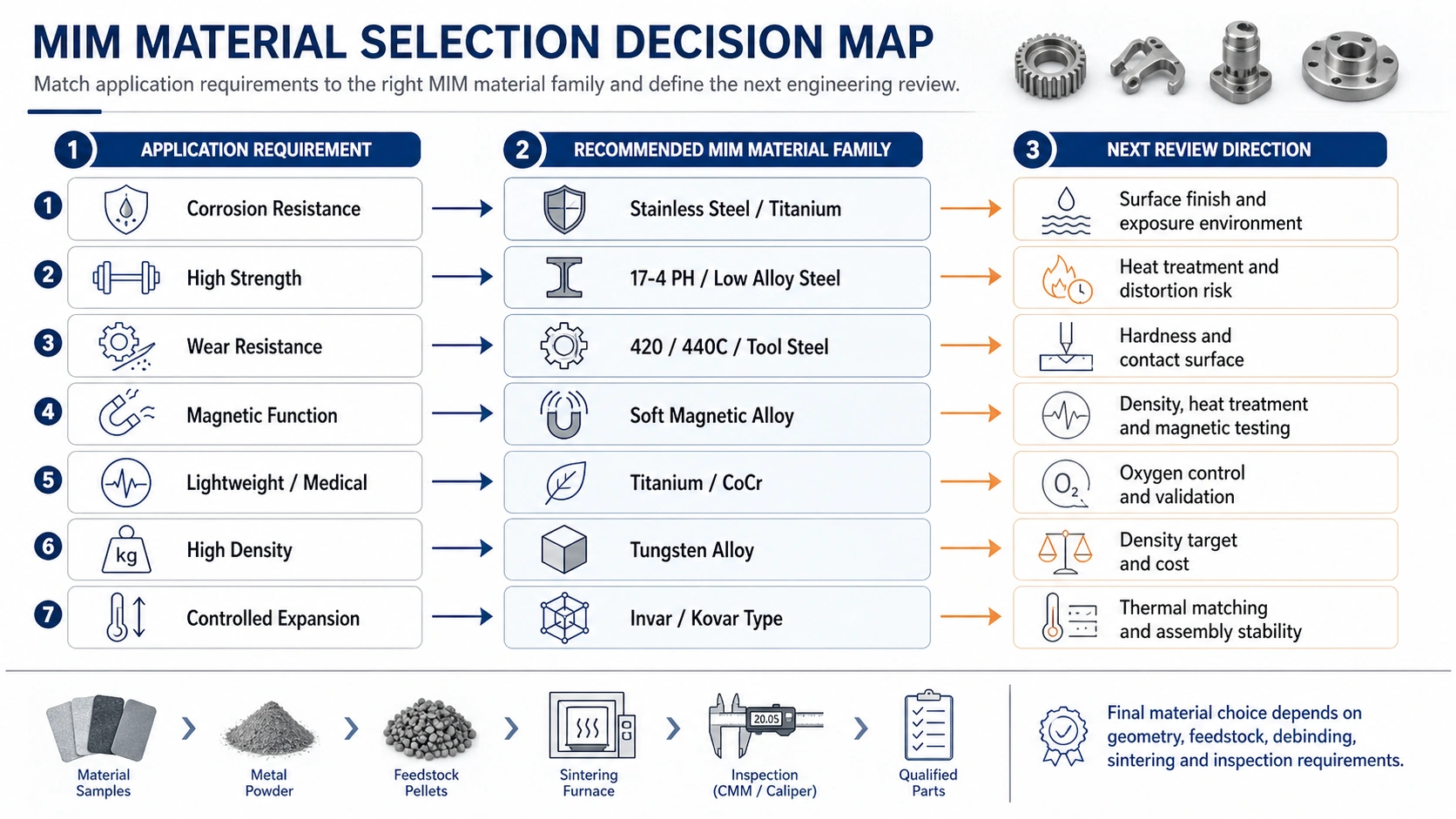
Temel sonuç: Malzeme kalitesi adıyla değil, performans gereksinimiyle başlayın.
MIM projeleri için malzeme ailesi yalnızca ilk filtredir. Nihai onay, besleme stoğu kararlılığı, bağlayıcı giderme, sinterleme büzülmesi, ısıl işlem, yüzey kalitesi, muayene yöntemi ve parça geometrisinin büzülme ve son işlem sonrası gerekli toleransı koruyup koruyamayacağına bağlıdır.
| Parçanızın İhtiyacı... | İncelemeye Başlayın... | Tipik Malzeme Yönelimi | Sonraki Mühendislik Kontrolü |
|---|---|---|---|
| Korozyon direnci | Paslanmaz çelik veya titanyum | 316L, 304, seçilmiş titanyum alaşımları | Maruz kalma ortamı, pasivasyon, parlatma ve yüzey kalitesi |
| Daha yüksek mukavemet | Isıl işlem görebilir paslanmaz çelik veya düşük alaşımlı çelik | 17-4 PH, 4605, 4140, 4340 | Isıl işlem, distorsiyon riski ve tolerans kontrolü |
| Sertlik veya aşınma direnci | Martensitik paslanmaz çelik, takım çeliği, karbür yönü | 420, 440C, takım çelikleri, sementit karbürler | Temas yüzeyi, eşleşen malzeme, yağlama ve son işlem |
| Manyetik fonksiyon | Yumuşak manyetik alaşımlar | Fe-Ni, Fe-Co, Fe-Si sistemleri | Yoğunluk, ısıl işlem ve manyetik test yöntemi |
| Hafif veya tıbbi kullanıma yönelik | Titanyum veya kobalt-krom alaşımları | CP titanyum, Ti-6Al-4V, CoCr alaşımları | Oksijen kontrolü, doğrulama rotası ve uygulama standardı |
| Yüksek yoğunluk | Tungsten alaşımı yönü | Tungsten bazlı malzemeler | Yoğunluk hedefi, parça boyutu, üretim maliyeti ve sinterleme fizibilitesi |
| Kontrollü termal genleşme | Kontrollü genleşmeli alaşımlar | Invar, Kovar tipi alaşımlar | Montaj ortamı, termal eşleşme ve boyutsal kararlılık |
Malzeme Ailesi Yolları
MIM Malzeme Aileleri: Her Bir Yol Neler İçin Kullanılır
Bir MIM malzeme merkezi üzerinde, malzeme aileleri ham alaşım kataloğu olarak değil, yönlendirme yolları olarak işlev görmelidir. Paslanmaz çelik, düşük alaşımlı çelik, takım çeliği, yumuşak manyetik, titanyum, bakır, tungsten, nikel, kobalt-krom ve kontrollü genleşme alaşımı sayfaları her biri farklı bir mühendislik sorusunu yanıtlar. Bu merkez, kullanıcıların nereye gideceklerine karar vermelerine yardımcı olmalıdır: kimya ve özellikler için derece düzeyindeki sayfalar, korozyon, mukavemet, aşınma veya manyetik gereksinimler için özellik sayfaları ve fonksiyonel gereksinim hala belirsiz olduğunda seçim kılavuzu.
Bir aile seçmeden önce, parçanın derin kör delikleri, ince nervürleri, keskin geçişleri, uzun desteksiz alanları, kozmetik yüzeyleri veya kapılara yakın tolerans kritik özellikler veya kalın-ince kesitler olup olmadığını kontrol edin. Bu geometri riskleri, kağıt üzerinde uygun görünen bir malzemenin kalıplanmasını, bağlayıcısının giderilmesini, sinterlenmesini, bitirilmesini veya denetlenmesini zorlaştırabilir.

Temel sonuç: Ana sayfa, kullanıcıları kalite seviyesi sayfalarına göndermeden önce malzeme ailesine göre yönlendirmelidir.
MIM malzeme seçimi genellikle aile seviyesinde başlar. Paslanmaz çelikler, düşük alaşımlı çelikler, takım çelikleri, titanyum alaşımları, yumuşak manyetik alaşımlar, tungsten alaşımları, bakır alaşımları, nikel alaşımları, kobalt-krom alaşımları ve kontrollü genleşme alaşımları her biri farklı mühendislik sorunlarını çözer. Kalite seviyesi kimya, mekanik özellikler ve ısıl işlem detayları alt sayfalarda ele alınmalıdır.
Paslanmaz Çelik MIM Malzemeleri
Paslanmaz çelikler, pratik bir korozyon direnci, yüzey durumu, bulunabilirlik ve mekanik performans dengesi sundukları için en yaygın MIM malzeme aileleri arasındadır. Tipik paslanmaz çelik seçenekleri şunları içerir: 316L paslanmaz çelik MIM, 304, 420, 440C, ve 17-4 PH paslanmaz çelik MIM.
Kullanım amacı: korozyon direnci, yüzey kalitesi, genel mekanik performans veya ısıl işlemle sertleştirilebilir mukavemet gereksinimlerden biriyse.
Dikkatlice inceleyin: parça kaymalı temas içeriyorsa, yüksek sertlik talebi varsa, kozmetik parlatma gereksinimleri varsa veya ısıl işlem sonrası dar toleranslar gerekiyorsa.
Düşük Alaşımlı Çelik MIM Malzemeleri
Düşük alaşımlı çelikler, parçanın mekanik mukavemet, ısıl işlem yanıtı ve birçok özel alaşıma göre daha iyi maliyet kontrolü gerektirmesi durumunda sıklıkla tercih edilir. Yaygın MIM düşük alaşımlı çelik yönelimleri şunları içerir: 4605 düşük alaşımlı çelik MIM, 4140, 4340, ve Fe-Ni alaşım sistemleri.
Kullanım amacı: proje yapısal performans, ısıl işlem yanıtı ve maliyet odaklı üretim gerektiriyorsa.
Dikkatlice inceleyin: korozyon maruziyeti, kaplama, boya, siyah oksit veya uzun süreli yüzey koruması gerekiyorsa.
Takım Çeliği ve Aşınmaya Dayanıklı MIM Malzemeleri
Sertlik, keskinlik tutma, kaymalı temas, aşınma veya lokalize temas gerilimi, genel korozyon direncinden daha önemli hale geldiğinde takım çelikleri, martensitik paslanmaz çelikler, 420, 440C ve sementit karbür yönleri dikkate alınır.
Kullanım amacı: çizim, gerçek bir aşınma yüzeyi, temas yükü, sertlik hedefi veya eşleşen malzeme durumunu tanımlar.
Dikkatlice inceleyin: keskin özellikler, kalın-yüzeysel geçişler, desteksiz temas alanları veya sinterleme sonrası ısıl işlem, deformasyona neden olabilir.
Yumuşak Manyetik MIM Malzemeleri
Yumuşak manyetik MIM malzemeleri, parçanın kompakt bir şekle ve kontrollü manyetik davranışa ihtiyaç duyduğu durumlarda kullanılır. Tipik yönler Fe-Ni, Fe-Co ve Fe-Si sistemlerini içerir.
Kullanım amacı: manyetik fonksiyon, kompakt manyetik çekirdekler, sensörle ilgili bileşenler veya aktüatör parçaları gibi geometri kadar önemlidir.
Dikkatlice inceleyin: manyetik performans, yoğunluk, sinterleme atmosferi, ısıl işlem veya manyetik test koşulları henüz tanımlanmamıştır.
Özel MIM Alaşımları
Standart paslanmaz çelik veya düşük alaşımlı çeliğin uygulama gereksinimini karşılayamadığı durumlarda özel MIM alaşımları gözden geçirilir. Bu yol şunları içerebilir: MIM için titanyum alaşımları, kobalt-krom alaşımları, bakır alaşımları, nikel alaşımları, tungsten alaşımları ve kontrollü genleşme alaşımları.
Kullanım amacı: hafif performans, yüksek yoğunluk, termal genleşme kontrolü, iletkenlik, korozyon direnci veya tıbbi ilgili gereksinimler ek inceleme çabasını haklı çıkarır.
Dikkatlice inceleyin: toz bulunabilirliği, oksijen veya karbon kontrolü, sinterleme rotası, doğrulama maliyeti veya muayene kabulü belirsizdir.
Standart ve yerleşik özel alaşım yöntemleri hala gereksinimi karşılayamıyorsa, özel bir MIM malzeme fizibilite incelemesine devam edin özel MIM malzeme fizibilite incelemesi kalıp (tooling) varsayımları kesinleşmeden.
Malzeme Seçim Kılavuzu
Malzeme ailesi hala net değilse, bu ana sayfadan malzeme seçimi kılavuzuna geçin. Bu sayfa, son sınıf onayından önce uygulama ortamını, performans önceliklerini, proses fizibilitesini, işlem sonrası işlemleri, tolerans riskini ve maliyet yönünü gözden geçirmek için kullanılmalıdır.
Kullanım amacı: Teklif talebinde yalnızca bir sınıf adı listelenmiş ancak korozyon maruziyeti, yük, aşınma, manyetik işlev, yüzey kalitesi veya muayene yöntemi açıklanmamıştır.
Erken Karşılaştırma
MIM Malzemelerini “En İyi Dereceye” Göre Değil, Mühendislik Gereksinimine Göre Karşılaştırın”
Erken MIM malzeme karşılaştırması tek bir soruyu yanıtlamalıdır: hangi malzeme ailesi MIM işlem rotasıyla pratik kalırken parça fonksiyonuna en uygun olanıdır? Tüm malzemeleri en iyiden en kötüye sıralamamalıdır. Düşük alaşımlı bir çelik mekanik bir bileşen için daha güçlü ve daha uygun maliyetli olabilir; 316L korozyon maruziyetine uygun olabilir; 17-4 PH ısıl işlem görmüş mukavemete uygun olabilir; ve yumuşak manyetik alaşımlar, titanyum, tungsten, bakır, nikel, kobalt-krom veya kontrollü genleşme alaşımları yalnızca işlevleri gerektiğinde incelenmelidir.
Bu bölüm yalnızca aile düzeyinde karşılaştırma için kullanın. Detaylı çekme mukavemeti, uzama, sertlik, yoğunluk, ısıl işlem tepkisi ve standartlar, derece sayfalarında, malzeme karşılaştırma bölümünde, tedarikçi veri sayfalarında ve proje özelinde incelemede doğrulanmalıdır.

Temel sonuç: MIM malzemeleri, evrensel bir en iyi sınıfa göre değil, uygunluğa göre seçilir.
Paslanmaz çelik sınıfı korozyon direnci için faydalı olabilirken, düşük alaşımlı çelik mukavemet ve maliyet açısından hassas mekanik parçalar için daha uygun olabilir. Titanyum, tungsten, bakır, manyetik alaşımlar ve kontrollü genleşme alaşımları yalnızca uygulama gereksinimi işlem risklerini ve maliyetlerini haklı çıkardığında incelenmelidir.
| Malzeme Ailesi | Dikkate Almak İçin Ana Neden | Ana Mühendislik Gücü | Gözden Geçirilecek Ana Risk | Genel Proje Yönü |
|---|---|---|---|---|
| 304 / 316L paslanmaz çelik | Korozyon direnci ve genel paslanmaz performans | İyi korozyon direnci ve kararlı uygulama alanı | Yüksek sertlik veya ağır aşınma için uygun olmayabilir | Medikal, tüketici, elektronik, hassas donanım |
| 17-4 PH paslanmaz çelik | Isıl işlem sonrası daha yüksek mukavemet | Mukavemet ve ısıl işlem tepkisi | Isıl işlem deformasyonu ve tolerans kontrolü | Yapısal küçük parçalar, braketler, kollar, mekanik parçalar |
| 420 / 440C paslanmaz çelik | Sertlik ve aşınma yönü | Ostenitik paslanmaz çeliklerden daha yüksek sertlik | Korozyon, kenar kalitesi ve deformasyon incelenmelidir | Aşınma yüzeyleri, temas parçaları, küçük fonksiyonel bileşenler |
| Düşük alaşımlı çelik | Mukavemet ve maliyet odaklı mekanik kullanım | Isıl işlem tepkisi ve yapısal performans | Korozyon koruması gerekebilir | Otomotiv, endüstriyel, mekanik montajlar |
| Yumuşak manyetik alaşımlar | Manyetik fonksiyon | Kompakt geometride manyetik performans | Yoğunluk, ısıl işlem ve manyetik testler | Sensörler, aktüatörler, elektromanyetik bileşenler |
| Titanyum alaşımları | Hafiflik ve korozyona dayanıklı yönelim | Ağırlık azaltma ve seçilmiş tıbbi kullanımlar | Oksijen kontrolü, maliyet ve doğrulama gereksinimleri | Hafif hassas parçalar, tıbbi bileşenler |
| Tungsten alaşımları | Yüksek yoğunluklu işlevsellik | Küçük karmaşık parçalarda yoğunluk | Malzeme maliyeti ve işleme zorluğu | Ağırlık dengeleme, kalkanlama, yoğun fonksiyonel parçalar |
| Kontrollü genleşmeli alaşımlar | Termal genleşme kontrolü | Montajlarda boyutsal kararlılık | Malzeme eşleştirme ve proses onayı | Elektronik, sızdırmazlık, hassas montaj parçaları |
Malzeme özellikleri değerleri referans değerlerdir, otomatik proje garantisi değildir
Yayınlanan MIM malzeme özellikleri, erken mühendislik incelemesi için referans aralıkları olarak kabul edilmelidir. Nihai kabul, tedarikçi malzeme verileri, yoğunluk hedefi, ısıl işlem durumu, sinterleme rotası, muayene yöntemi, müşteri spesifikasyonu ve parçanın gerçek geometrisi ile teyit edilmelidir.
Bir malzeme sınıfı kağıt üzerinde uygun görünse bile, bitmiş parça toz özelliklerinden, besleme stoğu formülasyonundan, bağlayıcı giderme stabilitesinden, sinterleme büzülmesinden, poroziteden, yüzey işleminden ve sinterleme sonrası boyutsal kontrolden etkilenebilir.
Sınıf düzeyinde karşılaştırmalar için, şunları kullanın: MIM malzeme karşılaştırması Bu merkez sayfayı ayrıntılı çekme mukavemeti, uzama, sertlik, yoğunluk ve ısıl işlem verileriyle aşırı yüklemek yerine, malzeme yönlendirmesine odaklanmasını ve sınıf özelindeki alt sayfalarla çakışmasını önlemek için bu bölümü kullanın.
Sınıf Düzeyinde Veri Sayfası Örneği
Kalıplama Öncesi MIM Malzeme Veri Sayfası Nasıl Okunur
Bir MIM malzeme ailesi yalnızca ilk seçim katmanıdır. Mühendisler, kalıplama öncesinde sınıf düzeyindeki besleme stoğu veri sayfasını, boyutlandırma faktörünü, eriyik akış indeksini, sinterlenmiş yoğunluğu, mekanik özellikleri, enjeksiyon penceresini, kalıp sıcaklığını ve işlem notlarını da gözden geçirmelidir. Bu değerler, belirli bir parça geometrisi için bir malzemenin güvenilir bir şekilde işlenip işlenemeyeceğini belirlemeye yardımcı olur.
Aşağıdaki örnek, malzeme verilerinin nasıl incelenmesi gerektiğini göstermek için 304H paslanmaz çelik MIM besleme stoğu veri sayfasını kullanmaktadır. Bu değerler mühendislik tartışmaları için referans verileridir ve her MIM parça tasarımı için sabit işlem garantileri olarak kabul edilmemelidir.
| Veri Sayfası Öğesi | 304H MIM Referans Örneği | Kalıp Öncesinde Neden Önemlidir |
|---|---|---|
| Malzeme / Ürün | 304H paslanmaz çelik MIM besleme stoğu | Başlangıç sınıfı yönünü tanımlar, ancak malzeme yine de geometri, tolerans, yüzey kalitesi ve uygulama gereksinimlerine karşı kontrol edilmelidir. |
| Büyütme faktörü | Min. 1.162 / Ortalama 1.165 / Maks. 1.168 | Kalıp tasarımı ve boyut planlaması için kullanılan büzülme telafisi aralığını gösterir. Yanlış bir boyutlandırma faktörü, nihai boyutların çizim gereksinimini karşılamamasına neden olabilir. |
| Akış indeksi / MFI | 800–1600 g/10 dk, ortalama 1200 g/10 dk, DIN EN ISO 1133 referans koşulları altında ölçülmüştür | Besleme stoğunun akış davranışını gösterir. Bu, ince duvarlar, küçük delikler, mikro özellikler, uzun akış yolları ve zor dolum koşullarına sahip parçalar için önemlidir. |
| Sinterleme sonrası tipik bileşim | Paslanmaz çelik Cr-Ni sistemli Fe dengesi; tipik referans aralığı Cr .0–20.0, Ni %8.0–11.0, C ≤%0.08, Mn ≤%2.0, Si ≤%1.0, S ≤%0.03, P ≤%0.035 içerir | Sinterleme sonrası nihai kimya önemlidir çünkü MIM parçaları yalnızca ham madde hazırlığından değil, bağlayıcı giderme ve sinterlemeden geçer. Kompozisyon, gerekli standart ve müşteri spesifikasyonuna göre gözden geçirilmelidir. |
| Tipik sinterlenmiş yoğunluk | >7.75 g/cm³ | Sinterlenmiş yoğunluk mukavemeti, korozyon davranışını, yüzey kalitesini, boyutsal kararlılığı ve muayene kabulünü etkiler. Yoğunluk, parça geometrisi ve sinterleme desteği ile birlikte gözden geçirilmelidir. |
| Tipik çekme mukavemeti | >480 MPa (sinterleme sonrası referans koşulu) | Erken bir mekanik referans sağlar, ancak nihai performans hala sinterleme koşuluna, yoğunluğa, parça şekline ve herhangi bir son işlem gereksinimine bağlıdır. |
| Tipik sertlik | 150–200 HV10 | Sertlik, aşınma, temas yüzeyi davranışı ve fonksiyonel performansı değerlendirmeye yardımcı olur. Kaymalı veya aşındırıcı aşınma uygulaması için malzemenin uygun olup olmadığına karar vermek için tek başına kullanılmamalıdır. |
| Diğer tipik özellikler | Akma dayanımı >160 MPa, uzama A10 >1, tuz püskürtme referans testi 36 saat | Bu değerler erken malzeme taramasına yardımcı olur, ancak gerçek kabul, inceleme planı, yüzey durumu ve uygulama ortamı ile doğrulanmalıdır. |
| Referans enjeksiyon sıcaklığı | Örnek namlu bölgeleri: Bölge 1 yaklaşık 185°C, Bölge 2 yaklaşık 185°C, Bölge 3 yaklaşık 175°C, Bölge 4 yaklaşık 150°C, meme ucu yaklaşık 190°C | MIM besleme stoğunun kontrollü bir kalıplama penceresi gerektirdiğini gösterir. Gerçek ayarlar parça boyutuna, et kalınlığına, yolluk tasarımına, makine durumuna ve üretim gereksinimlerine göre değişebilir. |
| Önerilen kalıp sıcaklığı | 90–125°C | Kalıp sıcaklığı, yeşil parça yoğunluğunu, yüzey kalitesini, dolum tutarlılığını, kalıptan çıkarma davranışını ve sinterleme sonrası nihai boyutsal kararlılığı etkiler. |
| Referans yeşil yoğunluk aralığı | 5,35–5,41 g/cm³ | Yeşil yoğunluk, bağlayıcı giderme ve sinterleme öncesinde kalıplama tutarlılığını izlemek için faydalıdır. Zayıf yeşil yoğunluk kontrolü, boyutsal varyasyona veya iç kusurlara yol açabilir. |
| İşlem notu | Enjeksiyon kalıplama parametreleri, ürün şekli ve gereksinimlerinden etkilenir ve ayar, yeşil parça yoğunluğunu ve nihai ürün boyutunu etkileyebilir. | Bu nedenle malzeme veri sayfaları, 2B çizim, 3B model, tolerans açısından kritik boyutlar, yüzey gereksinimi ve uygulama arka planı ile birlikte incelenmelidir. |
Mühendislik yorumu
Bir MIM malzeme veri sayfası yalnızca kimyasal ve mekanik özelliklerin bir listesi değildir. Ayrıca mühendislere, besleme stoğunun makul bir kalıplama penceresine sahip olup olmadığını, büzülme telafisi aralığının kalıplama için yeterince kararlı olup olmadığını ve beklenen yoğunluk ile mekanik özelliklerin parça işlevi için uygun olup olmadığını söyler.
Örneğin, 304H aşırı boyut faktörü, kalıp tasarımcılarının büzülme telafisini planlamasına yardımcı olurken, MFI ve enjeksiyon sıcaklığı penceresi, kalıplama mühendislerinin dolum kararlılığını değerlendirmesine yardımcı olur. Sinterlenmiş yoğunluk, çekme mukavemeti, uzama ve sertlik, proje ekibinin kalıplamaya karar vermeden önce malzeme yönünün uygun olup olmadığını kontrol etmesine yardımcı olur.
Ancak bu değerler yine de referans verileri olarak kabul edilmelidir. Nihai performans, parça geometrisine, yolluk konumuna, et kalınlığına, yeşil parça elleçlemesine, bağlayıcı giderme yoluna, sinterleme desteğine, ısıl işlemeye, yüzey işlemeye ve muayene yöntemine bağlıdır.
Mühendislik Riski
MIM Malzemeleri Seçerken Yapılan Yaygın Hatalar
Takım imalatı başlamadan önce malzeme seçimi hataları sıklıkla ortaya çıkar. Çizim, malzeme kalitesi, tolerans, yüzey kalitesi ve uygulama ortamı birlikte incelenmezse, proje ilk fiyat teklifi aşamasını geçebilir ancak deneme üretimi veya üretim doğrulaması sırasında başarısız olabilir.

Temel sonuç: Malzeme hataları genellikle üretim başladıktan sonra değil, takım imalatından önce olur.
Proje ekibi bir malzemeyi yalnızca kalite adı, çekme dayanımı veya CNC deneyimine göre seçerse, parça daha sonra deformasyon, zayıf yüzey performansı, ısıl işlem hareketi, aşınma uyumsuzluğu veya muayene belirsizliği ile karşı karşıya kalabilir. Erken malzeme incelemesi, kaçınılabilir birçok deneme üretim sorununu önler.
Hata 1: Yalnızca Çekme Dayanımına Göre Seçim Yapmak
Yüksek çekme dayanımı, stabil bir MIM parçası için tek gereksinim değildir. Bir malzeme mukavemet beklentilerini karşılayabilir ancak yine de sinterleme deformasyonu, ısıl işlem hareketi veya tolerans kontrolünde sorunlara neden olabilir. Bu durum, özellikle ince kollar, uzun desteksiz özellikler, düz sızdırmazlık yüzeyleri ve kalın-ince geçişlere yakın delikler için önemlidir.
Hata 2: Bir CNC Kalitesini Doğrudan MIM'e Kopyalamak
Bir CNC malzeme kalitesi mühendislik ekibi için tanıdık olabilir, ancak MIM çubuk stok işleme değildir. MIM, ince metal tozu ve bağlayıcı ile başlar, enjeksiyon kalıplama yoluyla yeşil bir parça oluşturur, bağlayıcıyı bağlayıcı giderme yoluyla çıkarır ve sinterleme ve olası son işlemler yoluyla nihai özelliklere ulaşır. Malzeme transferinin makul olduğu zamanları incelemek için MIM vs CNC işleme karşılaştırmasını kullanın.
Hata 3: Sinterleme Atmosferi ve Kimya Kontrolünü Göz Ardı Etmek
Malzeme kimyası, sinterleme atmosferi ile yakından ilişkilidir. Paslanmaz çelik, düşük alaşımlı çelik, titanyum, manyetik alaşımlar ve özel alaşımlar farklı atmosfer kontrolü ve kirlilik önleme gerektirebilir. Bu, özellikle karbon, oksijen veya yüzey koşullarının nihai performansı etkileyebileceği durumlarda önemlidir.
Hata 4: Aşınma Sorunu İçin Korozyona Dayanıklı Bir Kalite Kullanmak
Korozyon direnci ve aşınma direnci farklı mühendislik gereksinimleridir. 316L, birçok korozyonla ilgili uygulama için uygun olabilir, ancak kaymalı temas, aşındırıcı aşınma veya yüksek sertlikteki temas yüzeyleri için otomatik olarak doğru seçim değildir.
Proses Bağlantısı
Malzeme Seçimi Neden Besleme Stoğunu, Bağlayıcı Gidermeyi ve Sinterlemeyi Etkiler
MIM'de malzeme seçimi tüm proses zincirini etkiler. Alaşım sadece eritilip kalıba dökülmez. İnce metal tozu ve bağlayıcıdan oluşan bir besleme stoğu olarak hazırlanmalı, yeşil parça olarak kalıba enjekte edilmeli, bağlayıcıyı çıkarmak için bağlayıcısı giderilmeli ve gerekli yoğunluk ve geometriyi elde etmek için sinterlenmelidir.
Farklı malzemeler, besleme stoğunun akışını, yeşil parçanın işlenmesini, bağlayıcının nasıl çıkarıldığını, sinterleme sırasında parçanın nasıl büzüldüğünü ve nihai yoğunluğun veya sertliğin nasıl elde edildiğini değiştirebilir. Bu nedenle, malzeme seçimi, çizim zaten kesinleşmişken değil, çizimle birlikte gözden geçirilmelidir.

Temel sonuç: Bir MIM malzemesi, stabil bir üretim parçası haline gelmeden önce proses açısından stabil olmalıdır.
Malzeme seçimi, besleme stoğunun akışını, yeşil parçanın işlenmesini, bağlayıcının nasıl çıkarıldığını, sinterleme sırasında parçanın nasıl büzüldüğünü ve nihai yoğunluğun veya sertliğin nasıl elde edildiğini değiştirir. Bu nedenle, malzeme incelemesi, kalıp zaten serbest bırakıldıktan sonra değil, takımdan önce yapılmalıdır.
| Proses Aşaması | Malzeme Seçimi Neden Önemlidir | Neler İncelenmeli |
|---|---|---|
| MIM Besleme Stoğu | Toz özellikleri ve bağlayıcı uyumluluğu kalıplama stabilitesini etkiler. | Toz tipi, besleme stoğu tutarlılığı, katı yükleme ve akış davranışı |
| Enjeksiyon kalıplama | Malzeme ve geometri dolumu, kaynak çizgilerini, yolluk izlerini ve yeşil mukavemeti etkiler. | Et kalınlığı, yolluk konumu, ince özellikler, alt kesimler ve taşıma riski |
| MIM Bağlayıcı Giderme | Bağlayıcı giderme, geometrinin zor olması durumunda iç gerilim veya kusurlar oluşturabilir. | Kesit kalınlığı, kör delikler, kalın-ince geçişler ve bağlayıcı giderme yolu |
| MIM Sinterleme | Malzeme, büzülmeyi, yoğunluğu, atmosferi ve deformasyonu etkiler. | Büzülme davranışı, destek stratejisi, sinterleme atmosferi ve nihai yoğunluk |
| Isıl işlem | Isıl işlem görebilen malzemeler işlem sonrası hareket edebilir. | Deformasyon riski, sertlik hedefi ve tolerans kritik boyutlar |
| Yüzey işlemi | Bazı malzemeler pasivasyon, kaplama, parlatma, kaplama veya işleme gerektirir. | Korozyon maruziyeti, görünüm gereksinimi ve fonksiyonel yüzey |
| Son muayene | Malzeme ve uygulama, nelerin kontrol edilmesi gerektiğini belirler. | Yoğunluk, sertlik, boyutlar, yüzey ve fonksiyonel performans |
Çizim düzeyindeki üretilebilirlik riskleri için, kalıplama takımını üretime almadan önce MIM DFM tasarım kontrol listesi kullanın. Bu, özellikle sinterleme veya ısıl işlem sırasında hareket edebilecek ince duvarlar, alt kesimler, mikro özellikler, uzun desteksiz bölümler, dar delik konumları veya kozmetik yüzeyler için önemlidir.
Uygulama Yönlendirmesi
MIM Malzemelerini Uygulama Ortamına Göre Seçin
Uygulama ortamı, malzeme yönelimini daraltmaya yardımcı olur. Bir tüketici cihazında iyi çalışan bir malzeme, tıbbi bileşen, manyetik montaj, yüksek aşınmalı temas parçası veya korozyona maruz kalan endüstriyel parça için uygun olmayabilir. Aynı zamanda, pahalı bir alaşımı aşırı belirlemek, parçanın gerçek işlevini iyileştirmeden maliyeti artırabilir.
Malzeme seçimi sektöre özgü gereksinimlere göre belirlendiğinde, metal enjeksiyon kalıplama kullanan sektörlerin korozyon direncini, doğrulama beklentilerini, yüzey işlemlerini, tolerans planlamasını, manyetik performansı ve çizime dayalı malzeme incelemesini nasıl etkileyebileceğini anlamak için MIM endüstrileri merkezini inceleyin.

Temel sonuç: Aynı malzeme ailesi, uygulama ortamına ve kabul gereksinimlerine bağlı olarak farklı performans gösterebilir.
Bir tüketici elektroniği parçası, tıbbi bileşen, otomotiv küçük parçası, manyetik cihaz, aşınma yüzeyi veya yüksek yoğunluklu bileşen farklı malzeme mantığı gerektirebilir. Uygulama geçmişi, mühendislik ekibinin korozyon, aşınma, manyetik işlev, ısıl işlem, yüzey kalitesi, yoğunluk, doğrulama ve muayene yöntemini değerlendirmesine yardımcı olur.
| Uygulama Yönü | Yaygın Malzeme Yönelimi | Ana İnceleme Noktası |
|---|---|---|
| Tıbbi bileşenler için küçük parçalar | 316L, titanyum alaşımları, kobalt-krom alaşımları (uygulamaya bağlı olarak) | Biyouyumlulukla ilgili gereksinimler, yüzey kalitesi, müşteri spesifikasyonu ve doğrulama yolu |
| Tüketici elektroniği bileşenleri | Paslanmaz çelikler, yumuşak manyetik alaşımlar, seçilmiş özel alaşımlar | Görünüm, korozyon direnci, manyetik veya yapısal işlev |
| Otomotiv ve endüstriyel parçalar | Düşük alaşımlı çelikler, 17-4 PH, aşınmaya dayanıklı paslanmaz çelikler | Mukavemet, ısıl işlem, maliyet ve üretim kararlılığı |
| Aşınmaya dayanıklı küçük parçalar | 420, 440C, takım çeliği, karbür yönü | Temas yüzeyi, sertlik, eşleşen malzeme ve yüzey işlemesi |
| Korozyona dayanıklı bileşenler | 316L, 304, titanyum, uygun paslanmaz çelikler | Maruz kalma ortamı, pasivasyon ve yüzey durumu |
| Manyetik bileşenler | Fe-Ni, Fe-Co, Fe-Si sistemleri | Manyetik performans, yoğunluk, ısıl işlem ve test yöntemi |
| Yüksek yoğunluklu parçalar | Tungsten alaşımı yönü | Yoğunluk hedefi, parça boyutu, maliyet ve sinterleme fizibilitesi |
| Hassas montaj parçaları | Kontrollü genleşmeli alaşımlar | Termal genleşme davranışı ve montaj uyumu |
Daha geniş bir uygulama yolu için ziyaret edin Malzemeye ve performans gereksinimlerine göre MIM parçaları. Faydalı bir tedarik yaklaşımı, malzeme riskinin takım öncesinde gözden geçirilebilmesi için çizimle birlikte uygulama geçmişini sağlamaktır.
Kalıp Öncesi
XTMIM Takım Öncesinde Malzeme Seçimini Nasıl Gözden Geçirir
Takım öncesinde XTMIM, parça çizimini, malzeme gereksinimini, geometri riskini, tolerans-kritik boyutları, uygulama ortamını, işlem sonrası ihtiyacı, yıllık hacmi ve muayene gereksinimlerini gözden geçirir. Amaç sadece bir malzemenin mevcut olup olmadığını değil, aynı zamanda malzemenin belirli parça için güvenilir bir şekilde işlenip işlenemeyeceğini doğrulamaktır.

Temel sonuç: Malzeme riskini düzeltmenin en iyi zamanı kalıp tasarımı başlamadan öncedir.
Bir MIM malzeme incelemesi, istenen alaşımdan daha fazlasını kontrol etmelidir. Parça fonksiyonunu, geometrisini, duvar geçişlerini, tolerans-kritik özelliklerini, sinterleme desteğini, ısıl işlemi, yüzey kalitesini ve muayene yöntemini doğrulamalıdır. Bu, malzeme uyumsuzluğu, kaçınılmaz ikincil işleme, yüzey işlem hatası ve deneme üretim gecikmeleri riskini azaltır.
| İnceleme Kalemi | Neden Önemlidir |
|---|---|
| Gerekli fonksiyon | Yanlış sorunu çözen bir malzeme seçilmesini önler. |
| Uygulama ortamı | Korozyon, aşınma, sıcaklık, manyetik veya biyouyumluluk yönünü tanımlar. |
| Çizim ve geometri | Et kalınlığı, undercut, kör delik, deformasyon ve kalıplama risklerini belirler. |
| Tolerans kritik boyutlar | Sinterleme büzülmesinin ve işlem sonrası işlemlerin kontrol edilip edilemeyeceğini belirler. |
| Yüzey kalitesi gereksinimi | Parlatma, pasivasyon, kaplama, boyama veya işleme planını etkiler. |
| Isıl işlem ihtiyacı | Mukavemeti veya sertliği artırabilir ancak deformasyon riski ekleyebilir. |
| Muayene yöntemi | Malzeme, yoğunluk, sertlik, yüzey ve boyutların nasıl kabul edileceğini onaylar. |
| Üretim hacmi | Kalıp yatırımını ve malzeme/süreç uygunluğunu değerlendirmeye yardımcı olur. |
Mühendislik eğitimi için bileşik alan senaryosu
Hangi sorun oluştu: Paslanmaz çelik bir MIM parçası, öncelikli olarak kalite ve birim fiyat üzerinden incelenirken, çizimde ince fonksiyonel bir kol, kalın bir boss'un yanında küçük bir delik ve kozmetik bir yüzey gereksinimi yer alıyordu.
Neden oldu: Erken RFQ'da hangi yüzeylerin fonksiyonel olduğu, hangi boyutların tolerans açısından kritik olduğu ve sinterleme sonrası parlatma veya yüzey işlemenin gerekip gerekmediği net olarak tanımlanmamıştı.
Gerçek sistem nedeni neydi: Sorun sadece paslanmaz çelik seçimi değildi. Gerçek risk, malzeme, yolluk konumu, büzülme yönü, sinterleme desteği, kozmetik yüzey ve muayene yönteminin ayrı konular olarak değil, tek bir işlem zinciri olarak incelenmesinden kaynaklanıyordu.
Nasıl düzeltildi: Malzeme yönü aday olarak tutuldu, ancak kalıp incelemesi, kalıp tasarımından önce yolluk konumu, sinterleme desteği, kozmetik yüzey koruması ve sinterleme sonrası muayene önceliklerini ekledi.
Tekrarını önlemek için: Kalıplamadan önce 2D toleransları, 3D CAD verilerini, malzeme beklentisini, yüzey kalitesini, yıllık hacmi ve uygulama geçmişini sağlayın. Bu, mühendislik ekibinin malzeme, geometri, büzülme, işlem sonrası, ve muayeneyi birlikte incelemesine olanak tanır.
Standartlar ve Referanslar
MIM Malzeme Seçimi İçin Teknik Referans Notları
MIM malzeme seçimi, tanınmış malzeme standartları ve endüstri referansları ile desteklenmelidir, ancak standartlar proje bazlı mühendislik incelemesinin yerini almamalıdır. Gerçek fizibilite hala geometriye, besleme stoğuna, bağlayıcı gidermeye, sinterlemeye, işlem sonrasına, toleransa ve muayene yöntemine bağlıdır. Proje bazlı malzeme gereksinimleri, üretim onayından önce en güncel resmi standart sürümüne, müşteri spesifikasyonuna ve tedarikçi malzeme verilerine karşı doğrulanmalıdır.
MPIF Standard 35-MIM
MPIF Standard 35-MIM metal enjeksiyon kalıplama parçaları için yaygın malzeme spesifikasyonlarıyla ilgilidir. Tasarım mühendislerinin ve MIM tedarikçilerinin malzeme beklentilerini daha net iletmelerine yardımcı olur, ancak çizim gereksinimleri ve tedarikçi işlem incelemesi ile birlikte kullanılmalıdır.
MIMA Malzeme Yelpazesi
The Metal Enjeksiyon Kalıplama Derneği malzeme yelpazesi paslanmaz çelikler, düşük alaşımlı çelikler, bakır alaşımları, nikel alaşımları, titanyum alaşımları, manyetik alaşımlar ve kontrollü genleşme alaşımları dahil olmak üzere geniş MIM malzeme ailelerini anlamak için kullanışlıdır.
ASTM F2885
ASTM F2885 cerrahi implant uygulamaları için MIM Ti-6Al-4V bileşenleri tartışılırken geçerlidir. Yalnızca uygulama gerçekten tıbbi veya implantla ilgili olduğunda kullanılmalı ve tüm ticari parçalar için genel bir titanyum MIM standardı olarak ele alınmamalıdır.
ISO 22068
ISO 22068 sinterlenmiş metal enjeksiyon kalıplama (MIM) malzemeleri için spesifikasyon bağlamı sağlar. Geometri fizibilitesi, tolerans kabiliyeti, yüzey durumu ve üretim kontrolleri hala tedarikçi düzeyinde inceleme gerektirmektedir.
RFQ Hazırlığı
Çizimi Göndermeden Önce Malzeme İnceleme Giriş Kontrol Listesi
Net bir RFQ (Teklif Talebi), mühendislik ekibinin malzeme seçimi, proses riski, kalıp stratejisi, sinterleme büzülmesi, işlem sonrası ve muayene gereksinimlerini daha hızlı incelemesine yardımcı olur. Bilgiler eksikse, teklif parçanın gerçek çalışma koşuluna değil varsayımlara dayanabilir.
Daha doğru bir MIM malzeme incelemesi için bu detayları gönderin
- Toleranslar ve kritik boyutları içeren 2B çizim
- Geometri ve kalıp incelemesi için 3D CAD dosyası
- Hedef malzeme sınıfı veya gerekli performans
- Uygulama ortamı ve çalışma koşulu
- Yüzey kaplama, kaplama, pasivasyon veya parlatma gereksinimi
- Isıl işlem, sertlik, mukavemet veya manyetik gereksinim
- Yıllık hacim, deneme miktarı ve üretim beklentisi
- Muayene yöntemi, kabul standardı veya müşteri spesifikasyonu
Bu kontrol listesi neden önemlidir
MIM projeleri için, aynı malzeme ailesi geometriye, et kalınlığına, yolluk konumuna, bağlayıcı giderme yoluna, sinterleme desteğine, ısıl işlem ve yüzey işlemine bağlı olarak farklı davranabilir. Malzeme adından daha kullanışlı olan, çizim ve çalışma koşuludur.
Proje İncelemesi
MIM Malzeme ve Süreç İncelemesi İçin Çiziminizi Gönderin
Parçanız korozyon direnci, yüksek mukavemet, aşınma direnci, manyetik fonksiyon, hafif performans, kontrollü genleşme, yüksek yoğunluk veya özel bir alaşım gerektiriyorsa, kalıplama öncesinde malzeme ve süreç uygunluğu incelemesi için çizimi gönderin. Bu, çizim ince duvarlar, alt kesimler, küçük delikler, kozmetik yüzeyler, ısıl işlem, dar tolerans bölgeleri veya sinterleme sonrası bitirme gereksinimleri içerdiğinde özellikle faydalıdır.
Lütfen sağlayın
Toleranslı 2B çizim, 3B CAD dosyası, tercih edilen malzeme veya gerekli performans, yüzey bitirme gereksinimi, ısıl işlem veya kaplama gereksinimi, uygulama ortamı, yıllık hacim tahmini ve fonksiyonel veya denetim gereksinimleri.
XTMIM Neleri İnceler
XTMIM, malzeme ailesinin parça geometrisine uyup uymadığını, MIM sürecinin gerekli özellikleri destekleyip destekleyemeyeceğini, hangi kalıp veya sinterleme risklerinin dikkate alınması gerektiğini ve kalıp salınmadan önce herhangi bir son işlem veya denetim planının onaylanması gerekip gerekmediğini inceleyecektir.
SSS
MIM Malzemeleri Hakkında Sıkça Sorulan Sorular
Metal enjeksiyon kalıplamada hangi malzemeler kullanılabilir?
Yaygın MIM malzeme aileleri arasında paslanmaz çelikler, düşük alaşımlı çelikler, takım çelikleri, yumuşak manyetik alaşımlar, titanyum alaşımları, kobalt-krom alaşımları, bakır alaşımları, nikel alaşımları, tungsten alaşımları, kontrollü genleşme alaşımları ve seçilmiş özel alaşımlar bulunur. Pratik seçim; toz bulunabilirliği, besleme stoğu kararlılığı, bağlayıcı giderme, sinterleme davranışı, son işlemler ve nihai muayene gereksinimlerine bağlıdır.
MIM parçaları için 316L ve 17-4 PH arasında nasıl seçim yapmalıyım?
316L genellikle korozyon direnci ve sünekliğin yüksek mukavemetten daha önemli olduğu durumlarda değerlendirilir. 17-4 PH ise genellikle ısıl işlem sonrası daha yüksek mukavemet gerektiğinde değerlendirilir. Nihai seçimde yük, korozyona maruz kalma, ısıl işlem, boyutsal kararlılık, yüzey kalitesi ve muayene gereksinimleri dikkate alınmalıdır.
CNC ile işlenmiş parçamla aynı malzemeyi kullanabilir miyim?
Bazen, ancak otomatik olarak değil. MIM, ince metal tozu, bağlayıcı, enjeksiyon kalıplama, bağlayıcı giderme ve sinterleme kullanır. Bir CNC kalitesi, nihai özellikler, yoğunluk, sinterleme büzülmesi, yüzey durumu ve boyutsal davranış MIM proses yoluna bağlı olduğundan, eşdeğer bir MIM malzeme incelemesi gerektirebilir.
Hangi MIM malzemesi aşınma direnci için uygundur?
Aşınma direnci; temas yükü, karşı malzeme, yağlama, yüzey kalitesi, sertlik ve çalışma ortamına bağlıdır. 420, 440C, takım çeliği yönelimleri ve karbür bazlı malzemeler aşınma uygulamaları için değerlendirilebilir, ancak uygun seçim, çizim ve fonksiyonel yüzey gereksinimleri ile teyit edilmelidir.
Titanyum alaşımları MIM için uygun mudur?
Titanyum ve Ti-6Al-4V, seçili uygulamalarda MIM ile kullanılabilir; ancak oksijen kontrolü, sinterleme yöntemi, kontaminasyon riski, maliyet, doğrulama gereksinimleri ve uygulama standartlarının dikkatlice incelenmesini gerektirir. Titanyum, yalnızca hafif olduğu için seçilmemelidir.
MIM malzeme incelemesi için hangi bilgileri sağlamalıyım?
2D toleranslı çizimler, 3D CAD dosyaları, tercih edilen malzeme veya performans gereksinimi, yüzey kalitesi, ısıl işlem ihtiyacı, uygulama ortamı, yıllık hacim ve varsa fonksiyonel test gereksinimlerini sağlayın. Bu, mühendislik ekibinin malzeme uygunluğunu geometri, sinterleme büzülmesi, kalıp ve muayene riski ile birlikte değerlendirmesine olanak tanır.
XTMIM alternatif bir malzeme önerebilir mi?
Evet. Talep edilen malzeme maliyet, işleme, tolerans veya performans açısından sorun yaratıyorsa, XTMIM kalıplama öncesinde alternatif malzeme yönlerini, ısıl işlem seçeneklerini, yüzey işleme yöntemlerini veya ikincil işleme gereksinimlerini inceleyebilir.