
MIM için DFM: Kalıplama Öncesi Tasarım İncelemesi
MIM için DFM, kalıp onayı ve takım yatırımı öncesinde tamamlanan, çizim ve CAD tabanlı bir üretilebilirlik incelemesidir. Parçanın kalıplanıp kalıplanamayacağını, çıkarılıp çıkarılamayacağını, yeşil halde elleçlenip elleçlenemeyeceğini, bağlayıcısı giderilip giderilemeyeceğini, sinterlenip sinterlenemeyeceğini, desteklenip desteklenemeyeceğini, ölçülüp ölçülemeyeceğini ve tekrarlanabilir şekilde üretilip üretilemeyeceğini kontrol eder. İnceleme, tasarım değişikliklerinin hala pratik olduğu aşamada geometri, yolluk, büzülme, datum, tolerans, yüzey ve ikincil işlem risklerini belirler. Özellikle ince duvarlar, alt kesimler, yan delikler, kozmetik yüzeyler, düzlük gereksinimleri, dar toleranslar veya CNC'den MIM'e dönüşümler için faydalıdır.
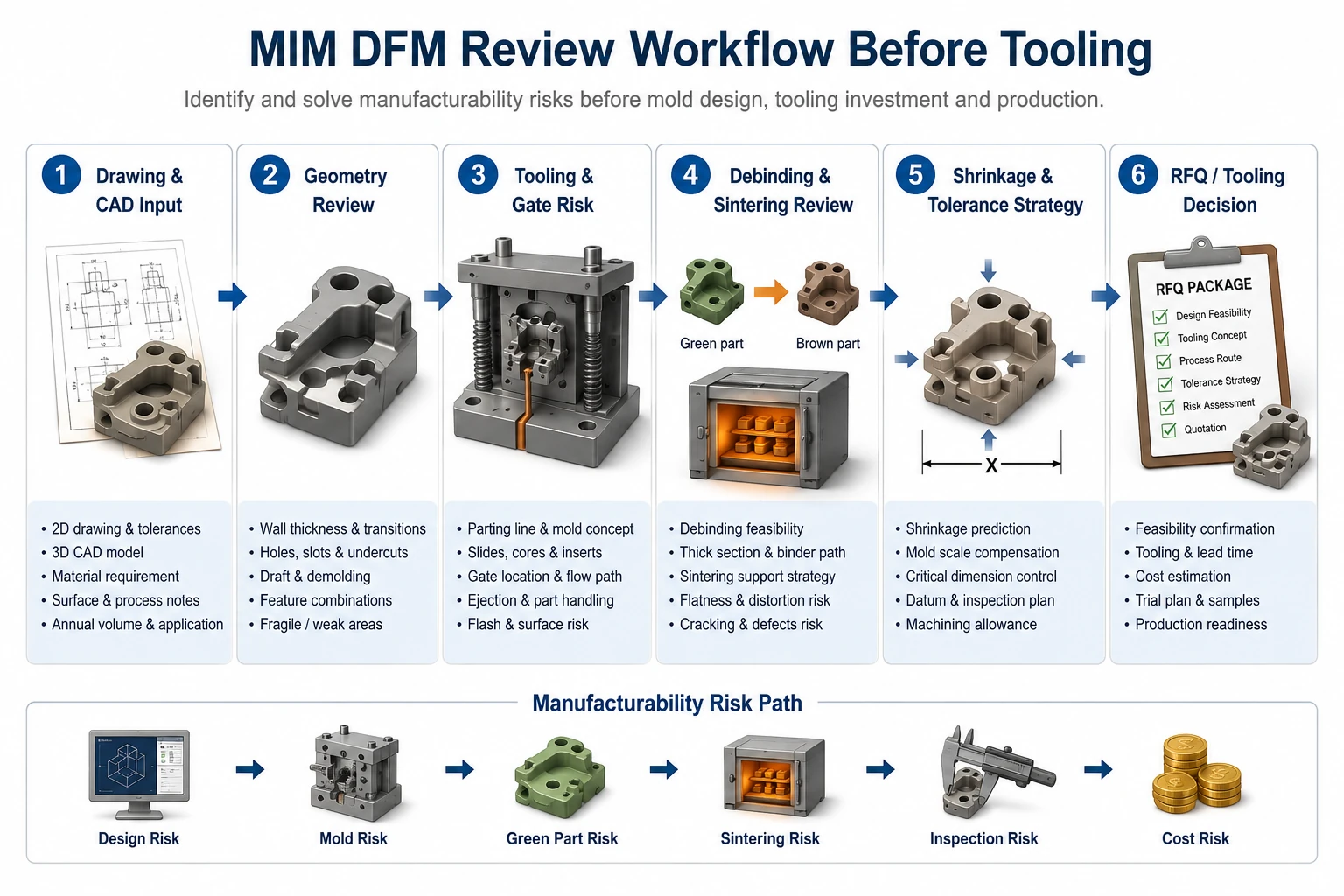
Bir MIM Parçası Ne Zaman DFM İncelemesinden Geçmelidir?
Bir MIM parçası, CAD geometrisinin kalıplama, yeşil parça elleçleme, bağlayıcı giderme, sinterleme veya muayene sırasında risk oluşturabileceği durumlarda DFM incelemesi gerektirir. Karar, sadece şeklin kalıplanıp kalıplanamayacağı değil, aynı zamanda tüm sürecin kararlı boyutlar, kabul edilebilir yüzeyler, gerçekçi verim ve uygulanabilir bir maliyet yapısı sağlayıp sağlayamayacağıdır.
Uygunluk, malzeme performansı, şekil karmaşıklığı, beklenen hacim ve bileşen ekonomisine bağlıdır. Bu nedenle inceleme, geometriyi besleme stoğu davranışı, takım hareketi, yolluk konumu, yeşil parça mukavemeti, destek stratejisi, büzülme, tolerans ve muayene ile ilişkilendirir.
Genellikle MIM DFM İncelemesi Gerektiren Parçalar
- Daha kalın boss'lar, yerel kütleler veya ani etiket geçişleriyle birleştirilmiş ince etiketler.
- Çapraz delikler, yan delikler, yuvalar, alt kesimler, küçük kancalar veya hassas mikro özellikler.
- Kalıp izlerinin, ayırma hatlarının veya destek izlerinin kabul edilemez olduğu kozmetik veya müşteri yüzeyleri.
- Düzlük, paralellik, konumsal kararlılık veya kontrollü montaj uyumu gerektiren fonksiyonel yüzeyler.
- Sinterleme sonrası güvenilir olmayabilecek sıkı datum tabanlı toleranslar.
- Sinterleme distorsiyonuna duyarlı büyük düz yüzeyler, konsol bölümler veya asimetrik geometri.
- MIM üretimi için yeniden tasarlanan mevcut CNC işlenmiş parçalar.
- Sinterleme sonrası işleme, ısıl işlem, parlatma, kaplama, elektroliz veya pasivasyon gerektiren parçalar.
MIM İçin Uygun Olmayabilecek Parçalar
İyi bir DFM incelemesi, MIM'in en pratik yol olmadığında da tanımlamalıdır. Bir parça çok büyük ve geometrik olarak basit olduğunda, yalnızca çok düşük yıllık miktarlarda gerektiğinde, geniş işlenmiş yüzeylere bağlı olduğunda veya herhangi bir kalıp izini, ayırma hattını, destek temasını, tolerans ayarını veya ikincil işlem izini kabul edemediğinde yeniden tasarıma veya başka bir işleme ihtiyaç duyabilir.

Bu sinyalleri bağımsız onay kriterleri yerine tarama tetikleyicileri olarak kullanın. Nihai karar, MIM DFM İnceleme Matrisi, burada geometri takım, yolluk, taşıma, sinterleme, büzülme, tolerans ve muayene ile birlikte değerlendirilir.
Özelliklere özgü limitler için, inceleyin MIM parça tasarımı, et kalınlığı riski ve sinterlenmiş ve işlenmiş tolerans stratejisi.
Faydalı Bir MIM DFM İncelemesi İçin Hangi Bilgiler Hazırlanmalıdır?
Faydalı bir MIM DFM incelemesi, 3B modelden daha fazlasına bağlıdır. Bir CAD dosyası şekli gösterir, ancak her zaman işlevi, kritik boyutları, muayene önceliklerini, kozmetik beklentileri, uygulama yükünü, yıllık hacmi veya kabul edilebilir ikincil işlemleri açıklamaz. Eksik proje bilgileri genellikle belirsiz geri bildirimlere, aşırı muhafazakar varsayımlara veya gerçek üretim riskini yansıtmayan bir teklife yol açar.
Çizim ve CAD Girdileri
Bir DFM incelemesi talep etmeden önce aşağıdaki bilgileri hazırlayın:
- Boyutlar, toleranslar, datumlar ve teknik notlar içeren 2B çizim.
- Kullanılabilir bir mühendislik formatında 3B CAD dosyası.
- Malzeme kalitesi veya hedef mekanik, korozyon, manyetik veya aşınma özelliği.
- İşlevsel kritik boyutlar ve montaj uyum gereksinimleri.
- Yüzey kalitesi, kozmetik yüzey notları, ısıl işlem veya kaplama gereksinimleri.
- Tahmini yıllık hacim veya üretim miktarı aralığı.
- Yük, aşınma, korozyon, sıcaklık veya eşleşen parçalar dahil olmak üzere uygulama ortamı.
- Parça CNC, döküm, damgalama veya montajdan dönüştürülüyorsa mevcut üretim süreci.
Mühendislerin Yalnızca Bir Çizimden Değerlendiremeyeceği Şeyler
Yaygın bir hata, çizimdeki her boyutun aynı işlevsel öneme sahip olduğunu varsaymaktır. Üretimde bu nadiren doğrudur. Bazı boyutlar montajı kontrol eder, bazıları yalnızca görünümü tanımlar ve diğerleri takım veya işleme kararlarını yönlendirmemesi gereken referans boyutlarıdır.
Kozmetik yüzeyler, montaj yönü, muayene yöntemi, kritik delikler, işlevsel datumlar, eşleşen parça arayüzleri ve sinterleme sonrası işleme kabul edilebilir olup olmadığı.
Kalıp konsepti, yolluk konumu, sinterleme desteği, tolerans stratejisi ve ikincil işlem planı yanlış varsayımlara dayanabilir.
Aşağıdaki tablo, her RFQ girdisinin DFM kalitesini ve teklif doğruluğunu neden etkilediğini göstermektedir.
| Gerekli Girdi | MIM DFM İçin Neden Önemlidir |
|---|---|
| 2D çizim | Toleransları, datumları, çizim notlarını ve muayene niyetini tanımlar. |
| 3D CAD dosyası | Geometriyi, ayırma yönünü, kalıp hareketini, yerel kütleyi ve özellik etkileşimini değerlendirmeye yardımcı olur. |
| Malzeme gereksinimi | Büzülme, mukavemet, korozyon direnci, ısıl işlem, yüzey işlemleri ve işlem rotasını etkiler. |
| Kritik boyutlar | Fonksiyonel gereksinimleri kritik olmayan geometriden ayırır ve her özelliği aşırı kontrol etmekten kaçınır. |
| Yüzey gereksinimleri | Kalıp yeri, ayırma hattı konumu, destek teması, parlatma ve kaplama kararlarını kontrol eder. |
| Yıllık hacim | MIM kalıp maliyetinin ve mühendislik doğrulama çabasının haklı olup olmadığını değerlendirmeye yardımcı olur. |
| Uygulama geçmişi | Yük, aşınma, sıcaklık, korozyon, montaj ve saha kullanım koşullarını açıklar. |
| İkincil işlem gereksinimleri | İşleme payını, referans noktası planlamasını, maliyeti, teslim süresini ve muayene sırasını etkiler. |
Proje hazırlığı için MIM DFM tasarım kontrol listesi, MIM tolerans ve büzülme kontrol listesi, veya MIM RFQ hazırlık rehberi.
Mühendisler MIM Kalıplamasından Önce Parça Geometrisini Nasıl İnceler
Geometri incelemesi, MIM DFM'nin ilk büyük bölümüdür, ancak basit bir “bu şekil kalıplanabilir mi?” sorusu olarak ele alınmamalıdır. Bir parça kalıplanabilir olsa bile, yeşil parça çıkarma, yolluk ayırma, bağlayıcı giderme, sinterleme veya son muayene sırasında riskli olabilir. Kalıplamadan önce temel soru, tüm özellik kombinasyonunun işlem rotasından sağ çıkıp çizim niyetini hala karşılayıp karşılayamayacağıdır.

Genel Geometri ve Özellik Kombinasyonu
MIM, küçük bir metal parçanın birden fazla karmaşık özelliği tek bir bileşende birleştirmesi gerektiğinde genellikle caziptir. Ancak, DFM incelemesi, yalnızca her özelliği tek başına değil, özellik kombinasyonunu da değerlendirmelidir. İnce bir kol, çapraz bir delik, kozmetik bir yüzey ve sıkı bir datum, her biri ayrı ayrı yönetilebilir olabilir. Tek bir parçada birleştirildiğinde, takım karmaşıklığı, dolum dengesizliği, sinterleme destek sınırlamaları ve muayene istikrarsızlığı yaratabilirler.
Duvar Geçişi, Yerel Kütle ve Kırılgan Alanlar
Duvar kalınlığı sadece bir dolum sorunu değildir. Düzensiz duvar kütlesi, bağlayıcı gidermeyi, sinterleme büzülmesini ve bozulmayı etkileyebilir. Kalın yerel boss'lar, ince bölümlere göre farklı şekilde bağlayıcı tutabilir. Desteklenmeyen ince özellikler, sinterlemeden önce çıkarma veya tepsi yükleme sırasında deforme olabilir.
DFM açısından, mühendisler kalın-ince geçişleri, ince duvarlara bağlı ağır boss'ları, keskin iç köşeleri, uzun desteksiz nervürleri veya kolları ve yerel kütlenin bağlayıcı gidermeyi yavaşlatabileceği alanları kontrol etmelidir. Detaylı duvar tasarım kuralları şurada bulunur: et kalınlığı risk incelemesi sayfa.
Delikler, Yuvalar, Ters Açılar ve Takım Hareketi
Delikler, yuvalar ve ters açılar otomatik olarak iyi veya kötü değildir. Üretilebilirlikleri yön, boyut, konum, derinlik, duvar desteği, takım erişimi ve özelliğin zayıf bir yeşil parça alanı yaratıp yaratmadığına bağlıdır.
DFM incelemesi, bir deliğin düz bir çekirdek pimi ile oluşturulup oluşturulamayacağını, yan bir hareket veya ek parça gerekip gerekmediğini, bir yuvanın flaş veya kırılma riski yaratıp olup olmadığını ve bir ters açının işlev tarafından gerekip gerekmediğini kontrol etmelidir. Detaylı özelliklere özgü rehberlik şurada bulunur: delikler, yuvalar ve ters açı fizibilitesi sayfa.
DFM Parça Tasarımını Kalıba, Girişe ve Yeşil Parça Elleçlemeye Nasıl Bağlar
Bir MIM parçası, kalıptan ayrı düşünülemez. Kalıp tasarımı sabitlendikten sonra birçok maliyet, kalite ve yüzey kararı değiştirilmesi zor hale gelir. Bu nedenle DFM incelemesi, önlenebilir riskleri ortaya çıkaran ilk numunelerden sonra değil, kalıp konsepti onaylanmadan önce yapılmalıdır.
Kalıp Tasarımı Sabitlenmeden Önce Kalıp Karmaşıklığı
Kalıp tasarımı incelemesi, ayırma hattı konumu, sürgü veya kaldırıcı gereksinimleri, insert ve maça pimi stratejisi, itici yönü, itici temas alanı, çapak hassasiyetli yüzeyler, takım bakım riski ve önlenebilir kalıp maliyetini dikkate almalıdır.
Birden fazla yan özelliğe sahip bir parça MIM ile üretilebilir, ancak her sürgü, insert veya zor maça pimi mühendislik riskini artırır. DFM sorusu sadece “bunu kalıplayabilir miyiz?” değildir. Sorun “bu kalıp konsepti, beklenen hacim ve kalite seviyesinde stabil üretimi destekliyor mu?” sorusudur. Daha derin kalıp yapısı rehberliği için şunları inceleyin: MIM Kalıp Tasarımının Etkisi.
Besleyici Konumu, Akış Yolu ve Korunan Yüzeyler
Besleyici tasarımı hem üretim hem de müşteri tarafındaki kaliteyi etkiler. Fonksiyonel veya kozmetik bir yüzeye yerleştirilen bir besleyici, çıkarma izleri, yerel deformasyon veya yüzey işlem maliyeti oluşturabilir. Kötü bir akış yolu, eksik dolum, kaynak hatları, yoğunluk varyasyonu veya boyutsal kararsızlık artışına neden olabilir.
DFM incelemesi sırasında mühendisler, korunan fonksiyonel yüzeyleri, kozmetik yüzeyleri, olası besleyici izi toleransını, akış uzunluğunu, dolum dengesini, besleyiciden ayırma yöntemini ve besleyicinin çıkarılmasının boyut veya görünümü etkileyip etkilemediğini belirlemelidir. Detaylı besleyici stratejisi için şunları inceleyin: Besleyici Konumu ve Akış Yolu İncelemesi.
Kalıplama Sonrası Yeşil Parça Elleçleme Riski
Yeşil parça nihai metal değildir. Bağlayıcı giderme ve sinterlemeden önce, sinterlenmiş bileşenden daha kırılgandır. İnce kollar, desteksiz pimler, küçük kancalar ve keskin detaylar kalıp dolumunu atlatabilir ancak itme, çapak alma, muayene veya tepsiye yükleme sırasında kırılabilir.
Bu nedenle DFM, sadece kalıp dolumunu değil, elleçlemeyi de dikkate almalıdır. CAD'de üretilebilir görünen bir tasarım, özellik takviyesi, destek yüzeyi değişiklikleri, besleyici yerinin değiştirilmesi veya elleçleme stratejisi gerektirebilir.
DFM İncelemesi Bağlayıcı Giderme, Sinterleme Desteği ve Büzülme Riskini Nasıl Değerlendirir
Enjeksiyonla kalıplanabilen bir parça, bağlayıcı giderme veya sinterleme riski kontrol edilmezse DFM incelemesinden başarısız olabilir. MIM DFM, tam işlem rotasını dikkate almalıdır: besleme stoğu kalıplama, bağlayıcı giderme, sinterleme büzülmesi, destek stratejisi ve boyutsal doğrulama.

Bağlayıcı Giderme ve Sinterleme, Sadece Proses Kontrolü Değil, DFM'nin de Parçasıdır
Bağlayıcı giderme, sinterlemeden önce kalıplanmış yeşil parçadaki bağlayıcıyı çıkarır. Parçanın kalın yerel kesitleri, kapalı bağlayıcı yolları, keskin geçişler veya desteksiz özellikler varsa, risk kalıplama sırasında ortaya çıkmayabilir ancak daha sonra çatlama, deformasyon veya tutarsız nihai boyutlar olarak görülebilir.
MIMA, MIM rotasını besleme stoğu hazırlığı, kalıplama, bağlayıcı giderme ve sinterleme olarak tanımlar. Ayrıca kalıplanmış parçayı yeşil parça, bağlayıcı giderme sonrası parçayı ise nihai sinterlemeden önceki kahverengi parça olarak tanımlar. Bu işlem dizisi, MIM DFM'nin sadece kalıp dolumundan fazlasını değerlendirmesinin nedenidir.
Sinterleme Desteği ve Düzlük Riski
Sinterleme desteği, sadece fırın sorunu değil, bir tasarım sorunudur. Büyük düz yüzeyler, konsollar, asimetrik geometri, uzun ince kesitler ve kararsız temas alanlarına sahip parçalar, destek stratejisi kalıplama öncesinde düşünülmezse deforme olabilir.
DFM incelemesi, hangi yüzeyin bir setter ile temas edebileceğini, destek izlerinin kabul edilebilir olup olmadığını, kritik bir yüzeyin destek temasından kaçınıp kaçınması gerektiğini ve düzlüğün veya doğruluğun destek yönelimine bağlı olup olmadığını belirlemelidir. Detaylı destek stratejisi, sinterleme desteği ve düzlük riski sayfa.
Sinterleme Büzülmesi Telafisi ve Kritik Boyut Tahmini
MIM parçaları sinterleme sırasında önemli ölçüde büzülür. Kalıp telafisi, malzeme sistemini, besleme stoğu davranışını, geometriyi, kesit kalınlığını, fırın işlemini, destek yönünü ve ölçüm referans noktasını dikkate almalıdır. İnceleme, sinterlenmiş olarak kontrol edilebilen boyutları, işleme gerektirebilecek veya daha sıkı bir inceleme stratejisi gerektirebilecek boyutlardan ayırmalıdır.
DFM, her kritik boyutun sinterlemeden hemen sonra tutturulabileceğini vaat etmemelidir. Bunun yerine, büzülme riskinin nerede bulunduğunu ve kalıplama, işlem ve inceleme planlamasının bunu nasıl yöneteceğini tanımlamalıdır. Daha derin rehberlik için, inceleyin kalıplama öncesi büzülme telafisi ve besleme stoğunun MIM parça kalitesini nasıl etkilediği.
DFM Tolerans, Referans Noktası, İnceleme ve İkincil İşlem Stratejisini Nasıl Belirler
Tolerans incelemesi, MIM DFM'nin en önemli kısımlarından biridir. Sorun, MIM'in hassas metal parçalar üretebilip üretemeyeceği değildir. Sorun, hangi boyutların MIM işlemiyle kontrol edilmesi gerektiği, hangilerinin kalıp telafisiyle ayarlanması gerektiği, hangilerinin kararlı referans noktalarından ölçülmesi gerektiği ve hangilerinin ikincil işleme gerektirebileceğidir.
Sinterlenmiş Durum Toleransı ve İşlenmiş Tolerans
Sinterlenmiş durum boyutları kalıplama, besleme stoğu, büzülme davranışı, sinterleme desteği ve işlem tutarlılığı yoluyla kontrol edilir. İşlenmiş boyutlar, delme, raybalama, kılavuz çekme, taşlama, frezeleme veya honlama gibi işlemlerle sinterlemeden sonra kontrol edilir.
DFM, çizim boyutlarını kritik işlev boyutları, montaj uyum boyutları, kozmetik boyutlar, referans boyutları, sinterlenmiş durumda kontrol için uygun boyutlar, işleme payı gerektiren boyutlar ve inceleme netliği gerektiren boyutlar olarak sınıflandırmalıdır. Yaygın bir hata, her özelliğe sıkı tolerans uygulamaktır. Bu, parçanın gerçek işlevini iyileştirmeden kalıp karmaşıklığını, inceleme maliyetini ve ikincil işlemeyi artırabilir. Detaylı tolerans stratejisi için, şunları kullanın: sinterlenmiş ve işlenmiş tolerans incelemesi sayfa.
Referans Noktası ve İnceleme Planlaması
Referans noktaları üretilebilir ve ölçülebilir olmalıdır. Çizim, referans noktası olarak küçük, esnek, desteksiz veya büzülmeye duyarlı bir özellik kullanıyorsa, parça üretilebilse bile inceleme kararsız hale gelebilir.
DFM incelemesi, referans noktalarının sinterlemeden sonra kararlı olup olmadığını, inceleme yüzeylerine erişilip erişilemediğini, destek temasının referans noktası yüzeyini etkileyip etkilemediğini, işlenmiş yüzeylerin nihai inceleme referans noktaları haline gelip gelmediğini ve kozmetik ve işlevsel gereksinimlerin net bir şekilde ayrılıp ayrılmadığını kontrol etmelidir.
İkincil İşlemler Sonradan Eklenmek Yerine Planlanmalıdır
İkincil işlemler faydalı olabilir, ancak erken planlanmalıdır. Geç alınmış talaşlı imalat kararları fikstür zorlukları, datum çakışmaları, ek maliyet ve daha uzun teslim süresi yaratabilir. Yaygın inceleme noktaları arasında talaşlı imalat payı, delik kılavuz çekme veya raybalama, kritik yüzey taşlama, ısıl işlem deformasyonu, parlatma, kaplama birikimi ve kaplama sonrası son muayene yer alır.
Maliyetle ilgili kararlar için inceleyin MIM tasarımı maliyet için ve parça boyutları nihai MIM parça kalitesini nasıl etkiler.
DFM Kararları Parçayı Aşırı Tasarlamadan Maliyeti Nasıl Etkiler
DFM maliyeti etkiler çünkü üretim riski kalıp yapımı, muayene, ikincil işlemler, verim kaybı, deneme düzeltmeleri ve üretim kontrolünde maliyete dönüşür. Ancak DFM, her faydalı özelliği kaldırarak parçayı sadece kolaylaştırmamalıdır. Amaç, gereksiz üretim zorluklarından kaçınırken işlevi korumaktır.
Aşağıdaki tablo, MIM DFM incelemesi sırasında bulunan yaygın maliyet etkenlerini ve mühendislerin parça işlevini zayıflatmadan kaçınılabilir maliyeti nasıl azaltabileceğini göstermektedir.
| DFM Bulgusu | Neden Maliyeti Artırır | Olası İnceleme Eylemi |
|---|---|---|
| Aşırı sıkı işlevsel olmayan toleranslar | Daha fazla muayene, talaşlı imalat ve proses kontrolü. | Kritik olmayan boyutları gevşetin veya yeniden sınıflandırın. |
| Karmaşık sürgü veya insert gereksinimi | Daha yüksek kalıp maliyeti ve bakım riski. | İşlev izin veriyorsa, özellik yönünü yeniden tasarlayın veya undercut'ı basitleştirin. |
| Korunan yüzeyde yolluk izi | Ek bitirme veya reddetme riski. | Yolluğu işlevsel olmayan bir yüzeye taşıyın veya korunan yüzey önceliğini gözden geçirin. |
| Kötü sinterleme destek yüzeyi | Düzlük düzeltmesi, destek izi kontrolü ve verim riski. | Kalıplama öncesi kabul edilebilir destek temasını ekleyin veya tanımlayın. |
| Çok sayıda sinterleme sonrası işleme alanı | Daha uzun çevrim süresi, daha fazla fikstür ve daha yüksek birim maliyeti. | İşlemeyi yalnızca işleve gerçekten kritik olan boyutlarla sınırlayın. |
| Aşırı belirlenmiş malzeme | Daha yüksek malzeme, ısıl işlem veya yüzey işlem maliyeti. | Gerçek mekanik, korozyon, manyetik veya aşınma gereksinimini gözden geçirin. |
DFM, takım hareketini basitleştirdiğinde, gereksiz ikincil işlemleri azalttığında, kritik ve kritik olmayan boyutları ayırdığında, yalnızca gerçekten işlevsel veya kozmetik yüzeyleri koruduğunda, sinterleme desteğini iyileştirdiğinde, deneme düzeltme döngülerini azalttığında ve malzeme seçimini gerçek uygulama koşullarıyla uyumlu hale getirdiğinde maliyeti düşürebilir.
Kalıplama Öncesi MIM DFM İnceleme Matrisi
Bu matris, pratik bir MIM DFM incelemesinin temelini oluşturur. Tasarım mühendislerinin, hangi risklerin kalıp tasarımından önce çözülmesi gerektiğini ve hangi konuların özel tasarım sayfalarında daha ayrıntılı incelenmesi gerektiğini belirlemesine yardımcı olur.

Aşağıdaki tablo, ana DFM inceleme alanlarını üretim riskleriyle ve bu MIM tasarım kümesindeki ilgili ayrıntılı kılavuzlarla eşleştirmektedir.
| İnceleme Alanı | Mühendisler Neleri Kontrol Eder | Üretim Riski | Beklenen DFM Çıktısı | İlgili Detaylı Kılavuz |
|---|---|---|---|---|
| Parça geometrisi | Özellik kombinasyonu, ince kesitler, keskin köşeler, kırılgan alanlar. | Dolum sorunu, çatlama, yeşil parça hasarı. | Geometrinin kalıplamaya hazır olup olmadığını veya yeniden tasarlanması gerekip gerekmediğini onaylayın. | MIM Parça Tasarımı |
| Et kalınlığı | İnceye kalın geçiş, yerel kütle, desteksiz ince alanlar. | Bağlayıcı giderme sorunu, çarpılma, büzülme değişkenliği. | İnceltme, boşaltma veya destek planlaması gerektiren duvar geçişlerini belirleyin. | Duvar Kalınlığı Tasarımı |
| Delikler, oluklar ve alt kesikler | Kalıp pimi yönü, yan hareket, kalıptan çıkarma, çapak riski. | Kalıp karmaşıklığı, parça kırılması, uyumsuzluk. | Özelliklerin kalıplanıp kalıplanmayacağına, yeniden tasarlanıp tasarlanmayacağına veya sinterleme sonrası işlenip işlenmeyeceğine karar verin. | Delikler, Yuvalar ve Alttan Kesikler |
| Kalıp konsepti | Ayırma hattı, sürgüler, ekler, çıkarma, kalıp erişimi. | Kalıp maliyeti, çapak, yüzey izleri, bakım riski. | Kalıp onayından önce kalıp karmaşıklığını ve yüzey risklerini tanımlayın. | MIM Kalıp Tasarımı |
| Yolluk tasarımı | Yolluk izi, akış yolu, yolluk ayırma, korumalı yüzeyler. | Eksik dolum, kozmetik kusur, yerel hasar. | Kabul edilebilir yolluk alanlarını onaylayın ve fonksiyonel veya kozmetik çatışmalardan kaçının. | Geçit Tasarımı |
| Ham parça taşıma | Çıkarma, çapak alma, yolluk ayırma, tepsiye yükleme, hassas özellikler. | Kırılma, deformasyon, gizli hasar. | Destek, özellik ayarı veya taşıma kontrolü gerektiren hassas alanları işaretleyin. | Enjeksiyon Kalıplama Kalite İncelemesi |
| Bağlayıcı Giderme | Kalın kesitler, bağlayıcı giderme yolu, çatlama riski. | İç kusur, deformasyon, proses kararsızlığı. | Numune denemesinden önce yerel kütle ve bağlayıcı giderme risklerini belirleyin. | Bağlayıcı Giderme ve Sinterleme Kalitesi |
| Sinterleme desteği | Destek yüzeyi, setter teması, konsol, düzlük. | Bozulma, düzlük kaybı, destek izleri. | Destek yüzeyini, destek izi kabulünü ve düzlük riskini tanımlayın. | Sinterleme Desteği |
| Sinterleme büzülmesi | Kritik boyutlar, kalıp ölçeği, deneme düzeltmesi. | Boyutsal sapma, kalıp düzeltme gecikmesi. | Sinterlenmiş boyutları, düzeltme veya işleme gerektiren boyutlardan ayırın. | Sinterleme Büzülmesi Telafisi |
| Tolerans ve datum | Fonksiyonel boyutlar, muayene datumu, ölçüm erişimi. | Ek maliyet, kararsız muayene, reddedilme riski. | Tolerans önceliğini, datum kararlılığını ve muayene yöntemini netleştirin. | MIM Toleransları |
| İkincil işlemler | İşleme payı, finisaj, ısıl işlem, kaplama. | Maliyet artışı, veri çakışması, teslim süresi etkisi. | Makine işleme, yüzey işlemleri, ısıl işlem ve son muayene sıralamasını planlayın. | Maliyet Odaklı Tasarım |
DFM İncelemesi İş Akışı: Çizim İncelemesinden Kalıp Kararına
Güçlü bir MIM DFM incelemesi yapılandırılmış bir iş akışını takip etmelidir. Bir iş akışı olmadan, tasarım geri bildirimleri dağınık ve üzerinde işlem yapılması zor hale gelebilir.
Çizimleri, CAD dosyalarını, malzeme gereksinimlerini, tolerans notlarını, yüzey gereksinimlerini, uygulama geçmişini ve beklenen hacmi inceleyin.
Geometri, duvar geçişleri, delikler, alt kesimler, yolluklar, yeşil parça elleçleme, bağlayıcı giderme, sinterleme desteği, büzülme ve veri kararlılığını tarayın.
Riskleri mutlaka değiştirilmesi gerekenler, kalıp tarafından yönetilenler, işlem tarafından yönetilenler, ikincil işlem, müşteri onayı ve deneme doğrulama kalemlerine ayırın.
Kalıp konseptini, yolluk stratejisini, işleme payını, muayene planını, malzeme rotasını, yüzey işlemleri ve maliyet varsayımlarını uyumlu hale getirin.
Büzülme, düzlük, parça kalitesi, yüzey durumu, ölçüm kararlılığı ve düzeltme ihtiyaçları için numune doğrulaması planlayın.
Parçanın kalıplamaya hazır olup olmadığını, yeniden tasarıma gerek olup olmadığını, ikincil işlemlere ihtiyaç duyup duymadığını veya başka bir işlemle karşılaştırılması gerekip gerekmediğini onaylayın.
Temsili Mühendislik Senaryosu: Kalıplanabilir Görünen Ancak DFM İncelemesinden Kalan Bir Parça
Senaryo açıklaması: Bu temsili senaryo, açıklama için yaygın MIM DFM risk kalıplarını birleştirir ve belirli bir müşteri projesi olarak sunulmamaktadır. Küçük bir metal konektör, karmaşık geometriyi ve birkaç entegre özelliği birleştirdiği için MIM'e uygun görünmektedir. Ayrıca geniş düz bir yüzeye, iki küçük yan deliğe, ince bir konsol bölüme ve kritik bir montaj deliğine sahiptir.

Aşağıdaki vaka mantığı, “CAD'de kalıplanabilir” ifadesinin “MIM kalıplamasına hazır” ile aynı olmadığını açıklar.”
| Vaka Noktası | Mühendislik Yorumu |
|---|---|
| Ne sorunu oluştu | Son geometri kalıplanabilir görünüyordu ve her özellik ayrı ayrı incelendiğinde mümkün görünüyordu. |
| Neden oldu | Çizim, nihai şekil düşünülerek oluşturulmuş olup, yeşil parça mukavemetini, yolluk konumunu, sinterleme desteğini veya muayene referans noktasının kararlılığını tam olarak dikkate almamıştır. |
| Gerçek sistem nedeninin ne olduğu | Desteklenmeyen ince kesit, büzülmeye duyarlı bir bölgeye yakın kritik bir delik, destek gerektiren geniş düz bir yüzey ve belirsiz referans noktası stratejisi birleşik riski oluşturmuştur. |
| Nasıl düzeltildi | Destek yüzeyi yeniden tanımlanmış, yolluk fonksiyonel yüzeyden uzağa taşınmış, delik tolerans stratejisi sinterlenmiş ve işlenmiş seçeneklere ayrılmış ve referans noktası şeması netleştirilmiştir. |
| Tekrar oluşması nasıl önlenir | Sadece nihai geometri kalıplanabilir göründüğü için bir MIM çizimini onaylamayın. Kalıp tasarımından önce takım, destek, büzülme, tolerans ve muayeneyi birlikte inceleyin. |
MIM DFM Kontrol Listesi Teklif Talebi Öncesi
Teklif veya kalıp incelemesi talep etmeden önce bu kontrol listesini kullanın. Mühendislik ekibinin üretim riskini daha erken belirlemesine ve daha faydalı geri bildirim sağlamasına yardımcı olur.

2B teknik resim, 3B CAD modeli, malzeme gereksinimi, kritik boyutlar, datum şeması ve yüzey veya kaplama notlarını sağlayın.
Beklenen yıllık hacmi, uygulama koşullarını, eşleşen arayüzleri, mevcut üretim rotasını ve incelemeyi yönlendiren herhangi bir maliyet veya kalite sorununu açıklayın.
Kullanın MIM DFM tasarım kontrol listesi tam madde madde inceleme için veya MIM uygunluk kontrol listesi süreç seçimi henüz onaylanmadığında.
MIM DFM İncelemesi İçin Çiziminizi Gönderin
Bu incelemeyi, projeniz kalıp onayı öncesinde, CNC'den MIM'e dönüşümde, ilk numune düzeltmesinde veya ince duvarlı, alt kesimli, dar toleranslı, düzlük gereksinimli, kozmetik yüzeyli veya ikincil işleme ihtiyaçları olan küçük karmaşık bir metal parça için üretim planlamasında kullanın.
Lütfen 2D çizimleri, 3D CAD dosyalarını, malzeme gereksinimlerini, kritik toleransları, yüzey bitirme ihtiyaçlarını, tahmini yıllık hacmi ve uygulama geçmişini sağlayın. XTMIM, kalıp tasarımı veya üretim planlamasından önce süreç uygunluğunu, kalıp riskini, yolluk yerleşimini, yeşil parça elleçlemesini, bağlayıcı giderme ve sinterleme riskini, büzülme telafisini, tolerans stratejisini, ikincil operasyon ihtiyaçlarını ve muayene fizibilitesini inceleyecektir.
MIM için DFM Hakkında SSS
MIM için DFM nedir?
MIM için DFM, metal enjeksiyon kalıplama parçalarının kalıplanıp kalıplanmadığını, işlenip işlenemeyeceğini, bağlayıcısının giderilip giderilemeyeceğini, sinterlenip sinterlenemeyeceğini, ölçülüp ölçülemeyeceğini ve kalıplama takımı kesinleşmeden önce tutarlı bir şekilde üretilip üretilemeyeceğini kontrol eden bir üretilebilirlik incelemesidir.
Bir MIM parçası için DFM incelemesi ne zaman yapılmalıdır?
Kalıp tasarımı onayından, fiyat teklifi kesinleştirmeden ve takım yatırımından önce DFM (Üretilebilirlik İçin Tasarım) incelemesi yapılmalıdır. Parçada ince cidarlar, alt kesimler, dar toleranslar, kritik yüzeyler, düzlük gereksinimleri olduğunda veya CNC işleme yönteminden geçiş yapıldığında bu özellikle önemlidir.
MIM DFM, MIM tasarım kılavuzu ile aynı mıdır?
No. Bir MIM tasarım kılavuzu, tasarım prensiplerini açıklar. MIM DFM, bu prensipleri belirli bir çizime, CAD modeline, malzeme gereksinimine, tolerans planına ve üretim beklentisine uygular.
MIM DFM incelemesi için hangi dosyalar gereklidir?
Faydalı bir inceleme genellikle 2B teknik resim, 3B CAD dosyası, malzeme gereksinimi, kritik boyutlar, yüzey gereksinimleri, bitirme gereksinimleri, tahmini yıllık hacim ve uygulama geçmişini gerektirir.
MIM DFM incelemesinden ne gibi çıktılar beklemeliyim?
Pratik bir inceleme, parçanın kalıplamaya hazır olup olmadığını, tasarım değişikliği gerekip gerekmediğini, ikincil işlemlere ihtiyaç duyup duymadığını, yolluk veya destek kısıtlamaları olup olmadığını, tolerans netleştirmesi gerekip gerekmediğini veya ilk numune denetimiyle doğrulanması gerekip gerekmediğini belirlemelidir.
DFM incelemesi, toleransın sinterlenmiş olarak elde edilip edilemeyeceğini teyit edebilir mi?
DFM incelemesi, bir toleransın sinterleme sonrası kontrol için uygun olup olmadığını veya ikincil işleme gerekip gerekmediğini belirleyebilir. Nihai yetenek malzeme, geometri, sinterleme büzülmesi davranışı, destek stratejisi, muayene yöntemi ve üretim doğrulamasına bağlıdır.
DFM incelemesi kalıp maliyetini düşürür mü?
Kaydırıcıları, ek parçaları, yolluk stratejisini, destek yüzeylerini, işleme payını ve kritik olmayan toleransları basitleştirerek kaçınılabilir kalıp maliyetini azaltabilir. Parça fonksiyonu gerçekten karmaşık kalıp veya sıkı kontrol gerektiriyorsa maliyeti otomatik olarak azaltmaz.
Bir CNC parçası MIM için yeniden tasarlanabilir mi?
Evet, ancak doğrudan MIM kalıplarına kopyalanmamalıdır. CNC'den MIM'e dönüşüm, özellik entegrasyonunu, duvar geçişini, yolluk yerleşimini, sinterleme büzülmesini, referans noktasını, tolerans önceliğini, ikincil işleme adımlarını ve beklenen üretim hacmini gözden geçirmelidir.
DFM incelemesinin sıfır kusur garantisi var mı?
Hayır. DFM incelemesi, kalıplama öncesinde bilinen riskleri azaltır, ancak nihai doğrulama hala kalıp kalitesine, besleme stoğu davranışına, bağlayıcı giderme ve sinterleme kontrolüne, numune incelemesine ve üretim süreci kararlılığına bağlıdır.
Mühendislik İncelemesi, Standartlar ve Teknik Referanslar
MIM DFM incelemesi, gerçek çizim, CAD modeli, malzeme gereksinimi, tolerans planı ve uygulama ortamına dayanmalıdır. Standartlar ve endüstri referansları, malzeme spesifikasyonunu ve tasarım anlayışını destekleyebilir, ancak tedarikçi özelinde DFM incelemesinin yerini almamalıdır.
Standartlar ve tasarım referansları erken DFM kararlarını destekleyebilir, ancak nihai proje geri bildirimi hala geometri, malzeme, toleranslar, kalıp, ikincil işlemler ve muayene gereksinimlerinin çizime dayalı bir incelemesine bağlıdır. XTMIM'in inceleme kapsamı, gerekli proje girdileri ve kalıplamadan önce beklenen geri bildirimler için bkz. MIM mühendislik inceleme yeteneği.
MPIF Standardı 35-MIM: MIM malzeme spesifikasyonu ve malzeme özelliği referansı için geçerlidir. Malzeme seçimi ve malzeme tartışmalarını destekler, ancak geometri, kalıp, tolerans veya üretim fizibilitesi için evrensel bir onay kuralı olarak kullanılmamalıdır.
MIM tasarım ve süreç referansları: Tasarım bağlamı, MIM uygunluğu, besleme stoğu hazırlığı, kalıplama, yeşil parça elleçleme, bağlayıcı giderme, sinterleme ve sürece duyarlı tasarım incelemesi için geçerlidir.
Proje bazlı onay: Nihai üretilebilirlik, tolerans kabiliyeti ve üretim stratejisi, çizim incelemesi, kalıp tasarımı incelemesi, deneme numunesi muayenesi ve müşteri uygulama gereksinimleri aracılığıyla hala doğrulanmalıdır.
Harici referanslar: MPIF Standartları, MPIF Standard 35-MIM, MIM ile Tasarım, MIMA Proses Genel Bakış: MIM.