
Industries et applications MIM
Industries MIM pour pièces métalliques de précision à haute valeur ajoutée
Le moulage par injection de métal (MIM) est utilisé dans les industries qui nécessitent de petites pièces métalliques complexes et à haute résistance en production répétable, notamment les dispositifs médicaux, la robotique et l'automatisation, l'aérospatiale, les systèmes VE et nouvelles énergies, les appareils portables, l'électronique grand public, les composants de précision automobile et les instruments de précision.
Une forte adéquation au MIM n'est pas décidée par le nom du marché seul. La pièce doit également avoir une taille appropriée, une géométrie complexe, des exigences matérielles, un volume stable, une stratégie de tolérance réaliste et un plan d'inspection capable de supporter le moulage, le déliantage, le retrait de frittage et les opérations secondaires.
Pour les responsables des achats, les ingénieurs produit et les équipes de projet OEM, cette page aide à déterminer si un projet industriel doit passer à une revue MIM basée sur le dessin avant l'outillage ou la demande de devis (RFQ).
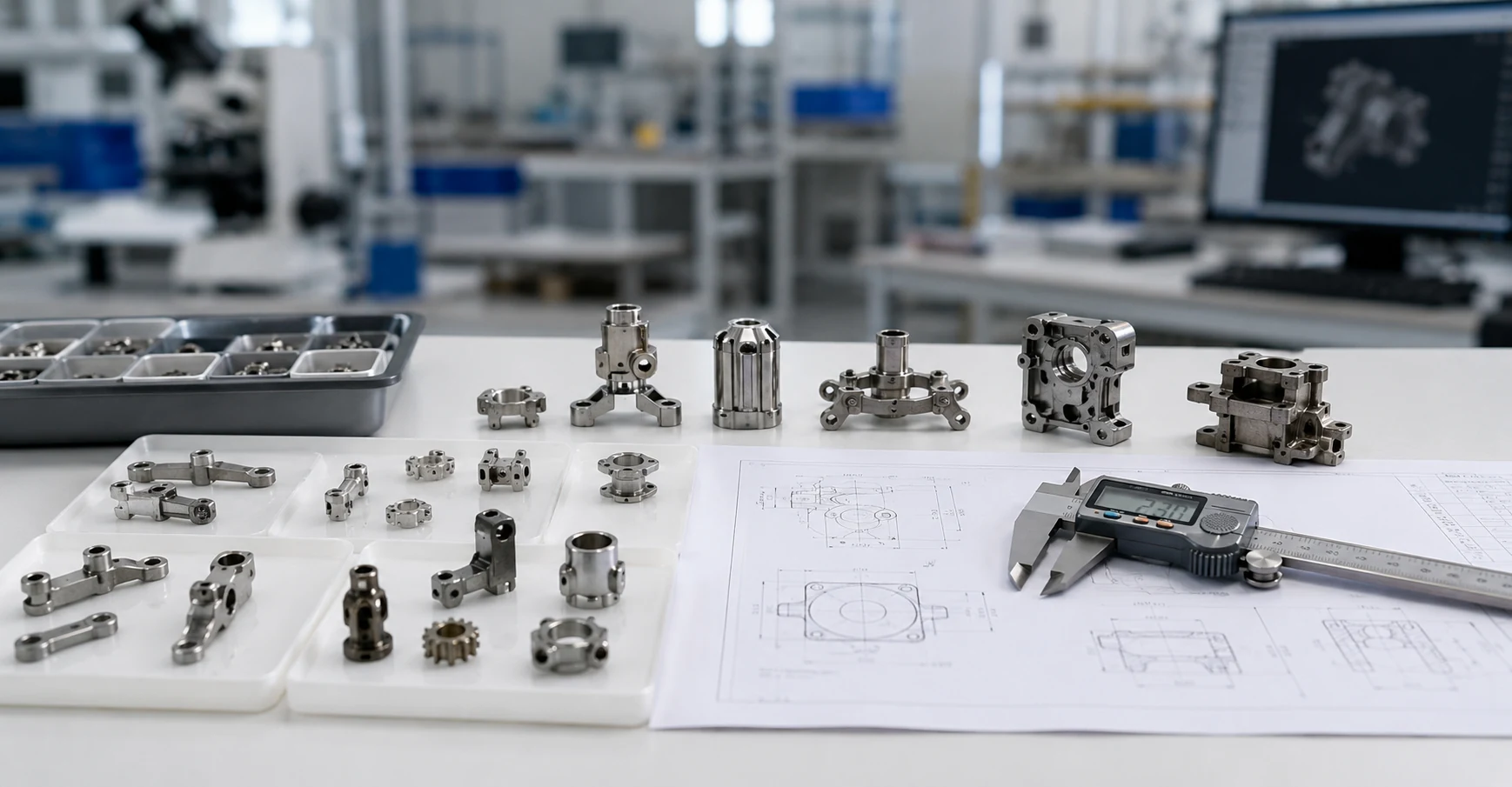
Quelles industries utilisent le MIM pour les pièces métalliques de haute précision ?
Le moulage par injection de métal (MIM) est couramment utilisé dans les dispositifs médicaux, la robotique et l'automatisation, l'aérospatiale, les systèmes VE et nouvelles énergies, les appareils portables, l'électronique grand public, les composants de précision automobile et les instruments de précision. Ces industries utilisent le MIM lorsqu'une pièce nécessite une géométrie compacte, de petites caractéristiques fonctionnelles, une résistance à la corrosion, une résistance à l'usure, un comportement magnétique, un contrôle de l'apparence ou une production répétable qui justifie l'outillage.
La question importante n'est pas simplement quelles industries utilisent le MIM, mais si la pièce spécifique est adaptée au MIM. Une analyse pratique doit confirmer la taille de la pièce, la complexité des caractéristiques, les exigences matérielles, le volume annuel, la stratégie de tolérancement, les besoins en opérations secondaires et les exigences d'inspection finale. Pour des exemples au niveau des composants après une sélection par industrie, consultez Pièces MIM utilisées dans ces industries. Pour le procédé de fabrication derrière ces décisions, consultez le Parcours de pertinence du procédé MIM, y compris le feedstock, le moulage, le déliantage, le retrait de frittage, les opérations secondaires et l'inspection.
Le MIM n'est adapté que lorsque la pièce, le matériau, la tolérance et le volume correspondent
Une erreur courante consiste à demander : “ Mon secteur est-il adapté au MIM ? ” La question plus utile est : “ Ma pièce a-t-elle la géométrie, le matériau, la tolérance et le volume qui rendent le MIM pratique ? ” Le MIM utilise une fine poudre métallique mélangée à un liant pour créer le feedstock. Le feedstock est injecté dans un moule pour former une pièce verte, déliantée pour éliminer le liant, puis frittée pour densifier le métal. Au cours de ce processus, de petites décisions telles que l'emplacement du point d'injection, l'équilibrage des parois, la manipulation de la pièce verte, le support de frittage et la planification des cotes critiques peuvent déterminer si le projet est stable en production.
Un projet médical, aérospatial, de véhicule électrique ou de robotique n'est pas automatiquement un bon projet MIM. Si la pièce est trop grande, trop simple, trop faible en volume, ou si toutes les surfaces fonctionnelles nécessitent un usinage serré, le MIM peut encore être la mauvaise voie.

Un bon projet MIM est défini par les caractéristiques de la pièce et la logique de production, et non par une étiquette sectorielle large.
| Niveau d'adaptation | Situation de projet typique | Raison technique |
|---|---|---|
| Bonne adéquation | Petites pièces métalliques complexes avec un volume annuel stable | Le MIM peut mouler des caractéristiques complexes et réduire les étapes d'usinage ou d'assemblage lorsque le coût de l'outillage est supporté par la demande de production. |
| Bonne adéquation | Le coût CNC est élevé en raison de nombreuses petites caractéristiques | Le MIM peut consolider les trous, fentes, formes courbes, caractéristiques minces et petits détails structurels en une seule géométrie moulée. |
| Adéquation conditionnelle | Pièces médicales, aérospatiales, EV ou robotiques nécessitant une validation stricte | La faisabilité dépend du choix du matériau, des exigences documentaires, des exigences de surface, des opérations secondaires et de la planification de l'inspection. |
| Adéquation conditionnelle | Pièces à tolérance serrée avec plusieurs dimensions critiques | Certaines dimensions peuvent convenir à l'état fritté, tandis que les trous, les surfaces d'étanchéité, les sièges de roulement ou les interfaces d'assemblage peuvent nécessiter un calibrage ou un usinage. |
| Mauvais ajustement | Grandes pièces simples ou quincaillerie bas de gamme | L'emboutissage, le moulage, le CNC, la coulée sous pression ou la métallurgie des poudres conventionnelle peuvent être plus pratiques lorsque la géométrie est simple ou que la pression sur les prix est le seul moteur. |
Industries MIM vs Applications MIM : En quoi ce hub est différent
Cette page est un hub industriel. Elle organise les opportunités MIM par marché client, tels que les dispositifs médicaux, la robotique, l'aérospatial, les systèmes EV, les appareils portables, l'électronique, les composants de précision automobiles et l'automatisation industrielle. Son rôle est d'aider les utilisateurs à identifier rapidement si leur secteur contient des opportunités MIM à forte valeur ajoutée, puis à passer à une revue basée sur le dessin.
Industries MIM
Se concentre sur les segments de marché et le contexte de l'acheteur : médical, robotique, aérospatial, EV, appareils portables, électronique, pièces de précision automobiles et automatisation.
Applications du MIM
Pour les cas d'utilisation fonctionnels et l'adéquation au niveau de la pièce, consultez le guide des applications du moulage par injection de métal. Il se concentre sur les types de pièces appropriés tels que les charnières, les engrenages, les pièces de capteurs, les pièces magnétiques douces, les pièces résistantes à l'usure, les supports structurels et les mécanismes compacts.
Aucun conflit de contenu
Les pages sectorielles expliquent où le MIM est utilisé. Les pages d'application expliquent ce que fait la pièce et pourquoi la géométrie, le matériau, la tolérance ou la logique de production conviennent au MIM.
Limite SEO : Ce hub ne doit pas répéter le contenu complet de la page Applications MIM. Il doit orienter les utilisateurs, en fonction de leur intention industrielle, vers des parcours d'examen au niveau de la pièce, de la fonction et du matériau.
Avant l'outillage, examinez les risques MIM qui décident souvent de la faisabilité
Dans un projet industriel à forte valeur ajoutée, l'examen précoce ne doit pas s'arrêter à “ La pièce peut-elle être moulée ? ” Un examen plus utile vérifie si la pièce peut survivre au moulage, à la manipulation de la pièce verte, au déliantage, au retrait de frittage, à la finition et à l'inspection sans générer un rendement instable ou des coûts cachés.
Équilibre des parois et épaisseur des caractéristiques
Les sections très fines, les changements brusques d'épaisseur, les cavités profondes borgnes et les détails non supportés peuvent augmenter les risques de courtes injections, de fissuration, de contrainte de déliantage ou de distorsion au frittage.
Point d'injection, ligne de joint et démoulage
Les marques de point d'injection, les lignes de joint, les emplacements des éjecteurs et la stratégie de contre-dépouille doivent être examinés avant l'outillage, en particulier pour les pièces portables, médicales et d'électronique grand public.
Retrait de frittage et stratégie de support
Les pièces MIM rétrécissent pendant le frittage. Les dimensions critiques, la planéité, la circularité et les longues caractéristiques non supportées doivent être planifiées en tenant compte de la compensation d'outillage et du support de frittage.
Matériau et parcours de traitement thermique
L'acier inoxydable, l'acier faiblement allié, l'acier à outils, les matériaux magnétiques doux, le titane et le Co-Cr nécessitent chacun une réflexion différente sur le processus et la vérification.
Allocation d'usinage et de finition
Toutes les surfaces critiques ne doivent pas nécessairement provenir directement du frittage. Les trous fonctionnels, les zones d'étanchéité, les portées de roulement ou les surfaces esthétiques peuvent nécessiter des opérations secondaires.
Séparation des dimensions critiques
Séparez les dimensions fonctionnelles des dimensions générales avant la demande de devis. Cela permet d'éviter un contrôle excessif des zones non critiques tout en négligeant les caractéristiques qui affectent réellement l'assemblage ou les performances.
Matrice des applications industrielles à haute valeur ajoutée en MIM
Le MIM est utilisé dans de nombreux marchés, mais tous ne présentent pas la même valeur pour un site web de fabrication de précision. Pour XTMIM, ce hub doit délibérément mettre l'accent sur les secteurs où la revue technique, la sélection des matériaux, la miniaturisation, la résistance, la qualité de surface et la validation sont plus importantes que le prix bas des pièces standard.

Les secteurs les plus porteurs pour le MIM sont ceux où la précision, la miniaturisation, les performances des matériaux et la production reproductible créent une réelle valeur technique.
| Industrie | Pièces MIM typiques | Pourquoi le MIM est adapté | Orientation matériau courante | Point d'attention de la revue d'ingénierie |
|---|---|---|---|---|
| Dispositifs médicaux | Mâchoires chirurgicales, pièces d'endoscopes, brackets dentaires, composants orthodontiques, petits mécanismes d'instruments | Petite taille, résistance à la corrosion, géométrie complexe, assemblage de précision | 316L, 17-4PH, Co-Cr, titane dans les cas qualifiés | Finition de surface, nettoyage, traçabilité, adéquation des matériaux, dimensions critiques |
| Robotique & Automatisation | Micro-engrenages, doigts de préhenseur, pièces d'actionneur compactes, boîtiers de capteurs, composants de transmission miniatures | Géométrie intégrée, mouvement répétable, résistance compacte | Acier inoxydable, acier faiblement allié, matériaux magnétiques doux | Usure, fatigue, ajustement d'assemblage, mouvement fonctionnel, répétabilité |
| Aérospatial | Petits loquets, supports miniatures, maillons de mécanisme, raccords de précision, inserts structurels légers | Forme complexe, valeur matière, efficacité poids et géométrie | Acier inoxydable, titane, alliages de nickel dans certains cas | Validation, contrôle des matériaux, niveau de risque, plan d'inspection |
| Véhicules électriques & Nouvelles énergies | Boîtiers de capteurs, noyaux magnétiques doux, pièces de verrouillage compactes, pièces de positionnement, petites pièces métalliques liées aux connecteurs | Miniaturisation, volume stable, intégration fonctionnelle | Acier inoxydable, alliages magnétiques doux, alliages résistants à la corrosion | Comportement magnétique, corrosion, sollicitations thermiques et mécaniques |
| Appareils portables | Charnières de montres, composants de fermoirs, liaisons structurelles compactes, petites pièces métalliques décoratives, éléments de pivot de précision | Petite taille, résistance, résistance à la corrosion, exigences esthétiques | 316L, 17-4PH, titane dans certains cas | Finition de surface, contrôle des matériaux en contact avec la peau, tolérance d'assemblage |
| Électronique grand public | Pièces de charnière de téléphone, pièces de mécanisme d'appareil photo, boîtiers de connecteurs, supports structurels microscopiques, supports métalliques internes compacts | Pièces de petite taille en grands volumes, parois fines, formes complexes | Acier inoxydable, alliages magnétiques, alliages spéciaux sélectionnés | Moulage à paroi mince, surface esthétique, ajustement d'assemblage |
| Composants de précision pour l'automobile | Composants de capteurs, leviers d'actionneurs, petites pièces liées au turbocompresseur, pièces de mécanisme de transmission, éléments de verrouillage de précision | Grand volume, répétabilité, résistance, intégration de fonctions | Acier faiblement allié, acier inoxydable, matériaux magnétiques doux | Stabilité dimensionnelle, usure, fatigue, validation |
| Instruments de précision et automatisation industrielle | Éléments de positionnement, petites pièces d'usure, mécanismes d'instruments, accouplements compacts, liaisons mécaniques miniatures | Précision, conception compacte, production reproductible | Acier inoxydable, acier à outils, acier faiblement allié | Stratégie de dureté, d'usure, de surface et d'inspection |
Pour les décisions de projet axées sur les matériaux, consultez matériaux MIM. Pour la navigation par type de pièce après une sélection par industrie, consultez le Hub des pièces MIM.
Pages MIM prioritaires pour les applications à forte valeur ajoutée
Ce hub ne doit pas devenir une longue encyclopédie de tous les marchés MIM possibles. Son objectif principal est d'orienter les utilisateurs vers les industries où XTMIM peut démontrer une valeur technique : précision, miniaturisation, sélection des matériaux, planification des tolérances, opérations secondaires et revue d'inspection.
Pièces MIM pour dispositifs médicaux
Idéal pour certains matériels de dispositifs non implantables, petits mécanismes, supports internes, boîtiers et pièces de précision résistantes à la corrosion nécessitant une révision du matériau, de l'état final, des CTQ et de l'inspection. Pour l'adéquation du programme au niveau de l'industrie, les limites de responsabilité de fabrication, les contributions à la planification de la qualité et la revue pré-outillage, consultez le guide MIM pour composants de dispositifs médicaux.
Pièces MIM pour la robotique et l'automatisation
Utile pour les pièces de mouvement compactes, les éléments de préhension, le matériel d'actionnement, les composants de positionnement et les pièces métalliques liées aux capteurs nécessitant une répétabilité. Pour le dépistage au niveau de l'application des contraintes de mouvement, de l'environnement d'exploitation, de la stabilité de l'interface et de la préparation à la production, examinez le guide des applications MIM pour la robotique.
Pièces MIM pour l'aérospatiale
Convient uniquement à certaines petites pièces complexes lorsque la qualification des matériaux, la validation et le risque d'application sont examinés avant l'outillage.
Composants MIM pour drones commerciaux
Pertinent pour certaines petites charnières, supports, arbres, goupilles, éléments de verrouillage, supports de capteurs, supports de charge utile et mécanismes compacts utilisés dans les assemblages de drones civils et industriels. Examinez moulage par injection de métal pour les applications de drones commerciaux lorsque la géométrie, le volume de production, la voie de processus, le matériau, la tolérance et la préparation de l'outillage doivent être évalués avant la revue au niveau de la pièce.
Pièces MIM pour véhicules électriques et nouvelles énergies
Pertinent pour les boîtiers de capteurs compacts, les pièces magnétiques douces, les composants résistants à la corrosion et les petites pièces fonctionnelles en production stable.
Pièces MIM pour dispositifs portables
Prend en charge les petites charnières, les composants liés aux montres, les pièces structurelles et les pièces sensibles à l'apparence nécessitant un contrôle de surface et d'assemblage. Pour les projets de matériel métallique de montres intelligentes, de trackers de fitness, d'appareils auditifs et de dispositifs adjacents à la peau, consultez pièces MIM pour appareils portables avant de passer à l'évaluation basée sur le dessin.
Pièces MIM pour l'électronique grand public
Utile pour les charnières compactes, les pièces métalliques liées aux connecteurs, les pièces de mécanisme de caméra et les petites structures internes à forte demande. Pour l'évaluation au niveau industriel de la miniaturisation, des surfaces cosmétiques, de l'ajustement d'assemblage, du cycle de vie du produit et des preuves RFQ, consultez la page sur les applications MIM pour l'électronique grand public avant de passer à l'examen au niveau de la pièce ou du dessin.
Pièces MIM pour appareils électroménagers
Convient pour certaines petites pièces métalliques fonctionnelles telles que les détails de charnières, les composants de loquets, les internes de boutons et d'interrupteurs, le matériel lié aux vannes et les mécanismes adjacents aux moteurs. Examinez applications MIM pour appareils électroménagers lorsque l'exposition à l'humidité ou au nettoyage, l'ajustement à l'assemblage, la hiérarchie des tolérances, les opérations secondaires et l'économie de volume répété doivent être évalués avant l'outillage.
Composants MIM de précision pour l'automobile
Les programmes MIM dans l'automobile sont mieux évalués en fonction de la géométrie compacte, de la production répétée, des CTQ (Critical To Quality), de l'état final du matériau, de la validation, de la traçabilité et de la qualification du fournisseur. Revue moulage par injection de métal pour les programmes automobiles avant de passer à la revue DFM au niveau de la pièce ou à l'engagement pour l'outillage.
Pièces MIM pour outillage industriel
Convient pour certaines petites pièces fonctionnelles utilisées dans les outils électriques, les outils à main, les outils de mesure, les fixations et les mécanismes industriels compacts. Examinez applications industrielles des outils MIM lorsque les chemins de charge, les surfaces d'usure, les interfaces critiques pour l'ajustement, le post-traitement et l'économie de répétition de volume doivent être évalués avant l'outillage.
Instruments de précision et automatisation industrielle
Pertinent pour les pièces de positionnement compactes, les mécanismes miniatures, les interfaces sensibles à l'usure et les composants de précision où l'ajustement d'assemblage et la stratégie d'inspection doivent être définis avant l'outillage.
Problèmes industriels qui amènent souvent les ingénieurs à envisager le MIM
De nombreuses demandes qualifiées en MIM ne commencent pas par “ Quelle industrie utilise le MIM ? ” Elles commencent par un problème de fabrication : l'usinage CNC est trop coûteux, la pièce est trop petite, l'assemblage nécessite trop de pièces, ou les performances du matériau doivent être maintenues dans un design compact.
| Problème d'ingénierie | Pourquoi le MIM peut aider | Ce qui doit être examiné |
|---|---|---|
| Le coût d'usinage CNC est trop élevé | Le MIM peut former de nombreuses caractéristiques directement dans le moule. | Coût d'outillage, volume de production, surfaces usinées critiques |
| La pièce est trop petite ou complexe pour un usinage efficace | Le moulage par injection peut former des géométries miniatures. | Épaisseur de paroi, emplacement du point d'injection, chemin de déliantage, support de frittage |
| L'assemblage nécessite trop de petites pièces | Le MIM peut regrouper des fonctionnalités en un seul composant. | Interfaces fonctionnelles, cumul de tolérances, démoulage |
| Une résistance à la corrosion est requise | L'acier inoxydable ou certains alliages peuvent convenir. | Nuance de matériau, état de surface, passivation, environnement de service |
| Une résistance à l'usure est requise | L'acier à outils ou les matériaux traités thermiquement peuvent être envisagés. | Objectif de dureté, risque de déformation, opérations secondaires |
| Des performances magnétiques sont requises | Les matériaux MIM magnétiques doux peuvent être utiles. | Propriétés magnétiques, traitement thermique, géométrie, méthode d'essai |
| L'apparence compte | Le MIM peut prendre en charge des conceptions métalliques compactes. | Traces de point d'injection, ligne de joint, polissage, finition de surface, inspection cosmétique |
Pour un examen précoce de la géométrie, voir le Guide de conception MIM. Si le projet implique une finition, un calibrage, un traitement thermique ou un usinage de précision après frittage, examinez Opérations secondaires MIM.
Scénario de champ composite : Conversion CNC vers MIM dans une charnière de dispositif portable

Une pièce adaptée à l'usinage CNC n'est pas automatiquement adaptée au MIM ; la conception doit être revue pour le moulage, le déliantage, le frittage et l'inspection finale.
Scénario de champ composite pour la formation en ingénierie
Un composant de charnière pour dispositif portable a été initialement conçu pour l'usinage CNC. La pièce comprenait un petit pivot, un profil extérieur courbé et plusieurs structures internes compactes. Le coût CNC a augmenté car plusieurs caractéristiques nécessitaient des configurations répétées, le client a donc souhaité évaluer le MIM pour la production.
Si votre projet passe de l'usinage au moulage, comparez la voie de fabrication entre MIM vs usinage CNC avant de considérer le MIM comme un simple raccourci de réduction des coûts.
Quand le MIM n'est pas la bonne solution industrielle
Le MIM est précieux, mais il n'est pas la bonne réponse pour chaque industrie ou chaque pièce métallique. Une page de fournisseur est plus utile lorsqu'elle explique quand ne pas utiliser ce procédé. Ceci est particulièrement important pour les projets où la demande est principalement motivée par le prix de la matière première plutôt que par la complexité de la pièce, l'intégration fonctionnelle ou les performances du matériau.
Pièces volumineuses ou simples
Les grands supports, les blocs simples, les plaques plates et les pièces présentant des caractéristiques simples de tournage ou d'emboutissage sont souvent mieux adaptés à d'autres procédés.
Prototype uniquement en faible volume
Si la conception change fréquemment, l'outillage MIM doit généralement attendre que la géométrie, le matériau et les exigences fonctionnelles soient stables.
Tarification de quincaillerie standard
Les serrures génériques, les vannes ordinaires, les fixations courantes, les pièces de machines à coudre, la quincaillerie de vélo et les composants d'outils à main de base attirent souvent des demandes axées sur le prix plutôt que des projets axés sur l'ingénierie.
Surfaces usinées ultra-précises
Si chaque surface nécessite une tolérance d'usinage serrée, le MIM peut encore nécessiter un usinage secondaire et peut ne pas offrir l'avantage de coût attendu.
Exigence de matériau peu claire
La sélection du matériau ne doit pas reposer uniquement sur le nom de l'industrie. La corrosion, la résistance, le comportement magnétique, l'usure et le traitement thermique doivent être examinés.
Dimensions critiques non définies
Sans dimensions fonctionnelles claires, il est difficile de planifier le contrôle du retrait, le calibrage, l'usinage ou l'inspection finale.
Que fournir pour une revue d'application MIM
Une demande MIM utile doit fournir à l'équipe d'ingénierie suffisamment d'informations pour évaluer l'adéquation du procédé avant de discuter de l'outillage ou de la production. De meilleures informations sur le projet aident à confirmer si la pièce est un bon candidat pour le MIM, un candidat conditionnel ou un mauvais candidat avant de générer des coûts d'outillage inutiles.
Dimensions, tolérances, notes de surface et caractéristiques critiques.
Géométrie, aptitude au moulage, analyse du retrait et direction d'outillage.
Feedstock, frittage, traitement thermique, corrosion, résistance et examen magnétique.
Exigences en matière de qualité, validation, état de surface et inspection.
Dimensions fonctionnelles séparées des dimensions générales.
Faisabilité de l'outillage et de la production MIM.
Planification de l'emplacement du point d'injection, du polissage, de la finition et de l'inspection.
Contexte de conversion CNC vers MIM, fonderie vers MIM, emboutissage vers MIM ou métallurgie des poudres vers MIM.

Plus les informations sur le projet sont complètes, plus le fournisseur peut évaluer précisément l'adéquation du MIM avant l'outillage.
Note sur les normes et références techniques
La sélection du matériau MIM ne doit pas reposer uniquement sur une étiquette industrielle générale. La norme MPIF 35-MIM est pertinent car il couvre les matériaux courants utilisés dans le moulage par injection de métal et fournit des notes explicatives et des définitions pour la spécification des matériaux MIM.
Le Aperçu EPMA du moulage par injection de métal est pertinent car il explique l'adéquation du MIM pour les formes complexes en grande quantité et sa limite de coût lorsque le pressage et le frittage conventionnels peuvent fabriquer la pièce plus facilement.
Le Ressource MIMA “ Qu'est-ce que le MIM ? ” fournit un contexte associatif pour les marchés du MIM, tandis que la présentation du procédé par PIM International est utile pour comprendre la préparation du feedstock, le moulage par injection, le déliantage et le frittage.
Ces références soutiennent la discussion sur les matériaux et les procédés. Elles ne remplacent pas une revue DFM spécifique au projet, la confirmation des données matériaux, l'évaluation des capacités du fournisseur ou l'accord sur les dimensions critiques et les exigences d'inspection.
FAQ : Industries et applications du MIM
Quelles industries utilisent le moulage par injection de métal ?
Le moulage par injection de métal est utilisé dans les industries nécessitant des pièces métalliques petites, complexes et à haute résistance, en production reproductible. Les applications à forte valeur ajoutée se trouvent souvent dans les dispositifs médicaux, la robotique, l'aérospatiale, les systèmes de véhicules électriques et de nouvelles énergies, les appareils portables, l'électronique grand public, les composants de précision automobiles et les instruments de précision.
Le MIM est-il adapté aux pièces de dispositifs médicaux ?
Le MIM peut convenir à certaines pièces de dispositifs médicaux, comme des composants d'instruments chirurgicaux, des pièces dentaires, de petits mécanismes d'instruments et des caractéristiques métalliques de précision. Les applications médicales nécessitent un examen attentif de l'adéquation des matériaux, de l'état de surface, du nettoyage, de la traçabilité, des dimensions critiques et des exigences de post-traitement avant l'outillage.
Le MIM peut-il remplacer l'usinage CNC ?
Le MIM peut remplacer l'usinage CNC lorsque la pièce est petite, complexe et nécessaire en volumes de production stables. Il est particulièrement utile lorsque l'usinage CNC nécessite plusieurs configurations ou enlève trop de matière. Certains trous critiques, surfaces d'accouplement ou caractéristiques à tolérances serrées peuvent encore nécessiter un usinage secondaire.
Pourquoi les applications matérielles à faible coût ne devraient-elles pas être le centre d'une page dédiée à l'industrie du MIM ?
Les serrures génériques, les vannes ordinaires, les fixations courantes, les pièces de vélo, les pièces de machine à coudre et la quincaillerie de base peuvent techniquement utiliser des composants métalliques, mais bon nombre de ces projets sont axés sur le prix et peuvent être mieux servis par l'emboutissage, le moulage, l'usinage CNC ou la métallurgie des poudres conventionnelle.
Quelles informations sont nécessaires pour une évaluation d'application MIM ?
Une évaluation MIM utile doit inclure un dessin 2D, un fichier CAO 3D, l'exigence de matériau, le contexte de l'application, les dimensions critiques, les notes de tolérance, l'exigence d'état de surface, le volume annuel estimé et le processus de fabrication actuel si la pièce est convertie depuis l'usinage CNC, le moulage, l'emboutissage ou la métallurgie des poudres.
Quand le MIM n'est-il pas le bon procédé ?
Le MIM n'est généralement pas le bon choix pour les grandes pièces simples, les prototypes en très faible volume, la quincaillerie de base, les pièces embouties plates, les pièces tournées simples ou les composants où chaque surface fonctionnelle nécessite un usinage ultra-précis. L'usinage CNC, l'emboutissage, le moulage, le moulage sous pression ou la métallurgie des poudres conventionnelle peuvent être plus pratiques dans ces cas.
Besoin de vérifier si votre projet industriel est adapté au MIM ?
Si votre projet implique de petites pièces métalliques complexes pour dispositifs médicaux, robotique, aérospatiale, systèmes EV, appareils portables, électronique grand public, assemblages de précision automobile ou automatisation industrielle, XTMIM peut évaluer si le moulage par injection de métal est techniquement réalisable avant l'outillage.
Si votre pièce est actuellement fabriquée par usinage CNC, moulage, emboutissage ou métallurgie des poudres conventionnelle, veuillez envoyer le dessin actuel, le matériau et le volume annuel estimé. XTMIM peut aider à vérifier si le MIM peut réduire les étapes d'usinage, consolider les fonctionnalités, améliorer la répétabilité ou éviter un risque inutile de conversion de processus.
Veuillez envoyer votre dessin 2D, fichier CAO 3D, exigence de matériau, dimensions critiques, exigence de finition de surface, contexte d'application, volume annuel estimé et processus de fabrication actuel si la pièce est convertie depuis l'usinage CNC, le moulage, l'emboutissage ou la métallurgie des poudres.
La revue peut aider à clarifier l'adéquation du processus, l'orientation du matériau, le risque d'outillage, le risque de distorsion au frittage, les besoins en opérations secondaires et la stratégie d'inspection avant la planification de la production.