Çiziminizi, malzeme gereksinimlerinizi, yıllık hacminizi, tolerans ihtiyaçlarınızı veya uygulama detaylarınızı paylaşın. Mühendislik ekibimiz MIM projenizi inceleyecek ve teknik geri bildirim veya fiyat teklifi ile yanıt verecektir.
MIM Parçaları İçin Metal Enjeksiyon Kalıplama Tasarım Rehberi
Metal enjeksiyon kalıplama tasarımı, bir parçanın kalıplanıp, bağlayıcısı giderilip, sinterlenip ve kararlı bir MIM bileşeni olarak boyutsal olarak kontrol edilip edilemeyeceğini doğrulamak için kalıplama öncesinde parçanın geometrisinin gözden geçirilmesi anlamına gelir. Karmaşık hassas parçalar için tasarım incelemesi, CAD şekil karmaşıklığı ile sınırlı kalmamalıdır. Et kalınlığı dengesi, kesit geçişleri, yerel kütle birikimi, delikler, yuvalar, …
Metal enjeksiyon kalıplama tasarımı, bir parçanın kalıplanıp, bağlayıcısı giderilip, sinterlenip ve kararlı bir MIM bileşeni olarak boyutsal olarak kontrol edilip edilemeyeceğini doğrulamak için kalıplama öncesinde parçanın geometrisinin gözden geçirilmesi anlamına gelir. Karmaşık hassas parçalar için tasarım incelemesi, CAD şekil karmaşıklığı ile sınırlı kalmamalıdır. Et kalınlığı dengesi, kesit geçişleri, yerel kütle birikimi, delikler, yuvalar, düzlüğe duyarlı alanlar, sinterleme büzülme davranışı, kalıp mantığı ve hangi kritik özelliklerin sinterleme sonrası işleme gerektirebileceği kontrol edilmelidir. Bu makale, mühendislik karar verme yoluna odaklanmaktadır: bir parçanın MIM için uygun olup olmadığına nasıl karar verilir, nerede deformasyon veya numune alma riski ortaya çıkabilir ve kalıplama, DFM incelemesi veya RFQ hazırlığına geçmeden önce nelerin netleştirilmesi gerektiği.
Bu makaleyi, daha geniş kapsamlı MIM tasarım kılavuzu. Amacımız her tasarım konusunu tekrarlamak değil, mühendislerin, satın almacıcıların ve OEM ürün ekiplerinin, bir çizim kalıp veya tedarikçi incelemesi için yayınlanmadan önce karmaşık hassas geometrileri değerlendirmelerine yardımcı olmaktır.
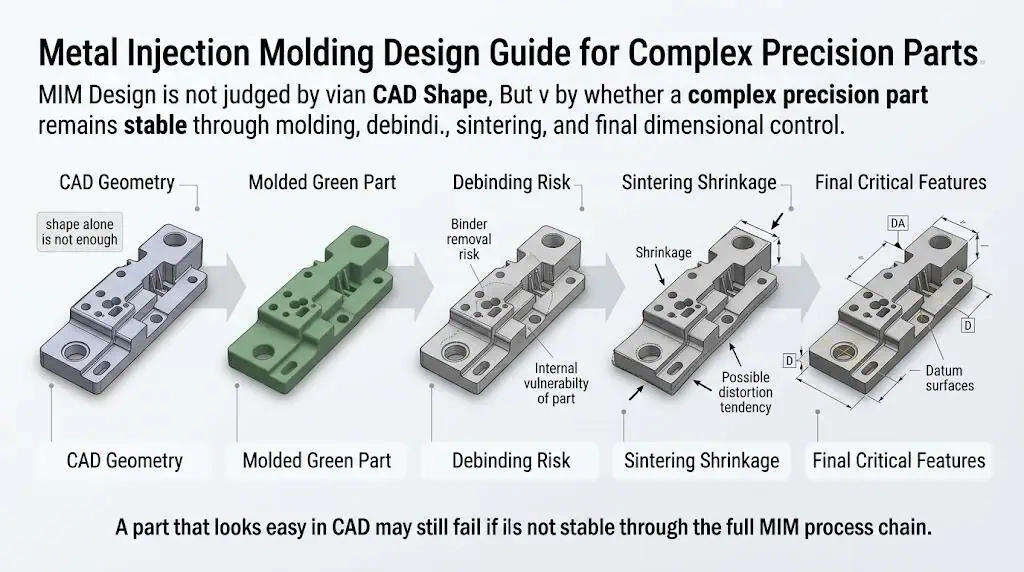
İyi bir MIM tasarımı, yalnızca CAD şekliyle değil, tüm süreç zinciri boyunca değerlendirilir.
Parçanız MIM İçin Uygun Mu?
Bir parça, yalnızca küçük, metalik veya görsel olarak karmaşık olduğu için güçlü bir MIM adayı olarak kabul edilmemelidir. Daha iyi soru, geometrinin, kalıplama, bağlayıcı giderme, sinterleme ve son boyutsal kontrol boyunca stabil kalırken, net şekle yakın üretim avantajlarından yararlanıp yararlanamayacağıdır. Gerçek proje incelemesinde, uygunluk görünümden daha çok yapısal dengeye, özellik mantığına ve işlev ile üretilebilirlik arasındaki ilişkiye bağlıdır.
İyi bir MIM adayı genellikle anlamlı şekil karmaşıklığını gerçekçi bir boyutsal strateji ile birleştirir. Sınırda bir parça hala mümkün olabilir, ancak genellikle çarpılma hassasiyetini artıran, destek koşullarını karmaşıklaştıran veya kritik özelliklerin çoğunu sinterlenmiş haldeki kategoriye iten geometri içerir. Yeniden tasarım adayı mutlaka yapılamaz demek değildir, ancak yapı artık MIM'in üretimde verimli ve tekrarlanabilir bir şekilde sunabildikleriyle iyi uyum içinde değildir.
Endüstri referansları MIMA’nın “MIM ile Tasarım” MIM seçimini dört birleşik faktör etrafında çerçeveler: şekil karmaşıklığı, malzeme performansı, üretim miktarı ve bileşen maliyeti. Bu çerçeve bu kılavuza iyi uyuyor: bir parça, yalnızca geometri, performans hedefi ve üretim mantığı en başından beri net şekle yakın üretimi desteklediğinde güçlü bir MIM adayıdır.
Dengeli et kalınlığı dağılımı ve daha pürüzsüz kütle akışı
Zayıf bölümlere bağlı yerel ağır bölgeler
Sinterleme sonrası çok fazla hassas kritik özellik
İşlenmesi verimsiz olacak fonksiyonel karmaşıklık
Büzülmeye duyarlı bölgelere yakın birkaç iç özellik
Kötü yapısal dengeye sahip güçlü asimetri
Kritik özelliklerin gerçekçi konumlara sınırlı olması
Yapısal harekete büyük ölçüde duyarlı düzlük veya hizalama
İşlem sonrası düzeltmeye büyük ölçüde bağlı geometri
Genel form ve hassas arayüzler arasında net ayrım
İşlem uyumu mümkün ancak stabilite marjı dar
Başka bir işlem muhtemelen daha sağlam ve ekonomiktir
1. Karmaşık Hassas Parçalar İçin Gerçek MIM Tasarımı Ne Anlama Gelir?
Erken proje değerlendirmesindeki yaygın bir hata, bir parçanın CAD'de karmaşık göründüğü için iyi bir MIM adayı olduğunu varsaymaktır. Bu yeterli değildir. İyi bir MIM parçası, yalnızca içerdiği ayrıntı sayısıyla, ne kadar kompakt göründüğüyle veya geleneksel olarak işlenmesinin ne kadar zor olabileceğiyle tanımlanmaz. Kalıplama, bağlayıcı giderme, sinterleme ve nihai boyutsal doğrulama boyunca yapının stabil kalıp kalmadığıyla tanımlanır. Pratik olarak bu, geometrinin yalnızca bitmiş bir çizim olarak değil, işlem odaklı bir yapı olarak incelenmesi gerektiği anlamına gelir.
Bu ayrım önemlidir çünkü MIM parçaları üretimde katı, boyutsal olarak nihai metal bileşenler olarak ilerlemez. Kalıplanmış besleme stoğu bazlı şekiller olarak başlarlar, ardından bağlayıcı giderme ve sinterleme süreçlerinden geçerler; burada büzülme ve yapısal tepki kalite için merkezi hale gelir. Bir parça CAD'de üretilebilir görünebilir ve yine de iç kesit mantığı zayıfsa sinterlemeden sonra düzlüğü, delik konumunu veya özellik tutarlılığını koruyamayabilir. Bu nedenle güçlü MIM tasarımı, görsel karmaşıklıktan çok yapısal öngörülebilirlik ile ilgilidir.
Yapılması kolay görünen bir parça, her zaman bağlayıcı giderme ve sinterlemeden sonra stabil kalacak bir parça değildir.
MIM tasarımını düşünmenin daha iyi yolu, bir dizi mühendislik sorusu sormaktır. Duvar yapısı öngörülebilir şekilde büzülmek için yeterince dengeli mi? Kritik özellikler stabil bölgelerde mi bulunuyor? Yerel yükseltiler, nervürler veya geçişler gizli distorsiyon riski oluşturuyor mu? Çizim, hangi özelliklerin sinterlenmiş olarak kalması gerektiği ve hangilerinin daha sonra işleme gerektirebileceği konusunda gerçekçi mi? Bu sorular, yüzey düzeyindeki CAD görünümünden çok daha fazlasını ortaya çıkarır. Ayrıca, stabil üretime verimli bir şekilde girebilen tasarımları, düzeltme odaklı ve pahalı hale gelen tasarımlardan ayırırlar.
OEM ve endüstriyel ürün ekipleri için bu zihniyet değişikliği erken önemlidir. “Karmaşık”ın otomatik olarak “MIM için ideal” anlamına geldiği yanıltıcı varsayımından kaçınmaya yardımcı olur. Gerçekte, en iyi MIM tasarımları genellikle karmaşıklığın denge, özellik disiplini ve net bir boyutsal strateji ile eşleştirildiği tasarımlardır.
2. İlk Karar: Parça Yapısal Olarak MIM İçin Uygun mu?
Kalıplama, malzeme seçimi veya maliyet modellemesinden önce, ilk ciddi tasarım sorusu, parçanın yapısal olarak MIM için uygun olup olmadığı olmalıdır. Her hassas metal bileşen sürece zorlanmamalıdır. Bazı parçalar, kompakt geometriyi, kullanışlı ayrıntı entegrasyonunu ve net şekle yakın verimliliği birleştirdikleri için MIM'den olağanüstü değer kazanır. Diğerleri teknik olarak mümkün kalır ancak geometrileri distorsiyon basıncı, boyutsal kararsızlık veya gerçekçi olmayan sinterlenmiş beklentiler yarattığı için daha yüksek risk taşır. Daha küçük bir grup ise basitçe işlem için uygun değildir ve yeniden tasarlanmalı veya farklı bir üretim rotası altında değerlendirilmelidir.
Uygun bir MIM parçası genellikle dengeli geometriyi, pratik duvar dağılımını ve çıkarmalı üretime kıyasla kalıplamadan gerçekten fayda sağlayan karmaşıklığı birleştirir. Yüksek riskli bir tasarım genellikle ani kalın-ince geçişler, daha zayıf bölgelere bağlı yerel ağır bölgeler, kör özellikler, dar yuvalar veya büzülmeyi daha az öngörülebilir hale getiren asimetri içerir. Önerilmeyen bir tasarım genellikle MIM'den aşırı büyük düz alanları stabilize etmesini, çok fazla kritik özelliği doğrudan sinterlenmiş olarak tutmasını veya başka bir işlemin daha sağlam olacağını düşündüren bir geometride performans göstermesini ister.
İlk tasarım kararı, parçanın yapısının sadece süreci haklı çıkaracak kadar karmaşık görünmesiyle değil, gerçekten MIM için uygun olup olmadığıdır.
Bu sınıflandırma önemlidir çünkü projenin nasıl yönetilmesi gerektiğini değiştirir. Yapısal olarak uygun bir tasarım, doğrudan mühendislik incelemesi ve optimizasyonuna geçebilir. Yüksek riskli bir tasarım, maliyet veya zaman çizelgesi varsayımları sabitlenmeden önce yeniden tasarım tartışmalarını tetiklemelidir. Kötü uyum sağlayan bir tasarım, sadece parça küçük olduğu veya kalıplama kavramsal olarak mümkün göründüğü için MIM'e zorlanmamalıdır. Güçlü MIM tedarikçileri sadece çizimleri fiyatlandırmaz. Ayrıca geometrinin, sürecin tutarlı bir şekilde sunabileceği şeylerle uyumlu olup olmadığını da belirlerler.
Başka bir deyişle, düzeltme başlamadan önce süreç uyumu değerlendirilmelidir. Bu tek karar, numune alma sürecinde önemli zaman kazandırabilir, gereksiz ikincil işlemleri azaltabilir ve daha kararlı bir üretim programına yol açabilir.
Hızlı Geometri Risk Özeti
Tüm tasarım riskleri genel şekilde görünmez. Birçok MIM projesinde, en önemli sorunlar, izole olarak kabul edilebilir görünen ancak bir sistem olarak kararsız hale gelen yerel geometri kararlarıyla yaratılır. Hızlı bir geometri incelemesi, parçanın temel olarak dengeli olup olmadığını veya birkaç orta riskli özelliğin daha ciddi bir üretilebilirlik sorununa birikip birikmediğini belirlemeye yardımcı olur.
Bu özetin amacı tam mühendislik incelemesinin yerini almak değildir. Amacı, hangi tasarım koşullarının genellikle yönetilebilir kaldığını ve hangilerinin kalıplama başlamadan önce daha derin dikkat gerektirdiğini vurgulamaktır.
Tasarım özelliği
Düşük riskli yön
Yüksek riskli sinyal
Mühendislik notu
Et kalınlığı
Daha dengeli kesit dağılımı
Ani kalın-ince değişim
Dengesiz kesit davranışı genellikle deformasyona neden olur
Delikler ve yuvalar
Stabil ve desteklenmiş bölgelerde yer alır
Zayıf bölgelerde dar veya kümelenmiş
Dahili özellikler yakındaki geometrileri dengesizleştirebilir
Düz yüzeyler
Desteklenmiş ve yapısal olarak dengeli
Büyük desteksiz açıklıklar
Düzlük, çevredeki kütlenin davranışına bağlıdır
Köşeler ve geçişler
Pürüzsüz radyuslar ve daha nazik yük yolları
Kritik bölgelerde keskin köşeler
Ani geometri değişiklikleri gerilme davranışını yoğunlaştırır
Boss'lar ve nervürler
Hafif, dağıtılmış takviye
Yığılmış veya sıkışık yerel birikim
Takviye, aşırı boyutlandırılırsa yerel dengesizlik haline gelebilir
Simetri
Daha iyi yapısal denge
Parça boyunca güçlü asimetri
Asimetri, büzülmeyi daha az tahmin edilebilir hale getirir
Kritik arayüzler
Sınırlı ve stratejik olarak atanmış
Sinterlenmiş durumda çok fazla hassasiyet talebi
Fonksiyonel özellikler sinterleme sonrası işlem gerektirebilir
Yerel kütle
Kontrollü ve dağıtılmış
İnce kesitlere bağlı ağır göbekler
Yerel kütle yoğunlaşması genellikle hareketi yönlendirir
3. Et Kalınlığı ve Kesit Geçişi: En Önemli Tasarım Kuralı
Tüm MIM tasarım prensipleri arasında, et kalınlığı dengesi ve kesit geçişi kontrolü genellikle en önemlileridir. Birçok boyutsal sorun ve çarpılma sorunu nominal boyutla başlamaz. Kütlenin parça boyunca nasıl dağıtıldığıyla başlar. İnce bir duvar doğrudan ağır bir bölgeye bağlandığında veya bir kesit diğerine çok ani bir şekilde değiştiğinde, sinterleme büzülmesini kontrol etmek zorlaşır. Sonuç, daha sonra düzlük kaybı, özellik kayması, bükülme veya kritik fonksiyonel bölgeler etrafında kararsızlık olarak ortaya çıkabilir.
Bu, her duvarın aynı olması gerektiği anlamına gelmez. Gerçek parçalar varyasyon gerektirir. Amaç, kendi başına bir üniformite değil, yapısal davranışı daha öngörülebilir hale getiren bir denge sağlamaktır. İyi tasarlanmış bir MIM parçası karmaşık formlar ve farklılaştırılmış özellikler içerebilir, ancak kesitler arasındaki geçişler, parçanın sinterleme sırasında güçlü yerel hareketler oluşturmayacak kadar pürüzsüz olmalıdır.
Et kalınlığı dengesi, MIM parçalarında sinterleme büzülmesini kontrol etmek ve çarpılma riskini azaltmak için en önemli tasarım kurallarından biridir.
Bu bölüm özel dikkat gerektirir çünkü kesit dengesizliği genellikle bir kalıp sorunu olarak yanlış teşhis edilir. Ekipler bazen birincil neden tasarımın kendisine gömülü olduğunda, telafiyi ayarlayarak veya işlem parametrelerini değiştirerek kararsız sonuçları düzeltmeye çalışırlar. Ağır bir yerel kütle, sinterleme sırasında hafif bir kesit gibi davranmayacaktır ve ona bağlı ince bir bölge, aynı termal döngü altında farklı tepki verecektir. Geometri güçlü bir iç çekme oluşturuyorsa, düzeltme daha zor ve daha az güvenilir hale gelir.
En iyi tasarım uygulaması, yalnızca üstten görünüm görünümüne güvenmek yerine parçaları kesit halinde değerlendirmektir. Bir parça dışarıdan temiz ve verimli görünebilirken, içinde hala zayıf iç geçişler barındırabilir. Kesit mantığını erken gözden geçirmek, mühendislik ekibine kalıp taahhüt edilmeden önce çarpılmayı azaltmak için çok daha iyi bir şans verir.
4. Delikler, Yuvalar, Kanallar ve Kör Özellikler Nasıl Tasarlanır
Erken CAD incelemesinin önerdiğinden daha fazla MIM riski genellikle iç ve yarı-iç özellikler oluşturur. Küçük delikler, dar yuvalar, kanallar ve kör detaylar çizilmiş özellikler olarak basit görünebilir, ancak parça bağlayıcı giderme ve sinterleme işlemlerinden geçtiğinde hassas bölgeler haline gelebilirler. MIM'de bir delik sadece bir delik değildir. Nihai davranışı, çevredeki duvar dengesine, yerel desteğe, kesit kalınlığına ve özelliğin kozmetik bir form, genel bir konumlandırma özelliği veya gerçek bir hassas arayüz görevi görmesinin beklenip beklenmediğine bağlıdır.
Bu nedenle, iç özellik tasarımı yalnızca nominal boyuta göre değil, işlev, konum ve yapısal etkiye göre değerlendirilmelidir. İyi dengelenmiş bir bölgedeki küçük bir delik, sinterlenmiş haliyle makul bir özellik olabilir. Ağır bir geçiş bölgesine yakın hassas bir delik, dokunulmadan bırakılmayacak kadar güvenilir olmayabilir. Kör bir delik, yerel bir alanı beklenenden daha fazla zayıflatabilir. Dar bir yuva, yerel sertliği azaltarak veya yakındaki düzensiz büzülme davranışını artırarak hassasiyet yaratabilir.
Küçük delikler, kör özellikler ve dar yuvalar, CAD'de göründüklerinden daha fazla tasarım riski oluşturabilir.
Buradaki en faydalı mühendislik alışkanlıklarından biri, form özelliklerini işlevsel özelliklerden ayırmaktır. Bir delik, oluk veya yuva esas olarak genel şekli, kritik olmayan montaj boşluğunu veya ikincil bir işlevi desteklemek için varsa, net şekle yakın olarak kabul edilebilir. Aynı özellik uyum, hizalama, sızdırmazlık veya performans için merkezi ise, tasarım incelemesi gerçekten sinterlenmiş durum kategorisine ait olup olmadığını sorgulamalıdır. Başarılı MIM programlarının çoğunda en iyi çözüm özelliği ortadan kaldırmak değil, nasıl taşındığını yeniden tasarlamak ve ikincil işlemenin nihai doğruluk için ayrılıp ayrılmayacağına karar vermektir.
Gerçekçi tasarım disiplininin büyük fark yarattığı yer de burasıdır. Yapının desteklemediği hassasiyet beklentileriyle tüm parçayı aşırı yüklemek yerine, hangi iç özelliklerin gerçekten kritik olduğunu tanımlamak genellikle daha iyidir.
5. Köşeler, Radiusler, Kanatçıklar, Pimler ve Yerel Kütle Birikimi
Birçok kararsız MIM parçası, bariz bir büyük geometri hatası nedeniyle başarısız olmaz. Bir dizi yerel özellik kararının gizli dengesizlik yaratması nedeniyle başarısız olurlar. Keskin köşeler, üst üste binmiş pimler, agresif kanatçık desenleri ve konsantre yerel kütle, genel parça makul görünse bile büzülme davranışını bozabilir. Bu ayrıntılar genellikle ikincil olarak ele alınır, ancak gerçek MIM tasarımında parçanın sinterleme sırasında nasıl tepki verdiğini güçlü bir şekilde etkilerler.
Keskin geçişler daha sert yapısal değişikliklere eğilimlidir. Zaten ağır bölgelere yerleştirilmiş aşırı büyük pimler yerel kararsızlığı yoğunlaştırabilir. Yoğun kanatçık düzenleri takviye gibi görünebilir, ancak düzgün dengelenmezlerse tasarımı iyileştirmek yerine yeni kesit tutarsızlığı ekleyebilirler. Birden fazla özellik, kütle dağılımı dikkate alınmadan tek bir yerel alana istiflendiğinde, kompakt ayrıntılar bile sorunlu hale gelebilir.
Keskin geçişler ve yerel kütle konsantrasyonu, genel şekil makul görünse bile hassas bir MIM parçasını kararsız hale getirebilir.
Daha iyi tasarım yaklaşımı, tüm yerel özelliklerden kaçınmak değil, onları parçanın yapısal mantığıyla çalıştırmaktır. Radiusler kesit sürekliliğini iyileştirebilir. Pimler aşırı büyük olmadan işlevsel kalabilir. Kanatçıklar, tıkanıklık yaratmak yerine dengeyi desteklerse bir yapıyı güçlendirebilir. Birçok durumda, kararlılık tasarım niyetini azaltarak değil, bu niyeti parça geneline daha akıllıca dağıtarak iyileşir.
Bu, deneyimin önemli olduğu bir alandır. Yerel özellik tasarımı, tek seferde bir karar olarak kabul edilebilir görünebilir, ancak yine de stabilize edilmesi zor bir geometriye birikebilir. Bu ayrıntıları izole CAD özellikleri olarak değil, bir sistem olarak incelemek, genellikle sağlam bir parça ile düzeltme ağırlıklı bir geliştirme yolu arasındaki farktır.
6. Hassas MIM Tasarımında Simetri, Düzlük ve Yapısal Denge
Simetri, MIM tasarımında yalnızca estetik bir tercih değildir. Büzülmenin daha öngörülebilir davranıp davranmayacağının güçlü bir göstergesi olabilir. Geometri daha iyi dengelendiğinde, kütle daha eşit dağıldığında ve destek koşulları daha tutarlı olduğunda, parça genellikle kontrol edilmesi daha kolay hale gelir. Buna karşılık, asimetrik yapılar, büyük desteksiz düz yüzeyler ve düzensiz takviye desenleri, nominal geometri basit görünse bile bozulmaya neden olabilir.
Düzlük özellikle hafife alınabilir. Geniş düz alanlar CAD'de genellikle basit ve kağıt üzerinde incelemesi kolay görünür, ancak yapının geri kalanına karşı oldukça hassastır. Bir düz referans noktası, yalnızca düz alanın kendisi kötü çizildiği için değil, komşu geometrinin sinterleme sırasında parçayı düzensiz çekmesi nedeniyle kararsız hale gelebilir. Desteksiz açıklıklar benzer bir risk oluşturur. Yapının bir tarafı diğerinden farklı davranırsa, boyutsal hareket olasılığı artar.
Dengeli geometri genellikle daha öngörülebilir şekilde büzülürken, asimetri ve desteksiz düz alanlar deformasyon riskini artırır.
Bu önemlidir çünkü birçok ekip düzlük riskine toleransları sıkılaştırarak yanıt verir, yapısal iyileştirmeler yapmak yerine. Bu genellikle çok geç olur. Tolerans stabilite yaratmaz. Yapı stabilite yaratır. Geometri hareket etmek istiyorsa, daha sıkı bir çizim aynı istikrarsızlığı daha büyük bir inceleme problemine dönüştürür. Daha etkili strateji, parça kalıplamaya girmeden önce hareket nedenlerini azaltmaktır.
Karmaşık hassas MIM parçaları için simetri incelemesi, destek mantığı ve yapısal denge, son aşama iyileştirmeleri değil, birinci seviye tasarım kontrolleri olarak ele alınmalıdır.
Sinterleme Destek Koşulu Göz Önünde Bulundurularak Tasarım Yapın
Bir MIM parçası yalnızca son kullanım yönünde değerlendirilmemelidir. Sinterleme sırasında destekleneceği koşulda da incelenmelidir. Bu önemli bir tasarım disiplinidir çünkü CAD'de stabil görünen geometri, sınırlı destek üzerinde dururken, bir boşluğu aşarken veya termal döngü boyunca dengesiz kütle taşırken çok farklı tepki verebilir. Pratikte, destek koşulu düzlük, çarpılma kontrolü ve boyutsal tekrarlanabilirlik ile yakından ilişkilidir.
Her geniş yüzey otomatik olarak iyi bir destek yüzeyi değildir ve her görünüşte sağlam yapı, parça ısıtılıp büzülürken stabil kalmaz. Desteklenmeyen açıklıklar, zayıf geçişler ve dengesiz yüklenen formlar sinterleme sırasında genellikle daha hassas hale gelir. Bu nedenle, tasarım incelemesi yalnızca bir özelliğin kalıplanıp kalıplanmayacağını değil, aynı zamanda geometrinin gerçekte sinterleneceği koşulda yapısal olarak mantıklı kalıp kalmayacağını da sormalıdır.
Anahtar inceleme noktaları:
Parça geometrisinde doğal olarak stabil bir destek bölgesi var mı?
Herhangi bir uzun açıklık veya ince kol, sinterleme sırasında desteklenirken daha hassas hale gelecek mi?
Parça, destek yüzeyi olarak öngörülemeyen şekilde davranmayabilecek düz bir yüze fazla mı güveniyor?
Kalıplama serbest bırakılmadan önce küçük bir yapısal yeniden tasarım destek stabilitesini iyileştirir mi?
7. Ayırma Hattı, Giriş Konumu ve Çıkarma: Tasarım Kalıplama Mantığı ile Çalışmalıdır
MIM tasarımı, kalıp mantığından ayrılamaz. Bir parça CAD'de yapısal olarak makul görünebilir ve yine de, ayrım hattı kritik bir yüzeyden geçiyorsa, yolluk konumu dengesiz doluma neden oluyorsa veya kalıplama sırasında çıkarma kuvveti hassas bir alana uygulanmak zorundaysa riskli hale gelebilir. Bu nedenle tasarım incelemesi, yalnızca parçanın şeklini değil, aynı zamanda kalıplama sırasında parçanın nasıl bölüneceği, doldurulacağı ve çıkarılacağı olasılığını da içermelidir.
Ayrım hattı konumu, kozmetik alanları, sızdırmazlık yüzeylerini ve işlevsel olarak önemli geometrileri etkileyebileceği için önemlidir. Yolluk konumu, dolum yolu ve besleme dengesinin kalıplanmış tutarlılığı ve sonraki boyutsal davranışı etkilediği için önemlidir. Çıkarma işlemi önemlidir, çünkü statik bir modelde kabul edilebilir görünen hassas bölgeler, yeşil durumda veya parça tam yoğunluğa ulaşmadan kuvvet uygulandığında savunmasız hale gelebilir.
Ayrım hattı, yolluk konumu ve çıkarma desteği gibi kalıp kararları, kritik özelliklerin stabilitesini güçlü bir şekilde etkileyebilir.
Pratik ders basittir: kalıp, tasarım sabitlendikten sonra çözülecek bir sonraki aşama sorunu olarak görülmemelidir. İyi MIM geliştirme, geometri ve kalıp stratejisi birlikte incelendiğinde başlar. Bir tasarım, kötü bir ayrım koşulu, elverişsiz bir besleme yolu veya zayıf bir çıkarma düzeni gerektiriyorsa, herhangi bir proses optimizasyonu başlamadan önce parça daha az sağlam hale gelebilir.
Karmaşık hassas bileşenler için, tasarım ve kalıp incelemesi arasındaki erken işbirliği, önlenebilir numune sorunlarını azaltmanın en hızlı yollarından biridir.
8. Boyutsal Strateji: Sinterlenmiş Olarak Ne Kalmalı ve Sonra Ne İşlenmeli
Ciddi bir MIM projesinde en önemli kararlardan biri, bir parçanın kalıplanıp kalıplanamayacağı değil, hangi özelliklerin sinterlenmiş olarak kalacağı ve hangilerinin daha sonra bitirileceğidir. İyi MIM tasarımı, her özelliği aynı boyutsal beklentiye zorlamaz. Genel geometrileri kritik arayüzlerden ayırır ve en çok değeri yarattığı yere doğruluğu atar.
Yapı iyi tasarlanmışsa ve proses kontrolü stabil ise, kritik olmayan birçok harici form, genel yüzey ve daha geniş geometri tanımlayan özellikler sinterlenmiş olarak kalabilir. Ancak, son montaj delikleri, kritik referans yüzeyleri, hassas dişliler ve sıkıca kontrol edilen arayüz özellikleri genellikle farklı bir strateji gerektirir. Bu özellikler montaj, hizalama, hareket, sızdırmazlık veya performans için merkezi olduğunda, sinterleme sonrası işleme daha sağlam ve ekonomik bir seçenek olabilir.
Pratik bir MIM tasarım stratejisi, genel sinterlenmiş geometriyi, sinterlemeden sonra işlenmesi gereken özelliklerden ayırır.
Bu, MIM'in sınırlı olduğunun bir işareti değildir. Bu, mühendislik ekibinin işlevsel önceliği anladığının bir işaretidir. Tüm parçanın nihai işlenmiş bir bileşen gibi performans göstermesi gerektiği varsayımıyla her boyutu aşırı belirlemek, genellikle sağlamlığı azaltır ve maliyeti artırır. Daha iyi bir yaklaşım, MIM'in net şekle yakın değerini korurken, yalnızca işlevi gerçekten tanımlayan özellikler için seçici bitirme işlemini ayırmaktır.
Boyutsal strateji tasarım aşamasına dahil edildiğinde, sonuç genellikle daha iyi verim, daha net inceleme mantığı ve projenin ilerleyen aşamalarında tolerans yeteneği hakkında daha az kaçınılabilir tartışma olur.
Resmi malzeme tanımı ve mühendislik-özellik referansı için tasarımcılar, proje gereksinimlerini resmi MPIF standartları portalı, burada MPIF Standard 35-MIM yaygın MIM malzemeleri için bir referans olarak sunulmaktadır. Pratikte, elde edilebilir toleranslar, nihai boyutsal yetenek geometriye, duvar dengesine, kalıplama stratejisine, sinterleme desteğine ve bir özelliğin sinterlenmiş olarak mı bırakıldığına veya sonradan işlendiğine bağlı olduğundan, tedarikçi özelinde DFM incelemesi yoluyla hala doğrulanmalıdır.
Hangi Özellikler Genellikle Sinterlenmiş Olarak Kalır ve Hangileri Daha Sonra İşlenmelidir?
Güçlü bir MIM boyutsal stratejisi, her özelliği eşit şekilde ele almaz. Yakın net şekle yakın kalabilen geometri ile doğrudan uyum, sızdırmazlık, hizalama veya performansı kontrol eden arayüzleri ayırt eder. Bu, MIM tasarımındaki en pratik kararlardan biridir çünkü işlemin ekonomik değerini korurken tüm parça üzerindeki gerçekçi olmayan doğruluk taleplerinden kaçınır.
Genel bir kural olarak, daha geniş form tanımlayan özellikler genellikle sinterlenmiş olarak kalmaya daha uygunken, montajı veya işlevsel hassasiyeti yönlendiren arayüzler daha eleştirel bir şekilde gözden geçirilmelidir. Amaç, gerekenden fazla işlemek değildir. Amaç, gerçekten haklı gösteren özellikler için talaşlı imalatı ayırmaktır.
Özellik türü
Genellikle sinterlenmiş olarak uygundur
Genellikle sonradan işlenmiş olarak daha iyidir
Neden
Genel dış profil
Evet
Hayır
Geniş geometri genellikle yakın net şekil değerini destekler
Kozmetik kritik olmayan yüzey
Evet
Bazen
Görünüm seviyesine ve nihai beklentiye bağlıdır
Kritik olmayan boşluk deliği
Sıklıkla
Bazen
Fonksiyonel hassasiyet nihai kararı belirler
Genel kanal veya yuva
Sıklıkla
Bazen
Yerel stabilite ve tolerans beklentisi önemlidir
Konumlandırma deliği
Bazen
Sıklıkla
Konumsal ve boyut kontrolü daha sıkı bir son işlem gerektirebilir
Referans yüzeyi
Bazen
Sıklıkla
Düzlük ve referans tutarlılığı genellikle daha önemlidir
Sızdırmazlık yüzeyi
Sinterlenmiş haliyle nadiren tercih edilir
Sıklıkla
Yüzey durumu ve boyutsal doğruluk kritiktir
Pres geçme deliği
Nadiren
Genellikle
Girişimli özellikler genellikle daha sıkı kontrol gerektirir
Hassas diş
Nadiren
Genellikle
Fonksiyonel kavrama genellikle son işlemden fayda görür
Kritik montaj arayüzü
Bazen
Sıklıkla
Nihai fonksiyon, boyutsal tahsisi belirlemelidir
9. Büzülmeyi Göz Önünde Bulundurarak Tasarım: Geometri Sonucu Belirler
Büzülme, MIM tasarımında en sık yanlış anlaşılan konulardan biridir. Genellikle bir ölçeklendirme sorunu olarak basitleştirilir, ancak gerçek parça davranışı daha karmaşıktır. Büzülme geometriye bağlıdır. Aynı parçanın farklı bölgeleri, et kalınlığına, asimetrisine, yerel desteğe ve kesit geçişlerine bağlı olarak farklı tepki verebilir. Bu nedenle, nominal CAD'de yönetilebilir görünen bir tasarım, sinterleme sonrası stabilize edilmesi zor olabilir.
Dengeli bir yapı daha öngörülebilir hareket etme eğilimindedir. Dengesiz bir yapı, yönlü bozulma, özellik yer değiştirmesi, düzlük değişikliği veya sadece telafi ile çözülmeyen yerel gerilim davranışı gösterebilir. Bu durumlarda sorun, kalıbın yanlış ölçeklendirilmiş olması değil, geometrinin termal döngü sırasında eşit olmayan harekete neden olmasıdır.
MIM'deki büzülme, sadece basit bir ölçek faktörüyle değil, geometri ve kesit dengesi ile etkilenir.
Bu nedenle büzülme incelemesi, son aşama kalıp düzeltme egzersizi olarak değil, bir tasarım incelemesi olarak başlamalıdır. Telafi, kararlı bir tasarımı iyileştirmeye yardımcı olabilir, ancak kararsız bir tasarımı nadiren kurtarır. Geometri zayıf kesit dengesi, ani geçişler veya yapının asimetrik yüklenmesi içeriyorsa, ne kadar aşağı akış ayarlaması yapılırsa yapılsın parçanın tahmin edilmesi daha zor olacaktır.
Mühendislik ekipleri için pratik sonuç açıktır: öngörülebilir MIM büzülmesi istiyorsanız, önce geometrinin kendisinde öngörülebilirliği iyileştirmeye başlayın.
10. MIM Numune Sorunlarına Yol Açan Yaygın Tasarım Hataları
Tekrarlayan birçok MIM geliştirme sorunu, tanıdık bir grup küçük tasarım hatasından kaynaklanır. Bunlar arasında ani kalınlık değişimleri, kritik bölgelerdeki keskin köşeler, ince yapılara bağlı ağır göbekler, yerel kesitleri zayıflatan kör özellikler, büyük desteksiz düz yüzeyler ve sinterlenmiş olarak kalması beklenen çok fazla hassas özellik içeren çizimler bulunur. Bu koşulların hiçbiri tek başına olağandışı değildir. Maliyetli olmalarının nedeni, ne sıklıkla çok erken kabul edilmeleri ve yalnızca kalıplama ve numune alma başladıktan sonra sorgulanmalarıdır.
Bu hataların önemli olmasının nedeni sadece kusurlar yaratmaları değildir. Aynı zamanda belirsizlik de yaratırlar. Yapısal olarak kararsız bir parçanın ayarlanması, denetlenmesi ve tekrarlanabilir üretime ölçeklendirilmesi daha zordur. Tek bir sorun izole edildiğinde yönetilebilir görünse bile, tek bir geometride birleşen birkaç küçük hata, çizimin önerdiğinden çok daha az sağlam bir parça üretebilir.
Maliyetli numune sorunlarının çoğu, erken tespit edilebilen birkaç tekrarlayan tasarım hatasıyla başlar.
Bu nedenle deneyimli MIM incelemesi genellikle örüntü tanıma olarak işlev görür. Amaç sadece bir CAD modelinin teknik olarak çizilebilir olup olmadığını doğrulamak değildir. Amaç, kararsızlık mekanizmalarını deneme yanılma maliyetleri haline gelmeden önce belirlemektir. Bu tasarım örüntülerini erken yakalamak, genellikle kalıba yerleştikten sonra onarmaya çalışmaktan çok daha değerlidir.
Proje ekipleri için bu bölüm, kalıplama öncesi bir filtre görevi görür. Birkaç uyarı işareti birlikte görünüyorsa, program ilerlemeden önce tasarımın daha derinlemesine yapısal incelemeye ihtiyacı vardır.
Kalıplama Öncesi Tasarım İncelemesi Kontrol Listesi
Kalıplama başlamadan önce, tasarım yalnızca bağımsız bir çizim olarak değil, bir üretim sistemi olarak incelenmelidir. Bu aşama, kaçınılabilir birçok MIM sorununun hala düşük maliyetle azaltılabileceği yerdir. Yapısal dengesizlik, gerçekçi olmayan boyutsal tahsis veya zayıf kalıplama etkileşimi tasarıma bir kez yerleştiğinde, düzeltme daha yavaş ve daha pahalı hale gelir. Kısa ama disiplinli bir kalıplama öncesi inceleme, önemli miktarda sonraki deneme yanılmayı önleyebilir.
Aşağıdaki kontrol listesi, mühendislik ekiplerinin, tedarik ekiplerinin ve OEM proje sahiplerinin geometrinin ciddi MIM geliştirme için hazır olduğunu doğrulamalarına yardımcı olmayı amaçlamaktadır. Kalıplama öncesinde tedarikçi geri bildirimi gerektiren projeler için, resmi bir inceleme ile birlikte kullanın Takım öncesi DFM incelemesi.
Kalıplama Öncesi İnceleme Kontrol Listesi
MIM için parça uygunluğu varsayılmamış, doğrulanmıştır
Et kalınlığı dengesi ve kesit geçişleri incelenmiştir
Yerel kütle konsantrasyonu, nervürler, pabuçlar ve keskin köşeler kontrol edildi
Kritik özellikler, genel net şekle yakın geometriden açıkça ayrıldı
Sinterleme sonrası işleme gerektirmesi muhtemel özellikler erken belirlendi
Düzlük hassasiyeti olan bölgeler ve sinterleme büzülmesine hassasiyeti olan alanlar işaretlendi
Sinterleme sırasındaki destek durumu yapısal incelemede dikkate alındı
Ayırma hattı, yolluk konumu ve itme etkisi, kalıp mantığı göz önünde bulundurularak tartışıldı
Numune doğrulama noktaları, kalıp salımından önce tanımlandı
Tasarım, sadece nominal şekil tamamlama için değil, stabilite açısından da incelendi
11. Vaka Tabanlı Tasarım Öğrenimi: Yapısal Yeniden Tasarım Neden Sonsuz Düzeltmeden Daha İyi Çalışır
En ikna edici MIM tasarım dersleri genellikle öncesi ve sonrası mühendislik vakalarından gelir. Gerçek projelerde, kararsız sonuçlar her zaman yalnızca işlem hatasından kaynaklanmaz. Genellikle geometrinin kendisinde kök salarlar. Kötü kesit dengesi, zayıf destek ve ağır yerel kütle konsantrasyonuna sahip bir parça, sinterleme sonrası bozulabilir, kritik özellikleri kaydırabilir veya boyut tutarlılığını, tekrarlanan düzeltmenin tam olarak çözemeyeceği şekillerde kaybedebilir. Bu durumlarda, en iyi iyileştirme genellikle kalıbı sonsuz ayarlamak yerine yapıyı yeniden tasarlamaktan gelir.
İşte bu, vaka tabanlı öğrenmeyi bu kadar değerli kılan şeydir. Sadece bir parçanın başarısız olduğunu değil, neden başarısız olduğunu ve ne tür bir yeniden tasarımın sonucu değiştirdiğini gösterir. Ağır bir bölge delindiğinde, geçişler yumuşatıldığında, destek iyileştirildiğinde veya kritik özellikler daha kararlı alanlara yeniden konumlandırıldığında, parça genellikle bir sistem olarak daha öngörülebilir hale gelir. Geometri artık işlemle mücadele etmediği için işlem penceresinin yönetilmesi daha kolay hale gelir.
Gerçek proje öğrenimi genellikle orijinal kararsız tasarımın düzeltilmiş yapıyla ve nihai kararlı sonuçla karşılaştırılmasından gelir.
Müşteriler ve OEM ekipleri için tedarikçi uzmanlığının görünür hale geldiği yer burasıdır. Yetenekli bir MIM üreticisi, bir parçanın zor olduğunu bildirmekten daha fazlasını yapar. Kök nedeni belirler, sorunun geometri, boyutsal beklenti veya işlem uyumundan kaynaklanıp kaynaklanmadığını açıklar ve en verimli yolu tanımlamaya yardımcı olur. Bazen bu kalıp iyileştirmesi anlamına gelir. Bazen seçici işleme anlamına gelir. Bazen gerçek yapısal yeniden tasarım anlamına gelir.
Bu fark önemlidir. Sadece çizimlere tepki veren bir tedarikçi ile tekrar eden maliyetin kilitlenmesinden önce üretilebilirliği iyileştirmeye yardımcı olabilecek bir tedarikçi arasındaki farktır. Daha fazla gerçek dünya örneği isteyen okuyucular ayrıca halka açık MIMA vaka çalışmalarını, inceleyebilirler. Bu çalışmalar, erken tasarım işbirliğinin, kalıp yönlendirme kararlarının ve özellik basitleştirmesinin üretilebilirliği nasıl iyileştirebileceğini ve ikincil işlemleri nasıl azaltabileceğini göstermektedir.
Sonuç
Metal enjeksiyon kalıplama, karmaşık hassas parçalar için büyük değer sağlayabilir, ancak yalnızca tasarım, işlemin gerçek davranışı ile uyumlu olduğunda. İyi MIM tasarımı, yalnızca birçok özelliğe sahip küçük bir metal parça yapmakla ilgili değildir. Yapının MIM için uygun olup olmadığına karar vermek, büzülme kararsızlığını azaltmak için bölümleri dengelemek, yerel özellik birikimini kontrol etmek, kritik boyutları gerçekçi bir bitirme stratejisiyle korumak ve numunelemeye başlamadan önce kalıp etkileşimini gözden geçirmekle ilgilidir.
Mühendisler, tedarik ekipleri ve OEM program yöneticileri için en önemli çıkarım basittir: Bir parçayı MIM tasarım mantığı aracılığıyla ne kadar erken değerlendirirseniz, kaliteyi, maliyeti ve üretim riskini kontrol etmek o kadar kolaylaşır. Bir çizim yalnızca şekil için değil, yapısal kararlılık için gözden geçirilir ise, sorunlar genellikle daha sonra ortaya çıkar ve düzeltilmesi daha zor hale gelir. Tasarım baştan doğru bir şekilde gözden geçirilir ise, MIM çok daha güçlü ve öngörülebilir bir üretim rotası haline gelir.
Karmaşık bir hassas metal parça geliştiriyorsanız ve MIM'e uygun olup olmadığını değerlendirmek istiyorsanız, en iyi başlangıç noktası, kalıplama yayınlanmadan önce kesit dengesi, özellik kararlılığı, sinterleme büzülmesi davranışı ve fonksiyonel boyutsal stratejiye odaklanan bir tasarım incelemesidir. Ayrıca MIM tasarım incelemesi için çiziminizi gönderin parça, RFQ veya kalıplama yayımından önce üretilebilirlik geri bildirimi gerektirdiğinde.
Endüstri Standardı ve Referans Notu
Resmi mühendislik referanslarına ihtiyaç duyan okuyucular için resmi MPIF standartları portalı yayını, yaygın Metal Enjeksiyon Kalıplama malzeme referansı için MPIF Standardı 35-MIM'i içerir. MPIF ayrıca malzeme standartlarının ASTM ve ISO standartlarıyla çapraz referanslandığını belirtmektedir.
Üretim pratiğinde, parça geometrisi, et kalınlığı dengesi, yolluk stratejisi, bağlayıcı giderme ve sinterleme davranışı ve işlem sonrası kararların tümü nihai sonucu etkilediğinden, nihai tolerans yeteneği her zaman DFM incelemesi sırasında MIM tedarikçisi ile doğrulanmalıdır.
Teknik İnceleme ve Referans Notları
Bu makale, karmaşık hassas MIM parçaları için üretilebilirliğe yönelik tasarım (DFM) düşüncesine odaklanmaktadır. Malzemeler, yüzey işlemleri veya genel bir proses karşılaştırması rehberi olarak hizmet etmesi amaçlanmamıştır. Amacı, kalıp üretimine geçmeden önce geometri, destek mantığı, sinterleme büzülmesi davranışı, kalıp etkileşimi ve boyutsal toleransların nasıl gözden geçirilmesi gerektiğini açıklamaktır.
İçerik, gerçek üretim değerlendirmelerinde kullanılan pratik MIM tasarım inceleme mantığına dayanmaktadır. Uygun olduğu yerlerde, bu rehber, malzeme seçimi, tolerans kabiliyeti, sinterleme sonrası işlemler ve proses karşılaştırması gibi konuları kapsayan ayrı teknik kaynaklarla birlikte okunmalıdır, çünkü bu konular burada tasarıma odaklanma pahasına genişletilmek yerine özel makalelerde daha iyi geliştirilir.
Yazar
XTMIM Mühendislik Ekibi tarafından yazılmıştır
Bu makale, XTMIM mühendislik içerik ekibi tarafından, yapısal uygunluk değerlendirmesi, et kalınlığı geçişi incelemesi, sinterleme büzülmesi risk analizi, kalıp fizibilitesi ve boyutsal kontrol planlaması dahil olmak üzere karmaşık hassas parçalar için pratik Metal Enjeksiyon Kalıplama tasarım inceleme mantığına dayanarak hazırlanmıştır.
İçerik, özellikle geometri karmaşıklığı, boyutsal kararlılık ve kalıp üretimine geçmeden önce sinterleme sonrası özellik stratejisinin değerlendirilmesi gereken parçalar için MIM proje geliştirilmesinde kullanılan gerçek üretim tarafı düşüncesini yansıtmaktadır.
Teknik İnceleme: XTMIM MIM mühendislik ekibi tarafından üretilebilirlik mantığı, terminoloji doğruluğu ve yapısal tasarım uygunluğu açısından incelenmiştir.
SSS
MIM Parça Tasarımı Hakkında Sıkça Sorulan Sorular
Bu sorular, mühendislerin ve satın almacıların Metal Enjeksiyon Kalıplama için karmaşık hassas parçaları değerlendirirken sahip oldukları en yaygın tasarım endişelerini ele almaktadır.
Bir parçayı Metal Enjeksiyon Kalıplama için uygun kılan nedir?
Uygun bir MIM parçası yalnızca karmaşıklığı ile tanımlanmaz. Aynı zamanda dengeli bir geometriye, pratik et kalınlığı dağılımına, yönetilebilir kesit geçişlerine ve gerçekçi bir boyutsal stratejiye sahip olmalıdır. En iyi adaylar, net şekle yakın üretimden faydalanırken, kalıplama, bağlayıcı giderme ve sinterleme süreçlerinde yapısal olarak kararlı kalan parçalardır.
MIM tasarımında et kalınlığı dengesi ve kesit geçişleri neden bu kadar önemlidir?
Et kalınlığı dengesi, parçanın sinterleme sırasındaki davranışını kontrol etmeye yardımcı olur. Kalın ve ince kesitler birbirine çok ani bir şekilde bağlandığında, büzülme daha az tahmin edilebilir hale gelir ve deformasyon riski artar. Pürüzsüz geçişler genellikle yapısal kararlılığı iyileştirir ve çarpılma, bükülme veya boyutsal sapma olasılığını azaltır.
MIM'de tüm delikler, yuvalar ve kör özellikler sinterlenmiş olarak üretilebilir mi?
Her zaman değil. Küçük delikler, dar yuvalar ve kör özellikler mümkün olabilir, ancak bunların kararlılığı yerel yapıya, çevredeki et kalınlığına ve nihai boyutsal beklentilere bağlıdır. Kritik olmayan özellikler sinterlenmiş olarak kalabilirken, hassas özellikler genellikle sinterleme sonrası işleme için yeniden atanmalıdır.
MIM büzülmesi basit bir ölçek faktörü müdür?
Hayır. MIM'deki büzülme geometriden büyük ölçüde etkilenir. Dengeli kesitlere sahip bir parça genellikle daha öngörülebilir şekilde büzülürken, asimetri, yerel kütle yoğunlaşması ve ani geçişler düzensiz harekete neden olabilir. Bu nedenle iyi büzülme kontrolü, yalnızca kalıp telafisiyle değil, daha iyi geometri ile başlar.
Hangi özellikler genellikle sinterleme sonrası işlenmelidir?
Montajı, hizalamayı, sızdırmazlığı veya işlevsel doğruluğu doğrudan etkileyen özellikler genellikle sinterleme sonrası daha iyi ele alınır. Bunlar hassas delikleri, kritik referans yüzeylerini, sıkı geçme arayüzlerini ve bazı dişleri içerebilir. İyi bir MIM boyutsal stratejisi, genel net şekle yakın geometriyi gerçekten kritik nihai özelliklerden ayırır.
En yaygın MIM tasarım hataları nelerdir?
Yaygın hatalar arasında ani kalın-ince geçişler, büyük desteksiz düz yüzeyler, kritik bölgelerde keskin köşeler, ağır yerel kütle birikimi, gerçekçi olmayan tümü sinterlenmiş tolerans beklentileri ve kalıp mantığını göz ardı eden özellik düzenleri yer alır. Bu sorunlar genellikle numune alma zorluğunu artırır ve boyutsal tekrarlanabilirliği azaltır.
MIM üretilebilirliği ne kadar erken gözden geçirilmelidir?
İdeal olarak kalıplama başlamadan önce. Erken inceleme, parçanın MIM için yapısal olarak uygun olup olmadığını, anahtar özelliklerin kararlı bölgelere yerleştirilip yerleştirilmediğini ve boyutsal stratejinin gerçekçi olup olmadığını belirlemeye yardımcı olur. Bu sorunlar ne kadar erken ele alınırsa, maliyeti düşürmek, geliştirme süresinden tasarruf etmek ve üretim kararlılığını iyileştirmek o kadar kolay olur.