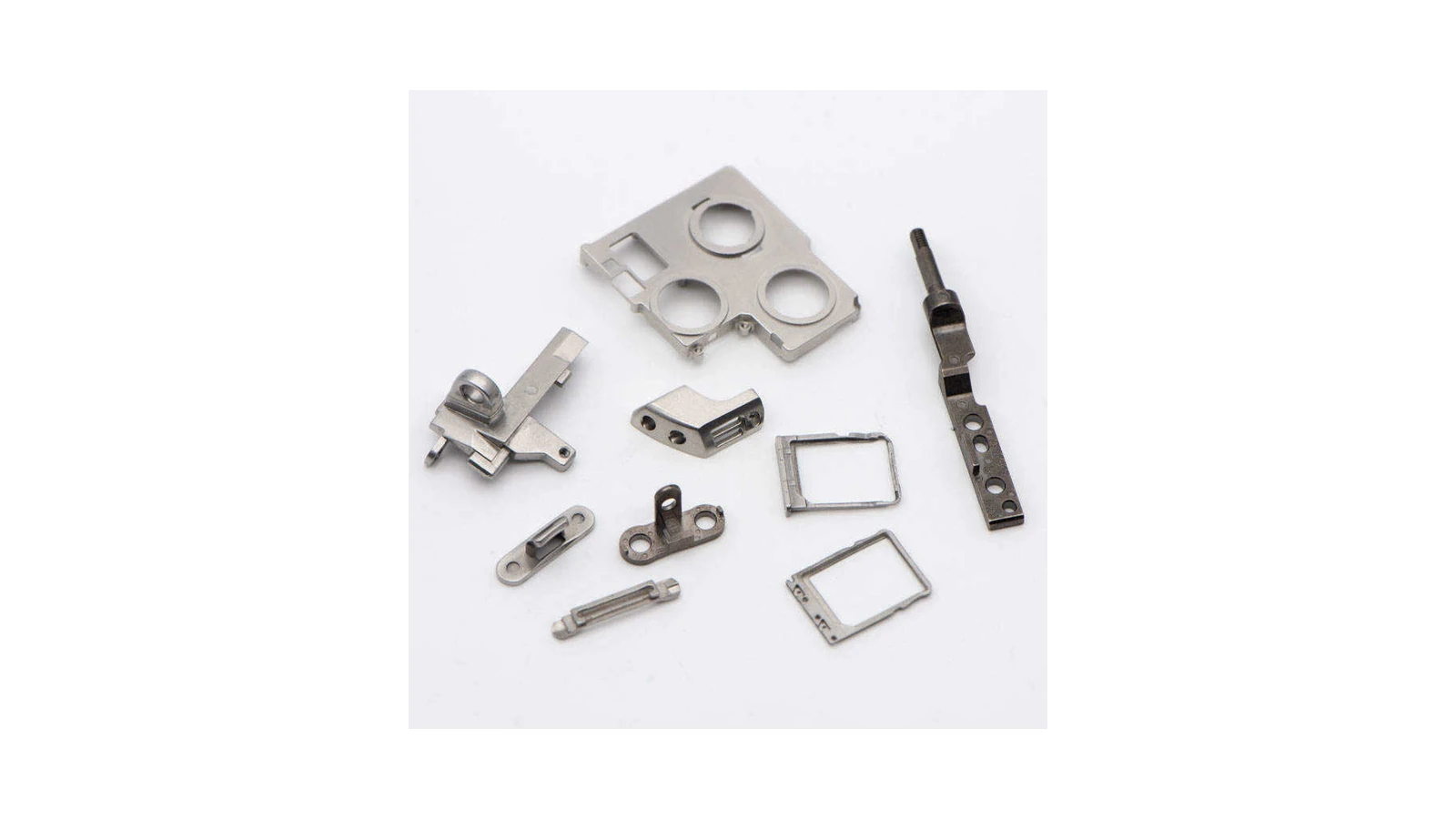
Earbud and Audio Device Parts
- Earbud frame structures
- Miniature acoustic supports
- Decorative + structural metal details
- Wearable-size internal hardware
Metal injection molding is usually a strong fit for consumer electronics parts that are small, precise, and produced in repeat volumes. It becomes especially useful when the part needs thin feature control, cosmetic stability, and near-net-shape geometry that would be inefficient to machine feature by feature.
This block is built for electronics programs where miniaturization, appearance, fit, and assembly logic all matter at the same time. It helps users understand which parts tend to fit MIM, which engineering risks appear early, and what should be reviewed before tooling is released.
Miniature precision metal parts
Appearance and fit review
Thin-wall and feature density control
Mass production planning
Best-Fit Signal
That is usually the starting point when an electronics team evaluates a metal part for MIM.
Typical Review Topics
Small parts with dense features are common in consumer electronics and often align with MIM screening logic.
Electronics parts are often judged by both function and surface appearance, not only by base shape.
MIM can reduce multi-step machining or simplify small-part assembly when geometry is chosen well.
Consumer electronics programs often make sense when tooling can be supported by stable production demand.
This page should feel different from automotive or medical. Electronics buyers usually care more about small-part complexity, cosmetic stability, assembly fit, and production efficiency than about heavy structural loading.
Small mechanical details, internal support structures, and compact device hardware are often stronger candidates than large simple housings.
Surface finish, edge quality, and final cosmetic consistency often matter alongside mechanical performance.
MIM tends to become more attractive when an electronics part is repeated in large quantities over a product cycle.
Well-planned MIM parts can sometimes reduce the number of tiny machined pieces or simplify assembly stack-up.
Use real electronics categories here, not generic industrial claims. This helps the page feel like a true end-use page under your MIM industries menu.
For electronics pages, the self-screening logic should focus on geometry, cosmetics, tolerance priority, and volume. That is usually more useful than a long process explanation.
MIM is usually more attractive for electronics parts when the geometry is small and feature-dense. A common fit signal is a part that would otherwise need several machining operations or multiple tiny assembly pieces.
Compact metal part with multiple local features, tight packaging space, and a shape that benefits from near-net-shape production.
Large, simple, flat, or very low-complexity part that another process can make more directly and with less tooling effort.
Consumer electronics parts are often judged by look and touch as well as function. Surface finish path, edge quality, polishing, coating, and visible-zone requirements should be reviewed before tooling release.
The visible surfaces and post-finish route are understood early, and the team knows which zones are cosmetic-critical versus hidden.
The part is highly appearance-sensitive, but no one has yet separated visible surfaces, assembly-hidden zones, and finish expectations.
Not every electronics dimension should be forced into the as-sintered condition. Small fit features, mating areas, and critical assembly interfaces may need a split strategy between sintered capability and secondary finishing.
The design clearly separates cosmetic dimensions, non-critical geometry, and features that may need sizing, machining, or another post-process.
The part expects every visible and functional dimension to come directly from sintering without feature prioritization or post-process planning.
MIM usually becomes more compelling in consumer electronics when the part is not only small and complex, but also repeated in quantities that justify tooling and process optimization.
Stable product demand, repeat production, or component families that can support tooling and controlled manufacturing development.
The part may fit MIM geometrically, but the product cycle is short or uncertain and the volume case has not yet been tested against machining alternatives.
Small electronics parts often combine cosmetic thin zones with structural local mass, which can increase distortion or surface inconsistency risk.
If finish-critical zones are not identified early, the part may technically pass function while still failing appearance review.
Small mating features, snap-related areas, or hinge interfaces often need more careful tolerance planning than the first concept drawing suggests.
Even when a part fits MIM technically, the project economics should still be checked against product lifecycle and refresh timing.
Polishing, coating, plating, or decorative treatment can change the practical material decision and cosmetic stability.
Visible surfaces, hidden surfaces, and post-finish expectations should be separated early so the part is judged by the right standard.
Critical mating features, snap-related zones, hinge interfaces, or precision contact areas should be identified before tooling release.
Polishing, blasting, plating, coating, or decorative treatments can all affect the final review path for consumer electronics parts.
Electronics programs often depend on consistent part appearance and fit across large production runs, not just first-sample approval.
This section helps the page feel like a production support page rather than a generic brochure.
Review geometry complexity, product cycle, and whether MIM is truly a better route than machining or another process.
Check alloy fit, cosmetic sensitivity, finish compatibility, and whether the part needs decorative or wear-related surface treatment.
Define which features can be controlled through molding and sintering and which should be finalized by secondary operations.
Separate visible surfaces from hidden surfaces and align the finish route with product expectations before launch.
Align tooling, inspection logic, finish path, and assembly-fit checks with repeat production needs rather than prototype-only thinking.
Useful when the user moves from application fit into alloy selection and finish compatibility.
Supports engineers reviewing geometry, thin-wall behavior, and manufacturability logic.
A natural next step for electronics buyers focused on cosmetic consistency and post-finish options.
Useful for teams deciding whether a precision electronics component should move away from machining.
Small, precise, and geometrically complex metal parts produced in repeat volumes are usually the strongest candidates. Earbud frame parts, miniature hinges, SIM-related parts, structural inserts, and wearable hardware are common examples.
No. Large, simple, low-complexity, or low-volume parts may still be better served by machining, stamping, die casting, or another process depending on geometry and product cycle.
Because electronics parts are often judged by both appearance and function. Visible surfaces, edge quality, polishing, coating, and other finish requirements can strongly affect the manufacturing plan.
Some dimensions can be controlled through the molding and sintering route, but assembly-critical features often benefit from a planned tolerance split and selective secondary operations.
Review geometry fit, cosmetic zones, finish route, assembly-critical dimensions, material choice, product cycle, and volume logic before tooling is released.
MIM can be a strong route for consumer electronics parts, but the part should be screened with geometry, finish expectations, assembly fit, and production volume together. The most useful next step is usually a manufacturability review based on the drawing, 3D data, material target, visible-surface requirement, and annual demand.
Name: Tony Ding
Email: tony@xtmim.com
Phone:+86 136 0300 9837
Address:RM 29-33 5/F BEVERLEY COMM CTR 87-105 CHATHAM ROAD TSIM SHA TSUI HK
XTMIM
© 2026 - All Rights Reserved