CNC to MIM Conversion Solution
Convert CNC Machined Parts to MIM When Cost, Volume, and Geometry No Longer Fit Machining
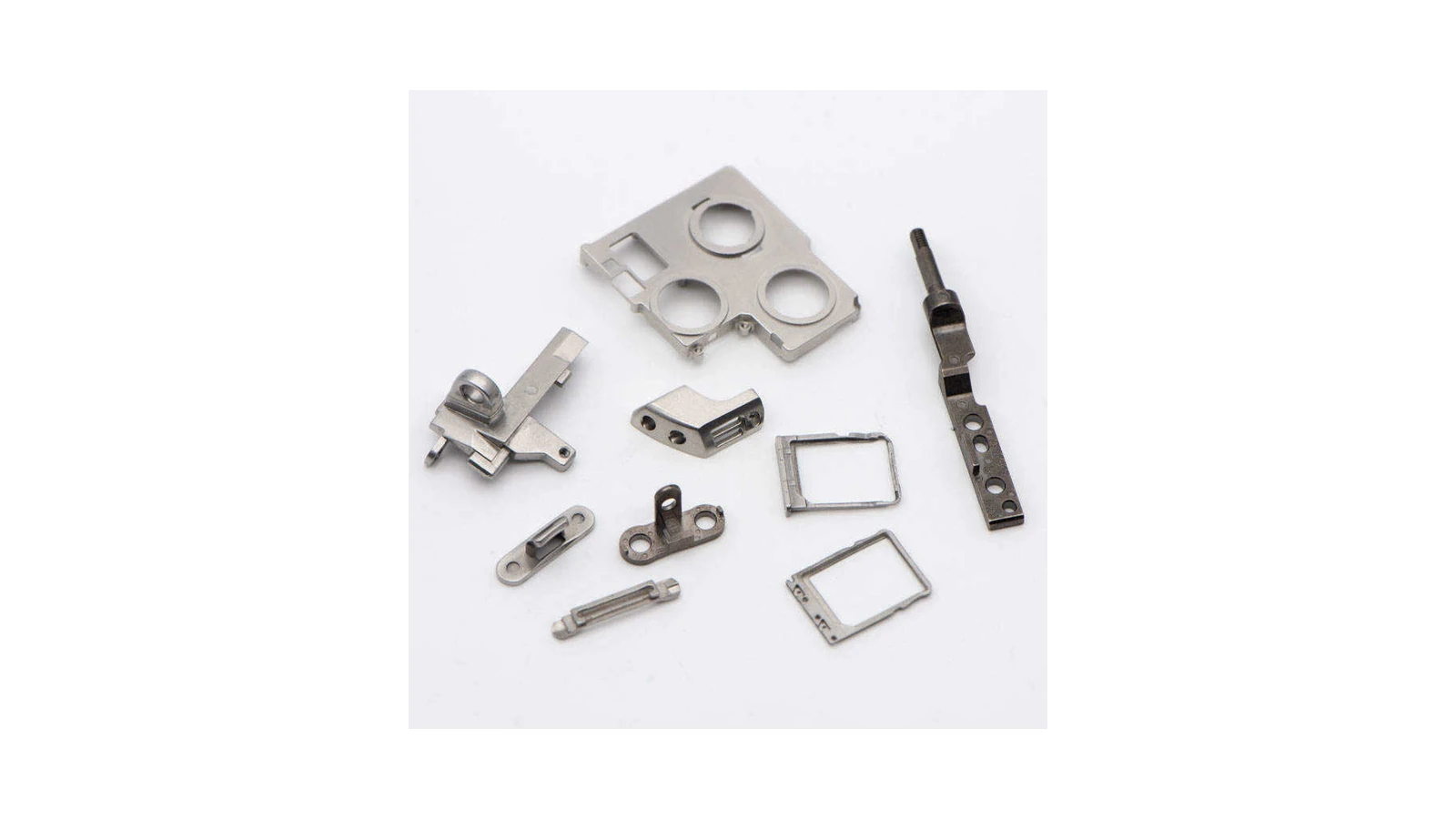
CNC machining is often the right choice for prototypes, low-volume production, and parts with simple critical features. But when a small metal part reaches repeat production and still needs complex geometry, tight assembly fit, high material utilization, or lower unit cost, it may be time to evaluate a CNC to MIM conversion.
XTMIM helps engineering and sourcing teams review whether a CNC part can be redesigned for metal injection molding, what must change before tooling, which tolerances should stay critical, and where secondary machining is still needed. The goal is not to force every CNC part into MIM, but to find the parts where MIM can reduce process steps, stabilize repeat production, and lower total manufacturing cost.
CNC cost reduction
Small complex metal parts
DFM for MIM conversion
Tolerance and shrinkage planning
Secondary machining strategy
Best-Fit Signal
High CNC Cost + Repeat Volume + Complex Geometry
That is usually the first signal that a CNC part may deserve a MIM conversion review.
We Review
When CNC unit cost stays high at repeat volume, MIM may reduce operation count and material waste.
Undercuts, side holes, small grooves, ribs, bosses, and internal features may favor near-net-shape production.
Not every CNC tolerance should be copied directly into MIM. Critical features need a planned tolerance hierarchy.
Conversion only makes sense when tooling, material, shrinkage, inspection, and volume are reviewed together.
What CNC-to-MIM Conversion Is Actually Meant to Fix
This solution is for teams that already have a metal part made by CNC machining but are running into cost, scalability, geometry, or production-efficiency limits. The conversion review starts from the existing drawing and asks whether MIM can make the same function more efficiently without creating new quality risks.
CNC Cost Does Not Drop at Volume
When every part still requires multiple tool changes, several setups, long cycle time, or heavy material removal, the unit cost may remain too high even after demand becomes stable.
Complex Features Drive Too Many Operations
Small pockets, side holes, undercuts, thin ribs, curved surfaces, and multiple local features can make CNC programming and fixture planning expensive.
Material Waste Becomes Significant
For small 3D metal parts cut from bar, plate, or billet, machining may remove more material than the final part keeps. MIM can improve near-net-shape efficiency when the geometry fits.
Capacity Cannot Scale Smoothly
If CNC capacity is blocked by machine hours, fixtures, operators, or inspection bottlenecks, MIM may be reviewed as a repeat-production route.
Check Whether a CNC Part Is a Good Candidate for MIM
A good conversion candidate is not simply a part that is expensive to machine. It should also have the right size, geometry, volume, material, tolerance structure, and post-processing logic.
Strong CNC-to-MIM Conversion Signals
The strongest candidates are small metal parts with complex 3D geometry, repeat demand, several CNC operations, and a tolerance structure that can be separated into general geometry and critical features.
Usually worth reviewing
Small to medium metal part, complex features, stable volume, high CNC cost, and several similar parts in a product family.
Good engineering condition
The function is clear, the material target is known, and only selected features truly require very tight tolerance or post-machining.
Parts That Need Deeper Review
Some parts look suitable at first but need more engineering work before MIM tooling. The most common concerns are thick sections, long flat areas, sharp transitions, deep blind holes, and tolerance expectations copied directly from CNC drawings.
DFM needed
The part has uneven wall thickness, isolated heavy sections, thin ribs beside thick bosses, or geometry that may distort during sintering.
Tolerance split needed
The drawing treats every dimension as CNC-level critical, but the real function may only require tight control on selected holes, faces, or interfaces.
Parts That Usually Should Stay CNC
CNC may still be the better route when the part is large, simple, very low volume, requires broad ultra-tight tolerances, or needs a material and property route that is not suitable for MIM.
Usually poor fit
Large simple plate, shaft, block, or bracket where machining, stamping, casting, or another process is already efficient.
High conversion risk
The part requires many ultra-tight features across the full geometry with no room for tolerance split or selective secondary operations.
Information Needed for a Real Review
A useful conversion review needs more than a part photo. The more clearly the current CNC cost drivers and functional requirements are known, the more practical the MIM recommendation will be.
Send engineering data
2D drawing, 3D model, material grade, annual volume, current CNC process notes, surface finish, and critical dimensions.
Send business context
Current unit cost target, production quantity, pain points, assembly use, failure concerns, and whether part-family conversion is possible.
What We Do in a CNC-to-MIM Conversion Project
This page should answer one practical buyer question: if a CNC part is too expensive or difficult to scale, what can XTMIM actually do? The answer is not only manufacturing. It starts with engineering review and ends with a production route that separates MIM geometry from secondary finishing where needed.
Part Suitability Screening
We review the CNC drawing, 3D model, size, material, feature density, annual volume, and current machining pain points to decide whether MIM is worth deeper evaluation.
DFM Redesign for MIM
We check wall thickness, transitions, holes, undercuts, gates, parting line, sintering support, and shrinkage behavior so the part is designed around the MIM process rather than copied from CNC.
Tolerance and Secondary Operation Planning
We separate general molded geometry from critical features that may need sizing, machining, reaming, grinding, tapping, polishing, heat treatment, or coating.
Material and Cost Route Review
We compare material choice, final density target, surface condition, post-processing, tooling cost, and production volume to determine whether the conversion has a real business case.
Our CNC-to-MIM Conversion Workflow
A successful conversion is not a direct process swap. CNC removes material from stock, while MIM forms a feedstock part that shrinks during debinding and sintering. The part must be reviewed around that difference.
CNC Pain Point Review
Identify current cost drivers, machining steps, setup difficulty, material waste, inspection bottlenecks, and volume pressure.
MIM Suitability Check
Screen size, geometry, feature density, material grade, part weight, and whether the annual volume supports tooling.
DFM Redesign
Adjust wall thickness, transitions, holes, radii, gates, support surfaces, and geometry that may affect molding or sintering.
Tolerance Split
Define which features are suitable for as-sintered control and which should be finished by selective secondary operations.
Trial and Production Route
Prepare tooling, trial production, inspection plan, material checks, post-processing route, and ramp-up control.
Where CNC-to-MIM Conversions Usually Fail
Main Risk Signals to Review Early
- Copying CNC tolerances directly into MIM. A CNC drawing often carries tight tolerances that were easy to inspect but not truly functional across every feature.
- Ignoring shrinkage and sintering distortion. Thick-thin transitions, unsupported flat areas, long arms, and heavy local sections can cause dimensional drift.
- Assuming MIM removes all machining. Some holes, threads, sealing faces, bearing surfaces, or locating features may still need secondary finishing.
- Choosing material by name only. The final MIM material condition depends on density target, heat treatment, surface treatment, corrosion requirements, and mechanical performance.
- Converting a low-volume part too early. MIM tooling and process development need enough repeat demand or a strong part-family strategy.
CNC vs MIM: What Changes After Conversion
| Decision Area | CNC Machining Logic | MIM Conversion Logic | What XTMIM Reviews |
|---|---|---|---|
| Geometry | Features are cut one by one from stock, often with multiple setups. | Complex geometry can be formed near-net-shape if molding, debinding, and sintering behavior are controlled. | Feature density, undercuts, wall thickness, holes, radii, gate position, and support surfaces. |
| Cost structure | Cost often follows machine time, setup time, tool wear, and material removal. | Cost shifts toward tooling, feedstock, sintering, batch control, and secondary operations. | Annual volume, part family, current machining steps, material waste, and expected production life. |
| Tolerances | Tight tolerances can be achieved locally through machining and inspection. | General geometry may be controlled through MIM, while critical features may need secondary finishing. | Critical dimensions, functional interfaces, tolerance hierarchy, and post-machining plan. |
| Material use | Material waste can be high when a small 3D part is cut from larger stock. | MIM can improve material utilization when the part is small, complex, and repeated. | Part weight, material grade, final density target, heat treatment, and surface treatment. |
| Production scaling | Scaling may require more CNC machine hours, fixtures, operators, and inspection capacity. | Scaling depends on tooling, stable sintering, batch control, and repeatable post-processing. | Process stability, inspection plan, production volume, lead time, and ramp-up risk. |
Useful Pages for CNC-to-MIM Conversion Decisions
MIM vs CNC
Use this when the first question is whether the part should stay machined or move toward MIM.
DFM for MIM
Useful when the CNC geometry needs redesign before it can become a stable MIM part.
MIM Tolerances
Supports tolerance split decisions between as-sintered features and selective secondary operations.
Shrinkage Compensation
Helpful when the team needs to understand why CNC dimensions cannot be copied directly into MIM tooling.
MIM Materials
Useful for reviewing whether the CNC material grade has a practical MIM equivalent or alternative.
Engineering Review
A natural next step when buyers need part-specific review before tooling decisions.
MIM Quality Control
Supports inspection planning, batch stability, material checks, and production release review.
Upload Your Drawing
Best for teams ready to send a CNC drawing, 3D model, current cost driver, and volume target for review.
TECHNICAL INSIGHTS
Insights for Metal Injection Molding Design, Materials, and Production
FAQ
Send the CNC Part for a MIM Conversion Review
When should a CNC machined part be considered for MIM?
A CNC part should be reviewed for MIM when it is small, complex, repeated in volume, expensive to machine, and has a tolerance structure that can be separated into general geometry and selected critical features.
Can MIM completely replace CNC machining?
Not always. MIM can replace many feature-by-feature machining operations, but critical holes, threads, sealing faces, bearing surfaces, or alignment features may still need selective secondary machining.
What information is needed for a CNC-to-MIM conversion review?
Useful inputs include a 2D drawing, 3D model, material grade, current CNC process notes, annual volume, target cost, critical dimensions, surface finish requirements, and any known assembly or failure concerns.
Will the MIM part have the same tolerances as the CNC part?
Not automatically. A conversion project should define which dimensions can be controlled through MIM and which features require sizing, machining, reaming, grinding, tapping, or other secondary operations.
What types of CNC parts are poor candidates for MIM?
Large simple parts, very low-volume parts, long straight shafts, simple plates, large blocks, and parts requiring ultra-tight tolerances across nearly all features are often better left in CNC or another process.
Next Step
Send the CNC Part for a MIM Conversion Review
A useful CNC-to-MIM review starts with the part function, current machining route, material grade, critical dimensions, annual volume, and cost pressure. XTMIM can help screen whether the part should stay CNC, move to MIM, or use a hybrid route with MIM plus selected secondary machining.
- Review CNC cost and process pain points
- Check whether the part geometry fits MIM
- Redesign features for molding, debinding, and sintering
- Plan tolerance split and secondary operations
- Estimate whether tooling and production volume make sense
Request a CNC-to-MIM Review
Send the drawing, 3D model, material grade, current CNC pain point, and annual volume so the part can be reviewed before tooling decisions are made.