
When Small High-Strength Metal Components Fit MIM
High-strength MIM parts are small, complex metal components where final strength depends on material route, molded geometry, debinding stability, sintered density, heat treatment, surface condition, and the actual load path. MIM is a practical option when a part needs both mechanical strength and near-net-shape complexity, such as gears, hinges, brackets, shafts, pins, locking parts, robotics hardware, drone inserts, or compact industrial mechanisms. It is not the right process for every strong metal part. Large solid blocks, simple turned parts, very low-volume prototypes, or components that require forged-level impact toughness may be better suited to CNC machining, forging, casting, or another route. Before tooling, the key question is whether this specific geometry, material, load condition, tolerance, and production volume can work together reliably.
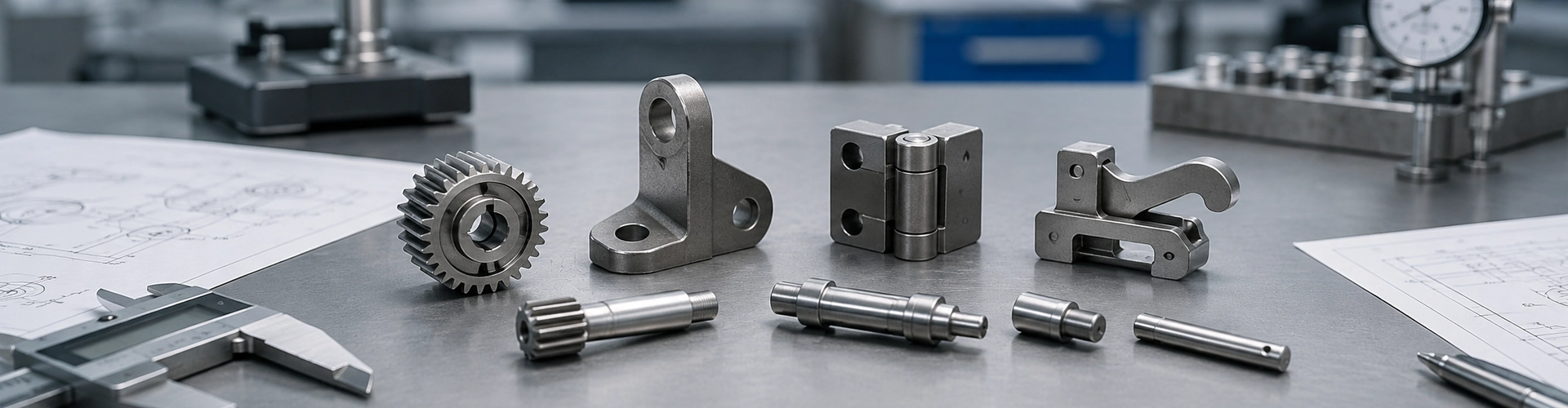
Visual disclosure: This image is a representative illustration for engineering explanation. It is not presented as a customer project, production record, or photograph of specific XTMIM-manufactured parts.
Quick Decision: Is Your High-Strength Part a Good Candidate for MIM?
A high-strength requirement alone does not make a part suitable for metal injection molding. MIM becomes valuable when strength, compact size, complex geometry, and repeat production demand are present at the same time. If the part only needs strength but has a simple shape, CNC machining, powder metallurgy pressing, stamping, casting, or forging may provide a better cost or performance fit.

| Decision Area | Good Candidate for MIM | Needs Engineering Review | Usually Not a Good Fit |
|---|---|---|---|
| Part size | Small to medium-small metal parts | Borderline size with thick sections or long unsupported spans | Large solid blocks or heavy structural parts |
| Geometry | Holes, ribs, bosses, teeth, grooves, undercuts, thin walls, or integrated features | Complex geometry with uneven wall thickness or local stress concentration | Simple turned, milled, stamped, or pressed shapes |
| Strength requirement | Load-bearing, torque transfer, locking force, shear, bending, or compact structural strength | Fatigue, impact, tight tolerance after heat treatment, or unclear load direction | Extreme impact, forged-level toughness, or no defined load condition |
| Production volume | Stable repeat demand suitable for tooling amortization | Pilot volume with a realistic future production plan | One-off repair parts or very low-volume prototypes |
| Engineering input | Drawing, 3D model, material target, load direction, tolerance, and annual volume are available | Some application data is missing but can be clarified before tooling | No drawing, no load information, no material target, or no volume estimate |
In practice, the strongest MIM projects are usually not the largest parts. They are compact components where machining every feature would be expensive, but the application still needs reliable metal strength, dimensional control, and repeatable production. For broader part-family navigation, start from the MIM parts hub.
What Makes a MIM Part “High-Strength”?
A high-strength MIM part usually performs a mechanical function, not only a cosmetic or positioning function. It may transfer torque, hold a load, resist bending, lock two assemblies together, support another component, or survive repeated motion. The strength requirement may appear as a note on the drawing, but the real engineering issue is usually hidden in the application: where the load enters, where the part is supported, where contact occurs, and where failure would start.
Strength Depends on More Than Material Grade
A common mistake is to choose a material grade first and assume the part will automatically meet the strength requirement. Material matters, but it is only one part of the system. In MIM, final performance also depends on feedstock behavior, injection molding fill quality, green part handling, debinding stability, sintering shrinkage, final density, heat treatment response, surface condition near stress-sensitive areas, and inspection method.
Two parts made from the same material can behave differently if one has sharp internal corners, poor load paths, uneven section thickness, gate-related weak zones, or heat treatment distortion. For high-strength MIM parts, drawing review should focus on where the part may fail, not only whether the material name appears strong.
Common Strength Requirements: Tensile, Shear, Bending, Torque, Impact, Fatigue, and Hardness
Different “strength” requirements need different engineering checks. A part that resists shear is not reviewed in the same way as a part that transfers torque or survives repeated fatigue cycles. This is why an RFQ should include load direction and the functional region that matters most.

| Strength Requirement | Typical Concern | Common MIM Part Examples | What Should Be Reviewed |
|---|---|---|---|
| Tensile / yield strength | Pulling, clamping, or structural load | Brackets, compact structural parts | Material route, sintered density, heat treatment, cross-section design |
| Shear strength | Pin or shaft loaded across its section | Shafts, pins, latch parts | Diameter, load direction, contact area, shoulder radius |
| Bending strength | Part arm, bracket, or hinge leaf under load | Brackets, hinges, support arms | Wall thickness, ribs, fillets, stress path, mounting hole location |
| Torque transfer | Rotational load or drive function | Gears, couplings, splines | Tooth root, hub area, hardness, heat treatment, mating part |
| Impact resistance | Sudden contact or locking load | Latch parts, locking hooks | Toughness, contact radius, weak section review, application validation |
| Fatigue resistance | Repeated cycling or vibration | Hinges, robotic joints, mechanisms | Surface condition, stress concentration, load cycle, assembly motion |
| Hardness-related strength | Wear and contact pressure | Gears, pins, contact parts | Heat treatment, surface finish, contact stress, mating material |
High Strength Does Not Mean Every Strong Metal Part Should Use MIM
MIM is strongest as a manufacturing choice when strength and geometric complexity appear together. If the part is large, simple, and easy to machine, CNC may be more practical. If the part has a simple vertical pressing shape and cost is the main driver, conventional powder metallurgy may be better. If the part is a thin sheet structure, stamping may be more suitable. If the part needs forged-level toughness under extreme impact, MIM should be reviewed carefully before any tooling decision.
When Are High-Strength Parts Suitable for MIM?
High-strength parts are suitable for MIM when the part is small enough for the process, complex enough to justify tooling, and produced in a volume where near-net-shape manufacturing can reduce machining burden. The best projects often involve parts that are too complex for simple PM pressing, too costly to machine at scale, or too small and detailed for casting.
Holes, ribs, bosses, teeth, grooves, undercuts, thin walls, and integrated features often improve the value of MIM.
MIM is most useful when the part needs mechanical strength and complex near-net-shape geometry together.
Tooling cost is more reasonable when the part has stable annual demand or a clear production plan.
Engineering decision: If the part only needs strength but has a simple shape, another process may be more cost-effective. If the part needs strength, compact size, and complex geometry together, MIM deserves a drawing-level review before the design is locked.
Common High-Strength MIM Part Types
This section shows common part types that may need a high-strength MIM review. These are not separate material specifications or guaranteed applications. Each part still needs drawing-level review because strength depends on geometry, load direction, material, heat treatment, shrinkage control, and inspection requirements.
| Part Type | Why Strength Matters | Review Focus |
|---|---|---|
| MIM gear parts | Gear teeth may transfer torque and experience root stress. | Tooth root, hub thickness, material, hardness, heat treatment |
| MIM hinge parts | Repeated motion can create bending and fatigue risk. | Pin area, hinge leaf thickness, hole edge distance |
| MIM bracket parts | Brackets may support load, vibration, or assembly stress. | Ribs, screw holes, wall transitions, mounting load path |
| MIM shafts and pins | Pins and shafts may experience shear, bending, or contact wear. | Diameter, shoulder geometry, surface hardness, mating part |
| Locking and latch parts | Repeated engagement may create impact and contact stress. | Hook geometry, contact area, radius, deformation risk |
| Robotics parts | Compact mechanisms may need torque transfer and stiffness. | Joint geometry, tolerance, fatigue, wear zones |
| Drone structural inserts | Lightweight assemblies may need small high-strength metal inserts. | Thin sections, weight reduction, fatigue, fastening area |
| Industrial mechanism parts | Small internal mechanisms may carry load in limited space. | Strength, wear, dimensional stability, assembly fit |
| Medical tool mechanism parts | Compact strength may combine with corrosion or cleaning requirements. | Material selection, surface condition, functional validation |
For geometry-specific review, use the dedicated gear, hinge, bracket, or shaft-and-pin pages. This page focuses on how load type, material route, heat treatment, local geometry, and verification planning affect small high-strength MIM components.
Material Routes for High-Strength MIM Parts
Material selection for high-strength MIM parts should not start from strength alone. The correct route depends on load type, corrosion exposure, hardness target, heat treatment plan, surface requirements, tolerance after treatment, and cost. MPIF Standard 35-MIM and MIMA technical resources can help frame material discussions, but final selection still requires project-specific review. For broader material-family planning, start from the MIM materials hub. For performance-driven material-family comparison, review high-strength MIM materials, then confirm the final alloy route against the drawing, load condition, heat treatment, tolerance, corrosion exposure, and inspection requirements.

Low-Alloy Steel MIM Parts
Low-alloy steel MIM parts may be suitable when strength, hardness, and cost balance are more important than corrosion resistance. These materials are often considered for gears, shafts, pins, locking parts, and compact structural components. In many projects, heat treatment is part of the review because strength and hardness targets may not be met by material selection alone. Caution: if the part is exposed to moisture, cleaning chemicals, or corrosion-sensitive environments, low-alloy steel may need coating, surface protection, or a different material route.
Precipitation-Hardening Stainless Steel MIM Parts
Precipitation-hardening stainless steels may be considered when a part needs strength with better corrosion resistance than many low-alloy steels. They can be relevant for compact mechanisms, tool hardware, locking parts, and industrial components where strength and environment both matter. The engineering review should confirm heat treatment condition, dimensional stability, hardness target, corrosion exposure, and critical tolerances. Caution: aging condition and post-treatment dimensional change should be reviewed before tooling when holes, gear hubs, pins, or mating features are critical.
Martensitic Stainless Steel MIM Parts
Martensitic stainless steels may be considered when hardness, strength, and wear-related contact performance are important. They may be suitable for parts such as pins, small gears, locking components, or contact mechanisms. However, corrosion resistance, heat treatment distortion, brittleness risk, and surface finish should be reviewed carefully. Caution: higher hardness can improve contact performance but may reduce toughness if the geometry has sharp corners or local impact load.
Titanium Alloy MIM Parts
Titanium alloy MIM parts may be relevant when strength-to-weight ratio, corrosion behavior, or special application requirements justify the higher material and process cost. Titanium should not be treated as a default high-strength choice for ordinary industrial parts. It requires project-level review of cost, sintering control, oxygen sensitivity, inspection requirements, and application risk. Caution: titanium selection should be driven by application need, not by the assumption that a premium alloy automatically solves strength or manufacturability problems.
Material review note: Grade-specific property values, heat-treatment conditions, corrosion requirements, and acceptance criteria should be confirmed against the actual drawing and application. Final material selection should be reviewed together with the load path, critical tolerances, surface requirements, production volume, and operating environment.
DFM Risks That Can Reduce Strength in MIM Parts
A strong material cannot fully compensate for weak geometry. In high-strength MIM parts, the highest risk areas are usually not the whole part. They are the local features where load enters, changes direction, concentrates, or repeats. These areas should be reviewed before tooling because later correction may require mold change, secondary machining, or a material and heat treatment revision.

| DFM Risk | Why It Matters | Review Action Before Tooling |
|---|---|---|
| Sharp internal corners | Create stress concentration and possible crack initiation points | Add suitable radii where function and tooling allow |
| Sudden wall thickness changes | Increase shrinkage imbalance, internal stress, and distortion risk | Use smoother transitions and balance the section where possible |
| Thin walls without support ribs | Reduce stiffness under bending or assembly load | Add ribs, modify wall thickness, or review the load path |
| Holes close to load path | May weaken the critical section around fasteners or pivots | Review hole position, edge distance, and load direction |
| Long unsupported spans | May deform during debinding or sintering support stages | Review support strategy, geometry, and fixture requirements |
| Poor gate location | May affect filling behavior, knit lines, density consistency, or weak zones | Confirm gate position and visible gate mark tolerance before tooling |
| Heat treatment distortion | Can shift dimensions, create residual stress, or affect critical fits | Define post-treatment inspection and possible secondary operations |
| Surface defects in stress areas | May become crack initiation points under fatigue or impact | Define inspection zones and surface acceptance requirements |
Load Path and Stress Concentration Review
The first design question should be: where does the load travel? In a bracket, the risk may be near mounting holes. In a gear, it may be at the tooth root. In a hinge, it may be around the pin hole. In a shaft, it may be at a shoulder or groove. In a latch, it may be at the contact edge.
From a design review perspective, load path review is more useful than a general strength discussion. It helps identify whether the part needs larger radii, thicker sections, better rib support, material change, heat treatment, local machining, or inspection control at specific features.
Scenario disclosure: The following representative scenarios illustrate common high-strength MIM design-review patterns. They are not presented as named customer cases, project-specific production records, or guaranteed outcomes.
Bracket Crack Risk Near a Mounting Hole
Typical risk: A compact bracket places a mounting hole close to a sharp internal corner while the surrounding section carries assembly load.
Why the risk develops: Limited edge distance, an abrupt geometry transition, and insufficient local support can concentrate stress even when the selected material has adequate nominal strength.
Engineering review response: Review the actual load path, increase the internal radius where function and tooling allow, reinforce the local section, and identify the dimensions that control mounting alignment.
Prevention before tooling: Mark load-sensitive regions on the drawing and review mounting-hole position, edge distance, section thickness, ribs, and corner transitions under the expected assembly condition.
Shaft Shoulder Risk After Heat Treatment
Typical risk: A small shaft or pin requires higher hardness after heat treatment, while the functional load passes through a narrow shoulder transition.
Why the risk develops: A small shoulder radius can concentrate stress, and heat treatment can increase sensitivity to dimensional change, residual stress, and surface condition in the transition zone.
Engineering review response: Review the shoulder radius, groove geometry, load direction, hardness target, and post-treatment inspection plan together rather than treating hardness as the only requirement.
Prevention before tooling: Define the critical transition zone on the drawing and confirm whether local geometry adjustment, controlled heat treatment, secondary finishing, or focused inspection is required.
Before mold design: If your drawing has thin sections near load areas, sharp transitions, holes close to a force path, or post-heat-treatment tolerance risks, send the file for MIM drawing review before tooling is started.
How High-Strength MIM Parts Are Reviewed and Verified
High-strength MIM parts need both design review and verification planning. The verification method depends on the part function, material, application risk, and customer acceptance requirements. Not every part requires the same level of testing, but the review method should be clear before tooling.
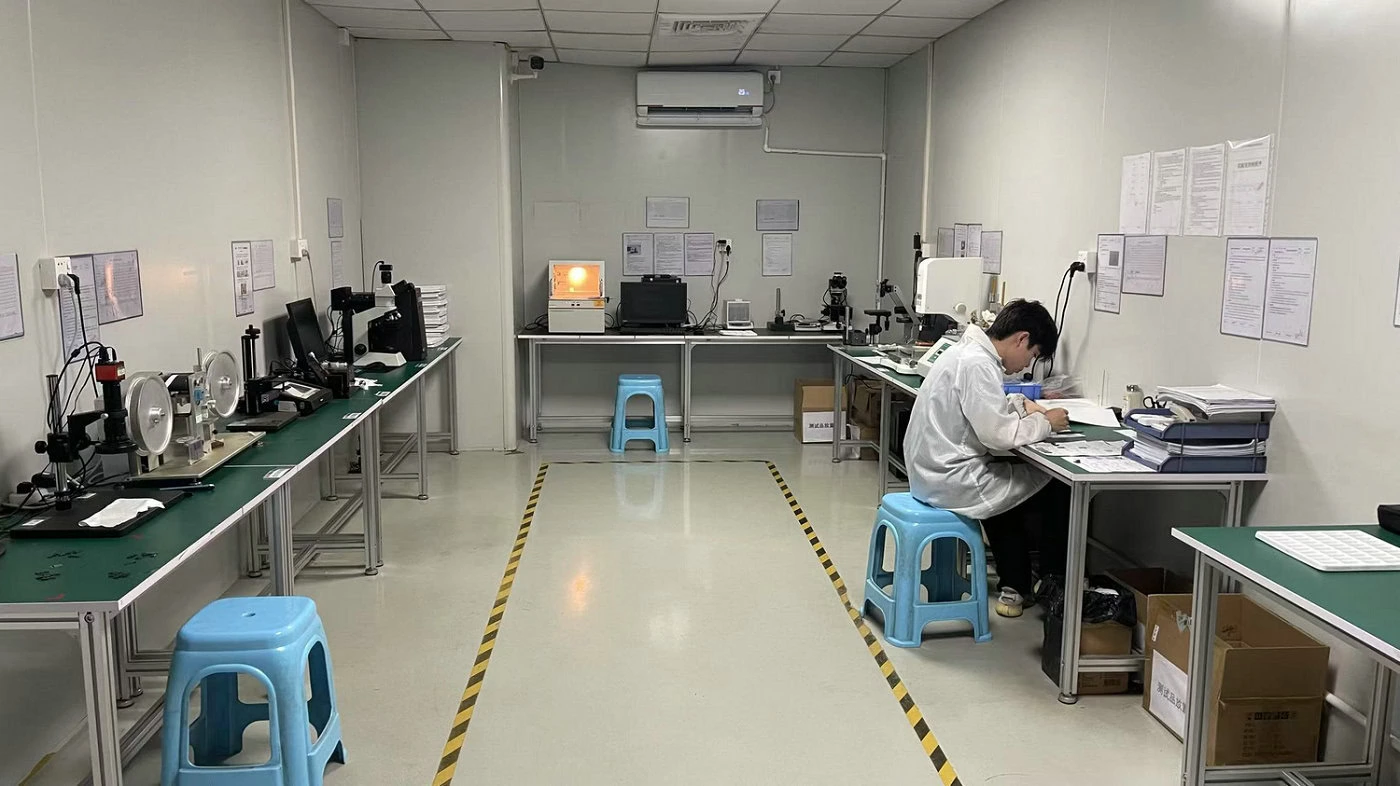
| Review Item | Why It Matters | Typical Review Method |
|---|---|---|
| Material route | Strength, corrosion behavior, hardness, and cost depend on material selection | Material standard, application review, supplier process experience |
| Sintered density | Density influences mechanical performance and consistency | Process review and material-specific inspection plan |
| Heat treatment condition | Strength and hardness may depend on treatment condition | Heat treatment specification and post-treatment inspection |
| Critical dimensions | Strength may depend on hole position, section thickness, or contact area | Dimensional inspection after sintering and secondary operations |
| Surface condition | Surface defects near stress zones can initiate failure | Visual, dimensional, or application-specific inspection |
| Load path | Failure often starts near local geometry, not across the whole part | Drawing markup and DFM review |
| Functional validation | Fatigue, impact, or safety-related performance may require customer-side validation | Application test plan or assembly-level validation |
Strength Verification Items to Confirm Before Production
Strength verification should match the failure mode of the actual part. A gear, bracket, shaft, hinge, or latch may all be described as high-strength, but each one may need a different confirmation method before production approval.
| Verification Item | What It Confirms | When It Matters |
|---|---|---|
| Tensile / yield requirement | Basic mechanical strength of the selected material route | Load-bearing brackets, compact structural parts, clamping components |
| Hardness | Contact resistance, wear-related strength, and heat treatment response | Gears, shafts, pins, latch surfaces, sliding or contact areas |
| Density / porosity review | Sintering consistency and potential internal defect risk | Fatigue-sensitive parts, critical strength applications, thin load paths |
| Heat treatment condition | Final strength, hardness, toughness balance, and distortion risk | Low-alloy steel, precipitation-hardening stainless steel, martensitic stainless steel |
| Critical dimensions after heat treatment | Assembly fit and functional alignment after post-treatment change | Pins, holes, gear hubs, brackets, mating features, tight-fit areas |
| Surface and edge inspection | Whether cracks, dents, sharp edges, or surface defects may trigger failure | Fatigue, impact, bending, contact, or visible functional surfaces |
| Functional load test | Real application performance under the customer-defined use condition | Latches, hinges, robotics mechanisms, torque-transfer parts, safety-related assemblies |
A supplier can review manufacturability, material route, process risks, tooling feasibility, shrinkage behavior, and inspection strategy. Final functional validation for fatigue, impact, safety load, or regulated applications should be defined by the customer’s design and quality requirements.
High-Strength MIM Parts vs CNC, PM, Casting, and Stamping
High-strength parts often trigger process comparison. The best choice depends on geometry, volume, material, tolerance, strength requirement, and total production cost. MIM should not be compared only on material strength; it should be compared on whether it can form the required complex geometry at repeatable volume with acceptable inspection controls.
| Process | Best Fit | Limitation for High-Strength Parts |
|---|---|---|
| MIM | Small, complex, repeat-volume metal parts needing strength and near-net-shape geometry | Not ideal for large simple parts, very low-volume projects, or forged-level impact toughness |
| CNC machining | Low-volume, tight-tolerance, solid billet parts | Cost rises with complex geometry and repeat production volume |
| PM pressing | Simple high-volume parts with pressable geometry | Limited for undercuts, side features, thin complex geometry, and high-density complex shapes |
| Investment casting | Larger or medium-complexity metal parts | Less suitable for very small precision features and fine functional details |
| Die casting | High-volume non-ferrous parts with good productivity | Material and strength limitations for many steel applications |
| Stamping | Thin sheet metal parts | Not suitable for 3D solid complex components |
The process boundary is important for B2B buyers: MIM is usually not selected because the part is simply “strong.” It is selected when the part needs strength and complex geometry at repeat production volume.
When High-Strength MIM Parts Are Not Recommended
MIM should not be forced into every high-strength project. It may not be the best fit when:
- the part is large, thick, and simple;
- the annual volume is too low to justify tooling;
- the part is a simple cylinder, plate, block, or turned component;
- the application requires extreme impact toughness or forged-level performance;
- the design has severe stress concentration that cannot be modified;
- the critical failure mode is fatigue, but load-cycle information is unavailable;
- heat treatment distortion cannot be accepted and no secondary operation is allowed;
- material certification or validation requirements are beyond the project budget or timeline;
- the part can be produced more economically by CNC, PM, stamping, or casting.
Practical rule: A high-strength requirement should be reviewed before tooling, not after the first failed production trial. Early review is especially important when load-bearing areas are close to thin walls, holes, sharp transitions, or cosmetic surfaces.
Engineering note — gear tooth-root risk under torque: A compact gear with a thin tooth root or sharp hub transition can concentrate torque in a small region. Before tooling, review tooth-root geometry, hub thickness, local radii, material route, hardness target, mating-part condition, and the inspection plan for the torque-transfer area.
Strength Review Checklist Before Tooling
Before opening a mold for a high-strength MIM part, the engineering team should review more than the outer shape. A useful review package should show the part geometry, load condition, material target, tolerance risk, surface requirements, heat treatment plan, and expected production volume.

- 2D drawing with critical dimensions
- 3D CAD model
- Target material or current material
- Required tensile strength, yield strength, hardness, or other specified properties
- Load direction and load type
- Torque, shear, bending, impact, or fatigue condition
- Surface finish and heat treatment requirements
- Estimated annual volume
- Whether the part size and geometry are suitable for MIM
- Whether strength and geometry requirements conflict
- Whether the material route matches the application
- Whether wall thickness, holes, radii, ribs, and load paths need changes
- Whether sintering shrinkage and heat treatment may affect critical dimensions
- Whether secondary operations or inspection controls are required
Related MIM Parts and Engineering Requirement Pages
High-strength requirements often overlap with other MIM part categories. Use the following pages when your project needs a more specific review.
Related Part Families
Related Engineering Requirements
For project submission or general communication, use drawing review, RFQ submission, or contact XTMIM.
FAQ About High-Strength MIM Parts
Can MIM parts be high-strength?
Yes. MIM parts can be suitable for high-strength applications when the material, density, heat treatment, geometry, and inspection plan are properly reviewed. Strength should not be judged by material grade alone. Load path, stress concentration, sintering control, surface condition, and application validation also matter.
Which MIM materials are used for high-strength parts?
Common material routes may include low-alloy steels, precipitation-hardening stainless steels, martensitic stainless steels, titanium alloys, and selected tool steels. The correct choice depends on strength target, hardness, corrosion exposure, heat treatment response, tolerance, cost, and annual volume.
Are high-strength MIM parts stronger than PM parts?
In many small complex parts, MIM can offer higher density and more complex geometry than conventional pressed-and-sintered PM. However, PM may be more cost-effective when the part shape is simple and suitable for compaction. The correct choice depends on geometry, volume, density requirement, and cost target.
Are MIM parts as strong as machined or forged parts?
MIM parts can reach strong mechanical performance when alloy selection, sintered density, heat treatment, and inspection are properly controlled, but they should not be automatically treated as equal to forged parts for every application. CNC machining may be better for low-volume solid parts, while forging may be better for extreme impact or toughness-critical applications. The correct comparison depends on geometry, load type, material condition, density, heat treatment, and validation requirements.
Can MIM replace CNC machining for high-strength parts?
MIM may replace CNC machining when the part is small, complex, and produced in repeat volume. It is less suitable when the part is large, simple, very low volume, or requires tight tolerance on many features without allowing secondary operations.
Do high-strength MIM parts always need heat treatment?
No. Heat treatment depends on material, hardness target, strength requirement, wear condition, and dimensional stability. Some projects need heat treatment to reach functional requirements, while others may not. Heat treatment may also create distortion risk, so it should be reviewed before tooling.
What part designs are risky for high-strength MIM applications?
Risky designs include sharp internal corners, sudden wall thickness changes, holes close to load paths, thin unsupported sections, long spans, weak tooth roots, narrow shoulders, and features that may distort during heat treatment or sintering.
What information is needed for a high-strength MIM part quote?
A useful RFQ should include a 2D drawing, 3D CAD file, material target, strength or hardness requirement, load direction, critical dimensions, tolerances, surface finish, heat treatment needs, application environment, estimated annual volume, and current manufacturing process.
Standards and Technical Reference Note
Standards and association resources can support material and process discussions, but they do not replace project-specific DFM review. For high-strength MIM parts, technical references are most useful when they help define material route, process suitability, inspection expectations, and supplier discussion points.
- MPIF Standard 35-MIM / MIMA Standard 35 information — relevant for MIM material standards and material specification discussion.
- MIMA Process Overview: MIM — relevant for understanding MIM process behavior, net-shape capability, shrinkage, and dimensional control considerations.
- MIMA Materials Range — relevant for understanding available MIM material families and material-route planning.
- EPMA Metal Injection Moulding overview — relevant for process selection boundaries, especially when comparing MIM with conventional PM pressing.
Final tolerance capability, strength performance, heat treatment response, and inspection criteria should be confirmed through drawing review, supplier process review, and customer application validation.
Review Your High-Strength MIM Part Before Tooling
If your part needs load-bearing strength, torque transfer, shear resistance, bending stability, hardness, fatigue resistance, or compact structural performance, send your drawing for an early MIM suitability review. XTMIM can review the part geometry, material route, load-sensitive areas, DFM risks, sintering and heat treatment concerns, tolerance requirements, and production feasibility before tooling.
For the most useful review, provide 2D drawings, 3D CAD files, target material, critical dimensions, load direction, hardness or strength requirements, surface finish, application background, and estimated annual volume.