MIM vs Die Casting: How to Choose the Right Metal Part Manufacturing Process
Metal injection molding and high-pressure die casting are not interchangeable “metal forming” options. MIM is usually evaluated for small, complex, high-density parts made from stainless steel, alloy steel, tool steel, titanium, or other MIM-suitable alloys. Die casting is usually evaluated for aluminum, zinc, or magnesium parts such as housings, covers, brackets, heat sinks, and enclosures. For engineers and technical buyers, the first decision is not which process sounds more advanced or cheaper. The first decision is whether the material, part size, geometry, tolerance, production volume, and post-processing requirements fit one route better than the other. This comparison helps identify when to review MIM, when to review die casting, and what information should be checked before tooling.
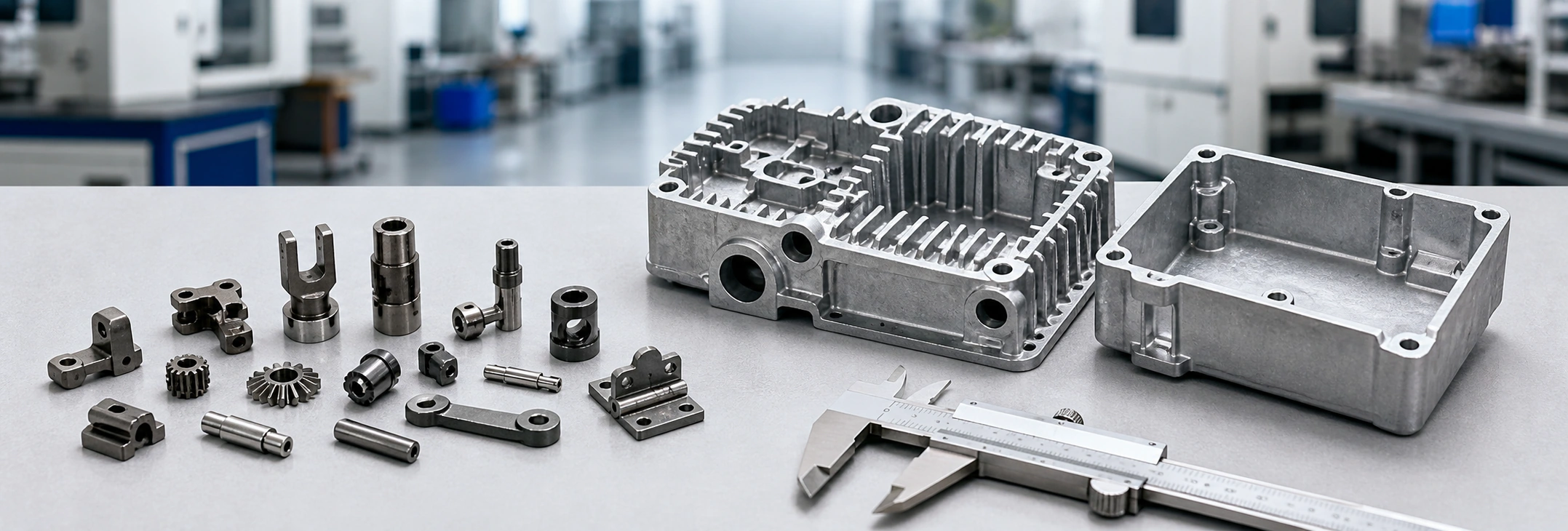
The real question is not whether MIM is “better” than die casting. The real question is whether the part belongs to a powder injection and sintering route or a molten non-ferrous casting route. A small stainless steel locking component with undercuts may be a strong metal injection molding candidate. A medium-sized aluminum electronic housing is usually a die casting candidate. From a design review perspective, the process choice should be made before tooling, not after defects, machining cost, or dimensional problems appear in production.
MIM vs Die Casting: The Short Answer for Engineers
MIM is a powder-based forming and sintering process. Die casting is a molten-metal high-pressure casting process. They may both use metal dies, but the material route, dimensional risks, cost structure, and suitable part types are different.
In practice, MIM is often considered when a small metal part would require too much CNC machining, assembly, or feature consolidation by other methods. Die casting is often considered when a larger non-ferrous part needs fast high-volume production with a suitable casting alloy.
Process Decision Snapshot
| If Your Part Is... | Start With... | Why This Direction Is More Practical |
|---|---|---|
| Small stainless steel precision part | MIM review | The material and small complex geometry often fit powder injection molding and sintering better. |
| Aluminum or zinc housing | Die casting review | The material route, size, and enclosure geometry usually fit high-pressure die casting better. |
| Complex steel part replacing multiple CNC features | MIM review | MIM may reduce machining and assembly by consolidating functional features into one part. |
| Large heat sink, cover, or enclosure | Die casting review | Non-ferrous casting alloys and fast cycle production are usually more suitable. |
| Low-volume prototype only | CNC prototype first | Production tooling for either process may not be justified until the design is validated. |
| Project Requirement | Better Fit | Engineering Reason |
|---|---|---|
| Small complex stainless steel part | MIM | Better material-process match for small steel precision parts |
| Aluminum housing or cover | Die casting | Better fit for non-ferrous cast housings |
| Zinc decorative or enclosure part | Die casting | Zinc die casting supports thin-wall decorative parts |
| Tiny part with undercuts and fine features | MIM | MIM can mold small complex details before sintering |
| Large heat sink | Die casting | Aluminum die casting is usually more suitable |
| High-density small metal component | MIM | Sintered MIM parts can achieve high density when controlled properly |
| Very high-volume non-ferrous part | Die casting | Fast cycle time and suitable alloy route |
| Part replacing multiple CNC-machined features | MIM | Part consolidation may reduce machining and assembly |
How MIM and Die Casting Work Differently
MIM Uses Powder Feedstock, Debinding, and Sintering
Metal injection molding starts with fine metal powder mixed with a binder system to create feedstock. The feedstock is injection molded into a green part, then debound to remove binder, and finally sintered to densify the part and develop the required metal properties. You can review the complete MIM process if you need a deeper process-level explanation.
The simplified process route is: fine metal powder + binder → feedstock → injection molding → debinding → sintering → secondary operations if needed.
This matters because MIM is not metal melted into a mold. The final part size is strongly affected by sintering shrinkage, tooling compensation, debinding stability, sintering support, and inspection of critical dimensions.
MIM is strongest when the part is small, geometrically complex, and difficult or expensive to machine from bar stock. Features such as small holes, slots, thin walls, undercuts, complex profiles, and integrated functional details can often be molded into the green part before sintering. However, this advantage only works when the part design, material, tolerance, and production volume are suitable for MIM.
Die Casting Injects Molten Metal into a Steel Die
High-pressure die casting injects molten metal, typically aluminum, zinc, or magnesium alloy, into a steel die under pressure. The metal fills the cavity, cools, solidifies, and is ejected. After casting, the part usually requires trimming, deburring, machining, surface finishing, or inspection depending on the application.
The simplified process route is: molten aluminum / zinc / magnesium alloy → high-pressure injection → cooling → ejection → trimming → machining or finishing if needed.
Die casting is strong when the part is a medium-to-large non-ferrous component, especially a housing, cover, bracket, enclosure, or heat sink. It can support fast production cycles and high-volume manufacturing when the alloy, die design, machine tonnage, wall thickness, and finishing requirements are properly matched.
The main risks are different from MIM. Die casting projects need to manage metal flow, air entrapment, porosity, flash, parting lines, ejector marks, trimming variation, machining allowance, and die wear.

Material Selection Is Usually the First Decision Point
Material is often the first reason why one process becomes more realistic than the other. Before comparing cost or tolerance, engineers should ask: What metal does the part actually need?
When MIM Materials Make More Sense
MIM is commonly considered for small precision parts made from stainless steel, low alloy steel, tool steel, titanium alloy, soft magnetic alloy, wear-resistant alloys, and other high-density small metal part materials suitable for MIM. If your project is still in the material review stage, the MIM materials page can help organize the material direction before detailed DFM review.
If the part requires stainless steel, high strength, corrosion resistance, wear resistance, or complex steel-based geometry, MIM is usually more relevant than die casting.
A common example is a small stainless steel mechanism part with multiple holes, slots, locking features, and tight assembly requirements. If made by CNC, the machining time may be high. If redesigned for MIM, many features may be formed in the mold, with secondary machining limited to critical surfaces if required.
When Die Casting Materials Make More Sense
Die casting is usually more relevant for aluminum alloys, zinc alloys, and magnesium alloys. Typical die cast parts include aluminum housings, zinc covers, magnesium lightweight structures, heat sinks, brackets, enclosures, consumer hardware shells, electronic housings, and automotive non-ferrous structural parts.
If the target part is an aluminum housing, zinc cover, magnesium enclosure, or heat sink, die casting is usually a better starting point than MIM. In these cases, the material direction and part size already point toward a non-ferrous casting route.
Common Material Mistake: Comparing Stainless Steel MIM with Aluminum Die Casting
A common mistake is to compare MIM and die casting as if they were two interchangeable methods for the same metal. In many real projects, they are not.
| MIM Direction | Die Casting Direction |
|---|---|
| Stainless steel | Aluminum |
| Low alloy steel | Zinc |
| Titanium alloy | Magnesium |
| Tool steel | Non-ferrous casting alloys |
| Soft magnetic alloy | Lightweight cast alloys |
If a customer asks whether MIM or die casting is cheaper, the first answer should be: confirm the material first. If the project requires stainless steel, aluminum die casting is not a direct comparison. If the project requires an aluminum enclosure, MIM is usually not the first process to evaluate.

Not Sure Whether the Material Route Fits MIM or Die Casting?
Send the material requirement, 2D drawing, 3D CAD file, and estimated annual volume for a drawing-based process suitability review before tooling. The review should confirm whether the part is closer to MIM, die casting, CNC machining, or another manufacturing route.
Submit a Drawing for Review Contact Our Engineering TeamPart Size and Geometry: Small Precision Parts vs Larger Cast Components
MIM Is Stronger for Small, Complex, High-Detail Parts
MIM is usually strongest when the part is small enough for the process economics to make sense, but complex enough that machining, stamping, or conventional casting becomes inefficient.
Typical MIM candidate parts may include micro gears, precision hinges, small brackets, locking parts, medical device components, electronic structural parts, small shafts, pins, levers, parts with undercuts, and parts with multiple CNC-machined features consolidated into one piece.
From a design review perspective, the value of MIM is not simply that it forms metal. The value is that it can integrate small functional features into a near-net-shape metal part. This may reduce machining time, reduce assembly steps, improve repeatability, or allow a geometry that would be difficult to machine economically at volume.
However, MIM should not be forced onto every small part. If the geometry is simple, the material is inexpensive, the volume is low, or the tolerance requires heavy machining anyway, CNC, stamping, PM, or another process may be more practical.
Die Casting Is Stronger for Medium-to-Large Non-Ferrous Parts
Die casting is usually stronger for medium-to-large non-ferrous parts, especially when the material is aluminum, zinc, or magnesium and the design fits a casting route.
Typical die casting candidate parts may include aluminum housings, zinc covers, heat sinks, motor housings, electronic enclosures, automotive brackets, and consumer hardware shells.
Die casting is often selected when production speed, non-ferrous material selection, and part size are more important than ultra-small steel geometry. It is especially useful when the part is a housing or enclosure that needs a combination of shape, wall structure, ribs, bosses, mounting points, and surface finishing.
| Design Factor | MIM | Die Casting |
|---|---|---|
| Small part size | Strong fit | Limited fit |
| Complex internal details | Strong fit | Depends on die design |
| Large housing | Usually not ideal | Strong fit |
| Thin-wall aluminum enclosure | Usually not ideal | Strong fit |
| Stainless steel small part | Strong fit | Usually not typical |
| Heat sink geometry | Usually not ideal | Strong fit |
| Micro features | Strong fit | Limited fit |
| Part consolidation | Strong fit | Sometimes possible |
Tolerance and Dimensional Control Are Different Problems
It is not accurate to say that one process always gives better tolerance than the other. The dimensional control problems are different. If the drawing includes tight critical features, review the part against practical MIM design guidelines and the intended inspection plan before tooling.
MIM Dimensional Risk Comes from Shrinkage and Sintering Stability
MIM parts shrink during sintering. The tooling must compensate for this shrinkage, and the final dimensional result depends on the material, feedstock, part geometry, wall thickness variation, debinding behavior, sintering support, furnace conditions, and inspection strategy.
Important MIM dimensional factors include sintering shrinkage, tooling compensation, uneven wall thickness, debinding stability, sintering support, part distortion, critical dimension drift, and sizing or CNC machining for key features.
In production, the most important issue is not whether MIM can mold fine details. It often can. The real issue is whether those features remain stable after debinding, sintering, and inspection. A thin arm, unsupported feature, long slot, or uneven section may behave differently during sintering than a compact, balanced geometry.
For this reason, critical dimensions should be identified before tooling. Some features may be suitable as-sintered. Others may require sizing, machining, or tolerance adjustment.
Die Casting Dimensional Risk Comes from Metal Flow, Cooling, Flash, and Die Wear
Die casting has different dimensional risks. A die cast part is shaped by molten metal flow, filling behavior, cooling, solidification, die condition, trimming, and post-processing.
Important die casting dimensional factors include metal flow, cooling shrinkage, parting line, flash, ejector marks, trimming variation, die wear, and machining allowance.
A die cast aluminum or zinc part can have good repeatability when the design and process are well controlled. But flash, parting line location, ejector marks, trimming operations, and machining allowance may affect the final functional surfaces.
Why “Better Tolerance” Depends on the Part
For a small complex steel component, MIM may be the better route because the process can form fine details and consolidate features. For a larger aluminum housing, die casting may be the better route because the material and part size match the casting process.
Both processes may require secondary machining for critical dimensions. The correct question is not “Which process has better tolerance?” The better question is: Which dimensions are critical, how will they be controlled, and which process gives the best balance of manufacturability, cost, and production stability?
Critical Feature Review Before Tooling
Before choosing MIM or die casting, mark the critical features on the drawing. The same feature may require different control methods depending on the process route.
| Drawing Feature | MIM Review Focus | Die Casting Review Focus |
|---|---|---|
| Critical bore | Sintering drift, sizing need, CNC finishing, inspection method | Machining allowance, porosity exposure, bore position after casting |
| Thin wall | Molding fill, debinding stability, sintering distortion | Metal filling, cooling balance, flash, local shrinkage |
| Thread | Molded feature, tapped feature, or machined thread after sintering | Tapped feature, machined thread, insert strategy, boss design |
| Sealing surface | Density, flatness, machining need, surface finish | Porosity, leakage risk, machining exposure, pressure test requirement |
| Long slot or thin arm | Sintering support, distortion risk, handling risk | Metal flow, ejector layout, trimming and parting line position |
Strength, Density, and Porosity: Different Quality Risks
MIM Parts Depend on Sintered Density and Process Control
MIM quality depends on feedstock consistency, molding stability, debinding control, sintering density, shrinkage behavior, and final inspection. A well-controlled MIM process can produce high-density metal parts, but the result depends on the material system, part design, and process control.
Important MIM quality considerations include feedstock uniformity, debinding control, sintering density, sintering distortion, hardness and strength requirements, heat treatment if required, and inspection of critical features.
MIM quality risks are not mainly die casting porosity risks. They are powder, binder removal, sintering, density, distortion, and dimensional control risks. If a project requires high strength, corrosion resistance, wear resistance, magnetic behavior, or heat treatment response, these requirements should be reviewed against the selected MIM material and process route.
Die Casting Parts Often Need Porosity and Flow Defect Control
Die casting quality often depends on melt handling, die temperature, filling behavior, venting, pressure, solidification, and trimming or machining. Porosity is one of the most important concerns, especially when the part requires sealing, pressure resistance, deep machining, plating, or high cosmetic quality.
Important die casting quality considerations include gas porosity, shrinkage porosity, cold shut, flow marks, blistering, leakage risk, and machining exposing pores.
If a die cast part will be machined after casting, porosity risk becomes more important because machining may expose internal voids. If the part needs pressure tightness, coating, plating, or high-strength performance, the die casting supplier must review these requirements before tooling.
| Quality Issue | More Related Process | Root Cause | Project Impact |
|---|---|---|---|
| Sintering distortion | MIM | Uneven shrinkage or poor support | Critical dimension variation |
| Debinding crack | MIM | Binder removal instability | Scrap or hidden weakness |
| Density variation | MIM | Sintering or feedstock instability | Strength and performance risk |
| Gas porosity | Die casting | Trapped gas during filling | Leakage or machining defects |
| Shrinkage porosity | Die casting | Solidification shrinkage | Weakness or pressure failure |
| Flash | Die casting | Die parting, pressure, or die wear | Trimming and dimensional risk |
| Gate mark | Both | Gate design and removal | Cosmetic or functional concern |

Before Comparing Cost, Confirm Material, Size, Tolerance, and Annual Volume
Cost comparison is often misleading when the project information is incomplete. A common mistake is asking, “Is MIM cheaper than die casting?” before confirming whether both processes are even realistic for the part.
If these details are missing, any simple cost answer is unreliable. A small stainless steel part with complex features may become more economical with MIM because machining time is reduced. A large aluminum enclosure may be more economical with die casting because the material and production route fit the part. A very low-volume prototype may be better reviewed by CNC first before committing to either production tooling route.
Cost Comparison: MIM Is Not Always Expensive, Die Casting Is Not Always Cheaper
What Drives MIM Cost
MIM cost is affected by more than molding. The process includes feedstock preparation, molding, debinding, sintering, inspection, and sometimes secondary operations. If cost is the main concern, review this topic together with the broader metal injection molding cost factors.
Key MIM cost drivers include mold complexity, feedstock material, part size and weight, debinding time, sintering time, tolerance requirement, secondary machining, heat treatment, inspection requirement, and annual volume.
MIM may look expensive if the part is simple, large, low-volume, or easy to machine. But for a small complex steel part with multiple machined features, MIM may reduce total cost by reducing machining, assembly, and material waste.
What Drives Die Casting Cost
Die casting cost is affected by tooling, alloy selection, machine size, cycle time, trimming, machining, finishing, and quality control.
Key die casting cost drivers include die cost, alloy, machine tonnage, part size, cycle time, trimming, machining, surface finishing, scrap control, porosity control, and production volume.
Die casting can be cost-effective for suitable high-volume aluminum, zinc, or magnesium parts. But cost can increase if the part needs heavy machining, tight sealing performance, special cosmetic requirements, porosity control, or complex finishing.
Cost Decision by Project Scenario
| Scenario | Usually Better Cost Direction | Why |
|---|---|---|
| Small stainless steel part with many CNC features | MIM | Reduces machining and supports part consolidation |
| Large aluminum enclosure | Die casting | Better material-process match and faster cycle time |
| Tiny high-strength component | MIM | Small steel geometry fits MIM better |
| Zinc decorative cover | Die casting | Zinc die casting supports thin-wall decorative parts |
| Large simple steel part | Neither may be ideal | CNC, stamping, forging, or casting may need review |
| Small part with extreme tolerance on one bore | Depends | May require secondary machining in either process |
| Porosity-sensitive aluminum part | Depends | Die casting needs special porosity review |
| Low-volume prototype only | Usually neither for production tooling | CNC prototype may be more practical first |
Production Volume and Tooling: Both Need Enough Volume to Justify the Mold
MIM Volume Logic
MIM usually makes sense when the project has enough production volume to justify tooling, process development, debinding, sintering, and inspection planning. It is not normally the first choice for a few prototype pieces unless the project is moving toward production.
In early development, CNC prototypes may be useful for checking assembly, function, and geometry. But a CNC prototype does not prove that the part is ready for MIM production. Before MIM tooling, the design should be reviewed for wall thickness, sink or distortion risk, gate location, debinding stability, sintering support, and critical dimensions.
Die Casting Volume Logic
Die casting also requires tooling investment. It is generally strongest when the part volume is high enough to benefit from fast production cycles and die life. For aluminum or zinc housings, covers, brackets, and enclosures, the unit cost can become attractive when the part design and production quantity fit the die casting route.
However, high volume alone is not enough. The design must also allow proper metal flow, venting, ejection, trimming, machining, and finishing.
Prototype-to-Production Risk
A prototype made by CNC, 3D printing, or soft tooling does not automatically validate MIM or die casting production. The production process must be selected based on the final material, functional surfaces, critical tolerances, application environment, annual volume, and quality requirements.
From a project management perspective, the best time to compare MIM and die casting is before tooling. Once tooling is built, changing the material route or process route can become expensive.
Surface Finish and Secondary Operations
MIM Secondary Operations
MIM can reduce machining, but it does not mean no secondary operation is ever needed. Depending on the part, application, and tolerance requirements, secondary operations may include sizing, CNC machining of critical features, heat treatment, polishing, passivation, plating or coating if applicable, and final inspection.
For stainless steel MIM parts, passivation or polishing may be needed depending on corrosion or surface requirements. For high-strength parts, heat treatment may be required. For critical holes, bores, threads, or mating surfaces, machining may still be necessary. Learn more about MIM secondary operations if the project requires post-sintering processing.
Die Casting Secondary Operations
Die casting can produce near-net-shape parts quickly, but post-processing is often part of the total manufacturing route. Secondary operations may include trimming, deburring, shot blasting, machining, tapping, powder coating, anodizing for aluminum die casting, plating for zinc die casting, and leak testing if required.
A smooth cast surface does not automatically mean the part is finished. Flash, parting lines, ejector marks, machining allowance, coating requirements, and leak testing can all affect total cost and production planning.
When You Should Not Choose MIM or Die Casting
When MIM May Not Be the Right Choice
- The part is too large.
- Aluminum is the required material.
- The geometry is simple and CNC or stamping is cheaper.
- Annual volume cannot support tooling.
- Tolerance requires extensive machining anyway.
- Part weight is too high for MIM economics.
- The project is only a very low-volume prototype.
MIM should not be selected only because the part is metal. It should be selected because the geometry, material, tolerance, and volume create a real advantage for powder injection molding and sintering.
When Die Casting May Not Be the Right Choice
- Stainless steel is required.
- Titanium or tool steel is required.
- The part is very small with fine internal features.
- Porosity cannot be accepted.
- Machining may expose internal pores.
- High density or high strength is critical.
- The geometry is too small or too intricate for practical die casting.
Die casting should not be treated as a universal replacement for all metal parts. It is a strong process for suitable non-ferrous cast components, but material and porosity limitations must be reviewed carefully.
Common Wrong Assumptions When Comparing MIM and Die Casting
- Die casting is always cheaper.
- MIM is only for expensive parts.
- Aluminum parts can always be made by MIM.
- Stainless steel parts can be treated like aluminum die castings.
- A good as-molded surface means no secondary operation is needed.
- Tight tolerance never requires machining.
- Small metal parts are always better for CNC.
- Casting and die casting are the same thing.
The correct process choice must be based on material, size, geometry, tolerance, annual volume, post-processing, and application risk. If any of these details are unclear, the project should be reviewed before tooling.
MIM vs Die Casting Selection Checklist
Choose MIM if:
- Your part is small and complex.
- Stainless steel, titanium, tool steel, or alloy steel is required.
- Fine details, small holes, grooves, or undercuts are important.
- CNC machining cost is too high.
- Part consolidation can reduce assembly.
- High-density metal properties are required.
- Annual volume can support tooling and process validation.
- Secondary machining is limited to critical features only.
Choose Die Casting if:
- Your part is aluminum, zinc, or magnesium.
- The part is a housing, cover, bracket, enclosure, or heat sink.
- Production speed is important.
- Part size is medium to large.
- Thin-wall non-ferrous casting is suitable.
- Trimming, machining, and surface finishing are acceptable.
- Porosity risk can be managed for the application.
- High-volume production can justify die tooling.

Composite Field Scenarios for Engineering Training
The following scenarios are not customer case studies and do not represent a specific order. They are composite engineering examples used to show how process selection can change when material, geometry, tolerance, and quality risk are reviewed together.
Scenario A: Small Stainless Steel Locking Component
| Review Point | Engineering Interpretation |
|---|---|
| What problem occurred | The part was first considered for CNC machining, but several slots, holes, and locking features increased machining time and unit cost. |
| Why it happened | The design combined small size, stainless steel material, and multiple functional features that were not efficient to machine one by one at volume. |
| Real system cause | The project was being evaluated as a machining problem instead of a small complex part consolidation problem. |
| How it was corrected | The part was reviewed for MIM feasibility, including gate location, wall thickness, sintering distortion, critical dimensions, and required post-sintering machining. |
| How to prevent recurrence | Before quoting, confirm material, annual volume, critical tolerances, and which features must be machined after sintering. |
In this scenario, MIM is worth evaluating because the part is small, complex, steel-based, and may benefit from feature consolidation. This does not mean MIM is automatically approved. If one hole has an extremely tight tolerance or a functional bore requires a specific surface finish, that feature may still need machining after sintering.
Scenario B: Aluminum Electronic Housing
| Review Point | Engineering Interpretation |
|---|---|
| What problem occurred | The project was compared with MIM because both processes use tooling, but the part was a medium-sized aluminum housing with ribs, bosses, and enclosure function. |
| Why it happened | The initial comparison focused on the process name instead of the material route and part size. |
| Real system cause | The part belonged to a non-ferrous housing application, where die casting is usually more relevant than MIM. |
| How it was corrected | The review shifted toward die casting factors such as draft, wall thickness, metal flow, parting line, ejector marks, porosity risk, machining allowance, and finishing. |
| How to prevent recurrence | Confirm whether the part is a steel-based small precision component or an aluminum/zinc/magnesium cast housing before comparing cost. |
Both examples are metal parts, but the process logic is completely different. A small stainless steel mechanism part and a medium-sized aluminum housing should not be evaluated only by asking which process is cheaper. They should be evaluated by material route, geometry, tolerance, production volume, and quality risk.
What to Send Before Choosing MIM or Die Casting
If you are unsure whether your part should be made by MIM or die casting, the fastest way to make progress is to prepare the right engineering information before requesting a quote.
| Information to Provide | Why It Matters |
|---|---|
| 2D drawing | Confirms tolerances, critical dimensions, and inspection needs |
| 3D CAD file | Reviews geometry, undercuts, wall thickness, and tooling direction |
| Material requirement | Determines whether MIM or die casting is realistic |
| Annual volume | Checks tooling and production economics |
| Surface finish requirement | Affects secondary operations and cost |
| Application environment | Checks corrosion, wear, strength, leakage, and porosity risk |
| Critical dimensions | Identifies features that may need machining or special control |
| Current manufacturing process | Helps compare CNC, MIM, die casting, or other routes |
| Target production stage | Separates prototype review from mass production planning |
For better RFQ preparation, organize your drawing package, material requirement, target production volume, inspection priorities, and current manufacturing problems before contacting suppliers. You can also review the RFQ preparation guide or go directly to request a quote if the process direction is already clear.
Need a Process Suitability Review?
Send your drawing, CAD file, material requirement, tolerance needs, functional surfaces, application environment, and estimated annual volume. XTMIM can review whether the project is closer to MIM, die casting, CNC machining, investment casting, stamping, or another route before tooling decisions are made.
Contact Our Engineering Team Submit a Drawing for ReviewFAQ: MIM vs Die Casting
Is MIM the same as die casting?
No. MIM uses metal powder feedstock, injection molding, debinding, and sintering. Die casting injects molten aluminum, zinc, or magnesium alloy into a steel die. The two processes have different materials, cost drivers, dimensional risks, and suitable part types.
Is MIM better than die casting?
Only for certain parts. MIM is usually better for small, complex, high-strength metal components, especially when stainless steel, titanium, tool steel, or alloy steel is required. Die casting is usually better for medium-to-large non-ferrous parts such as aluminum housings, zinc covers, magnesium enclosures, and heat sinks.
Can stainless steel be die cast?
For typical high-pressure die casting, stainless steel is not the normal material route. If the part requires small stainless steel geometry, MIM is usually more relevant. If the part is larger and requires a casting route, other casting processes may need to be reviewed separately.
Can aluminum parts be made by MIM?
Aluminum is not a common first-choice MIM material route for typical industrial projects. If the part is an aluminum housing, cover, bracket, enclosure, or heat sink, die casting, CNC machining, extrusion, or stamping is usually reviewed first. MIM is normally more relevant for small complex parts made from stainless steel, alloy steel, tool steel, titanium, or other MIM-suitable alloys.
Is die casting cheaper than MIM?
It depends on part size, material, geometry, production volume, tolerance, and secondary operations. Die casting can be cheaper for large non-ferrous parts, while MIM can reduce total cost when small steel parts would otherwise require heavy CNC machining or assembly.
Which process is better for aluminum parts?
Die casting is usually more suitable for aluminum housings, covers, brackets, heat sinks, and enclosures. MIM is usually not the first choice for aluminum parts because MIM is more commonly used for small complex parts in stainless steel, alloy steel, titanium, tool steel, and other MIM-suitable materials.
Which process gives better tolerance?
It depends on geometry and critical dimensions. MIM must control sintering shrinkage, distortion, and tooling compensation. Die casting must control flash, porosity, trimming variation, die wear, and machining allowance. Critical dimensions should be reviewed from the drawing before choosing the process.
Can MIM replace die casting?
Sometimes, but only when the project is small, complex, and requires steel, stainless steel, titanium, or another MIM-suitable alloy. MIM is not a direct replacement for large aluminum or zinc die castings such as housings, covers, or heat sinks.
Is this comparison the same as MIM vs investment casting?
No. Die casting normally refers to high-pressure die casting for aluminum, zinc, or magnesium parts. Investment casting uses wax patterns and ceramic shells to produce precision cast parts. These are different comparisons and should be evaluated separately.
When should I request a DFM review?
Request a DFM review when material, size, tolerance, wall thickness, undercuts, annual volume, or post-processing requirements make the process choice uncertain. A drawing-based review can identify whether MIM, die casting, CNC machining, investment casting, stamping, or another route should be evaluated before tooling.
Standards and Technical References Note
MIM material selection and part specification should be reviewed against the selected material grade, supplier capability, application requirements, and current technical standards where applicable. The MPIF standards resources include references for powder metallurgy and metal injection molded materials, and the Metal Injection Molding Association provides process and material resources for MIM end users.
For die casting projects, aluminum, zinc, and magnesium alloy selection, porosity risk, parting line design, trimming, machining, and secondary processing should be reviewed with a qualified die casting supplier. The NADCA die casting FAQ provides general industry information about die casting materials and process topics. Die casting tolerance, porosity acceptance, and leak-tightness requirements should be confirmed by the die casting supplier according to the specific alloy, die design, production route, and inspection standard.
This article does not provide fixed tolerance values, fixed shrinkage rates, fixed cost ratios, fixed annual volume thresholds, or guaranteed process outcomes. Those decisions should be confirmed through part-level DFM review, material data, supplier process capability, inspection requirements, and the latest applicable standard documents.