MIM Materials / Controlled Expansion Alloy
Invar Alloys for Low-Expansion MIM Parts
Invar alloys are reviewed for small precision MIM components when low thermal expansion, dimensional stability, and repeatable assembly fit matter more than general material strength or low material cost.
Quick answer: Invar alloys are controlled-expansion Fe-Ni materials used when a metal component must keep its dimensions stable as temperature changes. For MIM projects, Invar should be reviewed together with part size, geometry, wall thickness, tolerance targets, sintering shrinkage, final machining needs, and the actual temperature range of use. It should not be selected by material name alone.
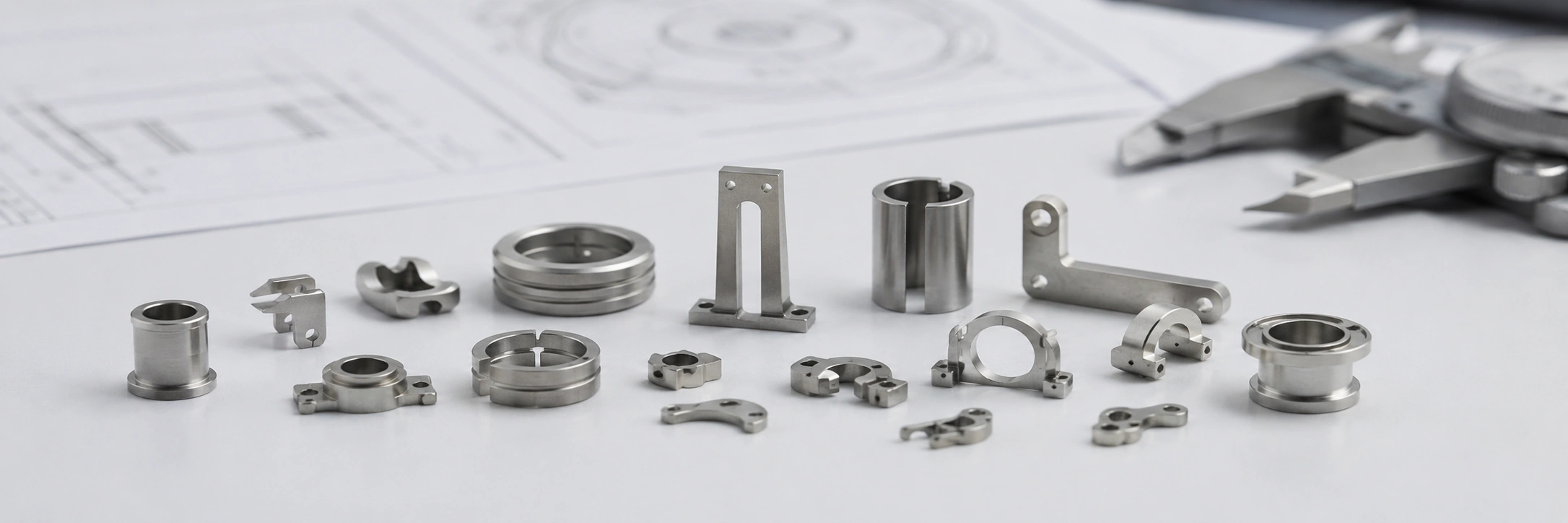
Core conclusion: Invar alloys are most relevant when low thermal expansion directly affects the function of a small precision MIM part.
What Are Invar Alloys in MIM?
Invar alloys are iron-nickel controlled-expansion materials known for low thermal expansion compared with many common engineering metals. In MIM material selection, this means the alloy may be considered for small parts where dimensional change under temperature variation can affect fit, alignment, sealing, measurement, or assembly function.
The key point is that Invar is not a general-purpose replacement for stainless steel, low-alloy steel, or nickel alloy MIM parts. Its value is specific: thermal dimensional stability. If the part does not need low expansion behavior, another MIM material may be easier to process, easier to source, or more cost-effective.
From a MIM engineering review perspective, Invar should be treated as a project-specific material choice. The alloy requirement must be connected to the part drawing, functional tolerance, operating environment, and final inspection method.
Material Positioning
Invar alloys belong to the wider group of controlled expansion alloys. This page focuses only on Invar-related MIM project review, not the full controlled-expansion alloy family.
If the project needs corrosion resistance, heat strength, magnetic behavior, or wear resistance more than low thermal expansion, another material direction should be reviewed first.
Low Expansion
Use Invar when dimensional change under temperature variation is a functional concern.
MIM Geometry
Review MIM when the part is small, complex, and difficult to machine efficiently at volume.
Final Condition
Confirm sintering behavior, critical dimensions, and any post-sintering operation before tooling.
When Invar Alloys Make Sense for MIM Parts
Invar alloys make sense for MIM when the part combines three conditions: low thermal expansion is functionally important, the geometry benefits from MIM, and the production quantity can justify tooling and process development.
| Project Condition | Invar MIM Suitability | Review Note |
|---|---|---|
| Small part with complex geometry | Stronger fit | MIM can reduce machining of small features if dimensional review is feasible. |
| Low thermal expansion is a functional requirement | Stronger fit | The alloy choice supports dimensional stability under temperature change. |
| Simple block or plate geometry | Weaker fit | Machining may be more direct and easier to control. |
| Very tight post-sintering tolerance | Needs review | Secondary machining, sizing, or inspection planning may be required. |
| Unclear temperature range or no thermal requirement | Weak fit | Invar may add cost and processing complexity without clear benefit. |
| High annual volume with repeat demand | Stronger fit | Tooling may be justified if geometry and material route are suitable. |
Project Decision Signals
Stop Signals Before Tooling
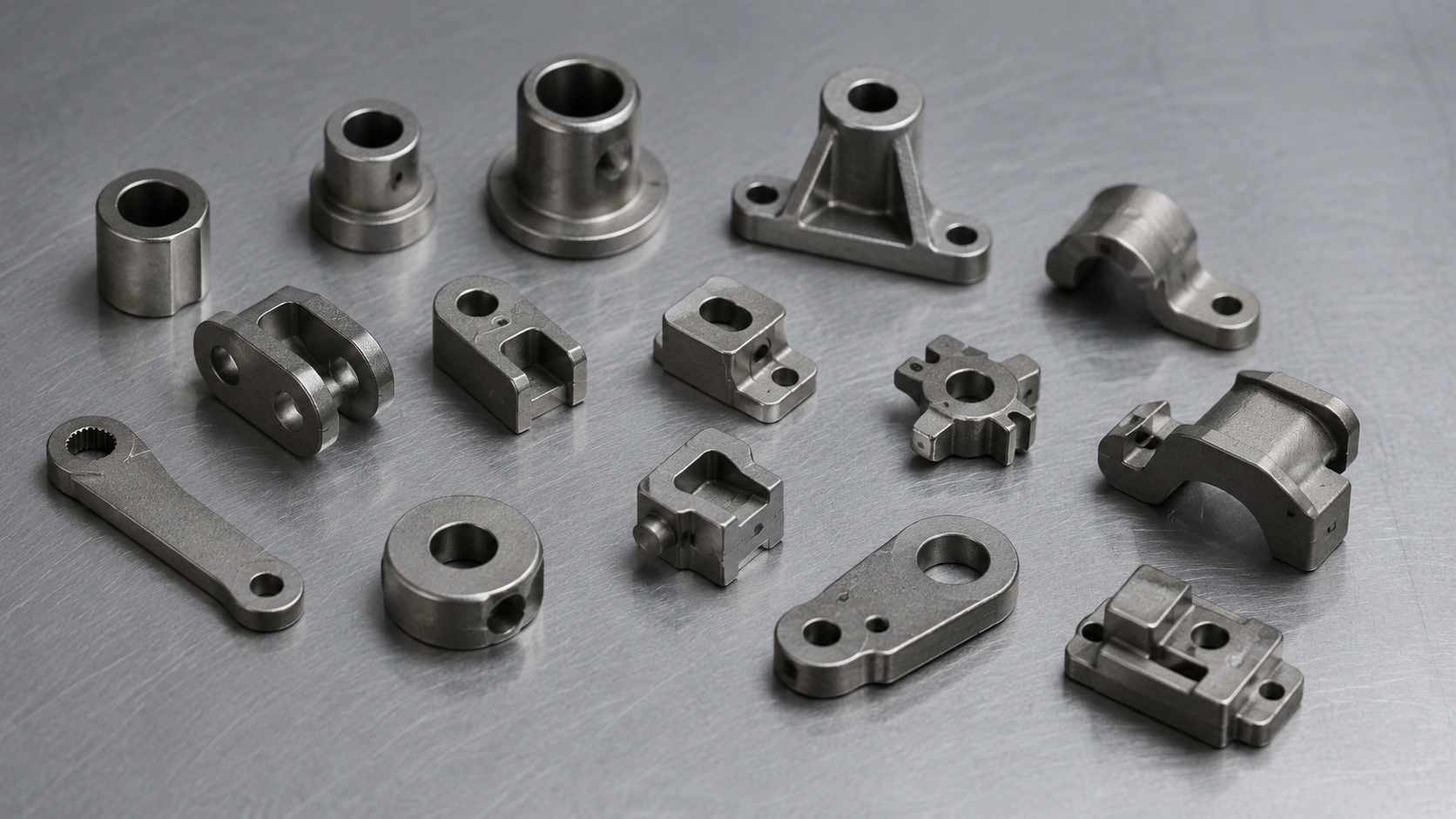
Core conclusion: Invar MIM is strongest when low thermal expansion and MIM-suitable geometry are both present.
Small Precision Components
Invar alloys are most relevant when the part must remain stable in a precision assembly. The reason may be alignment, calibration, sealing, sensor positioning, or a temperature-sensitive mechanical interface.
MIM-Suitable Geometry
MIM is usually considered when the part has small size and complex geometry that would be inefficient to machine from bar, plate, or tube.
When Not to Use Invar
Invar may not be the right choice if the part does not actually require low thermal expansion or if the geometry is too simple to justify MIM tooling.
Key MIM Processing Considerations for Invar Alloys
Invar MIM parts require a careful process review because the final part performance depends on both alloy selection and manufacturing control. The main areas to review are feedstock route, sintering behavior, dimensional stability, and any secondary operation required after sintering.
Feedstock Route
The first question is whether a suitable MIM feedstock route exists for the requested Invar alloy. Feedstock availability can affect development time, material verification, and project feasibility.
Sintering Control
All MIM parts shrink during sintering. For Invar projects, critical dimensions, flatness, hole position, and alignment surfaces should be reviewed before tooling.
Final Operations
Machining, sizing, surface finishing, cleaning, or final inspection may be needed when the as-sintered condition cannot fully meet the functional requirement.
Engineering review note: Low thermal expansion does not remove normal MIM process risks. Tooling compensation, debinding safety, sintering distortion, and final inspection requirements still need to be reviewed against the drawing.

Core conclusion: Invar material selection must be reviewed together with MIM shrinkage, distortion risk, and final inspection planning.
Feedstock and Powder Route Review
If the required alloy is not available as a standard MIM feedstock, the project may need additional material review before quoting. The RFQ should identify the target alloy grade, any equivalent material options allowed by the customer, and whether the project can accept engineering review before final material confirmation.
Sintering Shrinkage and Dimensional Stability
The review should focus on critical dimensions, flatness, hole position, alignment faces, and any assembly surface that must remain stable after thermal exposure. If the tolerance is too tight for as-sintered MIM, secondary machining or sizing may be needed.
Secondary Operations and Final Condition Review
Some Invar MIM parts may need machining, sizing, surface finishing, heat treatment review, or final inspection after sintering. These operations should be discussed before tooling because they can affect cost, lead time, and final tolerance planning.
Drawing Review Priorities Before Tooling
For broader tooling-stage questions, review XTMIM’s MIM design review before tooling guide before finalizing the RFQ package.
Composite Field Scenario for Engineering Training
A small alignment component requires low dimensional change in a temperature-sensitive assembly. The part has compact geometry, several small holes, and two assembly faces. Invar may be relevant, but the MIM review must confirm feedstock route, tooling compensation, sintering support, and whether the assembly faces need post-sintering machining.
Invar Alloys vs Other Controlled Expansion Alloy Options
Invar is one option within the broader controlled-expansion alloy group. It should not be treated as interchangeable with Kovar, Alloy 42, Super Invar, or other Fe-Ni controlled-expansion materials.
| Material Direction | Typical Review Focus | How to Treat on This Page |
|---|---|---|
| Invar alloys | Low thermal expansion and dimensional stability | Main topic of this page |
| Kovar-type alloys | Expansion matching for sealing-related applications | Mention only as a separate review direction |
| Alloy 42-type materials | Controlled expansion in Fe-Ni alloy selection | Mention only as a separate review direction |
| Super Invar-type materials | More specialized ultra-low expansion requirement | Mention only as a separate review direction |
| General nickel alloys | Strength, corrosion, heat resistance, or special alloy performance | Separate material family. Review nickel alloys only when the project requires that direction. |
The practical review should start from function. If the part needs low thermal expansion, Invar may be relevant. If the part needs sealing expansion matching, Kovar may deserve separate review. When both alloy directions remain candidates, compare Kovar and Invar for MIM parts before fixing the material direction. If corrosion resistance, high-temperature strength, or magnetic behavior is the primary requirement, another material family may be more appropriate.
For a wider material-family overview, use the parent page for controlled expansion alloys. For broader special alloy routing, review special alloys for MIM.
RFQ Checklist for Invar MIM Components
An Invar MIM RFQ should provide enough information for both material review and manufacturability review. A material name alone is not enough for a reliable quotation.
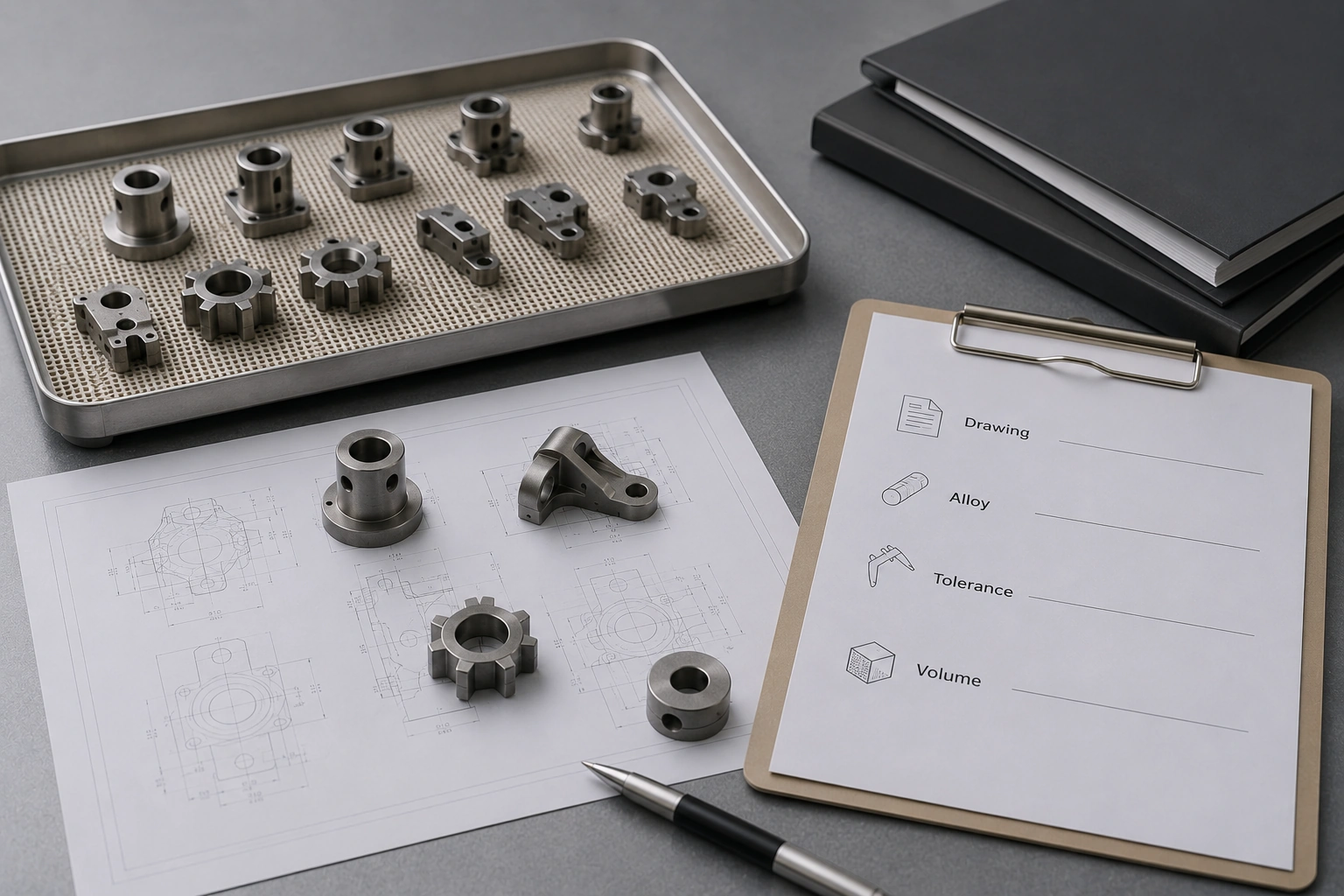
Core conclusion: A reliable Invar MIM quote depends on drawing data, material targets, critical tolerances, temperature conditions, and annual volume.
| RFQ Input | Why It Matters |
|---|---|
| 2D drawing | Defines critical dimensions, tolerance, and inspection points. |
| 3D model | Helps evaluate moldability, parting direction, wall thickness, and geometry risk. |
| Target Invar grade or equivalent option | Supports material route and feedstock review. |
| Operating temperature range | Connects alloy selection to real use conditions. |
| Critical thermal stability requirement | Clarifies why Invar is required. |
| Annual volume | Helps evaluate whether MIM tooling is justified. |
| Surface and post-processing needs | Affects process route, cost, and lead time. |
| Inspection method | Helps align final part verification with function. |
Before quoting: If the thermal stability requirement is not fully defined, send the drawing and available project conditions first. XTMIM can review the part and identify which material, tolerance, and process questions need to be confirmed before tooling.
What Helps Engineering Review
What Usually Delays Quoting
For a broader preparation list, review the MIM RFQ Preparation Guide before submitting drawings.
FAQ About Invar Alloys for MIM
Can Invar alloys be processed by MIM?
Invar alloys may be considered for MIM when a suitable feedstock route, geometry, sintering process, and final tolerance plan can be confirmed. The project should be reviewed before tooling because low-expansion material selection does not remove normal MIM design and sintering risks.
Is Invar suitable for all low-expansion metal parts?
No. Invar is suitable only when its low thermal expansion behavior matches the functional requirement. If the part is simple, large, very low volume, or does not require thermal dimensional stability, another material or manufacturing route may be more practical.
What information is needed to quote an Invar MIM component?
The RFQ should include drawings, 3D models if available, target alloy, critical dimensions, operating temperature range, annual volume, tolerance requirements, and any post-processing or inspection needs.
How is dimensional stability reviewed for Invar MIM parts?
Dimensional stability is reviewed by checking critical dimensions, sintering shrinkage, distortion risk, wall thickness balance, tooling compensation, and final inspection requirements. If the as-sintered condition cannot meet the requirement, secondary operations may be needed.
Should I choose Invar, Kovar, or another controlled expansion alloy?
The choice depends on the function. Invar is usually reviewed for low thermal expansion and dimensional stability. Kovar or other controlled-expansion alloys may be more relevant when the design requires a different expansion match or application-specific material behavior.
Related Material Review Pages
These links help users move between the current Invar alloy page, the parent controlled-expansion alloy page, and broader XTMIM material categories.
Use this parent page to review the broader low-expansion and controlled-expansion alloy family.
Use this category page when the material requirement is outside standard stainless steel, low-alloy steel, or common MIM materials.
Use this hub to compare common MIM material families before selecting a project direction.
Technical References
The following external source is included only as public material background for Invar 36 terminology. It does not replace project-specific material verification and does not represent a guaranteed MIM processing result.
Public reference for Invar 36 material background and nickel-iron low-expansion alloy positioning.
Material verification note:
Final project decisions should verify alloy grade, feedstock route, final part condition, tolerance requirement, and inspection method before tooling. This page does not imply guaranteed material performance, certified property values, or fixed processing results for every Invar MIM project.
Review Your Invar MIM Part Before Tooling
If your part requires low thermal expansion and has small, complex metal geometry, send the drawing, target alloy, critical dimensions, temperature range, and annual volume for an engineering review.