
MIM Parts / Stainless Steel Components
MIM Stainless Steel Parts
Custom stainless steel metal injection molded parts displayed by part form, material tag, application direction, finish requirement, and drawing review needs.
XTMIM organizes stainless steel MIM parts as a display-oriented page within the broader MIM Parts structure, not as a material encyclopedia or a general MIM suitability article. Buyers can review representative component forms such as housings, covers, brackets, hinges, shafts, pins, sleeves, connectors, compact mechanism parts, and wear-contact features. Material names such as 304, 316L, 17-4PH, 420, and 440C are used as practical tags, while final material selection still depends on the drawing, geometry, surface requirement, heat treatment target, tolerance expectation, inspection method, and application environment.
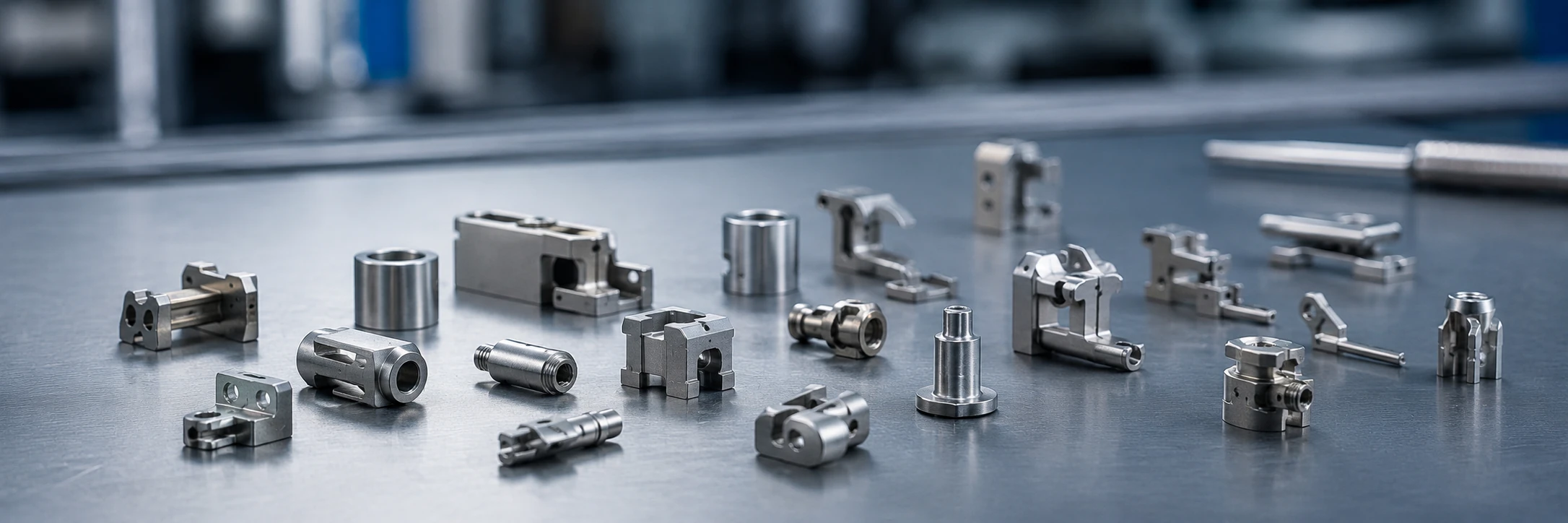
Core conclusion: Stainless steel MIM parts should be shown as real component examples, not only as material names.
Stainless Steel MIM Parts Gallery
A stainless steel MIM parts gallery should help sourcing and engineering teams quickly understand what type of components can be discussed with XTMIM. Instead of listing only material grades, the gallery should show part form, function, finish, and possible material direction together.

Core conclusion: A display page should group stainless steel MIM parts by part form and function, not only by material grade.
Cosmetic and Exterior Parts
Cosmetic and exterior stainless steel MIM parts may include small covers, caps, cases, buttons, decorative housings, and visible mechanism components. These parts are often reviewed for surface appearance, edge definition, corrosion behavior, and consistency between production lots.
For display and RFQ review, the visible surface should be separated from hidden functional surfaces. Gate position, parting line, polishing allowance, and surface finish expectation can influence whether a sample-like part is realistic for a new drawing.
Structural and Assembly Parts
Structural and assembly stainless steel MIM parts may include small brackets, links, support arms, hinge elements, locking features, and precision mounting components. These examples are easier to understand when shown by function instead of material name alone.
From an engineering review perspective, load direction, hole location, assembly datum, and post-sintering sizing needs matter more than the material tag alone. The gallery should help users identify similar forms, not assume that every bracket or hinge has the same tolerance requirement.
Small Motion and Wear-Contact Parts
Some stainless steel MIM parts are used in compact motion, locking, or wear-contact positions. Examples may include cams, latch parts, compact drive features, small gear-like components, pins, and contact elements.
These examples should be displayed conservatively. Wear life, hardness, and contact performance cannot be judged from a photo alone. For broader examples organized by wear function, compare this section with wear-resistant MIM parts. The project team should review mating material, contact pressure, heat treatment target, edge condition, and inspection method before tooling.
Precision Sleeves and Connectors
Precision sleeves, connectors, inserts, small couplings, and internal mechanism parts may combine thin walls, internal forms, slots, shoulders, undercuts, and assembly interfaces. Similar examples support discussion, while final review must still follow the actual drawing.
Critical bores, threads, sealing areas, and tight mating surfaces may need post-sintering machining or special inspection planning. These details should be marked clearly in the RFQ package.
How to Read the Display Cards
Each stainless steel MIM part example should be read as a combination of material tag, part form, application direction, and finish direction. A buyer may find a similar-looking sleeve, bracket, hinge, or locking part, but the quotation still depends on the actual drawing. In a composite engineering review scenario, two stainless steel parts can look similar in a gallery while requiring different tooling compensation, surface finishing, heat treatment, or inspection strategies.
How We Organize Stainless Steel MIM Part Examples
The most practical way to organize stainless steel MIM part examples is to combine four tags: material tag, part form tag, application or function tag, and finish tag. This keeps the page useful as a product display page while avoiding overlap with dedicated stainless steel material pages.
A buyer usually does not purchase “304” or “316L” as an isolated material. The buyer needs a small metal component that fits an assembly, survives the working environment, and can be manufactured consistently. The material tag helps organize examples, but the part form and function usually decide whether the drawing should move into MIM project review.
Display Logic
- Material tag: 304, 316L, 17-4PH, 420, or 440C as a starting point.
- Part form tag: housing, bracket, pin, sleeve, connector, gear-like feature, or latch.
- Application tag: wearable, electronics, mechanism, industrial assembly, or non-implant regulated device component.
- Finish tag: as-sintered, tumbled, polished, heat treated, machined where necessary, or PVD when suitable.
| Display Field | What It Means | Why It Matters for Review | What It Does Not Mean |
|---|---|---|---|
| Material Tag | A short material direction such as 316L or 17-4PH. | Helps buyers find examples close to their expected corrosion, strength, or hardness direction. | It is not a final material approval or performance guarantee. |
| Part Form Tag | The component shape or family, such as sleeve, bracket, pin, housing, or latch. | Helps XTMIM compare the drawing with similar component forms. | It does not mean every similar-looking part has the same manufacturability. |
| Application Tag | The general use direction, such as wearable assembly, mechanism, or industrial component. | Helps review surface, corrosion, assembly, and loading expectations. | It is not a claim that the part is qualified for a regulated industry. |
| Finish Tag | The surface direction, such as as-sintered, tumbled, polished, or decorative finish. | Helps clarify visible surface and secondary operation expectations before quotation. | It does not mean every finish is suitable for every geometry or material. |
Common Stainless Steel Material Tags for MIM Parts
Material tags help users recognize common stainless steel directions such as 304, 316L, 17-4PH, 420, and 440C. These tags should be used as quick identifiers, not as full material selection guides. For deeper material review, see Stainless Steel for MIM. When corrosion behavior is the main selection driver, also review the separate corrosion-resistant MIM parts page.
| Material Tag | Typical Display Role on This Page | Example Part Direction | Material Page |
|---|---|---|---|
| 304 | General stainless steel tag for appearance and general-purpose small parts. | Small covers, caps, exterior components, non-critical assembly parts. | 304 stainless steel for MIM |
| 316L | Corrosion-related or appearance-focused tag for compact components. | Wearable parts, connector bodies, regulated-device non-implant small components. | 316L stainless steel for MIM |
| 17-4PH | Strength-oriented tag for structural and mechanism components. | Hinge parts, brackets, latch features, shafts, pins, and compact mechanisms. | 17-4PH stainless steel for MIM |
| 420 | Hardness-related tag for selected contact or locking examples. | Small contact parts, cam-like features, latch parts, and mechanism elements. | 420 stainless steel for MIM |
| 440C | Higher hardness and wear-related tag when project requirements fit. | Compact wear-contact components and small mechanism parts requiring review. | 440C stainless steel for MIM |
Material Tags Are Not the Same as Material Subpages
On this page, 304, 316L, 17-4PH, 420, and 440C should be treated as display tags for stainless steel part examples. They should not automatically become new part subpages. A separate material-based parts page is only useful when there are enough real sample photos, clear search demand, and a different purpose from the existing stainless steel material pages.
Technical Source Note for Material Tags
The material tags on this page are used as practical project review labels. Industry sources such as the Metal Injection Molding Association materials range and MPIF Standard 35-MIM materials standards information support the use of recognized MIM material families as technical background. They should not be read as automatic approval of a material for a specific part drawing.
The material tag is a starting point. Final stainless steel selection should be reviewed together with geometry, surface finish, heat treatment target, assembly environment, inspection requirements, and production quantity.
Representative Stainless Steel MIM Part Forms
A representative part form section helps users browse stainless steel MIM examples by geometry and function. This is usually clearer than forcing every component into a material-only category.

Core conclusion: Part form is often the clearest way to organize stainless steel MIM examples for sourcing teams.
Housings, Covers, and Cosmetic Parts
Small housings, covers, caps, and cosmetic stainless steel parts are useful display candidates because buyers can visually compare shape, surface, and finish direction. These examples should be reviewed for visible surface planning and edge quality before tooling.
Hinges, Links, and Brackets
Hinges, links, and brackets can show how stainless steel MIM supports compact mechanical assemblies with holes, bosses, curved profiles, and small structural features. For broader structure-based examples, compare this section with MIM hinge parts and MIM bracket parts. Load direction and assembly datum should be clear in the drawing.
Shafts, Pins, Latches, and Locking Parts
Small shafts, pins, latches, and locking parts often need dimensional consistency, contact surface control, and stable assembly behavior. For more examples focused on shaft and pin forms, see MIM shafts and pins. Very long or simple cylindrical parts may still need comparison with machining or other routes.
Small Gears, Cams, and Drive Features
Compact drive features and small gear-like parts may be displayed when they represent dense stainless steel mechanism components. Tooth form, accuracy requirement, mating condition, and inspection method should be reviewed before quotation.
Sleeves, Connectors, and Precision Inserts
Sleeves, connectors, and precision inserts are useful examples for compact stainless steel parts with internal forms, shoulders, holes, slots, or assembly interfaces. Critical bores, threads, or sealing areas may need secondary operations.
Custom by Drawing
Displayed examples should support discussion, but quotation and feasibility review must still be based on the customer’s actual drawing, tolerance notes, surface requirements, and production expectations.
| Part Form | Useful Display Value | Review Point Before RFQ |
|---|---|---|
| Housing / Cover | Shows visible surface, edge definition, and compact enclosure geometry. | Cosmetic surface, gate location, parting line, polishing allowance. |
| Bracket / Link | Shows compact load-bearing or assembly support geometry. | Hole position, load direction, datum strategy, sizing requirement. |
| Pin / Latch | Shows small locking or contact features in stainless steel. | Contact surface, hardness target, mating material, wear expectation. |
| Sleeve / Connector | Shows internal forms, shoulders, slots, and assembly interfaces. | Bore tolerance, thread need, sealing area, secondary machining requirement. |
| Gear-like / Cam-like Part | Shows compact motion or drive features. | Tooth form, cam surface, mating condition, inspection method. |
Application Directions for Stainless Steel MIM Parts
Application directions help customers understand where stainless steel MIM parts may appear without turning this page into a full industry solution page. The goal is to connect displayed parts with common product environments and assembly functions.
Consumer Electronics and Wearable Components
Stainless steel MIM parts may be used in compact consumer electronics and wearable assemblies where appearance, corrosion behavior, small size, and repeatability matter. Examples may include covers, buttons, hinge parts, internal brackets, and decorative mechanism elements.
Precision Mechanical Assemblies
Precision mechanical assemblies may use stainless steel MIM parts for small links, inserts, connector bodies, latches, and mechanism elements that need consistent geometry and controlled functional surfaces.
Industrial Mechanism and Tool Components
Industrial mechanism and tool-related components may use stainless steel MIM when the part is small, complex, and difficult to produce efficiently through simple machining or forming.
Regulated-Device Non-Implant Components
Some stainless steel MIM parts may be used in regulated-device assemblies where cleanability, corrosion behavior, and part consistency are important. This page uses conservative non-implant wording unless the customer provides project-specific qualification requirements.
Why Application Tags Stay Conservative
Application tags on this page are used to help buyers compare part examples with their own assembly environment. They are not qualification claims. A part displayed under a regulated-device, wearable, or industrial mechanism direction still needs project-specific review for material, surface finish, inspection, documentation, and production requirements.
Surface Finish and Secondary Operation Examples
Surface finish and secondary operations are important for stainless steel MIM part display because many stainless steel components are selected for appearance, corrosion behavior, wear contact, or assembly interface quality. The gallery should show finish direction as a practical tag rather than a guaranteed result.
Finish planning should be reviewed together with material, geometry, visible surface location, critical dimensions, and production requirements. PVD or decorative finishes may be considered only when geometry, masking, material, coating thickness, and production requirements fit.
Finish Tags to Display
- As-sintered or tumbled stainless steel parts for internal or non-cosmetic uses.
- Polished or cosmetic surface examples for visible components.
- Heat treatment and hardness-related examples for selected materials.
- PVD or decorative finish direction when the part and production requirements fit.

Core conclusion: Finish direction should be reviewed together with material, geometry, and visible surface requirements.
| Finish Direction | Typical Display Use | Review Before Quotation |
|---|---|---|
| As-sintered / tumbled | Internal parts, mechanism parts, non-cosmetic surfaces. | Edge condition, surface uniformity, hidden vs visible surfaces. |
| Polished / cosmetic | Visible covers, buttons, caps, decorative components. | Cosmetic face, polishing allowance, gate and parting line location. |
| Heat treatment | Strength or hardness-related stainless steel examples. | Material grade, hardness target, distortion risk, inspection plan. |
| Local machining | Critical bores, threads, sealing surfaces, precision datum features. | Machining allowance, datum strategy, tolerance stack, cost impact. |
| PVD / decorative finish | Selected visible components when geometry and requirements fit. | Masking, coating thickness, surface preparation, production consistency. |
When a Separate Stainless Steel Part Subpage Is Worth Creating
Not every material tag should become a separate part page. For now, 304, 316L, 17-4PH, 420, and 440C should remain as material tags inside this stainless steel parts page unless a specific group has enough real examples, search demand, and independent page value.
| Decision Factor | Create a Separate Subpage Only If | Current Recommended Action |
|---|---|---|
| Real sample depth | The material or part family has enough real examples to support a full display page. | Keep as section tags until more sample assets are available. |
| Search demand | The query has clear demand beyond the existing material page. | Do not create a material-parts subpage only by guessing a slug. |
| Page sovereignty | The new page can stay different from material pages and part-form pages. | Use this page as the current stainless steel parts display hub. |
| Image assets | The page can support a hero image and several real body images without looking thin. | Collect sample photos first, then evaluate expansion. |
| RFQ value | The group attracts meaningful projects and not only informational traffic. | Use drawing review CTA before expanding the structure. |
Current Structure Recommendation
At this stage, the strongest structure is one stainless steel parts display page with material tags, part form tags, application tags, and finish tags. Future subpages should be created only after sample depth and search value are confirmed. Until then, unconfirmed URLs for “304 stainless steel MIM parts” or “316L stainless steel MIM parts” should not be written into HTML.
Custom Stainless Steel MIM Parts Based on Your Drawing
XTMIM supports custom stainless steel MIM part review based on customer drawings, 3D files, material targets, finish requirements, and expected production demand. A display page can show representative part families, but quotation and feasibility review must still be based on the actual component.
If the final material is not confirmed, the project can first be reviewed by function, geometry, and performance target. Stainless steel grade selection, heat treatment, surface finish, and secondary operations can then be discussed as part of the RFQ review.
What to Send for Review
- 2D drawing and 3D file if available.
- Target stainless steel material or performance requirement.
- Surface finish, heat treatment, or cosmetic surface requirements.
- Critical dimensions, inspection needs, and assembly interfaces.
- Estimated annual demand and project stage.

Core conclusion: Similar sample photos can support discussion, but quotation should be based on the customer’s actual drawing.
| Review Item | Why It Matters | Useful Input from Customer |
|---|---|---|
| Part geometry | Controls moldability, shrinkage compensation, and sintering distortion risk. | 2D drawing, 3D model, wall thickness, holes, slots, undercuts. |
| Material target | Determines whether the part should start from 304, 316L, 17-4PH, 420, 440C, or another option. | Material callout, corrosion need, strength need, hardness target. |
| Critical dimensions | Identifies dimensions that may require special process control, sizing, or machining. | Marked critical dimensions, datum strategy, inspection method. |
| Surface requirement | Influences gate location, polishing allowance, secondary operation plan, and cost. | Visible surface notes, finish target, cosmetic requirement, coating requirement. |
| Production expectation | Helps judge whether tooling investment and secondary operations are practical. | Annual quantity, prototype status, launch schedule, packaging or inspection needs. |
FAQ About MIM Stainless Steel Parts
These questions focus on stainless steel MIM part display, material tags, finish direction, future subpage logic, and drawing review rather than turning this page into a full material guide.
Can XTMIM make custom stainless steel MIM parts based on my drawing?
Yes. XTMIM can review custom stainless steel MIM parts based on your drawing, 3D file, material target, finish requirement, and production demand. The final quotation depends on part geometry, tolerance needs, material selection, tooling review, and secondary operation requirements.
Can I choose 304, 316L, 17-4PH, 420, or 440C for stainless steel MIM parts?
These stainless steel grades can be discussed as material directions, but the final choice should be based on function, environment, geometry, heat treatment requirement, finish expectation, and inspection needs. The material tag is a starting point, not the full project decision.
Can stainless steel MIM parts be polished or surface finished?
Yes, polishing, tumbling, heat treatment, machining in selected areas, and PVD for suitable parts may be reviewed. The result depends on part geometry, surface location, material, production requirement, and whether the finish is cosmetic or functional.
Do you provide sample photos before quotation?
Representative sample photos can help show part forms and finish directions, but new quotation work should still be based on the customer’s actual drawing and requirements. Similar-looking parts do not always have the same tolerance, material, or inspection needs.
Should stainless steel MIM parts be selected by material or by part function?
Start with part function, geometry, application environment, and surface requirement. Then confirm the stainless steel material. Selecting only by material name can miss important issues such as tolerance, wear contact, visible surface quality, post-sintering machining, and assembly fit.
Should 304, 316L, or 17-4PH stainless steel MIM parts have separate subpages?
Not automatically. A separate material-based parts subpage is useful only when there are enough real part examples, clear search demand, independent RFQ value, and a page purpose that does not duplicate the existing stainless steel material pages. Until then, these grades should remain as material tags inside this display page.
Technical References
The following non-competitor industry sources are provided as technical background for MIM process and material terminology. They do not imply that XTMIM is certified, approved, endorsed, or qualified by these organizations.
MPIF Standard 35-MIM Materials Standards
MPIF publishes materials standards information for metal injection molded parts. This source is useful background when discussing recognized MIM material families and material designation language.
MIMA Materials Range
The Metal Injection Molding Association materials range page is useful background for common engineering alloy families used in MIM, including stainless steel material directions.
MPIF / MIMA Process Background
MPIF and MIMA process overview pages provide general background on fine metal powders, binder-based feedstock, injection molding, binder removal, and sintering in the MIM route.
Send Your Stainless Steel Part Drawing for MIM Review
If you are developing a small stainless steel component and want to review MIM feasibility, send XTMIM your drawing, 3D file, material target, surface requirement, and estimated demand. We can review the part by geometry, material direction, finish requirement, and RFQ readiness before tooling discussion.