MIM Controlled Expansion Alloy
Kovar Alloys for MIM Parts
Kovar alloys are considered for MIM projects when a small, complex metal component needs controlled thermal expansion, stable assembly fit, or compatibility with glass, ceramic, or precision sealing environments. For metal injection molding, the material name alone is not enough to confirm feasibility. The project team should review alloy route, part geometry, critical surfaces, tolerance targets, sintering shrinkage risk, secondary operations, and inspection requirements before tooling.
Quick answer: Kovar alloys are worth reviewing for MIM when the component combines controlled expansion requirements, small precision geometry, and repeat production volume. The key question is not only whether Kovar can be processed, but whether the final part can meet functional dimensions and surface requirements after debinding, sintering, and any required secondary operations.
- Good fit for review: compact precision parts, controlled expansion requirements, repeat production, and geometry that may justify MIM tooling.
- Needs caution: flatness, sealing faces, contact surfaces, thin sections, tight alignment features, and features that may require post-sintering control.
- Not the main focus here: full Kovar metallurgy history, complete glass-sealing design theory, or broad controlled expansion alloy selection.
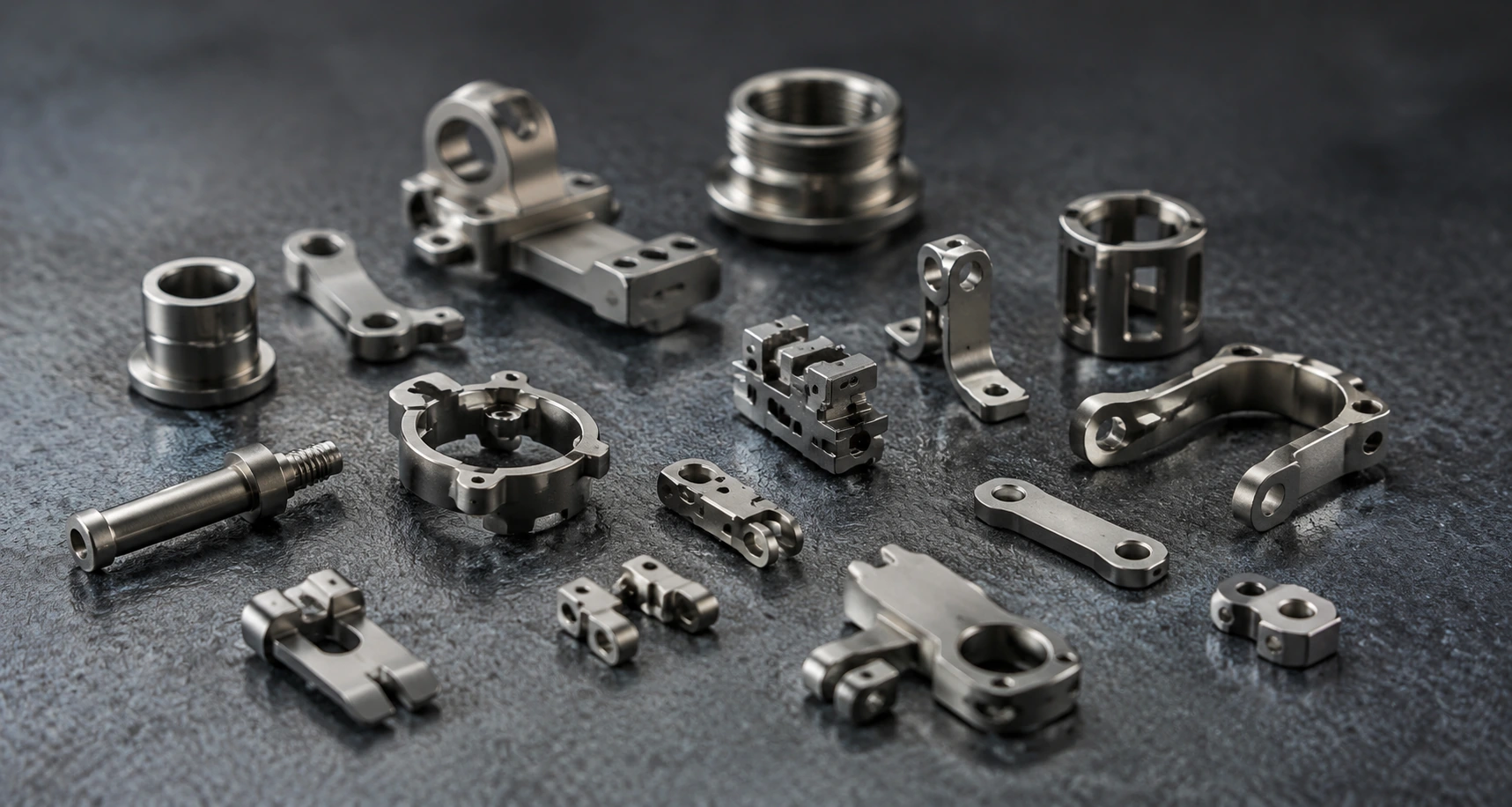
Core conclusion: Kovar alloys are relevant to MIM when small precision components need controlled expansion and stable assembly fit.
What Are Kovar Alloys in MIM?
Kovar alloys are iron-nickel-cobalt controlled expansion alloys. In MIM discussions, they are usually reviewed when a metal part must maintain a stable relationship with another material or assembly during thermal exposure. The engineering question is not only whether the alloy can be processed, but whether the final MIM part can meet dimensional, surface, and assembly requirements after debinding, sintering, and secondary operations.
This page focuses on Kovar alloy MIM suitability, process review points, material selection boundaries, and RFQ preparation. It does not replace a final material specification, sealing design validation, or customer-side functional testing. For the broader material family, review the parent page on controlled expansion alloys.
Material Intent
Kovar alloys are reviewed when controlled expansion behavior is part of the functional requirement, not only when the drawing lists a material name.
MIM Fit
MIM becomes relevant when the part is small, complex, repeatable, and difficult to machine efficiently one by one.
Engineering Risk
Critical surfaces, flatness, shrinkage, distortion, and inspection requirements should be reviewed before tooling.
Scope note: This page does not claim that every Kovar alloy component is automatically suitable for MIM. Feasibility depends on feedstock route, geometry, tolerance, sintering behavior, secondary operations, and the customer’s functional validation requirements.
When Should Kovar Alloys Be Considered for MIM Parts?
Kovar alloys may be considered when the part combines three conditions: a controlled expansion requirement, a small or complex geometry, and a production plan that can justify MIM tooling. The project should be reviewed by function, geometry, tolerance, and volume rather than by material name alone.
| Project condition | Kovar MIM suitability | Engineering note |
|---|---|---|
| Small part with complex geometry | Good candidate for review | MIM may reduce machining steps if the geometry is toolable. |
| Controlled expansion requirement | Strong reason to review Kovar | The material route must match the functional requirement. |
| Critical flatness or sealing surface | Needs caution | Secondary machining, lapping, finishing, or additional inspection may be required. |
| Very simple plate, strip, or tube geometry | May not justify MIM | Conventional wrought forms or machining may be more practical. |
| Very low annual volume | Needs cost review | Tooling cost may be difficult to justify. |
| Tight tolerance on several functional surfaces | Needs early DFM review | Sintering shrinkage and distortion must be considered before tooling. |
MIM Fit Decision Points
When MIM May Make Sense
MIM may be worth reviewing when the Kovar alloy part has small features, internal geometry, repeated production demand, and machining would create excessive cost or inconsistency.
When Another Route May Be Better
Machining, stamping, or wrought forms may be more practical when the part is a simple plate, strip, tube, very low-volume prototype, or requires a surface condition that would be easier to finish from wrought stock.

Core conclusion: A Kovar alloy project should be reviewed by function, geometry, tolerance, and tooling economics before quoting.
Kovar may not be the first choice when the part has no controlled expansion requirement, when the geometry is simple enough for machining or stamping, or when the required tolerance must be held without any secondary operation. Before tooling, the team should confirm whether the controlled expansion requirement is functional, cosmetic, or only a material preference.
MIM Manufacturing Factors for Kovar Alloy Components
Kovar alloy MIM parts require more than a material-name check. The process review should include feedstock selection, molding stability, debinding response, sintering shrinkage, distortion tendency, secondary operations, and final inspection strategy.
| MIM stage | What to review | Why it matters |
|---|---|---|
| Feedstock | Confirm available prepared feedstock route and material target. | Feedstock availability affects feasibility, lead time, and process consistency. |
| Injection molding | Review wall thickness, gate position, weld lines, and filling risk. | Thin or unbalanced geometry may create molding defects or distortion risk. |
| Debinding | Review part support and binder removal path. | Poor debinding control can affect shape stability before sintering. |
| Sintering | Review shrinkage, distortion, and furnace route. | Controlled expansion parts often need predictable dimensions after sintering. |
| Secondary operations | Review machining, surface finishing, sizing, or final surface control needs. | Critical surfaces may not be suitable as-sintered. |
| Inspection | Define critical dimensions and functional surfaces. | Inspection must match the actual assembly or sealing requirement. |
In production, this matters because Kovar applications often depend on the relationship between the metal part and another material. If a drawing only states “Kovar” without explaining the critical interface, the supplier may not know which dimensions, faces, or surfaces must be controlled most tightly. For related process background, review MIM sintering shrinkage and secondary operations.
Critical Feature Risk Review
| Feature or requirement | Typical MIM review concern | Possible engineering action |
|---|---|---|
| Flat sealing or contact face | Flatness change after sintering or handling | Review support, orientation, inspection, and possible secondary finishing. |
| Thin wall or asymmetric section | Filling imbalance, debinding sensitivity, and distortion | Review gate strategy, wall transition, and sintering support. |
| Small bore, slot, or alignment feature | Shrinkage variation and tolerance stack-up | Define critical dimensions and whether sizing or machining is required. |
| Surface for assembly contact | As-sintered surface may not match functional need | Review surface finishing, machining allowance, or inspection plan. |
| Thermal exposure in service | Functional validation depends on customer application | Confirm operating condition and validation responsibility before quotation. |
When flatness, long thin features, asymmetric geometry, or alignment surfaces are critical, the project should also review potential sintering distortion before approving the part for tooling.

Core conclusion: Kovar alloy MIM feasibility depends on manufacturing control as much as material selection.
Engineering review note: A common mistake is treating Kovar as a normal alloy substitution. For MIM, the project team should also review whether the part can be molded, supported, debound, and sintered without unacceptable distortion.
Kovar Alloys vs Other Controlled Expansion Materials
Kovar should be reviewed as one option within the broader controlled expansion alloy family. It is not the same selection question as general nickel alloys, soft magnetic alloys, or Invar-type low expansion materials.
| Material direction | Main review focus | Keep on this page? |
|---|---|---|
| Kovar alloys | Controlled expansion and sealing-related MIM part review. | Yes. |
| Controlled expansion alloy family | Broader material family selection. | Brief only; link to the parent page. |
| Invar alloys | Very low expansion material selection. | Brief comparison only; use the separate Invar page for deeper review. |
| Nickel alloys | Corrosion, heat, or special alloy performance. | Mention only when material family context is needed. |
| Soft magnetic Fe-Ni materials | Magnetic performance. | Do not expand unless the project has a magnetic requirement. |
Kovar and Invar should not be merged into one topic. When both alloys remain candidates, use the Kovar vs Invar comparison for MIM parts to determine whether the project is mainly about matching expansion with another material or minimizing dimensional change. For projects mainly focused on very low expansion rather than expansion matching, review Invar alloys separately.
Design and RFQ Information Needed for Kovar Alloy MIM Parts
Before quoting a Kovar alloy MIM part, the engineering team should receive enough information to judge both material feasibility and manufacturing risk. A material name alone is not enough.
| RFQ input | Why it is needed |
|---|---|
| 2D drawing and 3D model | Needed for geometry, tolerance, tooling, and shrinkage review. |
| Target material or equivalent grade | Needed to confirm whether Kovar, ASTM F15, UNS K94610, or another controlled expansion alloy is intended. |
| Critical dimensions | Needed to identify which features require the most control after sintering. |
| Functional surfaces | Needed to judge whether machining, finishing, or special inspection is required. |
| Assembly or sealing condition | Needed to understand why controlled expansion matters. |
| Thermal exposure range | Needed to understand the service environment and review risk. |
| Annual volume | Needed to judge tooling economics and production route. |
| Surface finish or plating requirement | Needed to avoid late-stage secondary operation surprises. |
| Inspection requirement | Needed to align dimensional, visual, or functional checks with the drawing. |
During early DFM review, shrinkage compensation should be considered when critical dimensions, tooling strategy, or post-sintering tolerance control may affect the final Kovar alloy MIM part.
What XTMIM Reviews Before Quoting
Geometry and Process Fit
XTMIM can review whether the part shape is suitable for MIM molding, debinding, sintering shrinkage, support strategy, and post-sintering handling before quotation.
Material and Functional Requirement
The review checks whether the requested Kovar alloy direction, controlled expansion purpose, critical surfaces, tolerance targets, and production volume are clear enough for a responsible RFQ.

Core conclusion: Clear RFQ inputs help determine whether Kovar alloy MIM is technically and commercially suitable.
Before tooling, the project team should confirm whether any sealing surface, contact face, bore, slot, or thin wall is critical to function. If the part needs a highly controlled surface after sintering, it may require secondary machining or finishing. That does not mean MIM is unsuitable, but it should be included in the cost and process review from the beginning.
Composite Field Scenario for Engineering Training
A compact metal component requires controlled expansion behavior and includes several small features that would be inefficient to machine one by one. The drawing includes a flat contact face, two small internal features, and tight assembly alignment requirements. During review, the engineering team does not approve the project based on material name alone. They check whether the geometry can be molded, where shrinkage may cause distortion, which surface needs post-sintering control, and what inspection method is needed before shipment.
This type of review is important because Kovar alloy projects often fail at the interface between material selection and manufacturing reality. The earlier the drawing, material target, tolerance, and functional surfaces are reviewed together, the more reliable the RFQ decision becomes.
FAQ About Kovar Alloys for MIM
Can Kovar alloys be processed by MIM?
Kovar alloys can be reviewed for MIM when suitable feedstock, geometry, debinding, sintering, and inspection conditions are available. The final feasibility depends on part shape, tolerance, critical surfaces, and production volume.
When is Kovar a better choice than Invar for MIM parts?
Kovar is usually reviewed when controlled expansion matching with another material or assembly is the main concern. Invar-type materials are more often reviewed when very low thermal expansion is the primary requirement. The correct choice depends on the function, not only the alloy name.
What are the main risks when using Kovar alloys in MIM?
The main risks are sintering shrinkage variation, distortion, flatness control, surface condition, and critical dimension stability. These risks are especially important when the part has sealing, contact, or alignment surfaces.
Do Kovar alloy MIM parts need secondary operations?
Some Kovar alloy MIM parts may need secondary machining, surface finishing, sizing, or additional inspection. This depends on the drawing tolerance, surface requirements, and functional interface.
What should be sent for a Kovar alloy MIM RFQ?
Send the 2D drawing, 3D model, target material or equivalent grade, critical dimensions, tolerance requirements, functional surface notes, annual volume, and any assembly or thermal exposure information.
Technical References
The following external references may help engineering and sourcing teams review Kovar alloy terminology, ASTM F15 reference information, and controlled expansion alloy background. These sources are used for material background only and do not imply certification, approval, current specification status, or project-specific performance validation by any third party.
- Carpenter Technology Kovar alloy page — Material identity and controlled expansion alloy background.
- CarTech Kovar Alloy datasheet — Technical datasheet for Kovar alloy material description and application context.
- ASTM F15 reference information page — Reference information for iron-nickel-cobalt sealing alloy terminology; verify current specification status and project requirements directly with ASTM or the customer specification.
Review Your Kovar Alloy MIM Part Before Tooling
If your Kovar alloy component requires controlled expansion behavior, compact geometry, and repeat production, send the drawing and material requirement for engineering review. XTMIM can review whether the part geometry, tolerance, sintering route, and secondary operations are suitable for a MIM quotation.